




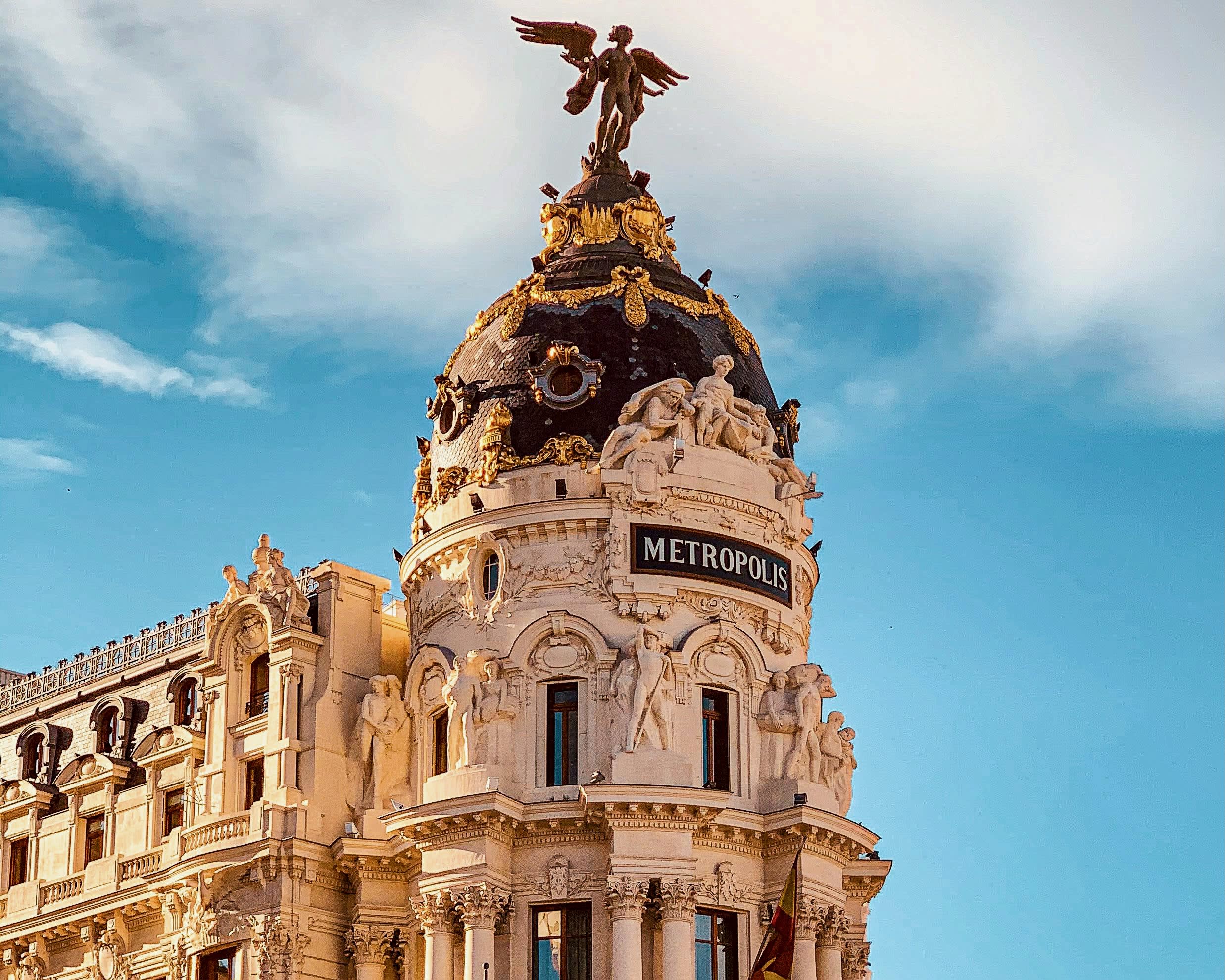
Visiting Madrid is all about embracing long meals, late nights, and lively conversations. There’s an ease to public life here that you feel almost imemdiately—in the corner bars where no one is in a hurry to leave, in the plaza terraces that stay full well past midnight, in the way madrileños treat a weeknight dinner like an occasion worth taking seriously. The city runs on its own terms, and recognizing that early matters more than any itinerary.
What draws visitors to Madrid is obvious enough: world-class museums, a serious food scene, and some of Europe's best nightlife. But what surprises many travelers is how seamlessly it all fits into a city that still feels, at its core, like a place people actually live. Centuries-old tabernas and three-Michelin-star kitchens occupy the same street, and neither feels out of place. Velázquez's naturalistic court portraits hang a ten-minute walk away from Picasso's Cubist anti-nationalist mural Guernica. And while there's been a renewed sense of innovation in recent years, Madrid’s soul is still rooted in traditions worth slowing down for.
Need to know
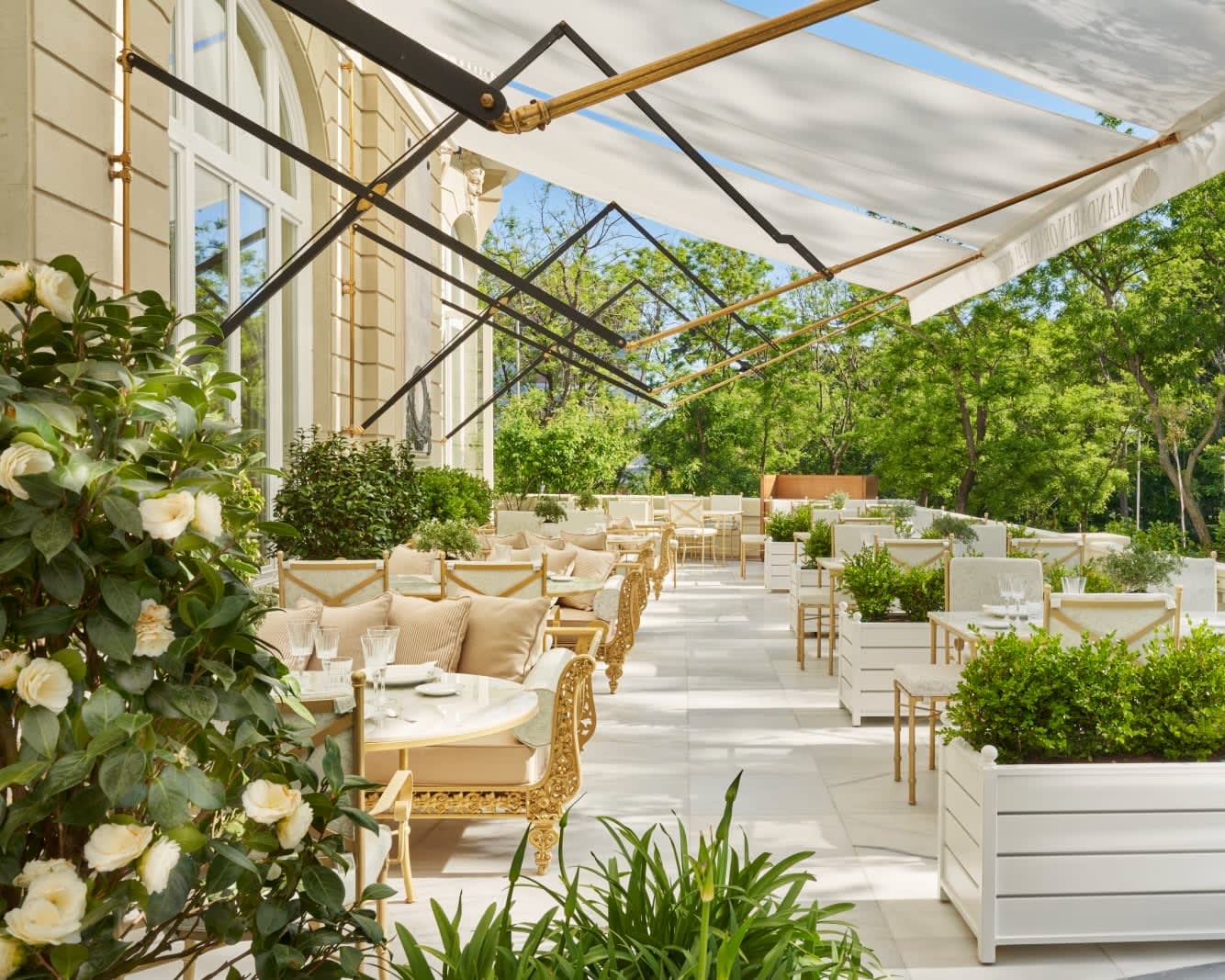
Image courtesy of Mandarin Oriental Ritz, Madrid
Madrid runs on its own clock, and you’ll have a richer, more authentic experience if you lean into it. Lunch doesn’t start until 2 p.m., dinner rarely before 9 p.m., and the city doesn’t hit its stride on a Friday night until well past midnight.
Currency: Spain uses the Euro (EUR). Cards are accepted almost everywhere, from restaurants and shops to museums and taxis. That said, keeping a small amount of cash on hand is useful for markets, smaller cafés, and the occasional tip.
Languages: Castilian Spanish (castellano) is the official language. English is spoken in most hotels and major tourist areas, but learning common phrases in the local language always goes a long way.
Key phrases: hola (hello), gracias (thank you), por favor (please), perdón (excuse me), cómo está? (how are you?), sí/no (yes/no), no hablo español (I don’t speak Spanish), habla inglés? (do you speak English?)
Airports: Adolfo Suárez Madrid-Barajas Airport (MAD) is Spain’s busiest airport. Nonstop flights connect to cities across North America, including New York, Miami, and Los Angeles.
Transportation: Madrid’s metro is one of Europe’s most extensive and efficient networks, making it the easiest way to move around the city. Buses and commuter rail fill in the gaps, and the system as a whole is affordable and straightforward to navigate. Taxis are plentiful and reasonably priced, and ride-share apps are widely available. The city’s historic center is best explored on foot.
Best time to visit: Spring (April–May) and fall (September–October) are the sweet spots with mild temperatures, sunny days, and lively terraces. Summer (June–August) brings intense heat, and much of the city empties in August as locals leave for vacation. Winter (November–March) is cool, dry, and surprisingly sunny—ideal for museums and Christmas markets without crowds.
Ideal length of stay: Three nights covers the essentials, though four to five days will give you enough time to explore Madrid and layer in day trips outside of the city.
Signature dishes and drinks:
Bocadillo de calamares: Fried calamari rings stuffed into a crusty bread roll that’s become a Madrid street food staple
Cocido madrileño: A hearty, slow-cooked stew of chickpeas, vegetables, and pork, with its components traditionally served in three separate courses
Tortilla de patatas: A dense, satisfying Spanish omelet of eggs and potatoes, often made with onion
Callos a la madrileña: A rich, deeply savory tripe and chorizo stew
Jamón ibérico: Silky, intensely flavored cured ham
Churros: Fried dough, typically served with thick, dark hot chocolate for dunking
Vermut de grifo: Sweet vermouth served straight from the tap
Tinto de verano: Red wine topped with lemon soda over ice
Sangria: Red wine with fruit, soda, and sugar
What to wear: Madrileños default to smart-casual attire year-round. Summers run hot, so breathable fabrics and light layers are essential from June through September. Winters skew cooler than most people expect, which means proper coats and warm layers coming in handy. Prioritize comfortable shoes since you’ll likely cover a lot of ground on foot.
Travel tips:
August: Many neighborhood restaurants, bars, and small shops close for the entire month of August as locals escape to the coast on vacation.
Sun protection: Summer can easily hit triple digits. Apply SPF 50+ sunblock liberally, wear a hat, and dress in light, airy layers.
Safety: Madrid is generally safe, but pickpocketing happens. Keep valuables secured and stay aware in crowds, particularly in tourist areas and on public transit.
Siestas: Many smaller shops and businesses close for a few hours in the early afternoon, typically from 2 to 5 P.M.
Madrid
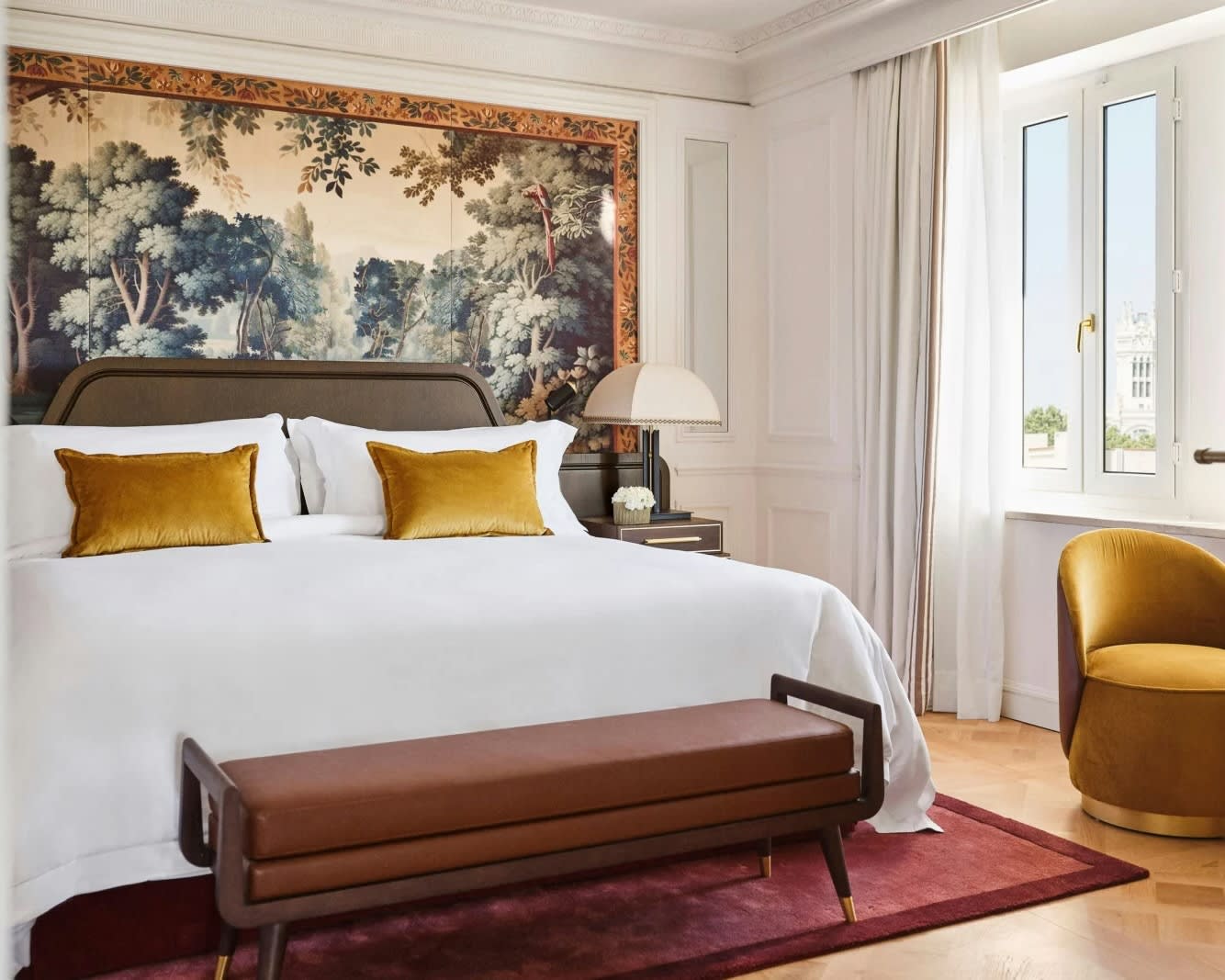
Image courtesy of The Palace, a Luxury Collection Hotel, Madrid
Madrid may not get as much credit as some other world capitals, but it’s one of Europe’s richest cities for art, culture, and cuisine. The best way to take the measure of all three is neighborhood by neighborhood—and no two feel alike. Salamanca is the city’s most polished quarter, its wide boulevards lined with luxury boutiques and some of Madrid’s finest restaurants. La Latina is where you’ll find the city’s oldest streets and truest expression of Spain’s celebrated tapas culture. Barrio de las Letras, tucked between the Paseo del Prado and the lively streets of Huertas, carries a literary, old-world atmosphere and puts the museum triangle within easy walking distance. Chueca runs trendier and more energetic, with trendy boutiques and craft cocktail bars. (It’s also the epicenter of the city’s LGBTGQIA+ community.) Malasaña has its roots in Madrid’s post-Franco counterculture with street art, vintage shops, and the city’s best nightlife. Leafy, residential Chamberí shows Madrid at its most relaxed and well-heeled.
Where to stay
The Palace, a Luxury Collection Hotel, Madrid: Anchoring the Paseo del Prado since 1912, the opulent hotel wears a century of history with confidence, its original stained-glass dome still dazzling guests as they check in.
Fora’s Marriott STARS partner perks include a $100 hotel credit, welcome amenity, daily breakfast, an upgrade, and extended check-in/out whenever possible.
Mandarin Oriental Ritz, Madrid: More than a century after King Alfonso XIII helped bring it to life, this regal hotel is still the one by which all others in Madrid are measured.
Fora’s Mandarin Oriental Fan Club partner perks include a $100 hotel credit, daily breakfast, an upgrade, and extended check-in/out whenever possible.
Rosewood Villa Magna: Discerning travelers favor this high-touch hotel in the prestigious Salamanca neighborhood for its private gardens, a well-stocked Negroni bar, and an art program serious enough to include a resident expert.
Fora’s Rosewood Elite partner perks include a $100 hotel credit, welcome amenity, and an upgrade and extended check-in whenever possible.
Brach Madrid - Evok Collection: The French hotel brand’s first Spanish outpost occupies a storied Gran Vía building with sophisticated, Philippe Starck-designed interiors that use warm-toned woods, woven leather ceilings, and terra-cotta floors to evoke a subtly masculine aesthetic. Eclectic decor touches (boxing gloves, instruments, travel mementos) reinforce that vintage, well-traveled feel.
Fora’s Evok Collector's Club partner perks include a €100 hotel credit, daily breakfast, welcome amenity, and an upgrade whenever possible.
URSO Hotel & Spa: Situated in an early 20th-century palace between Chamberí and Chueca, this handsome boutique hotel owes its lived-in feel to details like a restored marble staircase, original azulejo tiles, and Chinois wallpaper re-created from a neighboring estate.
Fora Perks include a $100 hotel credit, daily breakfast, a tapas and wine experience, an upgrade, and extended check-in/out whenever possible.
History and culture
Madrid’s origins are more modest than its current stature suggests. Founded as a Moorish fortress in the 9th century, it remained a minor settlement until Philip II made it the capital of the Spanish Empire in 1561—a move that raised the city’s cachet almost overnight. The centuries that followed produced the Prado’s unrivaled collection of art, the grand boulevards of the Bourbon monarchs, and a civic identity shaped by both extraordinary ambition and profound upheaval.
The Spanish Civil War left deep marks on Madrid, and General Francisco Franco’s dictatorship cast a long shadow that lasted until his death in 1975. What followed was La Movida Madrileña, an explosive cultural renaissance that flooded the city with music, film, and art. Today the city demonstrates a fierce pride in its history that’s visible in world-class museums, Habsburg architecture, and centuries-old tabernas. Its forward-leaning, intensely social culture absorbs any visitor as it plays out on terraces, in markets, and well past midnight on any given evening.
Cultural celebrations and events
Three Kings Day (January 5–6): A festive parade with sweets tossed into the crowd, and the main gift-giving occasion of the holiday season for many Spanish families.
Madrid Carnival (February): A costume-filled celebration in the days before Ash Wednesday, with parades, street performances, and elaborate masks.
Madrid Pride / MADO (late June–early July): One of Europe’s biggest LGBTQ+ celebrations, drawing enormous crowds for 10 days of performances and parties.
Veranos de la Villa (July–August): The city's summer-long arts program brings open-air concerts, theater, and performances to outdoor venues and public spaces.
Festival de Otoño (November): An international arts festival spanning theater, dance, and music, with a program that pulls from companies and performers around the world.
Changing of the Guard (year-round, Wednesdays and Saturdays): The full ceremony at the Royal Palace is a sharp, ceremonial affair.
What to do in Madrid
Madrid layers high culture and street life in unusually close proximity.
The Golden Triangle: This trifecta of powerhouse museums includes The Prado and its unrivaled Spanish masters, the Reina Sofía with the city’s best modern collection, and the Thyssen, which spans seven centuries in a single building.
The Palacio Real: With its baroque interiors and formal gardens, the royal palace—one of Europe’s largest—offers a full picture of Spain’s imperial ambitions. The adjacent Almudena Cathedral is worth stepping inside; its neoclassical stone exterior gives little hint of the colorful, strikingly modern interior within.
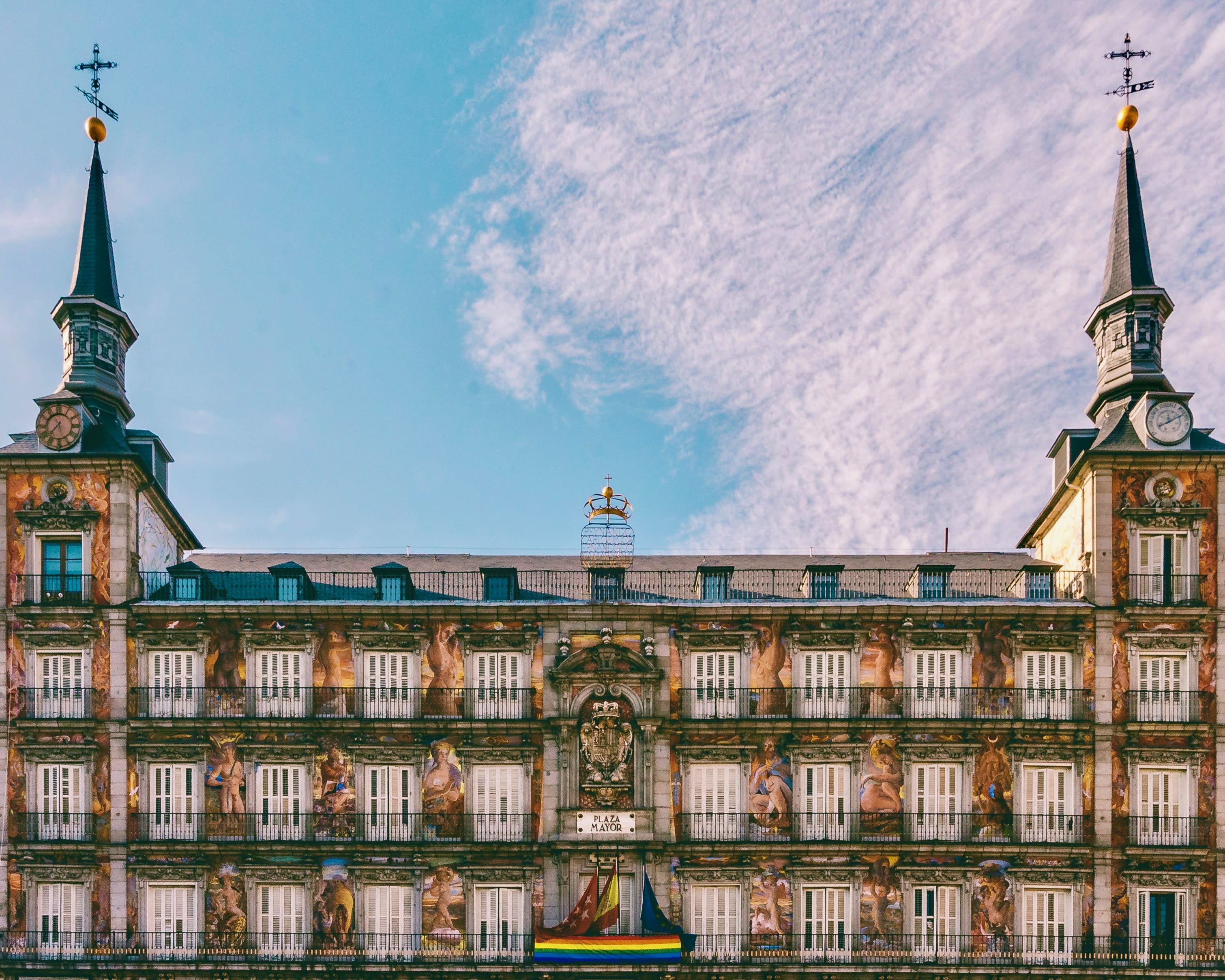
Plaza Mayor: Yes, the 17th-century arcaded square is touristy, but its ochre buildings and slate spires offer a grand backdrop for a coffee or vermouth enjoyed slowly from one of the terrace cafés.
Food markets: Steps from Plaza Mayor, San Miguel is a wrought-iron and glass gourmet hall best visited at aperitivo hour for vermouth on tap, Galician oysters, or jamón croquetas. San Antón in Chueca runs livelier, with a neighborhood crowd and a rooftop terrace overlooking central Madrid. Mercado de la Cebada in La Latina is the most workaday of the three: a neighborhood market during the week that loosens up on weekends, when locals crowd the stalls for gildas and affordable wine.
El Rastro: Every Sunday, La Latina’s famous open-air flea market takes over the streets with vintage finds.
Palacio de Liria: This 18th-century neoclassical palace—still the primary residence of the aristocratic Alba family—holds one of Spain’s finest private art and literature collections.
Matadero: One of Madrid’s most ambitious cultural spaces, this repurposed industrial complex in Arganzuela hosts contemporary art, performance, and design events year-round.
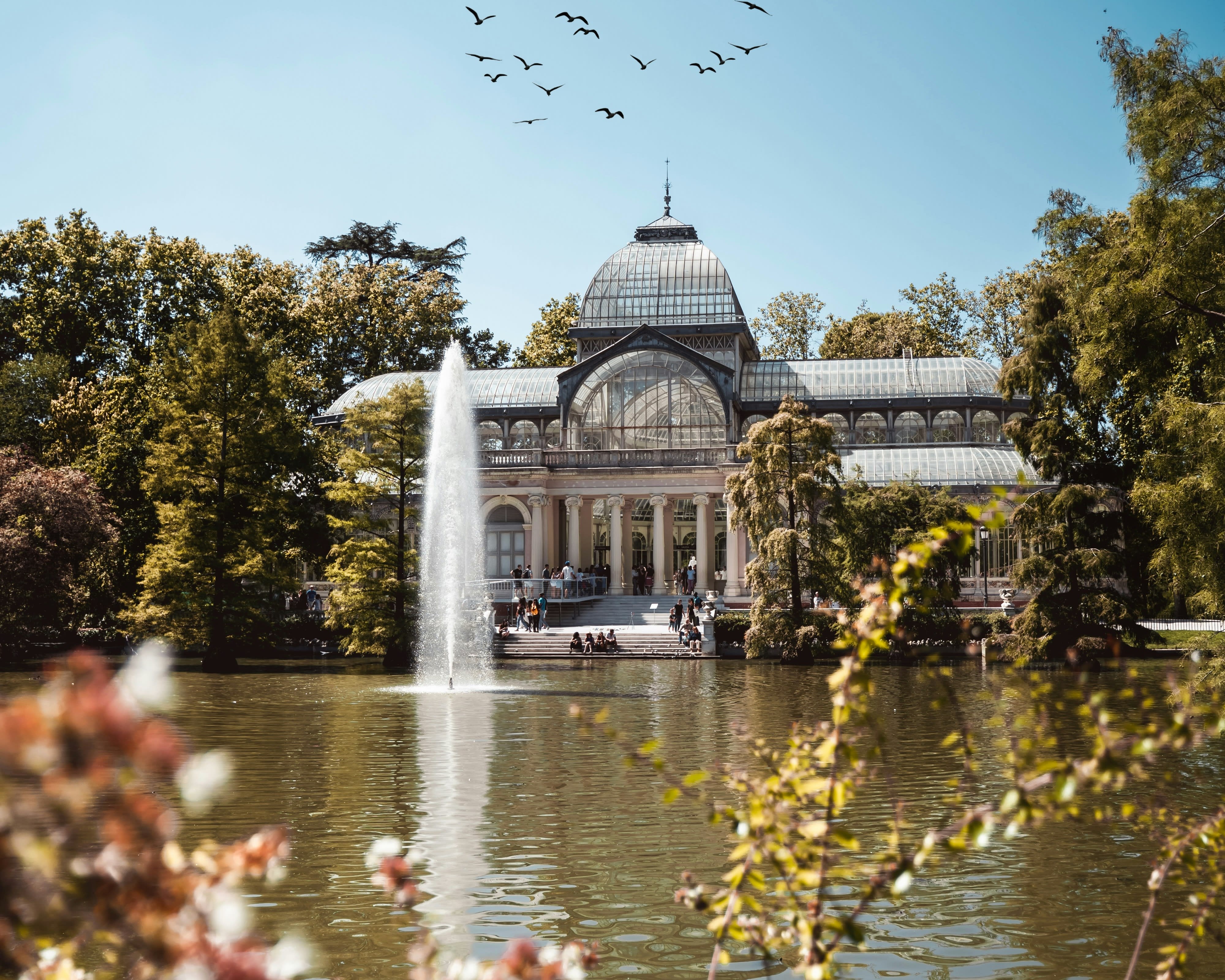
El Retiro: Once the private grounds of Spanish royalty, this 350-acre park is where madrileños come to exhale. Rent a rowboat on the lake below the Alfonso XII monument, linger at the weekend book stalls, or simply find a bench and stay a while.
Nightlife: When a 10 p.m. dinner reservation is the opening act, bars fill up around midnight and clubs don’t hit their stride until 2 a.m. Malasaña, a neighborhood with a slightly scruffy, countercultural edge, is the go-to for indie bars and live music. Chueca, Madrid’s LGBTQ+ neighborhood, draws a stylish crowd to its bars and terraces. Dedicate an evening to one of the city’s flamenco tablaos to soak up traditional music and dance.
Where to eat in Madrid
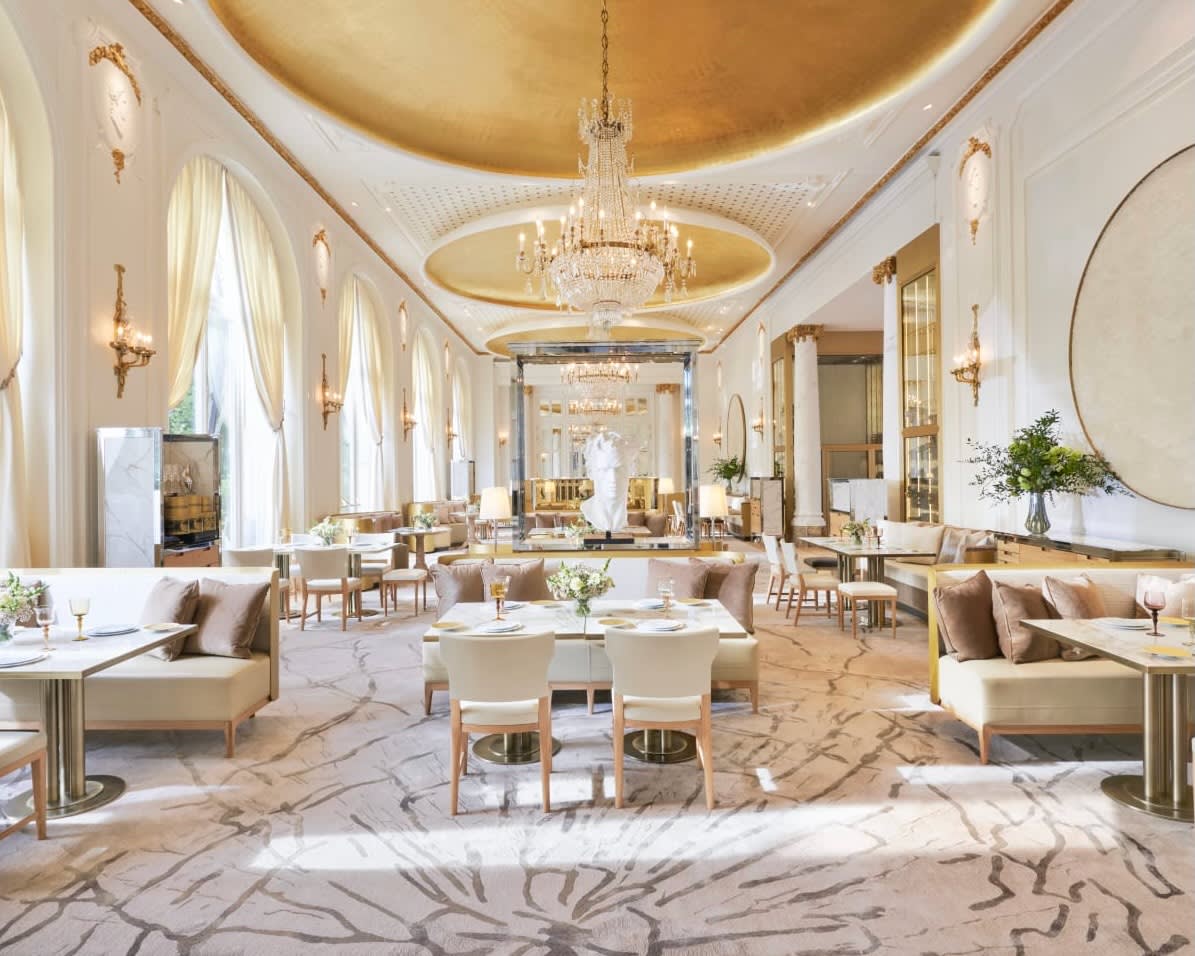
Image courtesy of Deessa at Mandarin Oriental Ritz
A population that lives to eat, deep roots in Spanish tradition, and a new generation of boundary-pushing chefs have made Madrid one of Europe’s most compelling food cities.
DiverXO: With just 32 seats and three Michelin stars, chef David Muñoz'’s restaurant has become Madrid’s most coveted reservation on the strength of its theatrical tasting menus.
Deessa at the Mandarin Oriental Ritz: Valencian chef Quique Dacosta brings Michelin-caliber land-and-sea tasting menus to one of Madrid’s most beautiful dining rooms, overlooking the Ritz garden.
La Tasquería: Chef Javi Estévez has built a Michelin-starred restaurant around offal, turning often-ignored cuts of meat into one of the most interesting meals in the city.
La Tasquita de Enfrente: A family-run institution near Gran Vía with nearly 50 years of history, where chef Juanjo López serves market-driven dishes built on radical simplicity—two or three ingredients, all Spanish, nothing superfluous.
Casa Lucio: This old-school dining room in La Latina has been feeding madrileños—including its politicians, artists, and royalty—for decades.
Horcher: A Berlin institution relocated to Madrid in 1943 and has barely changed since, offering game dishes, old-world Central European cooking, and a formal dining room that genuinely belongs to another era.
Amazónico: A tropical dining room in Salamanca that delivers an eclectic menu spanning South American, Asian, and Mediterranean influences.
Tatel: The celebrity ownership—Rafa Nadal, Pau Gasol, Enrique Iglesias—draws attention, but the kitchen earns its keep with polished Spanish cooking.
Ten Con Ten: This Salamanca institution attracts a cosmopolitan crowd that appreciates the setting (a lively bar, a greenhouse, and a library) as much as the Spanish dishes, pasta, and seafood that appear on the tables.
Bosco de Lobos: A convivial, all-day spot near the Prado that moves easily between casual tapas and a more composed lunch or dinner.
Oroya at The Madrid EDITION: A global menu rooted in Andean tradition makes this one of the most interesting on the restaurant scene.
El Pescador: A serious seafood restaurant in Salamanca that stakes its reputation on the quality of its sourcing.
Sala de Despiece: Equal parts tapas bar and culinary theater, this Chamberí spot serves precise, ingredient-focused small plates in a lively, standing-room setting.
Bichopalo: Two siblings serve a set tasting menu that applies Mediterranean and Asian touches to traditional Spanish recipes.
Virrey: Chef Carlos Fernández-Miranda brings the northern Spanish pantry to Madrid, incorporating ingredients like Santoña anchovies, Galician sea bass, and Asturian beef loin.
Sakro: Neapolitan-style pizzas made with Italian-sourced ingredients in a sleek, unhurried setting.
Superchulo: A plant-based kitchen in Malasaña that takes vegetarian and vegan cooking seriously.
Misión Café: One of Madrid's best addresses for expertly sourced and pulled espresso.
Panic Bakery: Some of the finest sourdough in the city comes out of this small bakery.
1862 Dry Bar: A handsomely designed cocktail bar in Chamberí with serious drinks.
San Ginés: The famed spot for Spanish churros and dipping chocolate.
Day trips from Madrid
Toledo
Madrid sits at the geographic center of Spain, putting some of the country’s most remarkable history and landscapes within easy reach for a side jaunt.
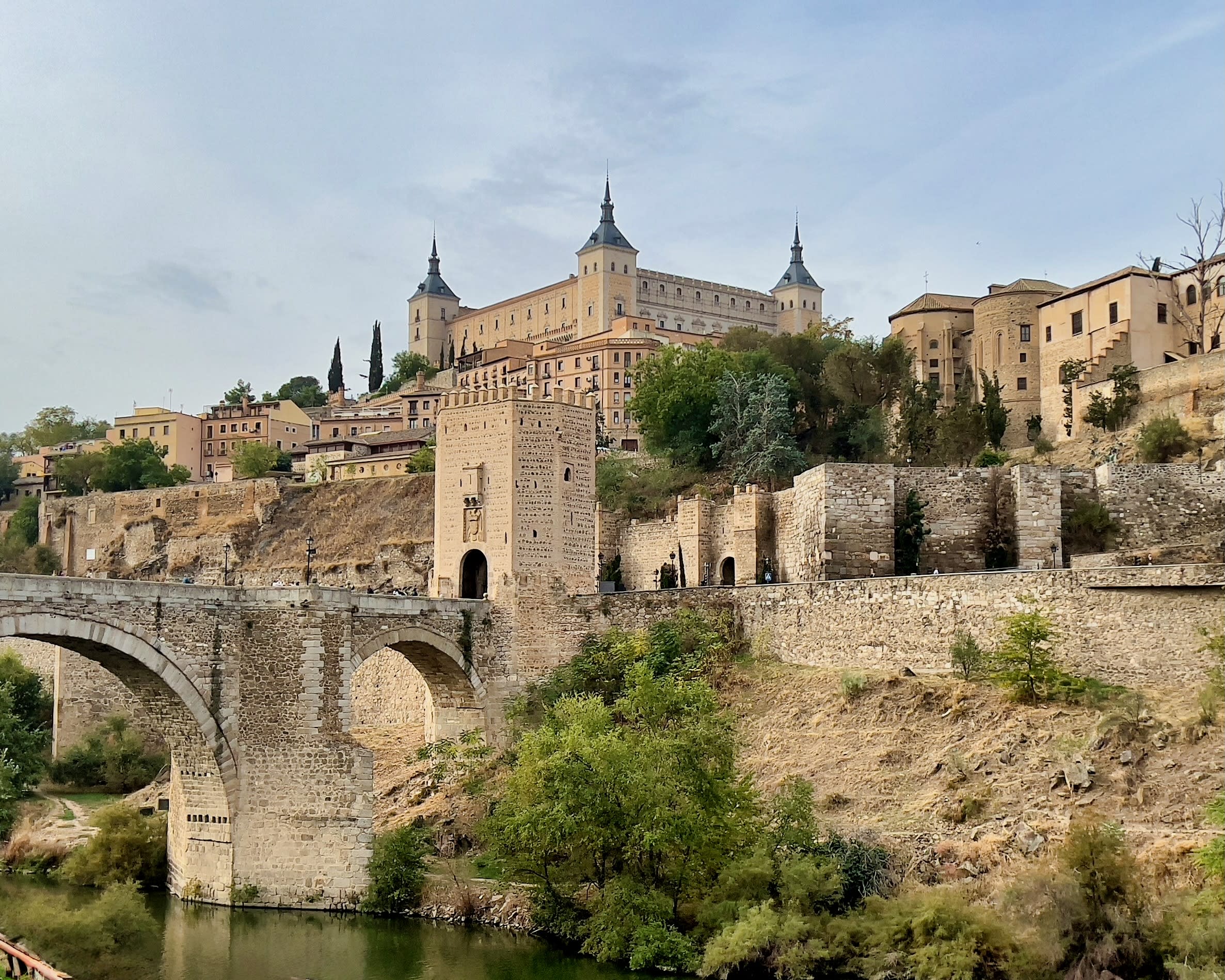
Toledo (30-minute train): A UNESCO-listed medieval city where Christian, Muslim, and Jewish cultures have coexisted for centuries and are reflected in the layered skyline of cathedral spires, minarets, and synagogues above the Tagus River gorge.
Segovia (30-minute train): A Roman aqueduct that has stood for nearly 2,000 years, a fairytale castle that inspired Disney, and a medieval old town. Segovia rewards an early start and a long lunch of the region's famous roast suckling pig.
El Escorial (1-hour train): A vast, austere royal monastery-palace built by Philip II in the 16th century—part mausoleum, part library, part royal residence—that reveals as much about Spanish imperial history as any museum in Madrid.
Ávila (1.5-hour train): The best-preserved medieval walled city in Spain, where 11th-century ramparts still encircle the entire old town. The walls are walkable, the cathedral is built directly into them, and the city rewards a few unhurried hours.
Cuenca (2-hour train): A dramatically situated medieval city balanced on a limestone gorge, best known for its casas colgadas, hanging houses cantilevered over the cliff edge. Compact, visually striking, and surprisingly rich in contemporary art for a city of its size.
Ribera del Duero (2-hour drive): Spain's most serious red wine region outside Rioja where the landscape is austere and beautiful. Tempranillo-based wines of real depth and age-worthiness are produced along the Duero River valley for a memorable day trip.
Trips to add on
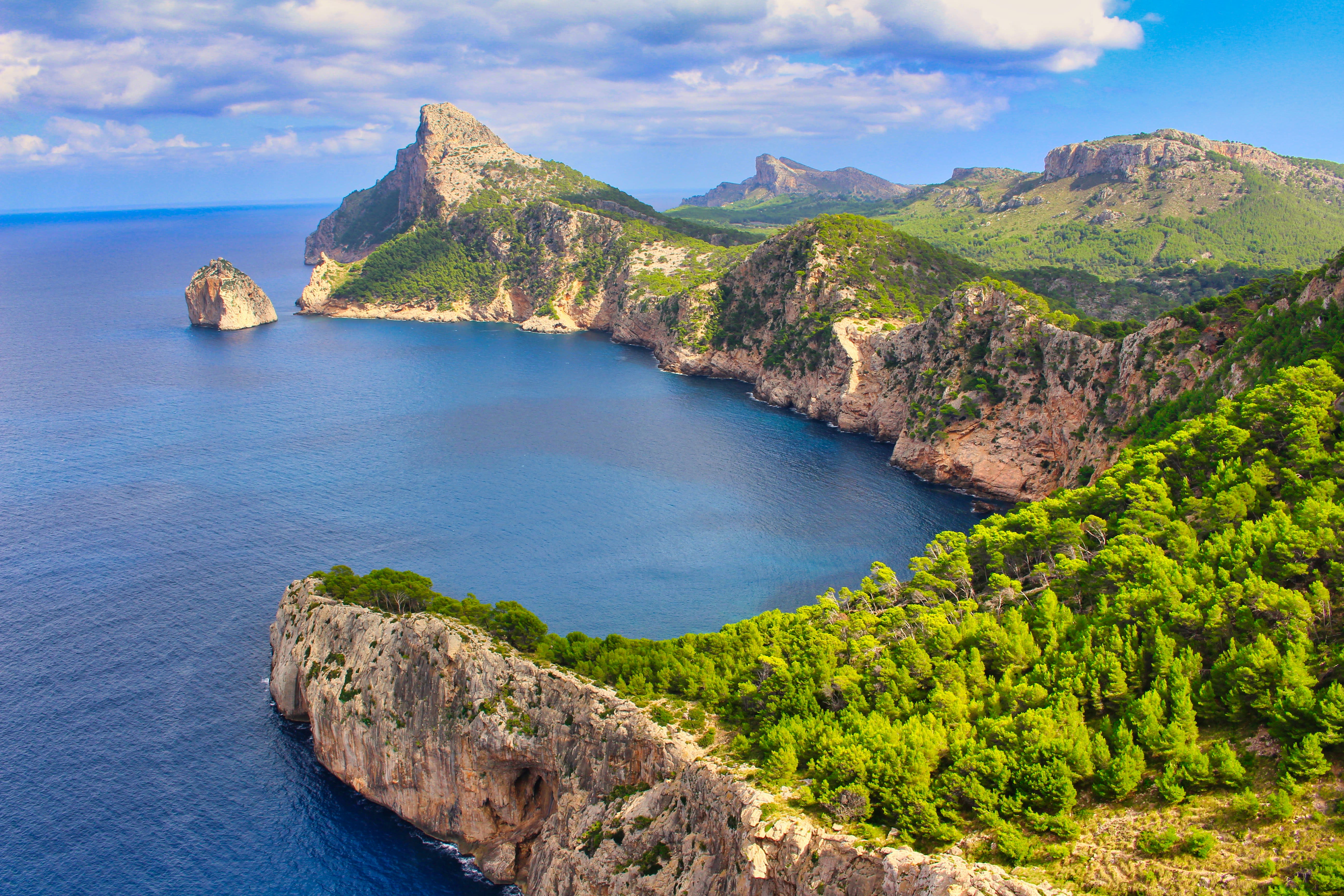
Madrid's central location makes it a convenient launchpad for exploring other parts of Spain.
Barcelona (2.5-hour train): Fiercely Catalan in identity, this city’s cultural pride shows up in the language, its soccer club, and a food scene that’s more seafood-centric and shaped by the Mediterranean coast. Balance visits to landmarks like Gaudí’s surrealist masterpieces and the Gothic Quarter with downtime at Barceloneta beach and late nights bar hopping.
Seville (2.5-hour train): Andalusia’s cultural heart is home to the Alcázar, the oldest royal palace in Europe still in active use, and a 15th-century cathedral considered the largest Gothic structure in the world. Moorish architecture and orange-tree-lined plazas give the city its character, flamenco in intimate tablaos is the evening's main event, and the Triana neighborhood—historically home to flamenco artists, bullfighters, and ceramics craftsmen—is the city's most characterful spot for tapas and late nights.
Marbella (3-hour train or drive): The Costa del Sol’s most glamorous address has two distinct faces: a beautifully preserved whitewashed old town, where narrow streets open onto flower-filled plazas, and the gleaming marina at Puerto Banús, anchored by beach clubs and superyachts. It's the kind of place Madrid residents escape to for long weekends.
San Sebastián (5-hour train or 1-hour flight): One of Europe’s great food cities—with the Michelin-star density to match—hugs the stunning Bay of Biscay. Its pintxos bar culture is the main draw, and it pays to plan out your nightly crawl to ensure you have a plan of attack for sampling both classics like Gildas (olive, anchovy, and pepper skewers) and buñuelos de bacalao (cod fritters) and more contemporary riffs—all which you can wash down with txakoli, a local effervescent white wine.
Balearic Islands (1–2 hour flight): Each of the four islands has its own personality and merits. Mallorca delivers a dramatic coastline and thriving food scene; Ibiza offers world-class nightlife and wellness resorts; Menorca is the most naturally beautiful; and Formentera is the most serene.
If not Madrid…
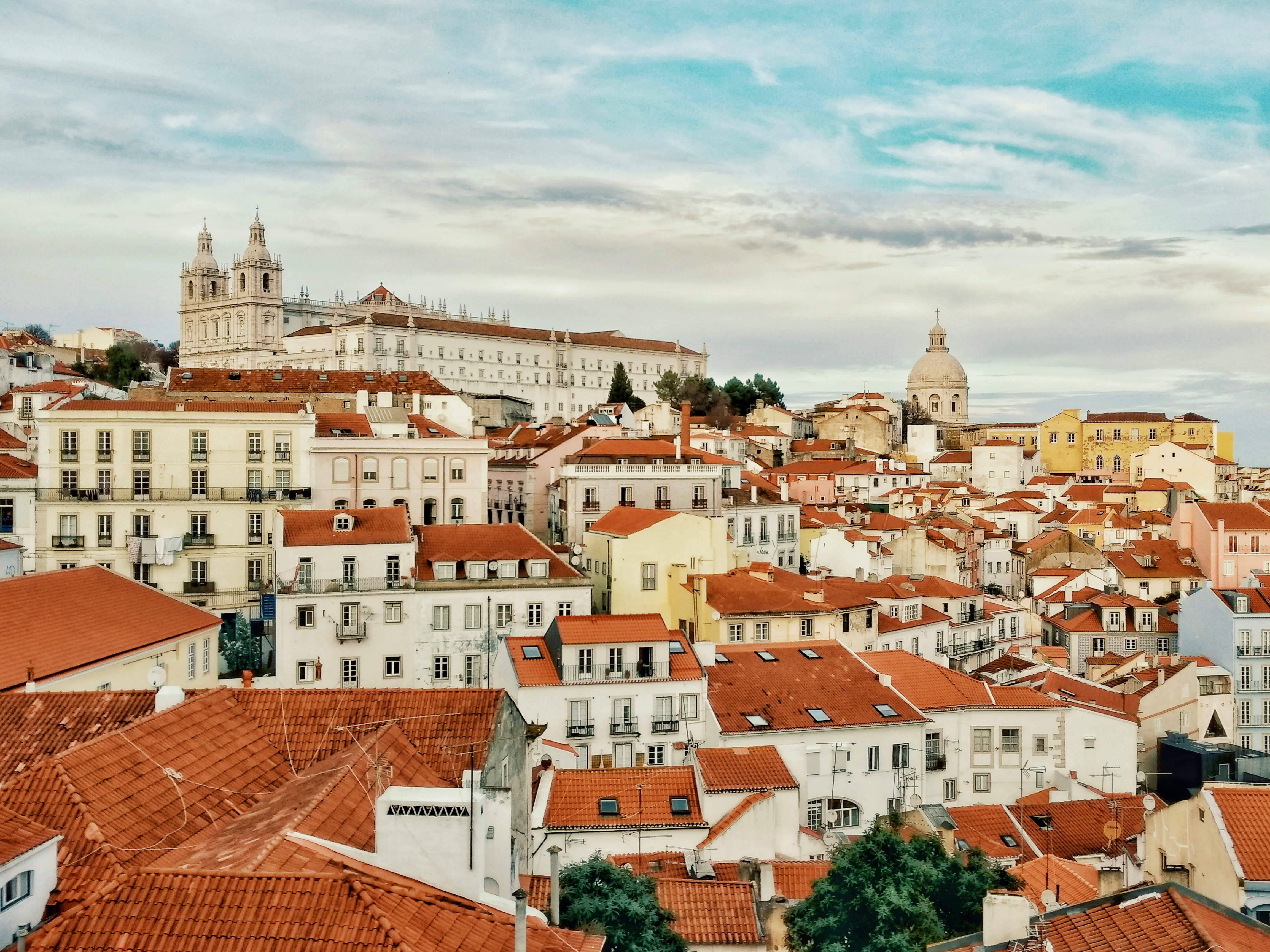
These cities share Madrid’s passion for late nights, great food, and a cultural life that spills out onto the streets.
Milan: The Brera district’s galleries, the La Scala opera house, and the Navigli canal neighborhood’s aperitivo scene capture what Milan does best: design, art, and a uniquely Italian sophistication that runs from the dinner table to the runway. Book Leonardo da Vinci’s “The Last Supper” well in advance.
Mexico City: Home to world-class restaurants, contemporary art museums, and a street food culture that rivals anywhere on earth, CDMX has the culinary and nightlife ambitions to match Madrid, and its hotel scene is only getting better.
Cartagena, Colombia: The historic walled city on the Caribbean coast trades Madrid’s urban intensity for something slower and more sensory: pastel façades, bougainvillea-draped balconies, seafood by the water, and evenings that drift from plazas to rooftop bars.
Buenos Aires, Argentina: Buenos Aires shares Madrid’s appetite for late nights, great food, and passionate football—just swap flamenco for tango and rioja for Malbec. The grand boulevards, ornate architecture, and legendary café scene feel distinctly European, but the energy behind it all is South American.
Lisbon, Portugal: The Portuguese capital moves at a similar pace, takes food and nightlife equally seriously, and has its own deeply embedded café scene. Fado music, pastéis de nata, and a vintage tram system make wandering its dramatic hills part of the pleasure.