



Curator’s statement
Most travelers treat Arequipa as a footnote on the way to somewhere else—if they visit at all. That’s a mistake. Peru’s White City, built from pale volcanic sillar stone and flanked by three towering volcanoes the locals call guardians, has a depth that surprised us at every turn: a culinary scene that rivals Lima’s ambition in a fraction of the space, centuries-old monasteries with stories stranger than fiction, and two traditional markets that reveal more about Peruvian food culture than any restaurant menu ever could. We spent two full days here before boarding the Belmond Andean Explorer, and those days turned out to be among the richest of our entire 17-day trip. Arequipa also sits at roughly 7,600 feet—high enough to begin acclimatizing for the extreme altitudes ahead, but comfortable enough to enjoy every moment on the ground.
The Fora Difference
Book with Nomadtique to access exclusive perks and experiences on your trip.

Killer perks
Free upgrades, spa credits and more—we got you

Personalized recs
Customized travel planning for your style

Insider knowledge
Expert advice from people who’ve actually been there
Where to stay in Arequipa
Unlock perks by contacting Nomadtique to book your trip.
Things to do in Arequipa
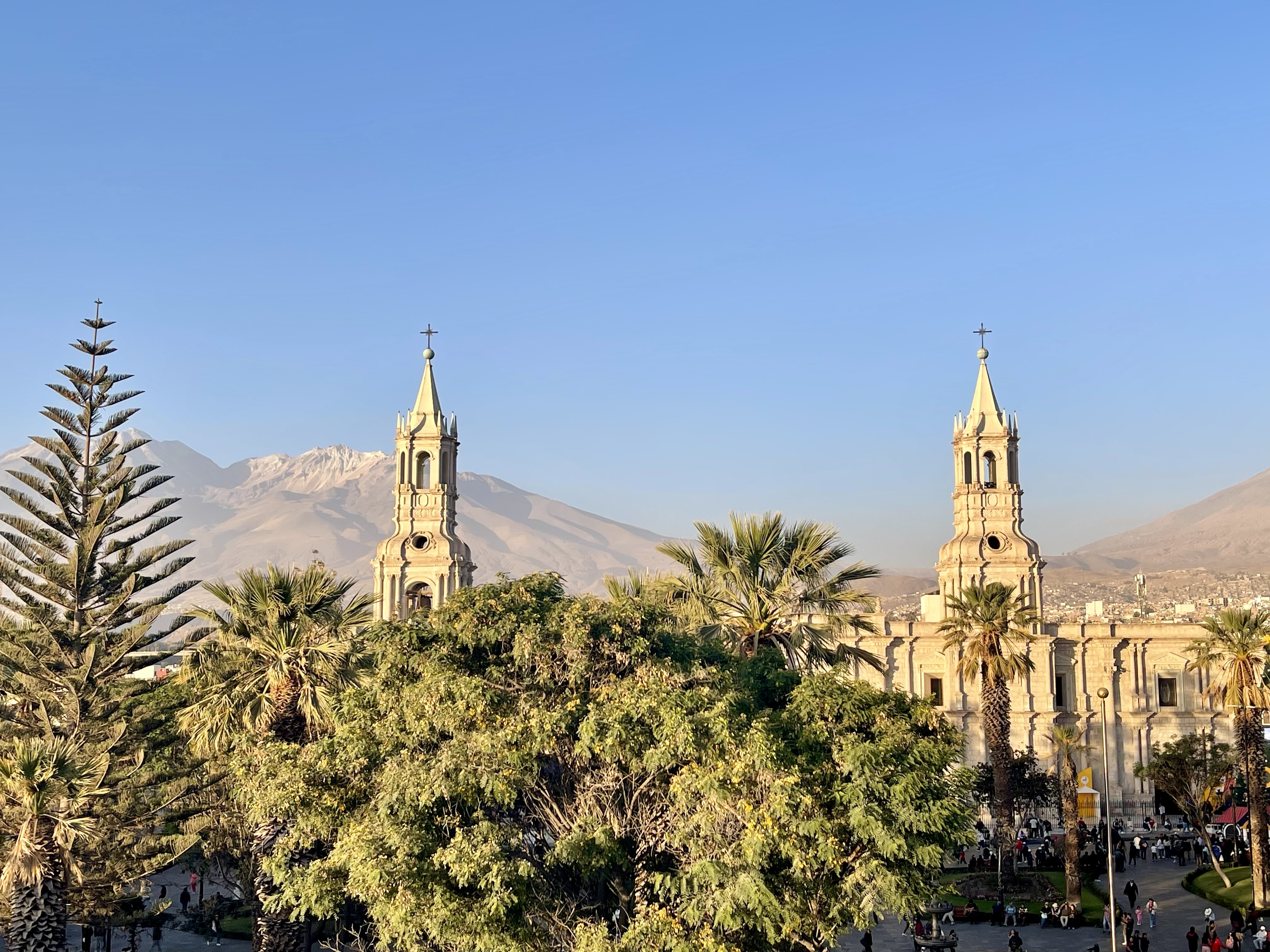
Photo by Summer Hartley
Monastery of Santa Catalina
This 16th-century cloistered convent is one of the most extraordinary historic sites in Peru. The guided tour walks you through how the nuns were chosen to enter the order, where and how they lived within its colorful, maze-like corridors, and how they practiced their faith in near-total seclusion from the outside world. The most unusual detail: the preserved heart of a cardinal who maintained a close relationship with one of the nuns, displayed in a small box within the monastery. It’s the kind of story you wouldn’t believe if you weren’t standing in front of it. Allow at least 90 minutes for the full tour.
Basilica Cathedral of Arequipa
Fronting the Plaza de Armas, the Basilica Cathedral is one of the most striking religious buildings in southern Peru. Its broad neoclassical facade stretches the entire length of the plaza, and the interior houses a Belgian organ, elegant stonework, and a museum of religious art. A guided tour provides context on the cathedral’s history, including its multiple reconstructions following earthquakes—a reminder that Arequipa sits in one of the most seismically active regions on the continent.
Colca Canyon full-day excursion
This is one of the most rewarding day trips in Peru, though it demands an early start—departure is around five in the morning, and you won’t return until roughly six in the evening. The drive from Arequipa is about four hours each way and crosses a mountain pass at 16,000 feet, where our driver stopped so we could take in the panoramic views and sip coca tea to help with acclimatization. The highlight is the Mirador Cruz del Cóndor near Cabanaconde, where wild Andean condors soar on thermal currents just below the canyon rim—sometimes close enough that you can hear the wind through their feathers. We also visited the natural hot springs at Colca Lodge and Spa along the Colca River, which were a welcome reward after the altitude and the long drive. For travelers planning to ride the Andean Explorer or visit higher-elevation sites, this excursion doubles as strategic altitude preparation.
Mercado San Camilo
Arequipa’s historic central market is a sensory experience. Stalls overflow with fresh local produce, artisanal cheeses, breads, spices, and handmade goods. What struck us most was the staggering variety of potatoes on display—Peru is home to over 4,000 native varieties, primarily grown in the Andean highlands, and seeing dozens of shapes, colors, and sizes piled side by side makes that statistic feel real. The market also has excellent fresh juice vendors, and it’s a genuine window into daily Arequipeño life rather than a tourist attraction.
Mercado Central
Located near the Plaza de Armas alongside Mercado San Camilo, the Mercado Central offers a similarly authentic experience with fresh produce, souvenirs, and local food vendors. Visiting both markets gives you a fuller picture of Arequipa’s food culture and the role these traditional markets play in the daily rhythm of the city. Between the two, you’ll find everything from exotic fruits to prepared dishes to handcrafted goods.
Silver & alpaca shopping district
The city blocks behind the Plaza de Armas, stretching toward the Monastery of Santa Catalina, form Arequipa’s main shopping district. You’ll find excellent silver jewelry and fine alpaca clothing alongside restaurants and bars. While it’s a well-known tourist area, it’s also frequented by locals, giving it a more grounded atmosphere than typical souvenir districts. Take your time here—the alpaca goods in Arequipa are often higher quality and better priced than what you’ll find in Cusco.
Walking the Plaza de Armas & the White City
Arequipa’s main plaza is one of the most beautiful in Peru—flanked by the cathedral and colonial arcades, and framed by the snow-capped cone of Misti volcano. The city’s whitewashed sillar stone architecture gives it a luminous quality, especially in the late afternoon light. Beyond the plaza, the surrounding streets are filled with old monasteries, gardens, and colonial courtyards. The three volcanoes that ring the city—Misti, Chachani, and Pichu Pichu—are known as the guardians of Arequipa. In the indigenous Andean tradition, the volcanoes and Pachamama (Mother Earth) are revered, and this spiritual relationship with the landscape adds a layer of meaning to the views that follow you everywhere.
Places to eat & drink in Arequipa
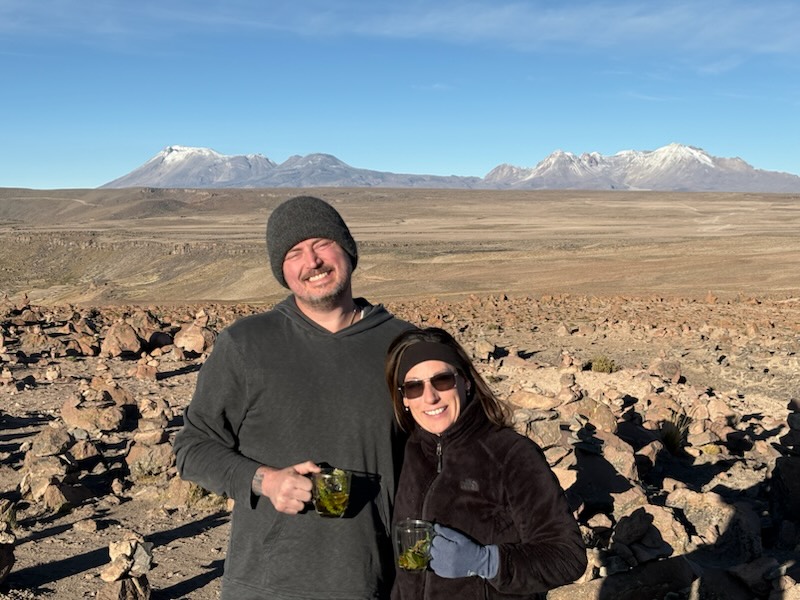
Photo by Summer Hartley
Chicha por Gaston Acurio
Gaston Acurio’s Arequipa outpost is the flagship dining experience in the city, serving regional Peruvian cuisine rooted in local ingredients and traditional preparations. The menu showcases Arequipeño specialties alongside Acurio’s signature modern touch. It’s a meal that makes clear Arequipa has a culinary identity entirely its own, distinct from Lima’s coastal flavors and Cusco’s more tourist-oriented dining scene. Reservations recommended.
Katari Hotel Rooftop Restaurant
Even if you’re not staying at the Katari, the rooftop restaurant is worth a visit. Positioned directly on the Plaza de Armas, it offers panoramic views of the volcanoes and the plaza below. We had the ceviche sampler here, and it was the best we tasted on our entire 15-day trip through Peru—a bold claim in a country where ceviche is practically a national sport. The combination of the food, the setting, and the late-afternoon light over the volcanoes made this one of our most memorable meals.
Dimas Restaurante
Dimas serves delicious local trout—an interesting contrast, eating fresh seafood in the arid volcanic landscape of Arequipa. But the coast isn’t far, and both river trout and ocean-caught fish are regional specialties. The restaurant has a warm, local feel, and the quality of the fish speaks to how seriously Arequipa takes its food.
Doña Julia at Mercado San Camilo
Tucked inside the historic market, Doña Julia is known for having one of the widest selections of fresh fruit juices in Arequipa—up to 19 individual fruit types and custom made-to-order combinations. It’s the kind of stop that transforms a market visit from browsing into an experience. Order something you’ve never tried; the vendors know their fruit and will guide you toward combinations that work.
La Ibérica
This beloved Peruvian chocolatier had a location right next door to our hotel, and we were glad it did. La Ibérica has been producing chocolate and confections since 1909, and their Arequipa shops carry a range of truffles, bars, and chocolate-covered treats that make for excellent gifts or personal indulgence. It’s a local institution with good reason.
Sweet Memories — Pastry, Bakery & Coffee
Just a few blocks from the Plaza de Armas, Sweet Memories became our go-to morning stop. The coffee is fresh and well-prepared, and the baked goods—especially the croissants—were the best we found in Arequipa. It’s a small, welcoming spot that’s easy to miss but worth seeking out if you need a strong start to the day before heading to the markets or the monastery.
Sipping coca tea
We enjoyed our sweet coca tea at altitude. Almost all Arequipa hotels provide coca tea complimentary in the lobby to help guest acclimatize to the altitude.
Need to know
Altitude & acclimatization
Arequipa sits at approximately 7,600 feet—high enough that some travelers may notice mild effects, but comfortable for most people arriving from sea level. If your Peru itinerary includes higher-elevation experiences like the Belmond Andean Explorer (which crosses 16,000 feet twice), the Sacred Valley, or any trekking, spending two to three days in Arequipa beforehand is one of the smartest logistical decisions you can make. The Colca Canyon day trip, which reaches 16,000 feet at the pass, serves as an additional acclimatization opportunity before moving on. Coca tea is widely available and genuinely helpful. We would strongly recommend consulting a physician about prophylactic altitude medication before the trip.
Getting around
Arequipa’s historic center is very walkable. The Plaza de Armas, cathedral, Monastery of Santa Catalina, both markets, and the main shopping and dining district are all within comfortable walking distance of one another. For the Colca Canyon excursion, a guided day tour with a private driver is the standard approach—the roads are mountain switchbacks at altitude, and having someone who knows the route is well worth it.
The volcanoes
Peru is home to over 400 volcanoes, and three of the most iconic—Misti, Chachani, and Pichu Pichu—frame Arequipa’s skyline. In the indigenous Andean tradition, these mountains are considered guardians of the city, and the Peruvian relationship with the volcanoes and with Pachamama (Mother Earth) adds a spiritual dimension to the landscape that feels palpable when you’re there. The views are especially striking from the Katari Hotel rooftop and from the Plaza de Armas at sunset.
Why most itineraries get Arequipa wrong
The majority of Peru itineraries either skip Arequipa entirely or treat it as a single overnight. Having spent two full days here, we believe that’s a missed opportunity. The city’s colonial architecture, food scene, and proximity to Colca Canyon make it a compelling destination in its own right—not a stopover. It also serves a practical purpose as altitude preparation for the higher elevations ahead. Two full days is the right amount of time: enough to see the monastery, the cathedral, both markets, and the Colca Canyon, while still leaving room for unhurried meals and evening walks around the plaza.


Travel Advisor
Nomadtique


Summer Hartley

Get in touch with Nomadtique
Did you like this guide? Reach out to customize and book your own experience. Or, just to chat about travel in general.
For more inspiration and insider recommendations, visit our Peru page.