
Curator’s statement
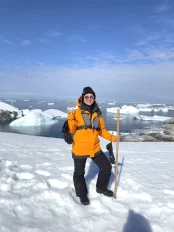
As a frequent solo traveler, I boarded the Seabourn Venture in December 2024 expecting two things: to set foot on my seventh continent, and to spend much of 11 days happily alone with the penguins and my book. The first expectation was spectacularly met. The second was not, and I couldn't be more grateful for it. Through a series of thoughtful, intentional touches, Seabourn went out of its way to help solo travelers find each other, and I came home not just with memories of one of the most stunning places on Earth, but also with a group of genuine friends I've since seen again on multiple continents. Seabourn operates two purpose-built expedition ships—the Venture and the nearly identical Pursuit—and both sail to Antarctica, so whichever vessel you end up on, you can expect the same exceptional experience.
The Fora Difference
Book with Wenli Plans Travel to access exclusive perks and experiences on your trip.

Killer perks
Free upgrades, spa credits and more—we got you

Personalized recs
Customized travel planning for your style

Insider knowledge
Expert advice from people who’ve actually been there
Where to stay
Unlock perks by contacting Wenli Plans Travel to book your trip.
Things to do on a Seabourn cruise
Solo traveler connections
This deserves to be first on the list, because it's what sets a Seabourn Antarctica expedition apart for anyone traveling alone. When I arrived in my cabin, a printed card was waiting for me with an invitation to a Solo Traveler's Get Together that evening in one of the ship's lounges. Every night after that, another beautifully printed card arrived inviting me to a hosted dinner at a reserved table in one of the ship’s restaurants, hosted by a member of the expedition staff. These dinners were entirely optional, kept to small groups of six to 12 people (mostly solo travelers, occasionally with one couple mixed in), and had place cards to ensure you weren't just clustering with people you already knew. Some tables clicked more than others, but I met several people early on who I ended up spending the rest of the voyage with—grabbing meals, sharing Zodiac rides, and staying up too late in the lounge. There's something uniquely powerful about being on a ship together: You keep running into the same people, which naturally deepens connection. But Seabourn made sure solo travelers got over the initial hurdle of actually meeting each other in the first place.
Zodiac landings & excursions
Every expedition day was scheduled to have at least one Zodiac landing on shore (which mostly did happen according to schedule, though occasionally a landing would be canceled due to weather because safety first), where you'd step out onto Antarctic soil and walk among the wildlife and landscapes at close range.
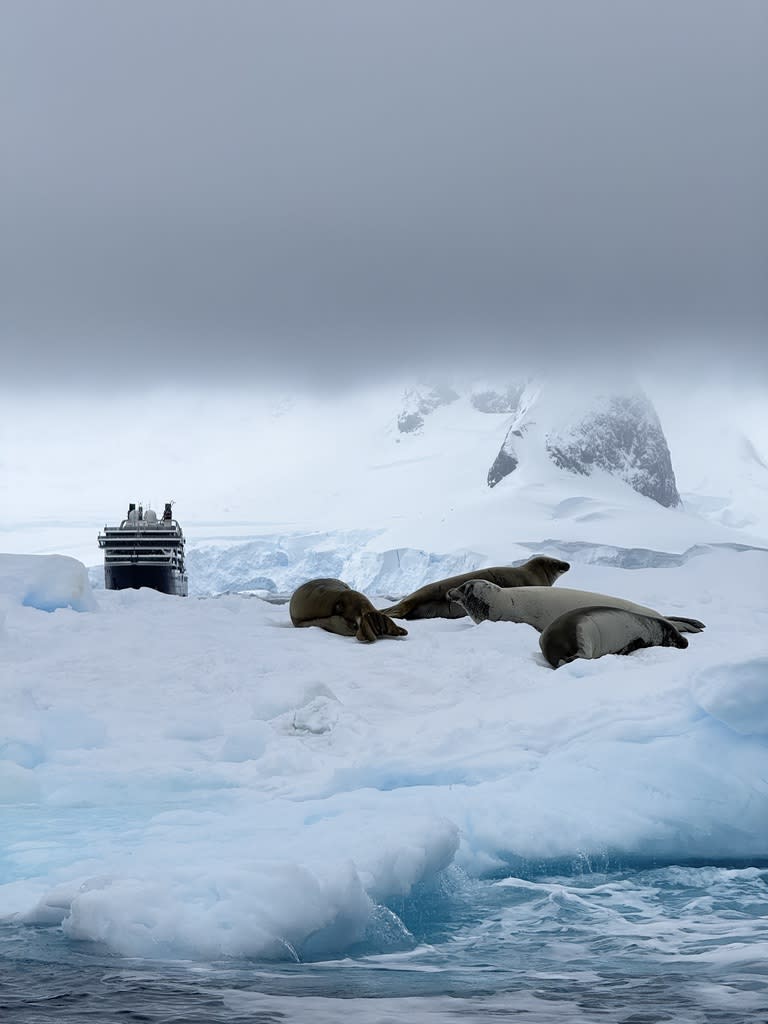
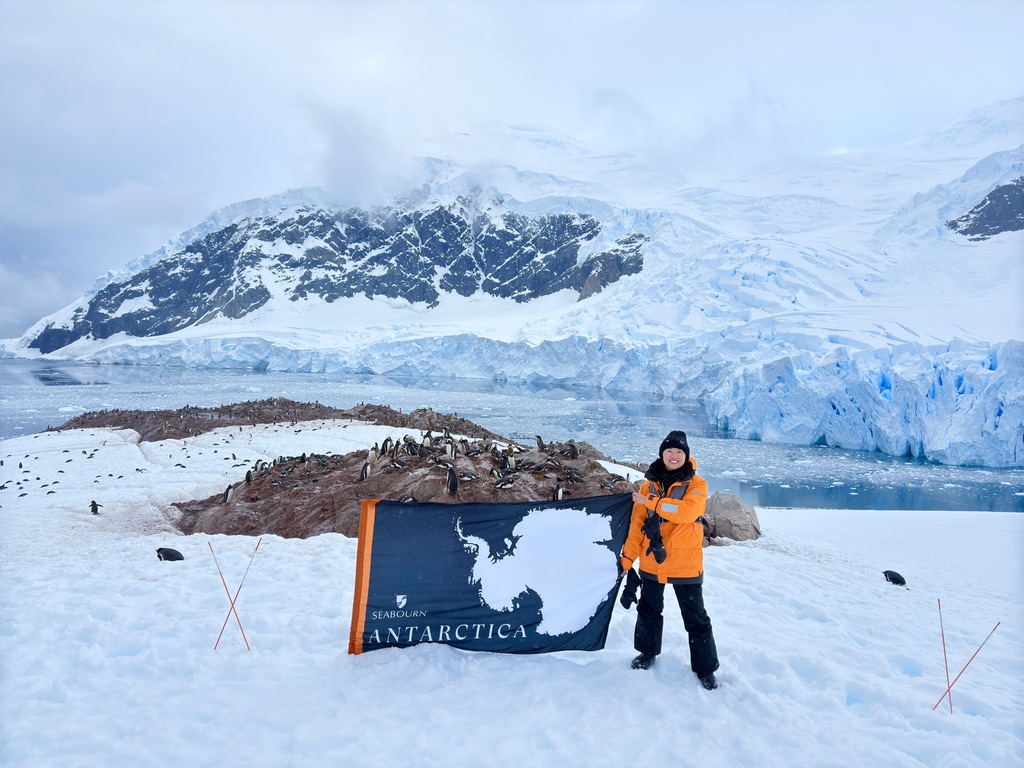
Penguins (Adelie, chinstrap, and gentoo) were everywhere, waddling to and fro along their “penguin highways,” utterly indifferent to human presence in the most magical way. On Zodiac cruises out on the water, we wove between icebergs and scanned the ice floes for wildlife: Weddell seals, crabeater seals, and, in one unforgettable close-up encounter, a leopard seal stretched out and watching us with that prehistoric calm of theirs. Whales surfaced regularly. Every outing felt like a different film. Kayaking was also available as an add-on excursion (I signed up, though my session was canceled due to weather, a reminder that Antarctica schedules are always subject to the continent's whims), and the friends who did paddle came back absolutely glowing about the experience.
Daily expedition briefings
Each evening, the expedition team gathered passengers for a recap of the day and a preview of what was coming next: landing sites, terrain, what wildlife to look for, what to wear. These sessions gave the trip a satisfying rhythm and helped you go ashore the following day actually knowing what you were looking at. They also created a natural social gathering point each evening, drinks in hand, before dinner.
Lectures & education
On sea days, and on any day when weather prevented excursions, the expedition staff (many of them working scientists with PhDs) gave lectures covering an impressive range of subjects: the history of famous Antarctic explorers, the geology and paleobotany of a continent that was once green, penguin biology, whale behavior, seabirds, geopolitics of the Antarctic Treaty, and even a session on Antarctica and poetry. One standout was a presentation by the ship's photographer on leopard seals, paired with photography tips. These weren't obligatory enrichment programming; they were genuinely fascinating, and the kind of thing you'd find yourself talking about at dinner.
Socializing & evening entertainment
Beyond the structured solo traveler events, the ship offered plenty of casual ways to pass the time and meet people: trivia nights, happy hours, and low-key evening entertainment from the ship's musician and the cruise director. A few times, the ship hosted movie screenings, either a documentary or a film with an Antarctic connection, complete with popcorn. On a voyage where the days are full and the scenery is overwhelming, it was nice to have evenings that felt relaxed and and at your own pace rather than programmed.
Places to eat & drink on a Seabourn cruise
Seabourn Venture (and its sister ship, the Pursuit) offers a range of dining options that punches well above what you'd expect on an expedition cruise, and it's all included.
Seabourn Square
The casual daytime hub of the ship, serving coffee, gelato, pastries, light sandwiches, and other snacks throughout the day. My new friends quickly established a daily ritual of swinging through in the afternoon for an affogato made with whatever flavor of gelato was on offer that day.
The Restaurant
The main formal dining room, open for multi-course tasting menus or à la carte ordering from a rotating selection of around seven appetizers, seven mains, and multiple desserts. There was always a gelato course, and almost always a freshly made soufflé. Unhurried, beautifully presented, and genuinely delicious.
The Colonnade
A more casual all-day option: buffet-style breakfast and lunch, with dinner ordered from a short menu. Lunches rotated through themed spreads (French one day, Spanish the next, Mediterranean the following, never repeated so there was constant variety) while keeping reliable standbys like pizza and a classics menu. Dinner here offered a smaller selection (three appetizers, three mains, dessert) but the relaxed atmosphere made it a nice change of pace from a full multi-course evening.
Sushi in The Club
Every night from 6 to 9 pm, the ship's lounge served a selection of sashimi, nigiri, and rolls. Sometimes you just want a casual plate of excellent sushi rather than a three-hour tasting menu, and this hit the spot perfectly. It became a favorite pre-dinner or standalone option for me and several of my fellow solo travelers.
In-suite dining
Available 24 hours a day. No further justification required.
The caviar secret
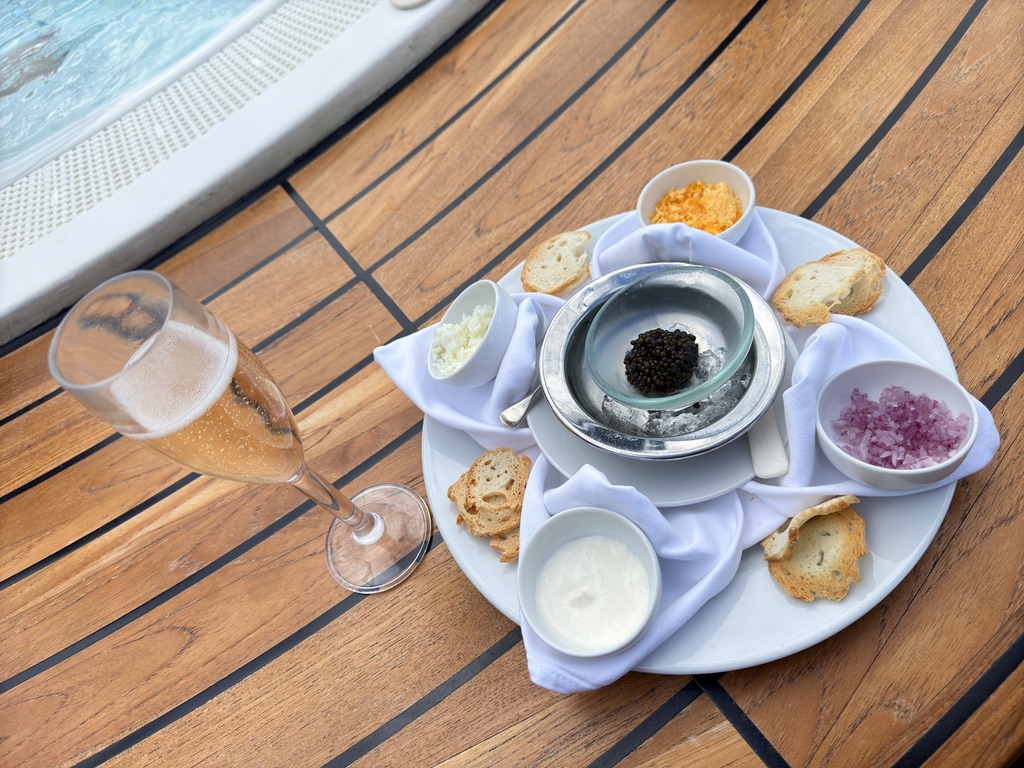
Seabourn doesn't exactly advertise this, but it's an open secret among those in the know: You can order caviar at any time, to anywhere on the ship, whether that's a lounge, a deck, your cabin, or, yes, one of the outdoor hot tubs. It arrives plated individually, with crackers, diced onion, sour cream, and all the trimmings. Order it with champagne. Again, it’s all included.
Need to know
Travel insurance
Travel insurance is strongly recommended for any Antarctica expedition cruise. These are significant investments, you are extremely far from medical infrastructure, and evacuation costs can be staggering. Some cruise lines require proof of insurance before you board. Additionally, as of July 2025, Argentina (where most Antarctic expedition cruises depart from) requires all foreign visitors to carry travel health insurance covering medical emergencies, hospitalization, and repatriation, and may ask for proof at the border. Check your policy carefully against Argentina's specific requirements before you travel.
The Drake Passage
The 600-mile stretch of open ocean between Argentina and Antarctica has a reputation, and it's earned. Waves can reach 40 feet in rough conditions (the "Drake Shake"), though you're just as likely to get the glassy, calm version known as the "Drake Lake." I got lucky both ways, with only a gentle rolling on a couple of nights. That said, I came prepared for the worst, and I'd encourage you to do the same. I had scopolamine patches (the prescription behind-the-ear kind, obtained from a travel doctor before departure), acupressure wristbands, an electronic vibrating pressure-point band, and Dramamine, a full arsenal. I ended up relying mostly on the scopolamine patches, which worked beautifully, though they do make your mouth quite dry. A few fellow passengers mentioned feeling queasy; I had zero issues. Whatever remedies you choose to bring, the key is to start them before you set sail, as almost all motion sickness treatments are significantly more effective as a preventative measure than once you're already feeling the effects. You can always remove a patch or skip a dose if the crossing turns out to be smooth, but it’s hard to get un-seasick.
What to pack (and what to leave behind)
Antarctica in December is not as brutal as you might imagine, as it’s their summer. Temperatures hovered in the low- to mid-30s°F during my trip, often with clear, sunny skies, and sunset wasn’t until almost midnight (with sunrise starting a few hours later).
Before you overpack, know that Seabourn provides quite a bit: Each guest receives a parka (a two-piece system with a waterproof outer shell and a lightweight down inner jacket), a beanie, and a waterproof roll-top backpack, all of which are yours to keep. They also provide the boots you'll wear on Zodiac rides and shore landings, so the only footwear you need to bring is what you'll wear around the ship, for which something comfortable like sneakers is perfectly fine.
For your own layers, focus on base and mid: moisture-wicking base layers (fleece-lined leggings and merino wool tops work well) and a warm mid-layer of fleece and down to wear under the provided parka. A few additional items I'd strongly recommend: alpine sunglasses with side and top shields, because the sun reflecting off snow and ice hits you from every angle and wraparound protection makes a real difference (plus, they look super cool! I wore the Sunski Teras and got constant compliments); high-SPF face sunscreen for the same reason; and a phone lanyard so you can hang your phone from around your neck, especially helpful on Zodiac rides where things can get bumpy and dropping your phone into the Southern Ocean is bad for both you and the environment.

Travel Advisor
Wenli Plans Travel


Wenli Cai

Get in touch with Wenli Plans Travel
Did you like this guide? Reach out to customize and book your own experience. Or, just to chat about travel in general.
For more inspiration and insider recommendations, visit our Antarctica page.