


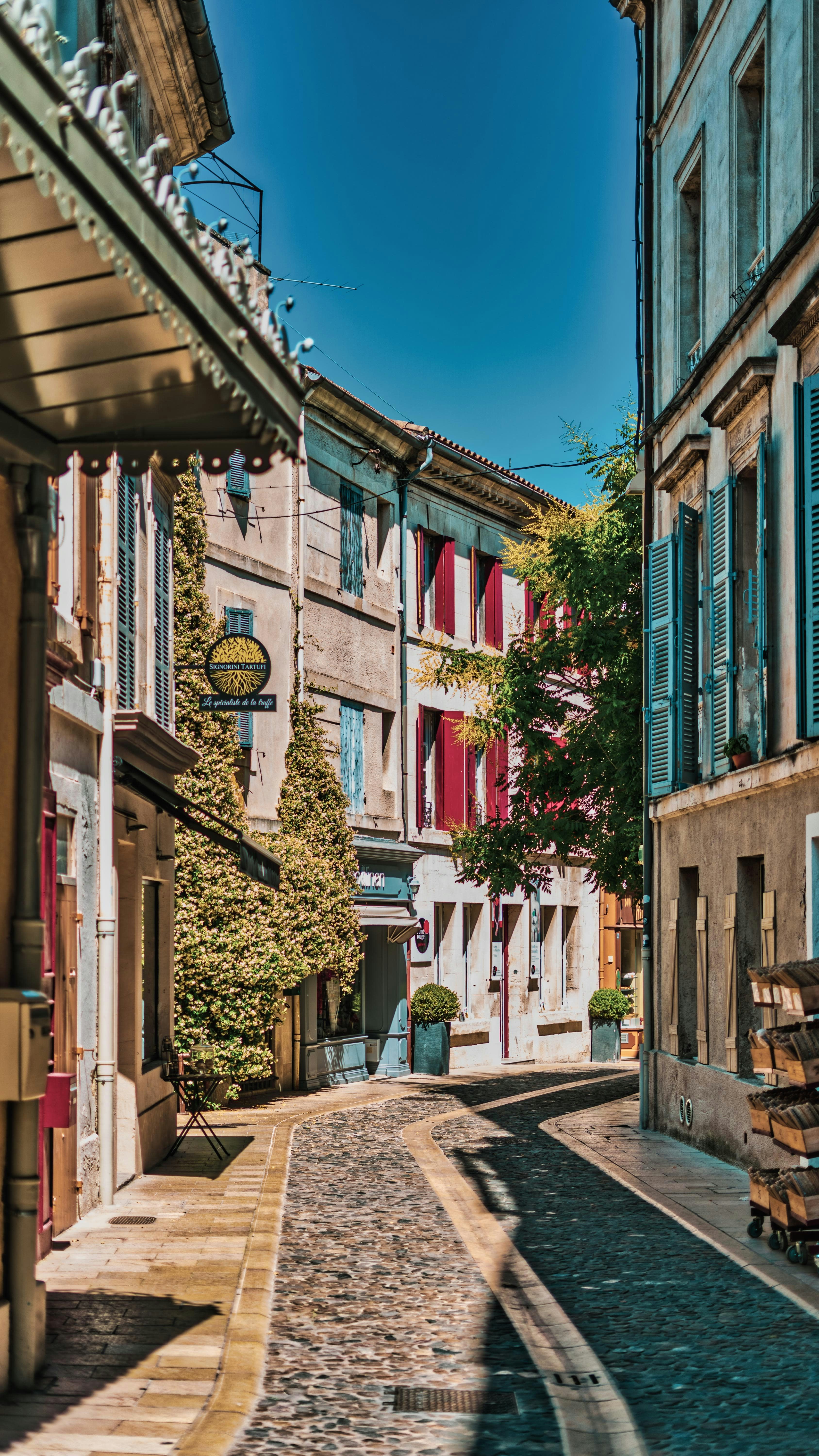
Curator’s statement
My husband is from Provence, and his roots have given me a different kind of access to this region—one measured not in sights ticked off but in market mornings, long lunches that stretch into dusk, and the particular quality of light that turns limestone gold at six in the evening. I got married in Gordes, which means this corner of France holds something more than travel memories for me. What keeps drawing me back is that Provence rewards slowness in a way few places do: the villages are best understood on foot, the food is best eaten unhurried, and the landscape—lavender, olive groves, white rock—reveals itself gradually, village by village.
The Fora Difference
Book with Alina Morand to access exclusive perks and experiences on your trip.

Killer perks
Free upgrades, spa credits and more—we got you

Personalized recs
Customized travel planning for your style

Insider knowledge
Expert advice from people who’ve actually been there
Where to stay in Provence
Unlock perks by contacting Alina Morand to book your trip.
Things to do in Provence
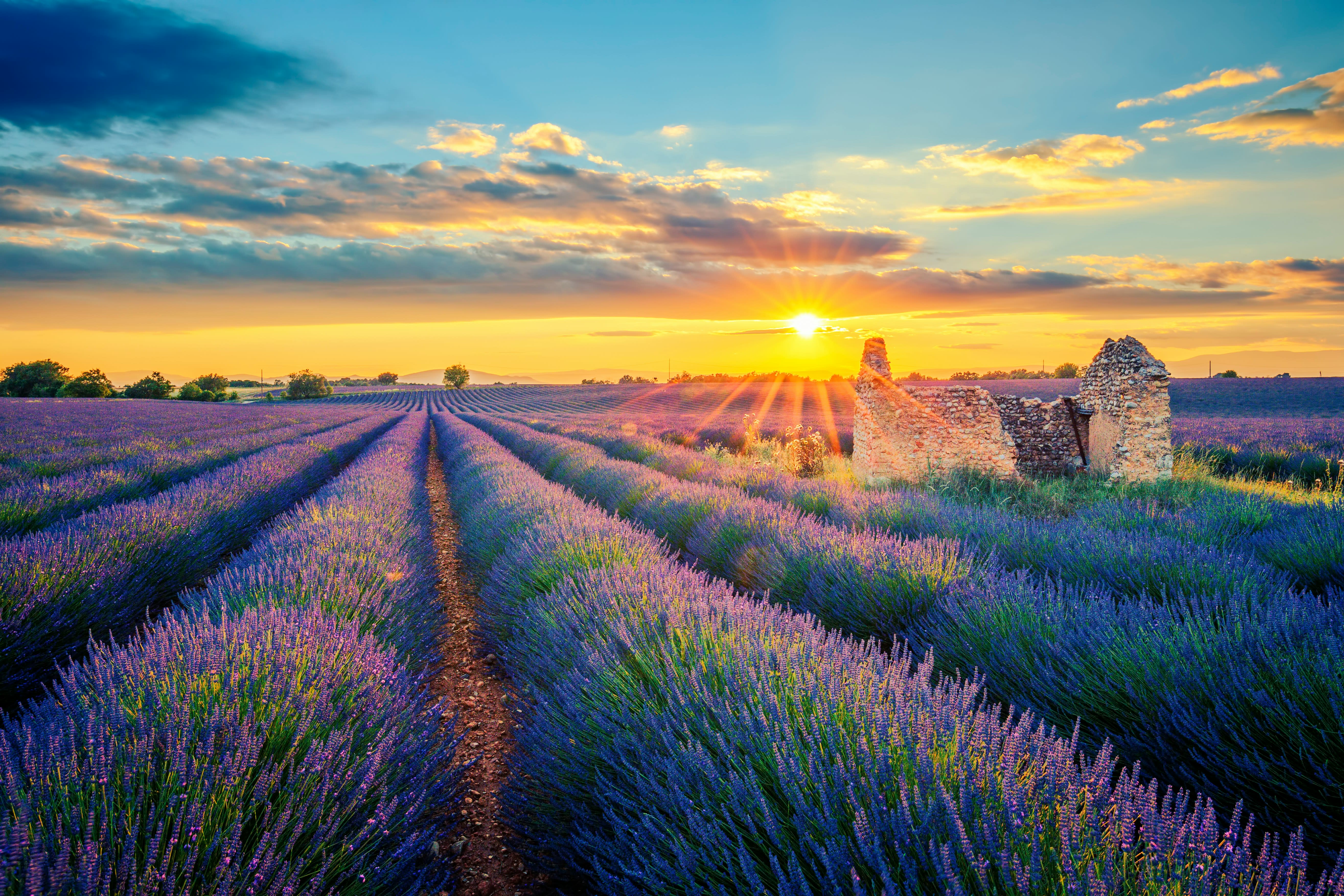
The approach into Gordes: Before you even arrive, Gordes delivers one of the great theatrical moments in French travel: the view as you come over the ridge on the D15 from Cavaillon, and the whole village appears, stacked improbably on its limestone spur above the Luberon valley. Pull over. Take it in slowly. This is one of those views that earns the cliché—and it looks different every time depending on the light and season.
Wander Gordes at dawn or dusk: The village earns its reputation as one of the most beautiful in France, but it earns it most fully when the tour coaches are gone. The medieval lanes, stone archways, and 16th-century château at the top of the hill have a completely different character in the early morning or golden evening hours. Linger, get lost, and find a terrace with a view of the valley below.
Abbaye de Sénanque: Three kilometers north of Gordes, this 12th-century Cistercian abbey surrounded by lavender fields is one of the most photographed scenes in France—and it lives up to the image. Come in late June or July when the lavender is in bloom and the air is thick with it. The monks still live and work here, which gives the place a contemplative stillness that the photographs cannot capture.
The Ochre Trail in Roussillon: Roussillon sits atop the largest ochre deposits in the world, and the Sentier des OOcres—ashort but extraordinary walking trail through the ccliffs—makesthat geological fact viscerally beautiful. The rock runs through every shade from pale yellow to deep rust-red, and the light in the late afternoon turns the whole landscape luminous. The village itself, painted in the same spectrum of ochre tones, is worth a slow wander before or after.
L’Isle-sur-la-Sorgue on a Sunday: This small island town on the Sorgue River is one of the best antiques markets in France—and on Sunday mornings, it transforms into a genuine event. Dealers from across the region set up along the canals and under the plane trees, selling everything from 18th-century armoires to vintage linens. Go early, take your time, and plan to stay for lunch at one of the riverside restaurants. The old water wheels still turn in the river, which gives the town its particular charm even when the market iisn’trunning.
Fontaine-de-Vaucluse: A short drive from L’Isle-sur-la-Sorgue, this village exists at the base of an enormous cliff where the Sorgue emerges from a deep underground spring—one of the most powerful resurgent springs in the world. The walk from the village to the source along the river is brief, green, and genuinely magical. In spring, the water runs turquoise and fast. In summer, it calms to something almost still. Either way, the setting is worth the detour.
Saint-Rémy-de-Provence on a Wednesday: The Wednesday market in Saint-Rémy is one of the best in Provence—not a tourist market, but a working one, with local farmers, cheese vendors, and charcuterie alongside flowers and textiles. The town itself has a chic, lived-in energy that distinguishes it from the more museum-like villages of the Luberon. Van Gogh spent a year here at the nearby Saint-Paul-de-Mausole asylum, and the Roman ruins at Glanum just outside town are among the most beautifully situated in France.
Les Baux-de-Provence and Carrières de Lumières: The cliffside village of Les Baux, with its ruined medieval fortress and sweeping views across the Alpilles, is dramatic at any hour—but come at dusk, when the day-trippers have gone and the light goes sideways across the white rock. A kilometer from the village, Carrières de Lumières is an extraordinary experience: a decommissioned quarry turned into a cathedral-scale space where monumental art projections—Klimt, Van Gogh, Cézanne — are mapped onto the stone walls and floor. It sounds gimmicky but it isn’t.
Vaison-la-Romaine: Ruins and the Medieval City: Vaison is Provence’s most underrated town, partly because it’s a bit further north and requires intention to reach. The Roman ruins here are extensive and remarkably well-preserved—forum, houses with intact mosaics, a theater still used for summer performances—and unlike Glanum, you can wander them unhurriedly without crowds. The medieval upper city, reached by crossing the Roman bridge, is a steep climb rewarded by stone lanes, an old castle, and views that explain why everyone who lived here wanted to be above the valley. Come for market day on Tuesday if you can.
Driving the back roads: The real Provence is in the connections between villages, not just in the villages themselves. Take the small departmental roads—the D roads—whenever you can instead of the N routes. Between Gordes and Roussillon, between Les Baux and Saint-Rémy, the landscape opens up into olive groves, dry-stone walls, and garrigue that smells of thyme and juniper. No agenda, no rush. This is the whole point.
Places to eat & drink in Provence
Clover Gordes by Jean-François Piège, Gordes:The restaurant at Airelles Gordes, La Bastide — known to Emily in Paris fans as L'Esprit du Luberon — is one of the great dining experiences in Provence. Michelin-starred chef Jean-François Piège brings a light, seasonal menu that leans into local Provençal ingredients without heaviness: the calamari carbonara, a signature dish in which thin squid replaces pasta, is worth the reservation alone. The terrace overlooks olive groves and the Luberon valley in a way that makes the meal feel suspended in time. Reserve as early as possible, especially in summer.
Bistro du’O and La Barjaca, Vaison-la-Romaine: At Les Maisons du'O, the panoramic bistro overlooks the Ouvèze river and the Roman ruins in a setting that's hard to beat for lunch or dinner. The chef sources locally and the menu shifts with the seasons—this is honest Provençal cooking elevated just enough. La Barjaca next door offers tapas-style Provençal plates for something more casual. Either way, the view seals the deal.
The Tuesday Market at Vaison: The weekly market in Vaison is among the most authentically local in Provence—less touristy than those in Gordes or L’Isle-sur-la-Sorgue, more genuinely regional. Tapenade, chèvre, lavender honey, saucisson, olives cured in every possible combination of herbs: this is the Provençal pantry laid out under the plane trees. Come hungry and bring a basket.
Long Lunch Anywhere with a Rosé: This isn’t a specific restaurant recommendation—it’s a travel philosophy. Provence was made for the long lunch. Find a terrace with a view, order a carafe of local rosé (Côtes du Luberon or Côtes du Rhône, both made in the vineyards you’ll drive through), and let the afternoon dissolve. The best meals here often aren’t in famous restaurants but in the kind of simple auberge you stop at because the tablecloths are red-checked and there are only six things on the menu.
Wine Estates of the Luberon and Ventoux: The vineyards between villages aren’t background scenery—they’re worth stopping for. Domaine de Fontenille in Lauris, Château La Canorgue near Bonnieux (used as a location in A Good Year), and the cooperative Cave la Romaine near Vaison all welcome visitors for tastings. Luberon rosé is exceptional and criminally underpriced compared to its Côtes de Provence neighbors.
Pastries and Coffee in Saint-Rémy: Saint-Rémy has the best café culture in this corner of Provence—the kind of town where you sit with a coffee and a croissant and genuinely have nowhere better to be. The Wednesday market brings additional energy. On other mornings, simply find whichever terrace has the most locals and order whatever they’re having.
Need to know
Who this region is for: Travelers who understand that slow travel is not a compromise but a choice. Couples who want beauty, food, wine, and the sensation of time moving differently. Anyone who has romanticized France and wants to find that reality exceeds fantasy—because in the Luberon and Alpilles, it genuinely does.
A car is non-negotiable: This region cannot be done properly without driving. The villages are small, spread across a large area, and connected by roads that are part of the experience. Rent the smallest car you can manage (parking in village centers is tight) and plan to drive slowly.
When to go: Late May through early July is the sweet spot: lavender not yet at full peak but wildflowers everywhere, heat manageable, and crowds not yet at summer maximum. Lavender blooms mid-June to mid-July—spectacular, but this is also the busiest period. September and early October bring harvest season, perfect light, and significantly fewer visitors. August is crowded and hot. The French themselves are everywhere in August, which is charming but logistically challenging.
Base yourself strategically: Gordes and Saint-Rémy make the best bases for covering the whole region—Gordes puts you in the heart of the Luberon with easy access to Roussillon, L’Isle-sur-la-Sorgue, and Fontaine-de-Vaucluse. Saint-Rémy puts you between Les Baux and the Alpilles, with Avignon an easy half-hour away. Vaison-la-Romaine is further north and worth a night on its own to do it properly.
Market days worth planning around: L’Isle-sur-la-Sorgue: Sunday (antiques and food). Saint-Rémy: Wednesday. Vaison-la-Romaine: Tuesday. Gordes: Tuesday morning. Apt (Luberon): Saturday (one of the best in the region). Arriving in a village on market morning completely changes the experience.
Booking restaurants: Clover Gordes and Baumanière both require advance reservations—for summer, book 4–6 weeks ahead at a minimum. Smaller village restaurants often don’t take online reservations. Call ahead or simply arrive and see. Don’t skip the unremarkable-looking places with handwritten menus. Some of the best meals in Provence happen in exactly those places.


Travel Advisor
Alina Morand

Alina Morand

Get in touch with Alina Morand
Did you like this guide? Reach out to customize and book your own experience. Or, just to chat about travel in general.
For more travel inspiration and insider recommendations, check out our South of France page.