




Curator’s statement
Iceland is a truly natural wonder. Its dramatic landscapes range from sprawling glaciers and powerful waterfalls to geysers, geothermal spas, active volcanoes, and a breathtaking coastline—from the towering cliffs of the Snæfellsnes Peninsula to the otherworldly black-sand beach of Reynisfjara, famously featured in Game of Thrones. And to top it all off, there is the possibility of witnessing the mesmerizing display of the Northern Lights. After many years of travel, this remains one of my most memorable travel experiences.
The Fora Difference
Book with Laurent Belamich to access exclusive perks and experiences on your trip.

Killer perks
Free upgrades, spa credits and more—we got you

Personalized recs
Customized travel planning for your style

Insider knowledge
Expert advice from people who’ve actually been there
Where to stay
Unlock perks by contacting Laurent Belamich to book your trip.
Day 1: Arrival in Reykjavík
Langjökull Glacier
Arrive at Keflavík International Airport. Depending on your arrival time, I recommend stopping at the Blue Lagoon on the way into Reykjavík. Set within a dramatic lava field, its warm, mineral-rich waters are deeply relaxing and feel especially restorative after a flight. It’s a wonderful introduction to Iceland’s geothermal energy and an ideal way to ease into the journey before continuing on to your hotel in Reykjavík.
Day 2: Exploring Reykjavík
Hallgrímskirkja Church
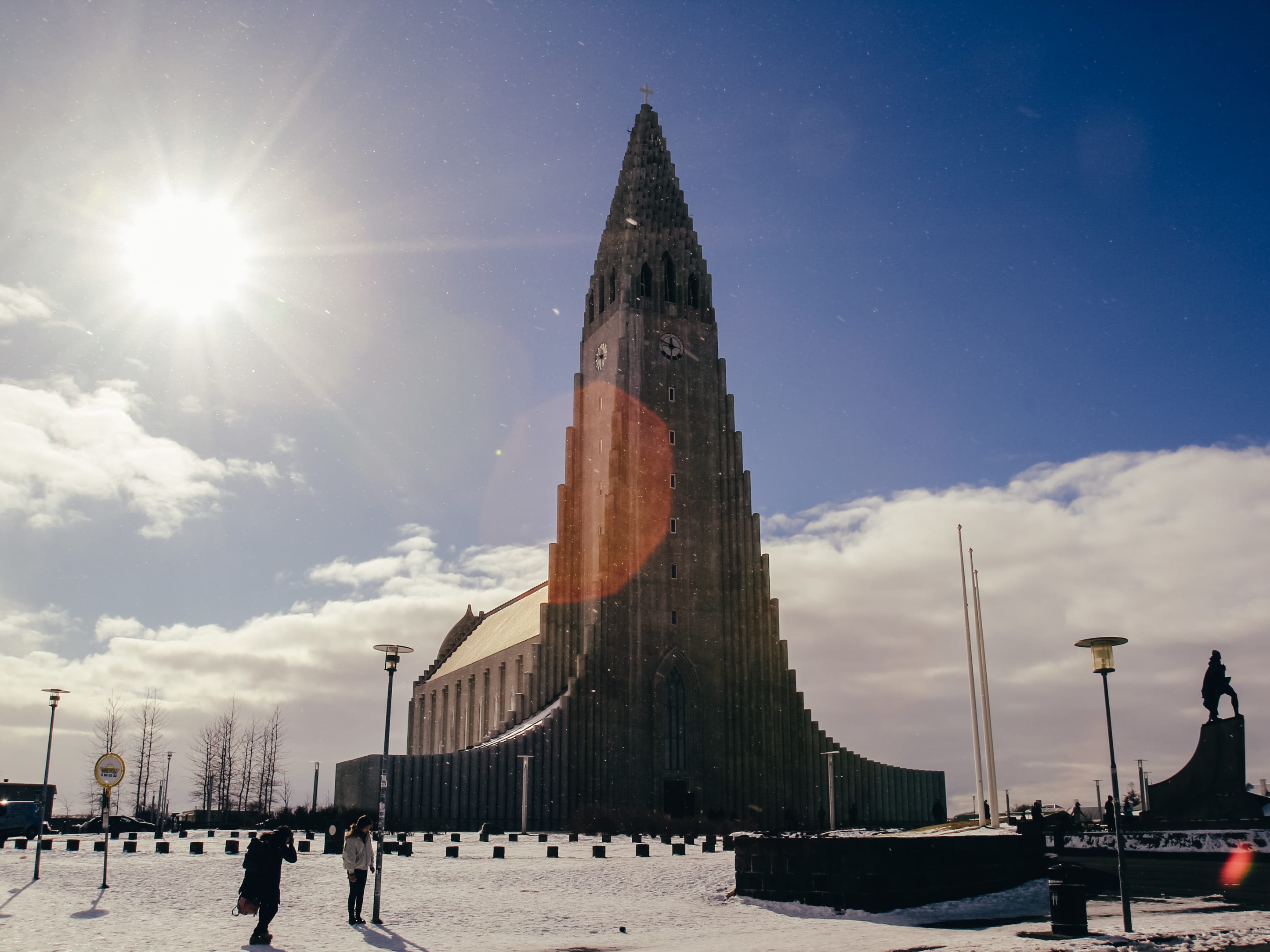
Today is dedicated to discovering Reykjavík, one of Europe’s smallest yet most characterful capitals. Begin at Hallgrímskirkja, the city’s most iconic landmark, whose striking design was inspired by Iceland’s basalt columns. Taking the lift to the top offers panoramic views across the colorful rooftops and the surrounding coastline.
From here, stroll down Skólavörðustígur, one of Reykjavík’s most pleasant streets, lined with boutiques and cafés, which leads naturally towards the waterfront. Continue on to the Harpa Concert Hall, an architectural landmark on the harbor. Its distinctive glass façade was designed in collaboration with Ólafur Elíasson, and features 714 glass “quasi-bricks” embedded with LED lights. At night, Elíasson’s permanent light and video work bring the building to life, illuminating it in constantly shifting colors and patterns that respond to the natural environment and subtly echo phenomena such as the Northern Lights.
From Harpa, walk along the shoreline towards the Sun Voyager sculpture, a striking stainless-steel artwork symbolizing discovery and the promise of new journeys. Harpa is especially magical after dark, so it’s well worth returning in the evening to experience the full effect of the illuminated façade reflecting across the water.
Continue your exploration around Reykjavík City Hall, Parliament, and Reykjavík Cathedral before visiting the Settlement Exhibition, which offers fascinating insight into the city’s Viking origins through archaeological remains found beneath the modern streets.
Finish the day wandering along Laugavegur, Reykjavík’s main shopping street, filled with independent boutiques, design stores, and relaxed restaurants—ideal for an easy dinner and a final wander through the city.
Day 3: Snæfellsnes Peninsula
Gatklettur at Arnarstapi
Not included in many itineraries, the Snæfellsnes Peninsula is absolutely not to be missed. Often described as “Iceland in miniature,” it offers an extraordinary concentration of landscapes in a single day and is one of my favorite parts of the country.
The journey begins through the scenic countryside around Borgarnes, an area closely associated with Icelandic rural heritage and the traditions of turf-house architecture. From here, continue towards the Hítará River and the distinctive green fishing lodge, a beautiful and unspoiled area famed for being one of Iceland’s most renowned salmon rivers.
The route then follows the rugged coastline, passing lesser-known waterfalls such as Svöðufoss, before arriving at Skarðsvík, a rare golden-sand beach whose warm tones create a striking contrast against the surrounding black volcanic rock. Nearby, Djúpalónssandur, also known as the Black Lava Pearl Beach, is a dramatic bay scattered with smooth black pebbles and framed by striking lava formations, offering a powerful sense of Iceland’s raw geological forces.
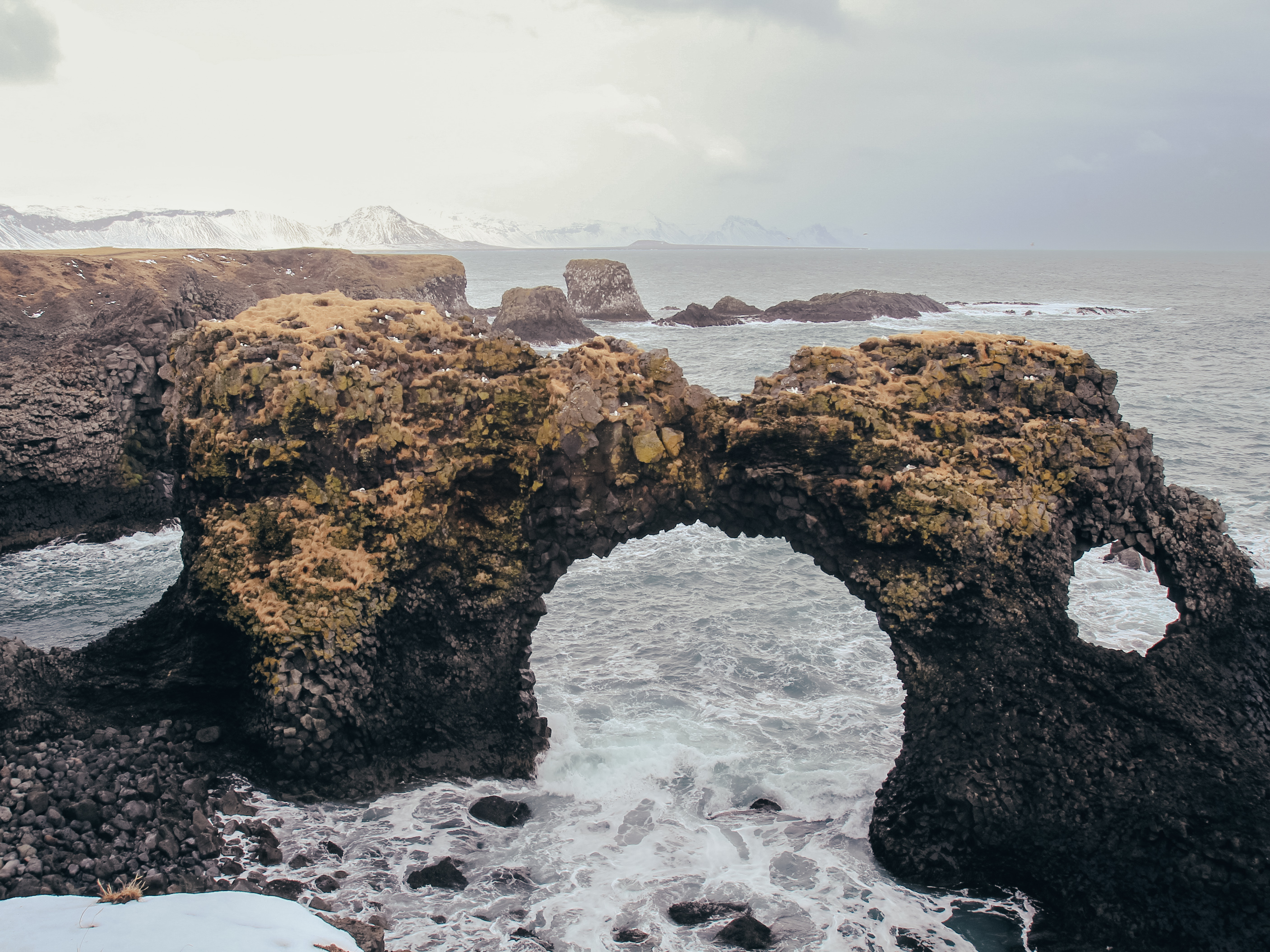
Further along the coast, stop near Arnarstapi, where walking paths lead past towering basalt columns and the impressive Gatklettur stone arch, with seabirds nesting overhead and waves crashing below. The day ends at Búðakirkja, an iconic 19th-century black wooden church, beautifully isolated amid lava fields, mountains, and open sea—one of Iceland’s most atmospheric and photogenic sites.
Day 4: Golden Circle & South Iceland
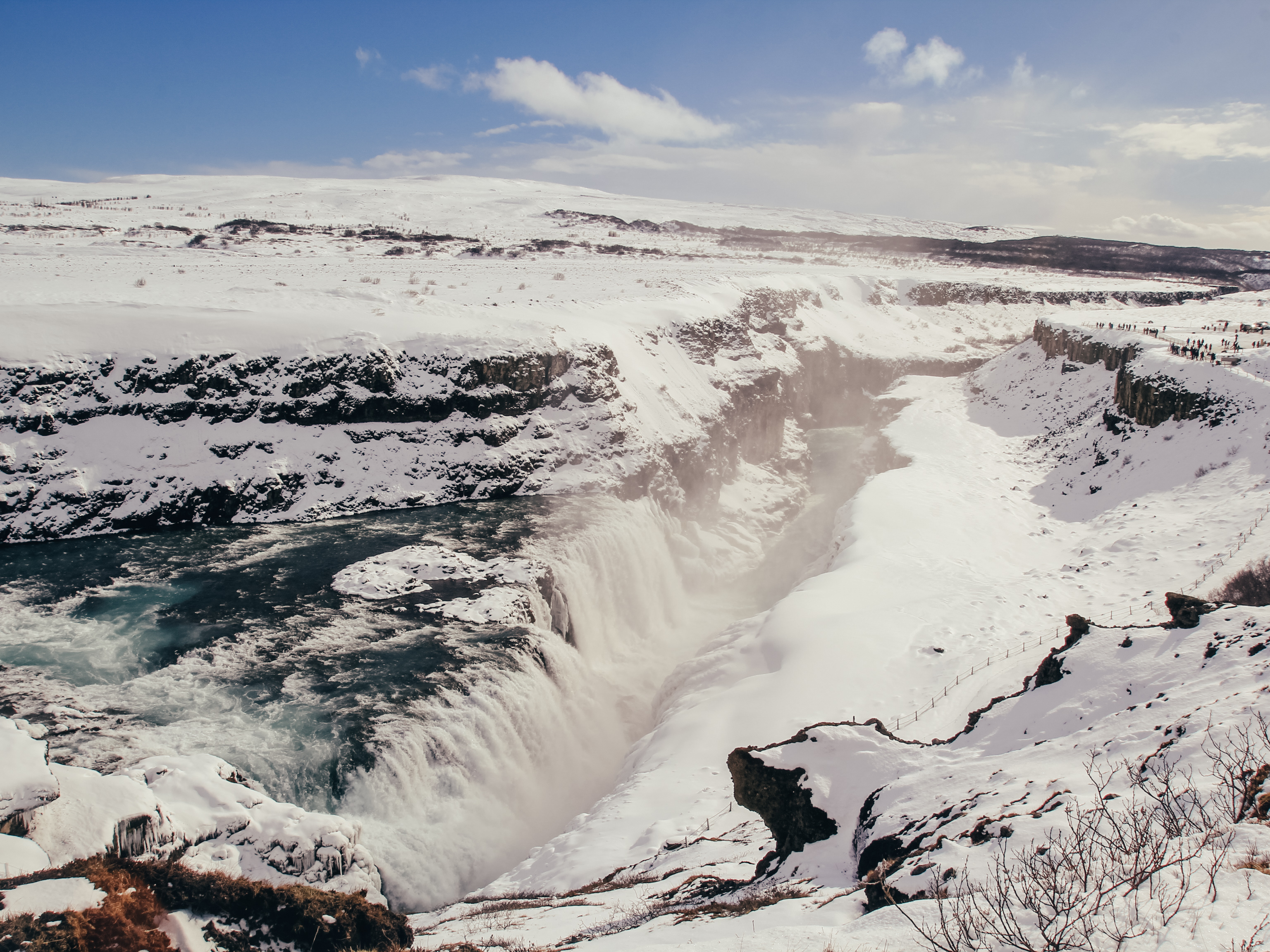
Gulfoss
Today follows the classic Golden Circle route, combining iconic landmarks with adventure. Begin at Þingvellir National Park, a UNESCO World Heritage Site of immense historical and geological significance. Here, you can walk between the North American and Eurasian tectonic plates while learning about Iceland’s early parliament, founded over a thousand years ago.
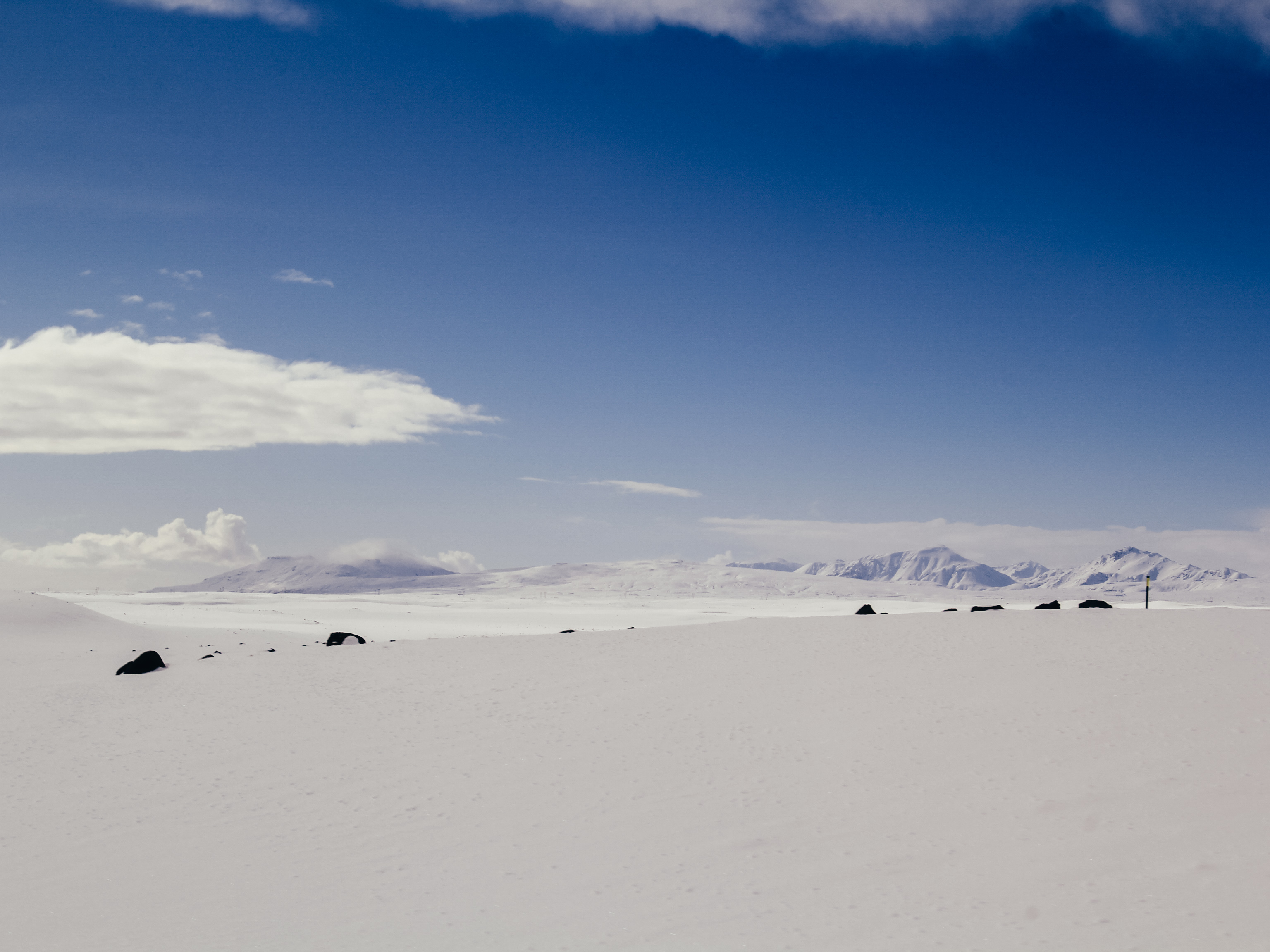
Continue to the Geysir geothermal area, where the active Strokkur geyser erupts regularly, sending boiling water high into the air. From here, head onto the vast ice cap of Langjökull Glacier for a snowmobiling experience. This was so much fun—exhilarating, visually stunning, and an unforgettable way to experience Iceland’s glacial landscapes.
The day concludes at mighty Gullfoss, one of Iceland’s most powerful waterfalls, where glacial water thunders into a deep canyon below. It’s very impressive, so take your time to walk around. From here, travel south to Hotel Rangá, where you will spend the next two nights. This is a wonderful hotel with warm service, excellent food, and a remote setting ideal for Northern Lights viewing. Some rooms are simple, but the experience is exceptional—the staff will even wake you during the night if aurora activity is detected.
Day 5: South Coast exploration
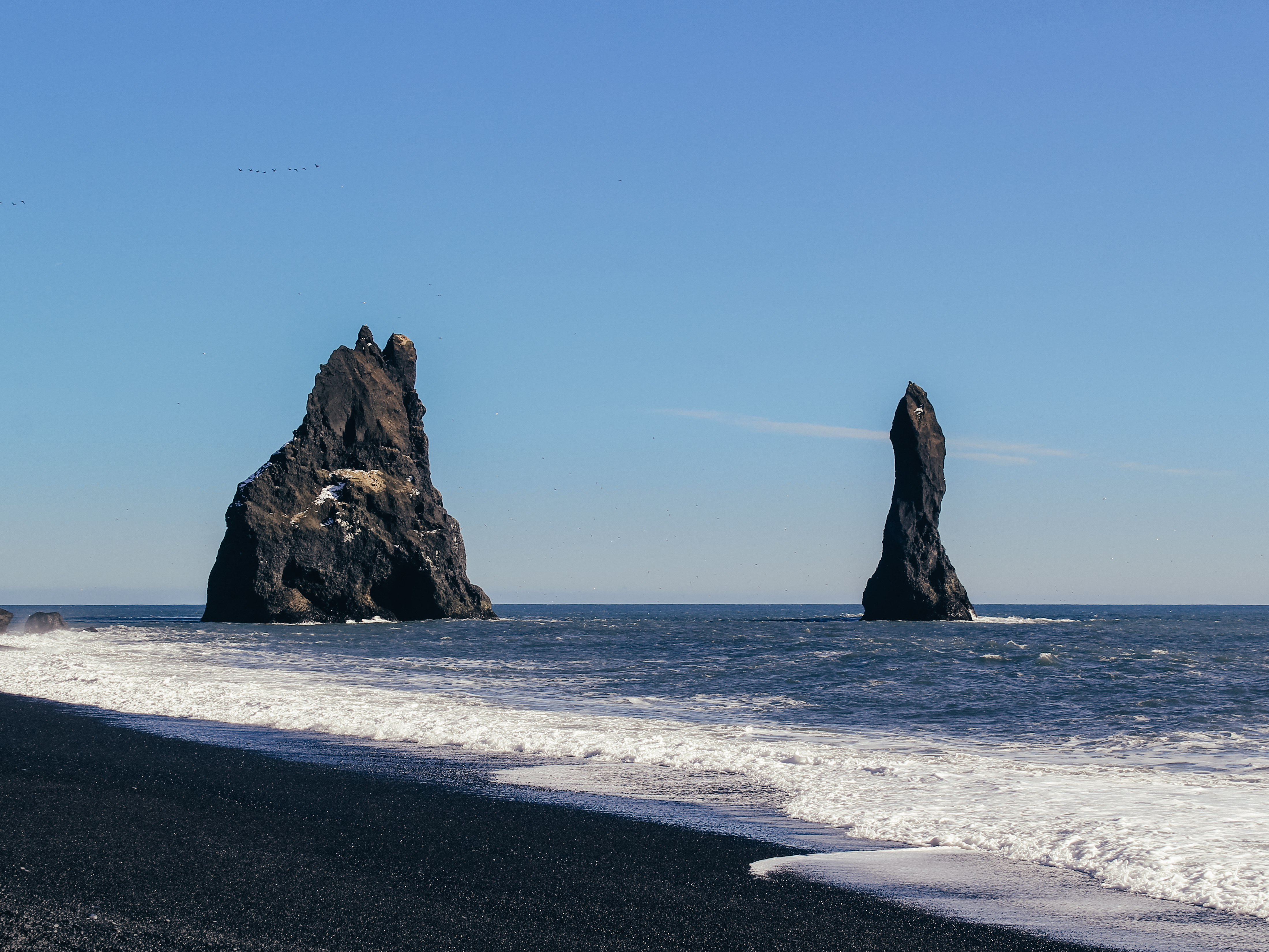
Dyrhólaey
Today explores Iceland’s dramatic South Coast, one of the most visually striking regions in the country. Begin with a guided visit to the Katla Ice Cave, an extraordinary natural formation beneath the glacier, offering incredible textures, colors, and photographic opportunities (conditions permitting).
Later, experience horse riding on the black-sand beach near Vík, a uniquely Icelandic activity. Icelandic horses are known for their calm temperament, making this accessible even for beginners, and riding along the volcanic shoreline is a truly special experience.
Continue to Dyrhólaey, a dramatic headland offering sweeping views over the coastline, before visiting Reynisfjara, the famous black-sand beach framed by basalt columns and sea stacks, and recognizable from Game of Thrones.
The day concludes with a visit to Skógafoss, one of Iceland’s most impressive and powerful waterfalls, followed by nearby Seljalandsfoss, famed for the path that allows you to walk behind the cascade—a magical experience in the right conditions and a beautiful way to end the day.
Day 6: Scenic return to Keflavík
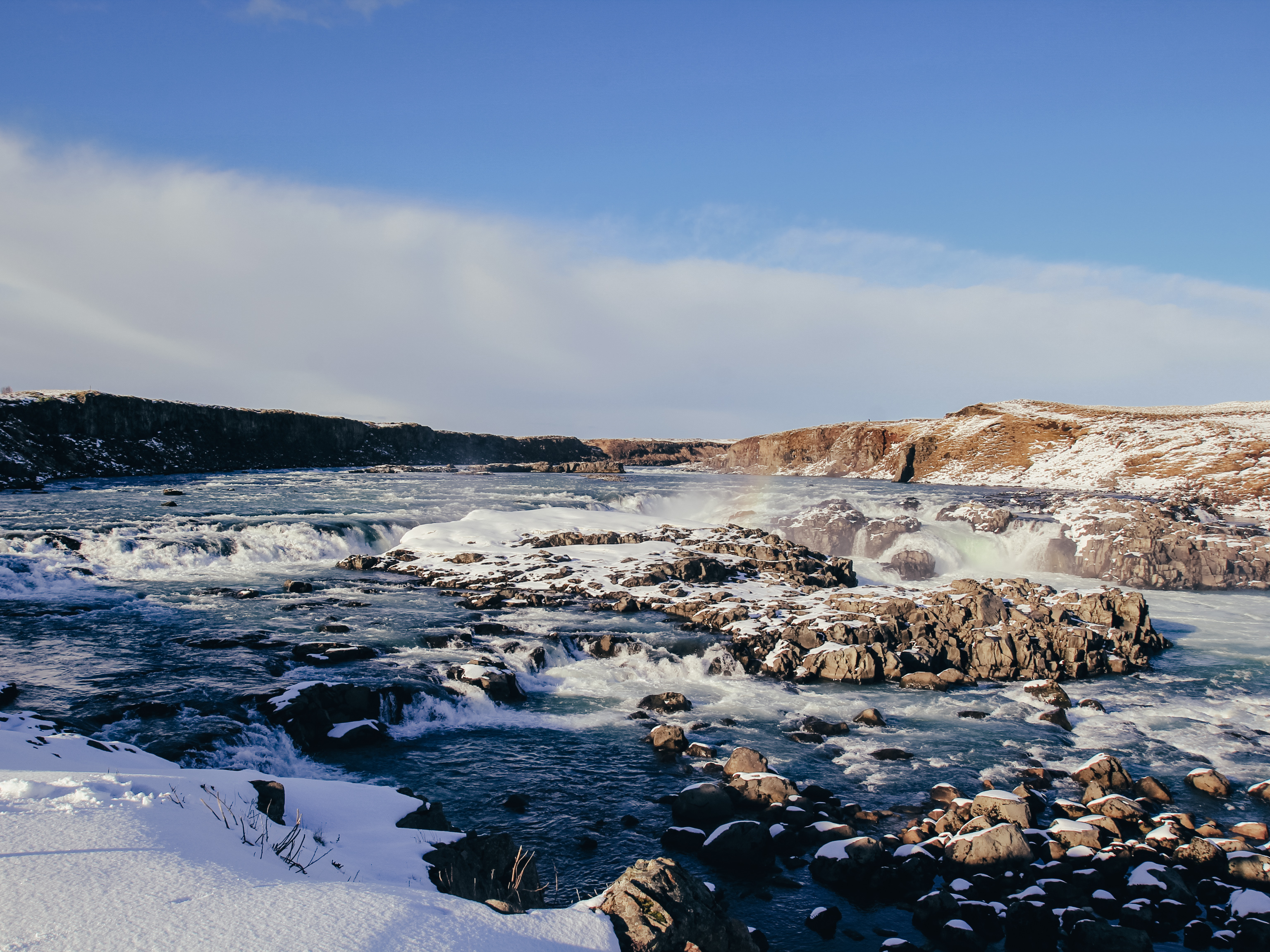
Urriðafoss
On the journey back towards Keflavík Airport, there are several worthwhile stops along the way, depending on how much time you have. Begin with a visit to the Lava Centre, an engaging and interactive exhibition that brings Iceland’s volcanic activity to life and provides valuable context for the dramatic landscapes experienced throughout the trip.
Nearby, the Caves of Hella offer insight into early Iceland’s early settlement, with a series of manmade caves believed to date back to the country’s earliest inhabitants. If time allows, a gentle stop can also be made at Ægissíðufoss, a smaller and lesser-known waterfall set within a peaceful rural landscape—a pleasant pause rather than a major highlight.
If time is short, I would prioritize a visit to Urriðafoss over the other stops. While not the tallest waterfall in Iceland, it is one of the most powerful and remains surprisingly uncrowded. Its sheer volume and raw force make it a true hidden gem, and a dramatic final encounter with Iceland’s natural energy before arriving at Keflavík for your onward flight.
Need to know
Northern Lights: Sightings are never guaranteed and depend on solar activity, darkness, clear skies, and being away from city lights. The best time to see the northern lights is from late September to March. I went at the end of March and was thrilled to witness it—the most beautiful and natural light show. You also benefit from a good amount of daylight compared to other winter months.
Driving: Highly recommend having a driver/guide in Winter, wind, snow, etc makes it very difficult.
Restaurant recommendations in Reykjavik: Matarkjallarinn, upscale Icelandic brasserie for an intimate dinner. Apotek Kitchen + Bar, lovely food in a vibrant, stylish restaurant set in a historic pharmacy building.
Driving: I strongly recommend booking private guided tours, particularly in winter when driving conditions can be challenging and unpredictable. Having expert local guides not only removes the stress of winter driving but also adds invaluable insight into Iceland’s landscapes, history, and culture—it made our experience feel seamless and truly special.
Daylight: If you travel in winter, keep in mind that December and January have limited daylight—around four to six hours.
Photography: Iceland is a photographer’s paradise. Don’t forget your tripod—which I did—especially if you hope to capture the Northern Lights.
Clothing: Layering is essential, as the weather can be unpredictable.


Travel Advisor
Laurent Belamich

Laurent Belamich

Get in touch with Laurent Belamich
Did you like this guide? Reach out to customize and book your own experience. Or, just to chat about travel in general.
For more inspiration and insider recommendations, visit our Iceland page.