



Curator’s statement
A visitor’s guide to the island of Zanzibar, Tanzania. I volunteered here in 2022 and it was a life-changing experience. I learned a lot about the culture and daily life.
The Fora Difference
Book with Ashley Dunlap to access exclusive perks and experiences on your trip.

Killer perks
Free upgrades, spa credits and more—we got you

Personalized recs
Customized travel planning for your style

Insider knowledge
Expert advice from people who’ve actually been there
Where to stay
Unlock perks by contacting Ashley Dunlap to book your trip.
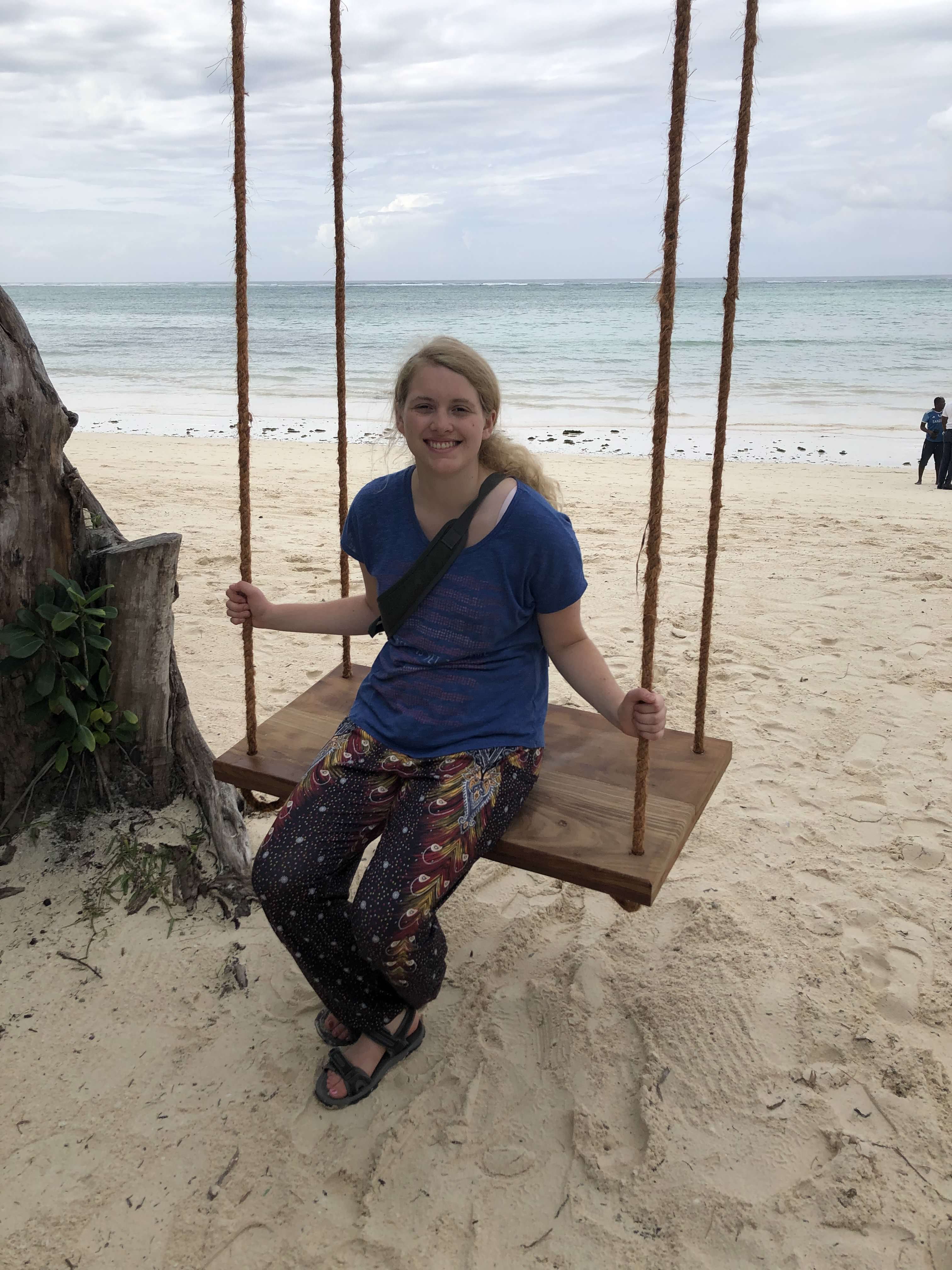
Me on the beach swing
During the summer of 2022, I traveled to Zanzibar, Tanzania with a volunteer group. It was my first visit out of the country in seven years, but I enjoyed every minute of it and it made me realize that I need to travel overseas more often! I felt very out of sorts at first for this reason, but my group and the environment relieved my anxiety!
We started in Stone Town, the main city in Zanzibar, and then traveled to Kairo Kiwengwa village where we spent the majority of the trip. We stayed in a hotel on the beach and did our volunteer work at the school in the village.
As far as the culture goes, it was a bit of a shock for all of us, but in a good way, and our guide enforcing the cultural consideration policies helped us adapt as well. Here’s what I learned from my time in Zanzibar.
95% of residents on the island are Muslim
For this reason, the females in the group had to cover their knees and shoulders unless we were doing construction or swimming. But, up until the construction location and the beach, we had to keep those areas covered. This is also the reason why all the meat we ate was halal, as Muslims do not eat pork, meaning that we did not have pork the whole trip. Nearly all of the Zanzibarian women and girls wore hijabs, and while in Stone Town, we would hear an occasional call to prayer that came from the mosque. We were warned not to be alarmed, though!
PDA is very frowned upon
This issue didn’t apply to me, and even though there was a couple in my group, they did a very good job not showing PDA while in Stone Town. But, showing affection goes against the local culture in Zanzibar, and I noticed this when I saw tourists and local couples not kissing, holding hands, etc.
Freddie Mercury’s childhood home is in Stone Town
He was born in Zanzibar, as it was a British colony at the time. I knew this ever since I saw “Bohemian Rhapsody” back when the movie first came out, and this was what I was looking most forward to when in Stone Town! Sadly, we did not get a chance to go inside, but from the get-go, the guides were aware that I wanted to see this sight so badly! Therefore, when we walked by it, they pointed it out to me and offered to take my picture!
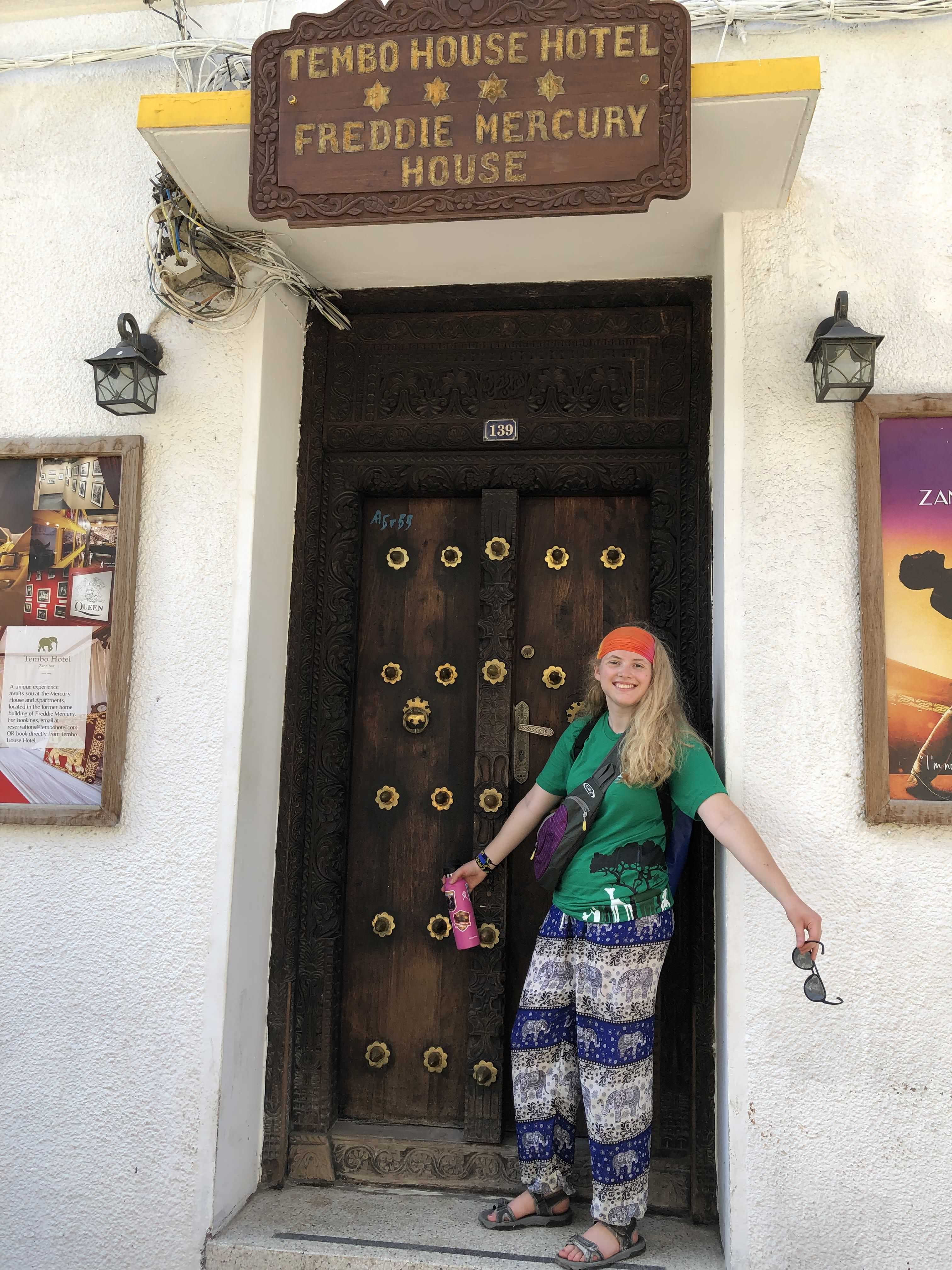
The Freddie Mercury house!
Fish are very big in Zanzibar
My group and I had a couple fish meals, and we also had a chance to check out the massive fish market in Zanzibar. It was super smelly but very organized, as different types of fish were separated into different exhibits and workers were shown prepping them and laying them out. I was way too impressed to be bothered by the horrid stench and realized it made sense why Zanzibar was so big on fish. They’re right by the ocean!
Zanzibar has a slave market museum
My group and I visited the slave market museum by the Anglican Cathedral on the island, and it really gave me insight into how terrible life in the slave trade was. Outside there was a rock sculpture of people who were meant to represent slaves who were all chained up. It got more mind-blowing, though: downstairs there was this stone cellar and three small rooms. The rooms were the slave chambers, where slaves were kept before being sold. Such a small space, stones for beds. And 50–75 slaves in each room! It was bad enough there were 20+ volunteers in the room! Also it was very short in terms of the ceiling because I’m 5’7 and I barely fit in! Other than that, the slave museum was very eye-opening and I can’t imagine what the slaves went through.
It is very humid in Stone Town—but if you are staying on the beach, it’s not as bad
When I first arrived in Zanzibar, my hair did not like the humidity! I know that’s because I have very thick hair, but either way, the humidity was something I was not used to. However, when we traveled to our hotel on the beach on day two of the trip, I was so relieved to have that nice ocean breeze overpower the humidity! In addition, the village we stayed in was also in the same location as many popular Zanzibar resorts, including Melia, Kiwengwa Beach Resort, and Tulia Zanzibar.
Bill Gates owns an island in Zanzibar
From what I have heard, it is called Mnemba Island. Unfortunately, we didn’t visit but we did see it on our snorkeling tour! I’m sure Bill Gates owns tons of islands around the world, but if you are ever in Zanzibar, feel free to snorkel near this island! However, it likely costs money to actually tour the island and set foot on it, but it is totally free to swim by!
The people of Zanzibar are accustomed to simple living, but they are happy with it
Every day my group and I would walk through the village homes on our way to our volunteer locations, and of course we noticed that they are different from what we were used to. We noticed that they were all made of stone. Clotheslines were being used. Little to no electricity, and a lot of homesteading going on. However, every local in that village was super friendly to us, especially the children! They knew we weren’t from Tanzania, so they excitedly ran up to us, hugged us, and wanted to play! In America, children are advised not to talk to strangers, but children in Zanzibar love talking to strangers.
Zanzibar has a significant Maasai population
I did not expect this, even though I knew they were prevalent in Tanzania and Kenya. I just thought they were in areas like Kilimanjaro, Dar Es Salaam, and most of Kenya, but apparently they were in Zanzibar too! Our students when we volunteered at the school were actually men from the Maasai tribe, and they are some of the most loving people ever. (I also think one of my students had a legit crush on me, lol!) They also don’t speak Swahili. They speak Maa primarily, and even though the language barrier was tough, they were still a fun group of students to work with! In addition, Maasai men usually have clubs with them, but do not fear—they do not use them on people! They use them to ward off snakes and other threats to humans, as they are protectors.
Zanzibar has some of the bluest water in the world
The best way to see this water was at Nakupenda Beach, off the coast of Stone Town. Nakupenda Beach is literally a huge shape of sand surrounded by blue water, and my group and I had lunch on the sandbank while exploring the beach. Another term to describe the scene would be “blue-ass” water!
Try to avoid talking to strangers in Stone Town
This may not be the case for every stranger, but I had an instance where my co-volunteer and I were waiting in the line for the bathroom and a local started randomly chatting us up. First, he asked what we were doing in Zanzibar and if we were staying in Stone Town, to which we answered, “volunteer trip, and no”. Then he started to mention how we were welcome to stay the night with him and if we were interested, to which we responded, “no… we gotta go back to our group”. Then he started going on and on about how much fun we’d have staying with him to which my co-volunteer whispered to me, “vamos”, which means “let’s go”, in Spanish. That’s when we left, and we talked about how uncomfortable that man made us feel. But, to avoid this problem, try and stay away from talking to strangers in Stone Town!
Phrases including “Hakuna Matata”, “Kula Bata” & “Pole Pole” are commonly heard
And they mean “take it easy”, “having a lot of fun”, and “slowly slowly”, respectively. You may recognize “hakuna matata”, from The Lion King, but it is actually a common Swahili phrase in real life, too. We used these phrases a lot during the trip to try and fit in with the culture, but a lot of souvenirs sold in the Zanzibar markets had these phrases on them as well!
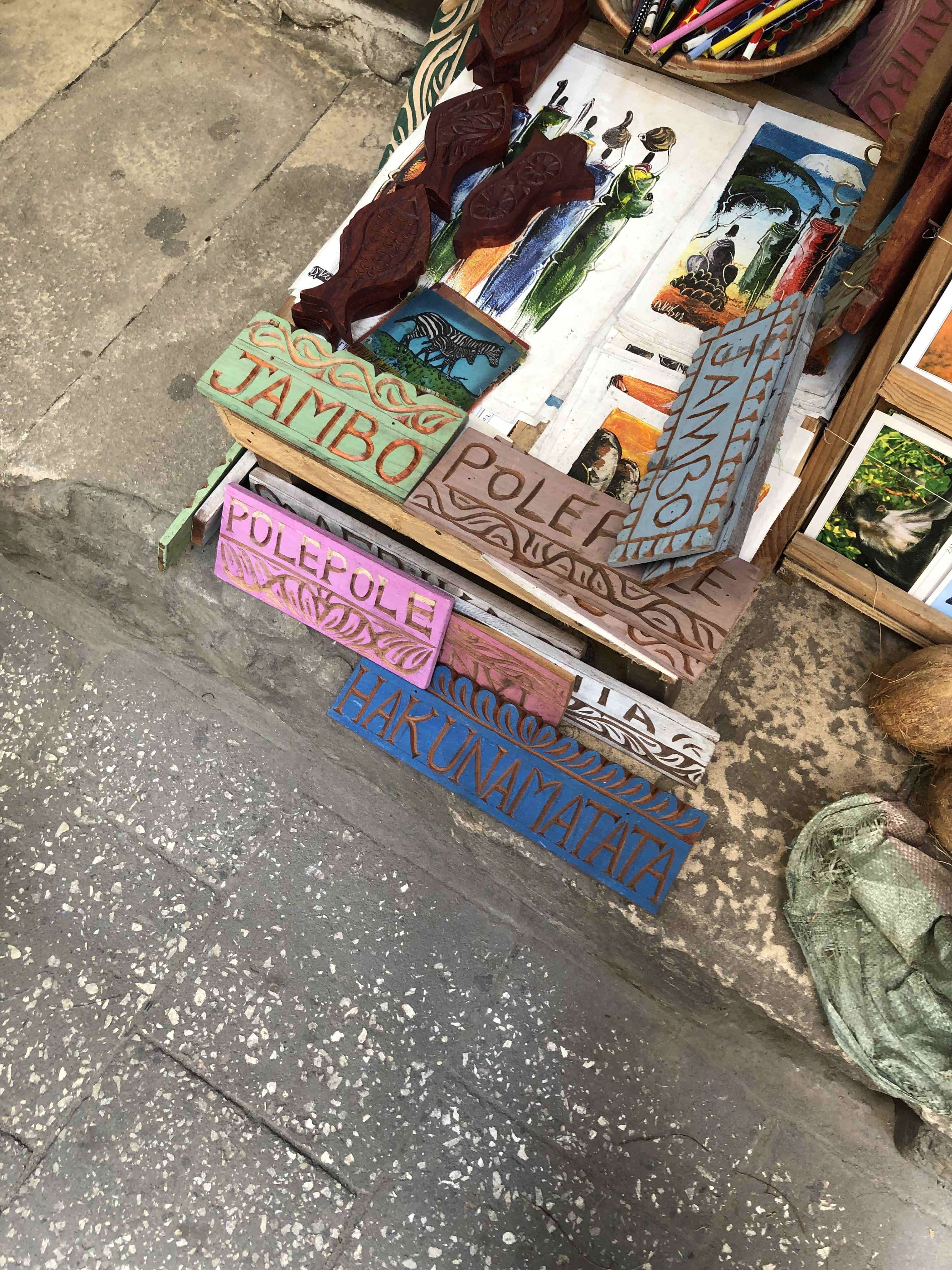
Hakuna matata!
Need to know
For more inspiration and insider recommendations, visit our Zanzibar page.


Travel Advisor
Ashley Dunlap

Ashley Dunlap
Get in touch with Ashley Dunlap
Did you like this guide? Reach out to customize and book your own experience. Or, just to chat about travel in general.