



Curator’s statement
Few places in the world deliver a first impression like Victoria Falls, and there’s a reason it’s one of the Seven Natural Wonders of the World! It’s a mile-wide curtain of water plunging into a dramatic gorge along the Zambezi River, which you can experience from two different countries: Zambia and Zimbabwe. But deciding when to go—rainy season or dry season—will completely shape what you experience. I’ve been fortunate enough to visit Vic Falls during both seasons, with two different groups, and there are definitely pros and cons to each.
The Fora Difference
Book with Jennifer Redman to access exclusive perks and experiences on your trip.

Killer perks
Free upgrades, spa credits and more—we got you

Personalized recs
Customized travel planning for your style

Insider knowledge
Expert advice from people who’ve actually been there
Where to stay
Unlock perks by contacting Jennifer Redman to book your trip.
Rainy season (high water)—typically February to May
During this time, Victoria Falls truly earns its local name, “The Smoke That Thunders.” Water levels are at their peak, sending mist high into the air, often visible from miles away and soaking everything in its path. It’s the Falls at their most powerful and dramatic, with vivid rainbows and an all-encompassing sensory experience of roaring sound, rushing water, and constant mist.
If you decide to go this time of year, you will get wet—very, very wet—so you’ll want ponchos, sturdy non-slip shoes, quick-drying clothes and shoes, and a waterproof bag for your phone or camera. At times, the incredible intensity of the mist can limit visibility, making it harder to take in the full scope of the Falls. Certain experiences, like Devil’s Pool, may also be inaccessible. That said, this season is ideal for first-time visitors seeking that unforgettable wow factor. You’re not just seeing the Falls during this time, you’re experiencing it, and it is a visceral experience you’ll never forget.
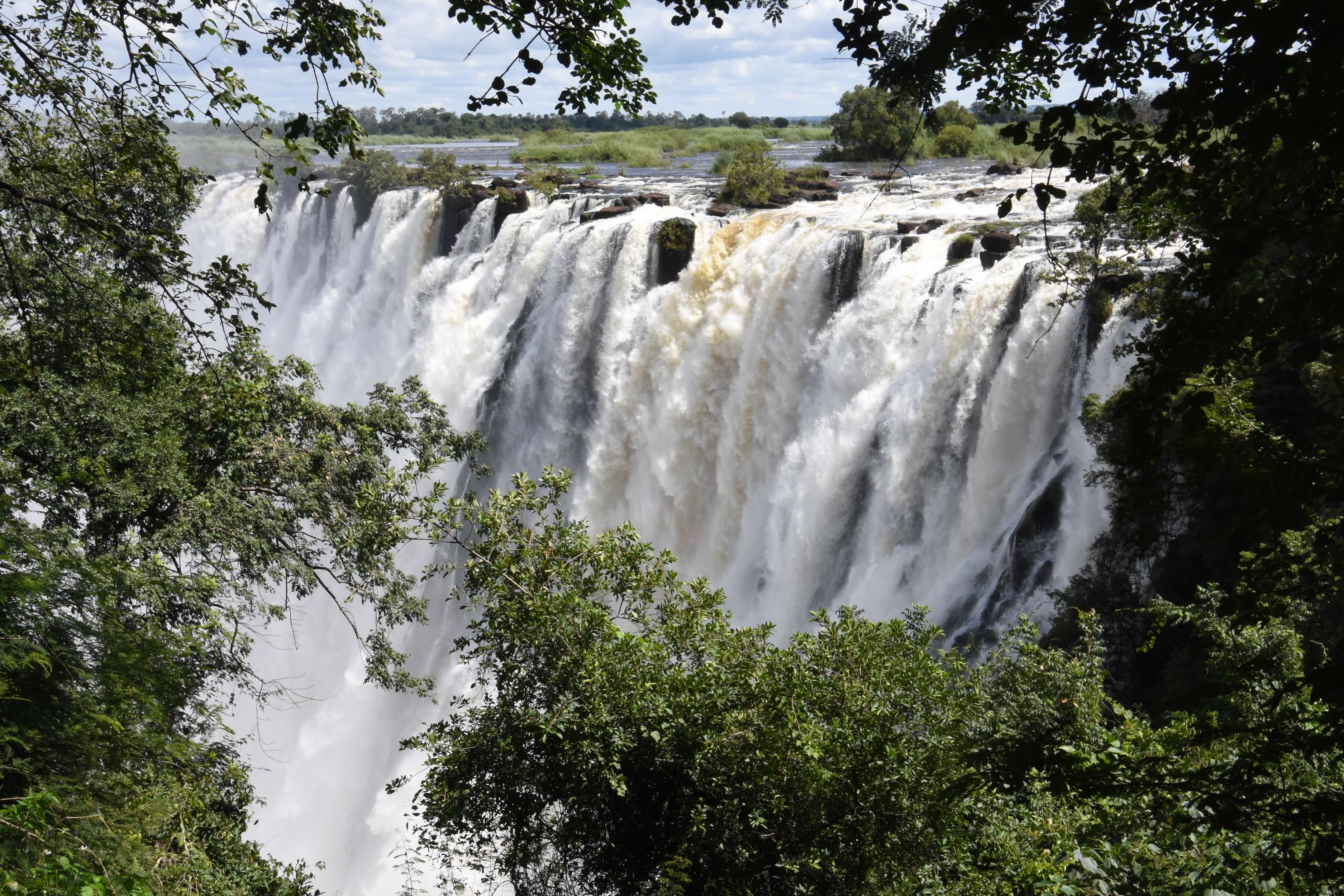
There’s nothing quite like the immense power and sheer scope of the water rushing over the top of the enormous curtain of Victoria Falls.
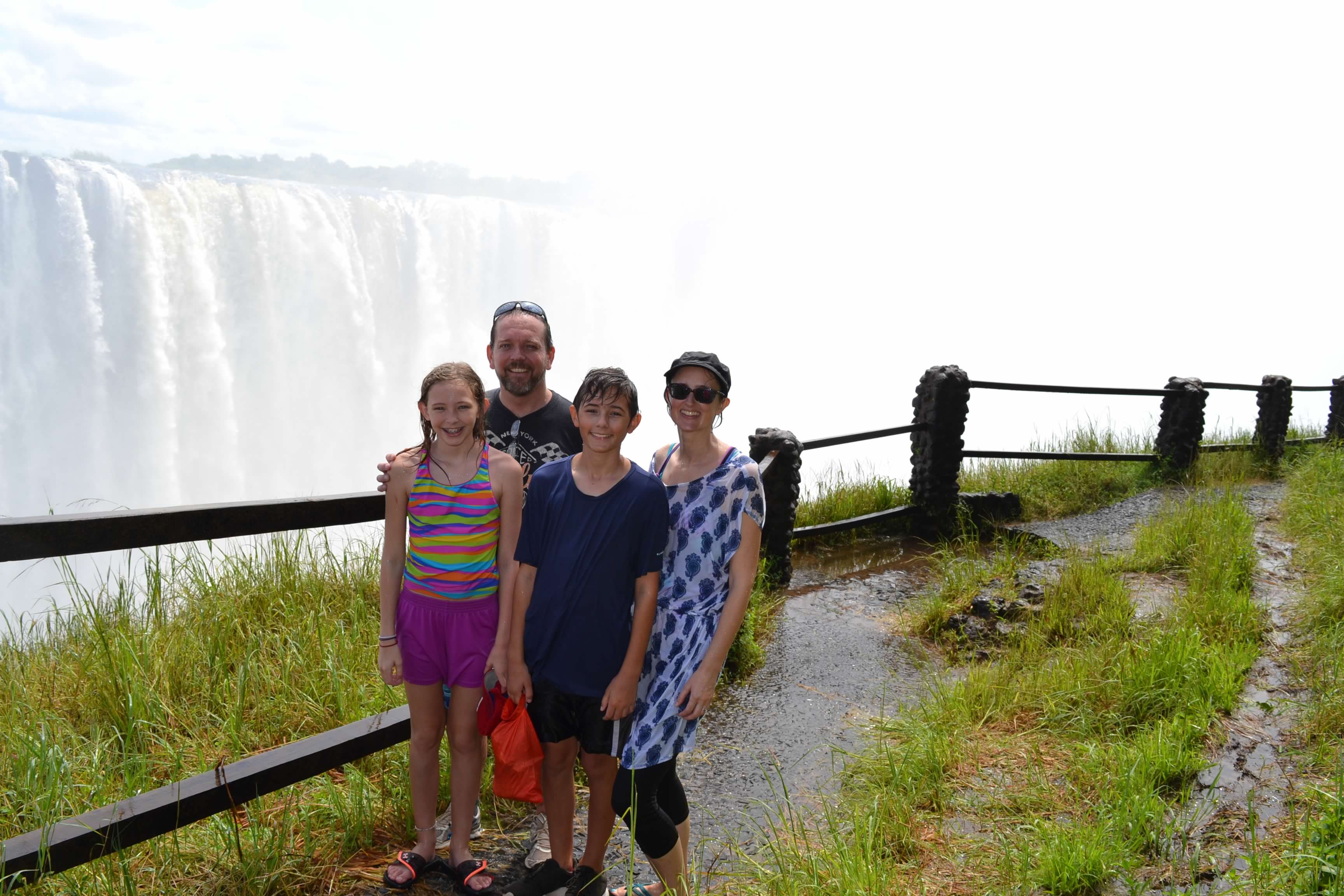
The water rushing over the Falls causes a gigantic spray that you can see and feel from all over the area. We were completely soaked!
Dry season (low water)—typically August to November
In the dry season, as water levels recede, especially on the Zambian side, the Falls transform into a completely different experience. The reduced water flow reveals the immense geological structure of the gorge and cliff face, offering clear, unobstructed views that are often hidden during peak flow. It’s also the best time to experience Devil’s Pool, along with other adventure activities like visiting the Boiling Pot, white-water rafting, or bungee jumping. Walking conditions are easier along the bridge, with far less spray along the trails.
The trade-off is that some sections of the Falls may shrink to a trickle, meaning you won’t see the same dramatic volume of water as in the rainy season. However, for travelers who want to fully appreciate the scale and structure of Victoria Falls, who want to seek out adventure experiences, or prefer drier, sunnier weather, this can be an excellent time to visit.
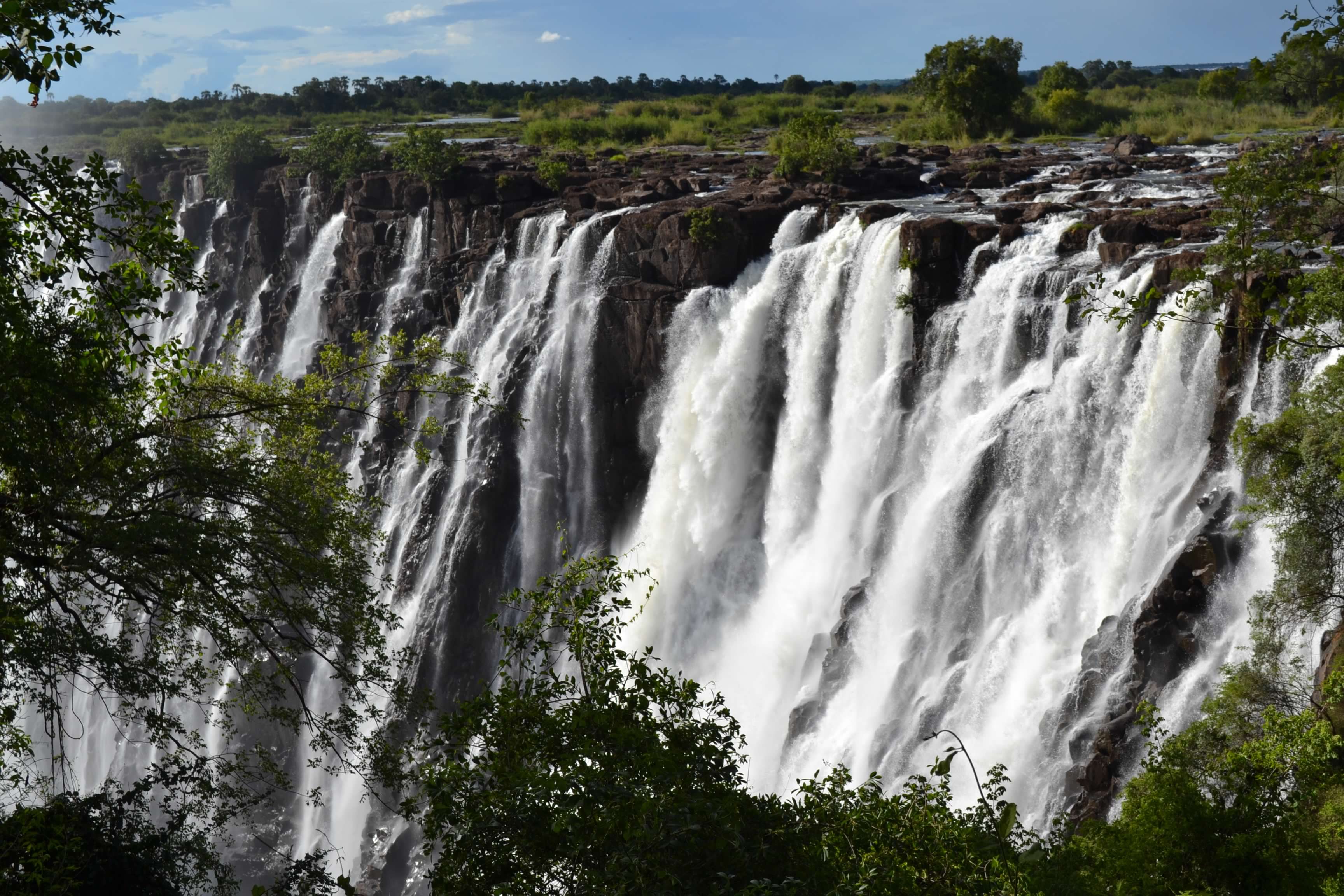
Going in the dry season, you can see what makes Victoria Falls so impressive.
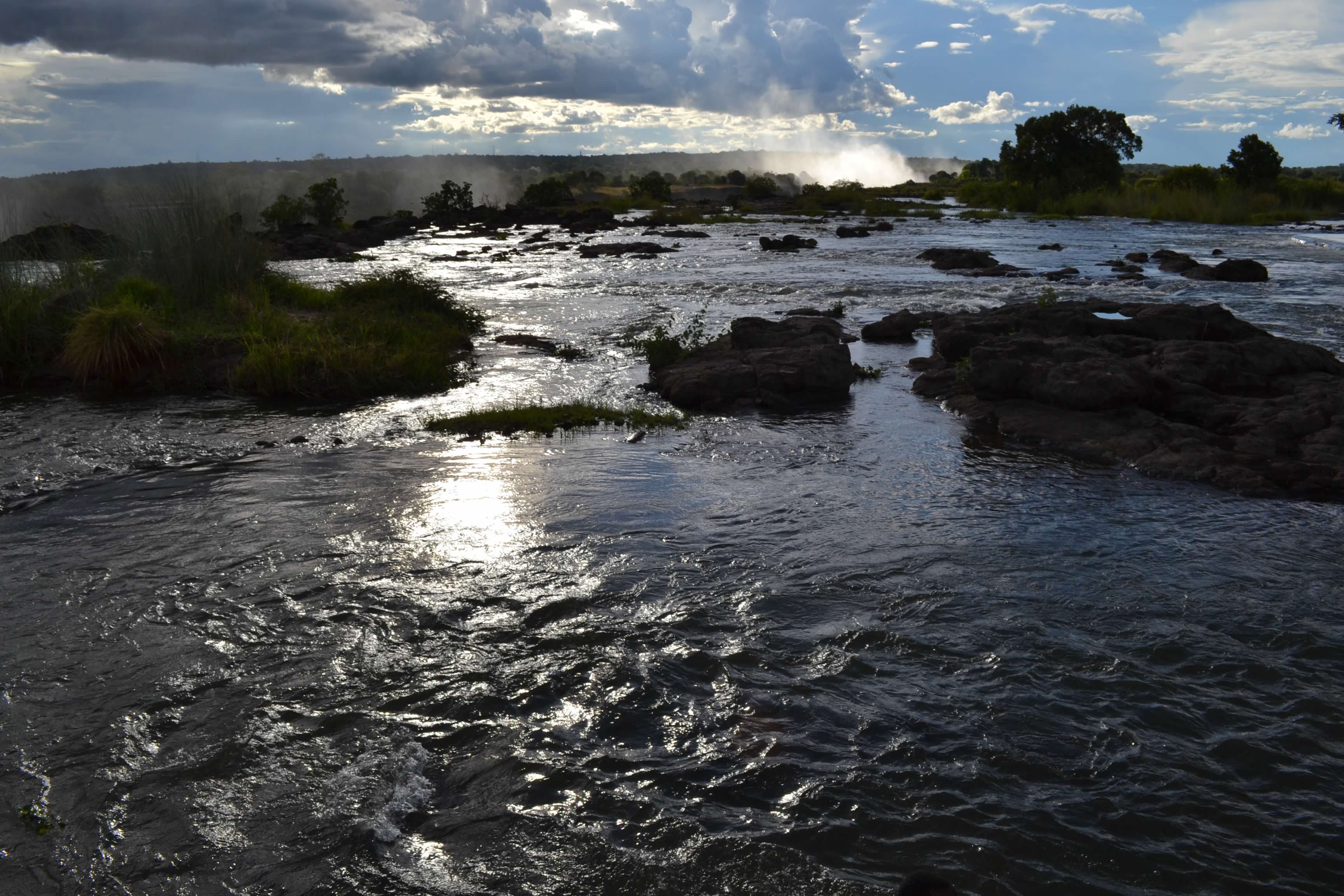
During the dry season, you can explore at the top of the falls. This is inaccessible during the wet season—you would be carried over the top by the intensity of the rapids!
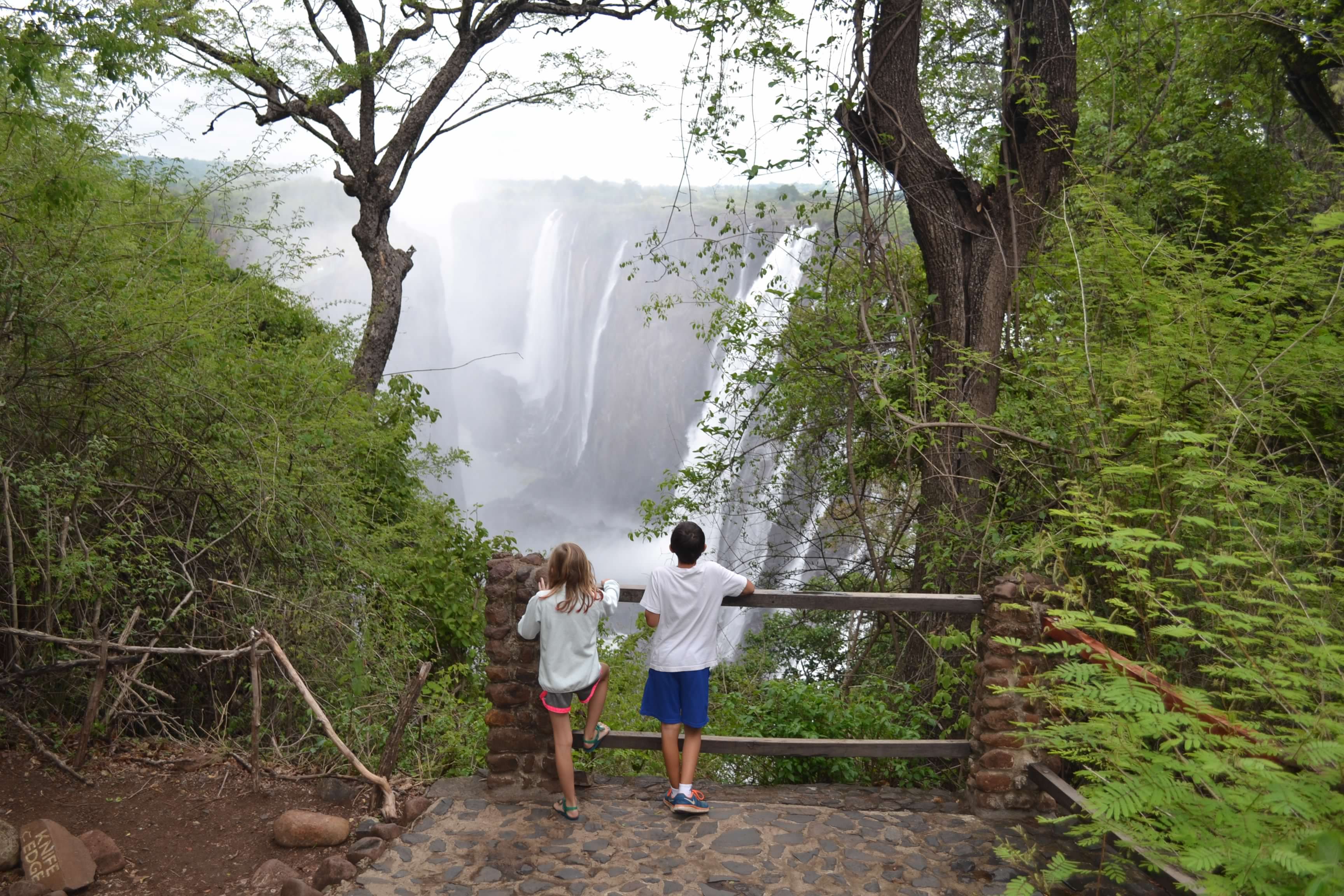
This is one area during the dry season to view the Falls—even with less water, the spray is still intense
So… when should you go?
Rainy season: Maximum wow-factor and power, minimum visibility
Dry season: Maximum visibility, less wow-factor, more adventure activities available
The honest answer? They are two completely different experiences. If you can, go twice! It’s one of the rare places where that truly makes sense.
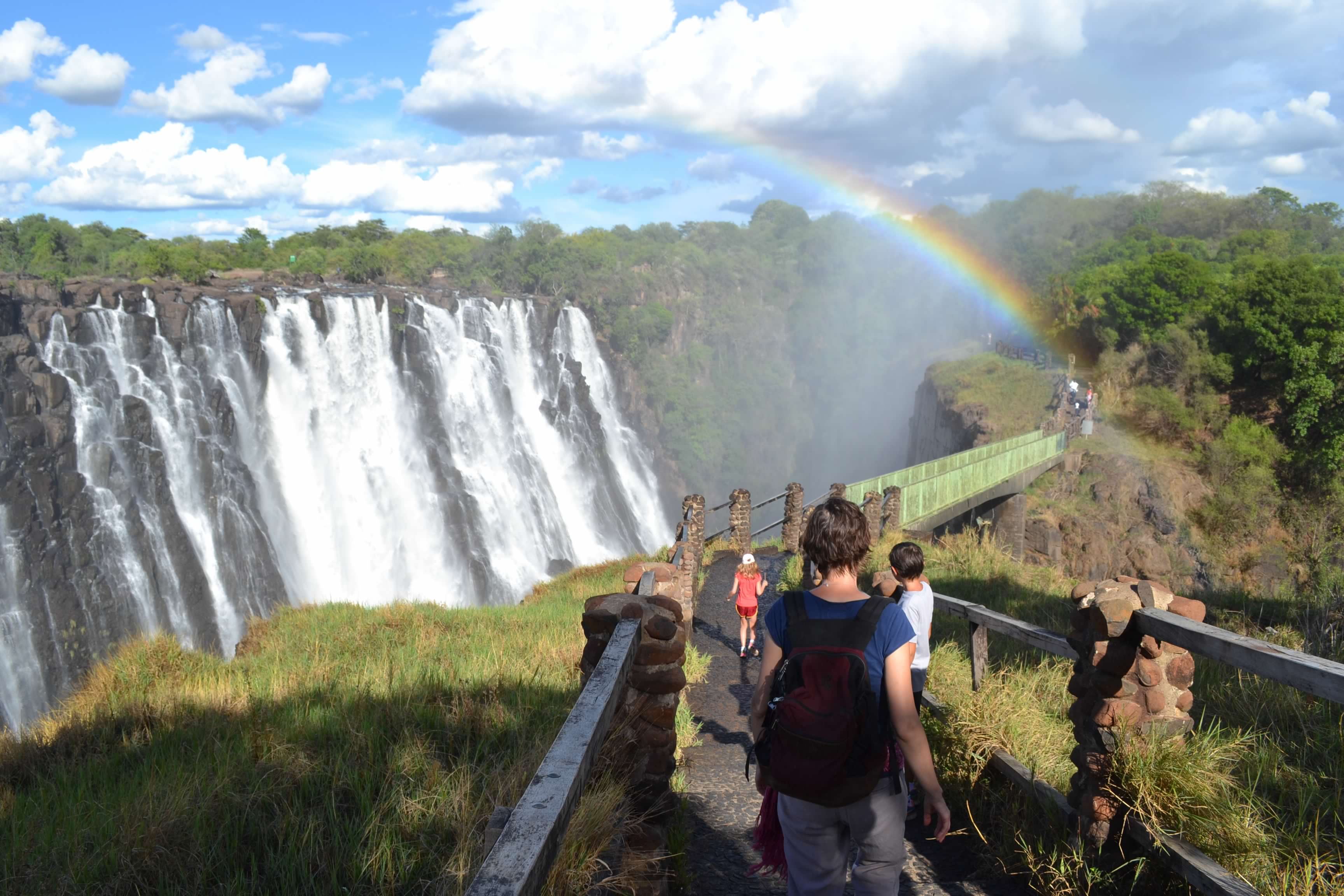
The bridge is an iconic way to experience the falls up close, and the rainbows created in the mist are stunning
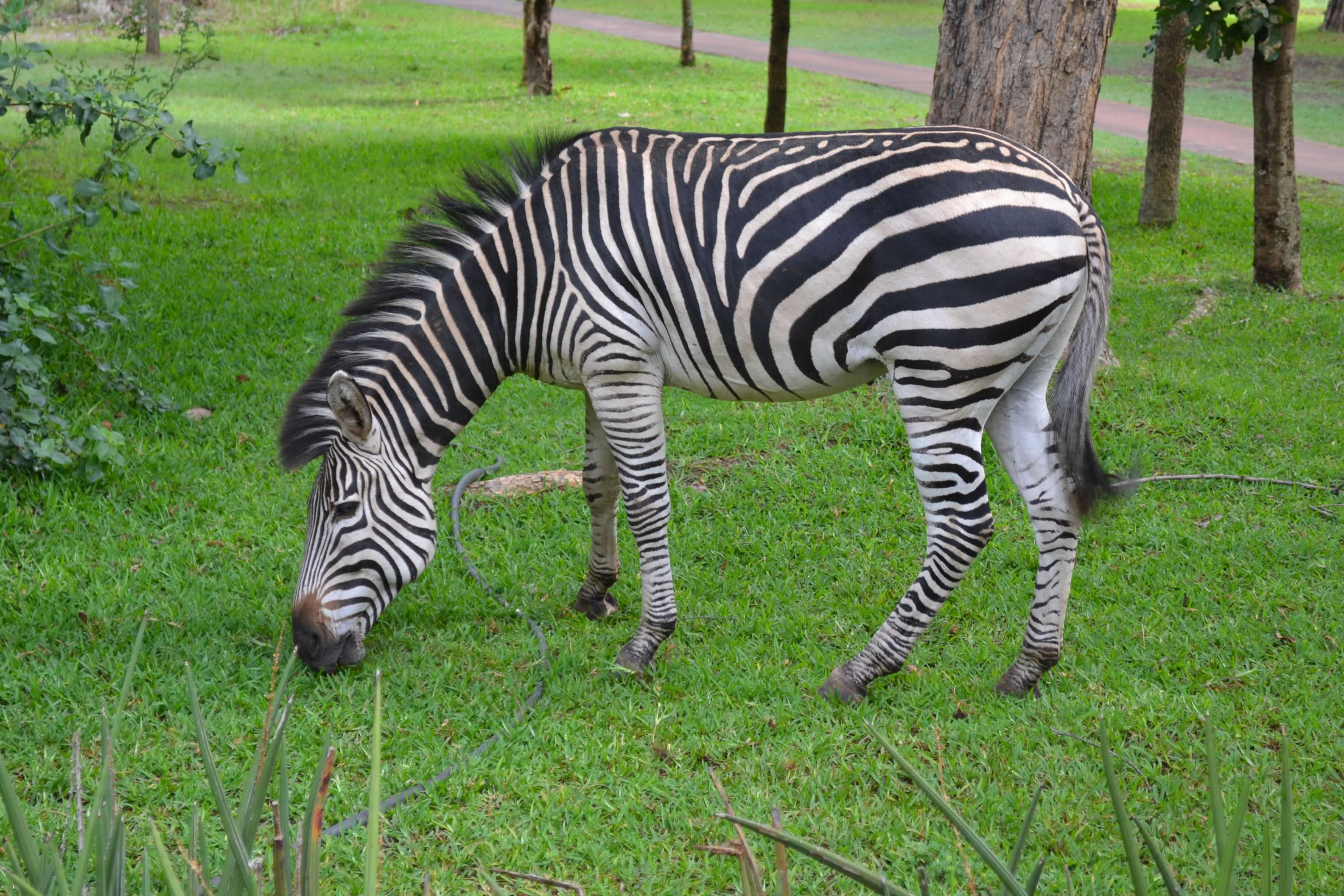
Wildlife like zebra and giraffes roam the grounds of the nearby hotels
Need to know
Where to stay
The Royal Livingstone Victoria Falls Zambia Hotel by Anantara is just a short walk from Victoria Falls, and feels both elegant and deeply connected to nature. Wildlife like giraffes, zebras, and antelope roam freely across the lush grounds. One of my favorite memories is when our group had sundowners in the garden (cocktail hour in the afternoon, watching the sunset) and listened to the Falls and live music—truly an unforgettable experience. The overall vibe is serene and timeless, making it an exceptional choice for couples, honeymooners, or anyone seeking a more elevated and atmospheric stay.
Avani Victoria Falls Resort, just next door, offers the same convenient access to the Falls but with a more relaxed and vibrant energy. Also within walking distance, the resort is known for its resident zebras and lively, family-friendly feel. It’s a great option that doesn’t sacrifice location, making it ideal for families or travelers looking for a fun, social atmosphere. We had three generations of travelers staying here, and there was something for everyone.
Whichever you choose, both properties include easy access to Victoria Falls, a short guided walking route to the main viewpoints, and prime positioning for unforgettable early morning or sunset visits. Be sure to bring kwacha, the local Zambian currency, in small bills, as you’ll inevitably want to check out the craft stalls that line the walkway between the hotels and the entrance to the Falls.
Final take
If you want to experience the power of Victoria Falls, go in the rainy season. If you want to see behind the Victoria Falls curtain, go in the dry season.
If you want the full story, experience both!
For more inspiration and insider recommendations, visit our Zambia page.


Travel Advisor
Jennifer Redman
Jennifer Redman
Get in touch with Jennifer Redman
Did you like this guide? Reach out to customize and book your own experience. Or, just to chat about travel in general.