


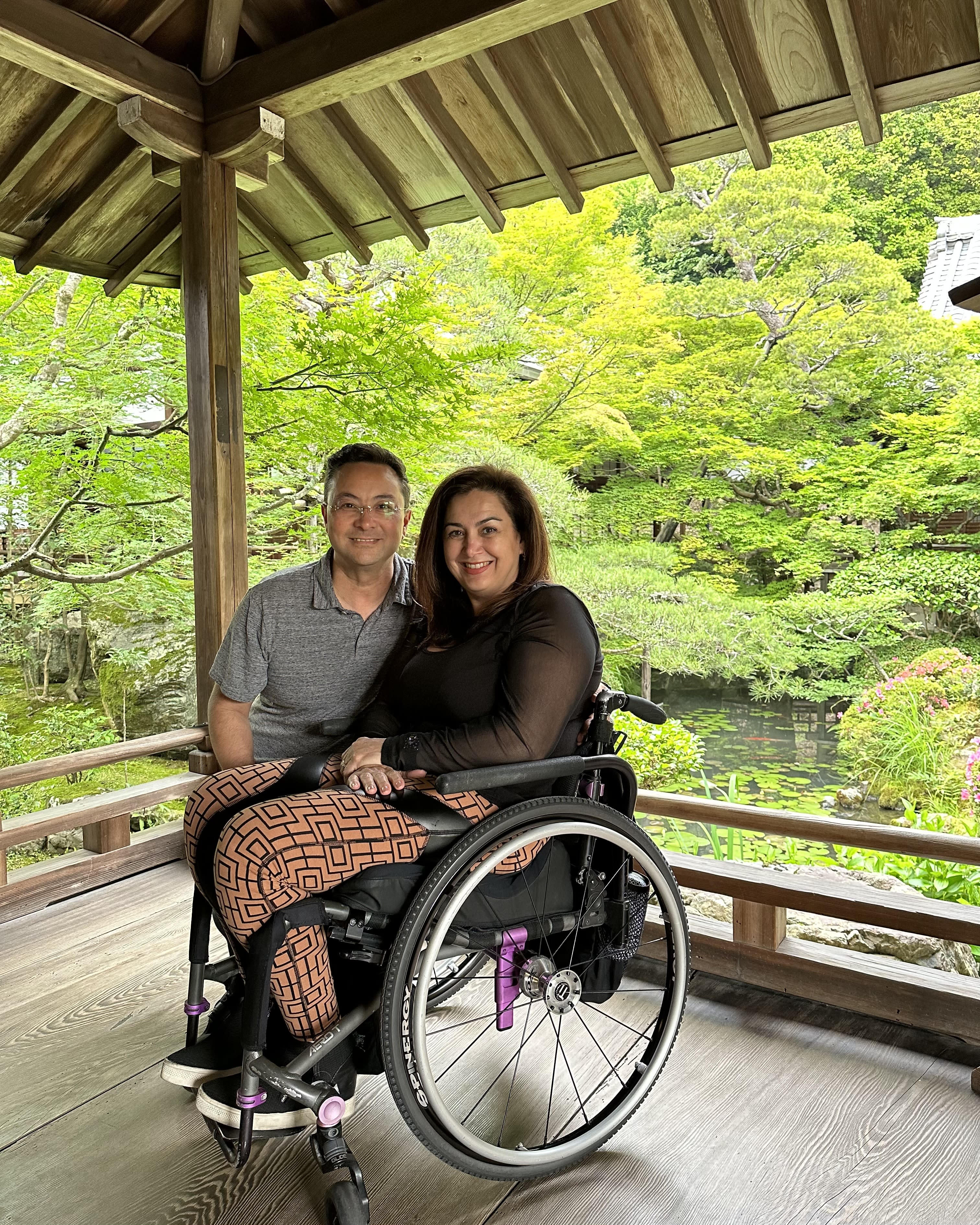
Curator’s statement
Kyoto rewards travelers who slow down. The pace is deliberate, the details are considered, and the city has a way of making a five-day trip feel like real time well-spent rather than a rushed checklist of temples. We had a memorable visit there with family, splitting our stay between two of the city’s best luxury hotels, and the choice of where to base ourselves shaped the trip more than we expected. That contrast is what makes a comparison piece on these two properties worth writing.
The Fora Difference
Book with TudorTravels to access exclusive perks and experiences on your trip.

Killer perks
Free upgrades, spa credits and more—we got you

Personalized recs
Customized travel planning for your style

Insider knowledge
Expert advice from people who’ve actually been there
Where to stay
Unlock perks by contacting TudorTravels to book your trip.
Where to stay:
We have stayed in a lot of luxury hotels in Japan over the years, and Kyoto is the city that consistently rewards the choice of hotel more than any other. The neighborhood you wake up in shapes the trip. Two of the city’s best luxury properties sit in the Higashiyama temple district, both within a short walk of each other on a map but offering completely different experiences once you actually step outside. We stayed at the Park Hyatt Kyoto first, then moved over to the Four Seasons Kyoto on the same trip with family. Same district. Same week. Two very different stays.
If you are choosing between them, this is the comparison we wish we had read before booking.
A note we make in every comparison: there is no “best” hotel in Kyoto. There is only the right hotel for the trip you actually want to take. Both of these properties are excellent. They just answer different questions.
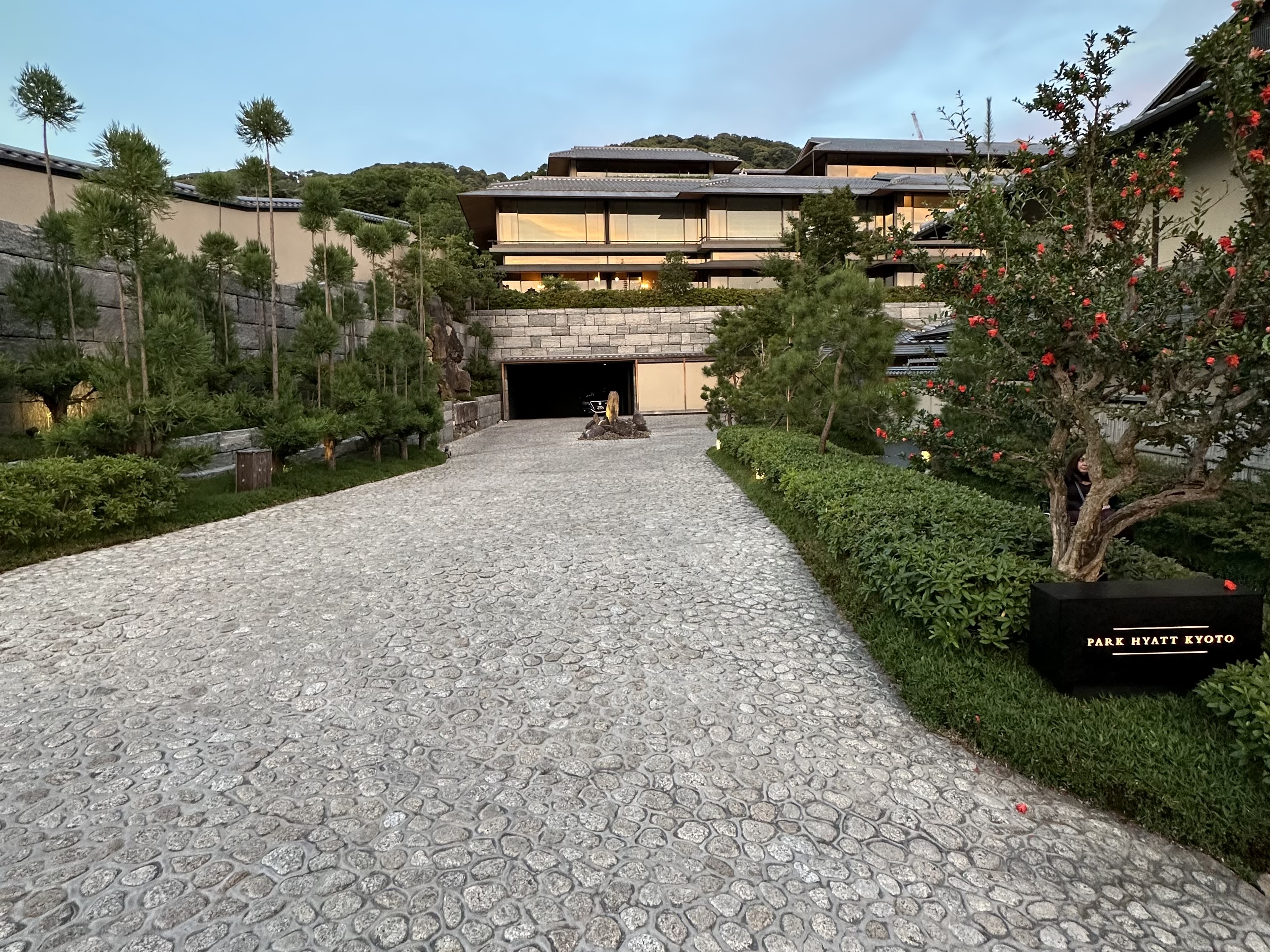
Park Hyatt Kyoto entrance
The neighborhoods (and they really are different):
The Park Hyatt Kyoto sits at the entrance to Ninen-zaka, the cobblestone lane that runs from Nene-no-Michi up toward Kiyomizu-dera. Step out the front door and you are in old Kyoto. Wooden machiya townhouses, lantern-lit alleys, the silhouette of Yasaka Pagoda rising over the rooftops. Kodai-ji is essentially next door. Kiyomizu-dera is a slow uphill walk through some of the most photographed streets in Japan. Yasaka Shrine and Gion are about ten minutes away on foot. We walked everywhere from this hotel, and the walks themselves were as memorable as the destinations.
The Four Seasons is also in Higashiyama, but the experience of being there is the opposite. The hotel sits in a quieter pocket of the district, closer to Myoho-in and Sanjusangen-do, and the immediate streets around it are residential rather than historic. Almost nothing is within real walking distance. You will be in taxis or arranging hotel cars to get to most temples and the better restaurants. Once you are inside the property, that does not matter. From the moment you arrive, the world outside disappears. But it is a real difference and worth understanding before you book.
This is the cleanest split between the two hotels. Park Hyatt is the hotel as a gateway to the city. Four Seasons is the hotel as a retreat from it.
The properties:
The Park Hyatt is small, just 70 rooms and nine suites, designed to feel like a luxury guesthouse rather than a hotel. The architecture leans hard into traditional Japanese aesthetics: tamo wood throughout, ikebana in the corridors, zen garden views from the windows, the kind of restraint and craftsmanship that defines high Japanese design. It feels Japanese in a way that a lot of international luxury hotels in Japan do not. That was the thing that landed for us most. A stay here feels like staying somewhere specifically Kyoto, not somewhere with Kyoto features applied.
The Four Seasons is larger at 123 rooms, and suites, plus 57 separate residences, with the kind of contemporary sophistication you would expect from the brand. The interior design draws on Japanese motifs (the purple hues that nod to imperial Kyoto, the dark hardwoods, the seasonal artwork) but the overall feel is more modern luxury hotel than a traditional Japanese guesthouse. What makes this property singular is what it is built around: Shakusui-en, an 800-year-old pond garden from the Heian period that once belonged to the warrior nobleman Taira no Shigemori. The hotel is essentially wrapped around it. Almost every public space and the best rooms look out over it.
We stayed in suites at both the Park Hyatt and the Four Seasons. Both rooms were beautifully done. Our Park Hyatt room was generous by Japanese standards, with a soaking tub and a clean, minimal aesthetic that felt like a private home. Our Four Seasons suite was larger, more designed, and gave us a balcony view directly over the pond garden. If you can swing a Heritage Garden category at the Four Seasons, do it. The room category really is the experience at this hotel.
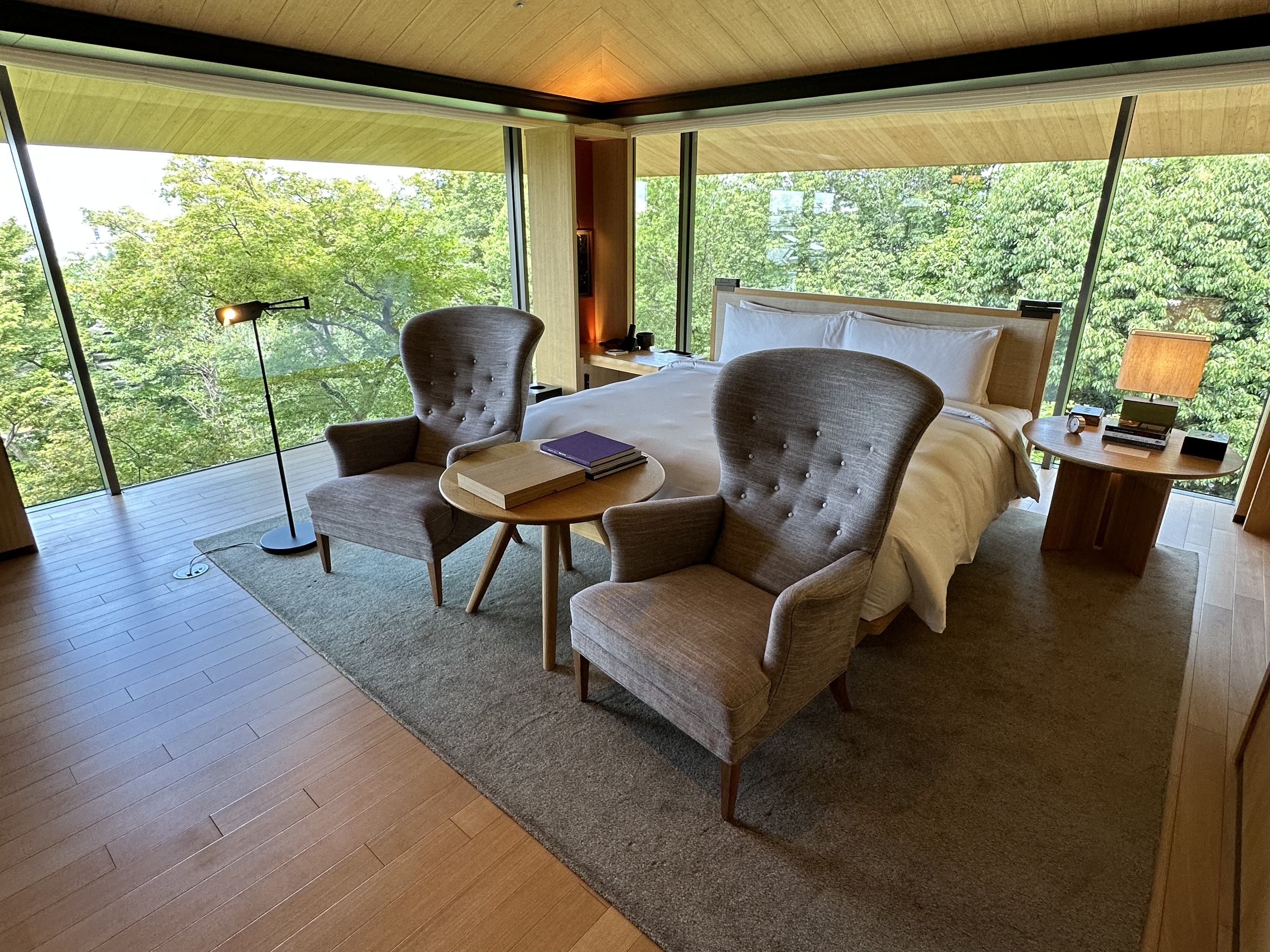
Suite at Park Hyatt Kyoto
The garden moment:
This is the Four Seasons’ single biggest asset, and it deserves its own section.
Shakusui-en is mesmerizing. We sat with it for long stretches every day we were there, watching the carp move through the water, the turtles sunning on the stones, dragonflies skimming, and the herons standing motionless in the shallows like they had been there for centuries. Honestly, we spent hours just watching the pond. There is a quiet to the garden that is genuinely rare in a city hotel, and it is the kind of space you sit with and lose track of time in. The garden does most of the heavy lifting for what makes a stay at the Four Seasons feel special.
The Park Hyatt has its own quiet, but it is built differently. The “garden” you wake up to here is the streets directly outside the hotel. Walk out the door and you are in the architecture, the temples, the cobblestones, the wooden facades that have defined this part of Kyoto for centuries. The Park Hyatt’s space is the city itself, and you feel the history of Kyoto by stepping into it rather than by looking out at it. Different idea. Both work.
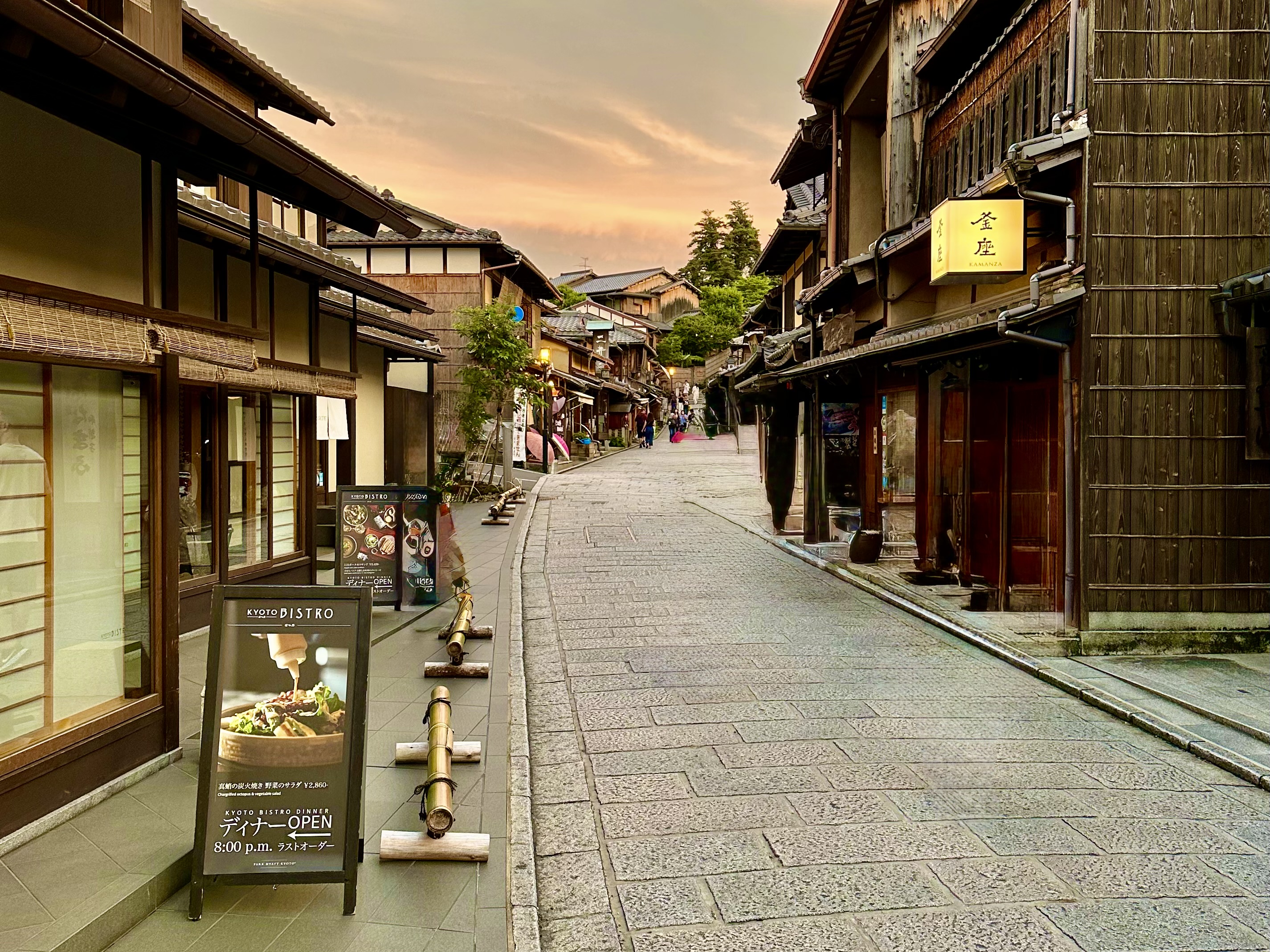
The neighborhood directly outside the Park Hyatt Kyoto
Service:
Service was excellent at both properties, and we struggled to separate them in any meaningful way. Both staff read the room well, both anticipated rather than reacted; both managed the small details that you only notice in the rare hotels that get them right. Both are top of the Japanese hospitality tradition, which is to say they are about as good as service gets anywhere in the world. If you are choosing between the two on service, you are not going to be disappointed by either, and we would not weight this category at all in the decision.
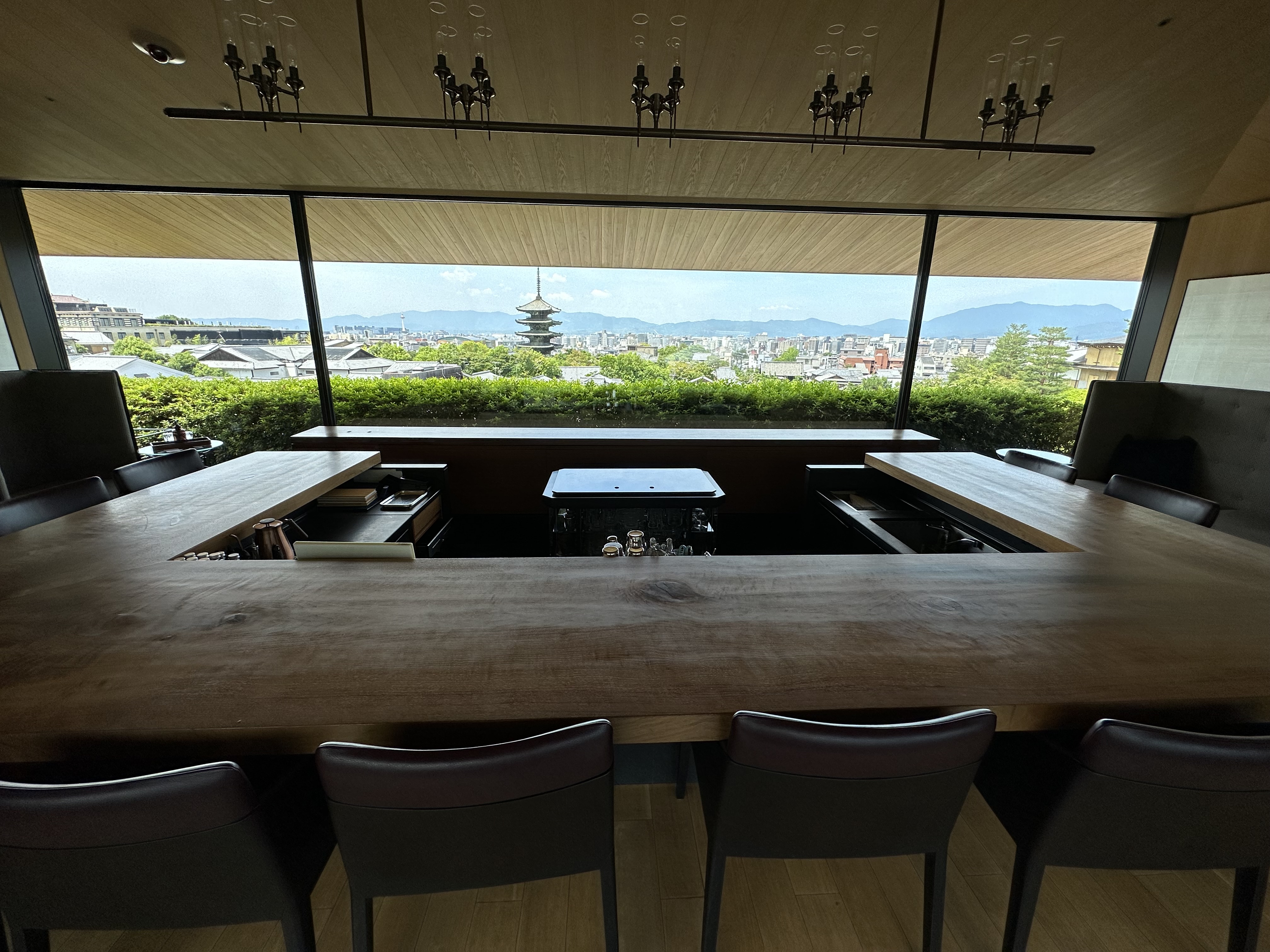
Bar Kohaku at the Park Hyatt Kyoto
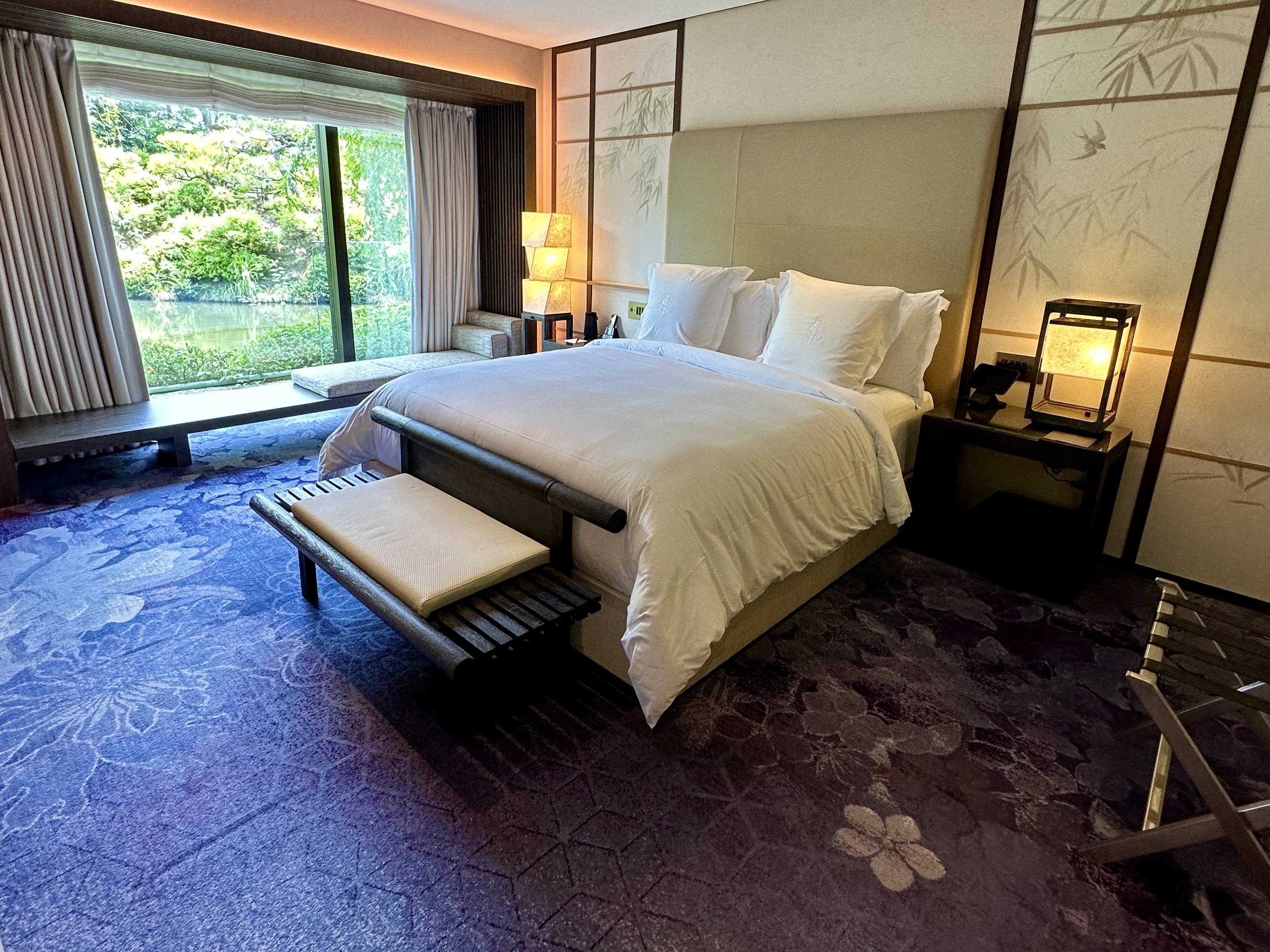
Suite at the Four Seasons Kyoto
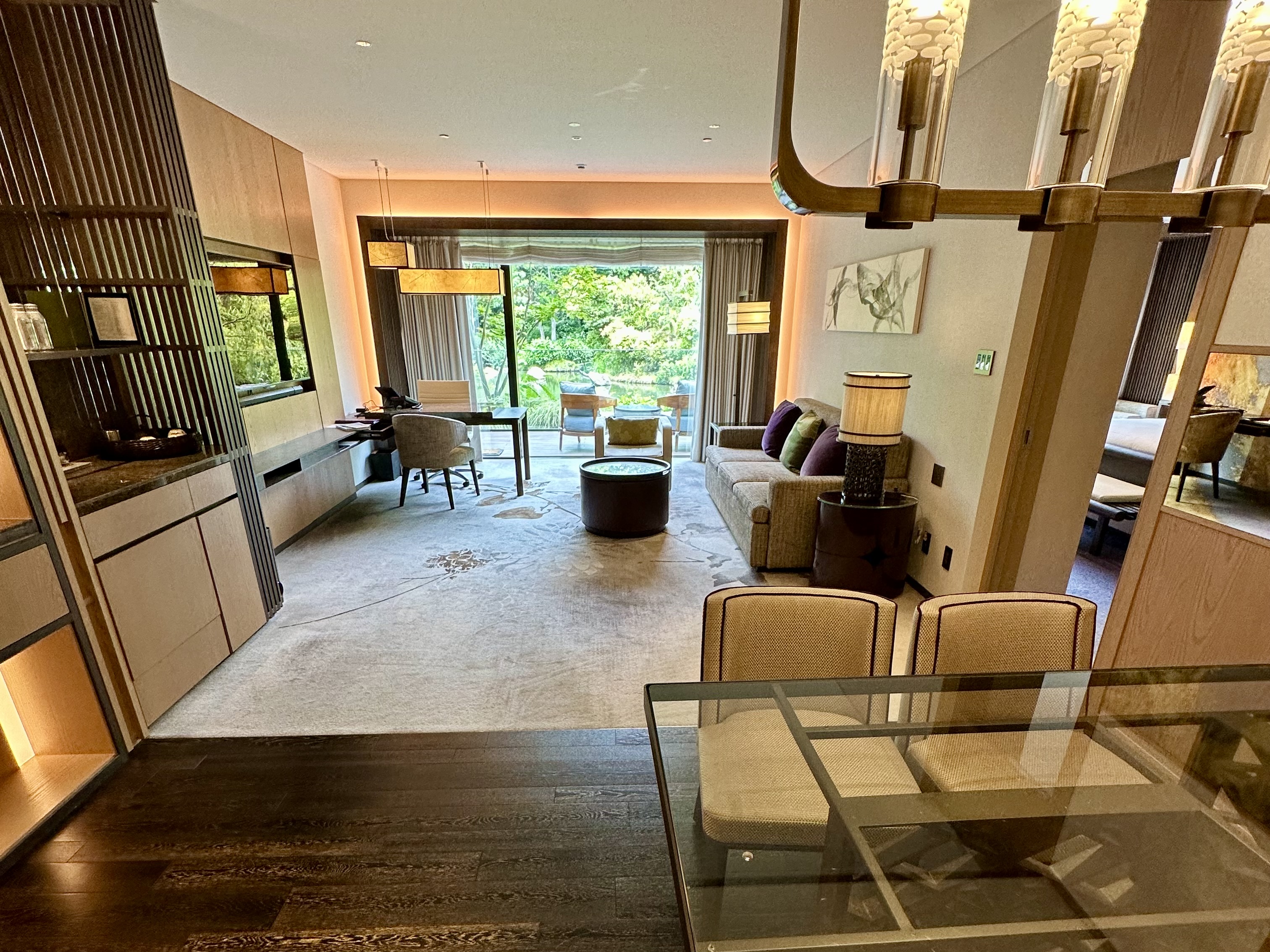
Suite at the Four Seasons Kyoto
Dining:
We only ate breakfast on property at both hotels, so this is a partial picture, but the breakfasts told us a lot.
At the Four Seasons, breakfast was at Brasserie, the all-day restaurant overlooking the pond garden (since rebranded as EMBA Kyoto Grill, the hotel’s modern steakhouse). Big, bright, glass walls looking onto the pond, and a menu that moved easily between Japanese and Western. We had the curry rice once, ordered through room service rather than in the restaurant, and it might be the best curry rice we have ever had. We are still talking about it. Both properties also offer a quintessential Japanese breakfast that is worth ordering at least once. There is something about starting the day with grilled fish, miso, rice, and pickled vegetables looking out at a Kyoto morning that sets the tone for everything that comes after.
At the Park Hyatt, breakfast at Kyoto Bistro was excellent in its own way. The space is more intimate and the menu leans more traditionally Japanese, with the obvious craft you would expect from a Park Hyatt kitchen in Kyoto. We were also lucky enough to do a tea tasting at the property, and that experience alone is worth carving out time for. The setting, the ceremony, the pacing, the precision: it was the kind of cultural moment that stays with you.
Both hotels have stronger dining options at dinner that we did not get to. Park Hyatt’s seventh-generation Kyoyamato kaiseki, which has been operating since 1877 and holds two Michelin stars, is on our list for next time. Four Seasons has Sushi Ginza Onodera over the pond garden, which we have heard is exceptional. Plan for at least one dinner on property at whichever hotel you stay at. They are both worth it.
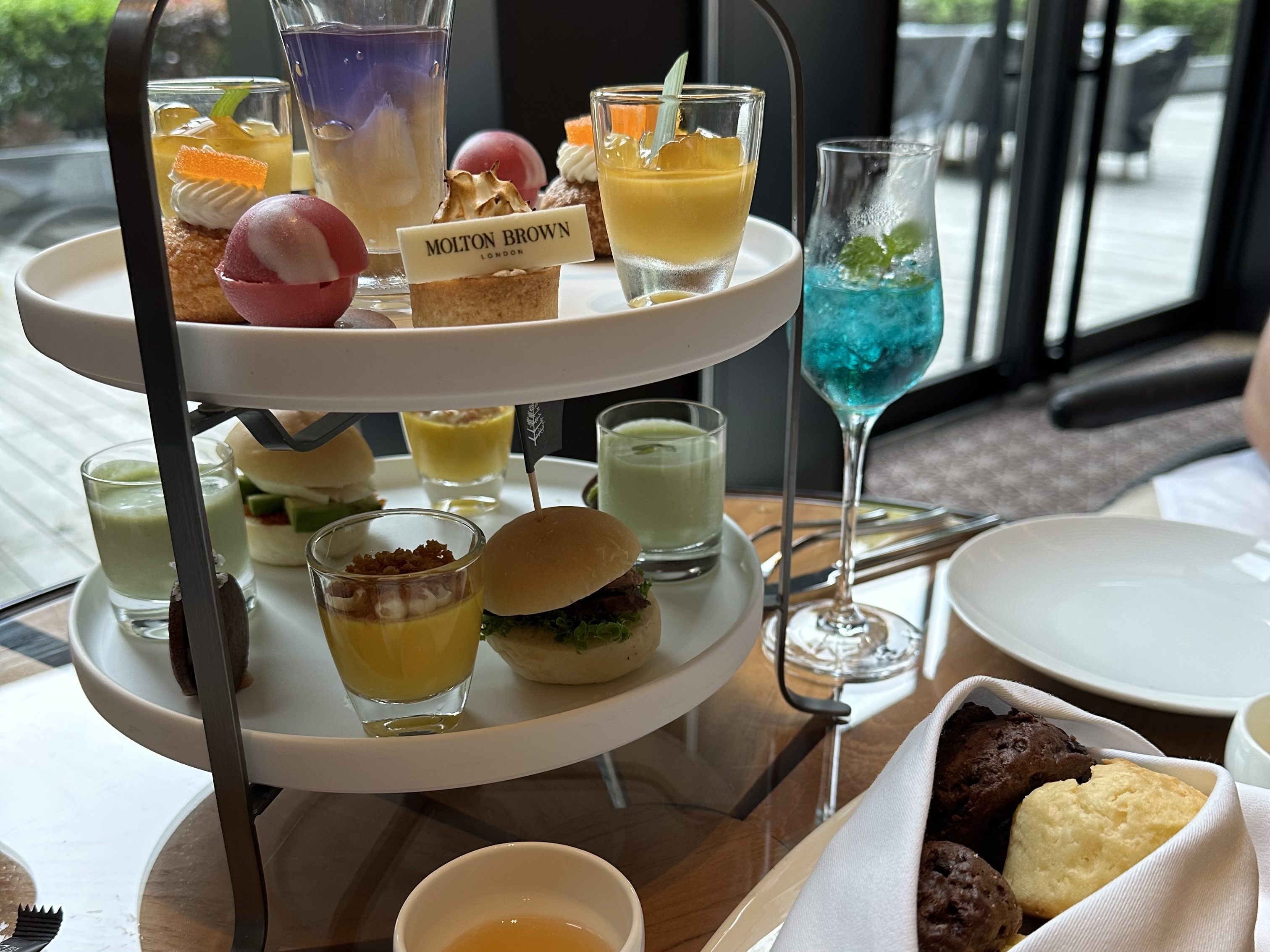
Afternoon tea at the Four Seasons Kyoto
The signature memory:
When we look back at our stays, we each have one moment from each hotel that defined the experience.
For the Park Hyatt, it was sitting at the bar at the front of the building one evening at sunset, looking out through the window with Yasaka Pagoda framed perfectly in our view, the light turning gold and the city slipping into evening. It felt like a scene from a Japanese film. Casual, unhurried, with the kind of view you do not see in hotels often. That single moment is reason enough to book this hotel.
For the Four Seasons, the pond was the headline. Sitting beside it, watching the herons, listening to nothing in particular. The garden is the experience. The rest of the hotel orbits around it. The other moment that stayed with us was a maiko performance in the lobby, a short live dance by an apprentice geisha in full traditional dress. The precision of the movements, the exactness of every gesture, the way each step seemed to be measured to the millimeter, was fascinating to watch up close. Ten minutes that felt like a window into something we would not have seen otherwise.
Both stays are still vivid years later. Different, but equally powerful.
Accessibility:
Both properties are accessible and well-set-up for guests with mobility needs. The Park Hyatt has elevators and dedicated facilities, though the surrounding Higashiyama lanes can be steep and uneven, so if you are using the hotel as a walking base, plan accordingly. The Four Seasons is on relatively flat ground and is the easier choice for navigating the property itself. The pond garden has accessible paths around most of it, though some of the bridges and traditional features are not.
If accessibility is a primary consideration and you want to walk to temples directly from the hotel, neither property is perfect. The Park Hyatt has the better location but more challenging terrain. The Four Seasons has the easier ground but requires transportation to most things.
The matchmaking
Book the Park Hyatt Kyoto if what you want is a sense of place. You always know you are in Japan inside the hotel, and the moment you step outside you are completely in Kyoto, with the architecture, the temples, the lanes, the pace of a city that has been here for over a thousand years. There are casual dining options within easy walking distance for the nights you do not want to think about it, and there is a two-Michelin-starred kaiseki restaurant on property for the night you do. The Park Hyatt is the more immersive Japan experience of the two, and if that is what you are after in Kyoto, this is your hotel.
Book the Four Seasons Kyoto for the consistent luxury standard the brand sets. You know exactly what you are getting, and what you are getting is excellent. The teahouse on the pond is everything you picture Kyoto to be about, the modern conveniences are all where you expect them to be, and the Japanese touches are layered throughout the experience without ever feeling forced. You are literally staying inside an authentic 800-year-old Japanese garden while sleeping in a contemporary luxury hotel. This is the right choice for travelers who want to experience Kyoto and Japanese culture without giving up the predictability of a modern five-star.
We loved both stays for entirely different reasons, and the takeaway is the same one we land on every time we compare two great hotels. There is no best. There is only the right hotel for the trip you actually want to take. These two are both wonderful answers, just to different questions.
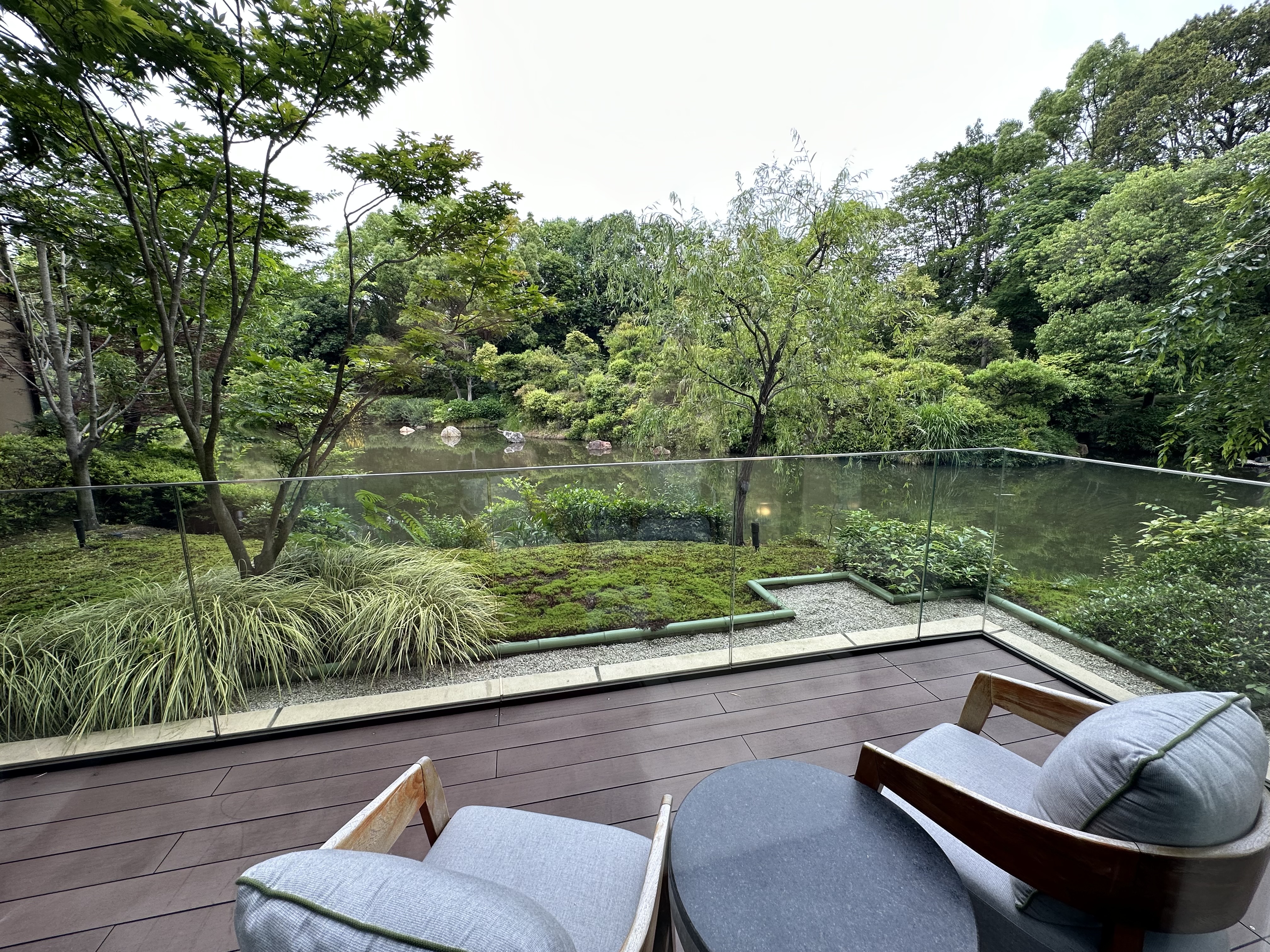
Suite deck overlooking the pond at the Four Seasons Kyoto
Need to know
For more inspiration and insider recommendations, visit our Kyoto page.


Travel Advisor
TudorTravels


Judy Tudor
Get in touch with TudorTravels
Did you like this guide? Reach out to customize and book your own experience. Or, just to chat about travel in general.