



Curator’s statement
On March 1, 11 of us were supposed to fly out of Dubai to meet the rest of our group in India. Instead, missile strikes were launched on Dubai, UAE airspace was shut down, and every flight was canceled. The good news: we were safe. The reality: we were stuck. And in today’s world—whether it’s conflict, weather, or airline disruptions—this is unfortunately something more travelers may find themselves facing. Here’s what I learned (and what I would do differently).
The Fora Difference
Book with Journey Goal to access exclusive perks and experiences on your trip.

Killer perks
Free upgrades, spa credits and more—we got you

Personalized recs
Customized travel planning for your style

Insider knowledge
Expert advice from people who’ve actually been there
Where to stay
Unlock perks by contacting Journey Goal to book your trip.
How to prepare before things go wrong
Use a flight desk
Use a flight desk: When flights started getting canceled day after day, my clients who had booked their own air had to call the airline repeatedly—there was no online option for a situation like this—wait on hold for hours, and rebook—only to have flights canceled again
Meanwhile, for this trip, I had booked through Fora Flights, which has direct access to airline ticketing systems. I could email their emergency line and have them handle rebooking and refunds. I had no previous idea how significantly less stressful this would be after successive days of flight cancellations
Takeaway: If you’re traveling during peak seasons or on complex itineraries, having someone in your corner can matter more than saving a few dollars.
A travel advisor isn’t just for the fun parts
While most of the group had booked their own air directly, I focused on the problem I could solve: where we were going to sleep.
The night our flights were canceled, our hotel lobby was chaos. Everyone was trying to extend their stay—and prices were rising fast. I took one look at the line, pictured myself standing there for hours (at midnight, no less), and quietly retreated back to my room.
From there, I opened my laptop and checked Fora’s booking platform. The hotel next door (the excellent Conrad Dubai) was still available for $170/night, compared to the $370 our current hotel was now charging. I locked in six rooms within minutes. That one move helped ease things for the group.
Takeaway: When things go wrong, access and speed are everything.
Travel insurance has limits (especially for war)
War and acts of conflict are almost always excluded from standard travel insurance (including most premium credit card protections).
There are “Cancel For Any Reason” policies that can help, but they typically need to be purchased shortly after your initial deposit (often within a couple of weeks) and availability varies depending on where you live.
Takeaway: If you want true flexibility, you have to plan for it early.
You’re stranded! Now what?
Don’t wait—move to where you have options
This is my biggest hindsight takeaway.
When Dubai airspace closed, flights were still operating out of Oman. But at the time, it felt complicated—especially for a large group with varying risk tolerances: it meant a long drive, a border crossing with visas, and flights that already looked limited and expensive.
So we stayed in Dubai. We had a decent hotel, we felt safe, and we kept thinking, “Maybe tomorrow’s flight will go.”
In hindsight, it likely would have been faster, cheaper, and far less stressful to pivot immediately. After a few days, that option became much harder as transportation filled up and prices climbed.
We also realized that while long-haul flights to the U.S. remained disrupted, some shorter-haul flights—to India or parts of Europe—were operating sooner. They weren’t ideal, but once out of the region, travelers had far more options.
Takeaway: When systems break, mobility equals options.
Stay calm… and make the best of it
You don’t make good decisions when you’re spiraling.
So we focused on what we could control: we were safe, we had a place to stay, and we were together.
And honestly, we ended up exploring a side of Dubai I never would have planned—including a fantastic Chinese spa about 30 minutes outside the city center (with great food included). We went almost every day. By the end, I was tired of being massaged. I truly never thought I would say that.
Some of our group just ended up chilling in their hotel rooms and reading, luxuriating in the unexpected gift of unscheduled free time.
Takeaway: Sometimes the best thing you can do is pivot your expectations.
Keep your suppliers in the loop
Instead of going silent, I kept our tour operator Gate 1 updated in real time on our group’s status. That allowed them to cancel services early and reduce costs on their end.
In the end, even though their terms didn’t require it, Gate 1 offered full travel credits to our affected travelers.
Takeaway: Communication builds goodwill—and goodwill often comes back to you. And it helps to work with quality, vetted suppliers.
Don’t forget the people at home
At first, I was updating my husband—but not really thinking about anyone else. Meanwhile, I didn’t realize how many people in my broader community were worried. Even my eldest son—who’s not exactly chatty—called me twice (a miracle)
It made me realize that while I was focused on logistics, the people who care about you just want reassurance.
Takeaway: A quick social media update can go a long way.
Final thought
We didn’t miss our India trip because of poor planning. We missed it because sometimes, things just…happen.
But how you respond—and how you lean on your community and resources—that’s where you have control.
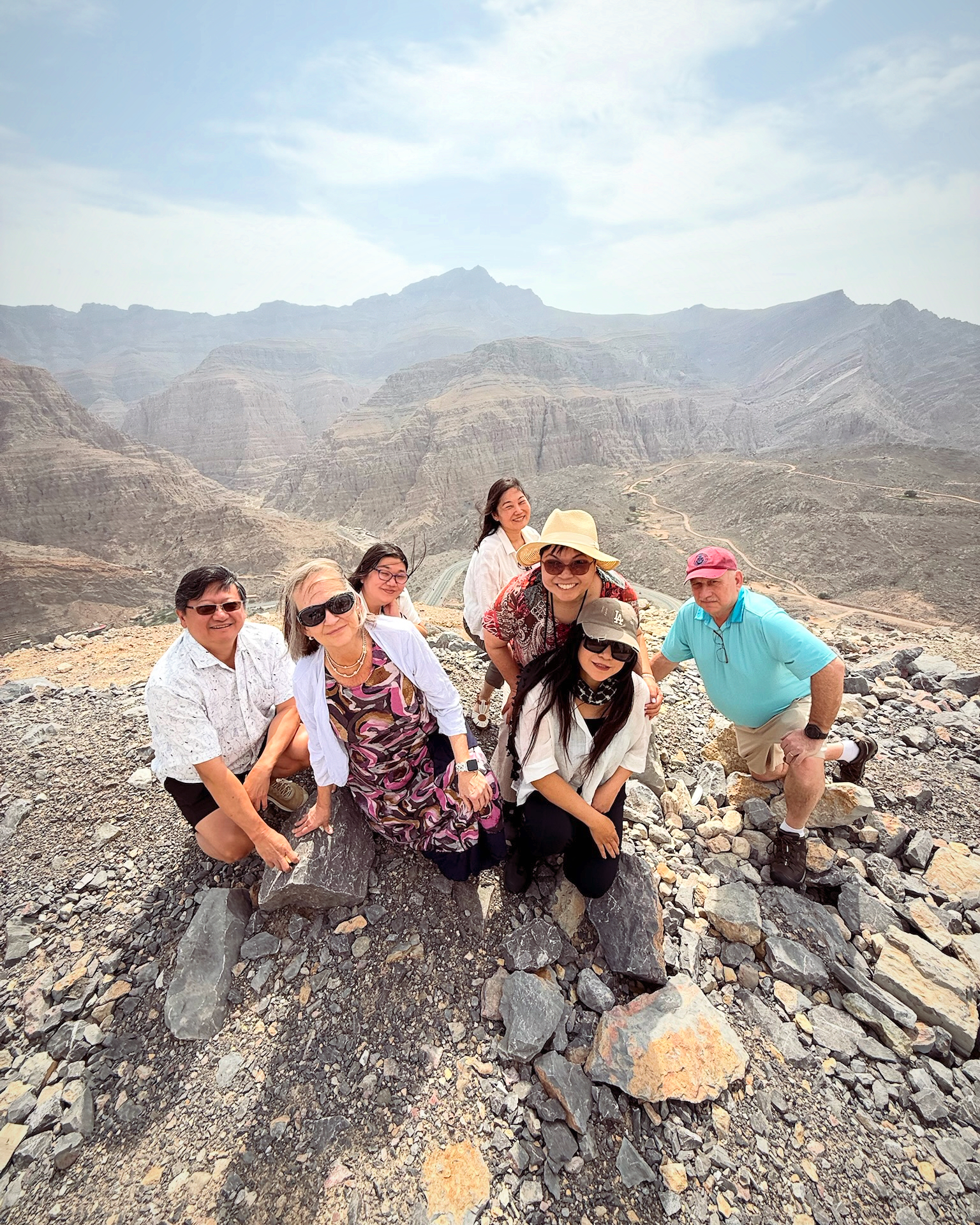
Making the best of it in action: an impromptu tour of Ras Al Kaimah, a lesser known Emirate.
Need to know
For more inspiration and insider recommendations, visit our Dubai page.


Travel Advisor
Journey Goal


Ruth Walker
Get in touch with Journey Goal
Did you like this guide? Reach out to customize and book your own experience. Or, just to chat about travel in general.