


Curator’s statement
If ever there was a quintessential tropical paradise, surely Bali is it. But amid an explosion in popularity in recent years, Bali is changing. As development increases and tourist numbers rise, you may be wondering—is Bali still worth it? It turns out—yes, not only is it possible to find the quiet serenity and natural beauty that made this island famous, but with a little insider knowledge, it’s actually quite easy.
The Fora Difference
Book with Oblique Route to access exclusive perks and experiences on your trip.

Killer perks
Free upgrades, spa credits and more—we got you

Personalized recs
Customized travel planning for your style

Insider knowledge
Expert advice from people who’ve actually been there
Where to stay
Unlock perks by contacting Oblique Route to book your trip.
Let’s get this out of the way at the start—I’m not much of a beach person. This is one of the reasons I hesitated booking a trip to Bali for a long time. The island, after all, is probably most famous for its beaches. The other reason for my hesitation was the reports I had heard from friends and fellow travelers that Bali was becoming overdeveloped and overrun with tourists. I tend to prefer a more off-the-beaten-path approach to travel, so this gave me pause. But once I started researching the island, I was encouraged by what I found. It seems the rapid development is mostly taking place in only a few areas—namely the south part of the island around Denpasar and the famous beach destinations Kuta, Seminyak, and Canggu. So I resolved that I would avoid this area on my trip. As I said, I’m not much of a beach person anyway, so this was no great loss.
For the first part of my trip, I based myself in Ubud. Now, admittedly, Ubud is a major tourism hub and Bali’s most well-known inland destination—so it’s not exactly “far from the madding crowds” per se. However, its central location makes it an excellent base for day trips and excursions to other parts of the island. It’s also a great place for holistic spas, yoga studios, and guided meditation retreats. While Ubud center is indeed very crowded and a bit over-commercialized, it’s easy enough to avoid the chaos if you wish. For accommodation, I highly recommend the Nyuh Kuning neighborhood, which is just south of the Sacred Monkey Forest. It’s chill, peaceful, lushly green, has plenty of great places to eat, and it’s still a walkable distance to Ubud center.
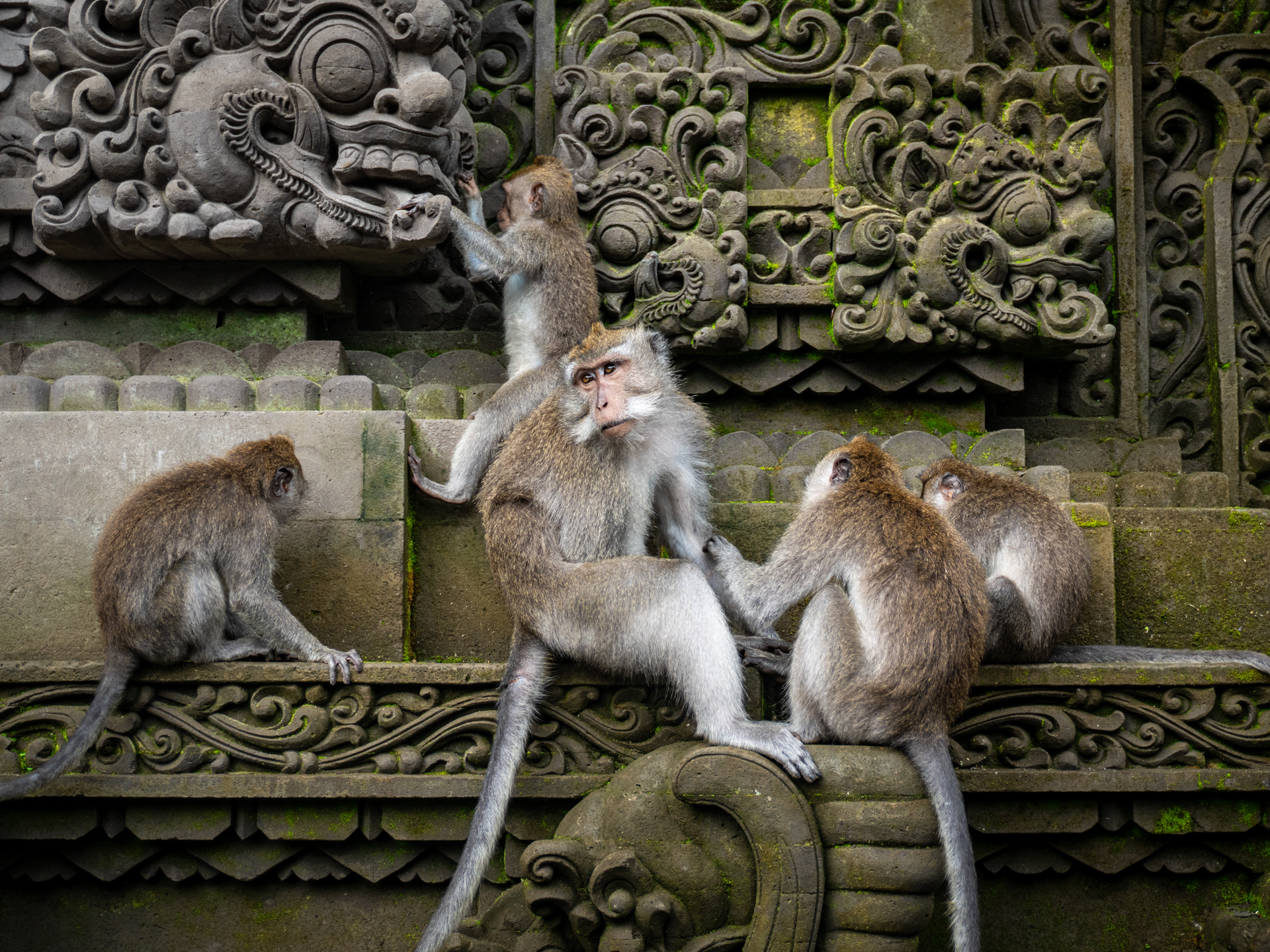
Here are some of my top recommendations for Ubud, based on my time there. First, check out the Sacred Monkey Forest. Yes, this is one of the most popular things to do in Ubud, but I think it’s worth it. Go early in the morning when it first opens to avoid big crowds. Second, take a walk through the rice fields on the edge of town. The Sweet Orange Walk Trail and the Sayan Rice Fields are particularly lovely. When it comes to food, you’re really spoiled for choice. MOTHER in the Nyuh Kuning neighborhood has great breakfast options and excellent coffee. Nearby, Old Friends Coffee is a wonderful little cafe (try the banana bread). Sage is an excellent vegan restaurant that even non-vegans will enjoy, especially if you end your meal with a slice of their decadent coconut cake. If you want to eat more like a local, visit one of the countless warungs around town–Sun Sun Warung and Warung Rama are two I can personally vouch for. Finally, for a true local experience, have dinner at Babi Guling Pan Lolo for traditional Balinese spit-roasted pig. (Vegetarians beware. This recommendation is not for you.)
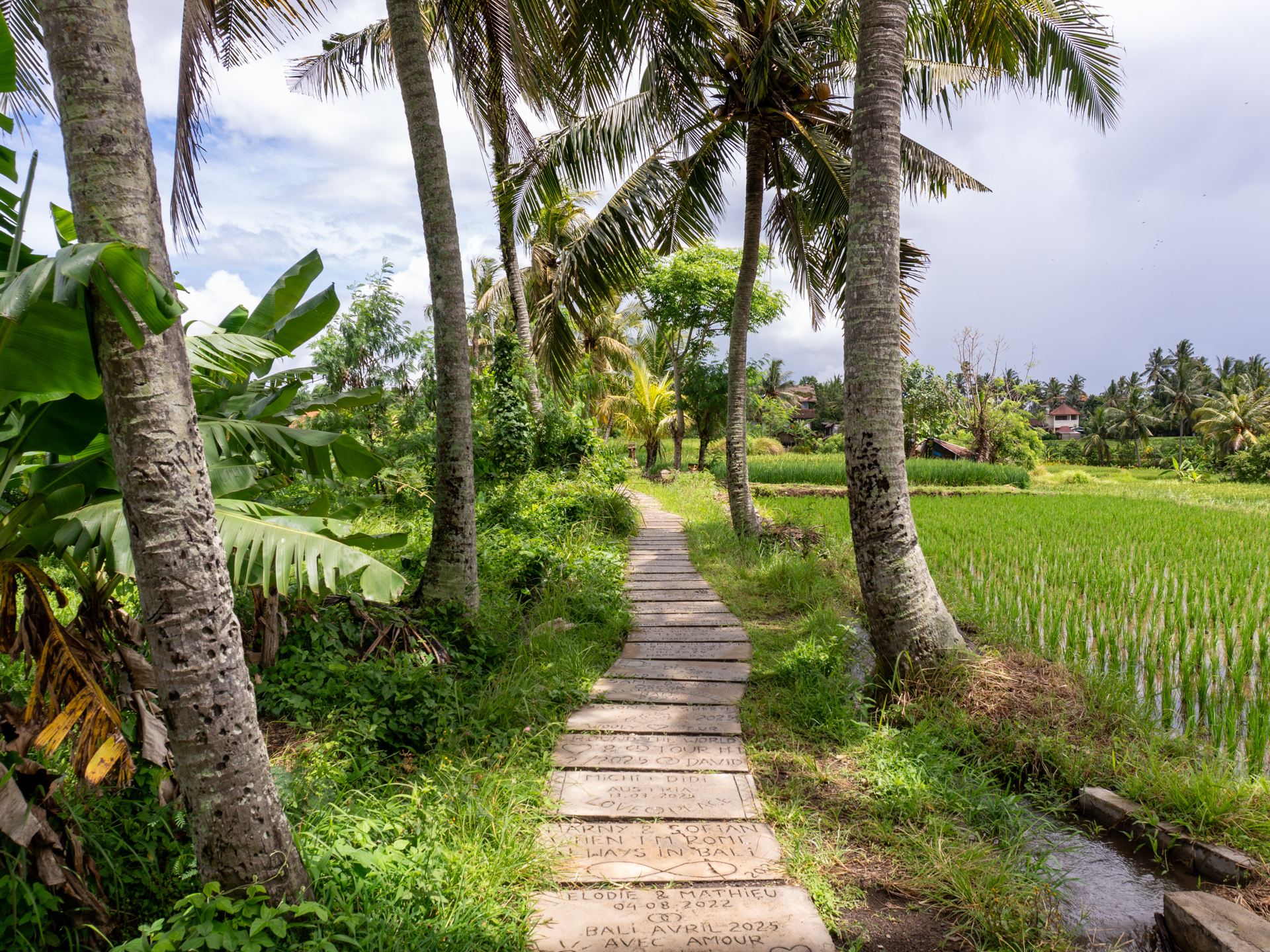
A scene along the Sweet Orange Walk Trail in Ubud
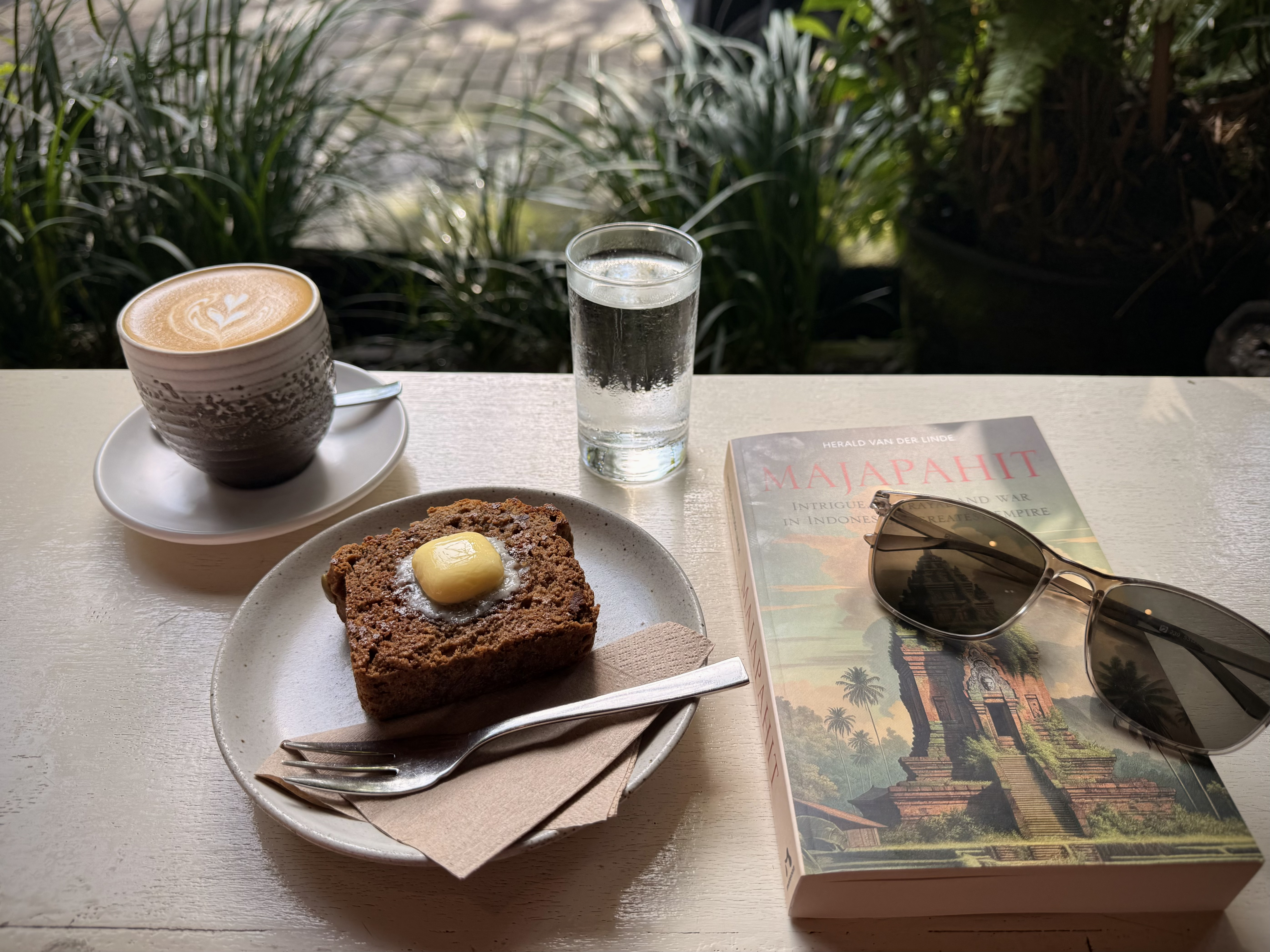
A slow travel day at Old Friends Coffee in Ubud's Nyuh Kuning neighborhood
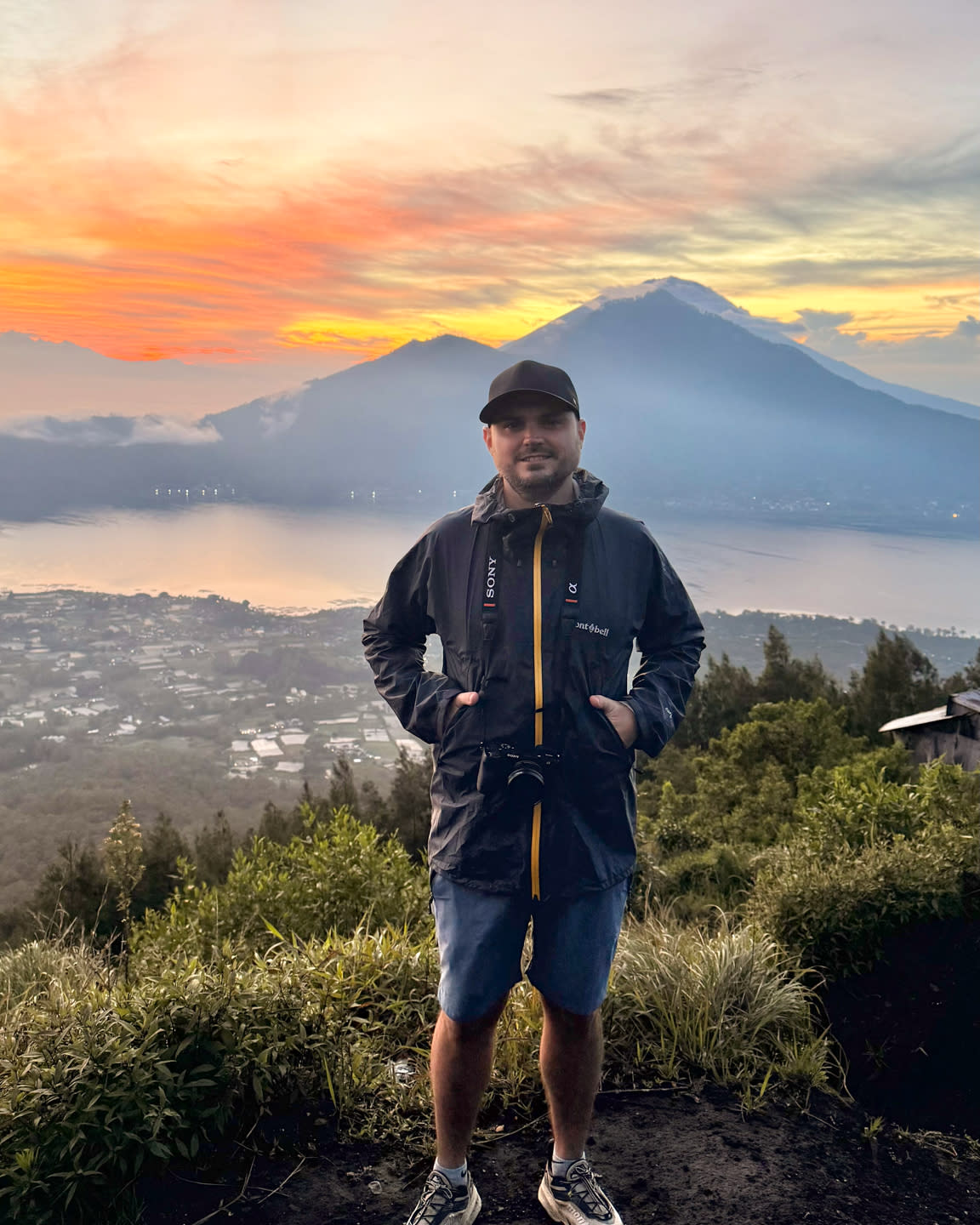
Earlier, I mentioned that Ubud is an ideal base for exploring other parts of Bali. During my stay, I did two half-day excursions, and these were the two most memorable highlights of my trip. The first excursion was a guided sunrise hike at Mt. Batur, an active volcano in the northeastern part of the island. The climb was less challenging than expected—you don’t need to be a seasoned hiker for this experience. A sturdy pair of shoes and a modest level of fitness are all that is needed. For me, the unforgettable view of the watercolor-painted sky reflected in the lake below was well worth the effort to reach the top. If hiking isn’t really your thing, you could opt for a jeep or ATV tour of the lava field created by Batur’s 1963 eruption. After the hike, I opted to stop for an hour at Batur Natural Hot Spring to soak my sore muscles while gazing out across Danau Batur Lake. To round out the experience, my driver stopped at a coffee plantation on the way back to Ubud. Here, I had a personal mini-tour and learned about luwak coffee—a uniquely Balinese specialty made from beans that have been, shall we say, processed through the digestive system of a civet cat, resulting in a remarkably smooth cup—followed by an extensive tasting experience of over a dozen varieties of tea and coffee. By the time I arrived back at my hotel in Ubud, I was exhausted but immensely satisfied.
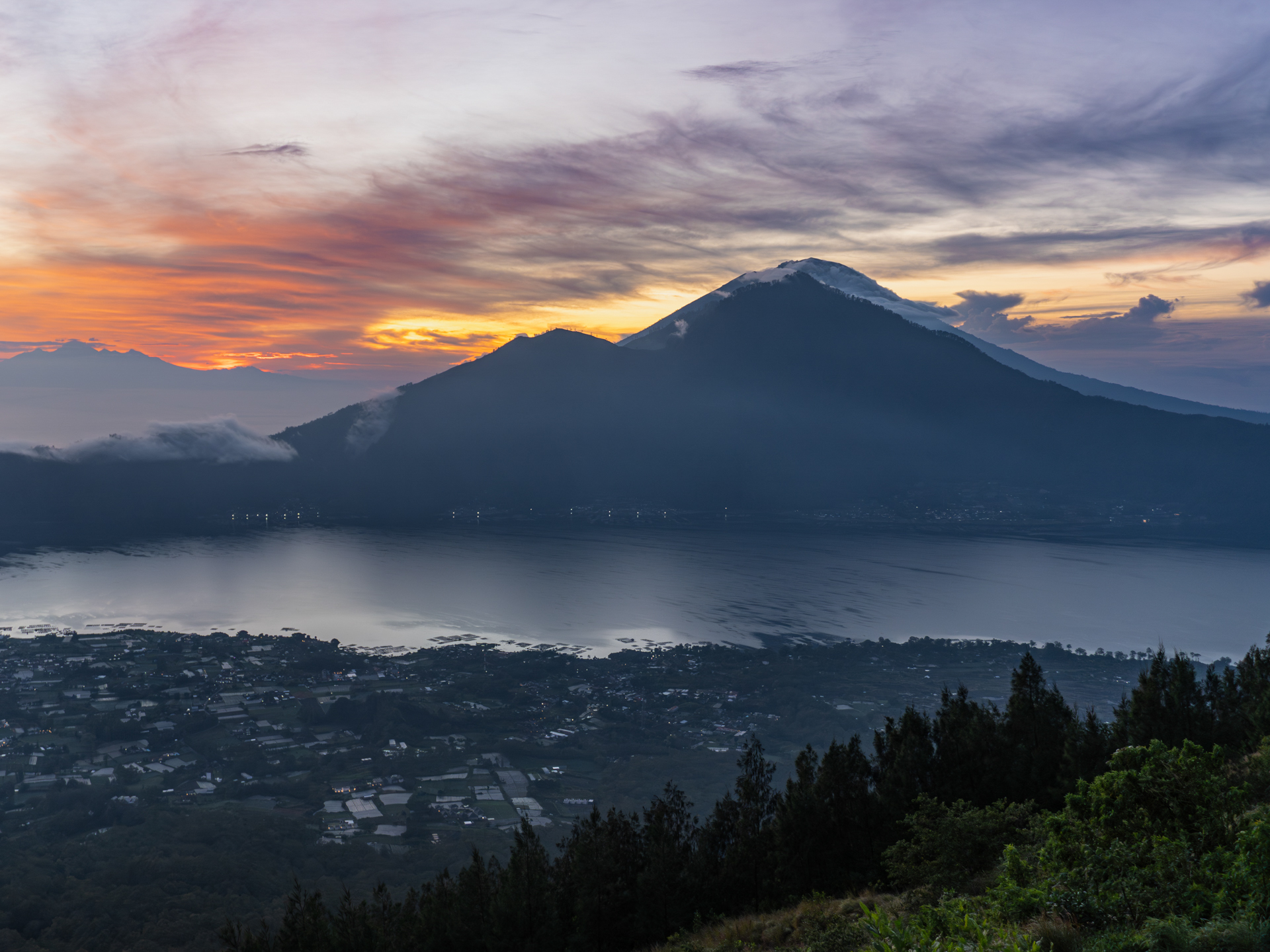
A watercolor sunrise seen from the top of Mt. Batur
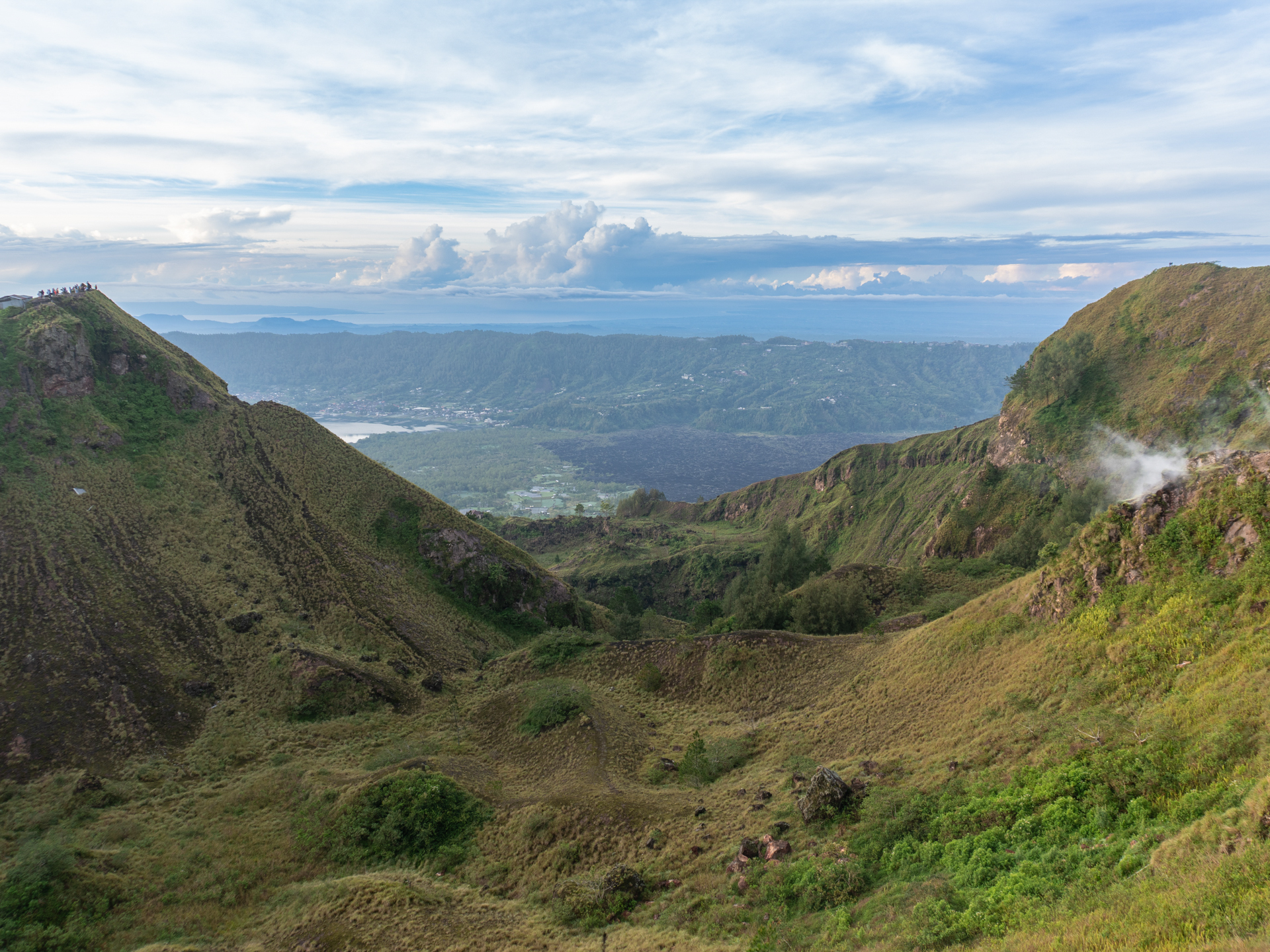
The Mt. Batur crater, with a steaming vent on the right and hikers on the summit to the left. In the distance, the lava field from the 1963 eruption.
The other half-day excursion I did was a visit to the Jatiluwih Rice Terraces, about an hour’s drive from Ubud. This was one of the most picturesque places I’ve ever seen—a living postcard of lush, vibrant green paddies stacked against a backdrop of mountains and distant volcanoes, accompanied by the sound of rushing water and birdsong. Heavenly. It was everything I wanted Bali to be. I went early in the morning, arriving shortly after sunrise, and it felt like I had the whole place to myself. There are several well-signed walking routes through the terraces, and you can choose your path depending on how much time you have and how much walking you want to do. I thoroughly explored all of the available routes, which took about two hours. Afterwards, I had a late breakfast at Jatiluwih Resto overlooking the terraces. I couldn’t get enough of that scenery.
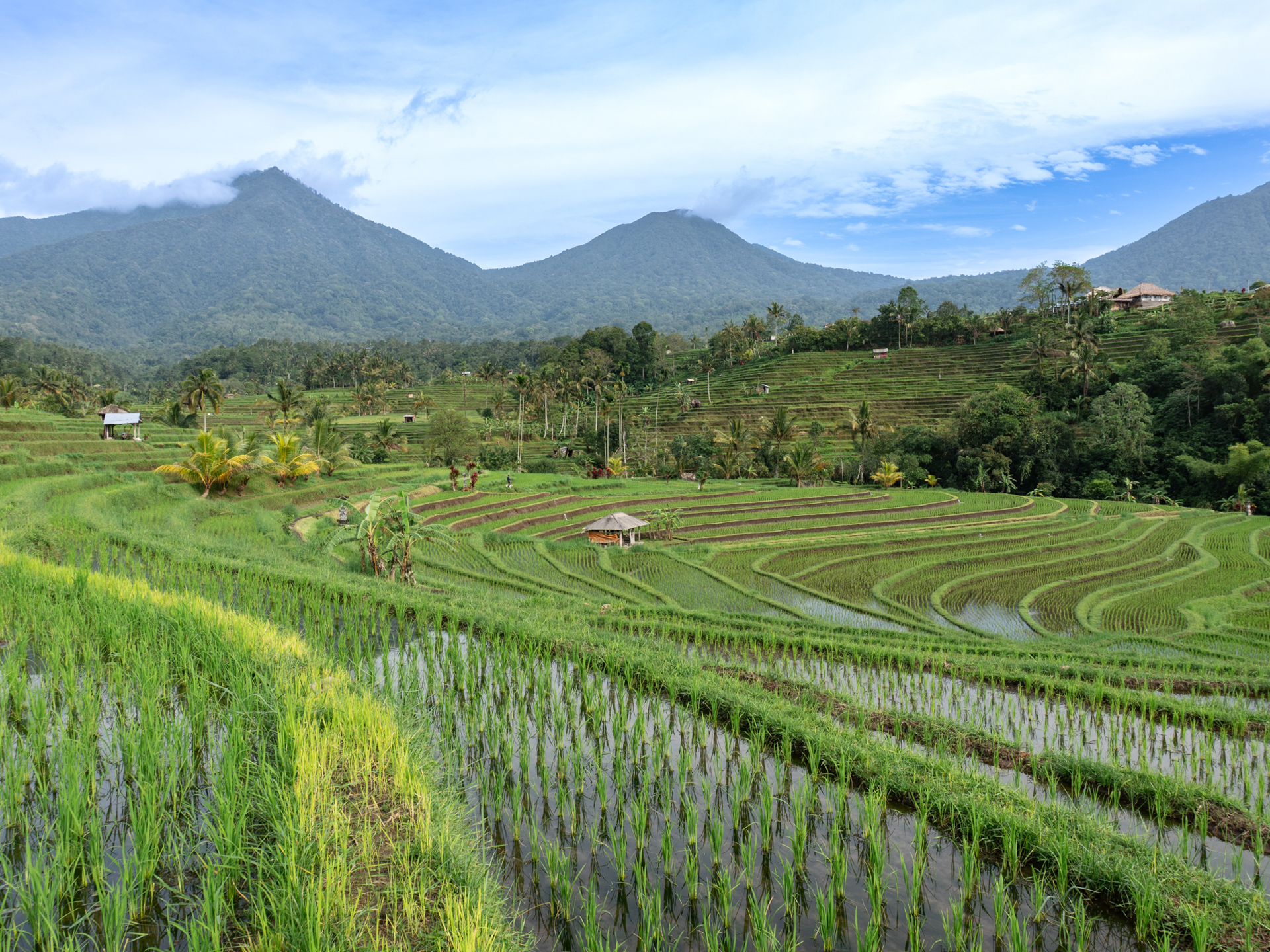
The Jatiluwih Rice Terraces in all their glory
For the last few days of my trip, I left Ubud and relocated to Munduk in the highlands to the north. Notably cooler and more sparsely populated than Ubud, Munduk felt like a quiet retreat by comparison. The area’s main draw is its abundance of waterfalls. There’s a trail just outside of town that includes four of them, each one more impressive than the last. Another popular activity in Munduk is a jungle walk combined with a canoe ride on nearby Lake Tamblingan—I had planned to do this, but ended up canceling due to poor weather. Instead, I visited the Munduk Moding Plantation—yes, another coffee plantation, complete with another private tour, an in-depth explanation of every stage of coffee production, and a guided tasting experience. This time, I bought some beans to take home. It’s worth noting that Moding Plantation also operates a 5-star resort, and while I didn’t personally stay there during this trip, I can attest to the beauty of the grounds and the warmth and hospitality of the staff.
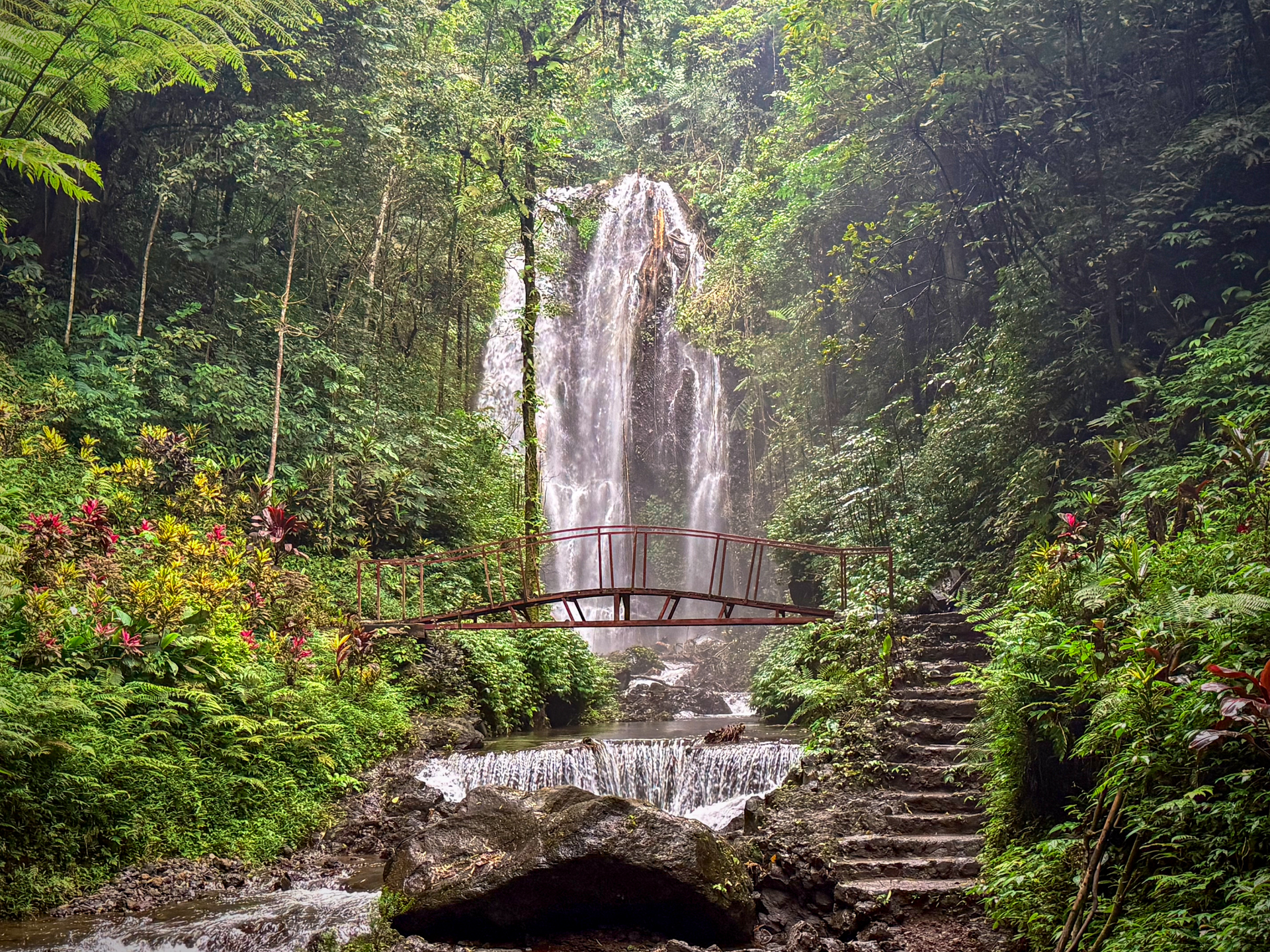
Labuhan Kebo Waterfall near Munduk
The final day of my Bali trip consisted of one major activity—I rented a motorbike and explored the backroads of the Munduk highlands on my own. This is an activity I would recommend only to intrepid, independent travelers with some motorbike experience—while there is very little traffic relative to Ubud and southern Bali, the roads are twisty, occasionally steep, and can be hazardous after rain. That said, if you’re feeling adventurous, this is the perfect way to truly get off the beaten path. I caught some stunning views of the twin lakes, saw wild monkeys, visited Ulun Danu Beratan Temple, had a superb lunch at a little warung called Éco Café 2, and just generally had a blast. I got back to my hotel just as the rain that had been threatening all afternoon finally started coming down. I capped off the day with a sumptuous dinner and a couple cold Bintang beers at my hotel’s restaurant—Bintang Munduk Bungalow Bar & Resto. Even if you don’t stay at this hotel, if you’re in the area, the poolside restaurant with views across the valley is worth a visit.
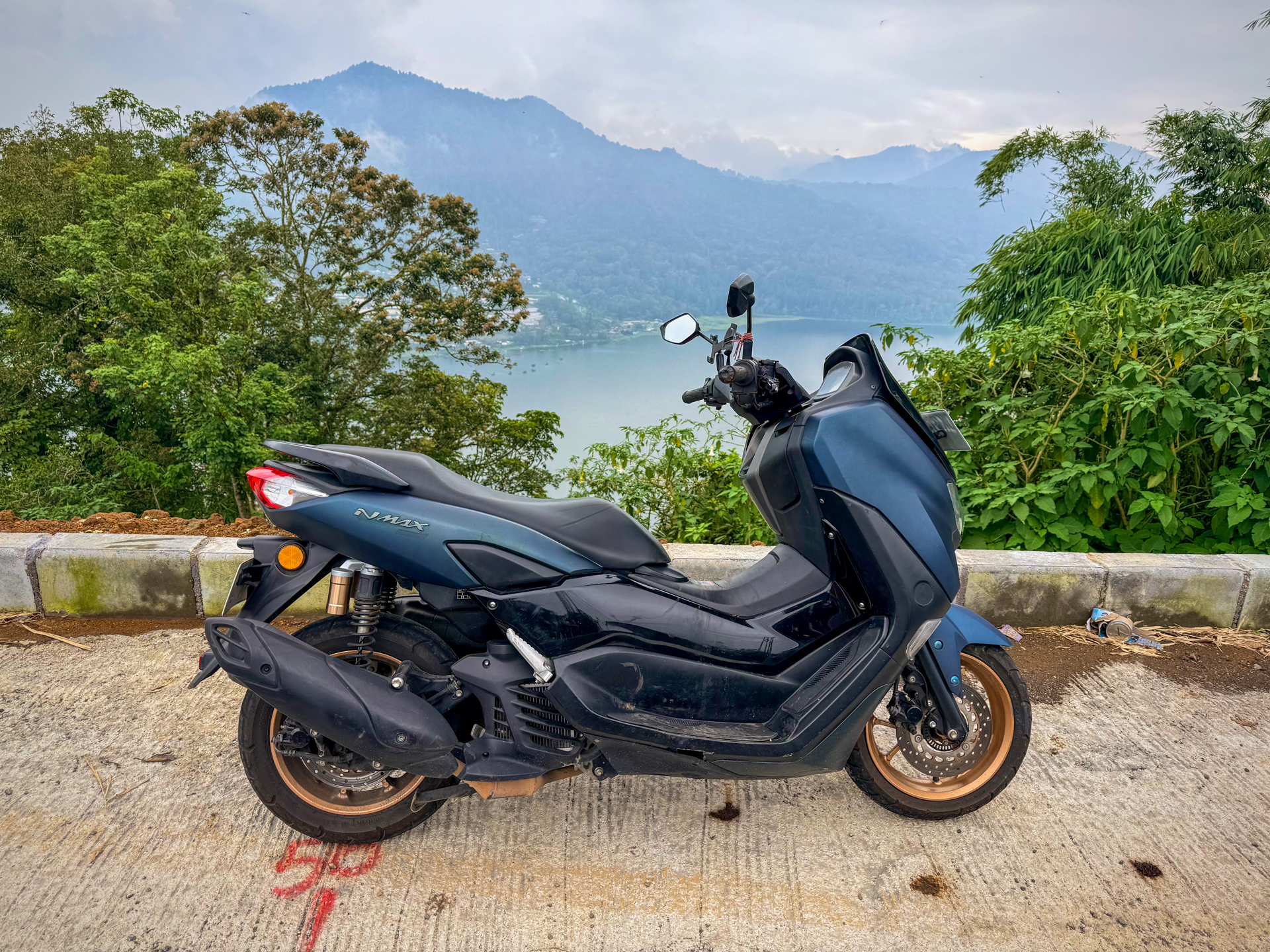
My trusty steed for exploring the Munduk Highlands backroads.
So—is Bali still worth it? Based on my experience, my answer is a resounding YES. The key is knowing where to go and what to avoid. I arrived with modest expectations, but Bali surprised me, and I ended up leaving with memories I’ll carry for a long time. The island is changing, yes. But the Bali worth seeking is still very much out there if you know where to look.
Need to know
A note about beaches: My trip didn’t include any of Bali’s world-famous beaches. The subject of Bali’s beaches has been thoroughly covered elsewhere, so I’ll skip the obvious and offer this instead: if you’re a beach lover who wants to avoid the crowds and traffic of the south, look to the eastern side of the island instead. Amed Beach, Virgin Beach, and the shores of Nusa Lembongan offer genuine tropical beauty without the chaos of Kuta or Seminyak.
Getting around Bali: You essentially have two options—employing a private driver, or taking advantage of rideshare apps like Grab. For most travelers, the best approach is a combination of private drivers for long day trips and ride-sharing apps for short local hops. A private driver can navigate chaotic traffic, knows the best routes, and will wait for you at each attraction. The cost of a private driver is typically between IDR 600,000 and IDR 900,000 ($40–$60 USD) depending on the car size and distance. A driver can be arranged beforehand by your travel advisor, or for spur-of-the-moment day trips, your hotel desk staff should be able to arrange one for you. Rideshare apps like Grab are great for shorter local jaunts—like getting from your hotel to your dinner reservations at a restaurant across town. You can pay for your Grab ride with an international credit card, so it’s convenient as well as efficient.
When to go to Bali: Bali has fairly distinct wet and dry seasons. The dry season is generally April to October, with the peak during the summer months of July/August. This is when you’ll have perfect beach weather and low humidity. The downside of visiting Bali during the peak is the extreme crowds, the heavy traffic, and the higher prices. The wet season, while it does come with frequent rain and higher humidity, also comes with lush green scenery, fewer tourists, and 30–40% discounted rates at hotels and resorts. I visited Bali in February, and the weather was actually fine for the most part. It did rain almost daily—but with just one or two exceptions, it only really rained in the evening, and usually only for an hour or two. The rest of the time, the skies were clear and there was plenty of sunshine. But I will offer this warning: when it rains in Bali, it really RAINS. Intense tropical downpours can come out of nowhere and quickly flood the streets without warning, and then disappear as suddenly as they came.
For more inspiration and insider recommendations, visit our Bali page.


Travel Advisor
Oblique Route


Kevin Miller

Get in touch with Oblique Route
Did you like this guide? Reach out to customize and book your own experience. Or, just to chat about travel in general.