


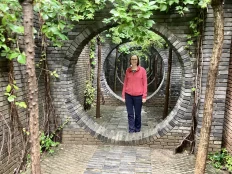


Curator’s statement
Vietnamese cuisine has a well-earned reputation for being fresh, vibrant, and incredibly flavorful. Taking part in a cooking class here is more than just a meal—it’s a full sensory journey into the culture. From hand-selecting ingredients at a local market to cooking in a traditional open-air kitchen, this experience can connect you to the heart of a destination through its food, people, and daily life.
The Fora Difference
Book with Jennifer Redman to access exclusive perks and experiences on your trip.

Killer perks
Free upgrades, spa credits and more—we got you

Personalized recs
Customized travel planning for your style

Insider knowledge
Expert advice from people who’ve actually been there
Where to stay
Unlock perks by contacting Jennifer Redman to book your trip.
We visited the coastal city of Nha Trang for diving, and while there, connected with Chef Dat, who hosts a cooking class. He picked us up from our hotel, the Sheraton Nha Trang Hotel & Spa, and our experience began.
Our first stop was a tiny bakery built into the side of a cliff, which was an unexpected and memorable introduction to the region. It’s the kind of hidden local spot you’d never find on your own, and it set the tone for the day ahead.
Next, we explored a local market, selecting the fresh herbs and vegetables we’d use in our meal. Vietnamese cooking is defined by its abundance of leafy greens such as mint, Thai basil, and coriander, which give dishes their signature flavor and brightness. Seeing (and choosing) these ingredients firsthand adds a whole new appreciation to every bite.
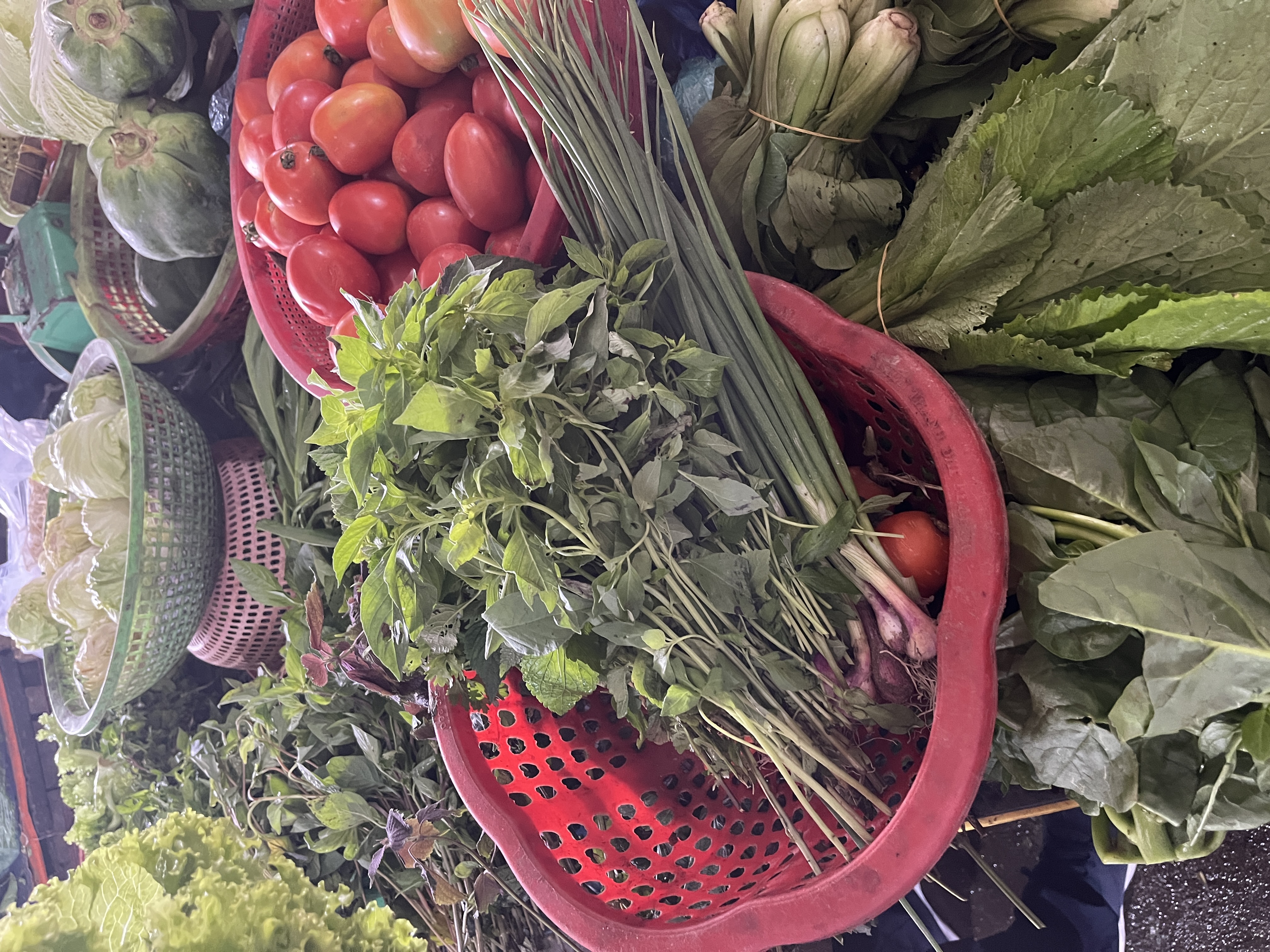
Some of the herbs and vegetables from the market that we’ll use in our meal
We then visited a rice paper shop to observe how this essential Vietnamese cooking staple is made using centuries-old techniques. Watching delicate sheets laid out to dry in the sun before being stacked and prepared for use brings a deeper understanding to dishes like spring rolls.
From there, we continued to Chef Dat’s home kitchen and garden, a peaceful, open-air space just outside the city. The outdoor kitchen is covered but open on the sides, allowing a natural breeze to flow through as you cook. It’s relaxed, authentic, and incredibly inviting.
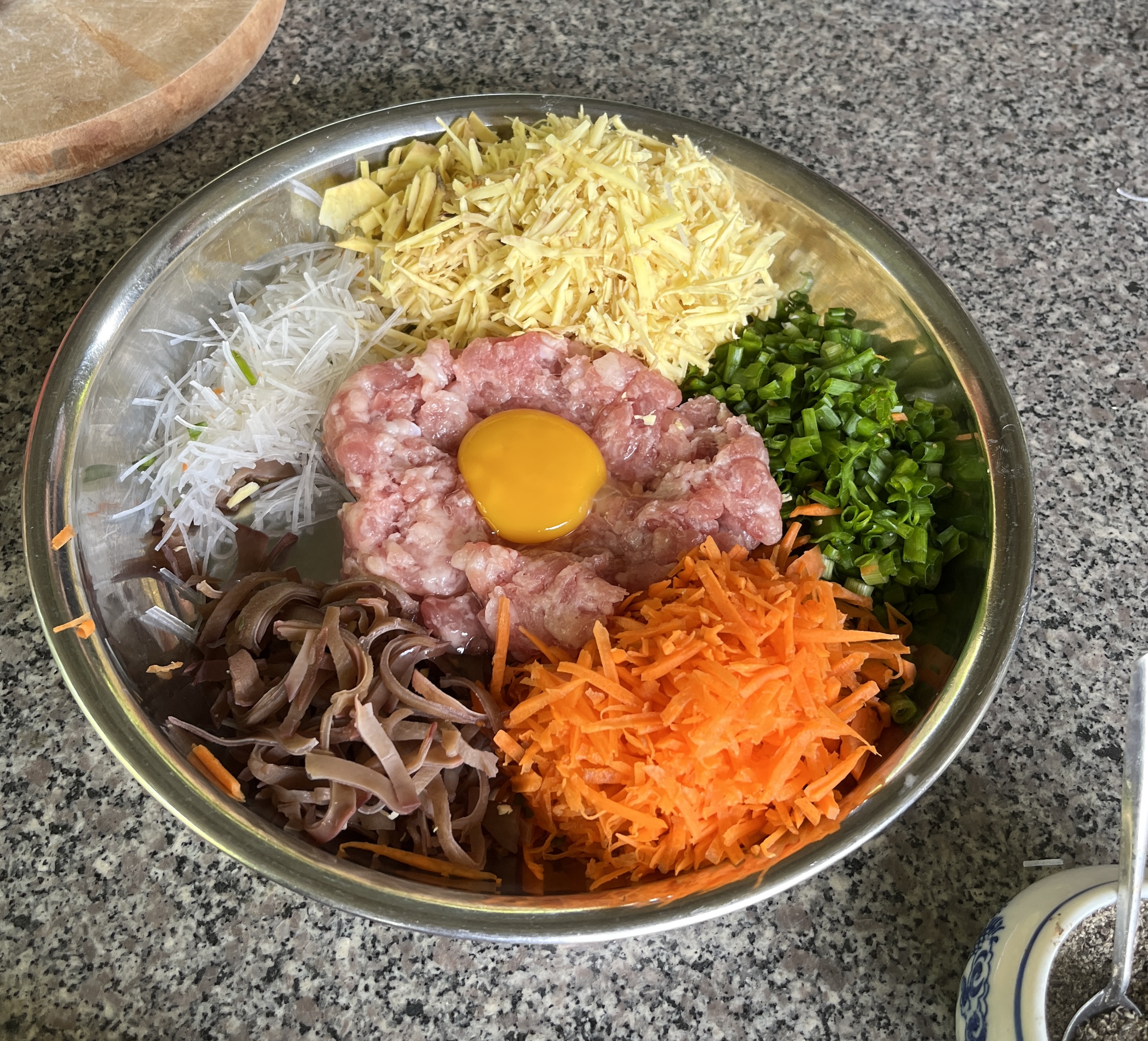
All the ingredients for our bún chả, ready to assemble together into the patties
This is where we truly dove in. Together, we:
Chopped and prepared fresh vegetables and herbs to use in all the recipes
Assembled bún chả, traditional ground pork patties with herbs, eggs, and vegetables such as carrots and mushrooms, and grilled them over open flames using traditional methods
Made chả giò, crispy fried spring rolls filled with shrimp and pork
Made bánh xèo, a rice flour Vietnamese crepe that is filled with herbs, bean sprouts, pork, and shrimp
Created our own nước chấm, the Vietnamese dipping sauce with fish sauce, lime, garlic, sugar, and chili
Every step was hands-on, and we came away with new skills and recipes, perfect for both the beginners and experienced cooks in our group.
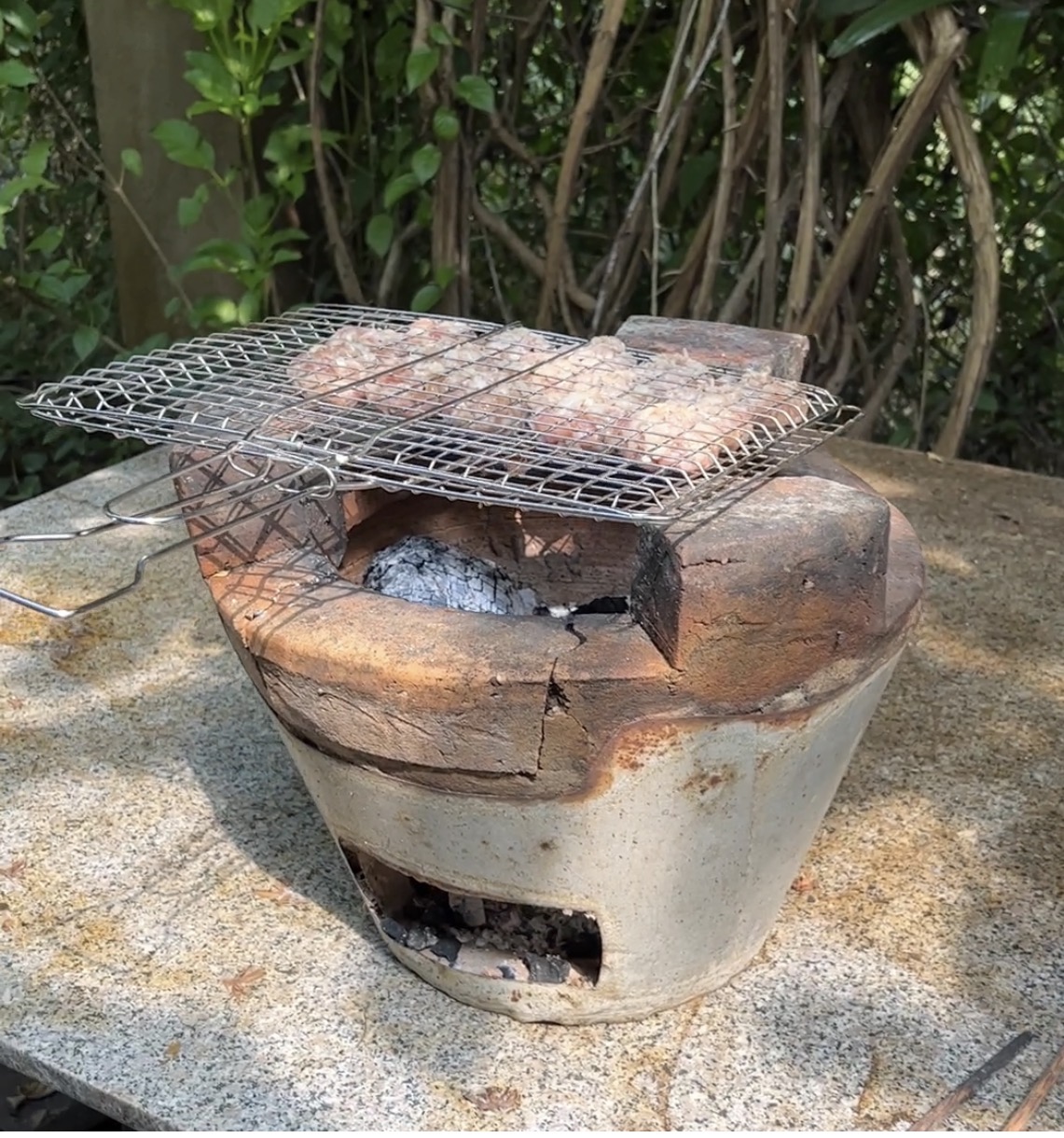
Grilling bún chả on an outdoor clay stove over charcoal
The best part: Enjoying our creations
At the end, we sat down to enjoy the meal we prepared together. But the real takeaway? Not just a delicious meal, but the confidence and knowledge to recreate these dishes at home, bringing a taste of Vietnam back with us.
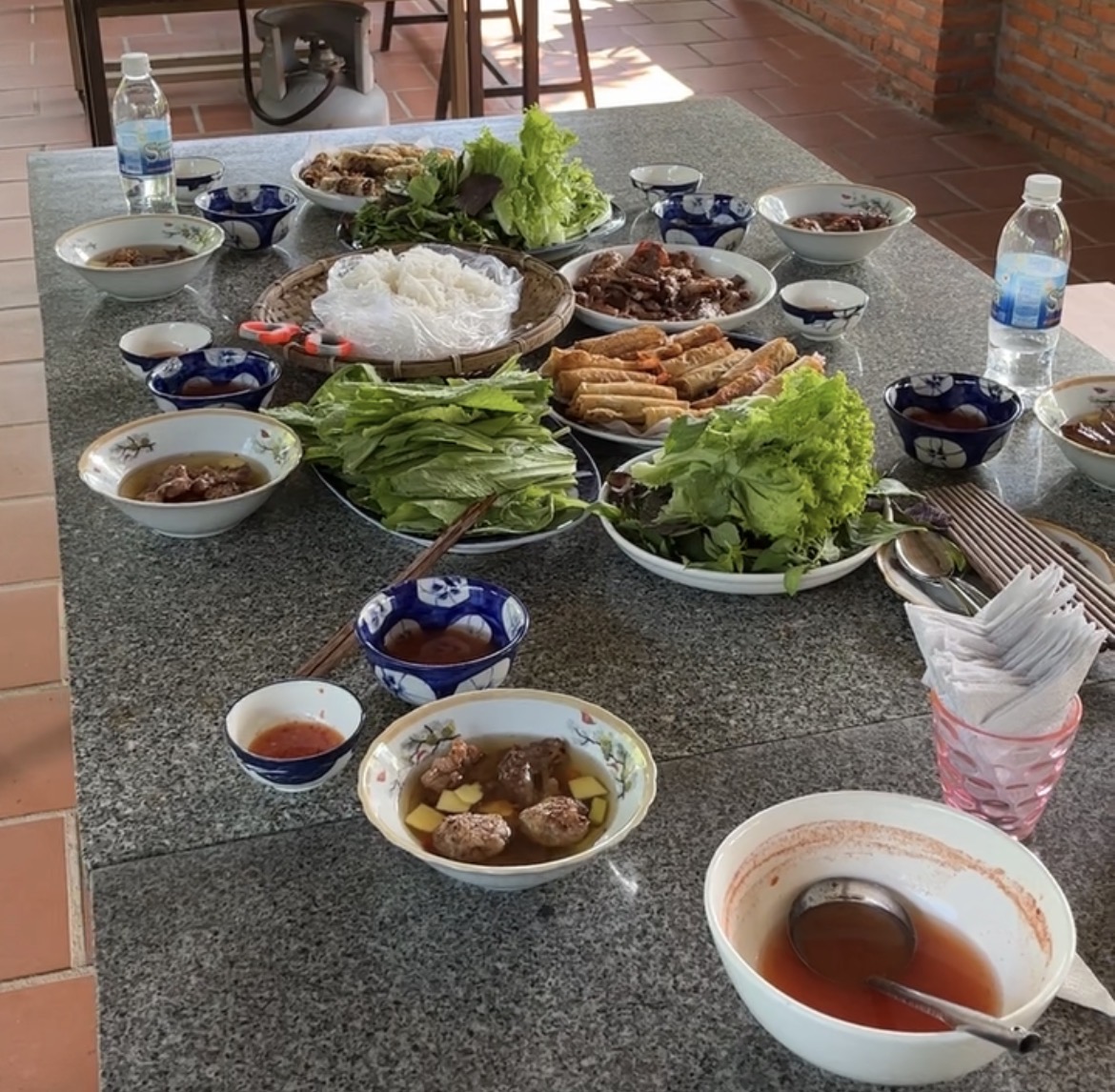
Everything is ready to eat! I’m surprised I stopped to take a picture, since everything looked and smelled so delicious—we could not wait to try it all!
Need to know
For more inspiration and insider recommendations, visit our Vietnam page.


Travel Advisor
Jennifer Redman
Jennifer Redman

Get in touch with Jennifer Redman
Did you like this guide? Reach out to customize and book your own experience. Or, just to chat about travel in general.