


Curator’s statement
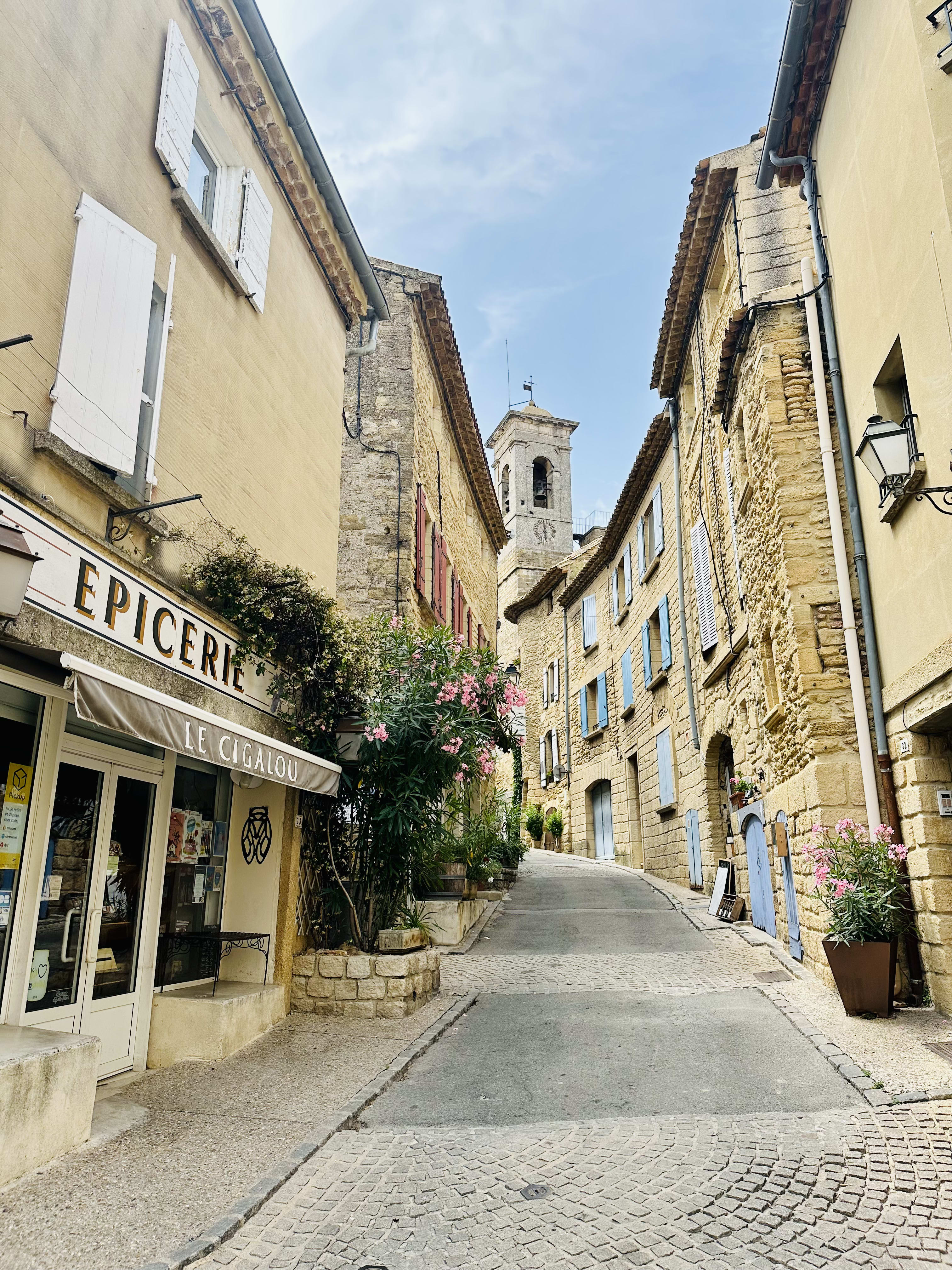
My husband grew up in Orange, the Roman city just 10 minutes up the road from Châteauneuf-du-Pape, which means this village isn’t a discovery for us—it’s family. We’ve wandered these medieval lanes, celebrated our wedding dinner above the Pope’s ruins, and spent countless meals working through the appellation one glass at a time. What keeps drawing me back, beyond the extraordinary wine, is how completely Châteauneuf resists becoming a tourist set piece. It remains a working wine village where the vignerons outnumber the visitors, the history is genuinely ancient, and the food takes the wine as seriously as the wine takes itself.
The Fora Difference
Book with Alina Morand to access exclusive perks and experiences on your trip.

Killer perks
Free upgrades, spa credits and more—we got you

Personalized recs
Customized travel planning for your style

Insider knowledge
Expert advice from people who’ve actually been there
Where to stay in Châteauneuf-du-Pape
Unlock perks by contacting Alina Morand to book your trip.
Things to do in Châteauneuf-du-Pape
A brief history worth knowing
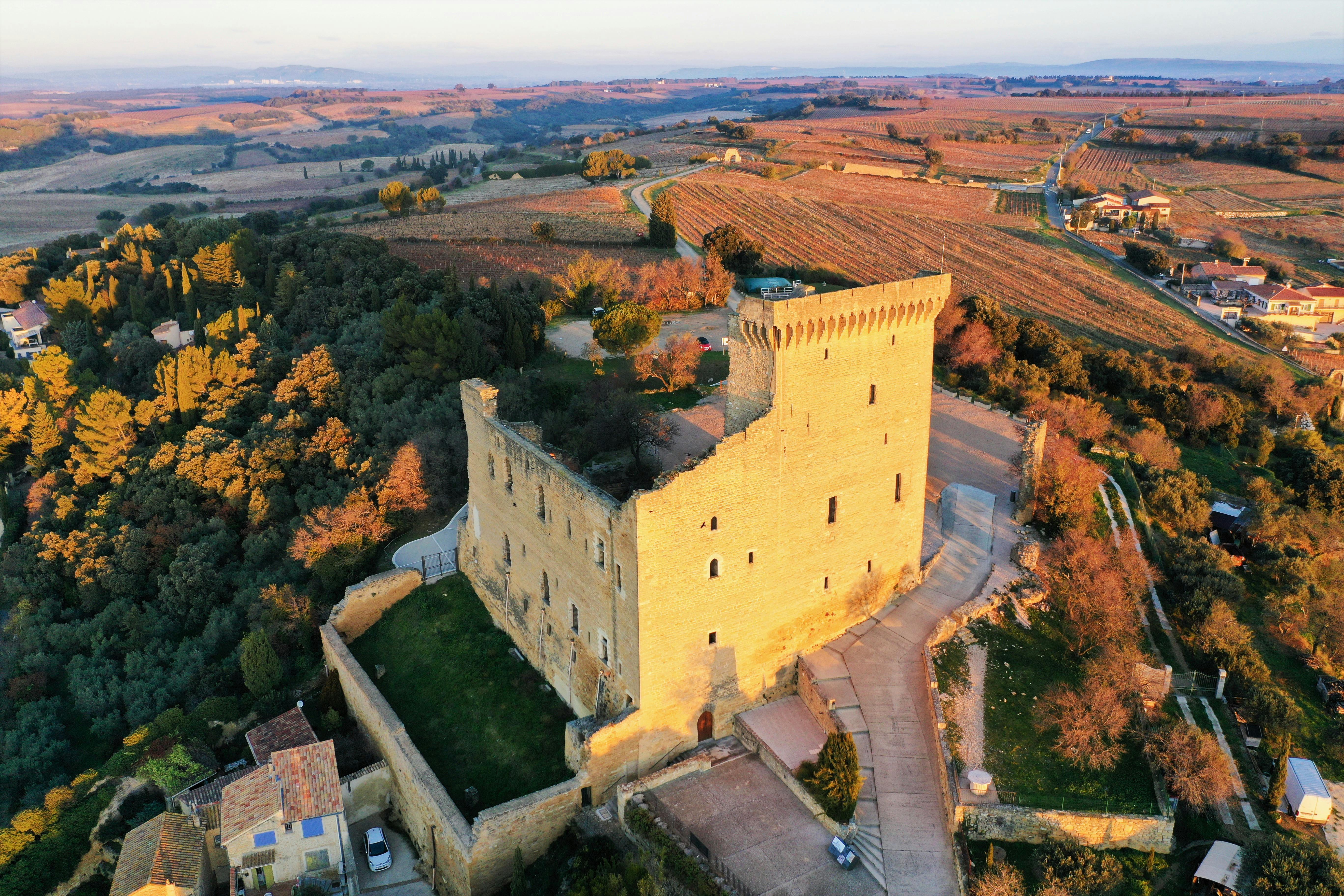
Châteauneuf-du-Pape (literally “the new castle of the Pope”) takes its name from the summer palace that Pope John XXII built here in the 14th century when the papacy was based in nearby Avignon. The popes planted the first vines, beginning a winemaking tradition that produced France’s very first AOC designation in 1936. The medieval castle at the top of the village was largely destroyed during the Wars of Religion and finished off by German forces in 1944, but what remains—a single dramatic wall and tower crowning the hill—is all the more powerful for it.
Climb to the Château des Papes ruins
The ruined castle at the summit of the village is the defining image of Châteauneuf-du-Pape, and the walk up earns you one of the most sweeping panoramas in all of Provence. From the crumbling walls, you can see the Rhône snaking south toward Avignon, the Palais des Papes in the distance, Mont Ventoux to the east, and an unbroken sea of vines in every direction. Come in the early morning or just before sunset, when the light turns the stones gold and the cicadas are at full volume.
Explore the village on foot
Châteauneuf-du-Pape is small enough to know in an afternoon, but rich enough to deserve a full morning of wandering. Start at the Grande Fontaine on Place du Portail, a 17th-century fountain fed by a spring several kilometers away, then wind up through the cobblestone lanes toward the castle. Look for the Rue de l’Eglise with its gate house spanning the street, the village church of Notre-Dame de l’Assomption, and the quiet squares where locals actually sit. It looks like a postcard but it hasn’t been staged.
Wine tasting: Start at Vinadea
Vinadea is the official maison des vins of the appellation, and it’s the smartest first stop for anyone overwhelmed by the choice—more than 300 producers work within the AOC, blending up to 13 different grape varieties. The staff are knowledgeable, the tastings are free, and the bottles are priced the same as buying direct from the domaine. From here, the staff can point you toward which vignerons are open for visits that day.
Visit Domaine Chante-Perdrix
This is the winery my husband’s family has always loved, and with good reason. The Nicolet family has been farming the same 18 hectares at the southern end of the appellation since 1896, producing what wine critics call one of the most “flamboyant and hedonistic” Châteauneuf-du-Papes wines—rich with ripe fruit, Provençal garrigue, and the characteristic warmth of the galets roules (the large rounded river stones that blanket the vineyards and retain the day’s heat into the night). It’s a small, family-run operation and a genuine pleasure to visit.
Walk the vineyard path through the galets
A marked trail leaves from the western edge of the village and winds through the vines, giving you a close look at the appellation’s most distinctive feature: the galets roules. In July and August, the landscape shimmers with heat and the stones glow copper in the afternoon light. It’s an extraordinary sensory experience even before you open a bottle.
Day trip to Orange: The Roman theater
My husband grew up in Orange, 10 minutes north, and no visit to this region is complete without a stop at the Theatre Antique d’Orange, one of the best-preserved Roman theaters in the Western world, with its original 35-meter stage wall still standing. The acoustics remain extraordinary. Summer brings the Choregies d’Orange opera festival, held in the theater since 1869, which is genuinely one of the great outdoor performance experiences in France. The city also has a well-preserved triumphal arch and a small but excellent museum.
Day trip to Avignon: The Palais des Papes
The city that was home to the papacy for nearly 70 years sits just 11 miles south. The Palais des Papes is the largest Gothic palace in Europe—massive, austere, and genuinely impressive even as a shell of its former self. The medieval bridge (Pont d’Avignon) and the old city walls are equally worth the visit. In summer, the Festival d’Avignon brings theater and performance from around the world.
Places to eat & drink in Châteauneuf-du-Pape
Le Verger des Papes
The most memorable dining setting in the village: a pine-shaded terrace built directly against the ramparts of the Château des Papes, with a panoramic view that takes in the Rhone Valley, Avignon, and as far as the Alpilles on a clear day. The Estevenin brothers are Châteauneuf natives, and their Provençal cooking—rack of lamb, monkfish, fresh pasta, seasonal produce from local farms—matches the setting. Don’t miss descending into their vaulted cave to choose your own bottle from the cellar.
Hostellerie du Château des Fines Roches
A 19th-century château hotel rising dramatically from the middle of the vineyards, Fines Roches has one of the most stocked wine cellars in the appellation (over 50 domaines, 800 references) and the gastronomic restaurant to match. Chef Hugo Loridan-Fombonne works with local seasonal produce in the French tradition, and the panoramic terrace looks out over the vines toward Mont Ventoux and the Palais des Papes. It's worth coming for dinner and staying the night—the 11 rooms are small but beautifully appointed, and waking up in the middle of a vineyard is its own kind of magic.
La Mere Germaine (restaurant)
In March 2025, the Guide Michelin awarded La Mere Germaine its first star—recognition that this century-old maison had completed its transformation into something genuinely special. The original Germaine Vion opened a hotel here in 1922 after cooking at the Elysee Palace, and her establishment became a stop for Paris society traveling south to the Riviera. Chef Adrien Soro’s cuisine is rooted in southern French flavors and Provençal terroir, and the wine list runs to over 800 references. The terrace looks over the Rhone Valley. Book ahead.
Le Comptoir de la Mere Germaine
The more casual sibling of the Michelin-starred restaurant, located on Place Jean Moulin in the heart of the village. An open kitchen with a rotisserie, a convivial dining room, a terrace with vineyard views, and a menu built around straightforward, well-executed French classics. This is where you go for a relaxed lunch between tastings, when you want real food without ceremony.
The wine caves of the village
Every few meters in Châteauneuf-du-Pape, you’ll find a cave de dégustation where you can taste directly with the vigneron or their family. Most are free. Some of the most celebrated include Château la Nerthe, Châateau de Beaurenard, and Château Fortia. Pick up a free tasting map from the tourist office and spend an afternoon going door to door. This is exactly how this village is meant to be experienced.
Need to know
Who this destination is for
Châteauneuf-du-Pape is ideal for food and wine lovers who want their tasting experiences rooted in real history and place—not a theme park version of French wine country. It’s also an exceptional base for history enthusiasts, with Avignon, Orange, and the broader Rhone Valley all within easy reach. It works beautifully as a romantic escape, a multi-generational trip (the village is walkable and low-key), or a dedicated wine trip. It does not work for travelers who need a full schedule of activities or evening nightlife.
Getting there & getting around
The nearest TGV stations are Avignon TGV (about 20 minutes by car) and Orange (10 minutes). A car is essentially required to visit the vineyards and day-trip to nearby villages. Avignon makes an excellent base if you prefer a city; Châteauneuf itself has limited but excellent accommodation in the village and vineyards. Mas de Capelou on the Ile de la Barthelasse is a beautiful middle-ground option—rural Provencal calm just minutes from Avignon’s historic center.
When to visit
Late spring (May–June) and early autumn (September–October) are the sweet spots. The landscape is green in spring, the harvest transforms the village in late September, and the summer crowds of Avignon rarely make it this far north. July and August bring the full Provencal heat—beautiful if you embrace it, but pace yourself during midday. Winter is quiet and peaceful, the gastronomic restaurants are often at their best, and you’ll have the village almost entirely to yourself.
The wine: What to know
Châteauneuf-du-Pape was the first wine in France to receive an AOC designation (1936), and the appellation allows up to 13 grape varieties in the blend. Grenache is the backbone of most reds, with Syrah, Mourvedre, and the rare Muscardin also common. The wines tend toward deep garnet, full body, high alcohol (typically 14–15%), and a characteristic warmth—dried herbs, ripe dark fruit, leather, and spice. The whites are less well known but extraordinary: rich and aromatic, often built on Grenache Blanc, Roussanne, and Clairette.
The galets roules
The large rounded stones that blanket the vineyards are called galets roules—river stones deposited by the ancient Rhône millions of years ago. They absorb the abundant Provencal sunshine during the day and release that warmth back to the vines at night, extending the ripening window and contributing to the wines’ characteristic richness. Walking through a vineyard and feeling the stones shift underfoot is one of those details that makes the wine make more sense.
The Mistral
The Mistral—the powerful northwesterly wind that sweeps down the Rhône Valley—is a defining feature of this landscape. It’s the reason the vines grow so healthy (the wind prevents rot and fungal disease), the reason the sky is so relentlessly blue, and the reason you should bring a layer even in summer. Locals have a complicated, affectionate relationship with it.


Travel Advisor
Alina Morand

Alina Morand

Get in touch with Alina Morand
Did you like this guide? Reach out to customize and book your own experience. Or, just to chat about travel in general.
For more inspiration and insider recommendations, visit our France page.