



Curator’s statement
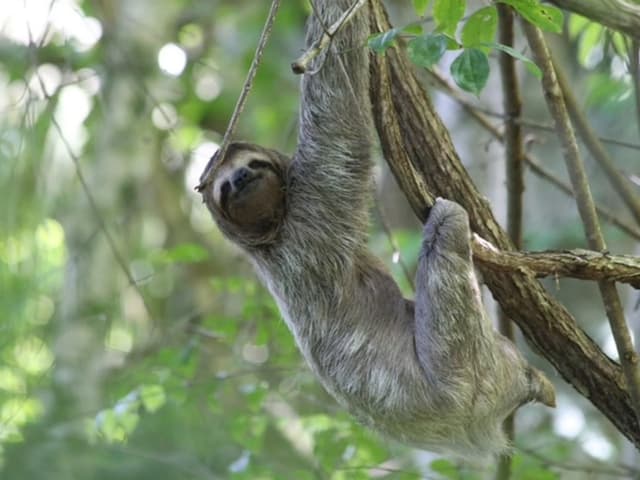
The Galápagos Islands are known for their distinctive, endemic wildlife and dramatic landscapes shaped by volcanic activity and the sea. There is nothing I can say that will prepare you for the sheer number of animals everywhere! Sea lions nap on the benches at the docks, marine iguanas hang out on walkways, finches and pelicans perch by restaurants, and giant tortoises wander where they like.
The Fora Difference
Book with Claudine Tambuatco to access exclusive perks and experiences on your trip.

Killer perks
Free upgrades, spa credits and more—we got you

Personalized recs
Customized travel planning for your style

Insider knowledge
Expert advice from people who’ve actually been there
Where to stay in the Galápagos Islands, Ecuador
Unlock perks by contacting Claudine Tambuatco to book your trip.
Things to do in the Galápagos Islands, Ecuador
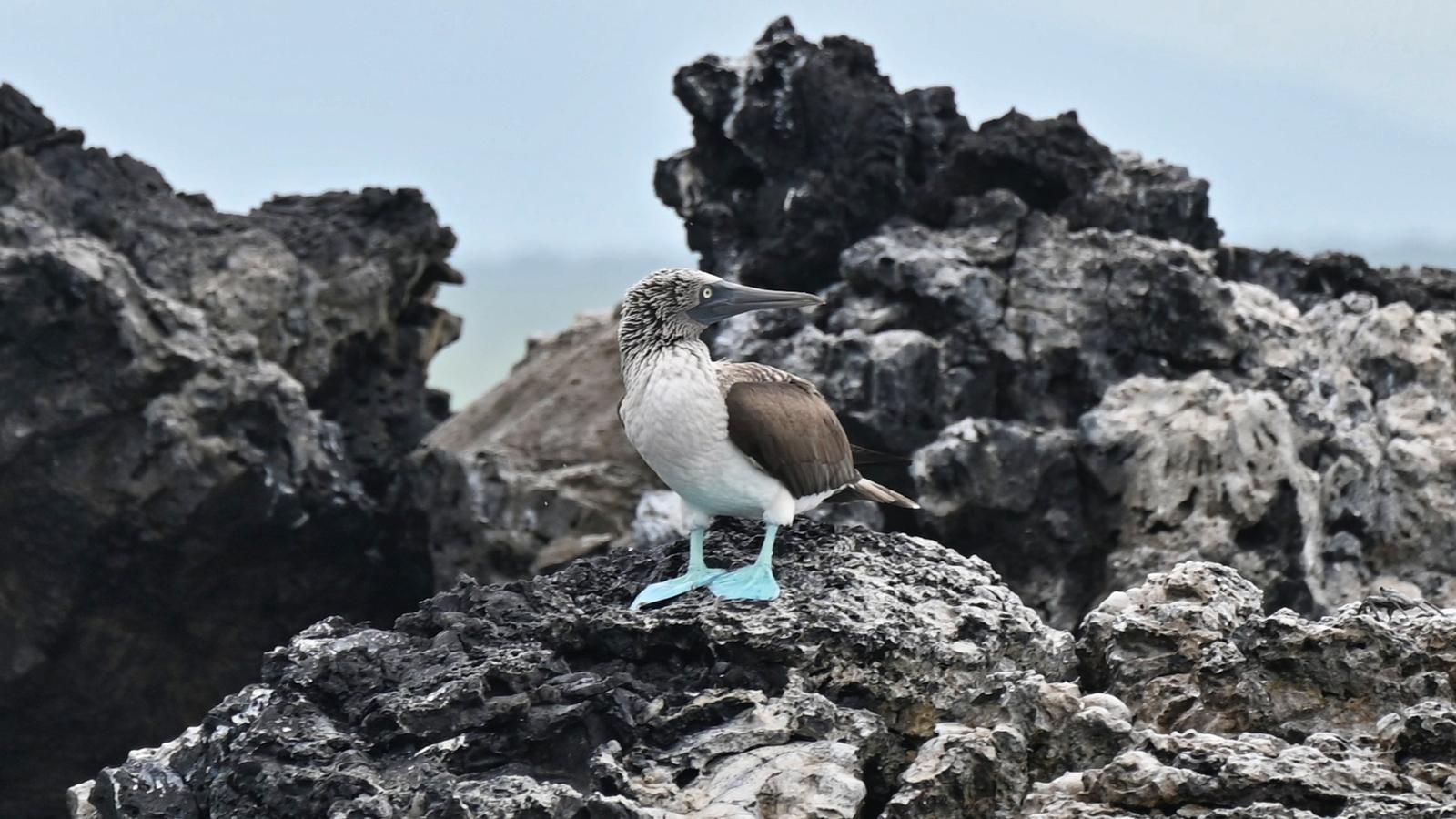
Blue-footed booby. Photo by Dana Hill.
Santa Cruz: What to do
El Chato Ranch is a family-owned farm and giant tortoise reserve. You’ll be able to walk on a path through the property and get close—up to six feet—to the tortoises. Darwin finches, yellow warblers, and other endemic birds hang out in the area. There is also a restaurant and lava tunnels you can walk through.
Visit the Charles Darwin Center at the start of your trip—the exhibits are a great educational guide to the different animals and plants you can expect to see. Compare different species of giant tortoises at their breeding center, and check out the native garden with endemic plants and birds.
Tortuga Bay is a pristine beach that can be accessed by a 45-minute walking trail, or by boat. Tortuga Bay itself usually has strong currents, but there is a nearby mangrove lined cove (an additional 15-minute walk) where you can swim, snorkel, or rent kayaks. This area is part of the national park. There are no permanent structures, shopping, or bathrooms nearby, so bring water, sunscreen, towels, hats, and anything else you may need. The beach is named for the sea turtle hatching area on it, but you’ll also likely see marine iguanas, Sally Lightfoot crabs, tiger sharks, and lava birds.
Tour de Bahia is a popular 4–5 hour combination hiking / snorkeling tour by boat. It includes stops at Las Grietas, Playa de los Perros, Canal del Amor, Tintoreras (Shark Channel), and Punta Estrada Bay. A lot of the hiking on this tour is over lava fields, the terrain is beautifully surreal but can be uneven—you’ll need proper footwear. We were able to observe a wide variety of wildlife from the boat and while hiking—blue footed boobies, penguins, lava herons, and sharks were among the many we saw. The tour ended with us snorkeling through schools of fish, sea turtles, and marine iguanas.
Isabela: Things to do
Concha de Perla: A 10-minute walk through a mangrove lined path gets you to a sheltered lagoon that is perfect for snorkeling. Aside from the ever present marine iguanas and sea lions, you will also likely be swimming amidst colorful damselfish, parrotfish, and sea turtles.
Las Tintoreras: A short boat ride from the harbor, this islet is formed by lava rock. Our tour started off with a hike and ended with snorkeling. We saw a few blue-footed boobies, herons, pelicans, frigates, and penguins from the boat, and we were able to get fairly close to a blue footed booby during our hike. The lava rock on this part of the island is spiky and uneven—resembling frozen waves. Sea turtles, rays, sea lions, marine iguanas, and a variety of colorful reef fish are among the animals you may see underwater.
Arnaldo Tupiza Tortoise Breeding Center: The center is a 20–30 minute picturesque walk on a tree-lined boardwalk from the town center. You’ll pass by Laguna Salinas, a popular spot for flamingos. This breeding center is smaller than the Charles Darwin Center, and focuses on five subspecies of giant tortoises who live on Isabela Island.
Puerto Villamil: The town has a rustic, laid-back vibe. Walk along the beach and on the sandy (unpaved) main street, Av. Antonio Gil. At sunrise and sunset, marine iguanas head to and from the beach to sunbathe on the black lava rocks.
Places to eat & drink in the Galápagos Islands, Ecuador
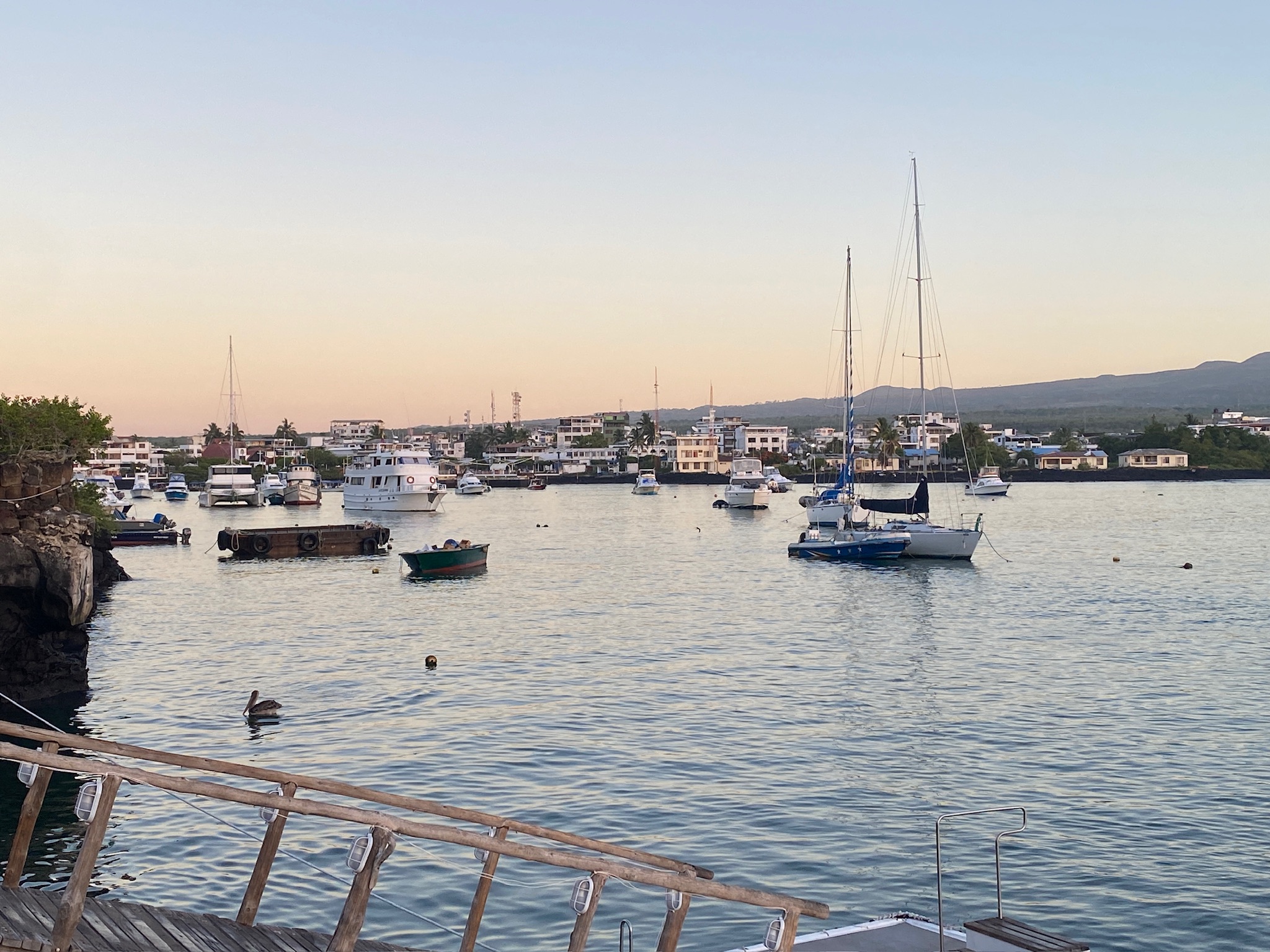
Puerto Ayora at sunrise from the Angermeyer Hotel / Eloise
Santa Cruz: Where to eat
La Cevicheria: Located a block off the main road. Casual restaurant that specializes in different types of ceviche, but they do have other seafood options.
TJ Restaurante: On the main road (Av. Charles Darwin). Casual, affordable, known for its encebollado.
Bahia Mar: Beachfront location with a great view and a more sophisticated ambiance. Excellent quality seafood, but other options (steak, chicken, vegetarian) are available.
Eloise: Located in the Angermeyer Waterfront Inn, with a beautiful view of the harbor. Menu includes a lot of well-executed locally inspired options. Great cocktails.
Isabela: Where to eat
Blue Summer: Dine on the beach or look out on the beach from the second floor. Great seafood.
El Cafetal: Next door to the Pink Iguana. Excellent seafood. Chicken, burgers, and vegetarian options available.
Pink Iguana: Beachfront bar, tropical drinks, board games, and cornhole. Best place for drinks at sunset.
Need to know
Getting there and getting around
The archipelago is comprised of 13 islands, four of which are inhabited by humans: Santa Cruz, San Cristobal, Isabella, and Floreana. If you are exploring the Galápagos by land, you will be staying on one of these four islands. Most (97%) of the land area is a national park / UNESCO world heritage site. You will need an official guide to accompany you on visits to the national park.
There are inter island ferries that run between Santa Cruz and Isabella, between Santa Cruz and Floreana, and between Isabella and San Cristobal. Note that these islands aren’t that close to each other, travel times for these routes are about two hours. There are flights on smaller aircraft that operate between these islands as well.
Land taxis are white pickup trucks, easily to find at the main harbor of both islands. Water taxis are yellow boats and operate more like an Uber Pool, also easy to find at the harbor. Bikes or e-bikes are available for rent and are an easy and safe way to get around. Santa Cruz has bike paths and protected bike lanes that connect Puerto Ayora to the more rural highlands.
You can fly into the Galápagos from Quito or Guayaquil. We flew into Seymour airport at Baltra (GPS), but you can also fly into San Cristobal (SCY). From Seymour airport, a short bus ride followed by a 5 minute ferry ride gets you to Santa Cruz.
When to visit
The Galápagos is a popular destination year-round as temperatures don’t vary by that much throughout the year. Water temperature and weather are dependent on ocean currents. December through May is dominated by the Panama current from the northeast, bringing warmer water and wet weather. June to November is colder and drier. The Humboldt current (from the south) and Cromwell current (from the west) bring nutrient-rich water, attracting more marine life and sea birds. The best time for you would depend on what you want to see.
What to bring
Sunscreen: Apply early and often! A rashguard or wetsuit helps with sun protection as well.
Sturdy walking shoes: A pair similar to Keen’s waterproof sandals would be perfect for a hike over uneven terrain and boat rides.
Waterproof bag that fits the day’s essentials, snorkeling gear, towel, change of clothes, etc.
Water bottle: There are refill stations everywhere. There is a ban on single-use plastics. I don’t recall seeing a lot of bottled water. Make sure you refill with filtered water, as tap water is not safe to drink.
Don’t overpack. You’ll have to manage your own luggage at the airport, and before and after boarding the inter island ferries where your belongings will be checked for invasive species / seeds. If you are flying between islands, the weight limit for your checked bags will be lower. Overnight laundry, if you need it, is available at the hotels I mentioned here. At the Angermeyer Hotel, prices were a very reasonable $2–3 per piece.


Travel Advisor
Claudine Tambuatco
Claudine Tambuatco

Get in touch with Claudine Tambuatco
Did you like this guide? Reach out to customize and book your own experience. Or, just to chat about travel in general.
For more inspiration and insider recommendations, visit our Galápagos Islands page.