




Curator’s statement
Welcome to Bastogne, nicknamed “Nuts City.” Bastogne was a key site during the Battle of the Bulge (12/16/1944–01/26/1945), the last major Nazi offensive on the Western Front and still the largest battle ever fought solely by the United States Army. During the attack, the city was completely surrounded, and “NUTS!” was the famous reply given by General McAuliffe when he was asked to surrender. From here, you can easily explore many places in Belgium, France, and Luxembourg. Oh, and it’s the birthplace of my son-in-law, and the city where my daughter got married!
The Fora Difference
Book with Christophe Bodin to access exclusive perks and experiences on your trip.

Killer perks
Free upgrades, spa credits and more—we got you

Personalized recs
Customized travel planning for your style

Insider knowledge
Expert advice from people who’ve actually been there
Where to stay in Bastogne
Unlock perks by contacting Christophe Bodin to book your trip.
Things to do in Bastogne
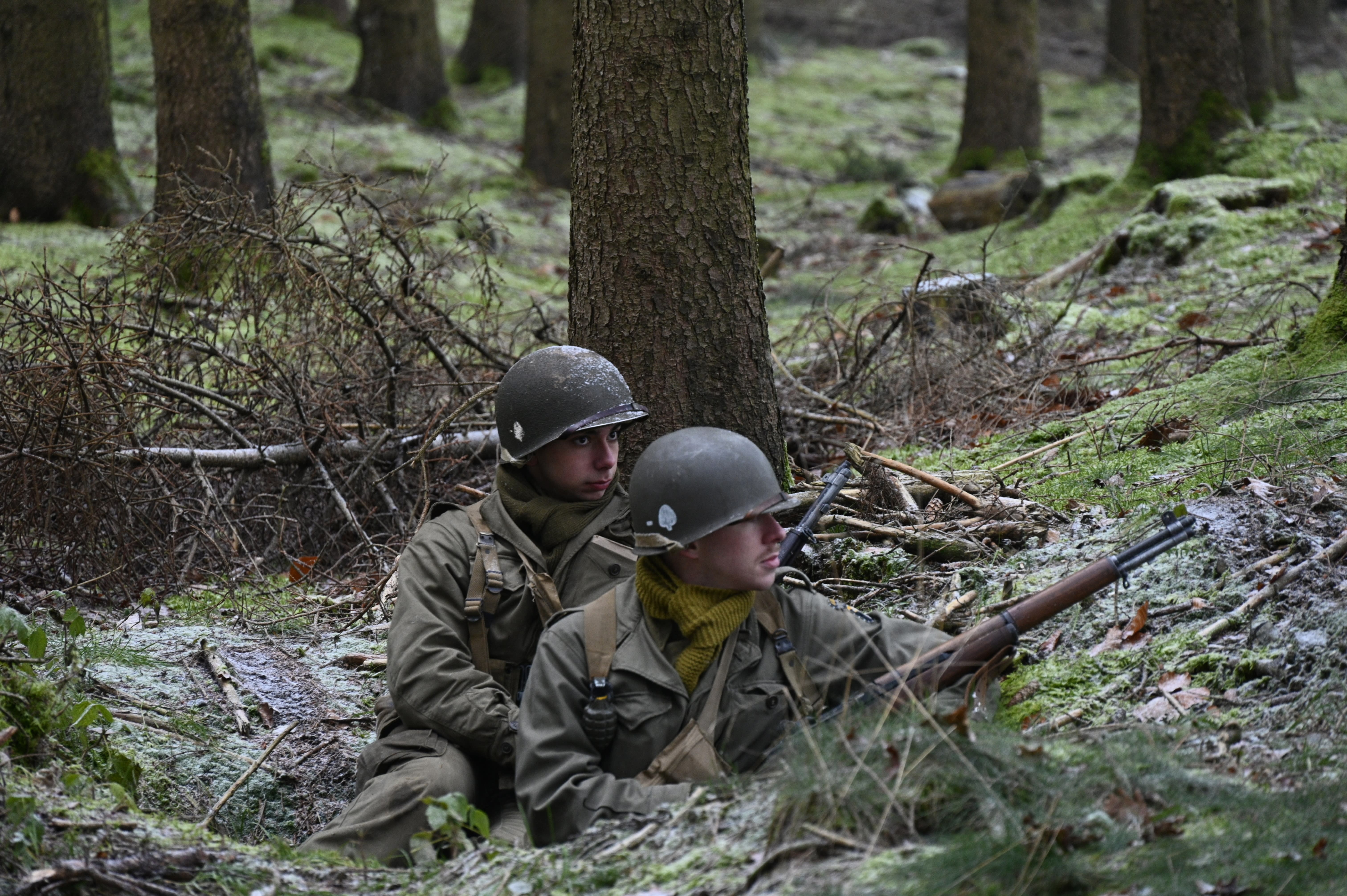
Reenactement in Bois Jacques during 80th anniversary
What → Battle of the Bulge guided tours
There are many options and variations, but if you truly want to understand what happened here and explore the major sites, only a guided tour will do it justice. I recommend doing the tour after visiting the museum.
When: Always available. Duration and depth depend on how detailed you want the tour to be.
What → Participating in the Annual Battle of the Bulge Celebration
You won’t find more WWII memorabilia, vehicles, or reenactments anywhere else in the world. The entire city and surrounding area transform into a massive American WWII base. A highlight is taking one of the three walks through the historical sites and watching the reenactments as you pass through them. If it’s snowing, you’ll get the full immersive experience.
When: Usually the weekend around December 15th, and it gets very busy.
What → Being here during the Liège-Bastogne-Liège Cycling Race
This is one of the world’s oldest and most famous cycling “classiques.” There are multiple viewing spots in and around the city, along with many activities taking place on race day.
When: The date varies, but it’s always on a weekend in late April.
What → Bastogne War Museum
Located on the outskirts of the city, this museum is simply incredible. I’ve been three times already because it’s so well done and constantly evolving. A great feature is the audio guide, which lets you follow the story through the eyes of one of four real people: a US GI, a German soldier, or a young local boy and his teacher from Bastogne.
When: Usually 9:30 am to 5 pm every day.
What → Mardasson Memorial
Close to the museum, this imposing monument honors all American soldiers who died during the Battle of the Bulge. It is shaped like a five-pointed American star, with each US state represented. It’s a deeply moving site.
When: Always open.
What → 101st Airborne Museum & The Barracks
Located in the city center, these relatively small museums are very well curated. At the 101st Airborne Museum, the bombing simulation is a must—it’s extremely realistic.
The museum also displays several items that belonged to General Patton, who helped liberate the city at the end of the Battle of the Bulge. There is a lot of history in this building, and I was fortunate enough to meet the last three living veterans who fought here during the 80th anniversary.
At The Barracks (free entry), the Belgian Army presents an impressive collection of restored WWII vehicles.
When: Wednesday to Sunday, 10 am to 5 pm
What → Battle-Shop on the main street
Don’t miss this shop! It’s filled with high-quality WWII souvenirs, with something for all ages. Just make sure you have enough room in your suitcase.
When: Every day except Mondays, 10 am to 6 pm
Places to eat & drink in Bastogne
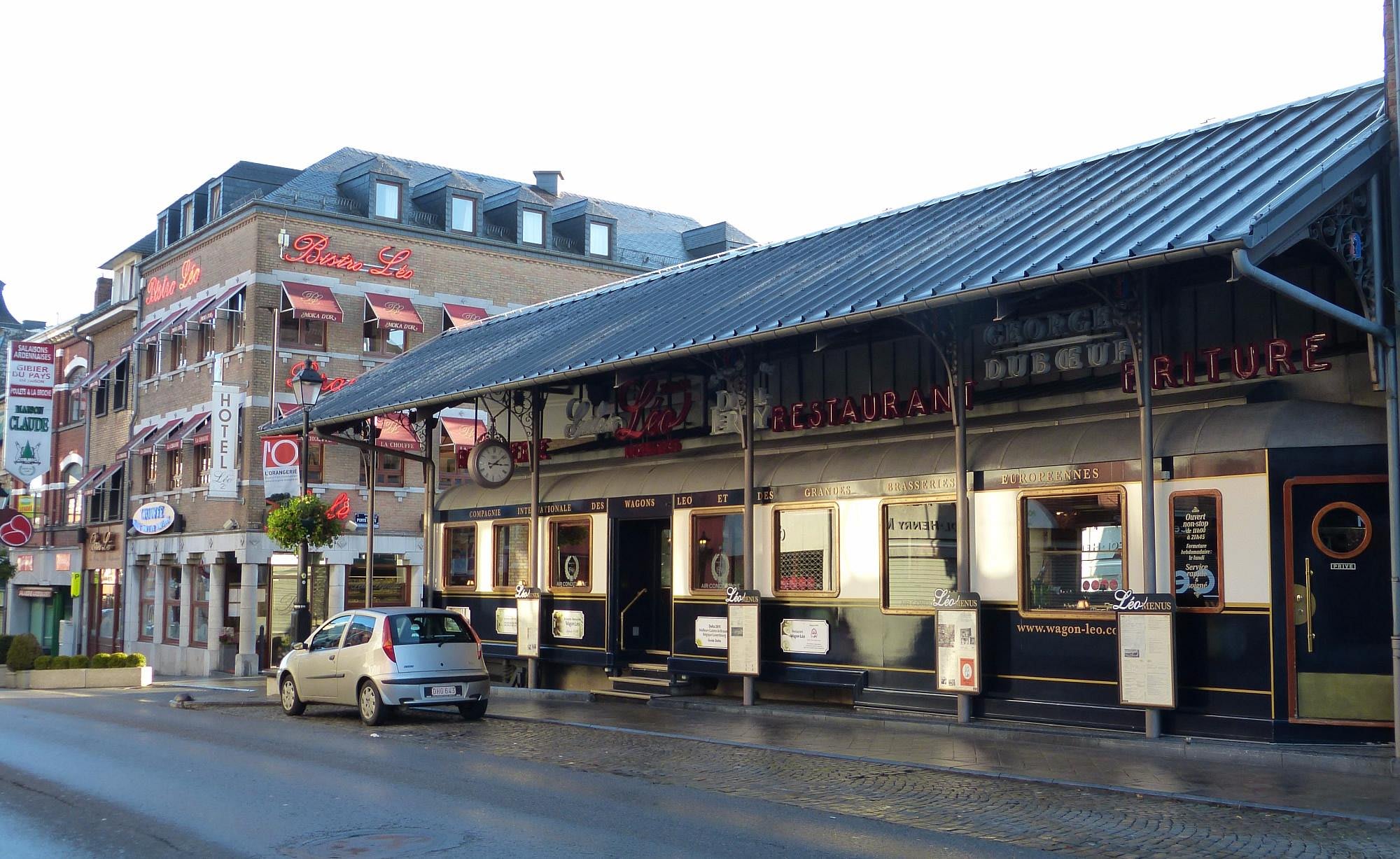
Brasserie Leo with its typical wagon front and next door Bistro Leo, and the hotel.
Let’s face it: you are not coming to Bastogne for exquisite cuisine. That said, you can enjoy hearty, satisfying meals here, and café and drinking culture is a big part of life in Belgium.
Beer country
Let’s start with drinks—after all, with 1,500+ beer brands and 800+ varieties, you’re in beer country. Every bar will have an extensive beer list, on draft or bottled, often longer than the wine list. It’s usually easy in Belgium to find the best bars: look for the main square in the city center—it’s called a “square” for a reason. Carré means “square” in French, and Belgians love their carrés (the most famous one is in nearby Liège).
In Bastogne, it’s McAuliffe Square, complete with a Sherman tank in the middle! Pick a bar around the square—I’d recommend Au Carré (I told you!) and Le Melbar (especially late evening and even later) but really you can just choose the café that feels like your spot. Most restaurants around the square also serve drinks in the afternoon, so step inside and enjoy your favorite beer or beverage.
In any case, please have a Chouffe for me—the most famous local beer (brewed about 20 minutes north) and a very good one. The Trappist beers are excellent, too.
Eating in Bastogne
I have to be honest: if you are vegetarian or vegan, eating here won’t be super easy. Meat, in all forms, is at the heart of local meals.
Let’s start with the restaurant where every Bastognard goes: Le Léo Wagon on McAuliffe Square (next to the hotel with the same name). It’s called “wagon” because Leopold Emanuel (Léo) opened a friterie in a wagon on the square in 1946, and the restaurant still keeps that wagon look. You have to book—it’s always full. Renowned for its seafood, the mussels, North Sea sole, but also anything beef are all very good. The atmosphere is similar to a Parisian brasserie.
There is a more casual, cheaper restaurant next door called Le Bistro Léo, owned by the same family.
Opposite Léo Wagon is Le Nuts. The food is decent, and it offers the only rooftop view in Bastogne. If you want a burger, this is the place. Everything is quite American-themed at Le Nuts, and you can even drink a Patton beer.
Take a stroll to Brasserie Lamborelle, behind the square—especially if you like beef and beer. Their specialty is beef served on a hot stone (pierrade in French), and they have hundreds of beers, including their own Airborne Beer. Similar in menu but to me less typical is La Brasserie Ardennaise or Completement Toque, located directly on McAuliffe Square are also two good restaurants.
If you want a great pizza or some excellent pasta, Giorgi, also on the square, is your place. They offer many styles of pizza, including a delicious mortadella-pistachio pizza and several white-sauce options (cream instead of tomato). My son-in-law’s favorite is the scampi pizza. The pasta dishes also come in many varieties, including the famous Thai fish ravioli.
All of these places are located on or around Place McAuliffe.
Just down the road from the square, walking backward while facing the McAuliffe statue and the Sherman tank, you’ll find Le Saint Germain, a more sophisticated restaurant than the typical options around the square. As the name suggests, it has a strong French inspiration with seasonal ingredients—a quieter, refined alternative to the lively square.
If you want an even more sophisticated experience in a peaceful setting, I highly recommend L’Adresse in Marvie, a small village five minutes from Bastogne. It is the best restaurant in the area and offers a fixed seasonal menu, with or without drink pairing, and you choose how many courses you’d like. The food is a refined fusion of traditional French gourmet cuisine and local specialties and ingredients.
And now… the friteries
As I said earlier, I would be remiss if I talked about food in Bastogne without mentioning the friteries. This is something you find mainly in Belgium—especially in the French-speaking region—and in the far north of France.
First, for the record: French fries are called “French” by mistake. Fries are Belgian. Americans started calling them French fries during WWI, when US soldiers discovered them on the northern front and assumed the people making them were French. They were actually Walloons, the French-speaking Belgians.
So… what is a friterie?
There’s even an official definition: it’s a movable structure (wagon, bus, caravan) that serves fries, sauces to dip them in, and “snacks.” Snacks include meatballs, fricadelles, and cervelas (two types of sausage). Burgers are sometimes available but are a more recent addition. Everything is served in single-use plates with disposable cutlery. And please—bring cash. Card readers rarely work at a friterie.
Not a place for non-meat eaters, as even the fries are usually cooked in beef fat. It’s a unique experience.
They’re usually located on the sides of roads outside city centers—you can’t miss them. In Bastogne, you can walk about a mile from the center to Friterie Marsupilami, a large yellow bus.
Not a friterie but, according to my son-in-law, the best Pita-Kebab in Belgium, a typical Middle-Eastern dish consisting of seasoned ground meat skewers in pita bread, can be found at Pita Botan in the main street down from McAuliffe Square.
Need to know
When to visit
While the best time to visit is during the yearly mid-December celebrations and reenactments, Bastogne is worth a visit year-round for its war museums and numerous historical sites. It is also a key city of the famous Liège-Bastogne-Liège cycling race, usually held in late April. The end of February is also a good time to visit Bastogne during the Pat’Carnaval all-weekend festival. The Bastognards are a very festive crowd!
Getting there
Getting to Bastogne can be a bit challenging, especially in winter if the weather is bad. It can get cold, snowy, and icy, and the airports are not very close. The nearest airport is in Luxembourg, while the larger ones are Brussels and Frankfurt. You’ll need to rent a car or take a bus from Luxembourg (about 1 hour 20 minutes).
I recommend spending two nights / three days in Bastogne—after that, you might start to feel bored. But you can easily connect this historical trip with visits to many nearby regions.
West: Brussels, the Belgian North Sea coastline, Ghent, Bruges
East: Luxembourg, the Moselle River, and its wine region, Trier in Germany, or Metz and Nancy in France
North: Amsterdam and the Netherlands (around a 3-hour drive)
South: Reims and the Champagne region (about a 2-hour drive)
So, you have plenty of choices from here.


Travel Advisor
Christophe Bodin

Christophe Bodin

Get in touch with Christophe Bodin
Did you like this guide? Reach out to customize and book your own experience. Or, just to chat about travel in general.
For more inspiration and insider recommendations, visit our Belgium page.