

Curator’s statement
This journey is designed as an immersive introduction to southern Spain, shaped by lived experience and urban immersion in Sevilla and a deep familiarity with its daily rhythms. Rather than emphasizing constant movement or exhaustive sightseeing, the itinerary focuses on neighborhood life, cultural context, and meaningful engagement through food, language, and place, with guided experiences integrated where they add depth and unstructured time allowing the city to unfold naturally. The journey concludes with a restorative stay at the Parador de Carmona, offering a slower, historic counterpoint to the city and space to reflect on Andalucía’s layered heritage.
The Fora Difference
Book with Dana Levy to access exclusive perks and experiences on your trip.

Killer perks
Free upgrades, spa credits and more—we got you

Personalized recs
Customized travel planning for your style

Insider knowledge
Expert advice from people who’ve actually been there
Where to stay
Unlock perks by contacting Dana Levy to book your trip.
Day 1: Arrival, river rhythm & first impressions in Sevilla
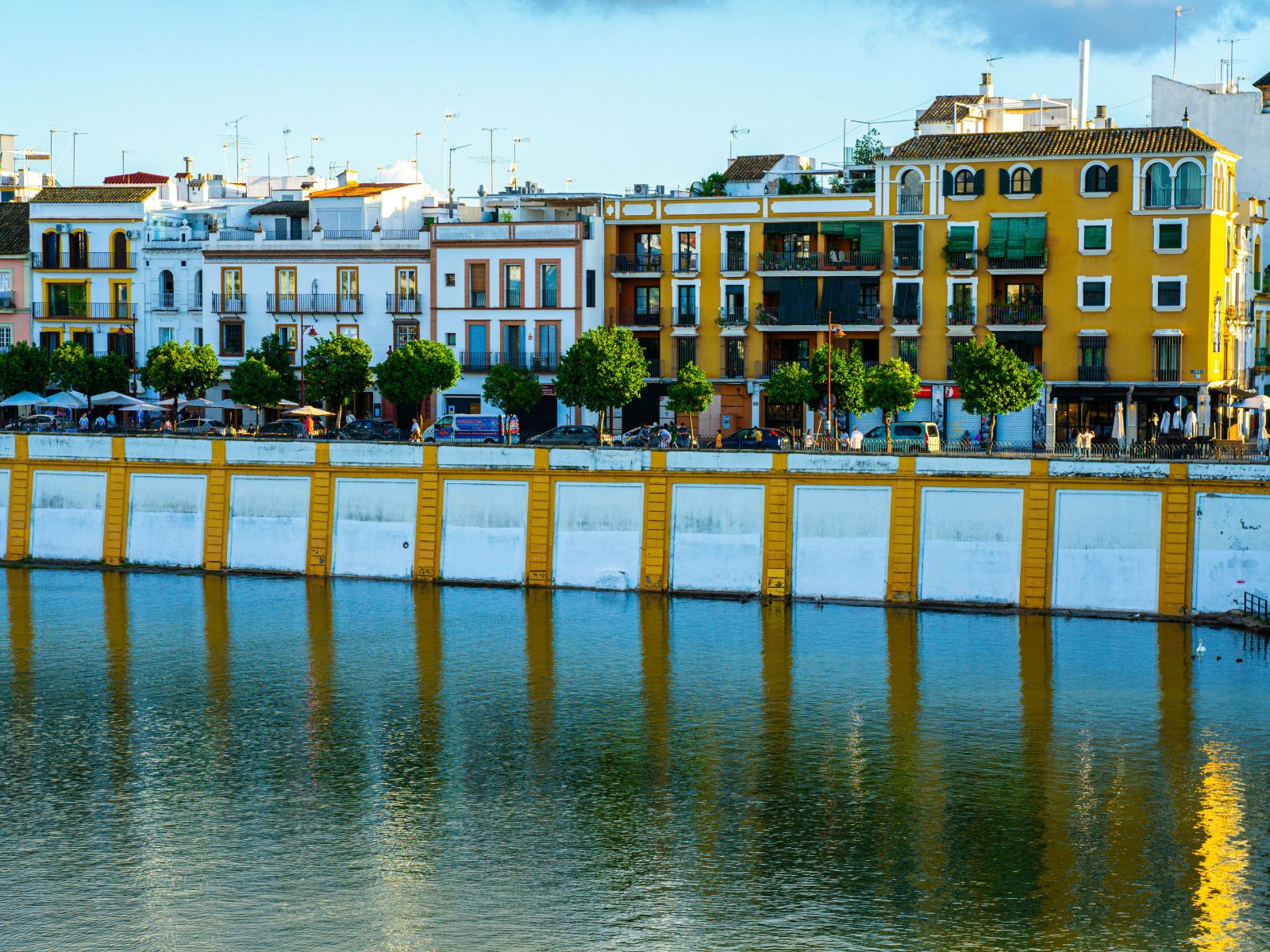
A stroll along the Guadalquivir River offers a gentle introduction to Sevilla’s pace, light, and social life.
Arrive in Sevilla and settle into your hotel and surrounding neighborhood before easing into the city at an unhurried pace. Begin with a stroll along the Guadalquivir Riverfront and pause for a drink at an open-air terrace—it’s the perfect way to slow down and start soaking in Sevilla’s rhythm.
Continue into the city center for a first exploration on foot. Browse along Calle Sierpes, visit Las Setas for panoramic views, and wander north toward La Macarena to get a feel for how Sevilla’s character shifts across neighborhoods. For lunch, stop for tapas at Bar Dos de Mayo, a local favorite that offers an excellent introduction to Sevilla’s everyday tapas culture. End on a sweet note with pastries from La Campana, a city institution.
Return to the hotel for a siesta, followed by the option of a private Spanish language lesson at the hotel. In the evening, immersion into Sevilla’s tapas culture is encouraged, either through a private, guided tapas experience or a self-guided curated tapas crawl. This flexible approach allows travelers to become comfortable with local dining rhythms from the very start of the journey, setting the tone for evenings that unfold through shared plates, drinks, conversation, and movement rather than formal, fixed meals.
Day 2: Barrio Santa Cruz & flamenco context in Sevilla
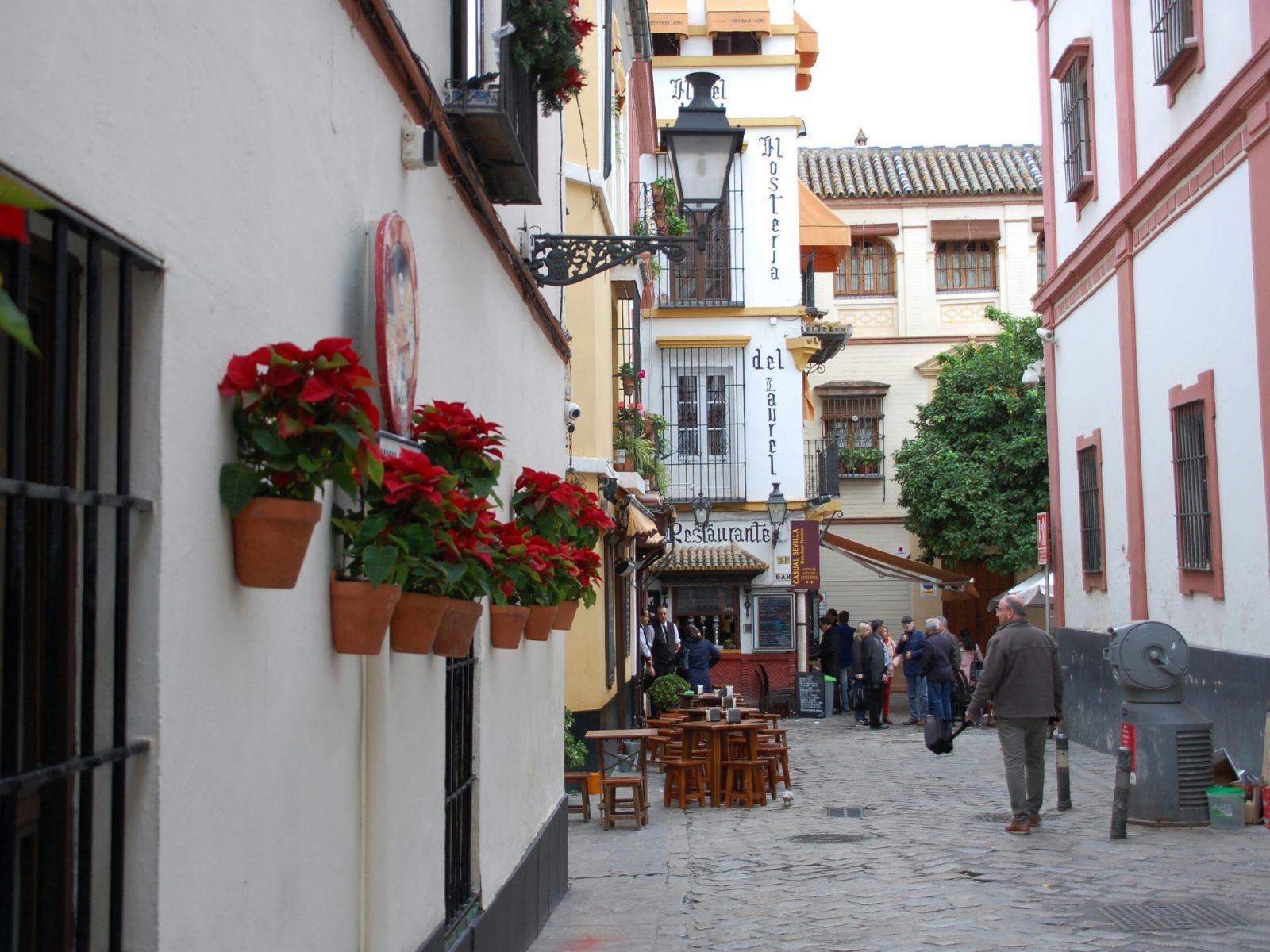
Winding streets and shaded courtyards in Sevilla’s historic center invite unhurried exploration and quiet discovery.
Begin with a traditional breakfast at the hotel, with the option to include a private Spanish language lesson. Spend the day discovering Barrio Santa Cruz—lose yourself in winding alleys, flower-filled patios, and hidden corners of Sevilla’s historic Jewish quarter. While in the area, visit Sevilla’s architectural landmarks, including the Cathedral and Giralda tower, the Alcázar palace, and the gardens of Parque de María Luisa, explored independently or with a private guide for added historical and cultural context.
In the afternoon, visit the Museo del Baile Flamenco to learn about flamenco’s history and cultural significance—an excellent introduction ahead of a live performance later in the journey.
In the early evening, pause at El Corte Inglés, a beloved Spanish institution, and head to the rooftop bar for a drink and views over the city. Dinner is flexible and based on preference, with recommendations available for a sit-down restaurant, casual neighborhood tapas, or a relaxed evening at leisure.
Day 3: Triana, markets, tapas & flamenco night in Sevilla
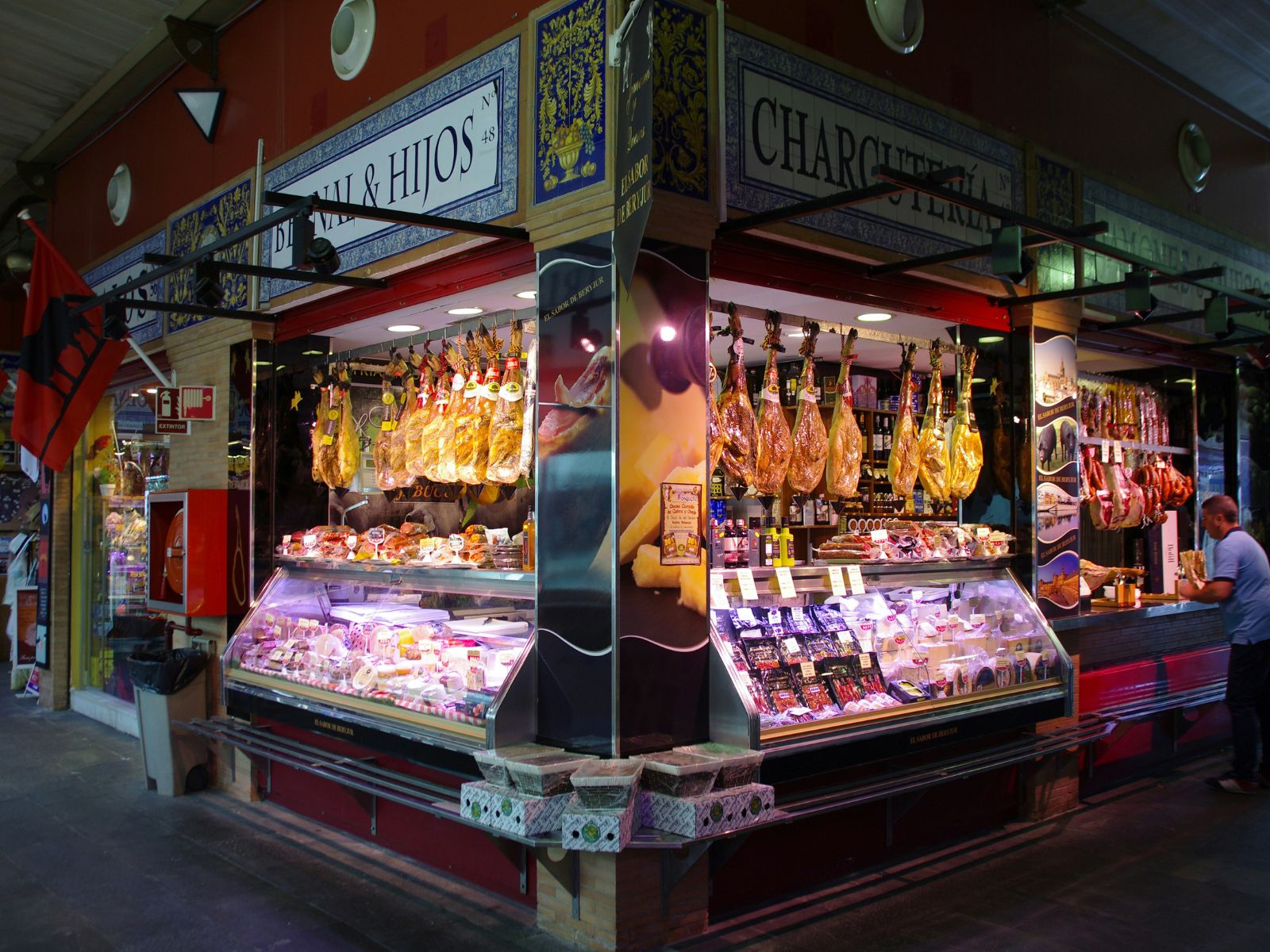
Triana’s colorful streets and market culture reflect one of Sevilla’s most lived-in neighborhoods, long associated with ceramics, music, tapas, and everyday life.
Begin the day in Triana, long regarded as one of Sevilla’s most characterful neighborhoods and a historic center of flamenco and tapas culture. Start at the Mercado de Triana, where stalls and small vendors reflect the everyday rhythms of Sevillano life. Wander Triana’s artisan ceramic shops and colorful streets, lingering wherever you feel drawn.
At some point, settle in with a drink along the river and enjoy the feeling of being “across the water” from the historic center. Meals today are intentionally centered around tapas in Triana, widely considered one of the most authentic neighborhoods in the city for a true tapas experience. Private guided options can include a Triana tapas experience and/or a ceramics/shopping-focused walk, depending on interest.
In the evening, return to Triana for an intimate live flamenco performance—experienced in the neighborhood where the art form has deep roots. The night is designed to unfold naturally through shared plates, conversation, and music.
Day 4: Los Remedios, river crossings & everyday elegance in Sevilla
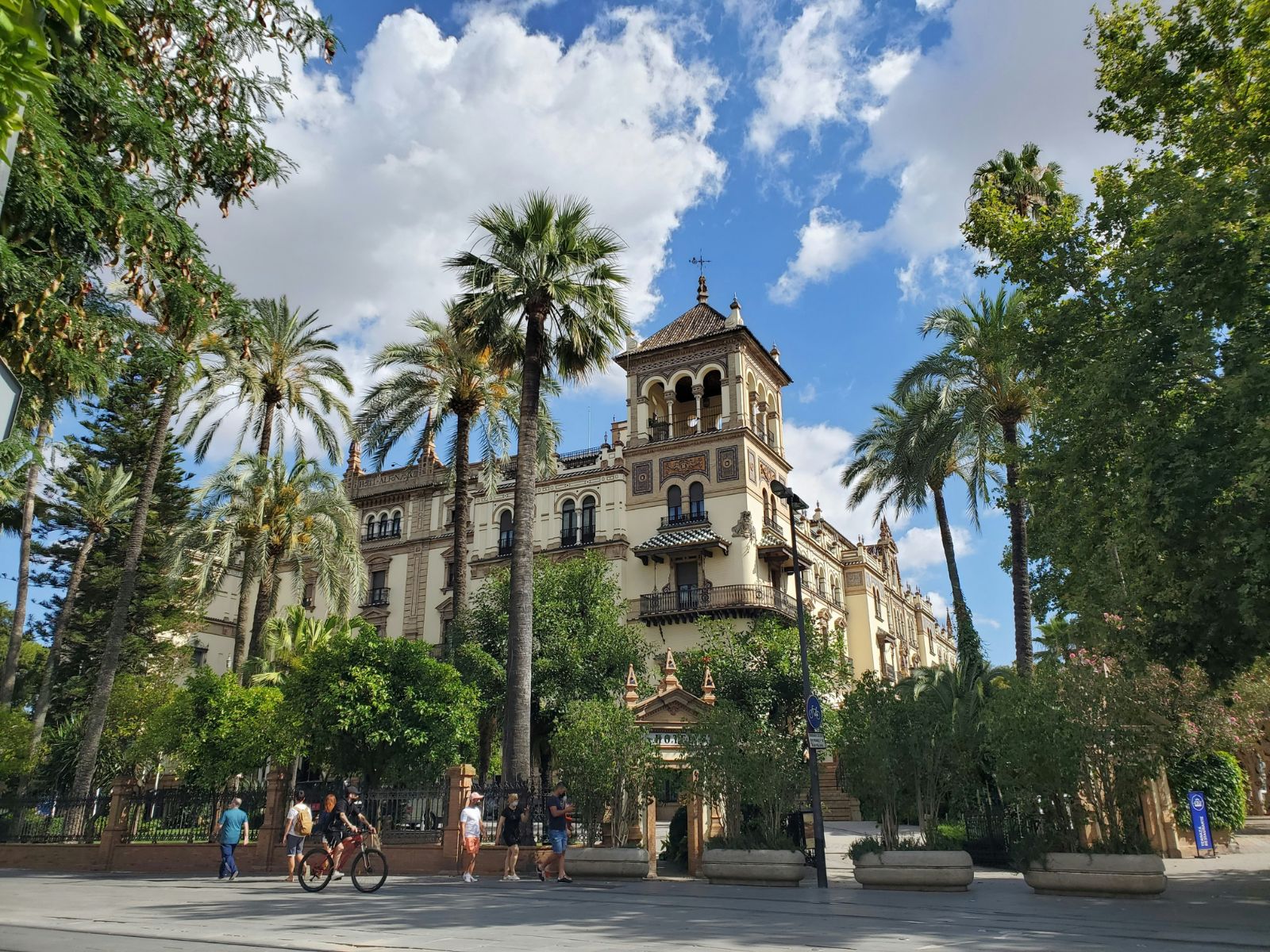
Palm-lined avenues and elegant public spaces reveal a calmer, residential side of Sevilla beyond the historic core.
Begin the day with a traditional breakfast before exploring the University of Sevilla, housed in the former Royal Tobacco Factory. The scale and architecture offer insight into Sevilla’s industrial, academic, and civic past, and the surrounding streets reflect a quieter side of daily city life. Pause for a coffee or mid-morning drink at Hotel Alfonso XIII, a refined landmark and longtime social gathering place.
Enjoy a relaxed lunch in the area, with recommendations focused on classic Sevillano dishes and easygoing cafés favored by locals. The emphasis is on simplicity and comfort, allowing time to linger without interrupting the natural flow of the day.
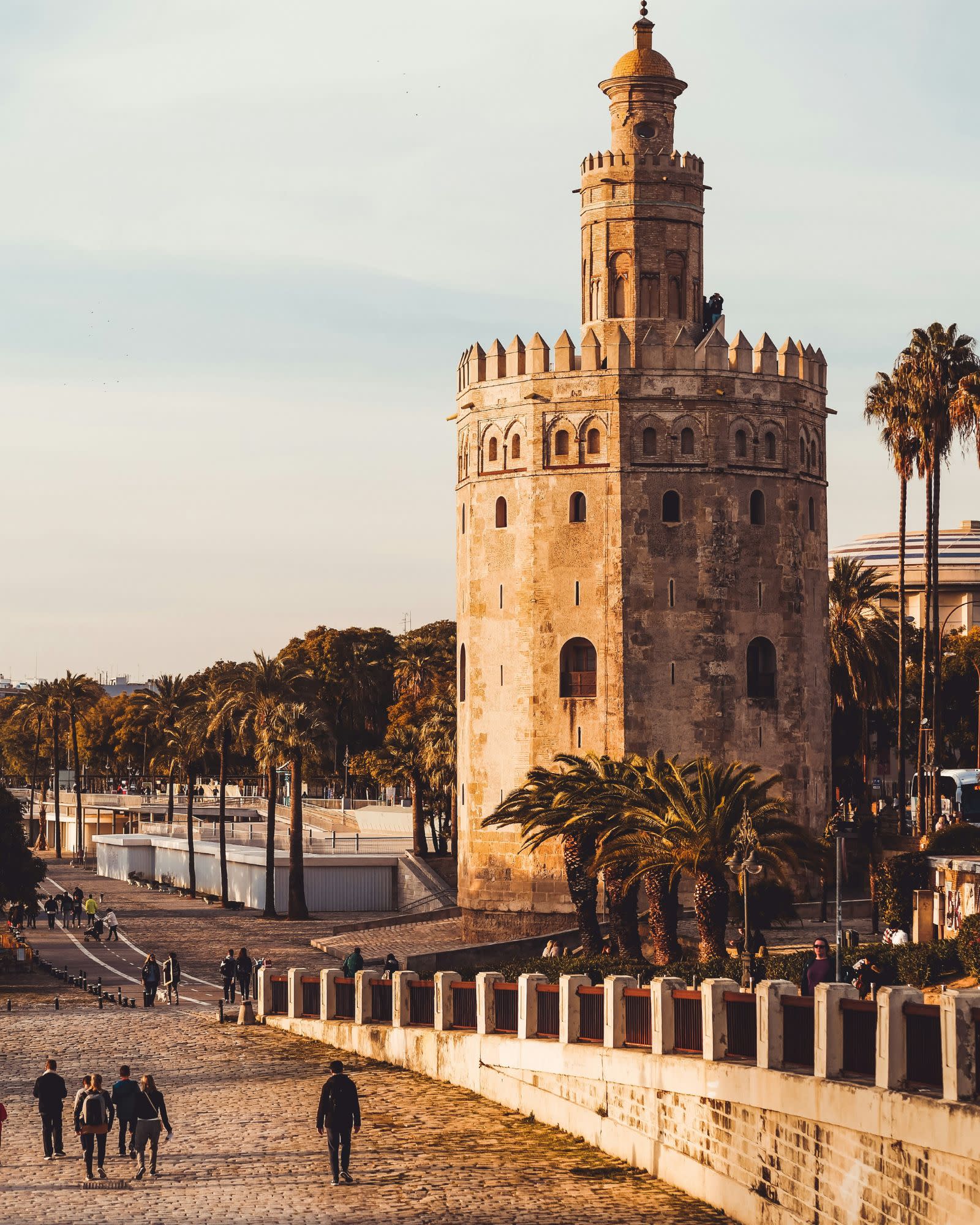
Continue on foot toward the river, passing the Torre del Oro, before crossing into Los Remedios via the Puente de San Telmo. Once across, relax beneath the trees of Parque de los Príncipes, a favorite neighborhood green space, and stop nearby for churros and hot chocolate at Chocolatería Virgen de Luján, a classic local ritual.
Dinner this evening reflects the residential rhythm of Los Remedios and can be enjoyed either as a light, mobile tapas walk between nearby bars or as a relaxed sit-down tapas meal at a neighborhood favorite. If energy allows, consider ending the evening with a quiet drink along the river, where Sevilla’s lights reflect on the water and the city settles into its nighttime rhythm.
Day 5: Arrival & quiet grandeur in Carmona
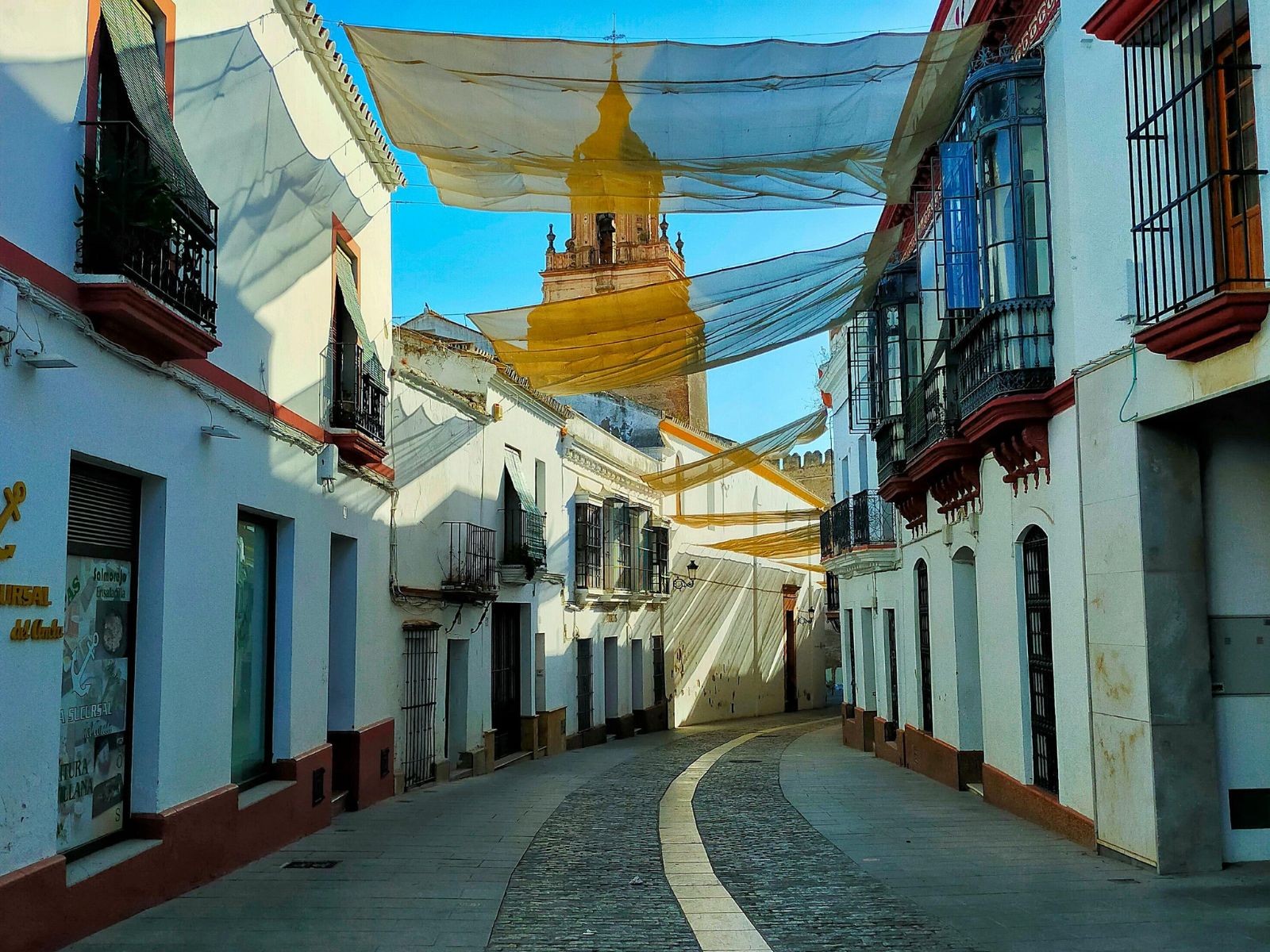
Whitewashed streets and elevated views introduce Carmona’s historic hill town character, where time slows and the landscape opens outward.
Begin the morning with breakfast in Sevilla before a private transfer to Carmona and check-in at the Parador de Carmona, dramatically situated above the surrounding countryside. Take time to explore the Parador and its grounds, where sweeping views and historic architecture immediately signal a slower pace.
Enjoy a leisurely lunch at the Parador, allowing the transition from city life to hill town calm to unfold naturally. In the afternoon, venture into Carmona’s historic center to begin exploring on foot. Walk through the old town streets, visit the Alcázar de la Puerta de Sevilla, and step inside a selection of local churches to gain an initial sense of the town’s layered past.
Dinner this evening is flexible and based on preference—choose a traditional restaurant in the old town or remain at the Parador for a relaxed meal on-site. The evening is intentionally unhurried, inviting rest, conversation, and a full embrace of Carmona’s quiet grandeur.
Day 6: Plazas, markets & daily life
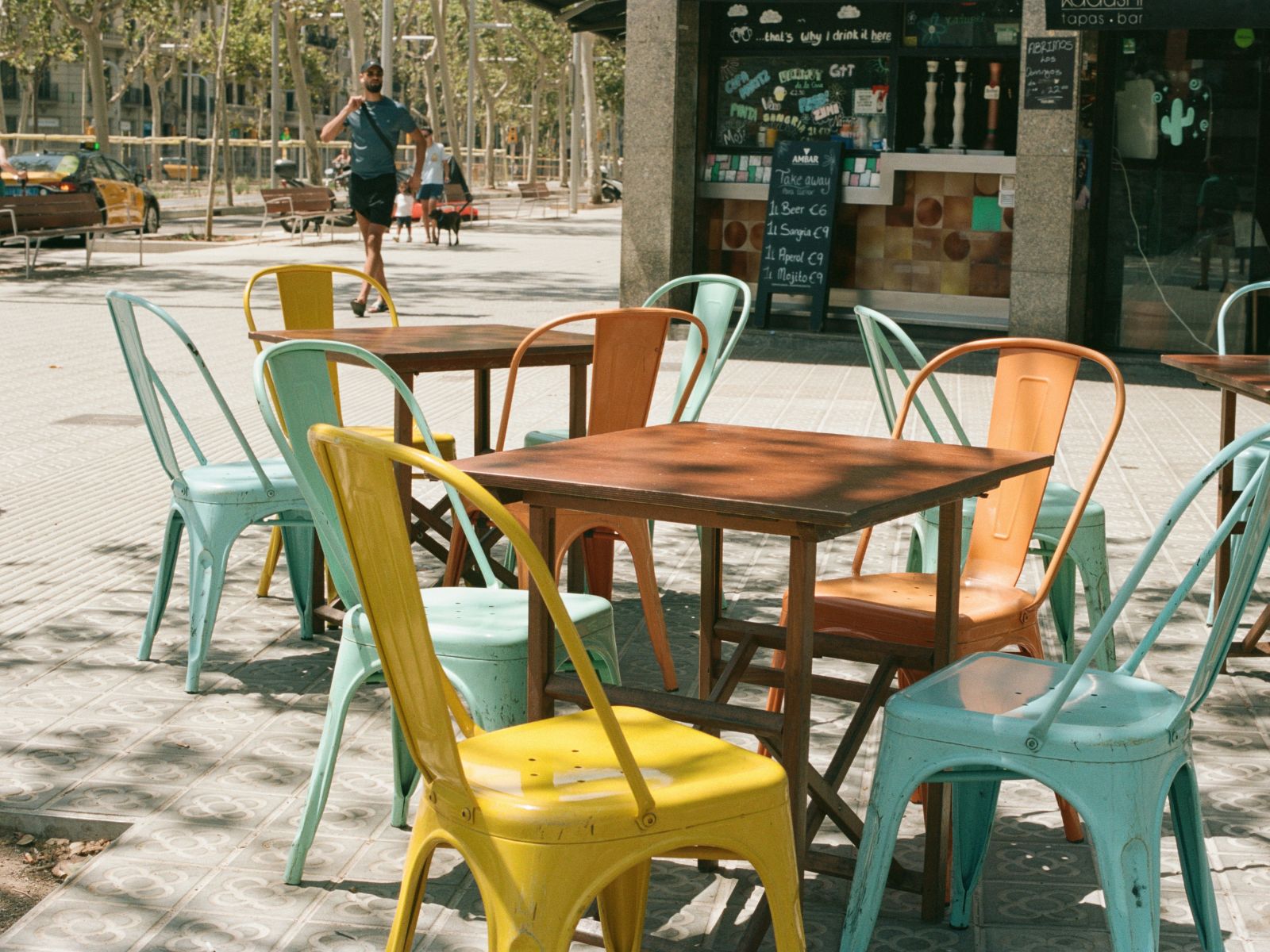
A relaxed café terrace captures the rhythm of daily life in Carmona, where mornings and afternoons are shaped by conversation and lingering pauses.
Begin the day with breakfast at the Parador before heading back into town to explore Carmona’s plazas and everyday rhythms. Wander through Plaza Mayor and Plaza San Fernando, settling in at cafés for coffee or a morning drink while observing daily life.
Continue on to the Plaza de Abastos (Mercado), where stalls, small shops, and neighborhood energy offer insight into local routines. This is an ideal place to pause for a casual drink, browse specialty products, or pick up small local treats.
For lunch, choose between a relaxed meal on one of the plazas or a standout sit-down restaurant in town, depending on appetite and mood. Afterward, visit the Carmona City Museum to deepen your understanding of the town’s Roman, Islamic, and medieval heritage.
The afternoon is left open for a traditional siesta, further wandering, or visits to local bakeries and small specialty shops. In the evening, return to the Parador de Carmona for dinner and a restful final night, enjoying the stillness and views that define Carmona after dark.
Need to know
Who this itinerary is for:
This journey is ideal for travelers who want to experience Sevilla beyond its most famous landmarks and connect with the city through daily life, language, and neighborhood rhythm. It is well suited to first-time visitors to southern Spain who value cultural context and thoughtful pacing, as well as returning travelers seeking a more personal, lived-in experience. The itinerary balances guided insight with unstructured time, making it especially appealing to travelers who enjoy walking, lingering in cafés and plazas, and engaging with local culture at a comfortable pace. The concluding stay in Carmona offers a quiet, historic counterpoint to the city, ideal for those who appreciate reflection, landscape, and a slower close to their journey.
Pacing and walking:
This itinerary is designed for travelers who enjoy walking and exploring cities at a relaxed, observational pace. Sevilla is largely flat and well suited to exploration on foot, with neighborhoods, plazas, and parks easily connected by riverside walks. Days are intentionally paced to allow for café stops, mid-day breaks, and time to linger without feeling rushed. In Carmona, historic streets and plazas are compact and easily walkable, though some uneven surfaces and gentle inclines are typical of hill towns. Centrally located accommodations minimize the need for transportation once settled in each destination.
Transportation notes:
Transportation throughout the journey is designed to balance comfort, simplicity, and flexibility. Sevilla is explored primarily on foot, with minimal reliance on vehicles once arrived. A private transfer is included for the journey from Sevilla to Carmona, allowing for a seamless and unhurried transition from city life to hill town calm. This approach minimizes logistical complexity while maintaining a smooth overall flow.
Customization and flexibility:
All elements of this itinerary can be tailored to individual interests and travel style. Optional private guided experiences—including cultural walks, culinary explorations, flamenco-focused activities, and language instruction—can be added or adjusted based on preference. Time for rest, independent exploration, or additional neighborhood immersion can be expanded as desired.
Sevilla also has a vibrant nightlife that extends well beyond traditional dinner hours. For travelers interested in experiencing this side of the city, recommendations can be curated for late-night flamenco venues, live music, atmospheric cocktail bars, or neighborhood spots favored by locals. Accommodations, pacing, and evening plans may also be adapted to reflect seasonal considerations, energy levels, or specific cultural interests.
Dining and reservations:
Dining is approached as an integral part of cultural immersion rather than a fixed schedule of reservations. Restaurant and tapas recommendations are curated in advance, with an emphasis on neighborhood favorites and regional traditions. Spanish dining rhythms are observed, with later dinners and flexible evening plans built into the itinerary. Reservations are recommended for select experiences, particularly flamenco performances and standout restaurants, while many meals are designed to unfold naturally through casual tapas and spontaneous choices.
Best time to travel:
Spring and fall are the most comfortable and rewarding times to visit Sevilla and Carmona, offering mild temperatures, lively street culture, and ideal conditions for walking and outdoor dining. Late March through May and September through early November are particularly well suited to this itinerary’s emphasis on neighborhoods, plazas, and evening strolls.
Winter is also an excellent time to visit Sevilla, especially for travelers interested in food, culture, and daily life. Cooler temperatures make walking more comfortable, crowds are lighter, and the city takes on a distinctly local feel. Carmona is similarly well suited to winter travel, with crisp days, clear views, and a quieter pace that complements the Parador experience.
Holy Week (Semana Santa) and the April Fair (Feria de Abril) are among Sevilla’s most significant cultural events and can be extraordinary experiences for travelers interested in tradition, music, and pageantry. However, these periods also bring increased tourism, higher accommodation demand, and limited availability. Travelers considering visits during these dates should plan well in advance and be prepared for a more festive, crowded atmosphere that differs from the city’s usual rhythm.
Summer travel is possible but best approached with early starts, mid-day breaks, and relaxed evenings, particularly in Sevilla, where temperatures can be high. This itinerary is designed to accommodate seasonal adjustments, ensuring comfort and enjoyment year-round.


Travel Advisor
Dana Levy

Dana Levy

Get in touch with Dana Levy
Did you like this guide? Reach out to customize and book your own experience. Or, just to chat about travel in general.
For more inspiration and insider recommendations, visit our Andalusia page.