

Curator’s statement
Coming face-to-face, toe-to-toe with silverback mountain gorillas was more astonishing than I ever imagined! Wildlife is our passion, and we are constantly seeking intimate encounters in natural habitats. After Arctic polar bears and Antarctic penguins, of course we had to go trekking with gorillas, the largest of primates.
The Fora Difference
Book with Globetrotting Kirks to access exclusive perks and experiences on your trip.

Killer perks
Free upgrades, spa credits and more—we got you

Personalized recs
Customized travel planning for your style

Insider knowledge
Expert advice from people who’ve actually been there
Where to stay
Unlock perks by contacting Globetrotting Kirks to book your trip.
Mountain gorillas, living in families of up to 30, can only be found in Rwanda, Uganda, and the Republic of Congo.
They are a rare success story, recovering from about 300 in the wild in 1970 to over 1,000 today. These gentle beasts cannot survive in captivity, but they can be readily observed in Uganda's Bwindi Impenetrable Forest and Rwanda's Volcanoes National Park. Small groups of eight guests get to spend an hour with each "habituated" family. Here are highlights and top tips from our four treks in Rwanda and Uganda in December 2025.
Gorilla trekking in Rwanda
We booked one trek and enjoyed it so much we returned the second day, hoping to snag a spot, and got lucky with a last-minute cancellation! (A number of other guests had planned two in a row.)
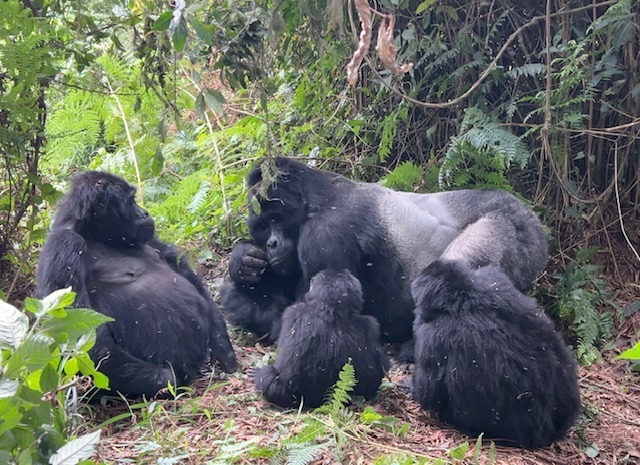
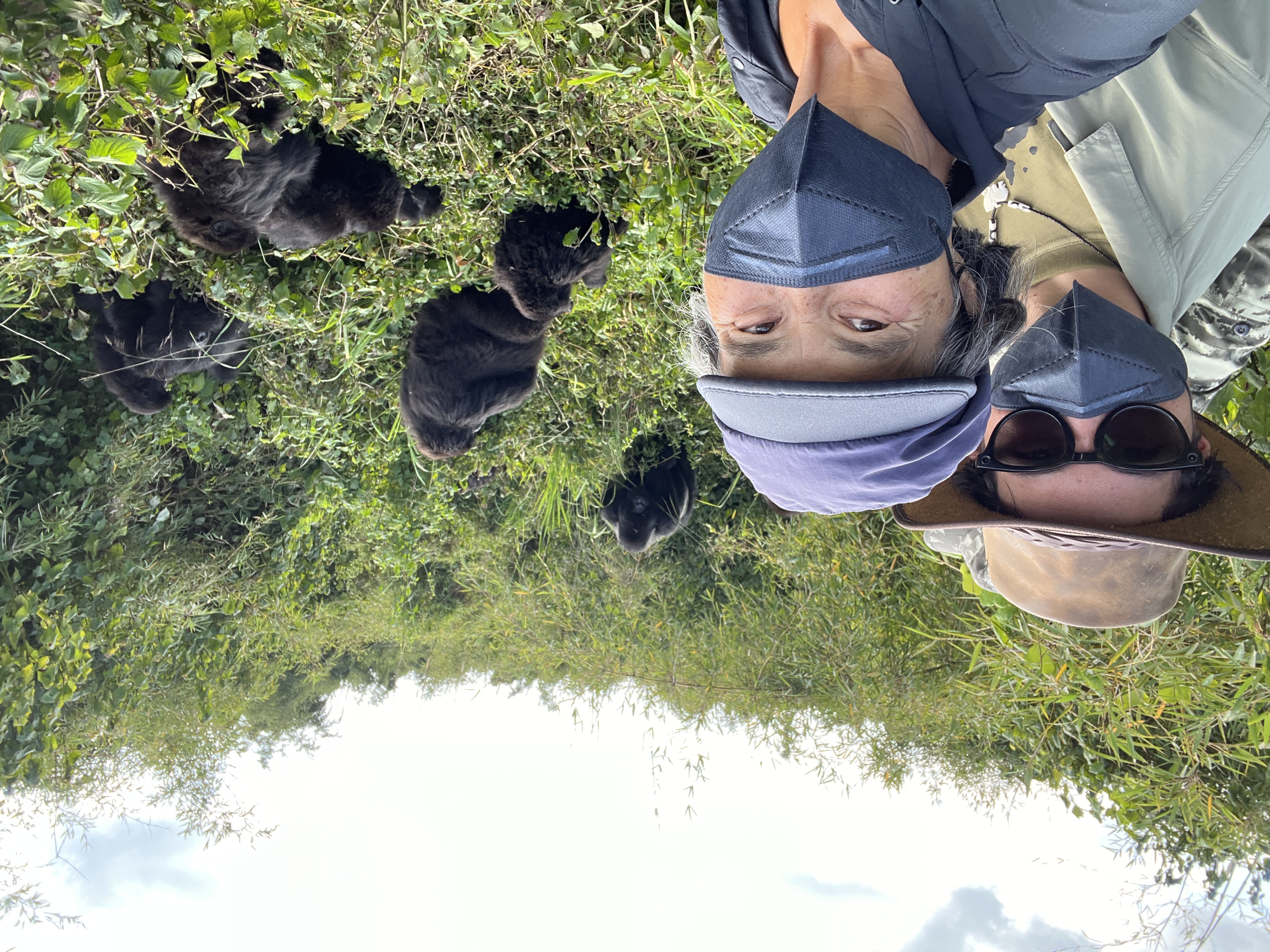
Silverback and family
Both treks started from the same spot and resulted in fabulous encounters. The first took about an hour to locate a large family with playful youngsters; the second took nearly two hours to reach a family with seven silverbacks!
The trekking was muddy and thorny but not too rough—except for an unfortunate attack by safari ants.
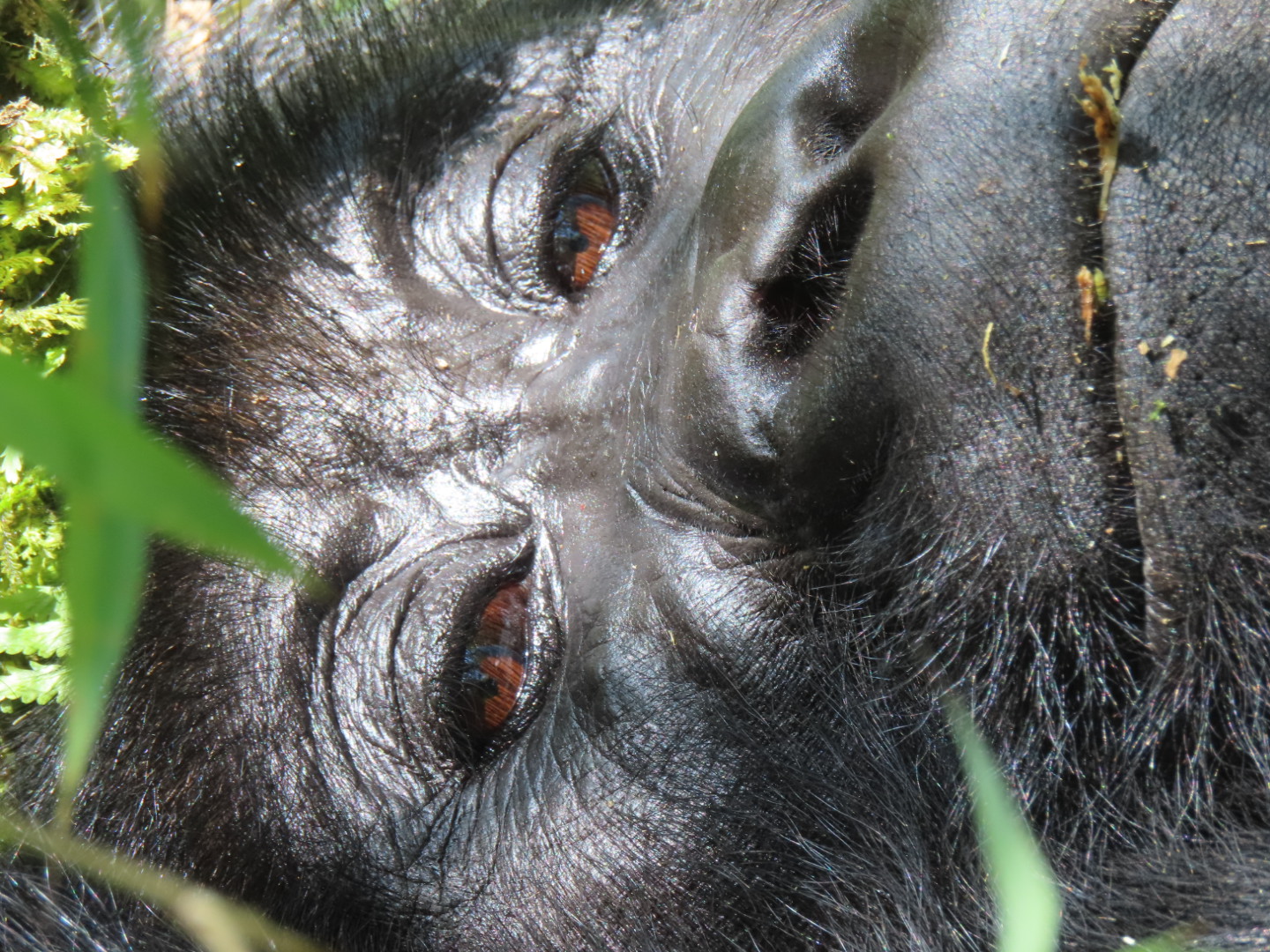
This female had the most startlingly beautiful eyes.
Gorilla trekking in Uganda
Bwindi is the only place that offers a "habituation" trek, where you spend time with gorillas not yet ready for general visitation. Typically groups of four guests will get four hours with a family. We again lucked out as the only trekkers and got a private tour.
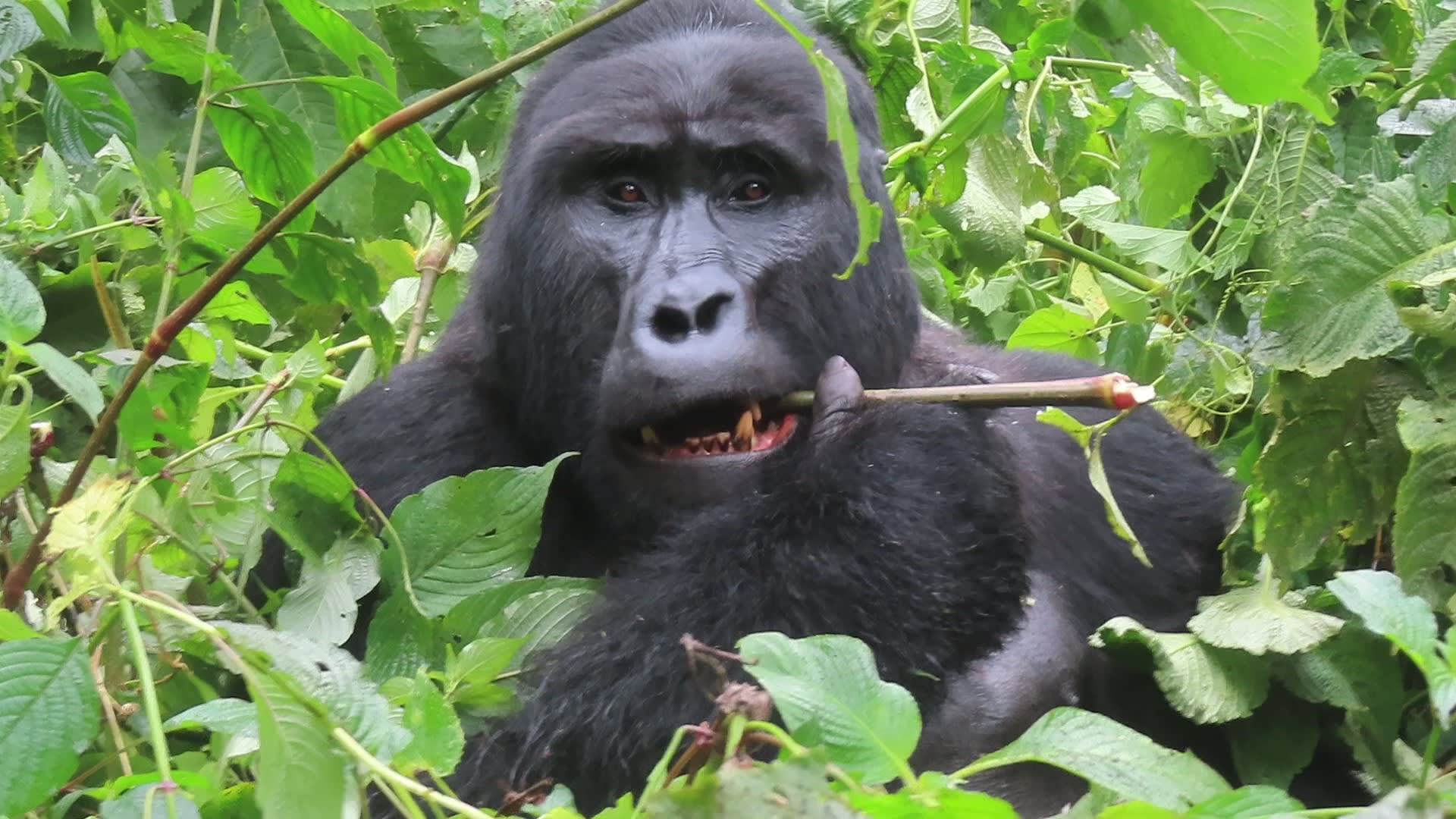
The gorillas spend most of their day eating—up to 60 pounds of plants.
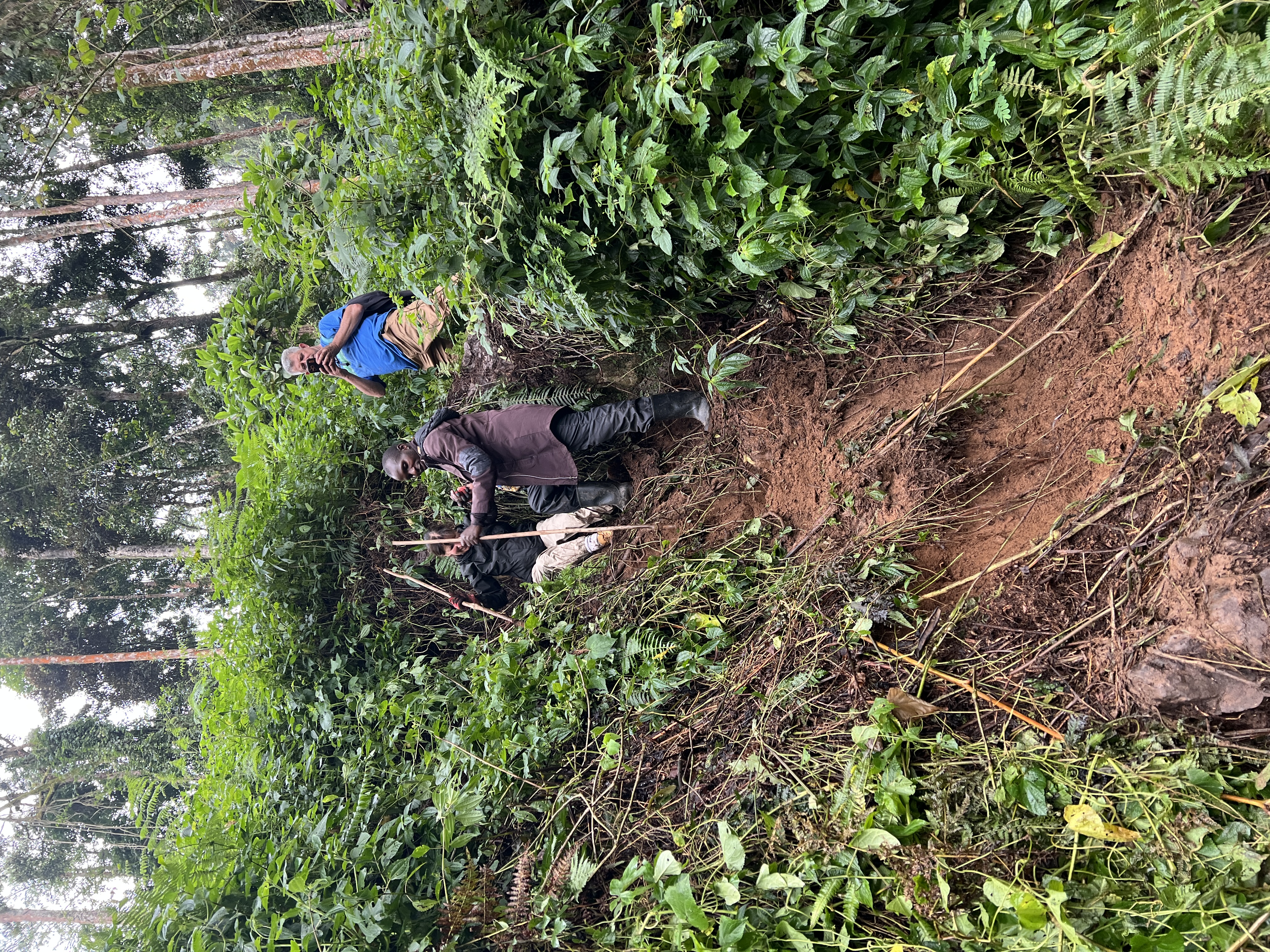
This was my favorite trek because it was so intimate and incredibly adventurous. It took 2.5 hours of hiking up the mountain then down into the ravine to reach the family. As they moved deeper and further down into the dense, steep jungle, our trackers followed, hacking human-sized paths with their machetes! In total, we hiked about four hours over eight miles.
Our second Uganda trek (and our last one) was disappointing. It took nearly three hours of grueling hiking to finally locate the family, only to find them mostly inactive or difficult to see in the tight brush. If this had been our first trek, we would have had very different attitudes about the experience.
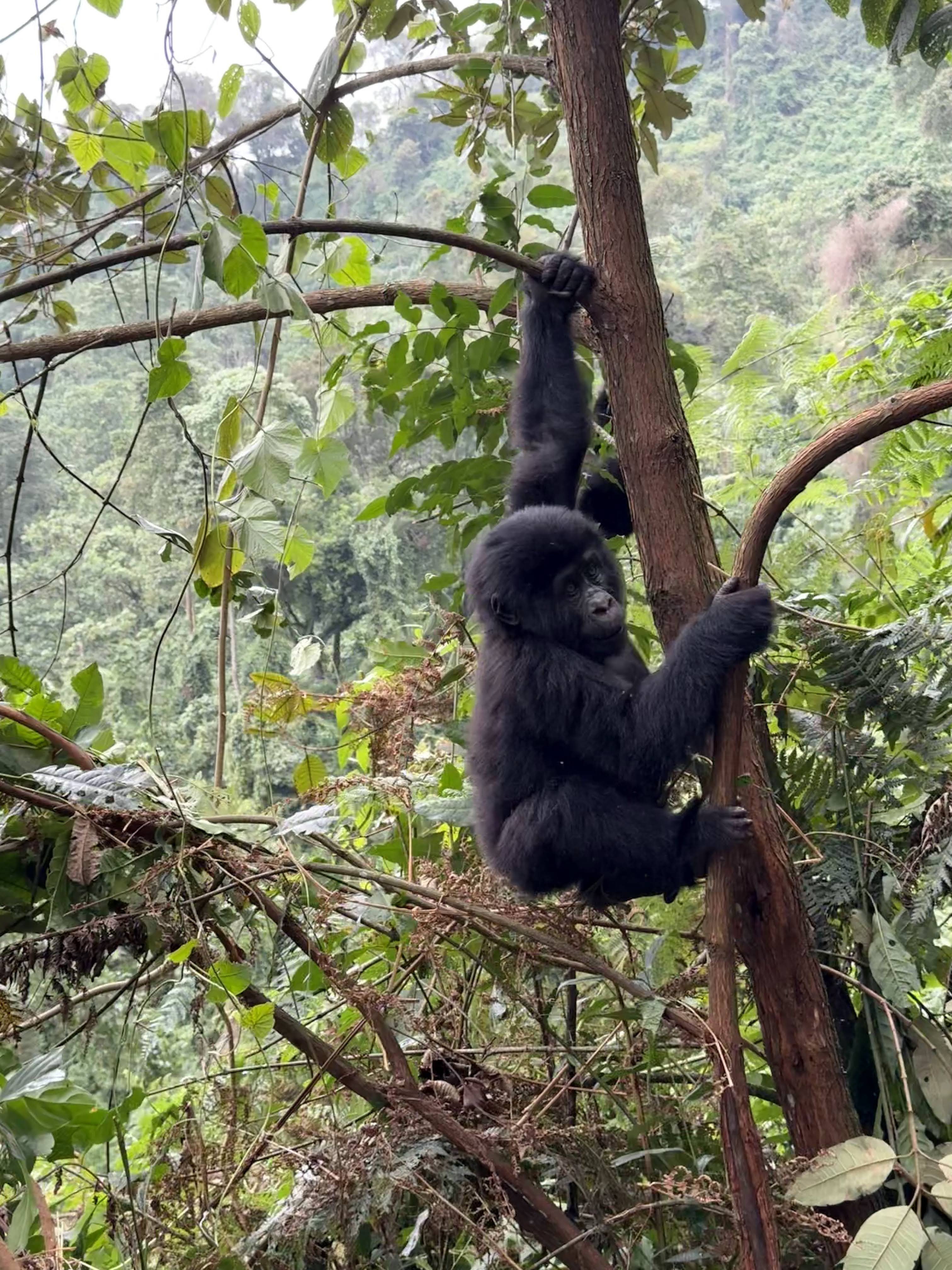
In Uganda, the gorillas scamper among the trees.
What to expect
Every trek will be different! You will request easy, medium, or hard treks and be assigned a family. But no one knows exactly where the gorillas will be, so medium can become easy and easy can become hard. If the trek is too arduous for you, you can pay for an "African helicopter," which is a metal sedan chair carried by locals (warning: it is uncomfortable and precarious—but may suit your needs).
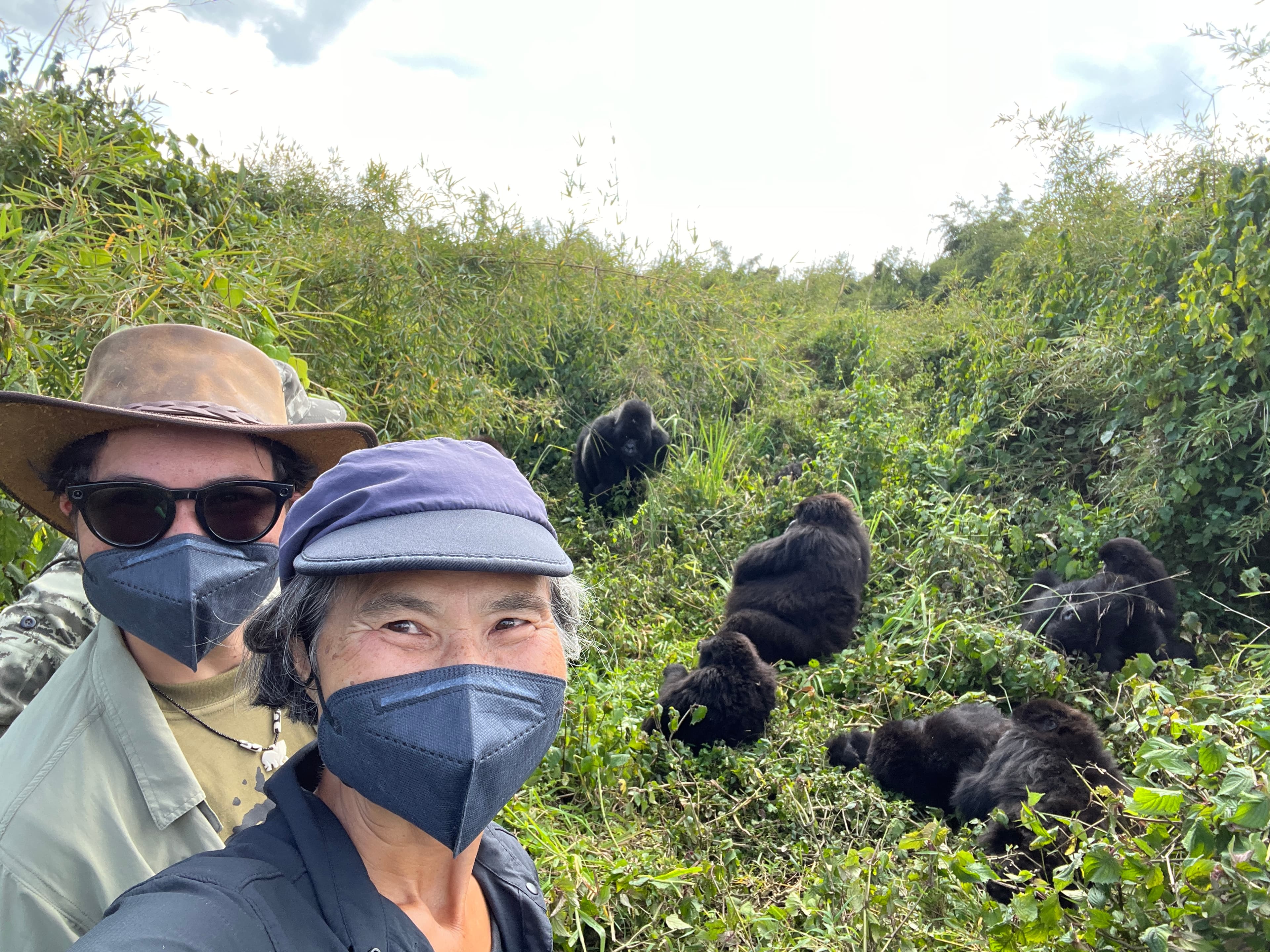
Our first gorilla trek—we were thrilled by this active family group.
There will be many more people involved than you expect. The trackers are the advance team searching for your gorilla family. The guide leads your group, accompanied by two armed escorts. The porters you hire for $20 will carry your bag (with raincoat, water, lunch) and, more importantly, help you on the often treacherous paths. Be generous in tipping all these individuals (US dollars accepted).
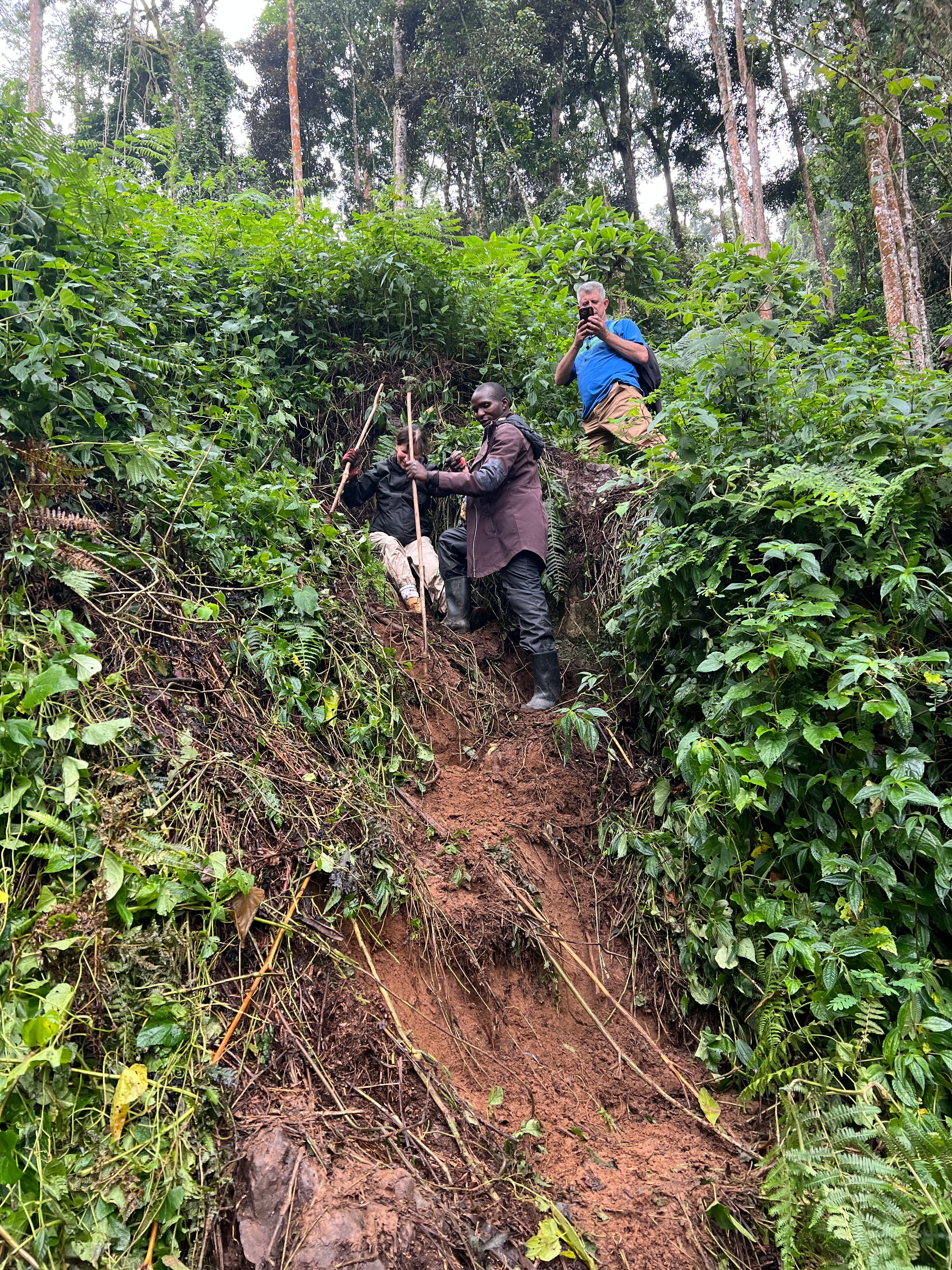
Trekking can be treacherous and grueling, especially in Uganda.
You should bring good hiking shoes, a raincoat, a hat/cap, and masks (required). Wear long-sleeve shirts and pants to protect against brush and nettles. Most lodges will provide/rent gaiters to protect your legs/pants and gloves for fending off thorns. (Lodges are great at helping you don your gear and cleaning your muddy shoes afterward!) Nice sturdy walking sticks are provided.
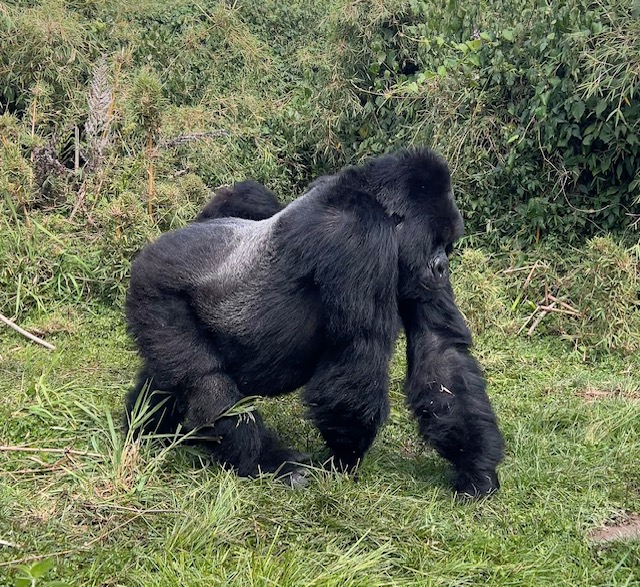
Beautiful silverback.
Which is right for you?
In general, Rwanda is a little easier with more infrastructure and more luxury lodges. Uganda is more rugged and steep and less sophisticated.
Rwanda is more expensive but is the same price as Uganda's special "habituated" trek. If you do both, start with Uganda to end with more comfort in Rwanda.
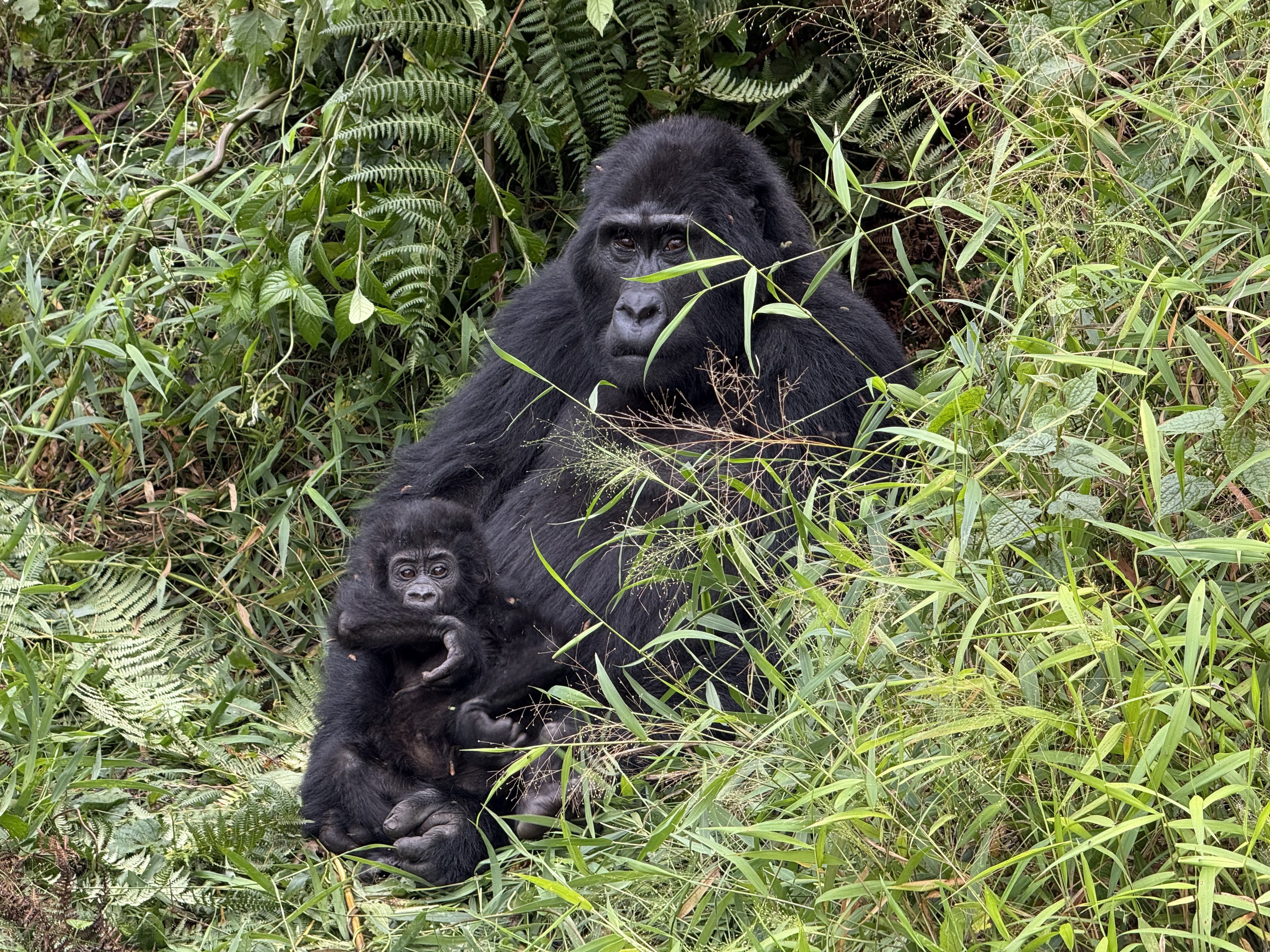
Mom and infant.
Need to know
Permits
Gorilla trekking has soared in popularity, so getting permits is a competitive process. There are only about 12 habituated families in Rwanda to visit and 20 in Uganda for a total of 256 slots on a given day. You can apply yourself, but using a reputable tour company provides a layer of security and important knowledge.
The permits are pricey: $1500 in Rwanda, $1500 for the Uganda habituation hike, and $800 for the regular Uganda treks. A portion goes to support local communities and conservation efforts. We hear prices are going up in both countries.
When to go
The dry season is most popular, from June to September and mid-December to early February.
Getting there
We did a week in Tanzania (Serengeti and Ngorongoro), flew to Kigali, Rwanda, drove to Uganda, and flew out of Kigali.
Rwanda's Volcanoes Park is easily accessible via Kigali. You can add chimpanzee and golden monkey tracking as well. From there, it's a reasonable drive to Uganda's Bwindi Forest.
To do Uganda gorillas only, you should tour the country and include Queen Elizabeth and Murchison Falls parks, chimpanzee and rhino tracking.
Both countries are strikingly beautiful!
For more inspiration and insider recommendations, visit our Africa page.


Travel Advisor
Globetrotting Kirks
Mei-Mei Kirk

Get in touch with Globetrotting Kirks
Did you like this guide? Reach out to customize and book your own experience. Or, just to chat about travel in general.