



Curator’s statement
My husband and I have been to Spain more times than I can count. Barcelona, Madrid, Bilbao, San Sebastián. We love this country. And yet, it took us years to get to Ronda. That was a mistake. Here’s the truth about Andalusia: most travelers follow the same loop. Seville, Granada, maybe Málaga. Those cities are great, but they’ve started performing for the crowd. Seville, when we visited just before Ronda, felt overrun. It didn’t feel like Spain anymore. Ronda felt like Spain.
The Fora Difference
Book with Kevin Davidson to access exclusive perks and experiences on your trip.

Killer perks
Free upgrades, spa credits and more—we got you

Personalized recs
Customized travel planning for your style

Insider knowledge
Expert advice from people who’ve actually been there
Where to stay
Unlock perks by contacting Kevin Davidson to book your trip.
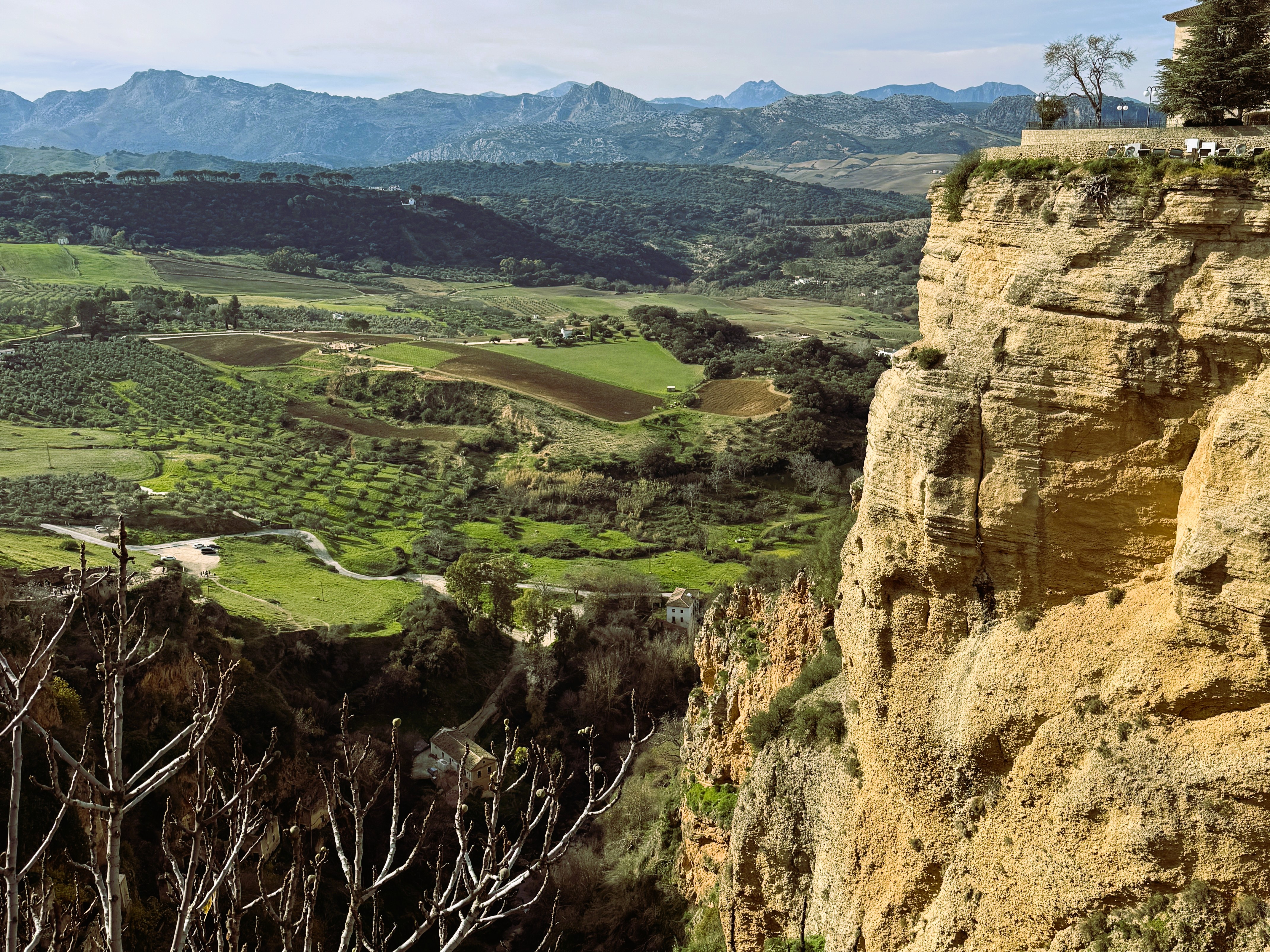
Views of the Valley from Ronda
Arriving
We came in by bus from Seville, a ride that's scenic enough to justify the trip on its own. Rolling hills, olive groves, then the road climbs into the mountains of Serranía. The first thing we noticed was the quiet. Not silence, but the right kind of noise. Locals having coffee. Dogs sleeping in doorways.
The views & sights
The city is built on the edge of a gorge that drops over 300 feet, split by the El Tajo canyon, with the Puente Nuevo bridging the gap. We're not people who get excited about views. We've seen a lot of views. But Ronda stopped us cold. Some of the most stunning photographs we've ever taken came from just walking around this city. No admission fee. No line. Just the edge of a cliff and a view that earns its reputation.
We walked down to the Baños Árabes, 13th-century Arab baths tucked into the San Miguel quarter near the old bridge. They're the best preserved Moorish baths in all of Spain. The walk down is steep enough that you’ll feel it in your legs. Horseshoe arches, star-shaped skylights cut into vaulted stone ceilings. A short film explains how donkeys powered a water wheel to pump river water into the hammam. Eight centuries of history, and the engineering still makes sense. A good warmup for what came next.
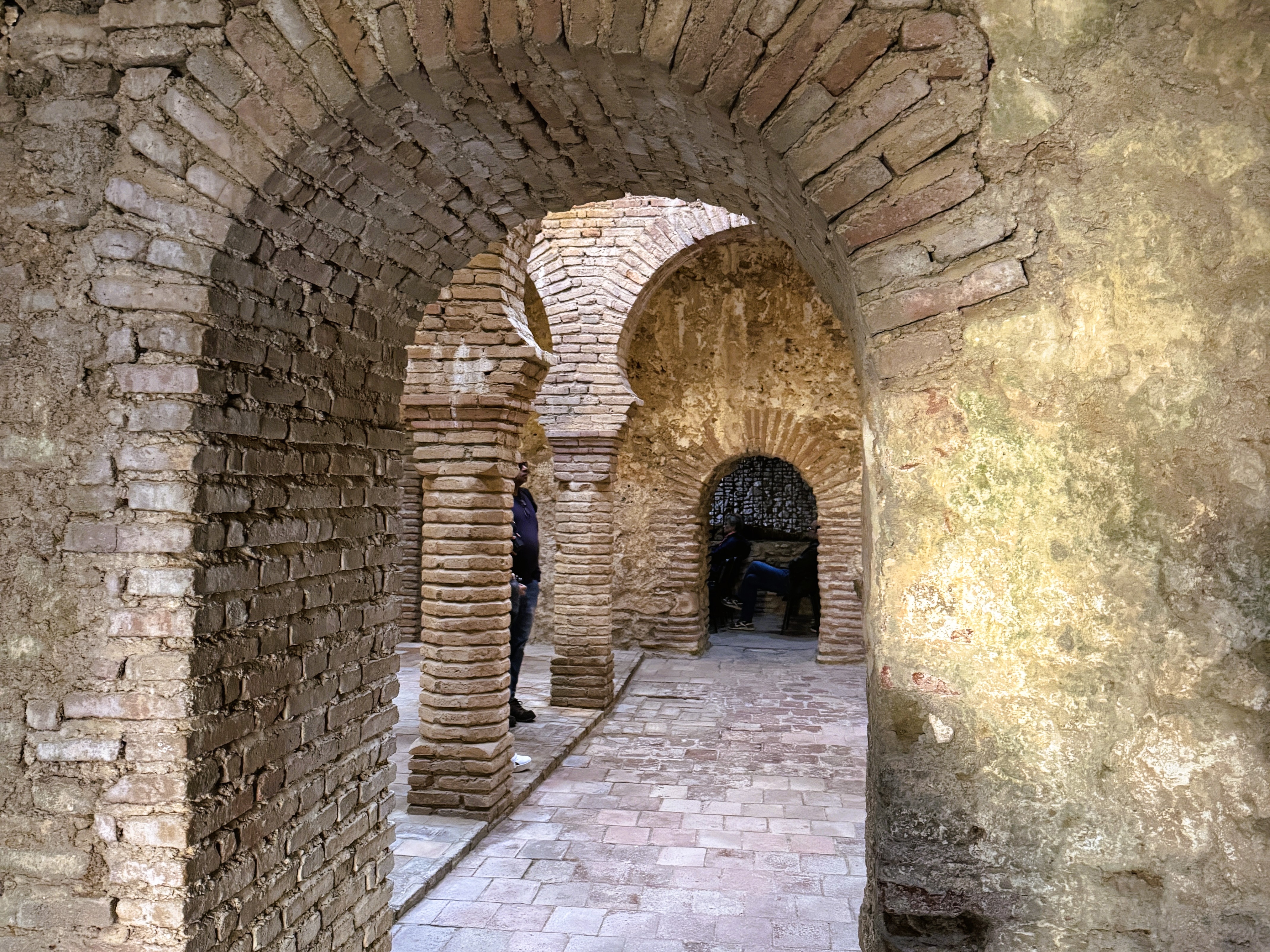
Ancient Moorish baths
Fine dining in Ronda
The real reason we went to Ronda was dinner at Bardal.
Chef Benito Gómez, a Catalan who’s made Ronda his home, runs the only two-Michelin-star restaurant in town. He also owns a local farm, Finca Rabadán, supplying much of the produce. We were excited going in but unsure what to expect. Spain’s high-end dining scene is technically precise, sometimes to a fault. The technique is flawless. But it can feel clinical. A beautiful machine producing beautiful food with no soul behind it.
Bardal was the opposite of that.
The meal told the story of Ronda itself. Every course had a reason. Local Iberian pork, Payoyo cheese from the surrounding mountains, foraged mushrooms, game. And the vegetables. Fine dining in Spain often skimps on produce, leaning hard on protein. Not here. Some of the vegetable courses hit harder than the proteins, which almost never happens at this level in Spain. I won't describe individual dishes because it was the composition of the entire meal that mattered.
The staff were cautious with us for the first couple of courses. Feeling us out. But once they clocked that we actually cared about what we were eating, everything opened up. We spent the rest of the evening talking with them, blending English and Spanish, trading stories about food and life. It felt like eating in someone’s home. We told the sommelier we wanted to stay local, and he didn't reach for the safe pours. He went deep into the cellar and pulled small production bottles from the Serranía that you cannot find outside the region. Every one was outstanding.
We've eaten at a lot of high-end restaurants across Europe. Bardal is on a very short list.
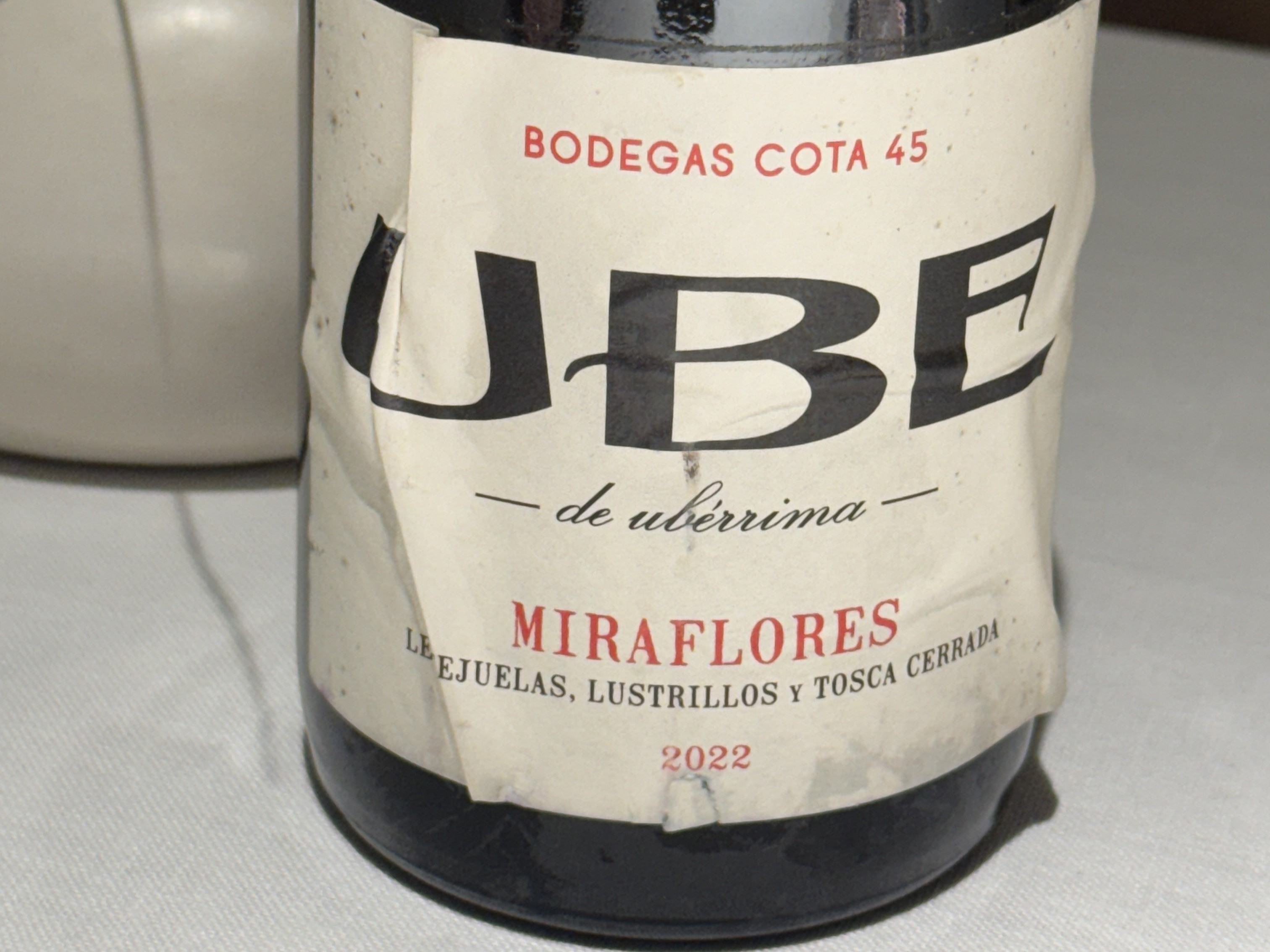
Sampling regional wines
Where to stay
We stayed at the Catalonia Ronda. Dark wood interiors, views into town, warm service, strong value. It's not flashy. It doesn’t need to be. Reference a few other great options at the top of this article.
In the morning
The next morning, we grabbed coffee and pastries at a bakery along Carrera Espinel, Ronda's main pedestrian street. Good strong coffee, flaky croissants, a few local sweets. For something more traditional, look for Confitería Daver and their Yemas del Tajo, a local specialty made with egg yolk and sugar that’s been a Ronda staple for generations.
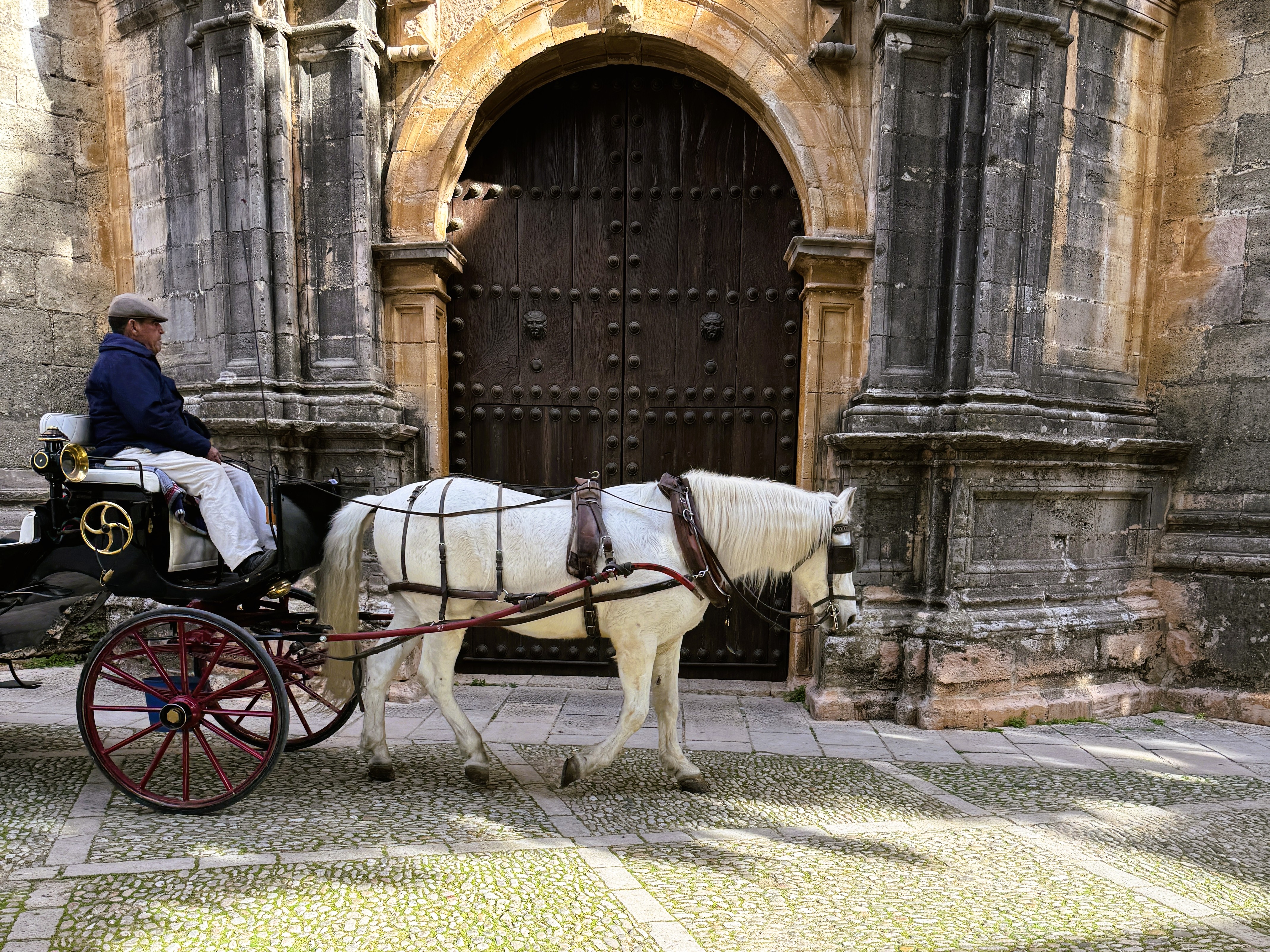
Stroll the streets or find a carriage ride
Local wine
After a few hours exploring the city, we wandered into a local wine bar for a small bite. With a restorative glass of local red in hand, we sat streetside soaking up the winter sun. Ronda's wine region is small and serious, producing mostly reds from Cabernet Sauvignon, Syrah, and Tempranillo grown at altitude.
Entre Vinos pours almost everything local by the glass, starting around two euros.
15 Arroba goes even deeper, with close to a hundred wines available.
Either one is worth an hour of your afternoon.
Need to know
Ronda is completely walkable—definitely bring comfortable shoes. In a day and a half, we covered the gorge, the baths, the old town, multiple meals, and never felt rushed. There’s no wrong turn here.
Spain is one of my favorite countries in the world. Ronda is now one of my favorite places in it. The food, the wine, the history, the fact that it hasn’t been sanded down for tourists. That’s getting harder to find—but to me, Ronda is truly worth a detour or an extended, relaxing stay.
For more inspiration and insider recommendations, visit our Andalusia page.

Travel Advisor
Kevin Davidson

Kevin Davidson

Get in touch with Kevin Davidson
Did you like this guide? Reach out to customize and book your own experience. Or, just to chat about travel in general.