


Curator’s statement
I first visited Tanzania’s famed Serengeti and Ngorongoro Crater in 2008. The stunning spectacle of the Great Migration, the remarkable variety of wildlife, and the intimate close encounters with lions and elephants won my heart. I returned in 2017 and have since been to Africa five more times. Each visit has been uniquely memorable, and my week in Tanzania in December 2025 actually exceeded all expectations!
The Fora Difference
Book with Globetrotting Kirks to access exclusive perks and experiences on your trip.

Killer perks
Free upgrades, spa credits and more—we got you

Personalized recs
Customized travel planning for your style

Insider knowledge
Expert advice from people who’ve actually been there
Where to stay
Unlock perks by contacting Globetrotting Kirks to book your trip.
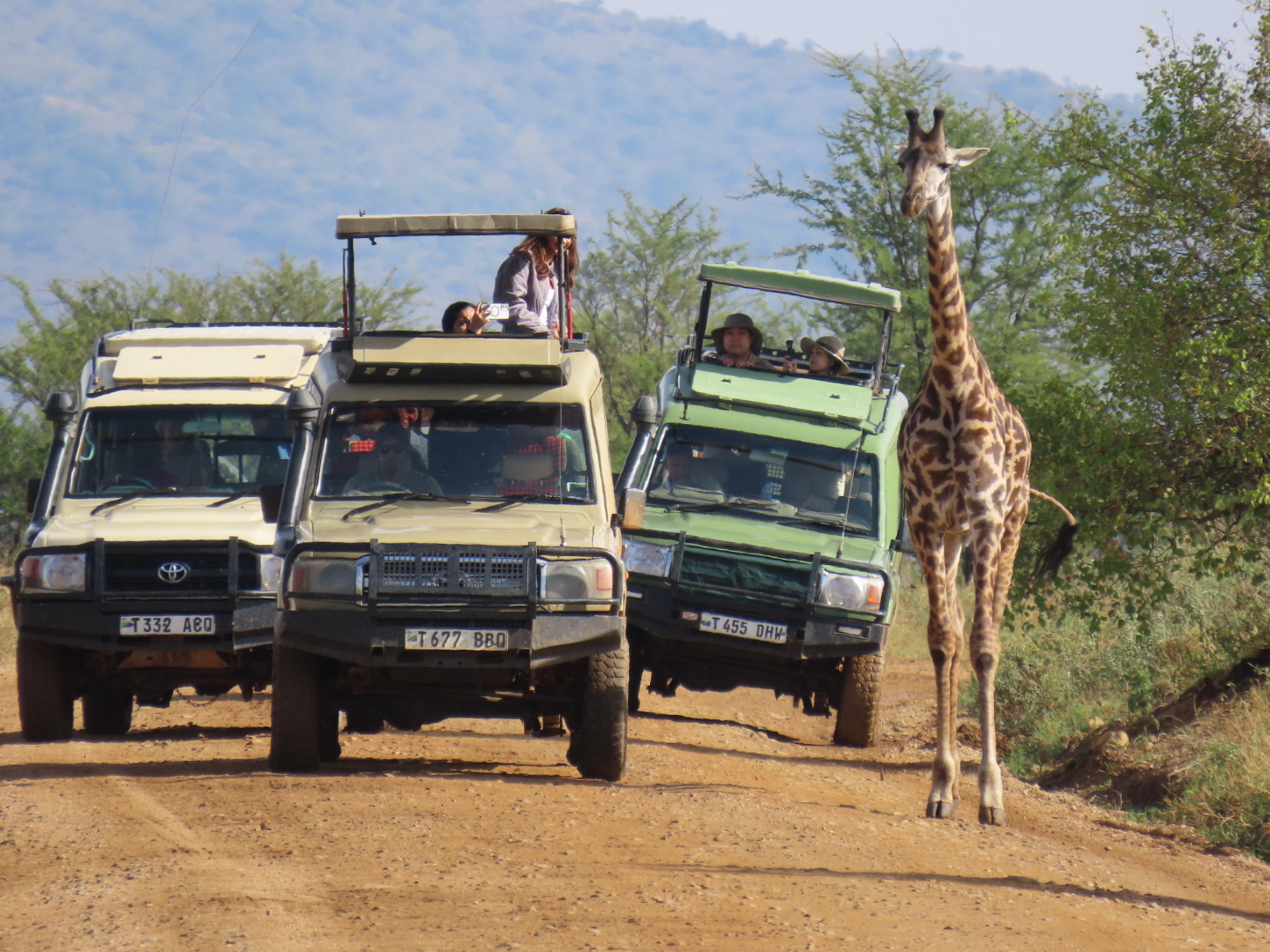
Sharing the road!
The Serengeti
The Serengeti is huge, about the size of Connecticut. It’s best known for hosting the Great Migration of some 750,000 wildebeest and 250,000 zebras most of the year. But the savannah nurtures all manner of wildlife, especially mammals (with lions galore), and remains home to indigenous communities like the Masai.
In December, we focused on the central Serengeti, flying into the Seronera Airstrip after a number of travel mishaps we won’t bore you with.
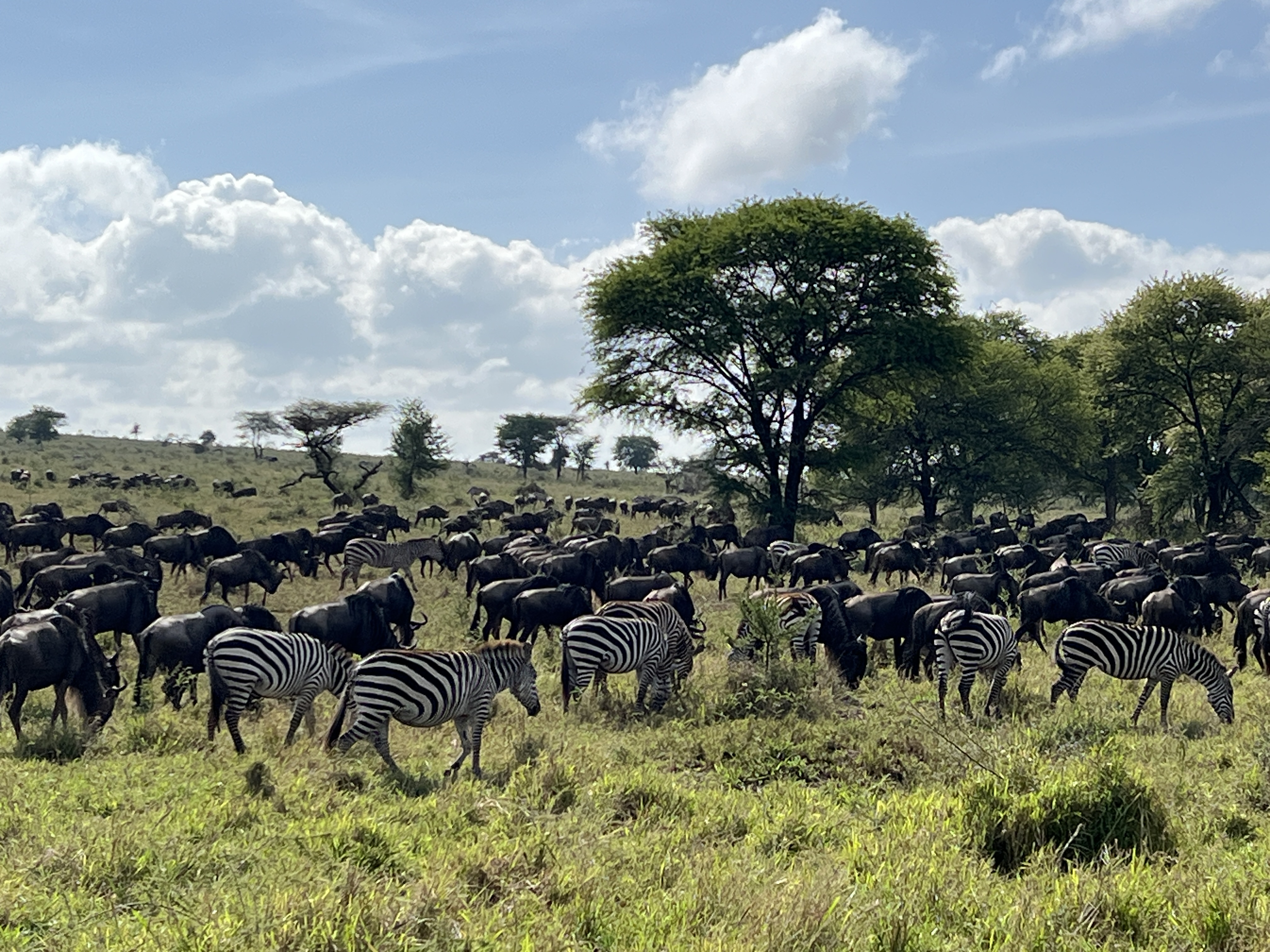
We saw only a small portion of the Great Migration on this trip.
We love the big cats, and over five days, we couldn’t believe our good fortune: we saw more than 100 lions (!), seven leopards, 17 cheetahs, two successful cheetah hunts, and one failed lion hunt. Oh, yes, and there were elephants, wildebeest, zebras, jackals, hyenas, buffalo, giraffes, antelope, birds of all kinds, and, to our delight, a serval cat and our first bat-eared fox posing nicely.
The largest pride of lions we had previously seen was about 30, in the Timbavati area of Kruger National Park in South Africa in 2024. So we were astounded by several prides of 40-plus in the Serengeti, some in trees, awkwardly, and some atop kopjes (ancient rock croppings). Being in the midst of 20-plus lion cubs on the move was just amazing.
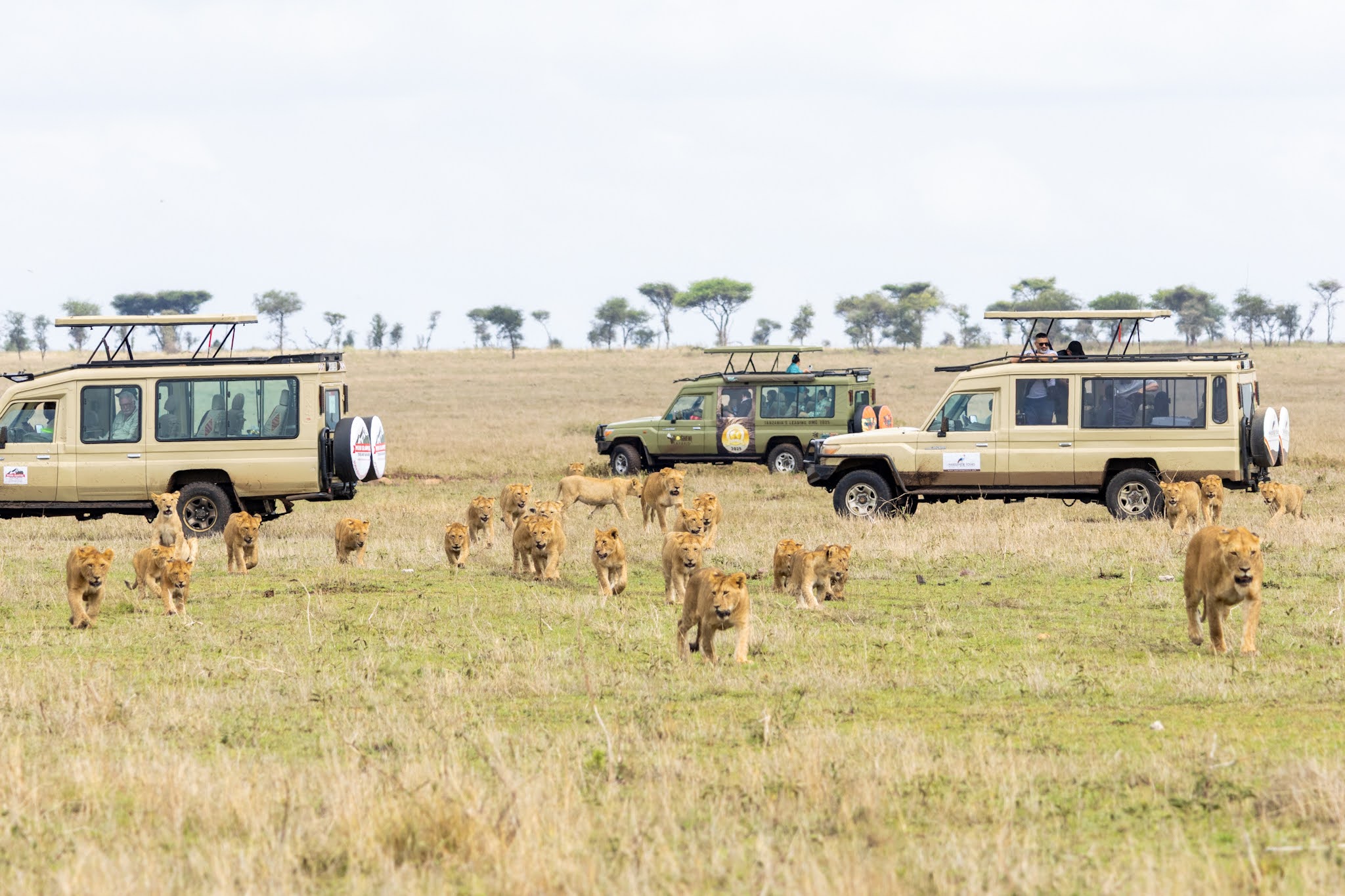
These were among the 40-plus lions in one incredible pride.
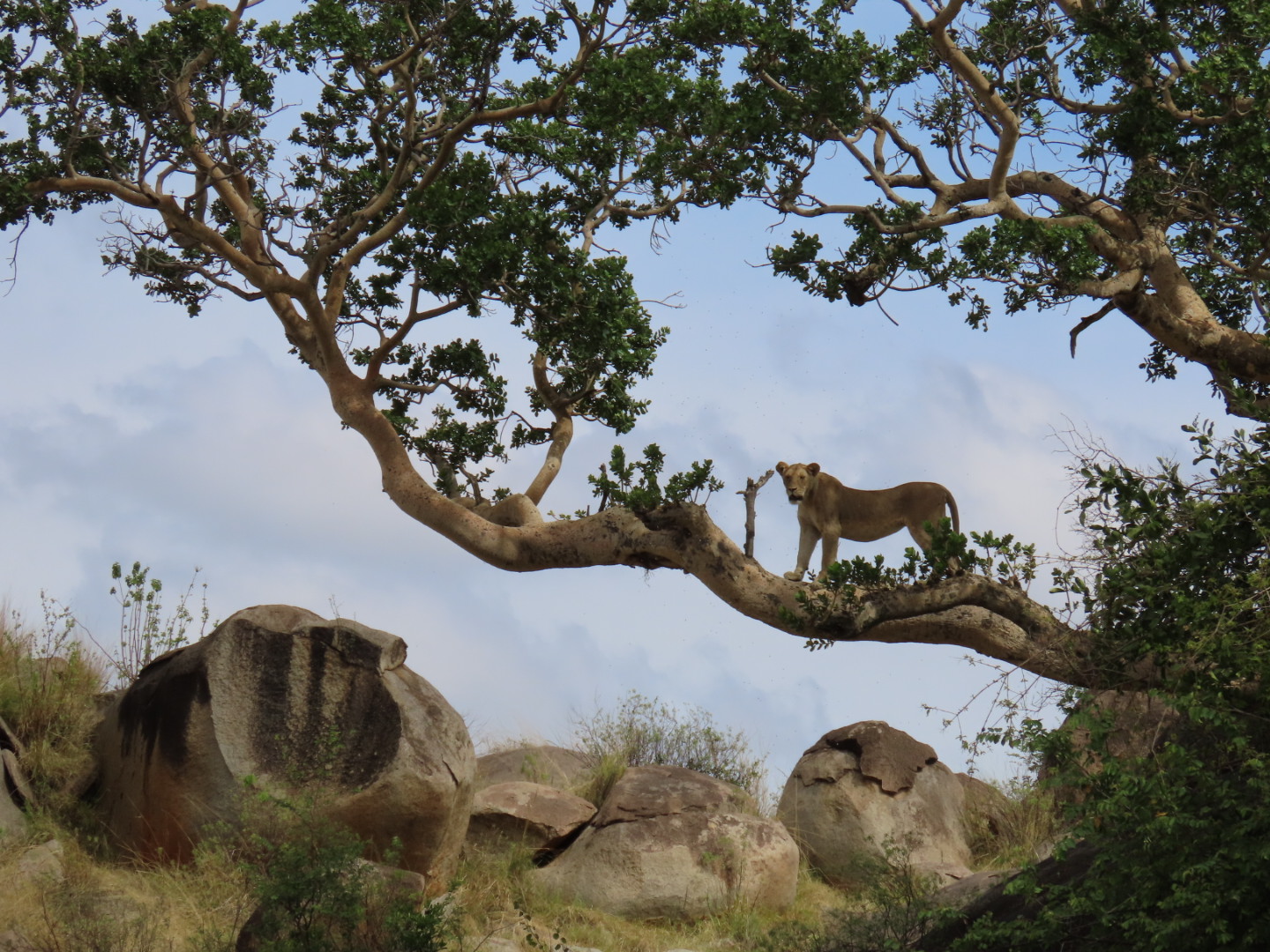
The Serengeti is known for tree-climbing lions.
Our original plan was to spend equal time in the Udutu area, where the Great Migration typically meanders in December. But the rains were late and there wasn’t much activity, so we spent only one night here, where...
We had maybe our best safari encounter ever: a mom cheetah with a rare quintet of darling, exuberant 2-month-old cubs! They tussled, checked out our jeep, climbed a tree, and like all youngsters, never stood still! In all, we got to spend nearly three precious hours with this family in two sightings. Later, we learned the mom is named Quince. She started with six cubs and shortly after we saw her was down to four. Sad, but that’s part of the circle of life.
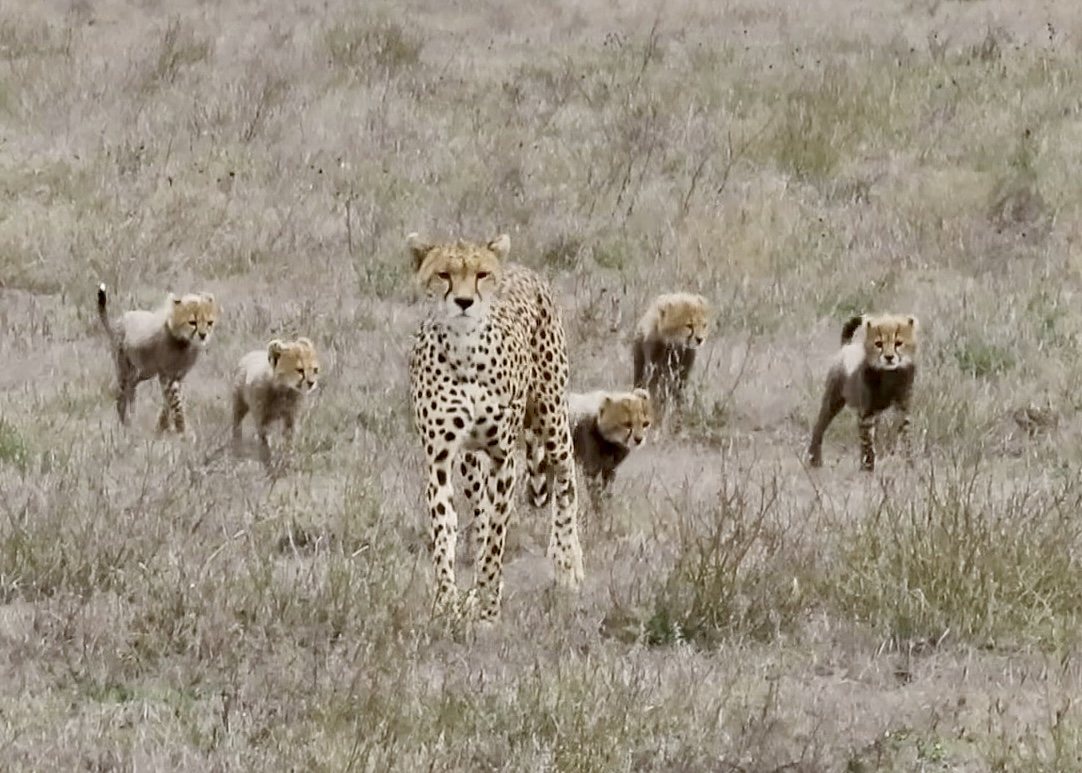
Possibly our best sighting ever: mom cheetah with a rare quintet.
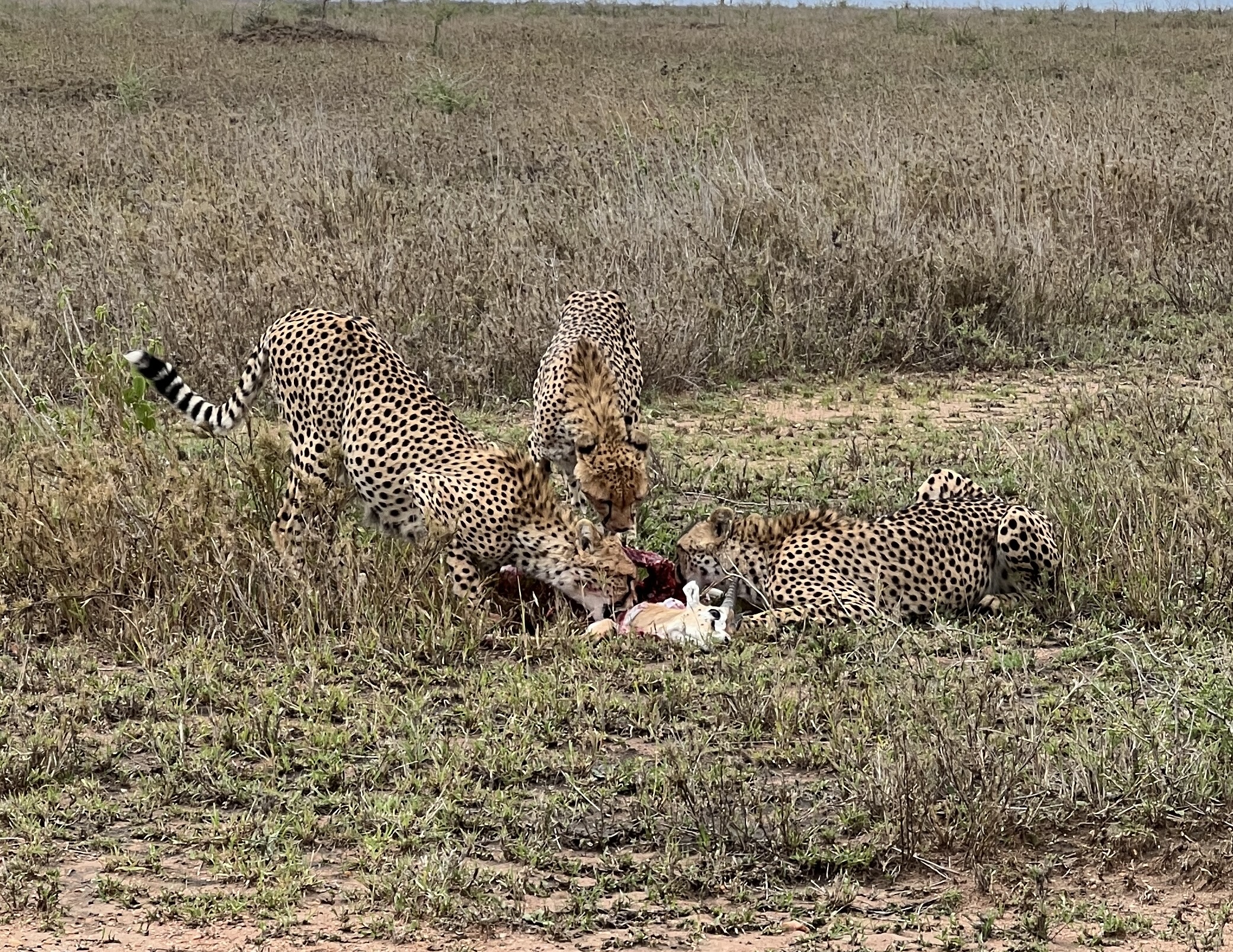
Three cheetahs enjoying their kill.
Ngorongoro Crater
Wrapping up our week in Tanzania were two drives down to the Ngorongoro Crater. This large volcanic caldera encloses a variety of wildlife who live full time in its crater. In my past two visits here, there were terrific sightings, including lions strolling the road, and sometimes laying down in the shadow of the jeeps for respite from the sun.
This time, it was disappointingly quiet, especially compared to our previous five days (although we spotted a leopard en route, which is unusual for Ngorongoro). We saw the only rhinos of this trip, but they were waaaaay in the distance.
We stopped at a watering hole to admire some zebras cooling down just 10–20 feet away. Moments later, our guide whispered, do you see what’s in the grass nearby? It was a well-hidden lioness!
She pounced just as we spotted her, startling the zebra into flight hither and thither. Just as quickly, it was over. The lioness gave up, realizing she had failed, as lions do on nearly 75% of their attempted hunts. It was time to conserve her energy for the next potential prey.
And we had front-row seats to this call of the wild! What a fabulous finale to an incredible week in Tanzania!
(Next, we flew to Rwanda and Uganda for gorilla trekking. See my trip report on that adventure!)
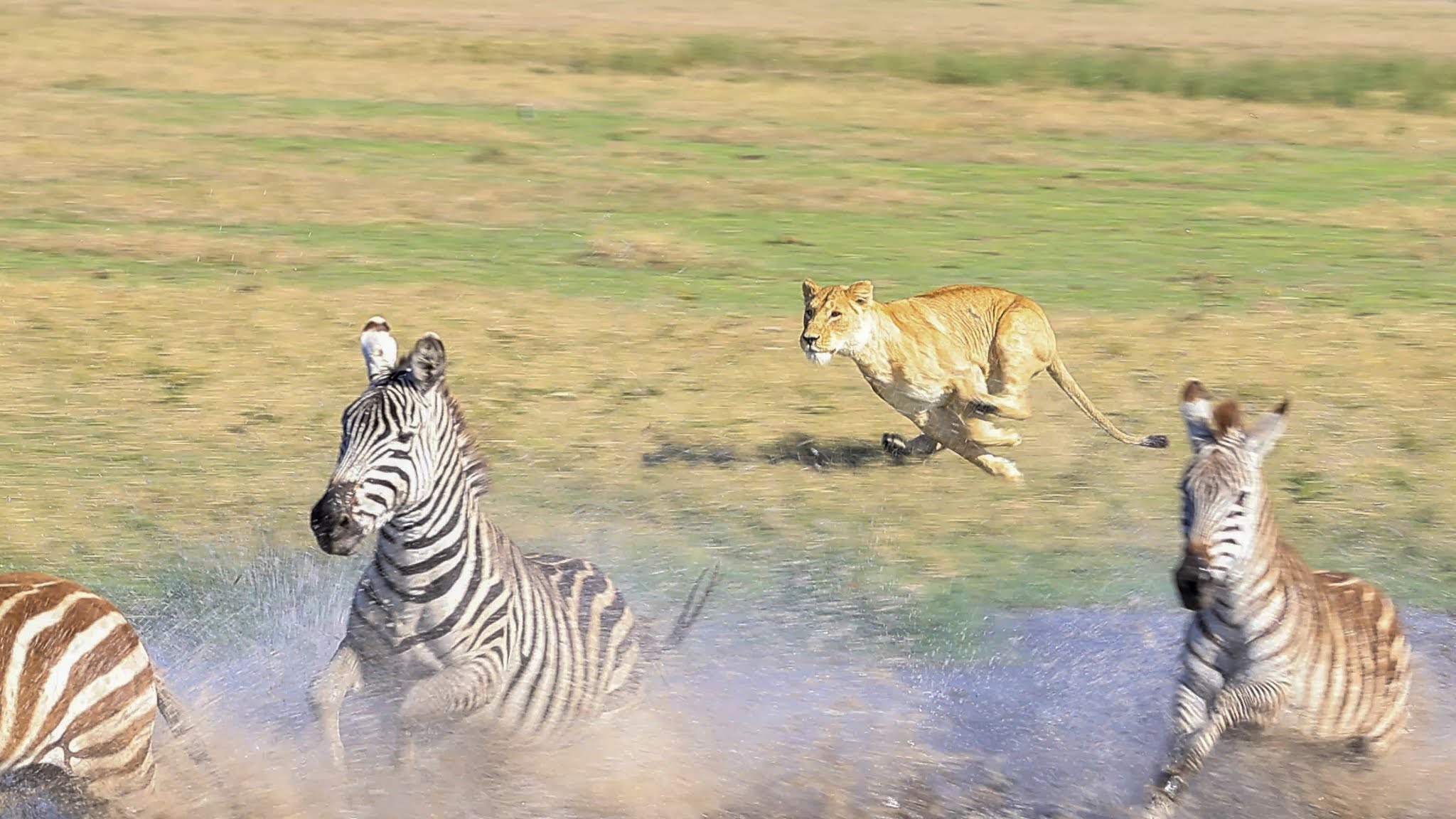
Zebras flee as a lioness pounces. Photo by Regan Kirk, Globetrotting Kirks.
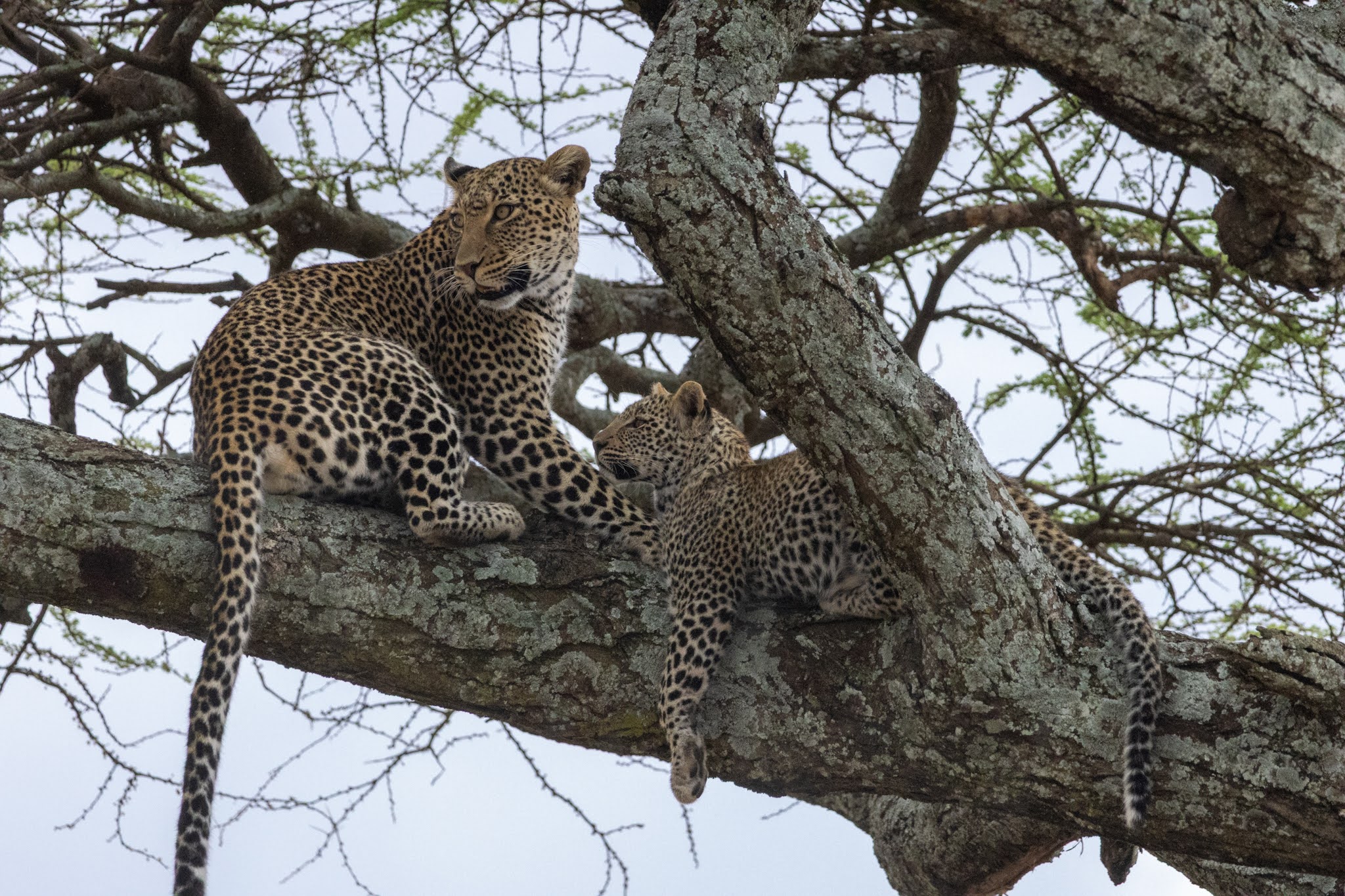
Beautiful leopard mom and cub: two of seven we spotted.
Need to know
Tanzania is a great destination year-round: you can target different regions based on your interests and where the Great Migration is likely to be. There is a wide breadth of camps and lodges from basic to luxury, mostly all-inclusive. Some are mobile camps that move with the migration!
Getting there & around
Logistically, the Serengeti is a bit challenging. Typically you fly into NBO Nairobi, Kenya, then to JRO Kilimanjaro Airport (which is as chaotic and inefficient today as it was 20 years ago, even if you get your visa online ahead of time).
The most budget-friendly plan is to have one driver who takes you from JRO throughout your visit. The road is fine from JRO to Ngorongoro, about 160 miles away. But then it’s rutted and bone-jarring the rest of the way. (Beware of low-budget short tours as you’ll spend a lot of time driving on terrible roads.)
Alternatively, you can fly from JRO or Arusha into one of the many small airstrips that dot the Serengeti, saving you time and discomfort.
Serengeti is one of the national parks where you can self-drive. That means sometimes you’ll find way too many Jeeps clustered around a sighting. Park rules prohibit driving anywhere but “authorized” roads. However, local guides will know which roads are authorized, how to avoid getting stuck in the mud, and how to cautiously, conscientiously bend rules to give you the best experience.
For more inspiration and insider recommendations, visit our Tanzania page.


Travel Advisor
Globetrotting Kirks

Mei-Mei Kirk

Get in touch with Globetrotting Kirks
Did you like this guide? Reach out to customize and book your own experience. Or, just to chat about travel in general.