




Curator’s statement
Paris may not market itself as a wellness destination, but for those who know how to move through it gently, it can be deeply restorative. This guide is designed for travelers who want to feel grounded, nourished, and calm while experiencing Paris—without rigid schedules, fitness bootcamps, or resort-style wellness. The recommendations focus on mindful movement, restorative rituals, quiet cafés, and walkable neighborhoods where wellness is woven into daily life. Think less “doing,” more being—in a city that rewards presence.
The Fora Difference
Book with Michael Huffman to access exclusive perks and experiences on your trip.

Killer perks
Free upgrades, spa credits and more—we got you

Personalized recs
Customized travel planning for your style

Insider knowledge
Expert advice from people who’ve actually been there
Where to stay in Paris
Unlock perks by contacting Michael Huffman to book your trip.
Things to do in Paris
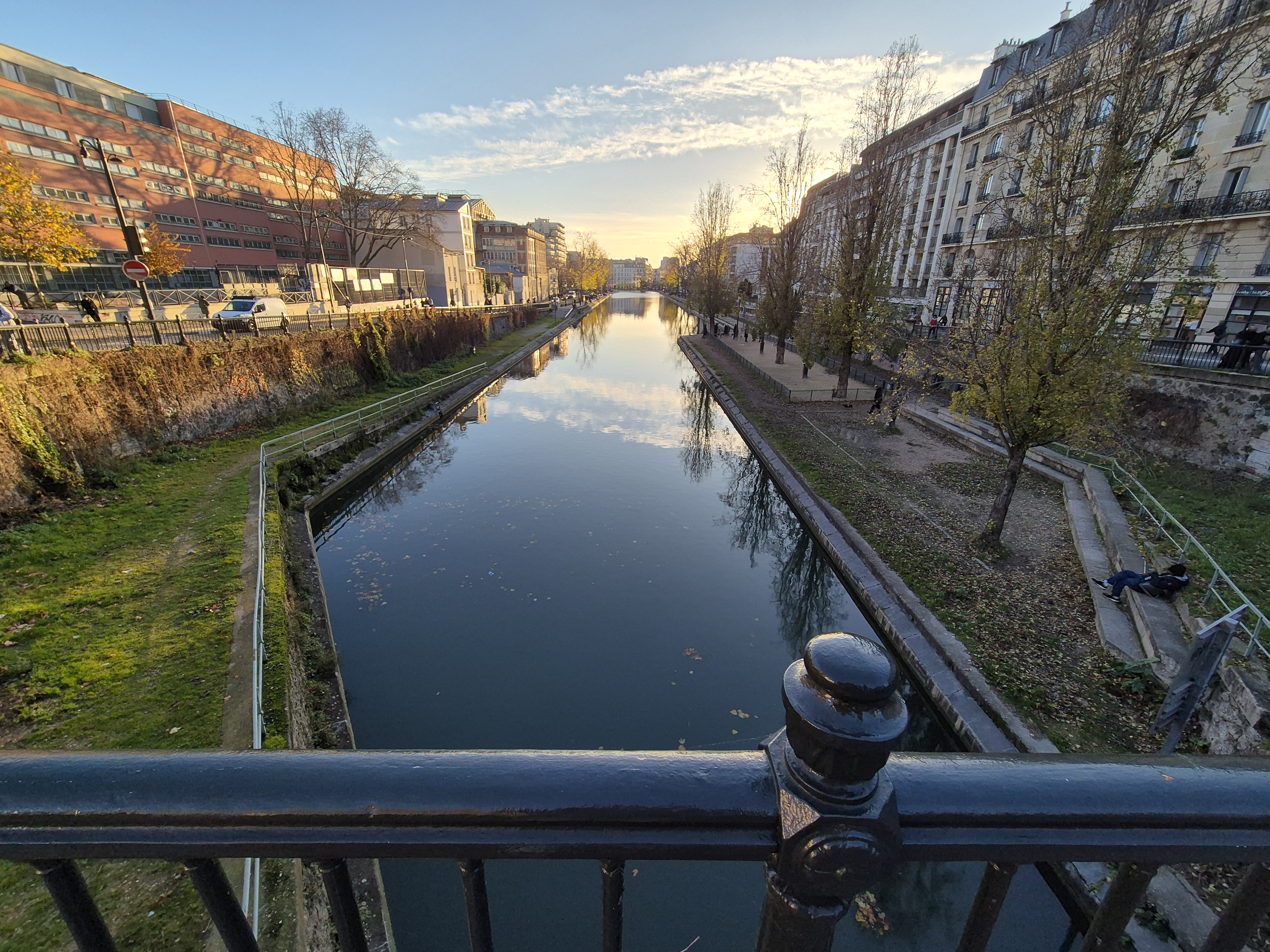
Canal St. Martin
Mindful movement: Yoga without the performance
Paris has a growing yoga scene, but not all studios offer the same nervous-system-friendly energy. These are places I return to for grounding rather than intensity.
HOY/YUJ Studio (9th): HOY’s candlelit YUJ studio is one of the most calming yoga environments in Paris. Classes often integrate infrared heat, breathwork, and slow, intentional sequencing. This is a beautiful option for travelers who want a luxurious yet introspective practice, especially in winter.
YAY Yoga—Douai (9th): YAY consistently attracts experienced teachers who emphasize alignment, breath, and embodied awareness over flashy flows. Classes here feel approachable and steady, making it a great option if you’re easing back into movement after travel.
Yoga Village (Blvd. des Capucines—2nd arrondissement): Just across the border from the 9th, Yoga Village offers an impressive variety of classes throughout the day. For wellness travelers, I recommend gentler styles (Yin, Hatha, slow Vinyasa) earlier in the morning or midday, when the studio feels quieter and more spacious. Camille’s Yin classes are lovely and she speaks English if you ask respectfully.
Hammams & restorative rituals: How to choose the right one
Hammams are one of Paris’ most underrated wellness rituals. The key is choosing the right experience for your energy level.
Les Bains du Marais (4th arrondissement): Best for first-timers or travelers who want a polished, spa-like introduction to hammam culture. Go on a weekday morning or early afternoon for a calmer experience.
O’Kari Hammam (two locations): A more intimate, traditionally inspired hammam that feels nurturing rather than overwhelming. Ideal if you’re seeking quiet restoration instead of a social atmosphere. Both are extraordinary and mindfully designed. Note: the Marais location (75004) is mixed for women, men, and children and the NEW Montorgueil location (75002) is exclusively for women.
Hotel Spas (La Fantaisie or HOY): If your nervous system is already taxed, a hotel spa can be the most grounding option. Short treatments, access to saunas, and the ability to return directly to your room make this a gentle choice, especially in winter.
Tip: Plan hammams or spa treatments for midday—after morning movement and before dinner—when Paris naturally slows down.
Walking as wellness: A gentle route through the 9th & 2nd
Walking in Paris becomes a wellness practice when you release the pressure to “cover ground” and instead let the city set the pace. This short, self-guided route is designed to be followed exactly as written—with built-in pauses, benches, and moments to reset your nervous system.
Duration: 45–75 minutes
Best time: Between 8–10 am, or after 3:30 pm
Pace: Slow, unhurried, easily adjustable
Start: Square Montholon (9th arrondissement)
Begin on a bench inside Square Montholon, one of the most quietly restorative squares in the 9th. It’s small, contained, and protected from traffic—an ideal place to arrive in your body before moving through the city.
Sit for a few minutes before you walk. Let your shoulders soften, place your feet flat on the ground, and notice the sounds around you without labeling them. This is where you’ll do the breathing practice below.
Walk: Square Montholon → Rue Lafayette → Rue de Rochechouart
From the square, walk toward Rue Lafayette, then follow the calmer stretch of Rue de Rochechouart. Keep your gaze soft and slightly widened rather than fixed straight ahead. Notice details—balconies, textures of stone, shop shutters—instead of landmarks.
If your body feels tight or rushed, shorten your stride. There is no destination to reach.
Passage Jouffroy (2nd arrondissement): Enter Passage Jouffroy and immediately slow down. Covered passages have a naturally regulating effect: the light is diffused, sounds are dampened, and movement becomes more contained.
Walk through without shopping. Let this be a transition space rather than a stop. Le Valentin could be a place to have a quiet cup of tea if this feels like the right time (see “Places to eat & drink” below).
Pause: Passage Jouffroy or Passage Verdeau Benches
Near the Musée Grévin or inside Passage Verdeau, take another brief pause if you need it. Sit, observe movement around you, and repeat a few rounds of the breathing practice. If you brought your water bottle, this would be a good place to hydrate>
Optional extension: If you feel energized, you can extend the walk toward Jardin Villemin near Canal Saint-Martin for still-water views of the canal and park greenery (~30 minutes 1-way). If you prefer containment, simply loop back toward the 9th and end at a quiet café.
A Simple Yogic Box Breathing Practice for Park Benches
This four-part yogic breathing technique can be done discreetly on any park bench or quiet seat during your walk. It’s especially helpful if you feel overstimulated, jet-lagged, cold, or mentally scattered.
How to practice (5–7 minutes):
Inhale—4 counts: Inhale slowly through the nose, feeling the breath expand into the ribcage and diaphragm rather than the upper chest.
Hold—4 counts: Pause gently at the top of the inhale without tension.
Exhale—4 counts: Exhale through the nose (or softly through the mouth), letting the shoulders drop.
Hold—4 counts: Rest at the bottom of the breath, noticing stillness.
Repeat this cycle 5–8 times.
Optional grounding cue: Place one hand on your abdomen and the other on your thigh or coat pocket. Let the bench fully support your weight, perhaps imagine tendrils and roots coming through your feet into the soil for an even more grounded connection into mother earth.
When to use this practice:
Before entering a café or yoga class
After navigating busy streets or transport
During moments of sensory or emotional overload
This simple practice turns an ordinary Parisian bench into a moment of embodied presence—one of the most accessible and powerful wellness tools the city offers.
Urban nature & nervous-system reset
Square Montholon (9th): A small, often-overlooked square that’s perfect for a brief pause between activities. Ideal for journaling, reading, or simply sitting without stimulation.
Jardin Villemin (10th): Near Canal Saint-Martin, this compact garden offers water, trees, and benches—a good option if you want nature without the scale of the larger, more touristy, and popular parks.
Places to eat & drink in Paris
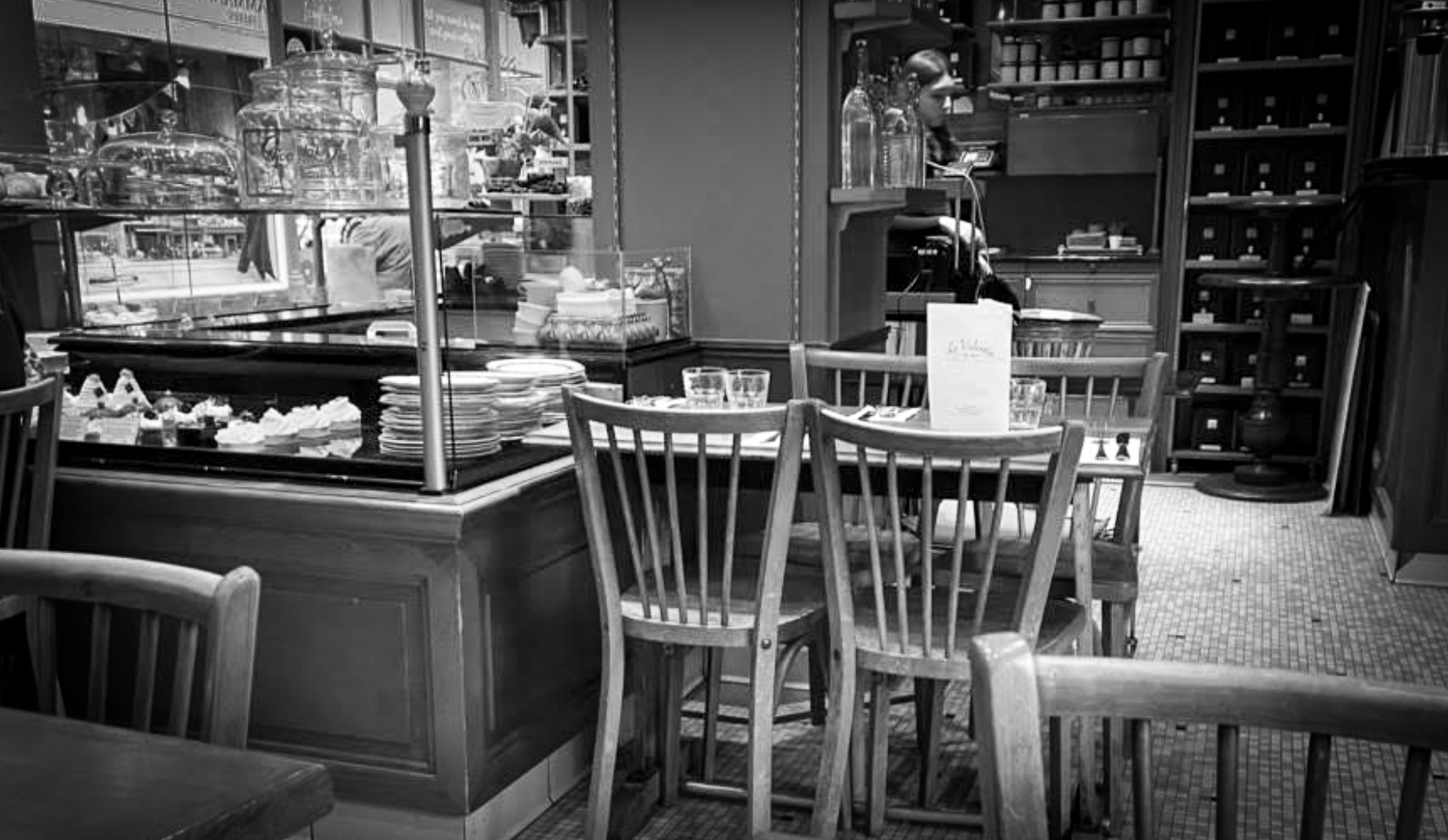
Le Valentin tea room (Passage Jouffroy)
These are places chosen for space, calm, and quality:
KB Roasters (9th): Excellent coffee, brunch or simple oatmeal raisin cookie in a bright, indoor unfussy setting or a table outdoors with a view of Sacre-Coeur from the terrace. Best mid-morning after yoga.
Le Valentin (Passage Jouffroy): A discreet tea room hidden inside the passage—ideal for quiet reflection or conversation.
HOY Café (9th): Plant-forward, nourishing dishes with a calm, minimalist atmosphere that supports slow meals.
Kitchen (3rd) or Mugung (2nd): If a healthy lunch is what you’re in the mood for, consider Kitchen for vegetarian deliciousness or Mugung for authentic, creative Korean dishes.
Need to know
Timing matters more than locations. Early mornings and weekday afternoons are your allies.
Don’t overschedule. One movement practice and one restorative ritual per day is plenty.
Choose neighborhoods over monuments. Calm Paris reveals itself between landmarks.
Winter wellness tip: Paris winters are cold and gray—indoor rituals (yoga, hammams, cafés with light) become especially important for balance.


Travel Advisor
Michael Huffman

Michael Huffman

Get in touch with Michael Huffman
Did you like this guide? Reach out to customize and book your own experience. Or, just to chat about travel in general.
For more inspiration and insider recommendations, visit our Paris page.