



Curator’s statement
Taipei, Taiwan is rapidly becoming one of Asia’s most popular destinations—and for good reason. It’s warm nearly year-round, blends a modern tech-forward vibe with deep cultural history, and is far easier to navigate in English than many nearby countries (plus, no visa needed for US travelers!). With three national carriers—China Airlines, EVA Air, and Starlux—offering direct flights from the US, getting there is surprisingly easy (truly easier than Thailand). It’s also way less crowded than Japan and much more affordable, while still offering dramatic mountain scenery, beautifully restored temples, and incredible Michelin-recognized food. I watched countless YouTube travel vlogs before visiting myself in October, but none addressed the chronic-illness angle—so, spoon-permitting, my own vlog will be up soon. What surprised me is just how chronic-illness-friendly Taipei actually is: hotels won’t blink if you request an air purifier, masking is completely normalized, and the weather is comfortable if you avoid peak summer (I went in mid-October and didn’t need cooling sheets even on my “big sightseeing day”). The humidity can actually be helpful for many conditions, and avoiding gluten or dairy is very doable with Taiwanese cuisine—just watch out for soy sauce. And unlike Japan, food allergies are understood in a more American way, and takeout is widely accepted.
The Fora Difference
Book with Sally Riggs to access exclusive perks and experiences on your trip.

Killer perks
Free upgrades, spa credits and more—we got you

Personalized recs
Customized travel planning for your style

Insider knowledge
Expert advice from people who’ve actually been there
Where to stay in Taipei
Unlock perks by contacting Sally Riggs to book your trip.
Things to do in Taipei
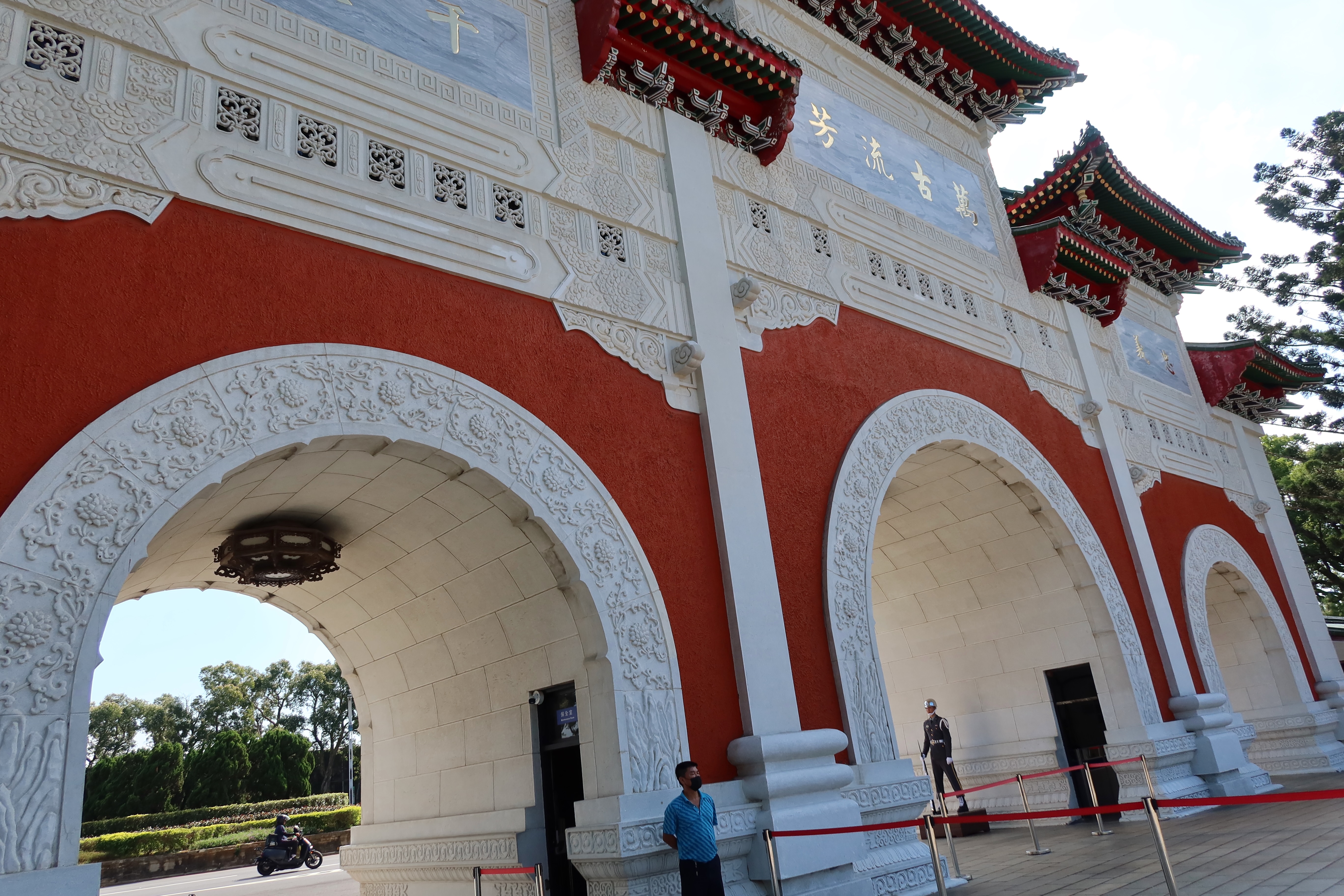
National Revolutionary Martyrs’ Shrine
I highly recommend booking a private tour if you want to see the key sights. They’re relatively inexpensive, pick you up directly from your hotel in an air-conditioned SUV, and—because Taipei’s sights are spread out but traffic and parking are reasonable—they save you from wasting precious spoons on public transportation. Your Fora Advisor can help you choose the right private tour for your needs. Taxis are also very affordable: I visited the night market on the northwest edge of the city (the best one!) and my round-trip taxi fare was only about $30.
Longshan Temple (accessible, atmospheric, easy to pace)
One of Taipei’s most important and beautifully restored temples, offering one of the gentlest cultural experiences in the city. The entry is flat and accessible, with only a very short walk from the parking garage (pro tip: wait by the 7-Eleven afterward for the smoothest pickup). There’s seating around the courtyard’s edges, and the atmosphere is calmest in the early morning or late evening. You can simply sit and observe the rituals without needing to “do” anything—the sensory load is surprisingly manageable compared to many major temples in Asia.
Taipei 101 Observatory (with priority elevator access)
One of the smoothest, most accessible big attractions in Asia. The high-speed elevator is step-free, and the observatory has seating throughout. Go early morning on a weekday for the calmest experience. Make sure you have your Fora Advisor book tickets in advance so you don’t have to wait in line (it can be up to two-hours for walk ups)
National Palace Museum (cool, quiet, easily paced)
Wheelchair-friendly, air-conditioned, and spacious, with tons of benches for frequent rest stops. You can do a 60–90 minute highlights loop without overwhelm, ideally on a weekday for fewer crowds and overwhelm. There is also a café on site if you need rehydration etc.
Dadaocheng/Dihua Street (Heritage District with easy flat walking)
Beautiful shophouses, tea shops, and small boutiques line this heritage street—perfect for gentle wandering or settling into a quiet teahouse. There are plenty of benches for resting and people-watching, and the whole area feels much calmer than Taipei’s big shopping districts. It’s also wonderfully photogenic. I was beginning to tire at this point in my tour, so I only walked about a third of the way before grabbing a drink and sitting on a bench to people-watch for a while.
Maokong Gondola (accessible cable car & tea on the mountain)
Take the accessible gondola up to Maokong for incredible views and a slow cup of oolong overlooking the valley. Go on a weekday to avoid lines. Cabins have wheelchair access.
I ran out of spoons for this one on my trip, but its definitely on my list for next time!! Some cabins even have glass bottoms, which easily rival the infamous Songdo Cable Car in Busan, South Korea.
Chiang Kai-shek Memorial Hall (calm, immersive architecture)
The plaza is vast and airy, and the hall itself is fully accessible via elevators. Time your visit to avoid school groups—late afternoon is the quietest—or go at noon if you want to see the Changing of the Guard. Don’t hesitate to sit on the steps—if you tuck yourself close to the wall, it’s shady too. Although the park is large, there are plenty of shaded benches for resting and people-watching, and you can take it entirely at your own pace. If you do visit at noon, it’s only a short walk to Michelin-starred soup dumplings for lunch afterward (see below). And absolutely let your guide tell you the history of Taiwan—it’s truly fascinating.
Huashan 1914 Creative Park (cafés, art & seating everywhere)
Former factory-turned arts district. Lots of indoor exhibits, indie shops, and plenty of benches. One of the best low-energy afternoon outings.
Shilin Night Market (with a guide!!!)
If you go right at opening—ideally on a weeknight—Shilin Night Market is absolutely doable with a guide. Tell them upfront that you need frequent sitting breaks and preferably some AC—there are several delicious spots that function more like “restaurants,” with open-air seating plus fans or AC, and many stalls have small stools you can rest on between bites. It took my guide a little explanation (invisible illness, anyone?) but once she understood, she was incredibly supportive—and slightly in awe that I was traveling solo! I managed six different foods, plus bubble tea, which was more than enough to fill me up. Do NOT wander Shilin alone: you’ll miss the good stalls and end up overheated and overwhelmed by the crowds.
National Revolutionary Martyrs’ Shrine (grand architecture & easy access)
A stunning ceremonial complex with sweeping traditional rooftops and a mountain backdrop—all with minimal walking required. You can watch the slow, low-stim Changing of the Guard from shaded seating areas close to the entrance, making it ideal for spoonie travelers. On the way, you will also pass...
The Grand Hotel Taipei (iconic landmark & secret diplomat tunnels)
This palace-style landmark isn’t just beautiful—it also hides historic underground tunnels built so diplomats could escape safely during air raids. Today, parts of the tunnel system are open for guided tours, making it a fascinating, low-energy cultural stop. Even if you don’t tour the tunnels, the lobby, tea room, and hillside views are an easy, accessible add-on to the Martyrs’ Shrine.
Places to eat & drink in Taipei
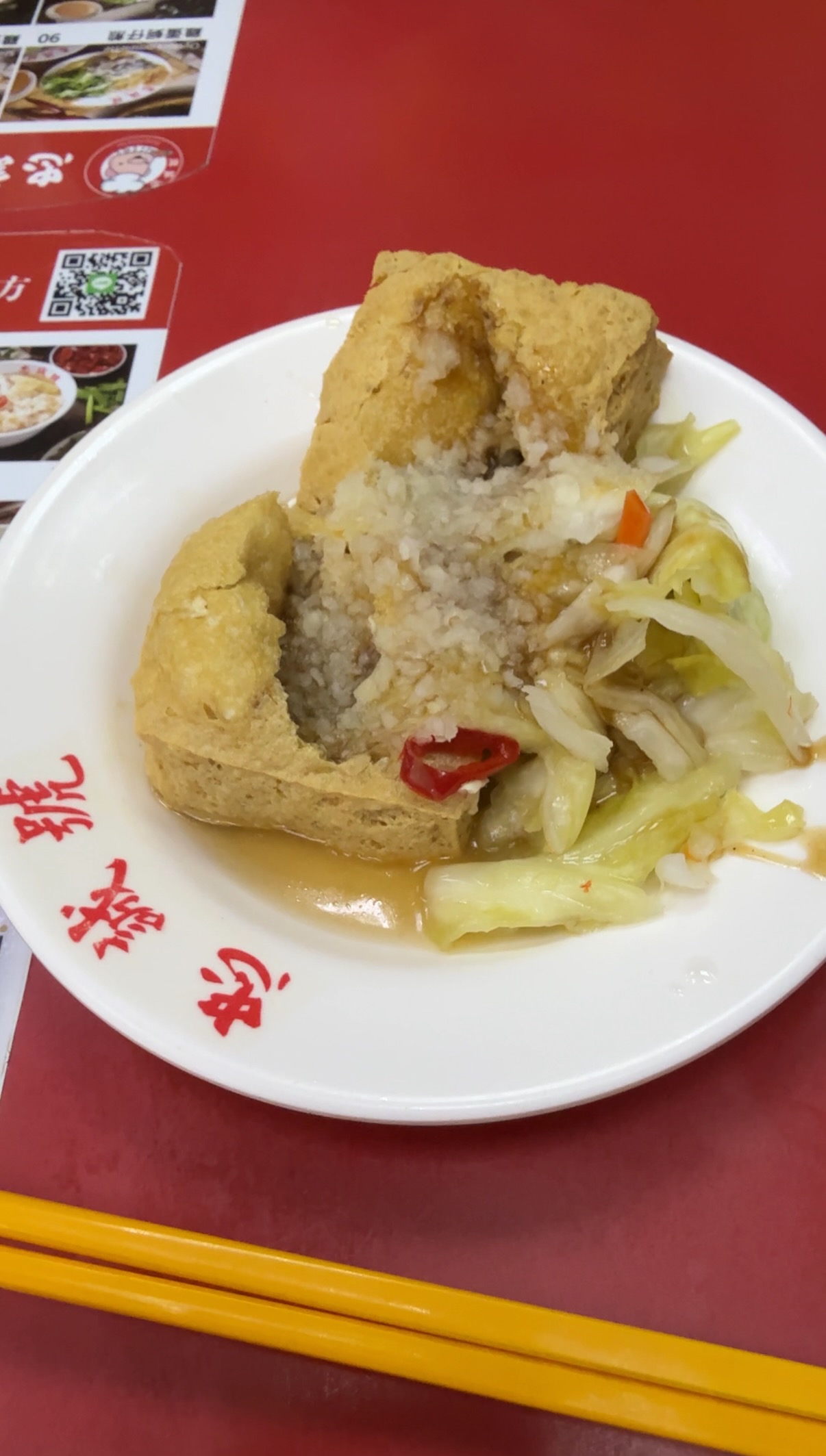
Stinky Tofu at Shilin Night Market
Din Tai Fung (go early, not at Taipei 101): The dumplings are iconic for a reason—but skip the Taipei 101 branch unless you enjoy 90-minute queues. Instead, go to the location closest to your hotel and show up at opening for a 5–10 minute wait and a calm dining room. Perfect for spoonies: sit-down service, predictable food, and no sensory chaos. You can also order while you are waiting with their QR code.
Hang Zhou Xiao Long Bao (local-favorite soup dumplings): This is where locals go when they want DTF-quality dumplings at neighborhood prices. Less polished, more authentic, and much easier on the nervous system. Go early or off-peak for the best experience. But its very close to the Chiang-Kai Shek Memorial Hall so easy to combine for lunch (we waited less than 10 mins).
Shilin Night Market—Michelin food stalls (but with a guide): Shilin is overwhelming alone, but with a guide it becomes a curated tasting experience. Michelin-recognized picks include Good Friend Cold Noodles, Zhen Hao Oyster Omelet, and Cheng Gen Mochi—all excellent but impossible to find calmly without help. Let someone else navigate while you sit, taste, and pace!!
Yongkang Beef Noodle (classic, comfortable, affordable): Taiwanese beef noodle soup is a must, and Yongkang offers a flavorful bowl in a sit-down setting that isn’t chaotic. Air-conditioned, fast service, and low sensory load.
Smoothie House (the famous mango shaved ice): A Taiwanese summer essential that’s surprisingly low-stress: shaded outdoor seating, quick service, and huge portions you don’t need to finish. Go mid-afternoon to avoid local crowds.
Qing Tian Tea House (traditional tea in a quiet historic home): Skip the touristy noisy teahouses—this serene Japanese-era house near Da’an Park is all tatami, calm music, and tranquil service. Ideal for a low-stim afternoon reset or gentle cultural immersion.
Fika Fika Café (specialty coffee in a peaceful setting): For excellent Nordic-style coffee without the bustle of East Taipei cafés, head to Fika Fika. Lots of seating, quiet ambiance, and a strong local following.
Simple Kaffa (award-winning, but choose the right branch): Simple Kaffa was once named the best café in the world. Go to Simple Kaffa Sola (instead of the hyper-popular original) for the same excellent coffee but with more seating, shorter waits, and much less chaos.
Need to know
Hydration & electrolytes matter: Humidity, even when helpful, can still sap energy. There are 7-Elevens everywhere—buy electrolytes daily. (Yes, Taiwanese 7-Eleven is practically a tourist attraction and they have lots of Japanese drinks like Pocari Sweat.)
Takeout is allowed and common: Unlike Japan, grabbing food to-go is perfectly acceptable. A lifesaver on low-energy evenings. And if you need delivery, Uber Eats is everywhere in Taipei—fast, reliable, and perfect for low-spoon evenings when leaving the hotel isn’t happening. You’ll find everything from dumplings to boba to full Taiwanese meals delivered right to your door. It’s my go-to backup plan on travel days when my nervous system needs absolute ease. And don’t be afraid to get some Western food if you need. I had a delicious TGI Friday evening!!
Pack layers for indoor AC: Taiwanese AC is strong—and sometimes freezing. Bring a light layer even on warm days.
Download local taxi apps ahead of time: Download Taiwan Taxi or use LINE Taxi—they’re far easier and calmer than trying to flag a cab on the street. Drivers are polite, rides are inexpensive, and you avoid standing outside in heat or rain waiting.
Taiwanese hospitality is gentle and respectful: If you disclose an invisible illness or need accommodations, people tend to respond kindly and without fuss. You don’t have to “justify” your needs.
The hidden Taipei trick travelers never know: Carry a tiny pack of tissues. Taipei bathrooms are spotless, but many don’t provide paper towels, and some night-market toilets don’t have toilet paper. Locals always have tissues—you should, too.


Travel Advisor
Sally Riggs

Sally Riggs

Get in touch with Sally Riggs
Did you like this guide? Reach out to customize and book your own experience. Or, just to chat about travel in general.
For more inspiration and insider recommendations, visit our Taiwan page.