



Curator’s statement
Brittany and Normandy: coastal charm, cultural depth, and space to breathe. Northern France unfolds in two distinct yet beautifully complementary regions: Normandy, known for its soft light, Impressionist gardens, and powerful history—think Monet in Giverny, the cathedrals of Rouen, or the dramatic shores of Honfleur—and Brittany, with its rugged Atlantic coastline, Celtic roots, pink granite cliffs, and salt-scented markets. This region offers a balanced mix of natural beauty and cultural depth. From Saint-Malo’s medieval ramparts to hidden river valleys and tiny fishing villages, every stop invites a slower pace. The cuisine is just as rich: fresh oysters, salted butter crêpes, local cider, and seafood pulled straight from the ocean. Brittany and Normandy invite exploration—by car, on foot, or even through literature. I recommend reading one of Jean‑Luc Bannalec’s Commissaire Dupin mysteries before or during your trip. Several titles are available in English and vividly evoke the landscapes, traditions, and daily rhythms of Brittany. Reading Dupin while traveling turns places like Cancale, Saint‑Malo, or Cap Fréhel into living literary scenes.
The Fora Difference
Book with Norma Kroeger to access exclusive perks and experiences on your trip.

Killer perks
Free upgrades, spa credits and more—we got you

Personalized recs
Customized travel planning for your style

Insider knowledge
Expert advice from people who’ve actually been there
Where to stay
Unlock perks by contacting Norma Kroeger to book your trip.
Day 1: May begins with sunshine, stories & a French B&B
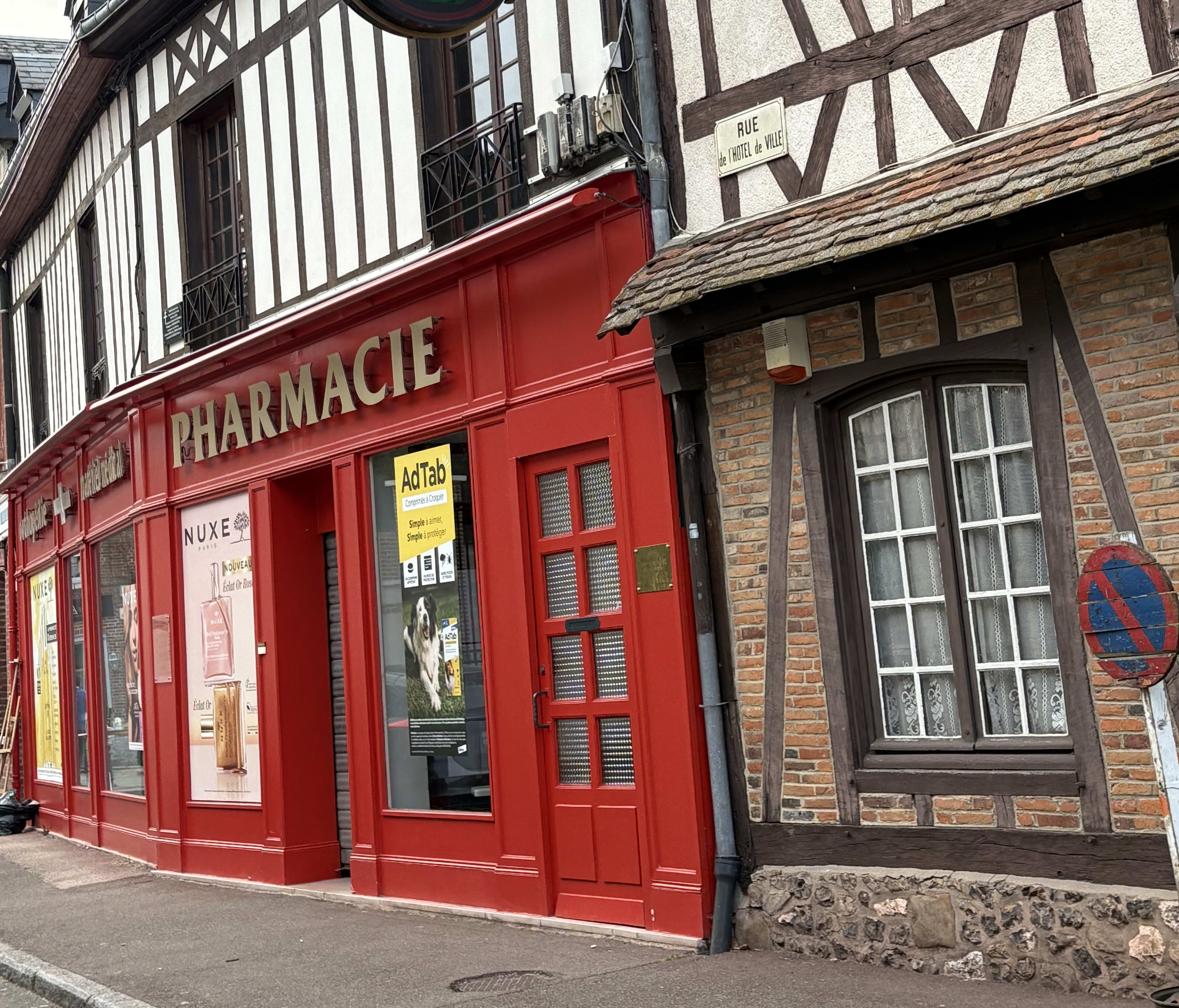
What a way to start May: 27 degrees Celcius, not a single cloud in the sky, and a golden voucher for a getaway. Instead of flowers or wine, this year, we gifted something different: our time. For Mum. For Grandma. Because hours together feel more precious with every year that passes.
Anouk can’t join us this time—Monday’s got a big presentation waiting. Very grown-up. Very sad. So it’s just the three of us, with nothing but excitement in the trunk and the GPS set to “country escape.”
Our B&B turns out to be a gem: charming, warm, and unmistakably French. Karine and her husband greet us with open arms—and my rusty French gets a gentle workout. Something, something baguette, something bonheur. It works.
In the evening, we treat ourselves to a sensational dinner in the next village. French cuisine? Never disappoints. Back home, I find myself soaking in an antique clawfoot tub, feeling like I’ve stepped into a Gérard Depardieu film.
Bonne nuit.
Day 2: History & harmony: From Rouen to Giverny
We begin our day with a countryside breakfast: fresh bread, the distant cluck of chickens, and a sleepy cat on the doorstep. Karine recommends two places we “must not miss.” So, we set off, winding through Normandy toward two places that hold very different promises: Rouen and Giverny.
Rouen: Where stories stand tall
Rouen welcomes us with grandeur and grit. It’s a city of a hundred spires, Gothic shadows, and whispered stories. On the square where Jeanne d’Arc was burned in 1431, we stand in silence, then step into the modern church that now remembers her. It’s both moving and surreal.
A short walk brings us to Rouen Cathedral, once the tallest building in the world and the favorite subject of Claude Monet’s light obsessions. You can still feel his gaze in the way sunlight dances across the façade.
We stroll through the medieval Old Town, past half-timbered houses and the majestic Gros-Horloge, a Renaissance clock gate that ticks as it always has. A nearby plaque reminds us that Rouen was once a Viking stronghold. The Seine flows through the city like a quiet witness to its ever-evolving stories.
Rouen feels like a history book you don’t read but walk through.
Giverny: Where paintings breathe
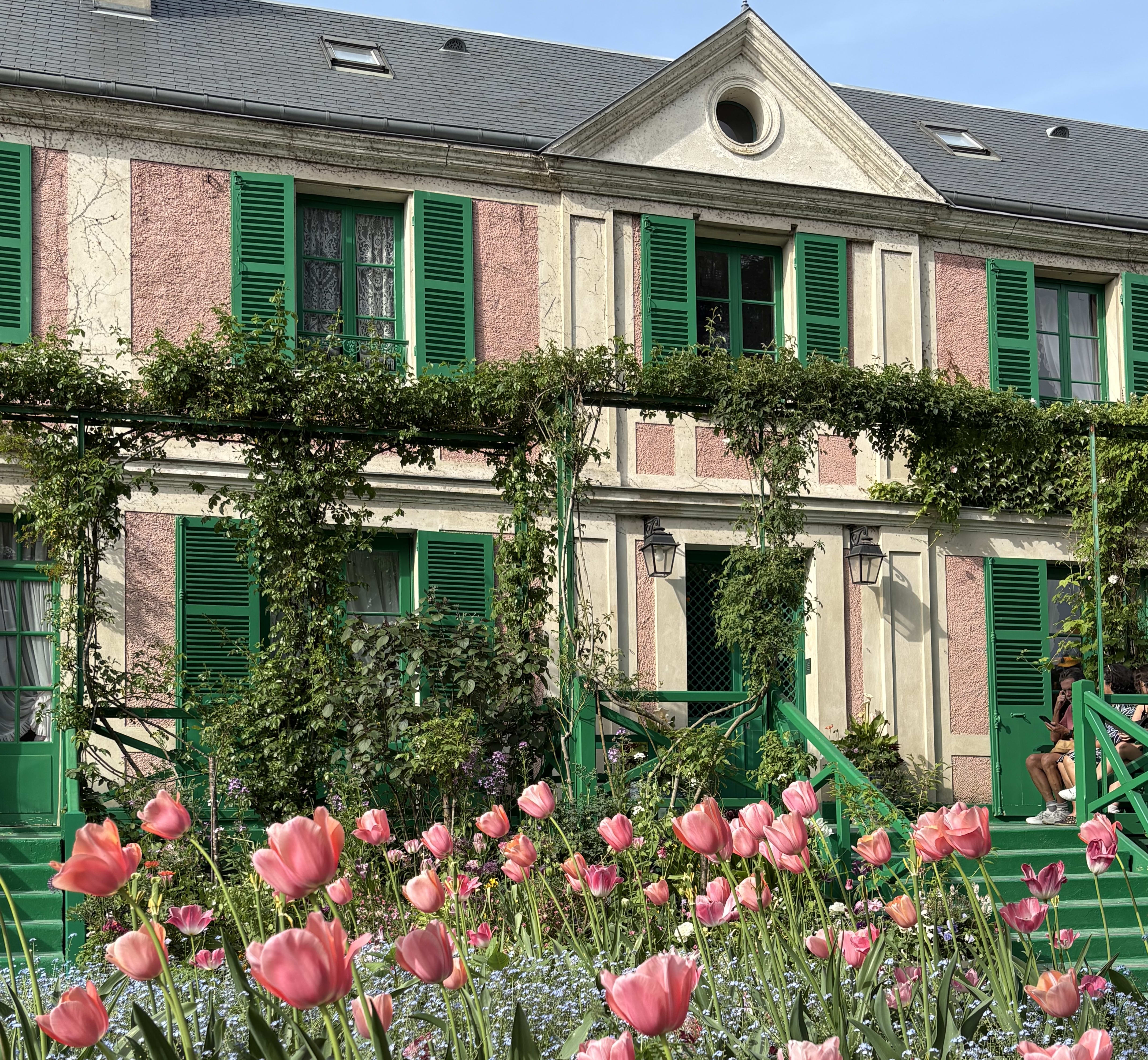
The late afternoon brings us to Giverny. We’re not sure we’ll make it before closing, but the gates open. We step into Monet’s world. The water lily pond shimmers in the sun, the Japanese bridge frames hushed visitors, and the entire place feels like stepping inside a painting.
We wander silently through the water garden and then the Clos Normand, where wild blooms spill into orderly chaos. Inside Monet’s house, vibrant color bursts from every room: the yellow kitchen, the blue-tiled dining space, the bedroom that gazes out over floral dreams.
It’s not just beautiful—it’s alive.
We return to the B&B for drinks by the pool with our hosts. History in the morning, harmony in the evening. A day of contrasts—and perfect balance.
Day 3: From Honfleur to Plouha: On Kommisar Dupin's trail
This day is inspired by Jean-Luc Bannalec’s novels The Granite Coast Murders and Death of a Masterchef.
The day begins with two books in my bag and wanderlust on my mind: novels by Jean-Luc Bannalec that take place in the very region we’re about to cross—The Granite Coast Murders, on the Granite Coast, and Death of a Masterchef, in Saint-Malo. With over two million books sold, Bannalec’s love for Brittany is contagious. I can almost feel the salt on my skin and the endless blue of the sea, even as I’m still curled up on the sofa.
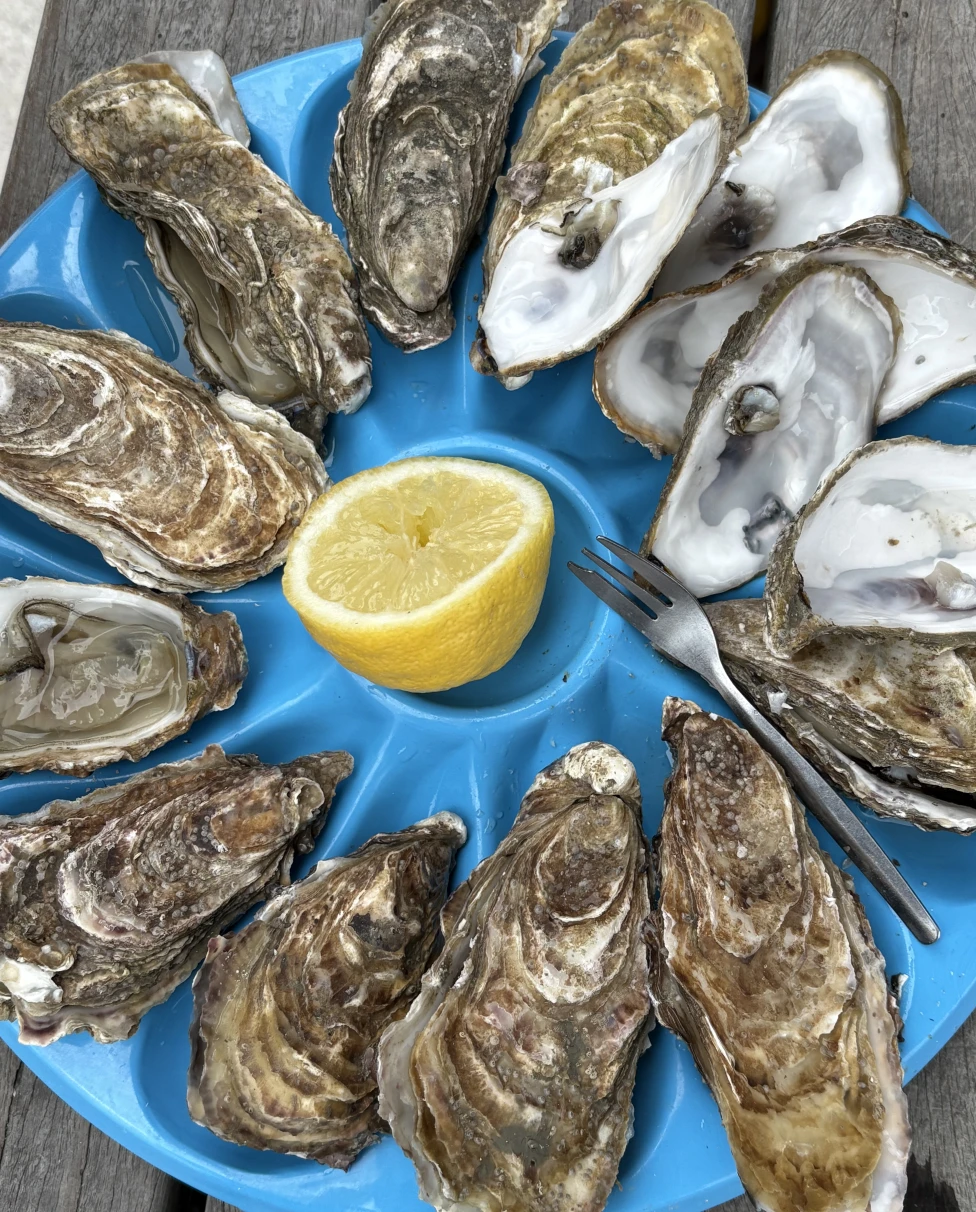
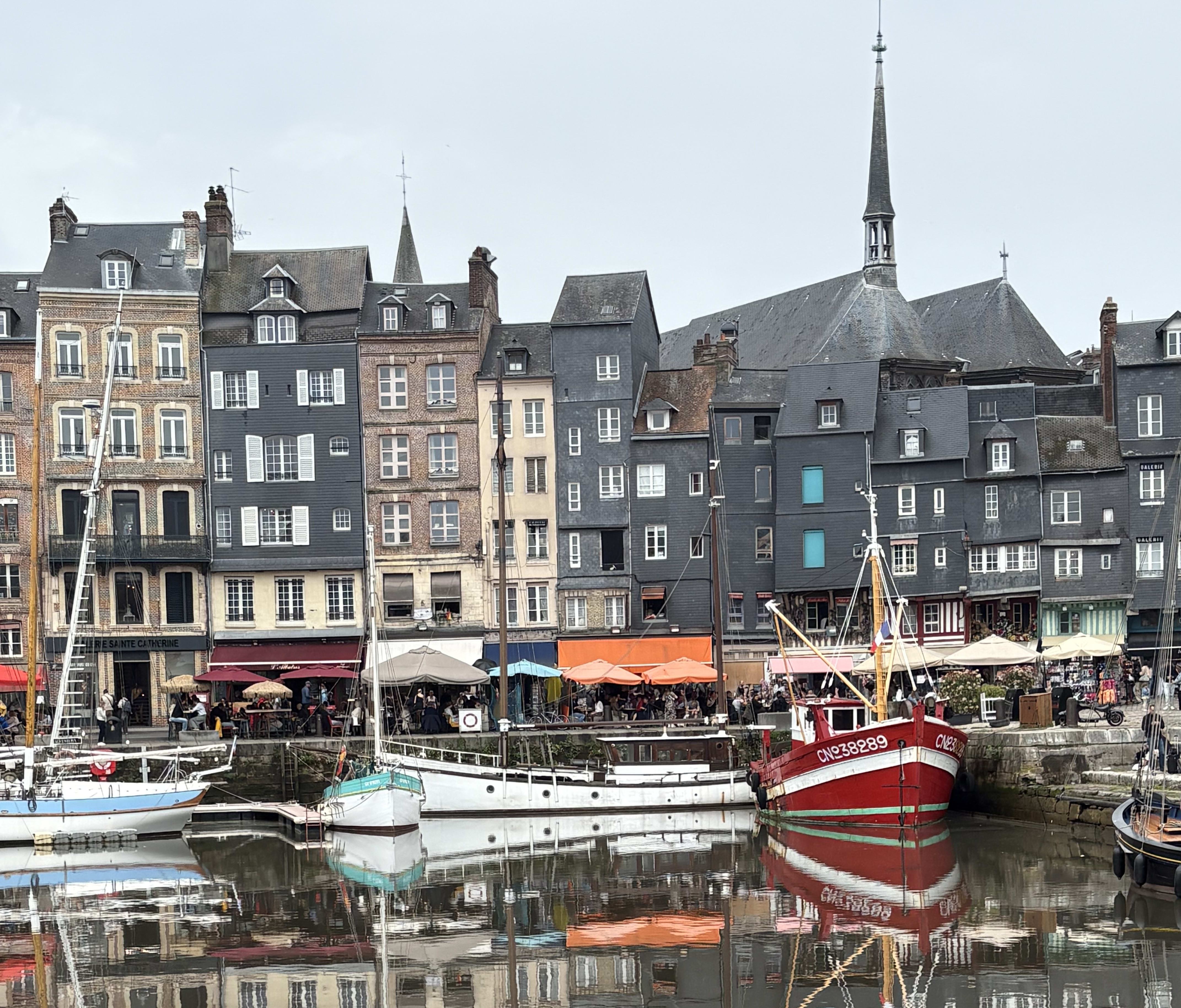
First stop: Honfleur, a charming town that was a hidden gem 35 years ago when Olli and I visited in our yellow VW bus. Today, it’s more touristy, with a flea market in full swing—but it hasn’t lost its charm. We enjoy a quick break with oysters and shrimp—accompanied by a glass of white wine, of course. Why not? A perfect start to our trip.
Then it’s off to Brittany—still 5.5 hours to drive, but hey, it’s an adventure. Plouha, here we come! Our destination: Keregal. The holiday home, Amandine, is a real gem—lovingly decorated, with a garden that radiates care and personality. We instantly feel at home and know we’re in for a relaxing stay.
To end the day perfectly, we pack our Canasta cards and imagine the fireplace crackling as we settle into this Breton idyll. What could go wrong? We’ve got the right mindset—and the right deck of cards.
Day 4: Brittany: More than just the sea
I brought along Dupin’s list of favorite places—and you can feel how much he loves this region. His passion is contagious.
Brittany is special in many ways: cliffside walks, dreamy beaches, small cafés, fine restaurants, and countless artisan workshops that sell canned fish, salt, chocolate, cookies, honey, cider, whiskey, and soap. It’s hard to know where to begin. And then there’s the light. The atmosphere here is simply magical.
If nature’s variety could be measured, Brittany would surely win first place. A few kilometers, and it feels like a different world, especially along the coast—known as “Armor” in Breton, “the land by the sea.” But the inland region, “Argoat,” or “land of the forest,” is just as captivating—quieter, greener, yet equally fascinating.
One of the most poetic elements? The Breton light reveals colors you won’t see anywhere else. One of them is le glaz: a mix of blue, green, and gray. Depending on the weather—or your mood—it always looks a little different.
And then there’s the food. Brittany is a paradise for gourmets. The Atlantic provides delicacies like monkfish and turbot, plus an incredible variety of seafood: oysters, crabs, and spider crabs of all sizes. The cows produce exquisite milk, which becomes world-famous butter—taking the spotlight in crêpes, cakes, and cookies. The Breton culinary philosophy? Turn something simple into something extraordinary.
Plouha: Cliffs & spider crabs
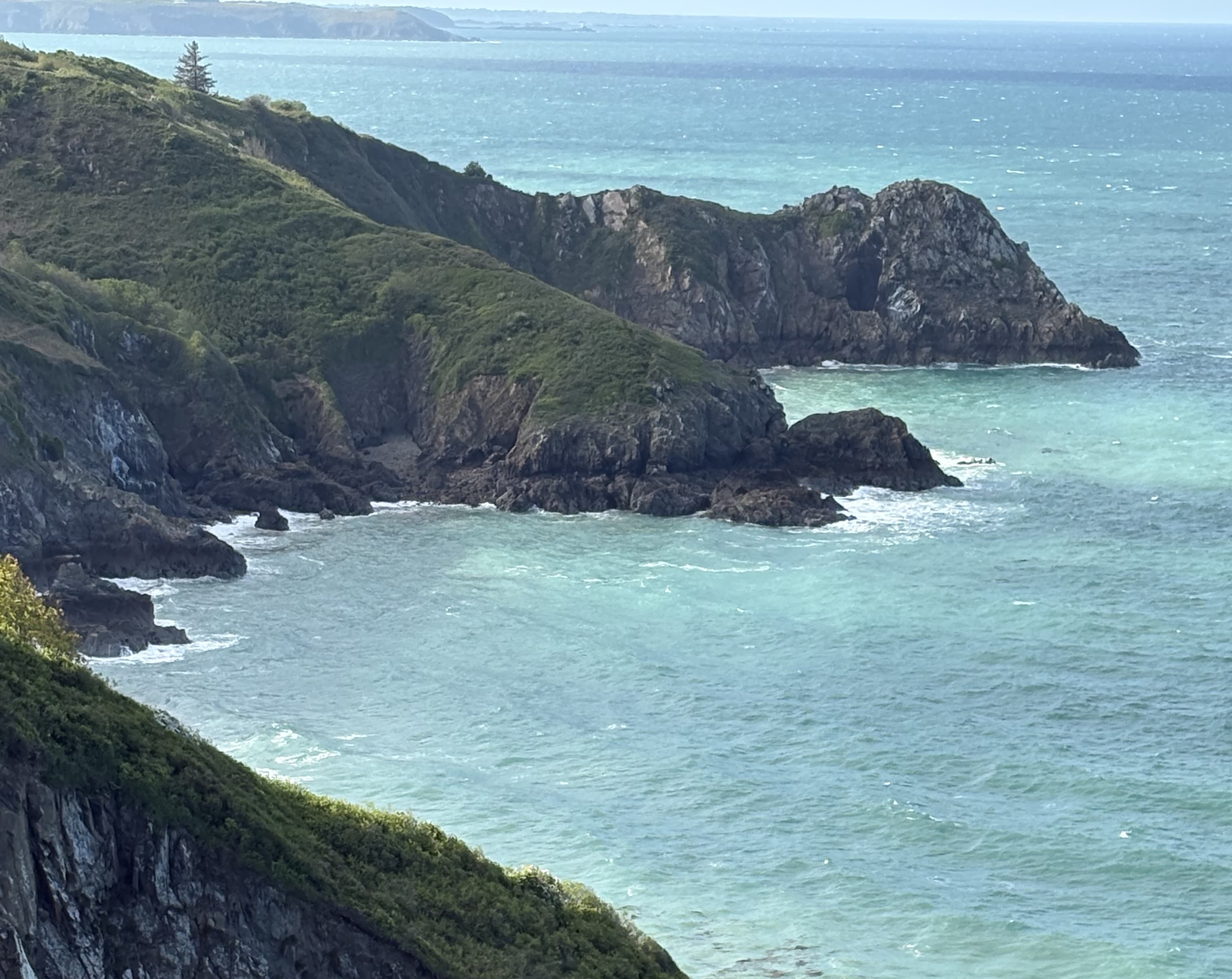
After a relaxed morning, we head to the 104-meter-high cliffs of Plouha. The GR34 coastal path offers spectacular views and winds through lush coastal terrain—almost like a wild jungle. During World War II, these cliffs served as an escape route.
We round off the day with dinner by the sea: fresh spider crab from a tiny fish shack. It doesn’t get any more authentic than this.
Day 5: Pink rocks, Breton light & a hint of literary history
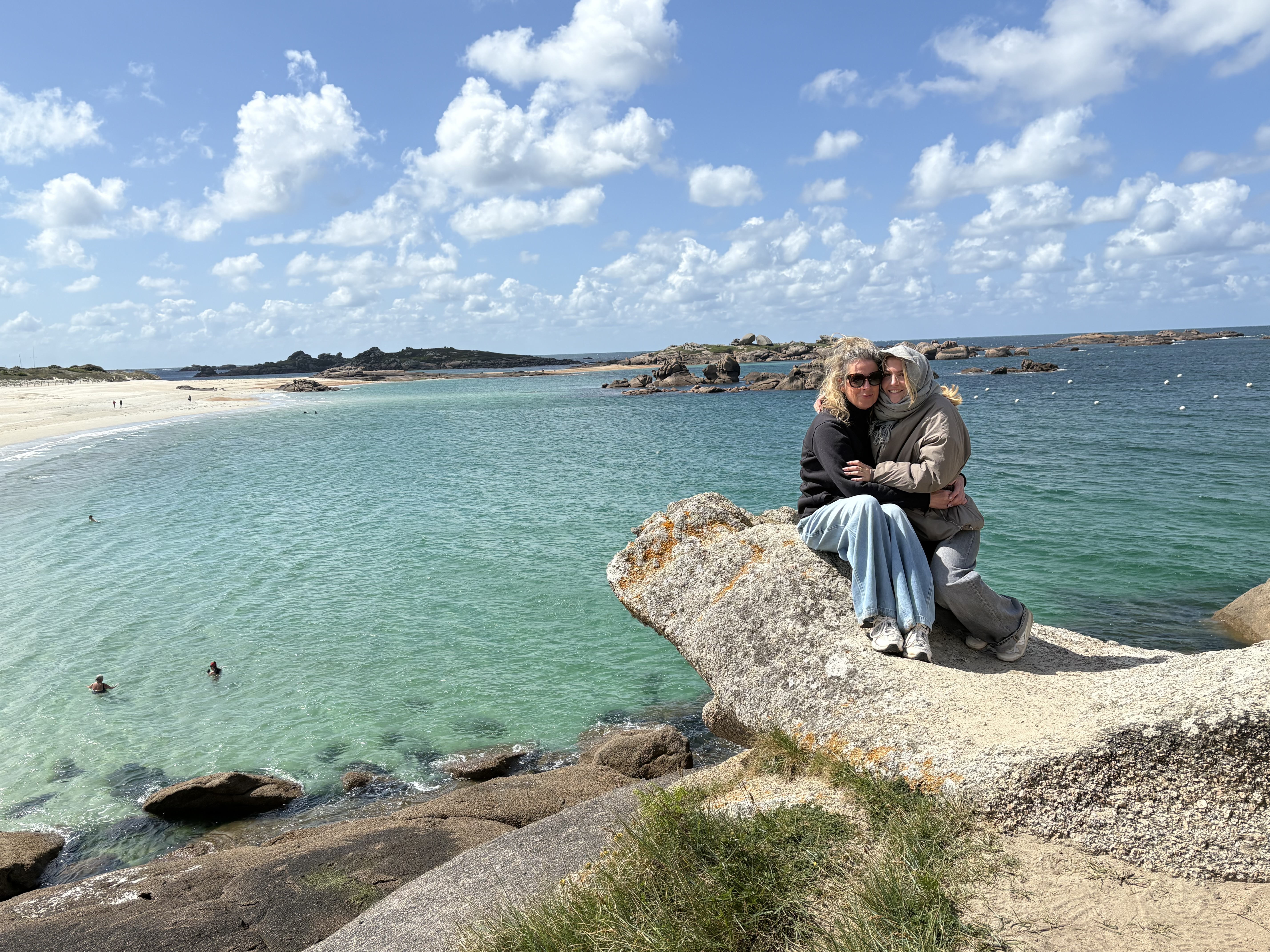
Today, we’re heading to the famous Côte de Granit Rose—with stops on Île de Bréhat and in Trégastel, Ploumanac’h, and Perros-Guirec. These places owe their magic to spectacular pink granite rocks that pile up like natural sculptures on the beaches, in the water, and scattered across the landscape.
Ploumanac'h is especially charming, with its crooked stone houses and wildflower gardens. In Bretonische Leuchten, Kommissar Dupin and Claire spend their first vacation here—until a murder case pulls him away from leisure.
His favorite spot? The terrace of Hotel Castel Beau Site—with a dreamy view of Île Costaérès and its fairytale castle. Built in the late 19th century by Bruno Abdank-Abakanowicz, it once hosted Nobel Prize–winning author Henryk Sienkiewicz, who wrote Quo Vadis here. Since 1988, it’s belonged to German comedian Dieter Hallervorden.
Following the coast again is the legendary customs path (GR34), a section I’m saving for next time. These rock formations are among the most impressive in Brittany. This special pink granite, used since the Neolithic period, is a true geological rarity.
We end the afternoon at the beaches Grève Rose and Grève Blanche. The hotel is still in spring slumber, but in the summer it must be the perfect spot for Gâteau Breton and Breizh Cola.
Dinner tonight is in Binic: duck and scallop risotto. A perfect ending to the day, despite a little hiccup with the car in the forest.
Day 6: Pordic: A day to savor
We take it slow this morning: coffee in our pretty vacation apartment and some reading. I lose myself in Jean-Luc Bannalec’s Brittany travel guide, imagining the coastal drive we’ll take tomorrow all the way to Cap Fréhel. I’m especially intrigued by Erquy, the small harbor town where the scallop is celebrated every April.
The scallop has a long and fascinating history—from a pilgrim souvenir from Santiago de Compostela to a beloved delicacy. And what a delicacy it is! Yesterday in Binic, we enjoyed it in a creamy risotto—tender, rich, and simply delicious.
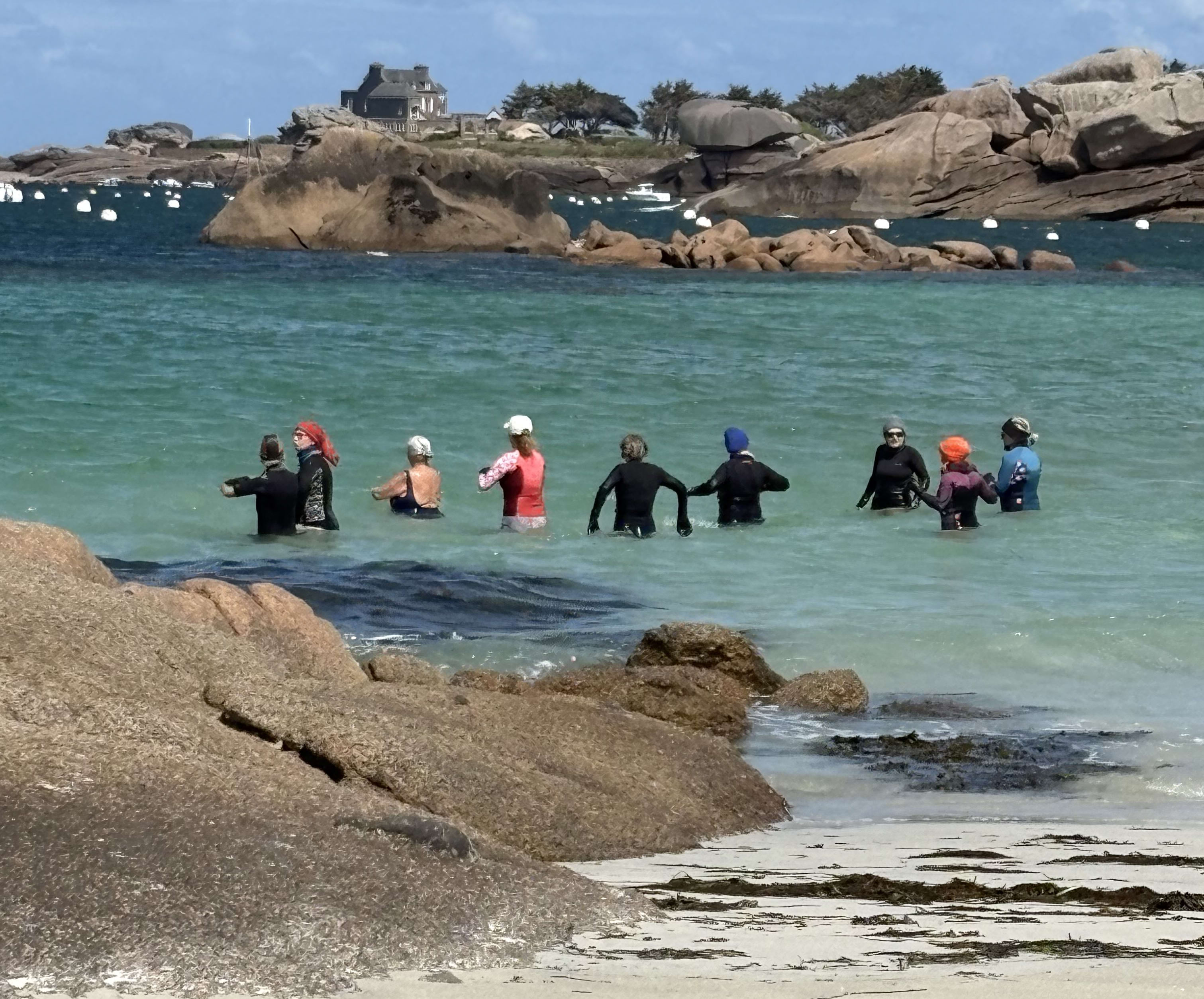
Today is all about doing nothing: a relaxed beach walk along the Bay of Palus, salty air, bare feet in the sand, and a sweet finale with crêpes. Brittany, you’re doing us good.
Day 7: Cap Fréhel to Dinard: A day of wind, waves & words
Today is inspired by Jean-Luc Bannalec’s novel Death of a Master Chef.
Today’s a big day packed with coastal wonders. We leave early and follow the dramatic shoreline eastward, past wild cliffs and inlets.
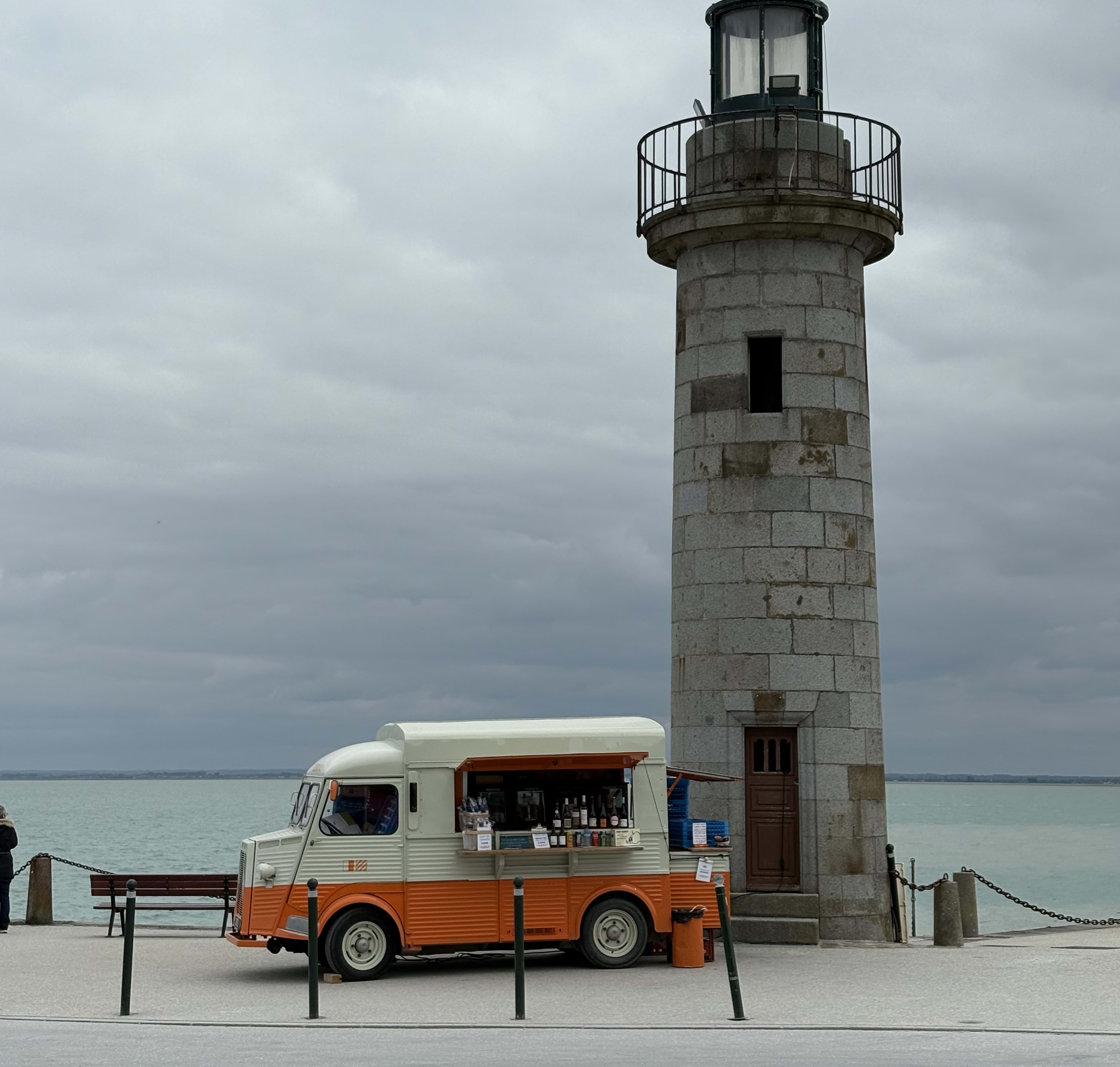
First stop: Cap Fréhel, towering 70 meters above the sea, with rugged cliffs, windswept heather, a striking lighthouse, and seabirds swooping through the sea spray. On a clear day, you can see all the way to Mont-Saint-Michel. A true Breton panorama.
Even Kommissar Dupin takes this route in Death of a Master Chef.
“Eastward, the tidal range becomes record-breaking. At high tide, towels barely fit on the remaining slivers of beach; at low tide, the water retreats to an unfathomable distance.”
Next is Cancale, the picturesque oyster haven on Brittany’s edge. Bannalec describes it with bittersweet beauty:
“If you see where Brittany begins in Pornic, in Cancale you see—and feel—how it ends.”
“Cancale sits on a narrow strip of land between sea and cliffs. A village stretched along a majestic seawall, forced to conquer the steep slopes behind it.”
The oyster scene is vivid:
“At the beginning of the pier, a dozen stalls sold fresh oysters. Tents in strict Atlantic colors—mostly blue and white. Rough wooden crates with oysters of all sizes and types. Signs over each stall naming the oyster fishermen. A wonderful atmosphere. The air smelled of seaweed and salt, with oysters displayed on algae.”
And that’s exactly where we sit—oysters on the plate, sea breeze in our hair. As fresh as it gets. The taste? Salty, bold, and perfect.
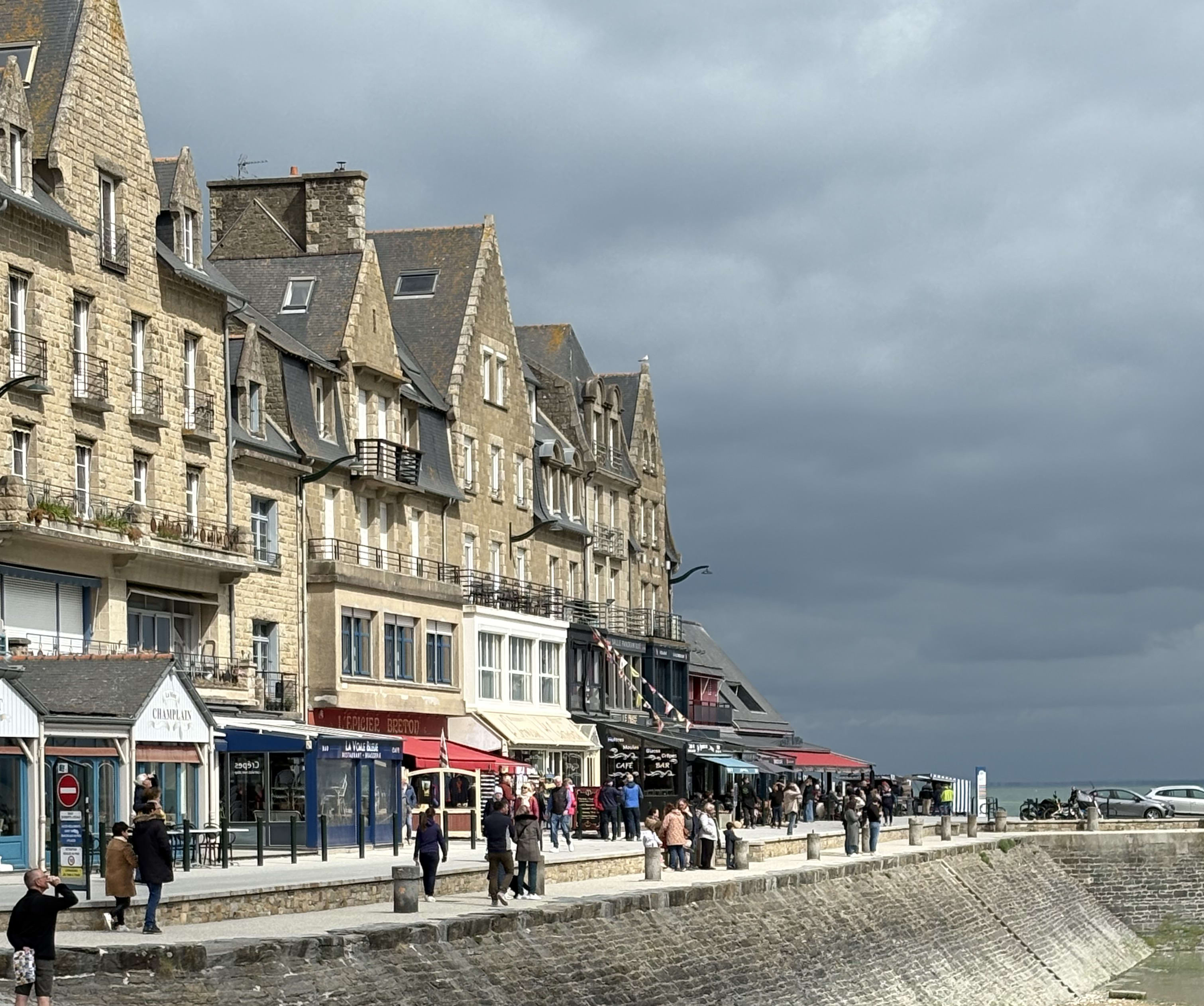
Later, we continue to Saint-Malo, the old corsair city. The sun is shining, the air is salty. We walk along the massive ramparts:
Built in the 12th century and expanded over time, Saint-Malo’s city walls now fully encircle the Old Town, offering sweeping views of the sea and nearby islands.
We think of Dupin, who’s supposed to be attending a seminar but, of course, gets pulled into a murder case:
“Beige tiles covered the floors, rust-red brick columns lining the halls. The most striking thing: glass wherever possible...decorative metal arches above Sophie’s cheese stall.”
“Sophie’s cheeses cast a spell on Dupin. Cheese comes right after coffee for him—essential. Then: a murder, almost before his eyes. The culprit flees. The victim’s sister. Both celebrity chefs.”
“Dupin gives chase—unsuccessfully.”
We follow his path to Dinard, the elegant side of the English Channel:
“Drive in on Avenue George V and roll down the passenger window. Suddenly, a break in the houses reveals a spectacular view—the bay between Saint-Malo and Dinard. A perfectly protected inlet lined with some of Dinard’s most famous villas."
Even Picasso knew this place is special. He summered here at Villa Beauregard.
With tired feet, salty skin, and full hearts, we finish the day with dinner by the sea. A bit of a splurge, but worth every cent. Dupin would have done the same.
Day 8: Paimpol & Brehec: Farewell with crêpe & fireplace
Our last day of vacation starts quietly—with a crêpe on the beach of Bréhec and the warm May sun on our faces. One last breath of salty air, feet in the sand, and a small moment to pause.
We then take a detour to Paimpol, once a harbor for cod fishermen who set sail from here to Iceland and Newfoundland. Pierre Loti paid tribute to them with his novel The Cod Fishermen. Today, sailboats rest in the harbor as we leisurely stroll through the alleys, peek into small shops, and feel a little wistful about the upcoming farewell.
For our last evening, we planned a nice dinner, preferably where we enjoyed the spider crab on our second night. But alas, the fish shack was closed. Plan B fell through, too, due to a private event.
In the end, it’s pizza to go, eaten back at the holiday home. And it feels just right. The last crackling fireplace makes for a fitting end to a trip full of small and big moments.
Three ladies, three generations: My afterword
Ten days of Brittany lie behind us—with sand in our shoes, salt in the air, and memories in our hearts. This trip was more than a change of scenery—it was a gift to the three of us: mother, daughter, granddaughter. Three perspectives, one shared path.
We didn’t just explore coasts, stroll gardens, and raid fish markets—we shared time. Time that was slow and precious. We were accompanied by Kommissar Dupin, Bannalec, and a suitcase full of books. Sometimes, it felt like literature was writing our script—with water lily ponds, city walls, oysters, and a glass of white wine at sunset.
We learned that traveling isn’t just about seeing places—it’s about marveling, laughing, and being silent, together.
And perhaps that’s exactly what remains: the soft crackling between the pages when life itself becomes a story.
Need to know
Recommended reading for your Brittany journey
To fully immerse yourself in the spirit and landscape of Brittany, I highly recommend bringing along or reading before your trip the first two novels by Jean-Luc Bannalec, featuring Kommissar Dupin:
Death of a Master Chef (Bretonische Spezialitäten)
The Granite Coast Murders (Bretonisches Leuchten)
Both are available in English and beautifully capture the atmosphere, culture, and charm of the region. Reading them while exploring Brittany adds a special literary layer to your travel experience.


Travel Advisor
Norma Kroeger
Norma Kroeger

Get in touch with Norma Kroeger
Did you like this guide? Reach out to customize and book your own experience. Or, just to chat about travel in general.
For more inspiration and insider recommendations, visit our France page.