

Curator’s statement
If you are going to explore the Southern African countries for a safari, three to four days in Cape Town, South Africa, provides the perfect start. With abundant international flights arriving daily, this fascinating city offers natural wonders, great food and wine, and deep history worth taking the time to understand. Our family hired a private guide to explore the Cape Town region in three parts, leaving with a true introduction to “the Mother City.”
The Fora Difference
Book with Michele Rhudy to access exclusive perks and experiences on your trip.

Killer perks
Free upgrades, spa credits and more—we got you

Personalized recs
Customized travel planning for your style

Insider knowledge
Expert advice from people who’ve actually been there
Where to stay
Unlock perks by contacting Michele Rhudy to book your trip.
Day 1: Get to know Cape Town
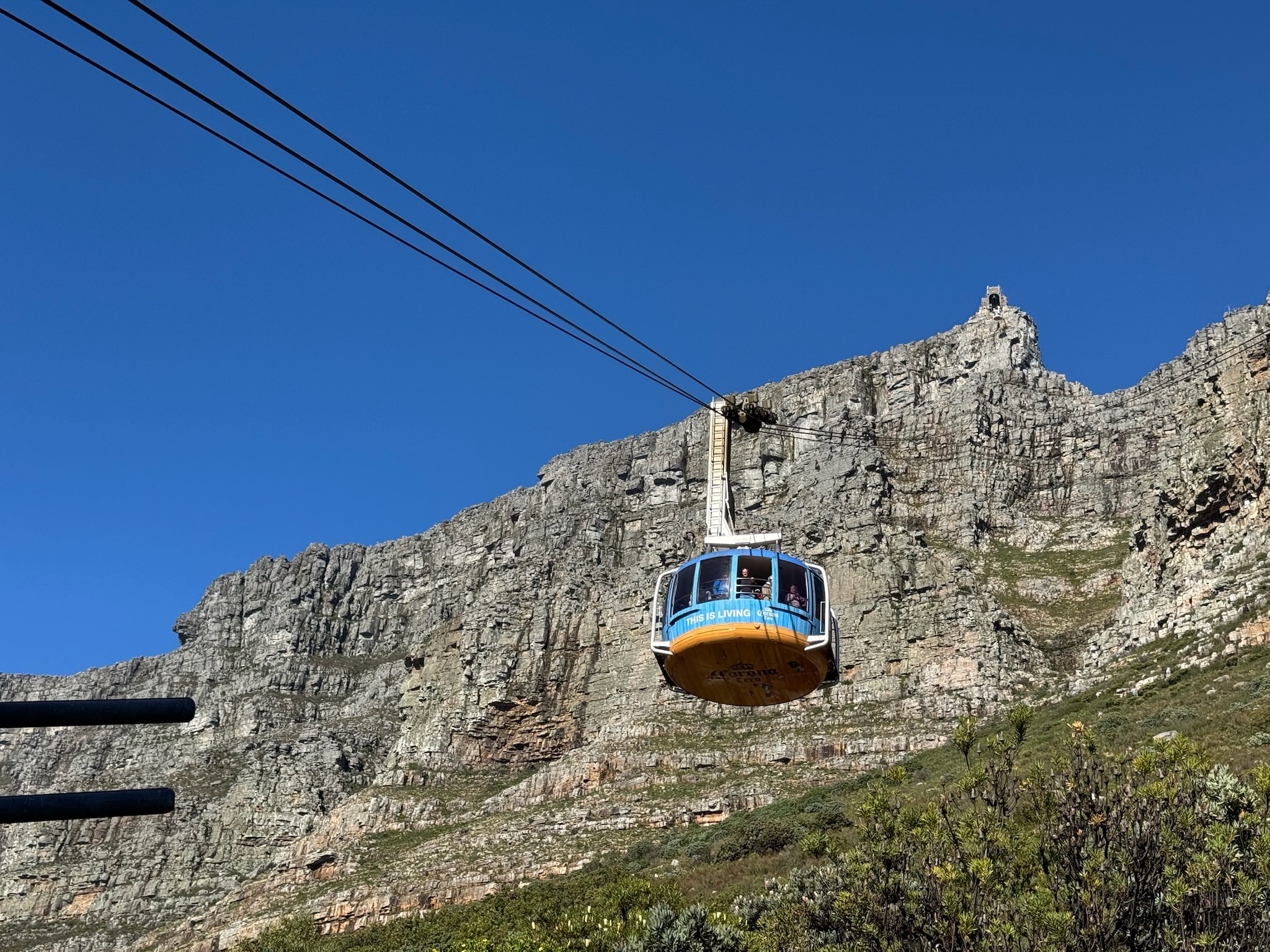
Opt for the "fast track" tickets and skip the line for the gondola up Table Mountain. The cable car rotates, one of only a few in the world to do so.
Spend your first day getting to know the dynamic city of Cape Town. Our family stayed in the Taj hotel, offering incredible breakfast and hospitality (highly recommend it!). We hired Rubin of Fabulous Cape Tours as our guide and driver for the entirety of our stay—an invaluable resource for covering the most ground in a new city and learning the most quickly!
Our day started with a loop of the city, visiting landmarks like City Hall, where Nelson Mandela made his first public speech after imprisonment. We took a long stop at the Company Gardens, Cape Town’s version of Central Park, with incredible flowers, a vegetable garden, and cafés. We also met several friendly albino squirrels.
A trip to the hills of Bo-Kaap in the Malay Quarter is worth a visit, filled with colorful homes and local art shops. We particularly loved the Nathan Chikoto Recycle Artist gallery, where all the works are made from recycled materials. A must-stop in Bo-Kapp is Biesmiallah Restaurant, whose owner of 52 years serves delicious quick-serve food with a smile.
No trip to Cape Town is complete without a trip up Table Mountain. We sprung for the fast-track tickets, and they are completely worth it. The cable car rotates on the ascent and descent, one of only a handful of such gondolas in the world. On Table Mountain, you’ll find breathtaking views, a couple of cute restaurants and shops, and photo ops at every turn.
We finished day one exploring the waterfront, a safe yet touristy shopping area. We opted to eat at the Time Out Food Hall, because the variety of choices is always a crowd-pleaser. Back at the Taj, our hotel is one short block from Greenmarket Square. This fun and festive market features crafts, jewelry, and clothing at prices you won’t find near the waterfront.
Day 2: A day on the coast
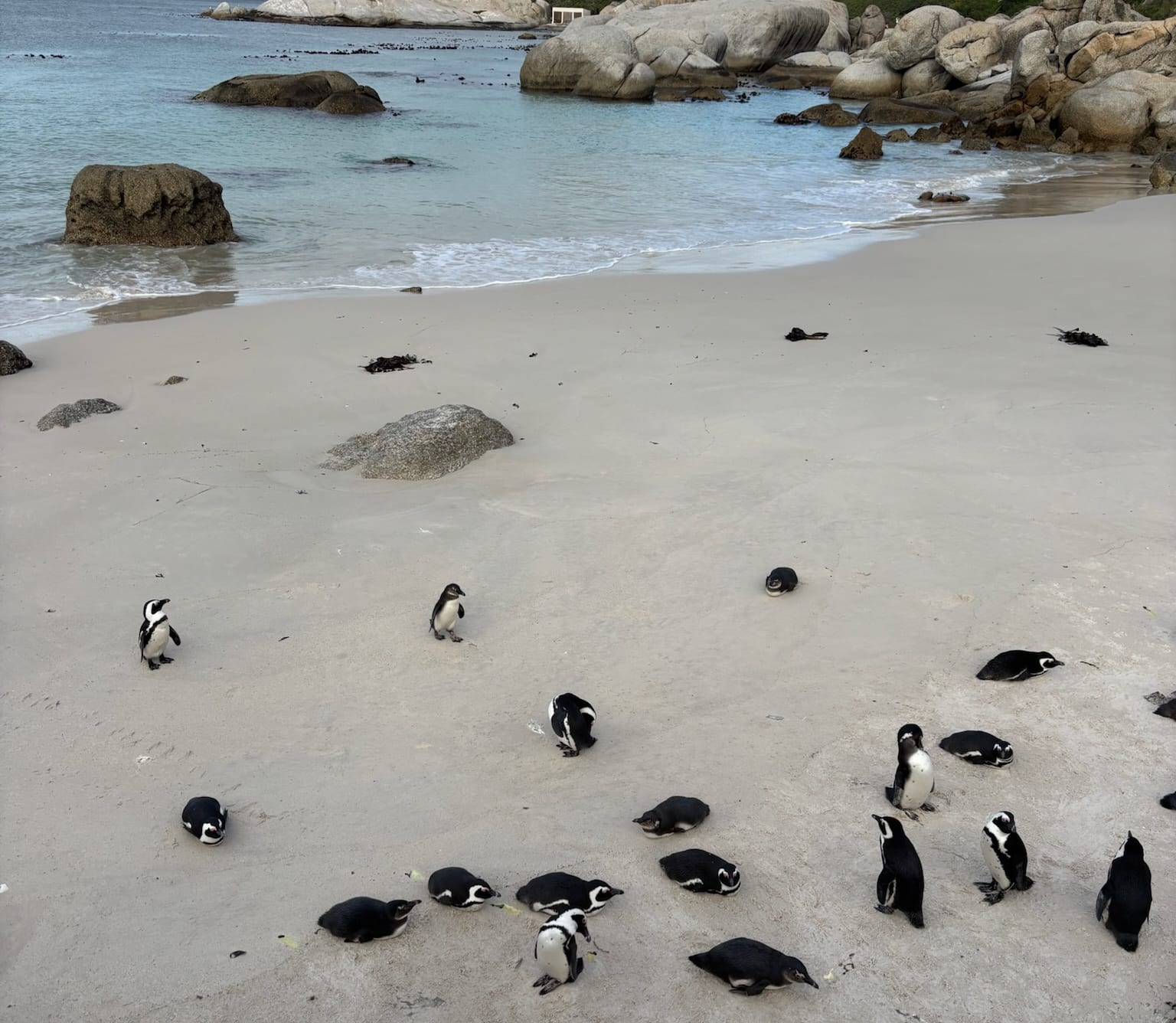
The Simon's Town penguins are an unforgettable stop along the coast.
A perfect second day is spent exploring the Cape of Good Hope and surrounding coastal towns. Although our day had intermittent light rain, it didn’t dampen our jam-packed itinerary driving south from Cape Town. Make your first stop Maiden’s Cove for your first big view of the rocky beaches set against Table Mountain. A bit farther south, stop at Hout Bay, where $8 per person buys tickets on the 45-minute boat ride out to see cape fur seals on Seal Island. The crew aboard Drumbeat Charters is amazing and was very supportive when two of us got nervous due to rough seas. Seasickness aside, it’s worth it for the memorable views of the seals and their pups—just bring your Dramamine.
From Hout Bay, head to the famous Chapman’s Peak Drive, three times named the world’s most scenic roadway. You’ll recognize it from car commercials. Along the route is Farm Village Noordhook, a great stop for delicious coffee and deli foods, ice cream and some shopping.
The Cape of Good Hope is the next major stop, and it’s truly incredible to visit the southernmost tip of Africa. Our guide, Rubin, did a beautiful job explaining the rich history of the region where the mountains meet the sea.
A short drive is the next great stop, Cape Point, which you can visit via the $6-per-person funicular. Visit the lighthouse at the top for incredible 360-degree views.
Take the eastern route back to Cape Town for the must-visit Simon’s Town. Seaforth Restaurant is a delicious stop with fresh seafood, meat, and vegetarian choices at reasonable prices. It’s great to have a hearty lunch because the next stop is the incredible Boulders Beach, home of the African Penguins. You can get close to the penguins while not disturbing them. Enjoying these precious endangered species was a highlight of our magical day.
Plan nine to 10 hours for this southern road trip from Cape Town. Along our journey, we were fortunate to see seals, bontebok, ostrich, baboons, penguins, and dassie. Keep your eyes focused and your binoculars handy for a day you’ll never forget.
Day 3: A day on the Franschhoek Wine Tram
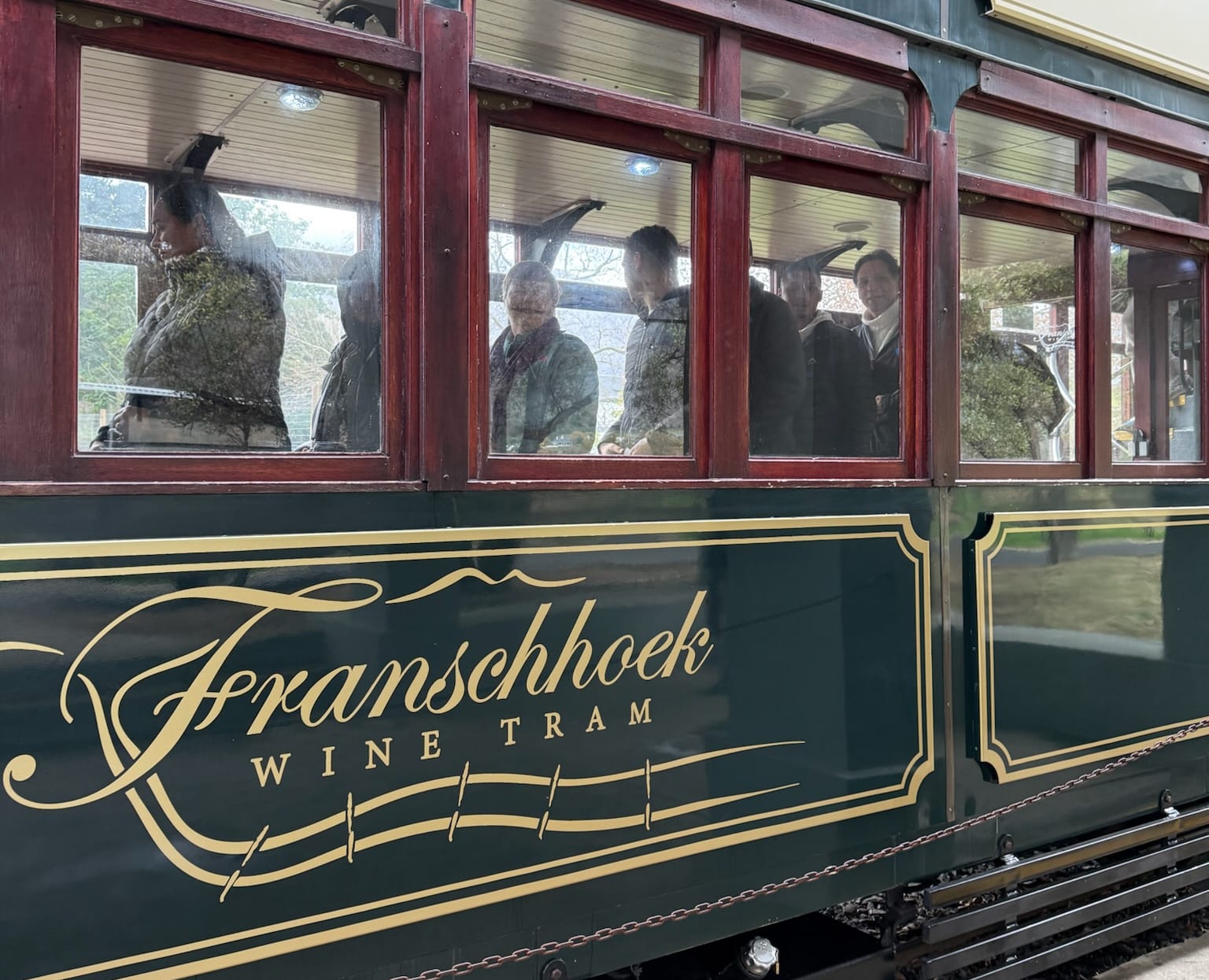
All aboard the Franschhoek Wine Tram: Purchase a full-day ticket on one of several color-coded lines that each have about eight stops in different directions.
If you’re spending time in Cape Town and looking for a unique, memorable day trip, don’t miss the Franschhoek Wine Tram. Nestled in the heart of South Africa’s Winelands, this charming little tram offers an easy and fun way to sample the region’s best vineyards, no designated driver required.
You purchase a full-day ticket on one of several color-coded lines that each have about eight stops in different directions. We chose the Pink Line because of its focus on white wines (our personal favorite), and despite the misty skies and occasional downpour, the day ended up being a standout of our time in South Africa.
Onboard the Wine Tram
The adventure officially kicked off at the Franschhoek Wine Tram station, where we were greeted with small plastic cups of rosé. From the start, everything felt easy and welcoming.
The tram itself runs on a narrow-gauge track (about half the width of a regular train), and between wineries, we traveled by tractor-pulled wagons wrapped in clear plastic to keep us dry.
Winery highlights
Rickety Bridge Winery: Our first stop was Rickety Bridge, where we did a special tasting for about 90 ZAR (~$5). The thatched-roof manor house with whitewashed architecture had views that felt like a fusion of Tuscany and Sonoma. Despite the upscale ambiance, the place felt almost empty, giving us space to really enjoy the wine and setting.
Grand Provence: Next, we stopped at Grand Provence, where a massive outdoor sculpture greeted us. We opted for their curated tasting: Sauvignon Blanc, Chenin Blanc, Merlot, and what they jokingly called “the big dog,” their Cabernet Sauvignon. We tasted in a barrel room, surrounded by fermentation vats, and shared fun conversation while sipping our way through the flight. (The Sauv Blanc was my favorite, but the Cab made a strong second-place showing.)
Franschhoek Cellar: We continued on to Franschhoek Cellar, where a young staffer named Deren guided us through two tastings: one paired white wines with cheese, and the other paired whites with chocolate, also around 90 ZAR per person. While not our favorite of the three wineries (simply due to the atmosphere, which felt a little more American, and hence too much like home), we did enjoy the wines while chatting about the cheese and chocolate pairings.
Farm Sanctuary SA: The real surprise of the day came at Farm Sanctuary SA, a haven for rescued farm animals that doubles as a winery and art gallery. At Farm Sanctuary, we learned the story of Pigcasso, a rescued pig who became a globally recognized abstract artist (yes, really). Her journey from slaughterhouse to art world darling is fascinating. A sign told us that she passed away in March 2024 at almost 8 years old, but her impact on animal advocacy lives on. Another highlight was reading about Baanksy, a painting sheep dubbed the “Rembrandt” of the sanctuary. There’s even a reward out for his return, though whether it’s real or part of the sanctuary’s wink-wink charm is hard to say. We paid a few dollars to feed some goats (the pigs were uninterested), and our young-adult daughters were smitten with the whole experience. The sanctuary strikes a perfect balance of humor, storytelling, and purpose, and it’s a great last stop on the wine tram.
Late lunch in Stellenbosch
By 2:30, we were all ready for a warm meal, and we stopped at Allora in Stellenbosch for pasta carbonara and fried cheese. The town of Franschhoek itself is steeped in Dutch influence, and its cobbled streets and chocolate shops only added to the charm. The girls bought chocolates at Huguenot Fine Chocolates, then we strolled the shops.
We didn’t bring home any wine, but we’ll definitely be on the lookout for South African wines going forward. The Franschhoek Wine Tram gave us more than just good wine—it gave us insight, warmth, and a day full of memories we won’t soon forget.
Need to know
I’ve been asked about the safety of South Africa, and at this writing I would say it feels like any major American city—there are places you visit and places you don’t. Near the waterfront and with our local guide, we never felt anything but completely safe. We found the people to be extremely warm, welcoming, and excited to greet travelers to their country.


Travel Advisor
Michele Rhudy
Michele Rhudy

Get in touch with Michele Rhudy
Did you like this guide? Reach out to customize and book your own experience. Or, just to chat about travel in general.
For more inspiration and insider recommendations, visit our Cape Town page.