

Curator’s statement
Lhasa, Tibet, is among the most remote and highest capitals in the world, set among the impressive Himalayan mountains at 12,000 feet. The birthplace of Buddhism and the former residence of the Dalai Lama, Lhasa draws pilgrims seeking spiritual enlightenment and visitors curious about an ancient way of life. You might expect solemn meditation and quaint charm, as I did. What I found was a loud, modern city of more than 500,000 people, with super highways, high-rises, and railways installed over the past two decades by the Chinese government. And yet, Lhasa still is the heart of Buddhism, with devoted rituals and spiritual longing unchanged for centuries.
The Fora Difference
Book with Globetrotting Kirks to access exclusive perks and experiences on your trip.

Killer perks
Free upgrades, spa credits and more—we got you

Personalized recs
Customized travel planning for your style

Insider knowledge
Expert advice from people who’ve actually been there
Where to stay
Unlock perks by contacting Globetrotting Kirks to book your trip.
Day 1: Arrival to the "Roof of the World"
It’s not easy to get here from there. You will be flying in from China or Nepal—the only two entry points. You’ll need a Chinese visa, along with Tibet Travel Permits booked through a tour operator.
Tip 1: Going to Tibet through Nepal requires a different China visa than the one you get through China. The Chinese Group Visa via Tibet will allow you to travel throughout China for 30 days. Hang on to this important document! (Note: China has been offering 30-day visa-free policies to many countries, but the US is not currently included.)
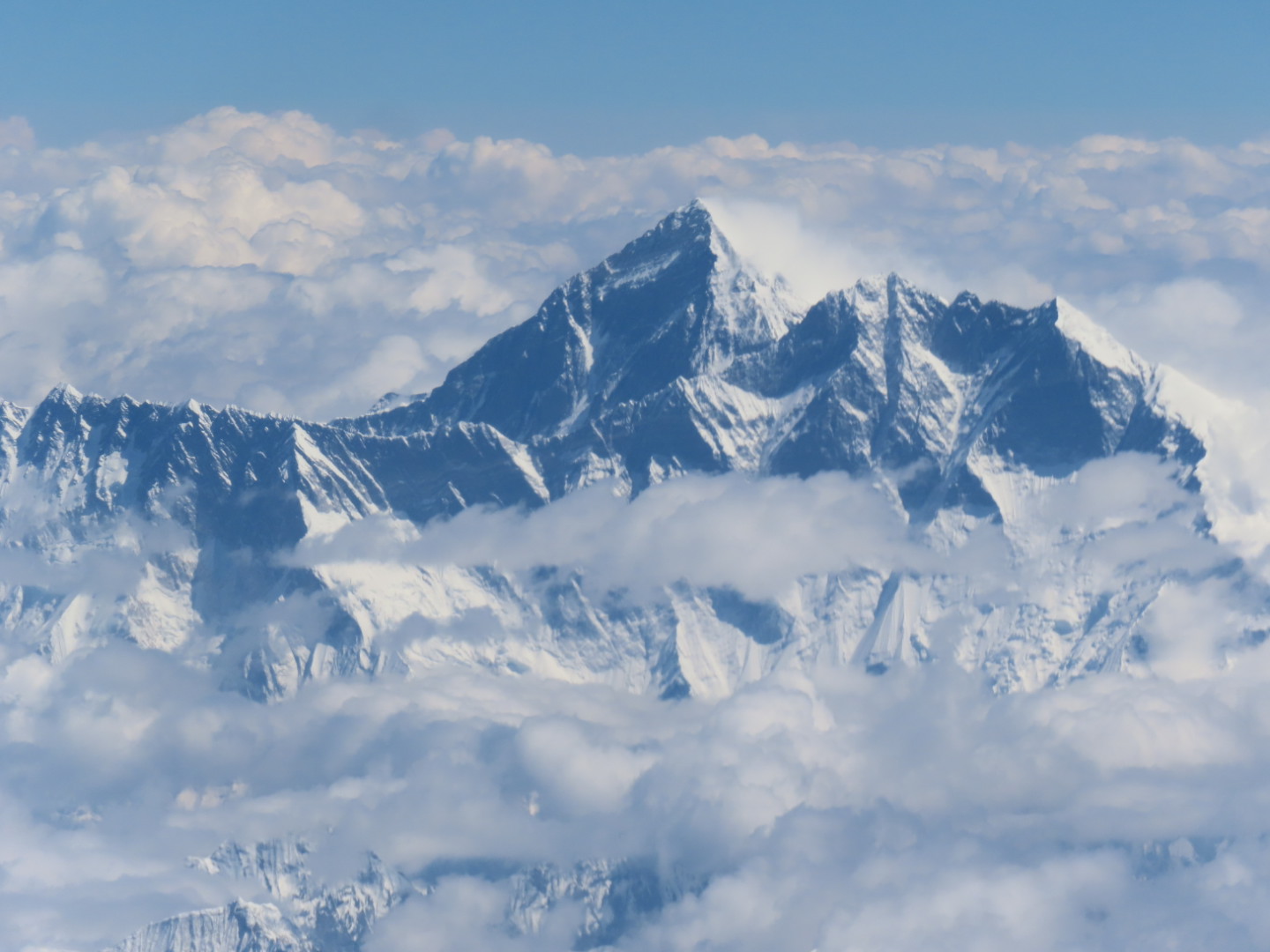
Tip 2: If flying into Lhasa from Kathmandu, sit left for the possible amazing views of Everest.
Upon arrival into Lhasa, you need to rest up, and take it easy to adjust to the altitude of 12,000 feet. (Most China hubs are nearly sea level—Kathmandu is at 4,600 feet.) Walk slowly, drink plenty of water and tea, and be mindful of your heart rate, headaches, breathing constraints, and sleep disruptions. It will take you a few days or more to acclimatize while your body produces more red blood cells to carry oxygen throughout.
Tip 3: Check with your doctor before departure about your fitness, and whether a high-altitude drug like Diamox may be useful.
Tip 4: The western-style hotels offer aids in the rooms, including humidifiers and oxygen canisters, as well as in-house medical staff. The Shangri-La has a great “oxygen room” where you can recharge.
If staying at the Shangri-La, dine tonight at their robust all-you-can eat buffet with a vast variety of seafood and local fare.
Day 2: Sera Monastery's debating monks
Founded in 1419, Sera Monastery is one of three major monasteries in Lhasa. It was a leading religious university with multiple colleges and chapels housing more than 5,000 monks in its heyday.
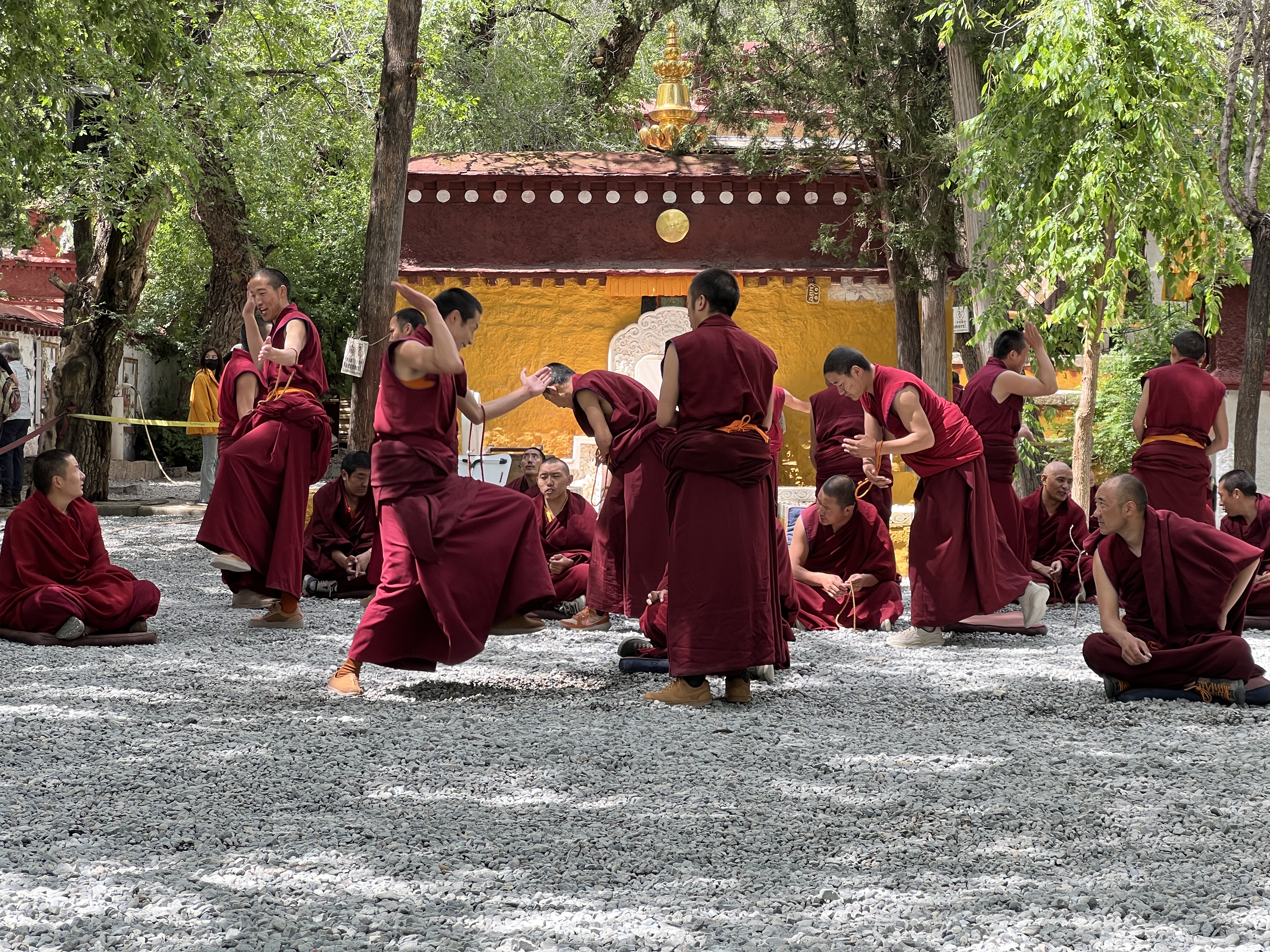
What makes Sera a must-visit site today are the daily monk debates in the courtyard. Continuing a long tradition, monks sharpen their reasoning and knowledge not just by prayer and study, but by arguing about Buddhist doctrines and scriptures.
A teacher will pair or group the monks by rank—the one standing asks questions while those sitting give answers. Over two hours, they’ll trade places and move around as they challenge each other:
How do you prove that something exists?
Can one accept offerings under certain conditions?
Is the self one with the body or separate from it?
It was fascinating as we watched nearly 100 monks gesture and stomp their feet, emphasizing questions by slapping their hands, sometimes getting right into another monk’s face, or even playfully slapping each other. It felt like theater, but it was intensely serious. Educational for them, and for us.
Tip 1: The monks debate daily at 3 pm except for Sundays or if the weather is inclement.
Tip 2: The more advanced monks are in the back courtyard.
Tip 3: You may photograph with cell phones but not with cameras. Of course, be quiet and respectful.
Day 3: Jokhang Temple and Barkhor Street
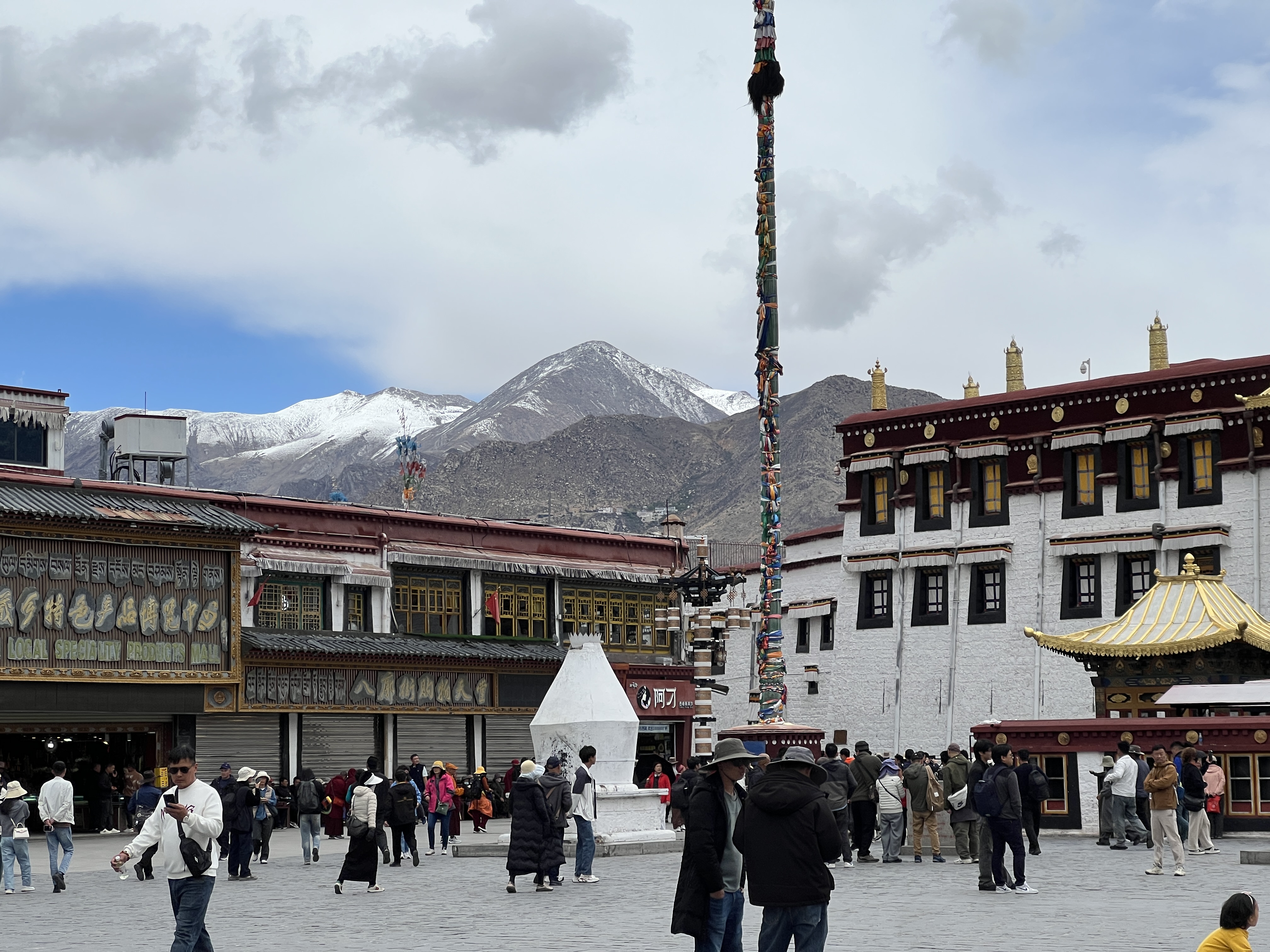
The Jokhang Temple is considered the holiest in Tibet. Built in 652 by the king who unified the country, Jokhang marked the beginning of Buddhism in Tibet, and remains the spiritual heartbeat.
Pilgrims come from thousands of miles away to pray and prostrate themselves (often in burpee-like movements), spinning handheld prayer wheels, and walking around the temple along Barkhor Street in a meditative kora (or circle around a sacred object).
Inside, amid the chanting, incense, and yak butter lamps, the faithful seek out the revered statue of the 12-year-old Buddha Shakyamuni—believed to have been blessed by Buddha—for their own blessings.
Note: No photography is allowed inside any of the religious structures, and hats must be removed.
Do your own kora around Barkhor Street, perusing its shops of gifts, crafts, clothing, and snacks. Try not to gawk at the locals going about their business, the pilgrims intent on their kora, or the Instagram tourists dressed from head to toe in traditional garb for souvenir photos in this holy setting.
For a different perspective, stop by nearby Ani Sangkhung Nunnery, a modest complex with a courtyard and small shrine room. The nuns make crafts to help fund their simple life.
If you’re still on Barkhor Street, consider dinner at Lhasa Kitchen, which has good food, a menu in English, and most importantly, Western-style bathrooms. Go early or be prepared for a long wait.
Day 4: Potala Palace and Norbulingka Palace
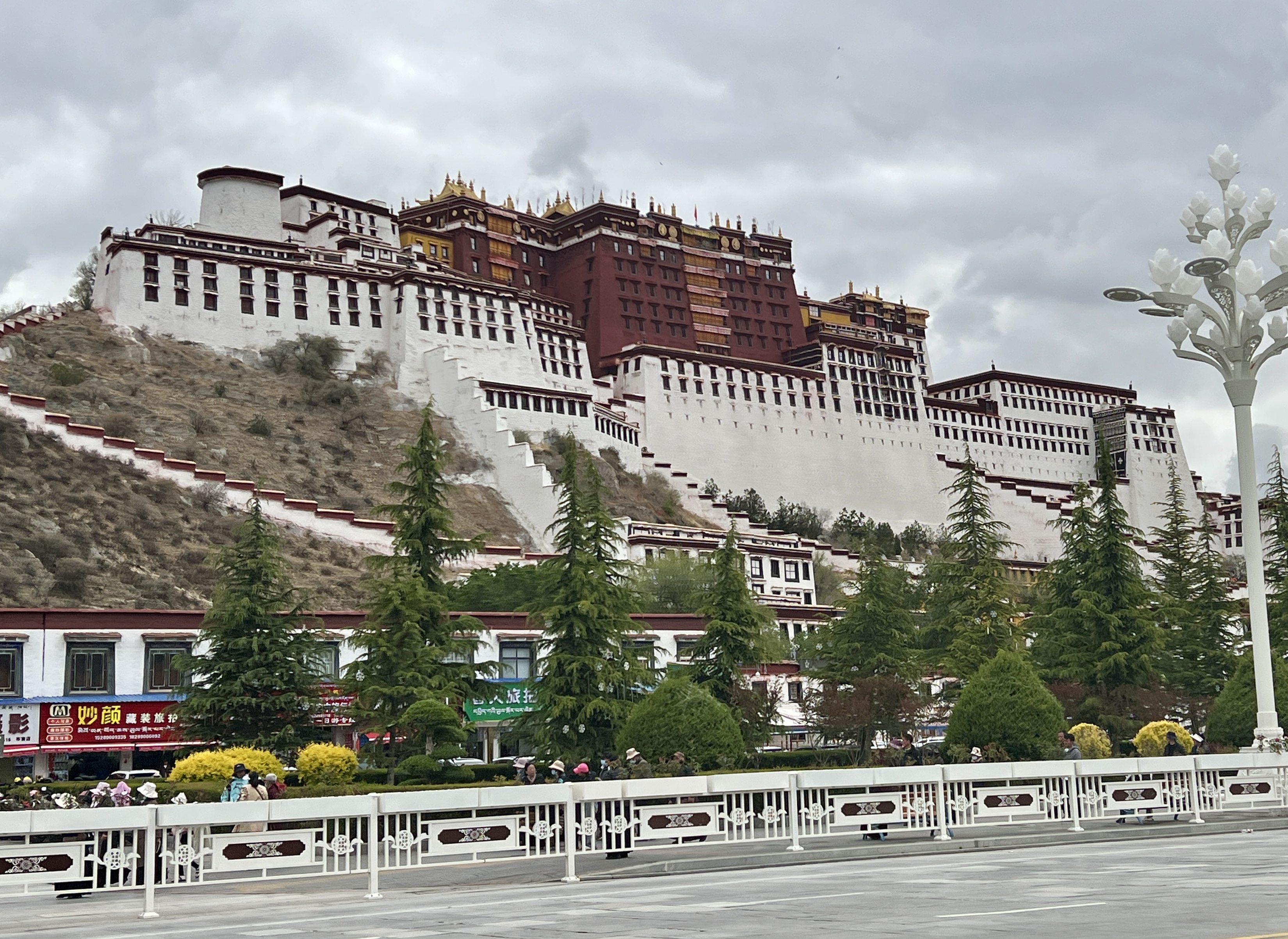
We waited to acclimatize before visiting the winter residence of the Dalai Lama, which sprawls over 13 stories with many steep steps and ramps.
Dominating the Lhasa skyline, the iconic Potala Palace was first built in 631 by the same king who built Jokhang Temple. A thousand years later, the 5th Dalai Lama expanded it into the White Palace for his home and office. Later, the Red Palace was built to house shrines and prayer halls.
After the unsuccessful Tibetan uprising against Chinese rule in 1959, the 14th Dalai Lama, Tenzin Gyatso, fled to India, where he led a government in-exile. (He won the Nobel Peace Prize in 1989—he’ll turn 90 on July 6, 2025.)
Potala and nearby Norbulingka Palace, the summer residence, are now museums with many restricted areas.
Like Jokhang and other temples, Potala is a warren of dark rooms filled with relics, statues, murals, and books. Monks chant loudly while pilgrims bow at shrines and leave money as a sign of respect and a way to build merit. The most significant feature of Potala is the tomb of the 5th Dalai Lama, who unified Tibet. Massive and surprisingly opulent, it is covered with 8,000 pounds of gold and inlaid with jewels. (It was closed to the public when we visited in May 2025.)
Tips: Potala is very popular and draws large crowds, including large tour groups. Be prepared for long lines and potential heat without much shade. Wear comfortable shoes and bring water. There is a time limit to make the tour circuit (to prevent people from dawdling) but you will have ample time to visit. Beware of the very poor condition of the public bathrooms.
After Potala, you might go over to the summer residence, Norbulingka Palace, which is set across tranquil landscapes, lakes, and gardens. (By now, the numerous shrines have begun to blur.) This is the site of the Dalai Lama’s last days before he fled in 1959.
Day 5: Drive to holy Yamdrok Lake
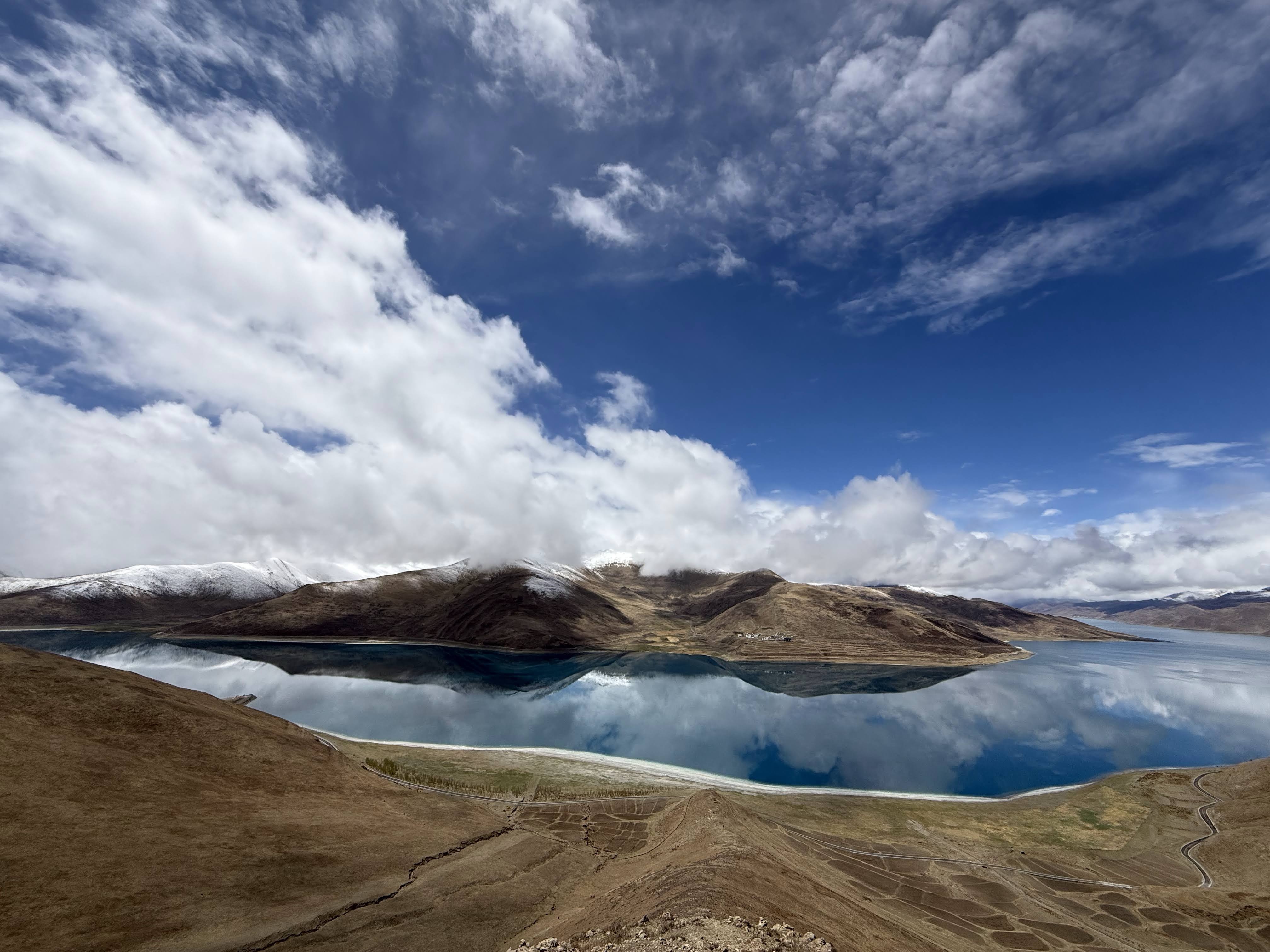
For your last day in Tibet, consider a drive out of the city, higher into the mountains to Yamdrok Lake.
At 14,570 feet, Yamdrok is one of three holy lakes, believed to have the ability to help locate the next Dalai Lama. You’ll drive 70 miles through villages and zig zag along dramatic mountains, then over Gangbala Pass (look for yaks) before reaching Kamba La Pass at 16,398 feet.
This popular viewpoint, with a shop and porta-potties, prayer flags and many tourists, is among the highest points you can drive to in Tibet.
Some 3,000 feet below, the large emerald lake shimmers—Yamdrok will look differently by the minute depending on the sun and clouds—you may see the snowy mountains only as a reflection in the water. (Go slowly due to the altitude!)
You’ll now head down toward the lake, stopping at several other viewpoints. You’ll see more and more enterprising locals with yaks, Tibetan massifs, and pygmy goats, offering photo opps for a reasonable cost. (US dollars will be accepted, along with local currency.) We did, indeed get on a yak—when else would we have such an opportunity?!
Finish your outing at the lake itself, dipping your hand into the holy waters. (Some Tibetans walk the kora, or circumambulation path, around the 45-mile lake, which takes days.)
You’ll reverse your path back to Lhasa, finishing up your five days of Tibetan discovery.
Note: If you have more time and the season’s right, consider a tour to the Tibet Everest Base Camp (also called the North Face Base Camp) viewpoints, just 430 miles from Lhasa. You’ll have the opportunity to be within 15 miles of the north face of the world’s highest mountain. Or, the more adventurous could join a hiking tour.
Need to know
Tibet is a fascinating destination, a confluence and collision of ancient and modern, religion and politics. Its future may be tenuous.
After Tibet’s failed 1959 independence uprising, China has directed key decisions, from the management of religious sites to modernizing the infrastructure.
Mandarin is increasingly used and taught rather than Tibetan. Officials are replacing the name Tibet in favor of the region’s Mandarin name, Xizang.
During our visit in May 2025, we were told to replace the word Tibet with Xizang on our travel documents. But we did not notice other subtle or overt restrictions or surveillance imposed by the Chinese government.
On July 6, Tenzin Gyatso, the 14th Dalai Lama, turned 90. The weeklong birthday celebrations drew thousands of supporters to Dharamshala, India, including actor Richard Gere. In a video message on July 2, the Dalai Lama stated he will reincarnate after his death, and that his Gaden Phodrang Trust will have sole authority to identify his successor. “I am affirming that the institution of the Dalai Lama will continue,” said the Nobel Peace laureate. In his new book, he reiterates that his successor will be “born in the free world,” a jab aimed at the Chinese government. Beijing passed a law in 2007 requiring state approval of such reincarnations, prompting fears they will install their own Dalai Lama after Tenzin Gyatso’s passing.
You may have heard about young Jalue Dorje from Minnesota. He has been confirmed as a reincarnation of a lama, or holy leader, destined to be a Buddhist monk—but he is not THE Dalai lama. He’s headed to India this year to study.

Travel Advisor
Globetrotting Kirks
Mei-Mei Kirk

Get in touch with Globetrotting Kirks
Did you like this guide? Reach out to customize and book your own experience. Or, just to chat about travel in general.
For more inspiration and insider recommendations, visit our Asia page.