




Curator’s statement
Tenerife is the largest of the eight Canary Islands, but most Americans have never heard of it. Imagine year-round perfect temperatures, 70 unique beaches, 88 festivals a year, delicious food and wine, rich culture with the kindest people, endless adventure sports, volcanoes, immense natural beauty, and world-class stargazing (it’s one of the top dark skies in the world!). This island has something for everyone. While it is hard to get to from the US, it was worth every part of the journey.
The Fora Difference
Book with Amanda Barrett to access exclusive perks and experiences on your trip.

Killer perks
Free upgrades, spa credits and more—we got you

Personalized recs
Customized travel planning for your style

Insider knowledge
Expert advice from people who’ve actually been there
Where to stay in Tenerife
Unlock perks by contacting Amanda Barrett to book your trip.
Why Tenerife should be on your travel radar
Perfect year-round weather
Average annual temperature: 73°F
3,000 hours of sunshine per year
Warm summers and mild winters
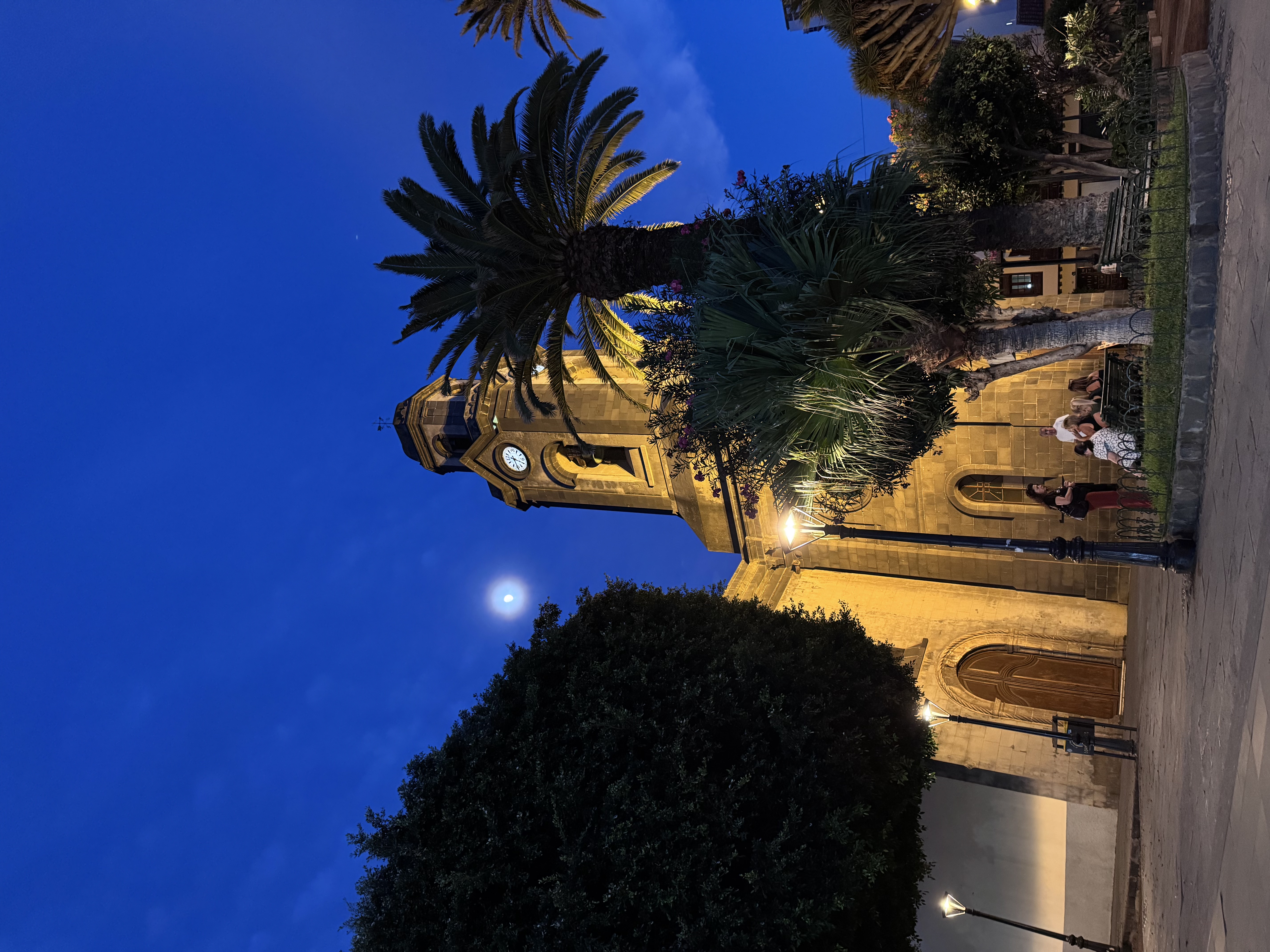
Inglesia de Nuestra Senora de la Pena de Francia
Natural beauty & outdoor adventures
70 unique beaches, ranging from golden sand to dramatic black volcanic shores
43 protected nature areas covering 48 percent of the island
Over 800 species of local flora and fauna
Two UNESCO World Heritage Sites: Teide National Park and the historic city of La Laguna
World-class stargazing
Tenerife's exceptionally clear skies make it one of the world's premier stargazing destinations. The island is home to the prestigious Canary Islands Astrophysics Institute and houses massive telescopes, including the Gregor solar telescope, used by international scientists to study the universe.
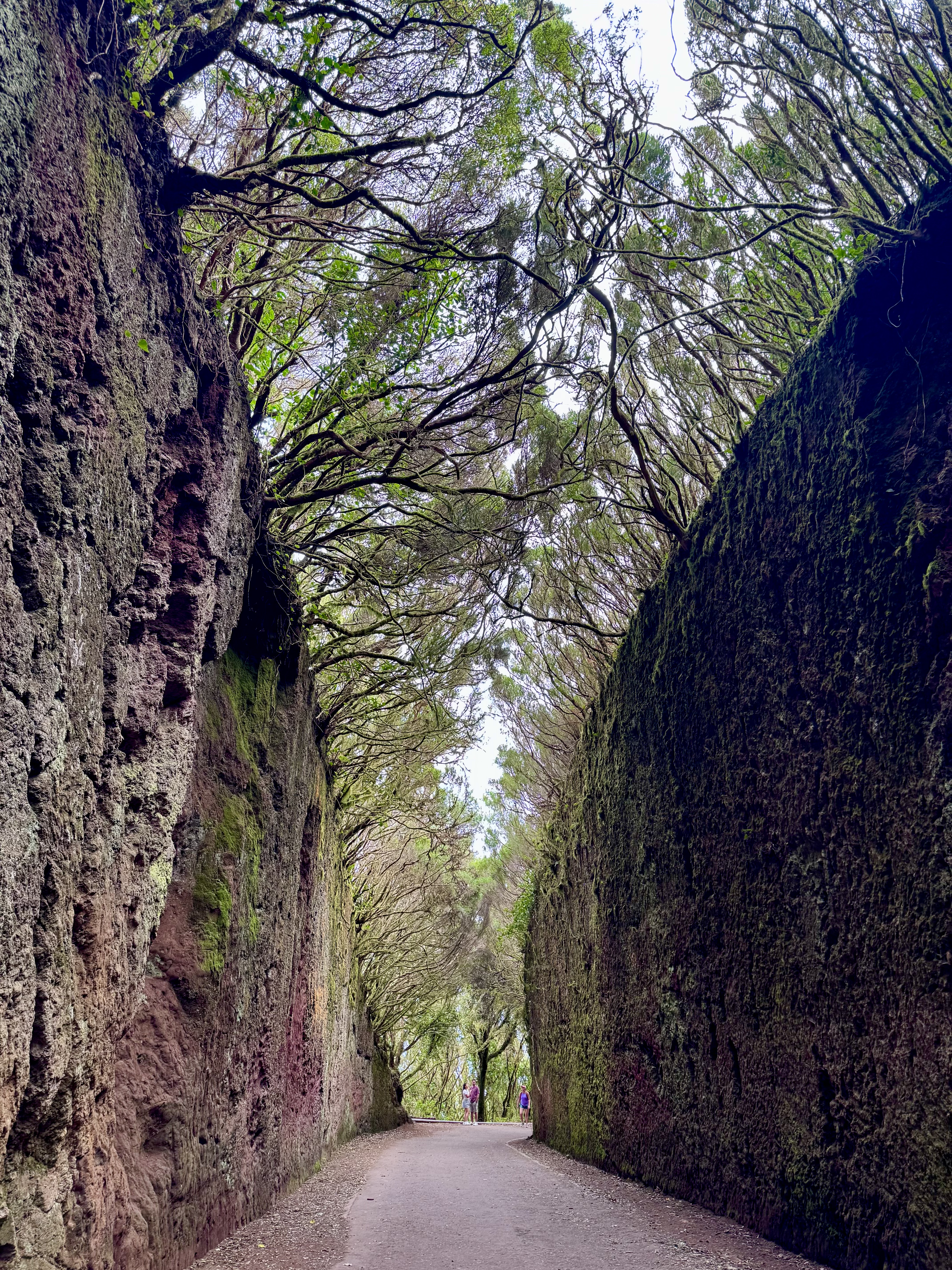
Tunel de las hadas
Teide National Park: A UNESCO must-see
With over three million visitors annually, Teide National Park is Tenerife's crown jewel and one of the most spectacular volcanic landscapes on earth. Words like "majestic," "breathtaking," and "unique" barely scratch the surface—this surreal landscape must be seen to be believed.
Spain's highest peak, Mount Teide, towers at 12,198 feet above sea level, dominating the island's skyline and offering visitors an otherworldly experience among thousands of tons of ochre lava flows.
Unique flora & fauna
The park is home to remarkable endemic species, including the vibrant Teide violet and Tenerife bugloss, whose bright colors create a stunning contrast against the dramatic volcanic terrain.
How to visit Teide National Park
Accessible from both the north and south of the island
Drive yourself or take the "guagua" (local bus)
The cable car experience: A modern cable car takes you within 200 meters of the volcanic cone, offering breathtaking views of this lunar-like landscape.
Summit access: To reach the very top of Mount Teide, you'll need to request a free permit in advance
For the adventurous: Serious hikers can trek to the Altavista mountain refuge (advance booking required):
Three-hour winding trail to the refuge
Overnight stay at the mountain hut
Final one-hour climb to the summit for sunrise
On clear days, you can see all seven Canary Islands from the peak—a truly top-of-the-world experience
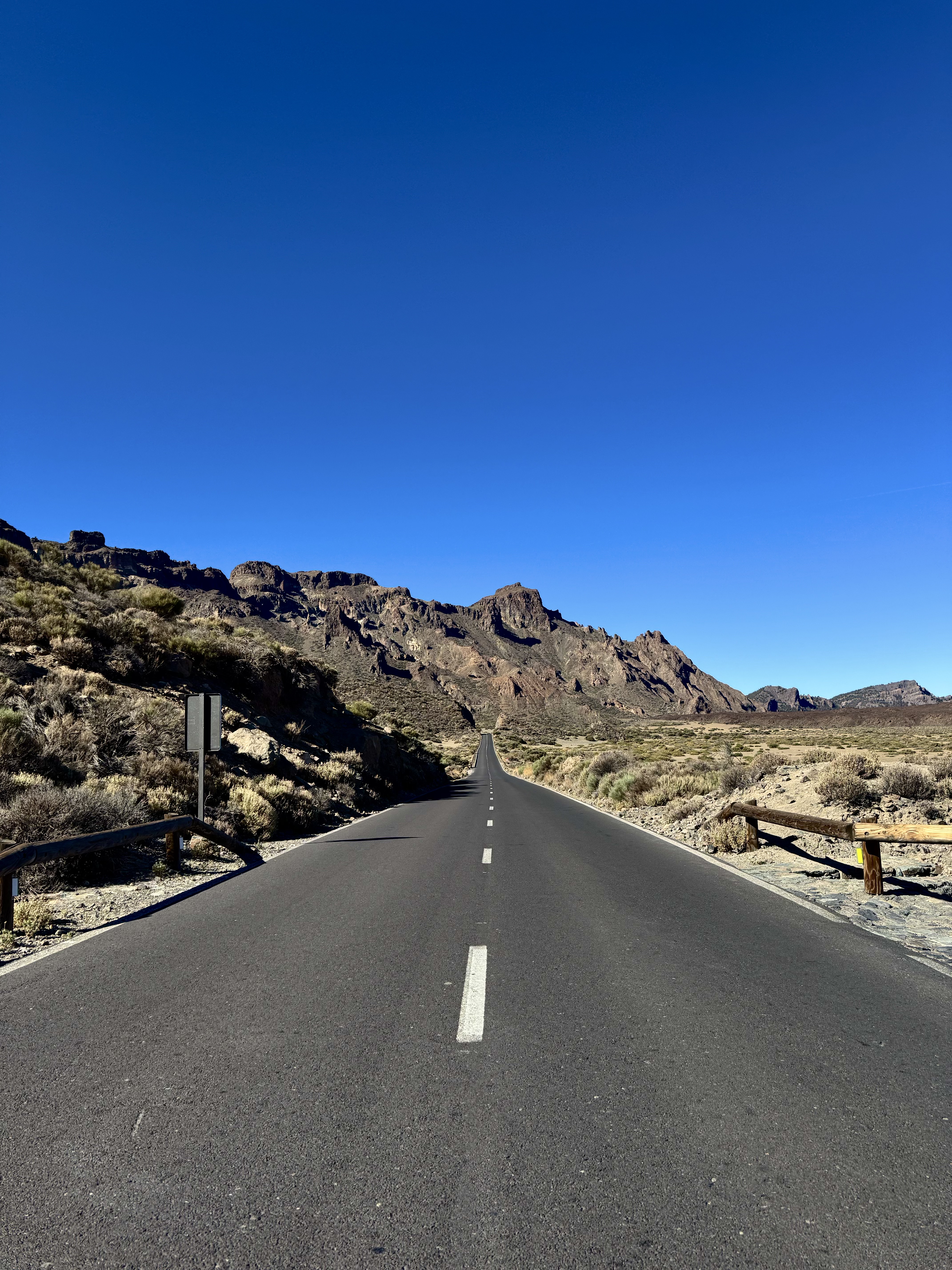
Road in Teide National Park
Getting around Tenerife
Despite being the largest Canary Island, Tenerife is perfectly sized for exploration—you can drive from one end to the other in a single day.
Transportation options
Modern motorway network
Comprehensive bus service throughout the island
Tramway system in the metropolitan area
Car rentals for maximum flexibility
Practical information
Currency: Euro (€)
Language: Spanish (English widely spoken in tourist areas)
Safety: Tenerife is exceptionally safe and family-friendly with a comprehensive healthcare network
Ports: Two international cruise ports
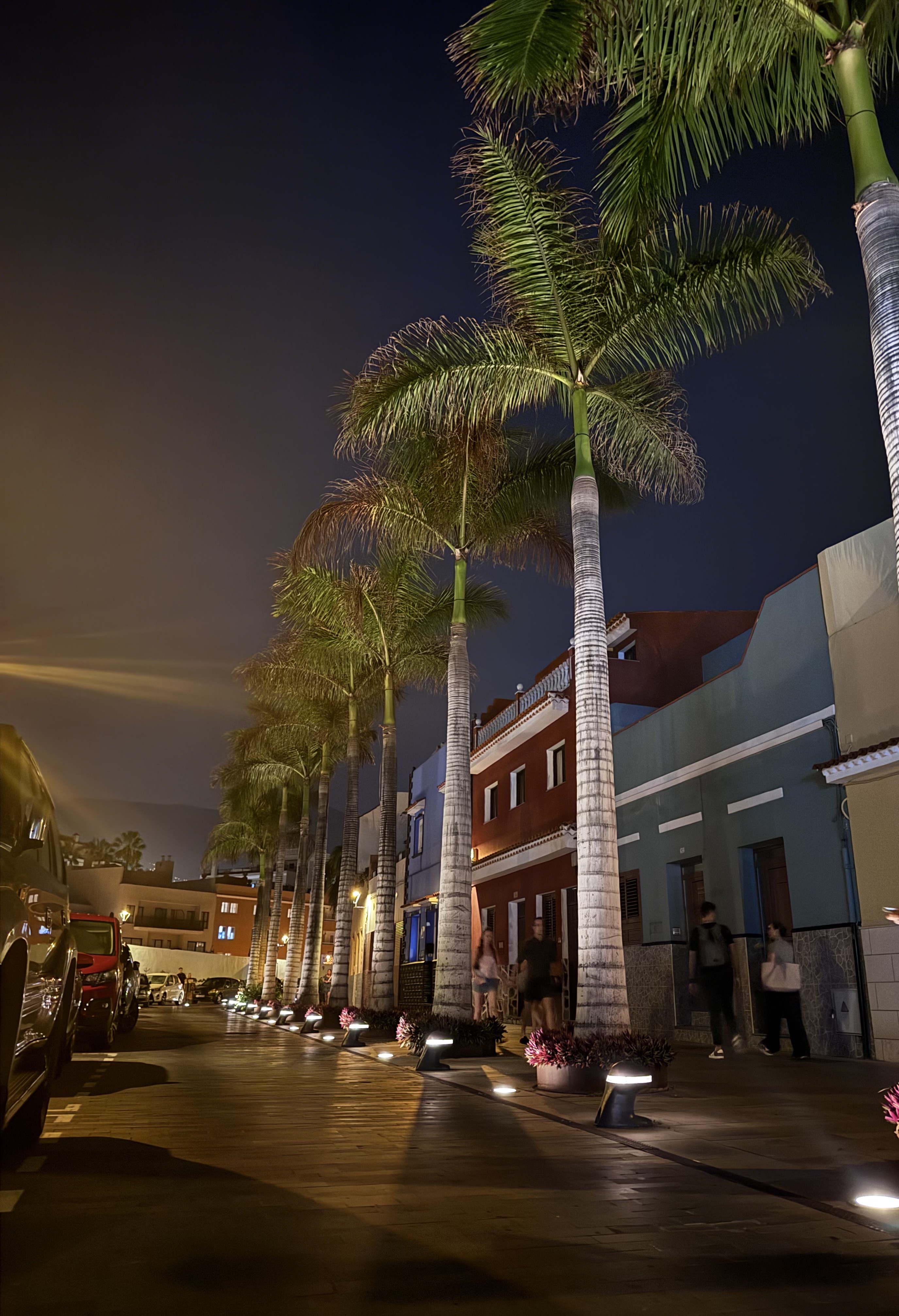
Nighttime stroll in Puerto de la Cruz
My Tenerife experience: Why the north stole my heart
After exploring both sides of the island, I can confidently say the north was my favorite. It felt authentically local, rich in culture, and refreshingly non-touristy compared to the all-inclusive, resort-heavy south. Don't get me wrong—the south has its appeal if you're looking for that classic beach resort experience—but the north offered something more genuine and immersive.
I was able to experience three separate hotels, but Gran Taoro was my favorite, positioned beautifully on the mountainside just outside the main downtown area. This location turned out to be perfect—close enough to walk into town for dinner and exploration, yet far enough to feel like a peaceful haven away from the bustle. There's something magical about retreating to your mountainside sanctuary after a day of adventure.
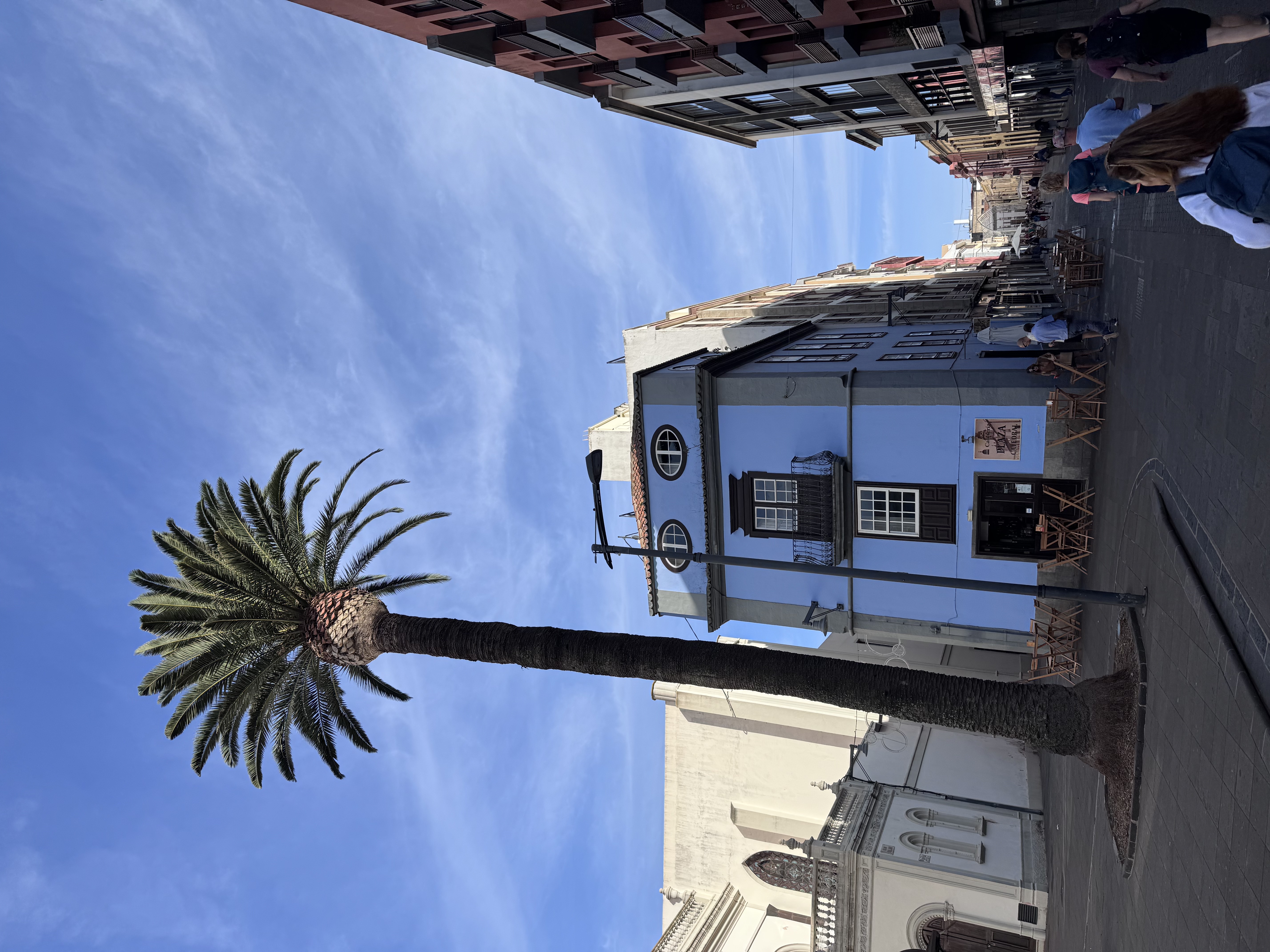
UNESCO town of La Laguna
The food scene: Never a bad meal
I ate at numerous local restaurants throughout my stay, and I'm not exaggerating when I say I never had a bad meal. The service was consistently friendly and accommodating, and the quality was outstanding. One of my favorite discoveries? I randomly walked into a hole-in-the-wall spa for a facial and met one of the kindest, most genuine people I've encountered in my travels. She was so wonderful that it genuinely makes me sad I don't live there to visit her regularly—that's the kind of authentic connection you find in North Tenerife. If you are a banana lover, you will be so excited to know that that is Tenerife’s biggest export. Their bananas are nothing like the ones we get in America; they're filled with tropical flavors and notes of mango. I may have eaten my weight in them while there.
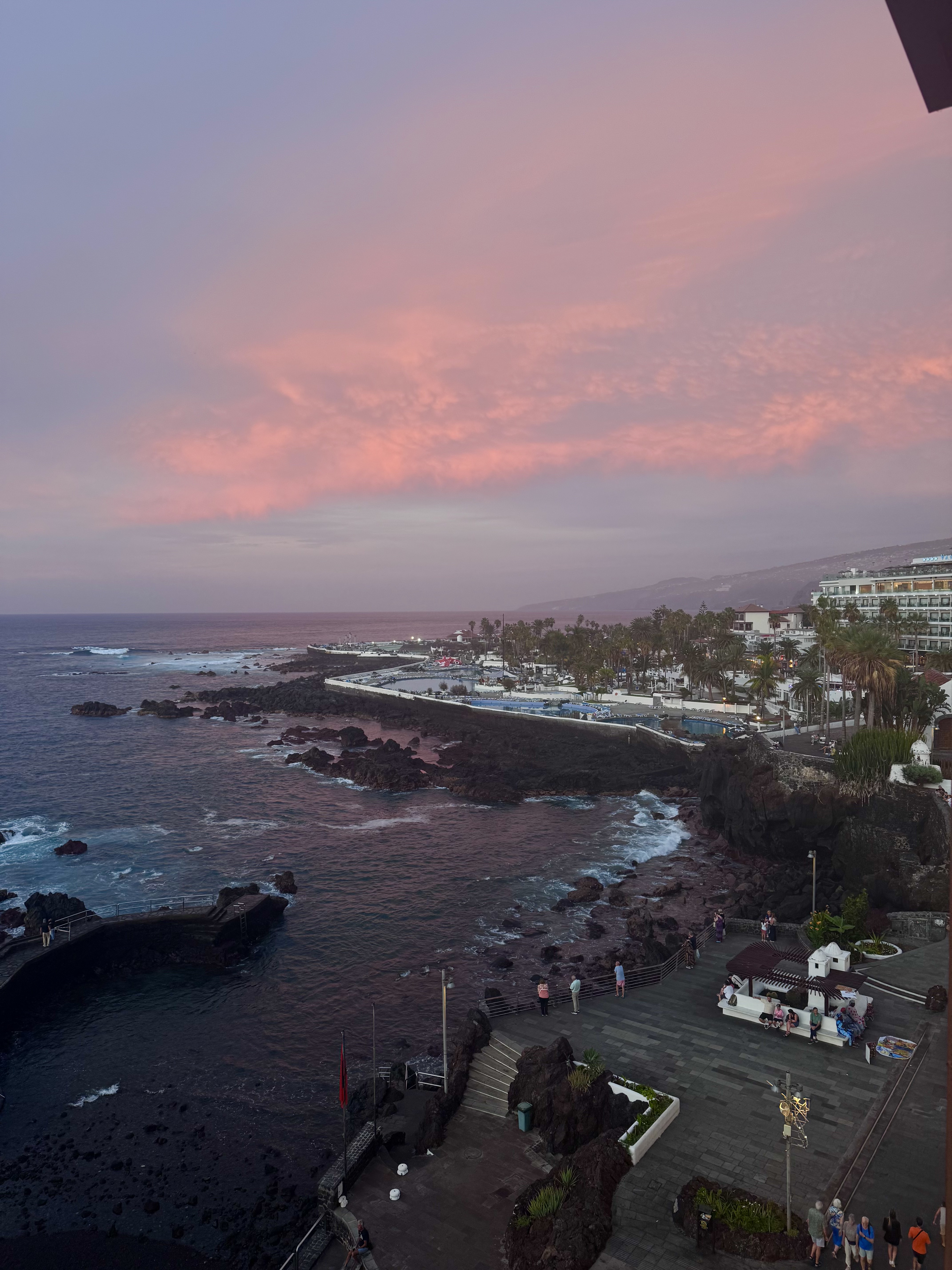
Sunset in Puerto de la Cruz
The hiking: Endless variety
The hiking opportunities blew me away. Every trail felt completely different, showcasing the island's incredible diversity. One fascinating phenomenon I learned about: There's often a slight haze over the island, which is actually sand from the Sahara Desert blowing across the ocean. How incredible is that?
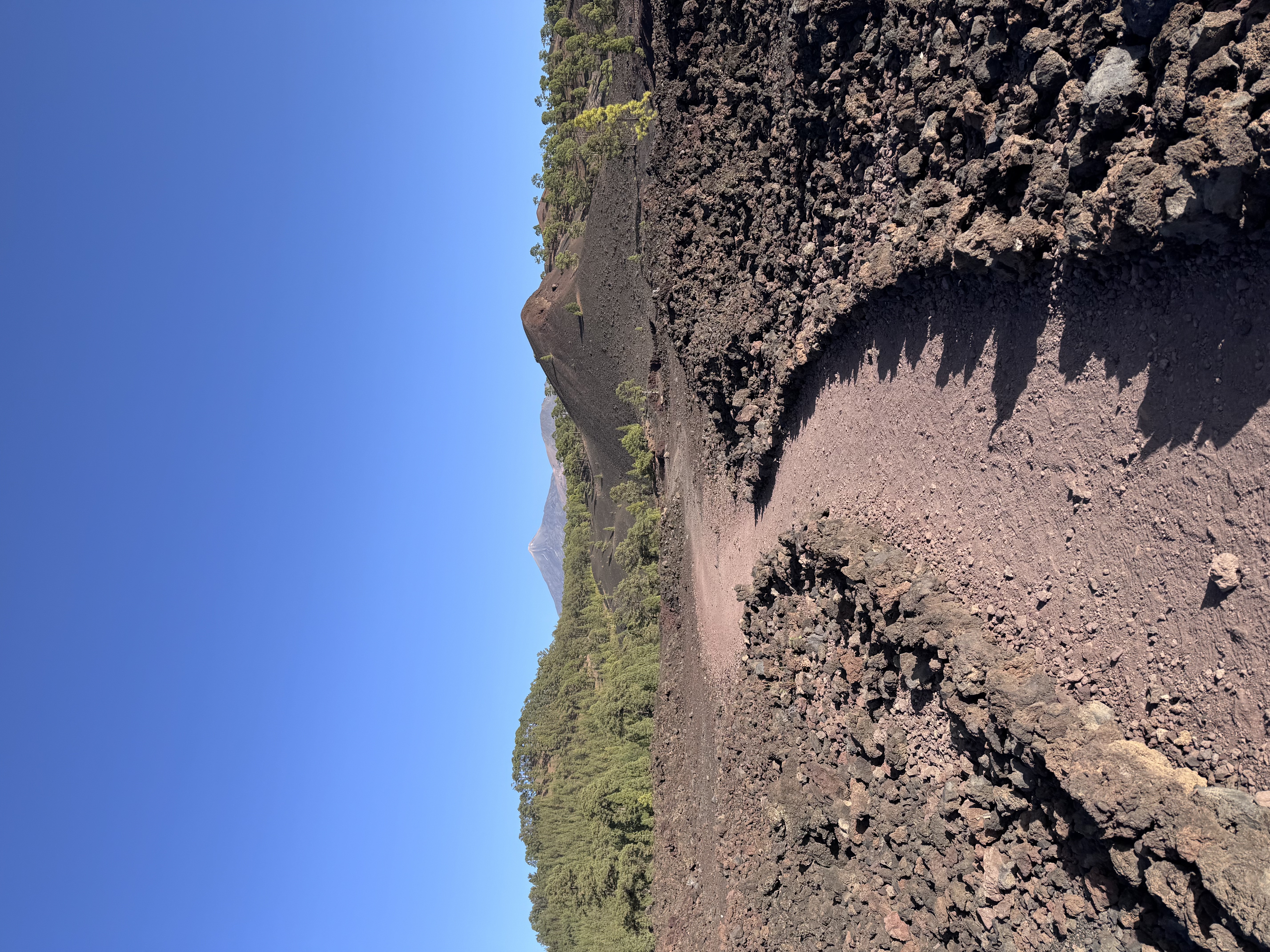
Hiking near Montana de Los Poleos
Being an American in Tenerife
Here's something interesting: Locals were consistently surprised to meet an American visitor. They're accustomed to UK and European tourists, so I felt like a bit of a novelty. It made for great conversations and even warmer welcomes.
I had the pleasure of having some of the best guides on the island, and they really made the trip special! Without them, I would have missed out on so many interesting facts. It really proved to me that there's traveling and learning about culture, and then there’s being a standard tourist.
What I missed (and will do next time)
Unfortunately, the ocean was too rough during my visit for the water activities I'd hoped to try—boating, kayaking, and learning to kitesurf are all high on my list for my next visit. I also didn't get to experience the world-class stargazing, which is absolutely happening next time!
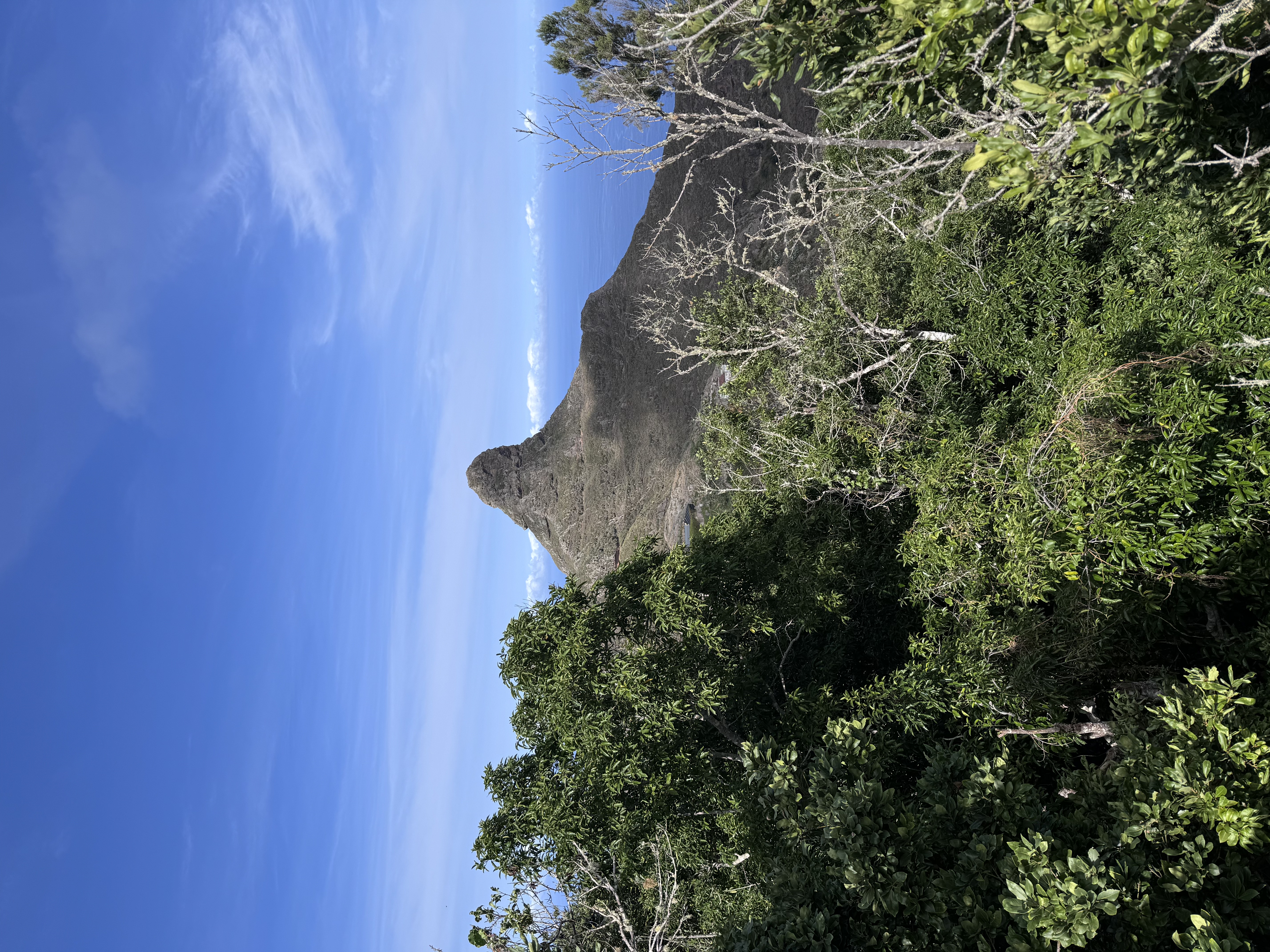
Hiking in the Parque Rural de Anaga
Planning your perfect Tenerife trip
How long to stay?
Six nights is the sweet spot for experiencing Tenerife without feeling rushed. This gives you time to explore both the North and South, hike Teide, enjoy the beaches, and truly soak in the island's culture.
Extend your adventure: Multi-island & stopover options
Tenerife pairs beautifully with the other Canary Islands. Consider adding:
La Palma
Gran Canaria
Lanzarote
Any of the other seven Canary Islands
Maximize your transatlantic flight with these incredible stopover options:
Madrid stopover (via Iberia): Explore Spain's vibrant capital for a few days
Lisbon Stopover (via TAP Portugal): Experience Portugal's charming coastal city
Atlantic island hopping: Combine the Azores, Madeira, and Tenerife for the ultimate island adventure
Each of these options adds minimal cost to your airfare while giving you two or three destinations in one trip!
Need to know
Getting to Tenerife from the USA
Tenerife has two airports, making it accessible year-round.
Tenerife North Airport (TFN): Primarily domestic flights
Madrid: 2.5 hours
Barcelona: 3 hours
Also connects through Bilbao, Sevilla, and Málaga
Tenerife South Airport (TFS): International hub connected to over 150 European airports with direct flights from major cities:
Madrid (Iberia Express): 2.5 hours
Lisbon (TAP): 2 hours, 17 minutes
Barcelona (Vueling): 3 hours
Paris (Transavia/Air France): 4 hours, 20 minutes
London Heathrow (British Airways) or Gatwick: 4.5 hours
Berlin (Eurowings/Lufthansa): 5 hours, 20 minutes
Reykjavik (Icelandair): 5 hours, 25 minutes
Pro tip: Most US travelers will connect through Madrid, Lisbon, or London for the easiest access.
Ready to discover Tenerife?
Whether you're drawn to volcanic landscapes, authentic culture, world-class hiking, or simply escaping to year-round sunshine, Tenerife delivers an experience that's both accessible and extraordinary. It's the kind of place that surprises you—less touristy than you'd expect, more authentic than you'd imagine, and absolutely worth the journey across the Atlantic.
For more inspiration and insider recommendations, visit our Spain page.


Travel Advisor
Amanda Barrett

Amanda Barrett

Get in touch with Amanda Barrett
Did you like this guide? Reach out to customize and book your own experience. Or, just to chat about travel in general.