


Curator’s statement
What comes to mind when you think of Dubai? For many, the name evokes images of opulence, extravagance, and architectural marvels that stretch the imagination. On my first visit this past June, I discovered a city that not only lives up to its glittering reputation but also defies it in surprising ways. Beyond the iconic skyline and luxury shopping, Dubai reveals itself as a destination where even the value-conscious traveler is well-cared for, offering audacious design, rich cultural encounters, and a hospitality scene that feels both ambitious and welcoming.
The Fora Difference
Book with Journey Goal to access exclusive perks and experiences on your trip.

Killer perks
Free upgrades, spa credits and more—we got you

Personalized recs
Customized travel planning for your style

Insider knowledge
Expert advice from people who’ve actually been there
Where to stay in Dubai
Unlock perks by contacting Journey Goal to book your trip.
If you’re planning a trip to Dubai, you’ll likely run into a few place names and terms that can be a little confusing at first. Here’s a quick cheat sheet to help you get started:
United Arab Emirates (UAE): Dubai is one of seven emirates that make up the United Arab Emirates (UAE), each governed by its own ruler. Abu Dhabi is the capital and the largest emirate by land area and oil wealth, while Dubai is the most cosmopolitan and internationally recognized, known for its skyscrapers, innovation, and tourism appeal.
Burj = tower
Burj Khalifa: The world’s tallest building and Dubai’s most iconic structure.
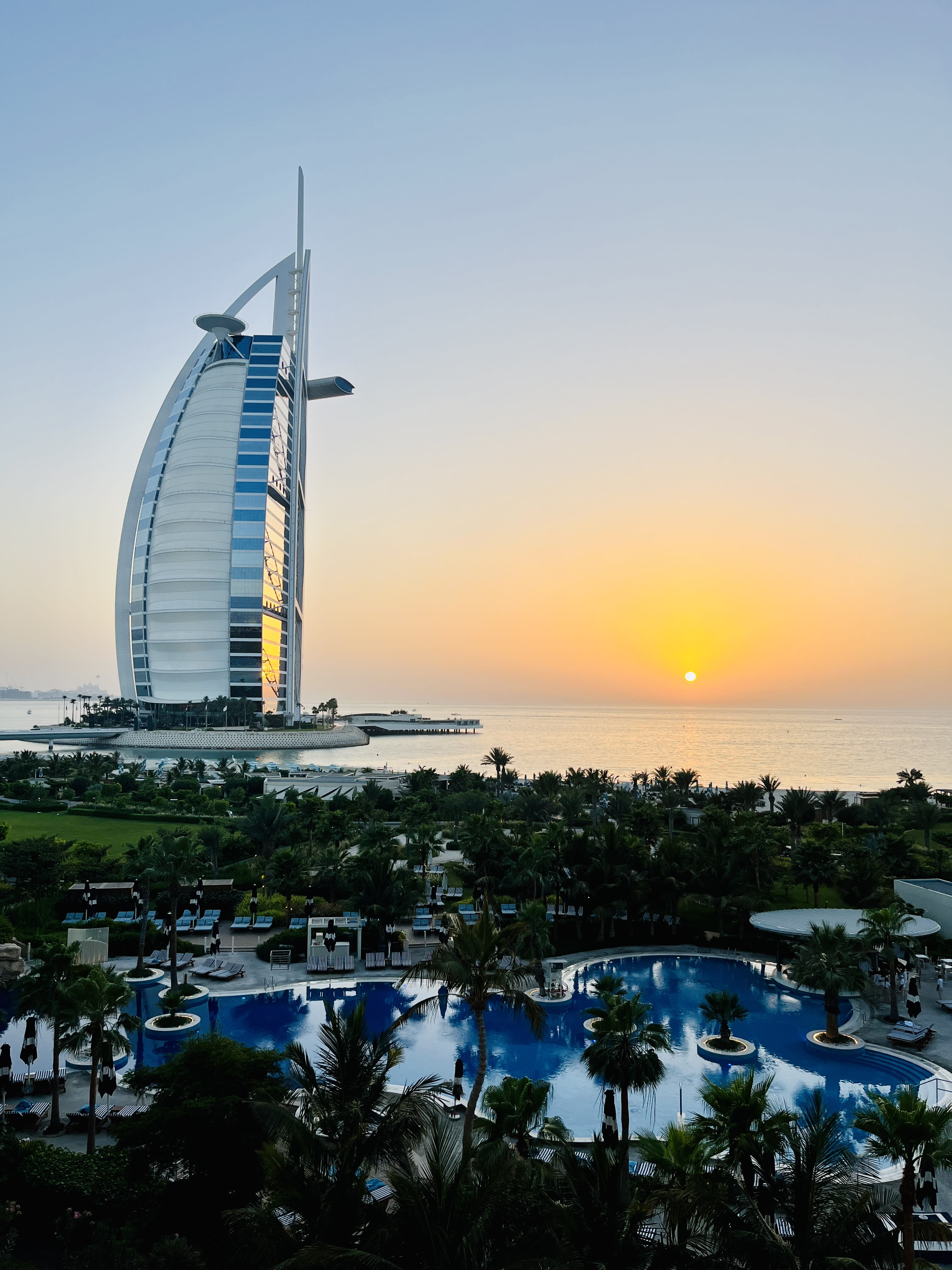
Burj Al Arab: The sail-shaped hotel on its own island. Famously luxurious and frequently Instagrammed.
Jumeirah: Can refer to either the Jumeirah beachside neighborhood or the luxury Jumeirah hotel group owned by Dubai’s ruler, Sheikh Mohammed bin Rashid Al Maktoum.
Souk=a traditional marketplace: The historic gold, spice, and perfume souks are clustered together in Deira and can be accessed on foot via Old Baladiya Street and Sikkat Al Khail Road, making it easy to explore them all in one visit.
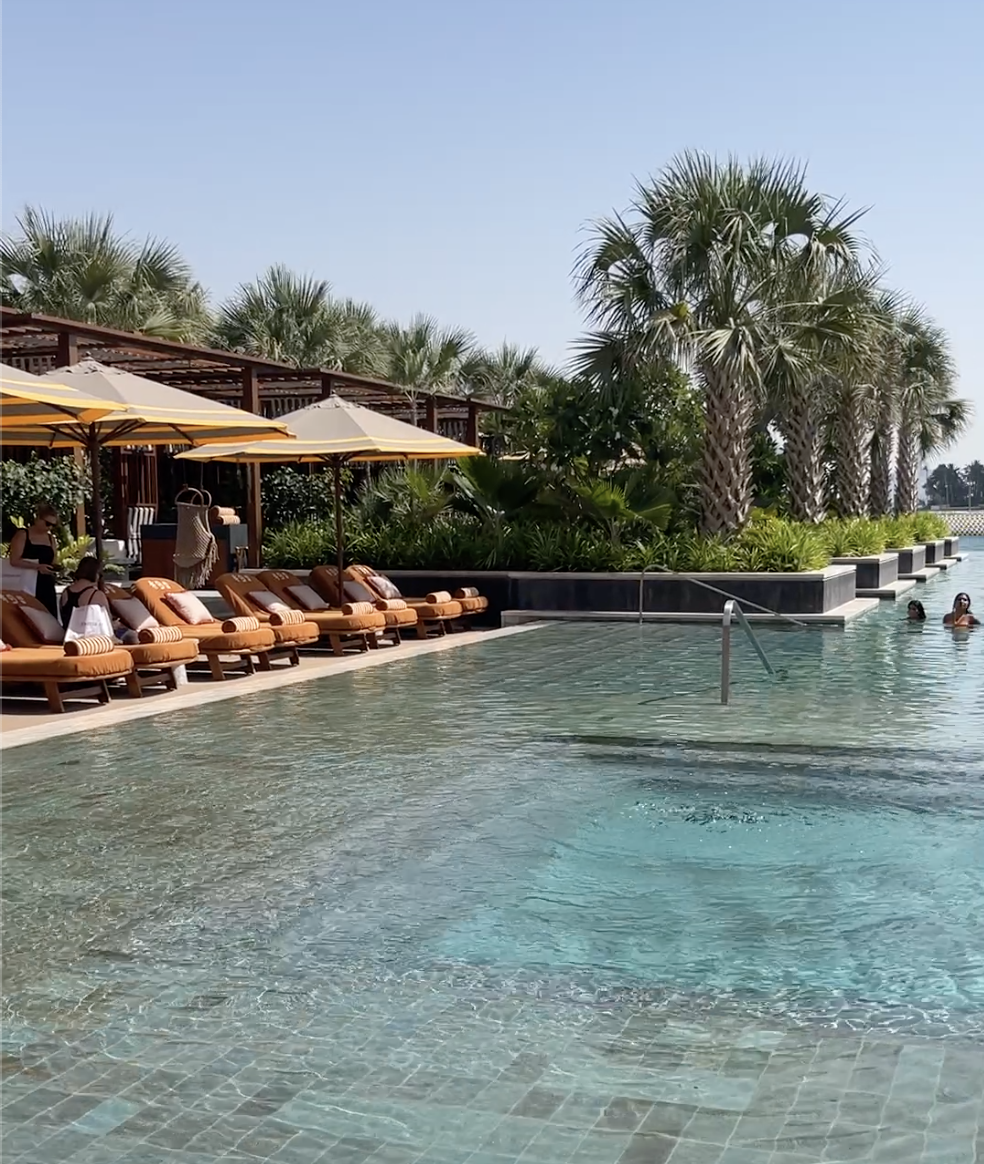
Iliana Pool Club at the Marsa Al Arab
Where to go for luxury
Because the Jumeirah hotel group is ultimately owned by Dubai’s ruler, you can bet he chose the most spectacular stretch of coastline for his flagship properties. The Burj Al Arab’s sail-like silhouette anchors a trio of beachfront resorts where every room offers an ocean view, and together the hotels’ designs symbolize the Gulf. The family-friendly Jumeirah Beach Hotel is shaped like a breaking wave, while the newly opened Marsa Al Arab draws inspiration from a sleek super yacht.
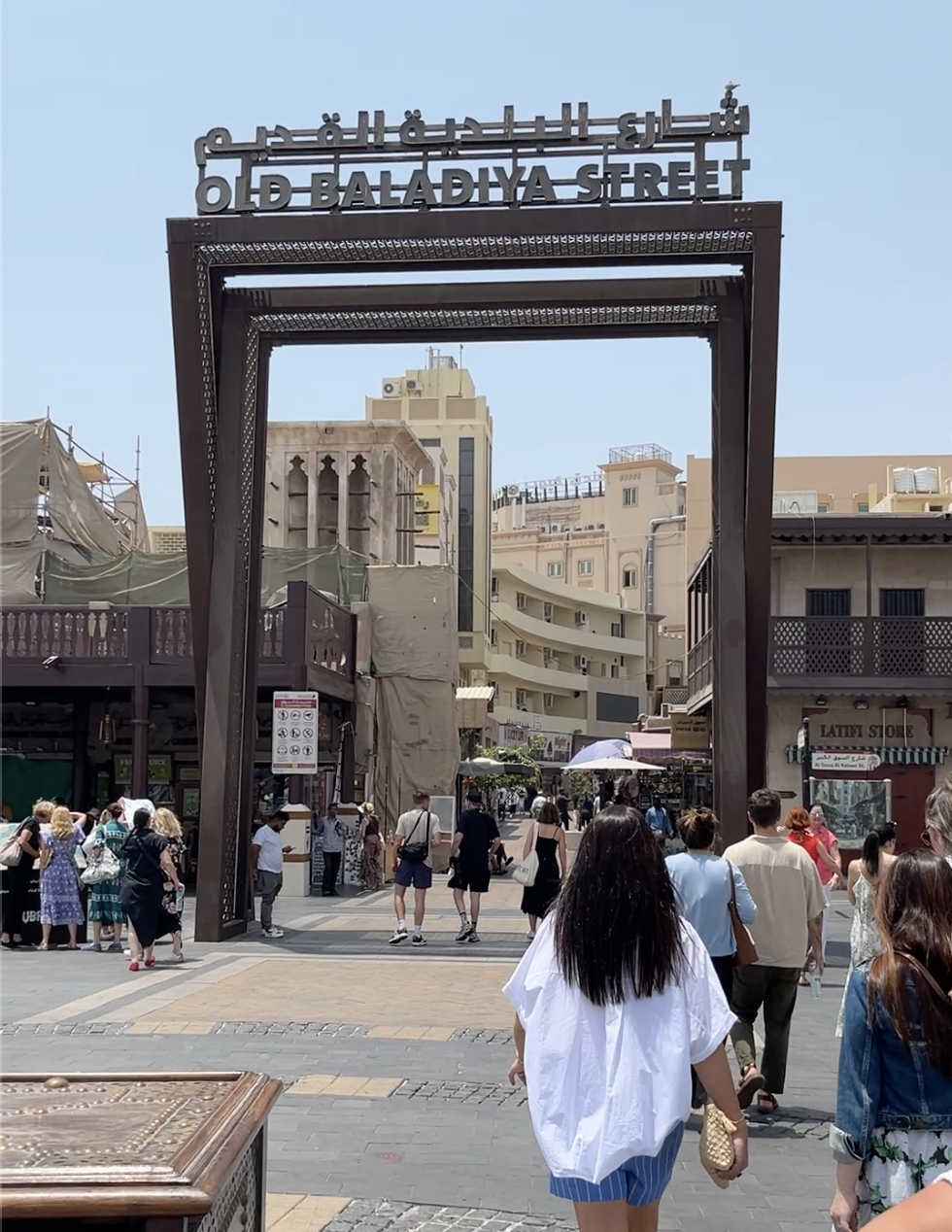
It’s only a short walk from the “abra” (traditional wood boat) port to the souks.
Just next door, the sprawling Madinat Jumeirah resort complex adds another four waterfront hotels—including one with villas connected by tranquil canals—and its own souk filled with restaurants, boutiques, and Arabian charm.
Each Jumeirah resort has its own private beach and pool areas reserved exclusively for its guests. However, if you’re staying at any of these properties, complimentary golf carts can shuttle you between them, giving you access to a wide range of dining, spa, and retail experiences across the entire collection. The Talise Spa at Marsa Al Arab offers signature treatments and advanced wellness therapies, some of which incorporate cutting-edge technologies like cryotherapy and hyperbaric oxygen chambers.
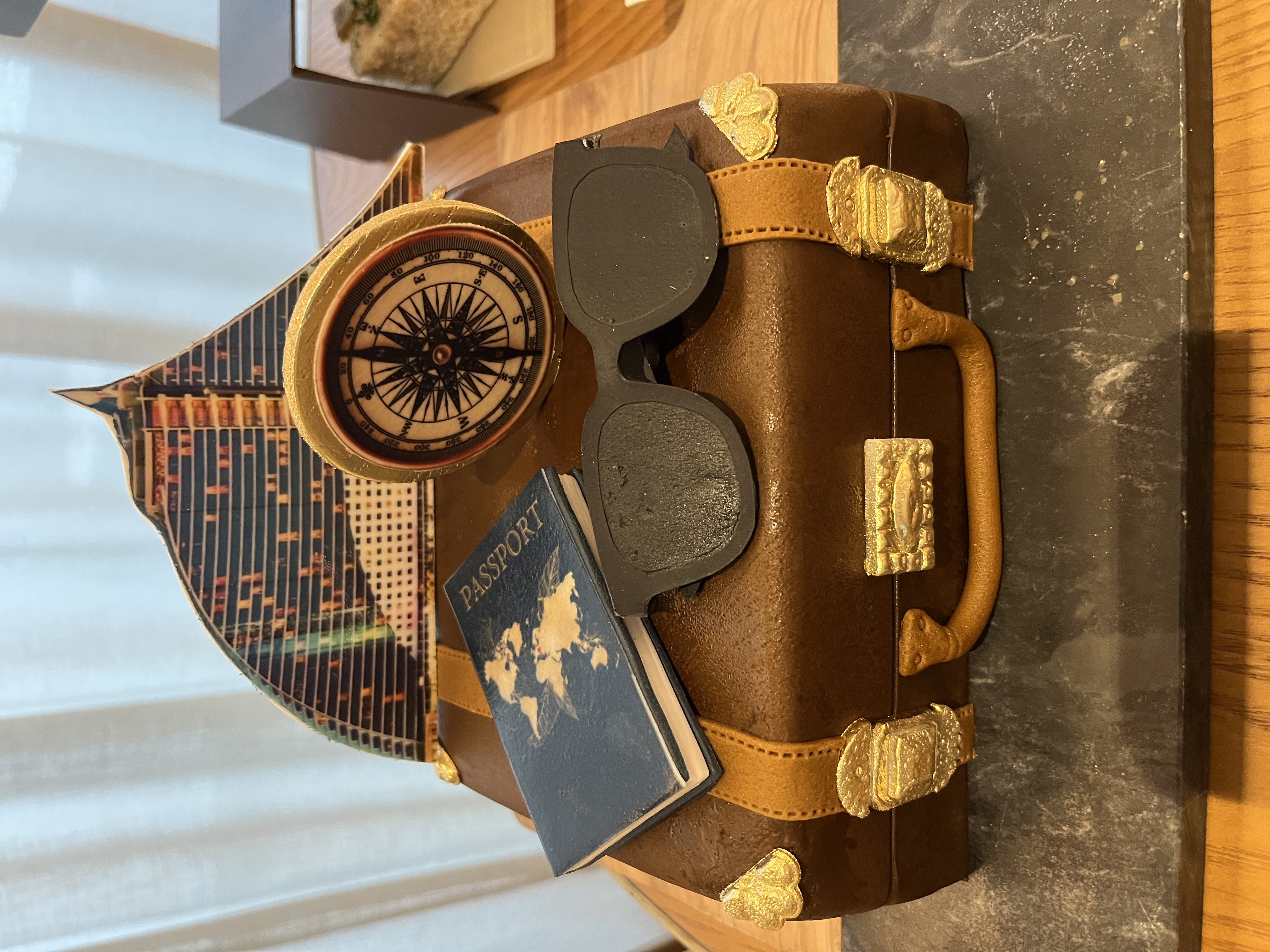
A cake with the hotel atop in chocolate. This is part of my room welcome at the Jumeirah Beach Hotel.
A scenic beachside running and walking track also connects the Jumeirah properties, offering ocean views and an inviting way to explore the shoreline on foot. I never saw this because it was so hot outside in June! But during the winter months, highs are only in the 70s.
While I didn’t visit any properties on Palm Jumeirah, this manmade resort island is home to luxury destinations like Atlantis The Royal and One&Only The Palm.
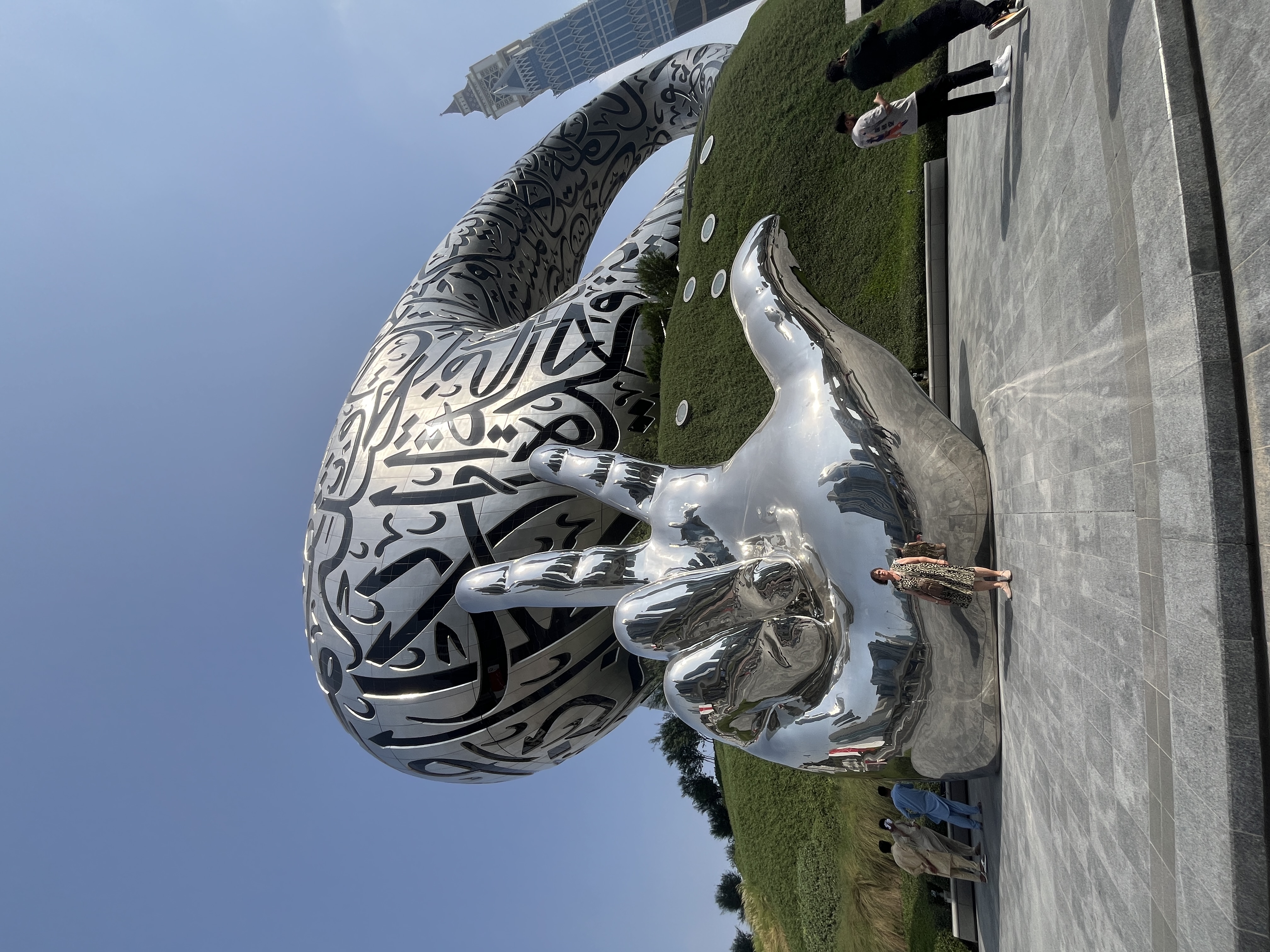
Museum of the Future
Shopping and sights
Downtown Dubai is the epicenter of architectural drama and retail therapy. Here, you’ll find sky-high views from the Burj Khalifa, sensory overload at Dubai Mall, and the nightly spectacle of the Dubai Fountain show. Many area hotels offer complimentary shuttles to the mall and major attractions, and getting around is easy—taxis, Uber, and the Dubai Metro are all safe and efficient.
I missed out on spending time here during my last (very compressed) Dubai itinerary, so I plan to make up for it on my next visit in February.
What I did manage to see was the nearby Museum of the Future. The exhibits made for a fun indoor escape on a sweltering summer day—but it was the building itself that truly wowed me. Fun fact: the architect, Shaun Killa, also designed the Marsa Al Arab hotel. I was lucky enough to hear him speak at a Fora retreat.
Proximity for travel
Jumeirah has a Creekside hotel that is less than a 10 min drive from the Dubai International Airport (DXB) and surprisingly affordable. I paid less than $100 for a night here (mind you, this is an off-season rate)! After a late-arriving international flight, all I wanted was something simple and economical before transferring to my retreat’s beach hotel. The location was convenient, too: I walked to a nearby pharmacy and grocery store to pick up a few essentials, and had a delicious dinner around the corner at Al Hallab Restaurant & Sweets, a fantastic local Lebanese spot. Irish Village and Century Village (different global cuisine venues) are also a few minutes walk away.
I couldn’t believe how far my money went here! While the furnishings aren’t luxurious, my room was very spacious. The service was warm and helpful, the included buffet breakfast spread was fantastic and there was a good-sized pool for families. While I didn’t have time to try out the hotel spa, I met a local couple who said the therapists (mostly from Bali and Thailand) are wonderful and they’ve been coming there every week for five years!
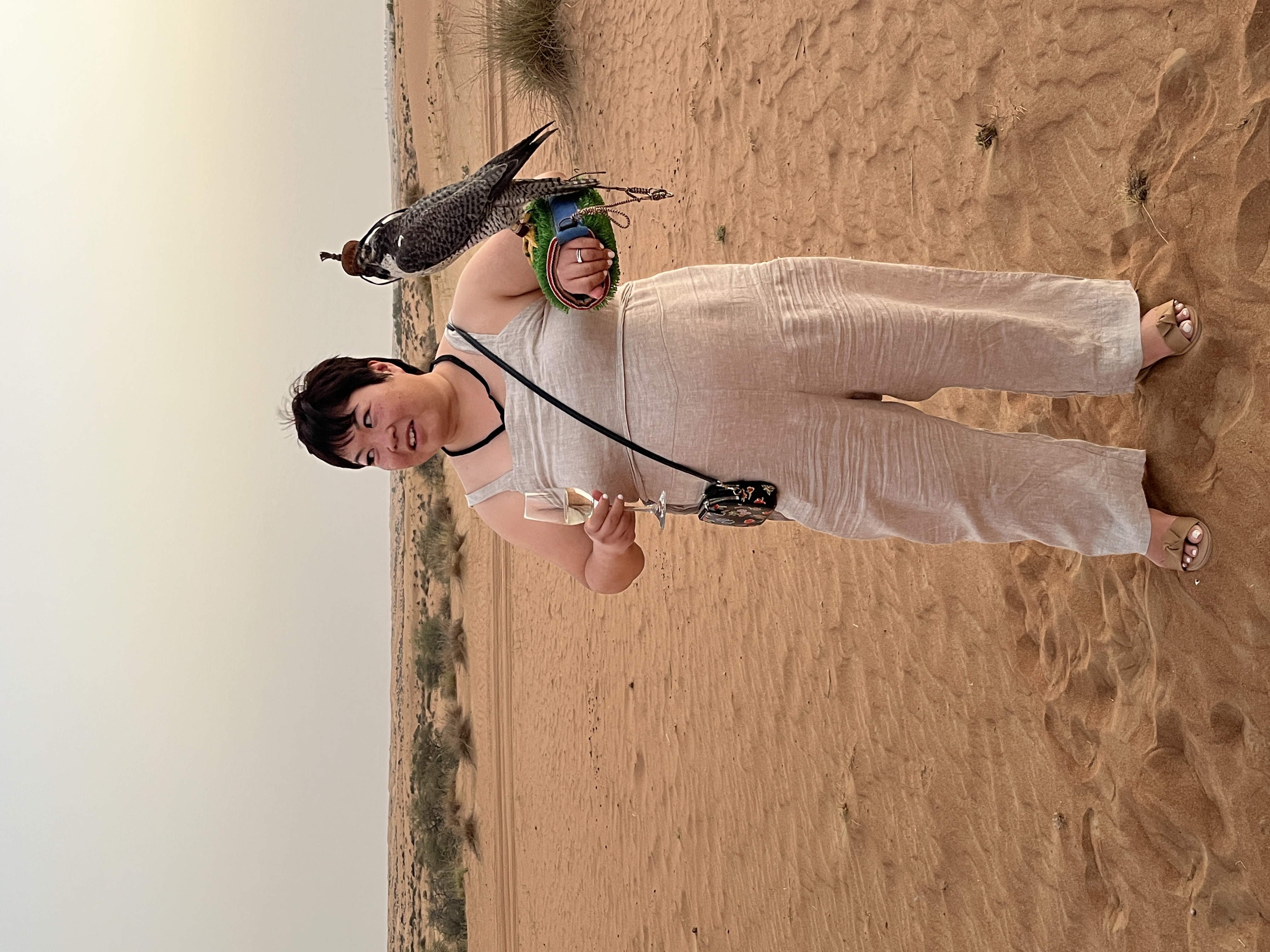
At a Bab Al Shams sundowner: a glass of champagne for one hand, a falcon for the other, as one does.
Arabian Nights desert fantasy
If you’re willing to drive about 45 minutes from Dubai’s city center, you can stay at Bab Al Shams, a Rare Finds Desert Resort set along the edge of the Al Marmoom Desert Conservation Reserve. I visited this property during my Dubai familiarization trip and loved it for its evocative Arabian ambiance.
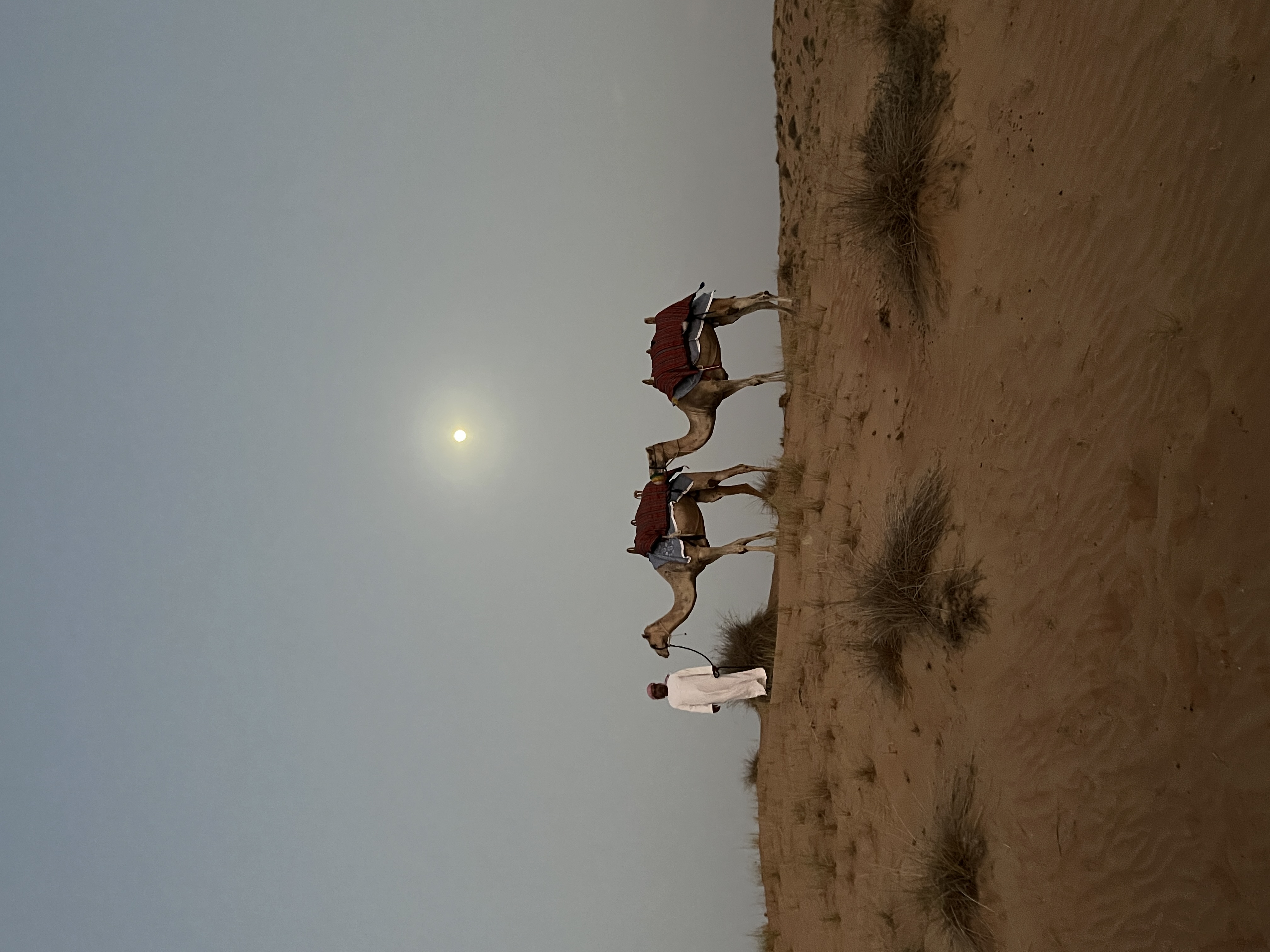
Embrace the desert landscape with activities like dune bashing, camel rides, and a classic sundowner—a sunset drink tradition (British in origin, not a dementia reference!). As you explore the grounds, you’re likely to spot endangered Arabian oryx and sand gazelles roaming the area.
And since you're already on the road, why not make a day trip to the breathtaking Sheikh Zayed Grand Mosque in Abu Dhabi? This gleaming white marble masterpiece features stunning floral mosaics reminiscent of the Taj Mahal. Opting for the VIP tour grants you access to the main prayer hall, where you’ll walk barefoot across the world’s largest handmade carpet and gaze up at massive crystal-and-gold chandeliers.
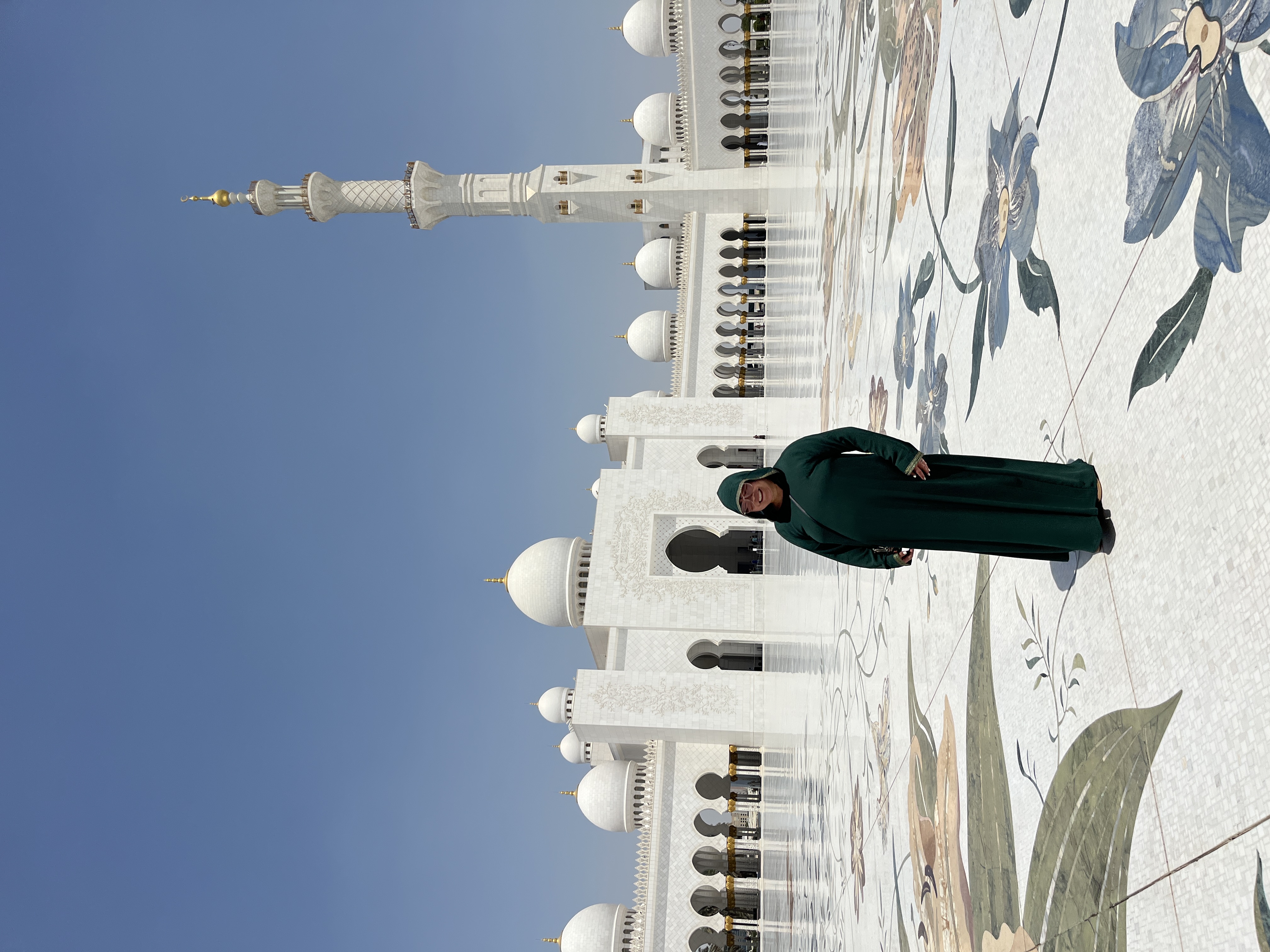
Sheikh Zayed Grand Mosque in Abu Dhabi
Ladies, take note: the mosque enforces a strict dress code—head coverings (scarf or hood), long sleeves, and long pants or a full-length dress are required. I learned that even a shadow of my arm showing through white fabric was considered unacceptable. Thankfully, there’s a small shopping area next to the welcome center where I was able to purchase an abaya on the spot.
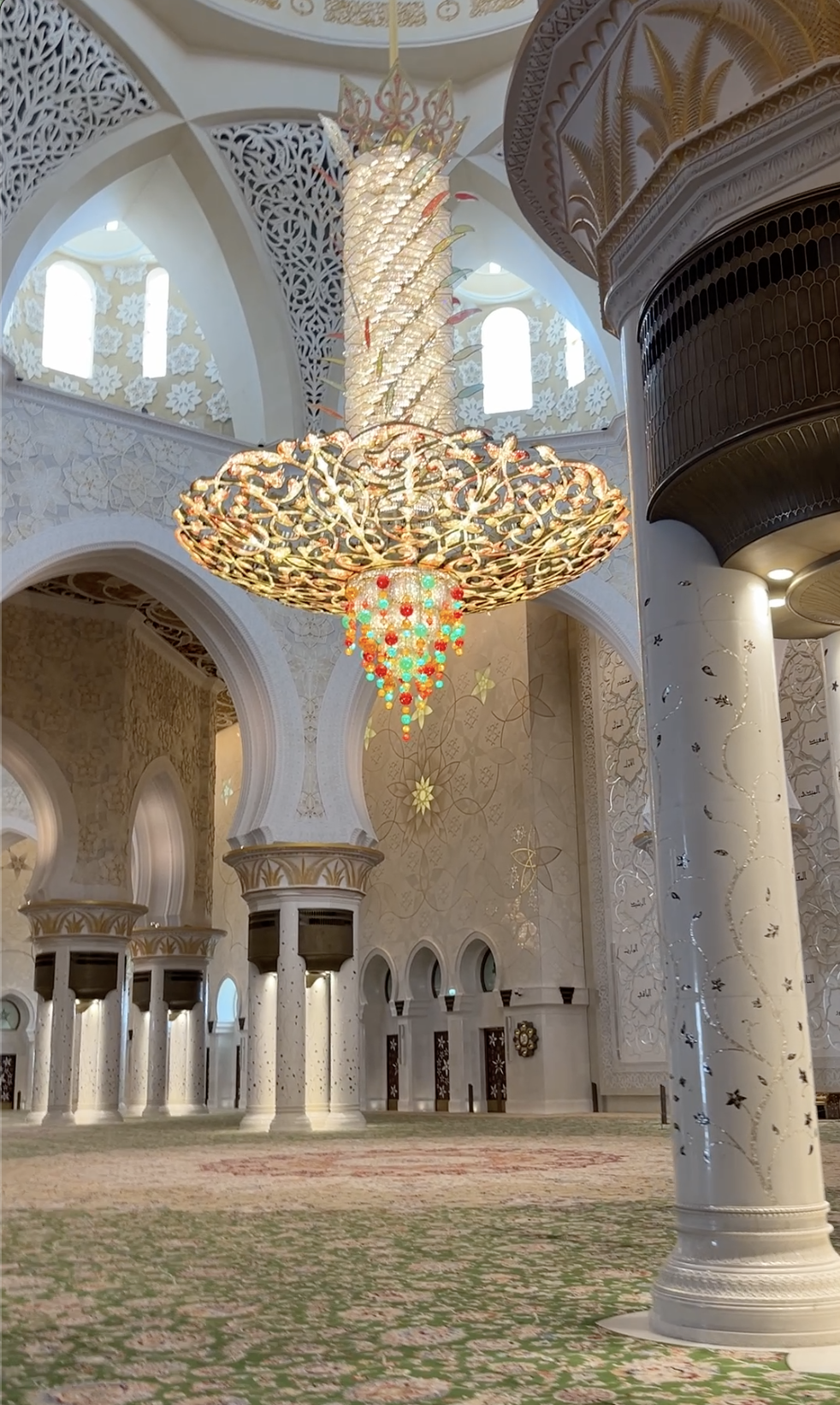
Inside the Grand Mosque
Need to know
Myth-busting
Is Dubai Unsafe? Dubai is not just “generally” safe, but remarkably so. I’ve felt more secure walking alone at night in Dubai than in many major cities around the world. Crime rates are low, and local laws are strict on issues like theft or harassment, which contributes to the sense of safety. That said, common sense still applies: don’t leave your bag unattended in a mall or flash valuables unnecessarily. But overall, Dubai’s safety record is a huge plus for solo travelers, families, and first-timers alike.
Is Dubai Expensive? It can be—but it doesn’t have to be. Yes, there are $25 cappuccinos with gold leaf and $1,500+/night underwater suites, but you’ll also find clean, stylish hotels for $100-300/night (depending on the season), and delicious meals for under $20 at local spots. Dubai offers extremes, but it’s not just for the ultra-rich. You can balance a trip with a combo of high-low experiences: enjoying a luxury spa treatment one day, and the next day taking a less than $1 abra boat ride across the creek to bargain for spices.
Is Dubai Unfriendly to Other Cultures and Lifestyles? Quite the opposite. Dubai is one of the most multicultural places I’ve ever visited—expats make up nearly 90% of the population, and English is widely spoken. While the UAE is a Muslim country with conservative roots, visitors of all backgrounds are welcomed as long as they’re respectful. You can wear sleeveless tops and swimsuits at beach resorts without issue. And though I worried I might not find great Asian food in the Middle East, I ended up eating the best Thai shrimp curry of my life—from room service, no less! That pretty much sums up Dubai: full of surprises, often where you least expect them.
When it comes to LGBTQ+ travelers, Dubai’s spirit of hospitality and global outlook shine through with all being welcome. However note that public displays of affection—regardless of orientation—are generally frowned upon. I’ve found it to be a place where discretion and mutual respect go a long way.
Listening to the excellent audio programming on my Emirates flight, I learned the city is actively working to become more inclusive: Dubai has officially gained recognition as the first Certified Autism Destination™ in the Eastern Hemisphere. Initiatives include staff training, sensory-sensitive spaces, and accessible attractions. It’s one more way Dubai is aiming to make all kinds of travelers feel seen and supported.
Ready to go? When should you go?
Dubai is a desert city, so timing matters. The best time to visit is from November to March, when temperatures are comfortably warm and perfect for rooftop dinners, beach days, and exploring the city without melting. This is also peak season, so book early and brace for crowds—especially around major events.
I went in June and while the crowds were less and rooms were much more affordable, the heat and humidity were intense. But if you’re mostly into indoor attractions like shopping, spas, and dining—or plan to spend your time poolside—off-season deals can make it worthwhile.
For more travel inspiration and insider recommendations, check out our Dubai page.


Travel Advisor
Journey Goal


Ruth Walker
Get in touch with Journey Goal
Did you like this guide? Reach out to customize and book your own experience. Or, just to chat about travel in general.