

Curator’s statement
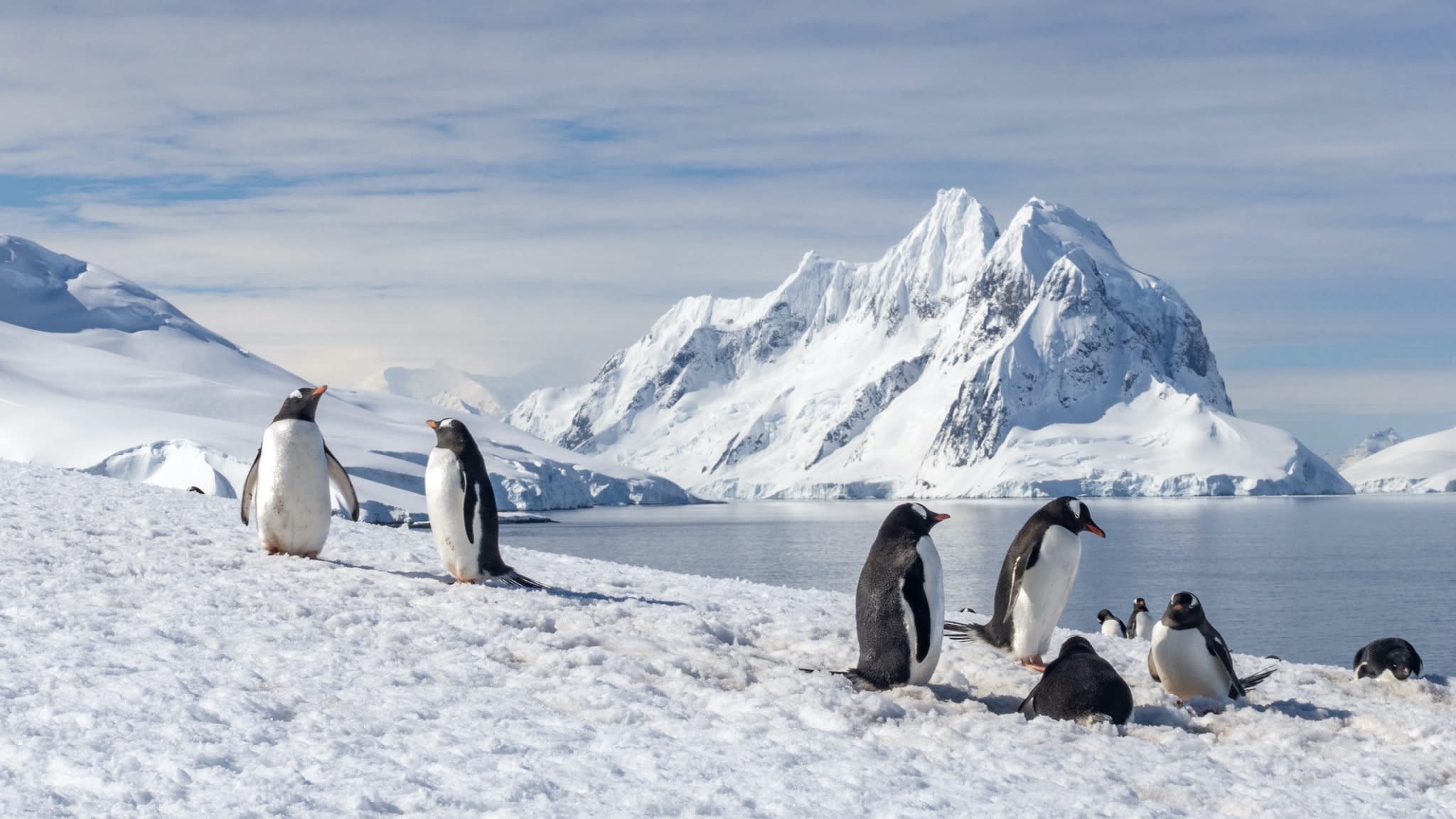
Antarctica is a once-in-a-lifetime journey that redefines what travel can be. It’s a place of staggering beauty and silence—where ice, sea, and sky meet in a way that humbles and transforms you. Standing on the edge of the world, surrounded by glaciers, penguins, and endless white horizons, offers a rare sense of perspective and awe. It’s not just a destination—it’s an awakening to the power of nature, the fragility of our planet, and the pure joy of discovery.
The Fora Difference
Book with RB Travel Collective to access exclusive perks and experiences on your trip.

Killer perks
Free upgrades, spa credits and more—we got you

Personalized recs
Customized travel planning for your style

Insider knowledge
Expert advice from people who’ve actually been there
Where to stay
Unlock perks by contacting RB Travel Collective to book your trip.
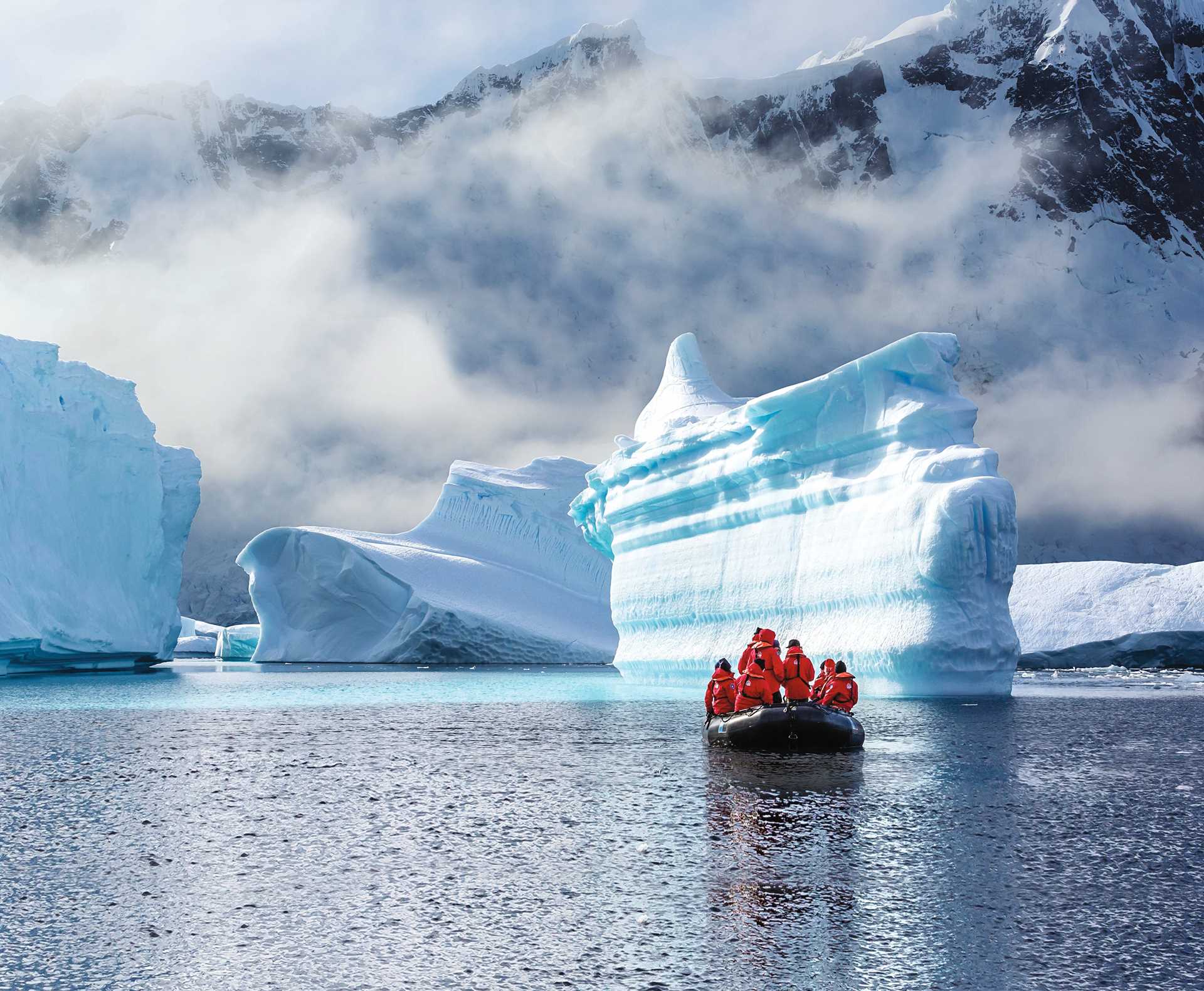
Photo Credit: David Cothran and Michael S. Nolan
A guide to Antarctica
For most of us, Antarctica sits quietly at the edge of the map-out of sight, out of mind. The White Continent feels like a distant dream, hidden in plain view until, one day, it calls. What begins as a fleeting, radical thought takes root over time, evolving from imagination into a powerful sense of possibility.
Whether you’ve just opened your heart to the allure of polar travel or are preparing to embark on the journey of a lifetime, our Antarctica travel guide shares everything you need to know-from expert insights and curated itineraries to thoughtful packing tips and sample budgets.
Can I travel to Antarctica?
What was once an unforgiving expedition through ice, snow, and perilous seas is now just a flight or voyage away-proof that, yes, you can travel to Antarctica.
For most of human history, the White Continent lay beyond reach-isolated at the bottom of the world, sealed in ice, and untouched for millennia. Yet even in antiquity, Greek philosophers speculated about a great southern land, a mysterious balance to the known world above.
Modern exploration began to open the door in the mid-20th century. In January 1958, the first tourists arrived by ship, and by 1966, Lars-Eric Lindblad had pioneered the concept of expedition cruising. By the 1970s, a defined Antarctic cruise season had emerged, setting the stage for a new era of adventure. Today, interest continues to soar with more than 100,000 travelers setting foot on the world’s most remote continent.
How do I travel to Antarctica?
Traveling by ship remains the original and most reliable way to reach Antarctica. Nearly all visitors, about 99%, arrive by cruise, tracing the same legendary routes once navigated by explorers. A small number choose to fly, while others opt for a hybrid fly-cruise journey—flying directly from southern Chile to meet their vessel on the Antarctic Peninsula, skipping the Drake Passage while still experiencing the majesty of the White Continent by sea.
Cruising
Expedition cruises: the quintessential Antarctic experience:
Crossing the Drake Passage aboard a polar-adapted vessel is the ultimate way to experience Antarctica. Following in the wake of legendary explorers, you’ll navigate stormy seas and unpredictable weather to reach the remote, pristine wilderness at the bottom of the globe. Modern vessels make this journey far safer-and far more comfortable-than it was for early expeditioners.
Today, nearly 50 ships sail to Antarctica each year, ranging from large passenger vessels to intimate expedition ships. Our Antarctica travel guide highlights the preferred vessels curated by Extraordinary Journeys.
Small ships vs. large ships
Ships of all sizes journey to Antarctica, but if your goal includes shore landings, a small ship-typically 200 passengers or fewer-is the superior choice. Antarctic regulations limit each landing party to 100 guests, so smaller vessels allow passengers to disembark quickly and maximize on-shore exploration. On larger ships, passengers are divided into multiple large groups, often resulting in long waits-or no landing at all. In the 2022-2023 season, 31% of cruise visitors never left their ship.
Small ships also provide a more intimate atmosphere, higher guide-to-guest ratios, and access to narrow fjords, channels, and secluded bays that larger ships cannot reach. For an extraordinary Antarctic experience, small ship expedition cruises are the way to go.
Ship amenities
Modern polar expedition ships combine rugged capability with refined comfort. Staterooms are spacious and well-appointed, and common areas include cozy lounges, observation decks, libraries, gourmet dining rooms, dry saunas, and Jacuzzis. Some vessels even feature helicopter pads for flightseeing excursions.
Crossing the Drake Passage takes roughly two full days each way, so expect four days at sea on a standard Antarctic cruise. Use this time to get to know the crew, connect with fellow travelers, and deepen your understanding of Antarctica—from its wildlife and history to its breathtaking geography.
Fly-Cruising
On a fly-cruise, travelers depart from Chilean Patagonia and land directly on the Antarctic Peninsula, where they join their expedition ship.
Advantages of fly-cruising
The primary benefit is skipping the two-day (each way) crossing of the Drake Passage—a dramatic stretch where the Pacific and Atlantic Oceans collide, producing notoriously rough seas, famously dubbed the Drake Shake. Many travelers experience seasickness during this passage, which can make the journey challenging.
By contrast, the flight from Punta Arenas, Chile, to King George Island takes just three hours. Descending from cruising altitude, you’ll enjoy a rare, sweeping aerial view of Antarctica—a perspective few travelers experience.
Considerations and risks
Fly-cruising is not without its uncertainties. Polar weather is unpredictable, and up to 60% of flights can face delays, sometimes lasting an entire day, which can impact vacation plans. In rare cases (around 2%), flights may be unable to take off, potentially missing the ship rendezvous.
There are also experiential considerations. Many travelers view crossing the Drake Passage as a rite of passage-an opportunity to bond with fellow passengers and acclimate to the polar environment. Flying bypasses this shared journey and the context it provides, which some feel diminishes the full expedition experience.
For balance, consider a fly-and-sail option: fly to Antarctica and return by ship, allowing you to savor both the convenience of a flight and the tradition of the ocean crossing.
How long is a trip to Antarctica?
Expect the quickest Antarctica cruise vacation to take two weeks, door to door from the United States. This includes return travel to South America and a straightforward itinerary to the Antarctic Peninsula. Four of these days will be at sea, crossing the Drake Passage. If you’re not short on time, linger longer. After all, you’ve journeyed all the way to the bottom of the world; make the most of it.
Antarctic cruises—time on board:
Standard cruises: 9 or 10 days
Fly-cruises: 6 days
Cruises that cross the Antarctic Circle: 11-12 days
Cruises that add the Falkland Islands/South Georgia: 18-21 days
Pro tip: We highly recommend you arrive in your departure city at least one day early. Antarctica luxury travel is an investment; don’t let flight delays jeopardize your entire experience. In addition, extra time in port means you’ll feel less rushed, more refreshed, and able to explore some of the southern most cities in the world.
Need to know
Where do I start the journey?
Even though Antarctica is more accessible than ever, reaching the continent is still an epic adventure. The vast majority of trips depart from South America because it is the shortest distance from Antarctica. Roughly 500 miles of ocean separate Cape Horn from the Antarctic Peninsula.
There are two primary gateways for Antarctica tours:
Ushuaia, Argentina:
Thanks to its southern location on Tierra del Fuego’s Isla Grande, Ushuaia is one of the main embarkation points for Antarctica luxury travel. Backed by snowy mountains and fronted by the Beagle Channel, the city’s natural beauty makes for a scenic start. Travelers who stay only one night will miss out on the town’s hardy, land ’s-end charm, and outdoor pursuits across enchanting Patagonian terrain. Go hiking among subantarctic forests in Tierra del Fuego National Park, hang out with penguins at Isla Martillo, and visit a historic estancia. No need to take a photo with the famous “End of the World” sign-your journey is about to take you much further south
2. Punta Arenas, Chile
Located in Chilean Patagonia, Punta Arenas is the point of departure for Antarctic fly-cruises. While the town itself offers plenty of diversions-wildlife-watching boat tours to see whales and penguins, sipping craft beer at the southernmost brewery in the world, diving into Patagonian history at museums-one of the best reasons to choose Punta Arenas is its proximity to Torres del Paine National Park. One of Patagonia’s top destinations, this gorgeous park boasts mountains, glaciers, and jewel-toned lakes. Just a four-hour drive from Punta Arenas, it makes luxury Chile tours the ideal pre- or post-cruise add-on.
Where to go in Antarctica
Despite the map showing a featureless white expanse, Antarctica is not an icy monolith. There are plenty of landmarks, wildlife colonies, geographical features, and research stations that make for worthy points of interest.
Antarctic Peninsula:
Extending from mainland Antarctica, the peninsula counts 208 visitor sites and includes the nearby Shetland Islands. A cruise around the wild Antarctic Peninsula includes visits to glaciated bays, channels, and landing sites. Fill days with whale watching, Zodiac safaris, hiking/walking, and optional activities such as camping, kayaking, or stand-up paddle-boarding.
The Antarctic Peninsula is included on all cruises, while the following can be considered add-ons.
Add-on Antarctica cruise destinations:
Antarctic Circle: Some cruise itineraries venture a little further south along the peninsula to cross the Antarctic Circle, which lies at 66°33′ S. Alternatively, ships traveling with on-board helicopters may offer scenic flightseeing that passes the iconic latitude.
Falkland Islands: While not part of Antarctica, the Falkland Islands lie en route, and are commonly paired with South Georgia. (Make no mistake, both feel more like rugged coastal Patagonia than icy Antarctica.) A true bird paradise, enjoy coastal hiking along hardy landscapes and visit Port Stanley for a taste of Britain in one of the world’s most remote settlements.
South Georgia: Travel to the historic island to meet its population of elephant seals and breeding king penguins (~250,000!), visit the burial site of Ernest Shackleton, and then tour Grytviken, a former whaling station.
Snow Hill Island: Rarely visited and sometimes without success due to ice, navigate the tabular glaciers of the Weddell Sea (Iceberg Alley) and then visit a massive 10,000-member colony of emperor penguins.
Caveat: A polar journey is unlike any traditional vacation—there’s no fixed itinerary or neatly mapped route. In Antarctica, weather and sea conditions dictate the course, often changing by the hour. Because of this, expedition itineraries remain intentionally flexible, rarely listing specific landing sites or daily details. Instead of comparing set schedules, travelers choose their voyage based on timing, vessel, and operator—trusting the journey to unfold as nature allows.
How much does a trip to Antarctica cost?
Expect an entry-level, luxury, small ship Antarctica cruise to start at $10,000 per person. For longer itineraries visiting the Falkland Islands or South Georgia, passage on more luxurious ships, and/or upgraded cabins, prices ebb between $15,000 to $40,000+. For the best deal, book sooner rather than later to take advantage of early booking promotions. (Operators typically release departure dates two years in advance.)
What is the best time to travel to Antarctica?
For most of the year, Antarctica remains isolated from the rest of the world—its vast sea ice and fierce winter conditions making access nearly impossible. Only during the brief austral summer does the White Continent open its doors to travelers. The expedition season runs from November through April, each month offering distinct natural wonders and wildlife encounters.
November:
The start of the Antarctic cruising season. As the spring thaw begins, immense icebergs drift through the waterways and the landscape is at its most pristine-ideal for photographers. The sturdy ice pack also makes this an excellent time for camping experiences. Travelers may witness the charming courtship rituals of penguins. While some landing sites remain ice-locked, seasoned expedition teams skillfully adapt itineraries to reveal equally spectacular alternatives.
December to early February:
The height of summer brings nearly 24 hours of daylight, milder temperatures, and an explosion of wildlife activity. Penguin chicks hatch, seal pups lounge on the ice, and whales begin to arrive in greater numbers. It’s an extraordinary time for close-up wildlife viewing and vibrant photography.
March and April:
As summer wanes, daylight shortens and the crowds thin. Whales are at their most active, feeding before their migration north. The light softens into dramatic sunsets and golden reflections on the ice-a dream for photographers seeking a quieter, more atmospheric voyage.
What should I expect on an Antarctica trip?
Antarctica promises breathtaking scenery, remarkable wildlife, and a sense of discovery found nowhere else on Earth. But what does a typical day look like in such an extraordinary place? In this section of our guide, we explore what to expect from life on board and the unforgettable activities that await ashore.
Days at sea:
Once you’ve boarded and settled into your cabin, your ship will typically depart in the late afternoon. After navigating out of the Beagle Channel, your Drake Passage Crossing begins. (Unless your journey first visits the Falkland Islands and South Georgia.) The four days in transit (two there and two back) are put to good use with enriching presentations, dining, and socializing. The day will be anchored by your three main meals and highlight lectures on wildlife, history, glaciology, and geology delivered by polar experts. You’ll arrive in Antarctica with a greater understanding of the physical environment and animal, whale, and bird behavior and identification.
You’ll also want to get to know your crew and the other passengers. On-ship dining rooms are casual, with unassigned seating, so it’s easy to make fast friends with like-minded travelers.
Depending on your ship’s amenities, you might also:
Watch movies in a theater, work out in the fitness room or practice yoga, enjoy a spa treatment or a dry sauna session, socialize, read, or play board games in the lounge, peruse the on-ship boutique, and possibly visit the Bridge to meet the captain and/or officers
What should I pack for Antarctica?
Antarctic expedition ships are designed for adventure and comfort, equipped with mud rooms, personal gear lockers, and all the essentials—including parkas and durable rubber boots for shore excursions. (Many cruises even gift guests a take-home parka.)
When it comes to packing, think practical, warm, and weather-ready:
Clothing: Bring thermal base layers, warm fleece, waterproof outerwear, and casual attire for relaxing onboard. Expect temperatures between 30–45°F. No need for formalwear—jeans and a sweater fit in perfectly.
Protective accessories: Hats, gloves, sunglasses, high-SPF sunscreen, a balaclava, and lip balm are musts.
Gear: Don’t forget binoculars, a camera, chargers, and any necessary adapters.
Footwear: Pack one pair of comfortable, closed-toe shoes for onboard use—ideally something easy to slip on and off over thick socks. Expedition boots are provided (and carefully cleaned to protect the environment).
Pro tip: Tuck in a swimsuit—you may just be tempted by the ultimate brag-worthy experience: the polar plunge.
Visiting Antarctica tips
Choosing a small ship (200 guests or fewer) is the best way to visit Antarctica. Regulations dictate that only 100 passengers per vessel may depart the ship at a time. Traveling on a larger ship means waiting longer for your turn to enjoy excursions. To maximize the off-ship experience, Extraordinary Journeys works exclusively with small ships.
Give yourself at least one full day in-destination as a buffer before you embark; you really (really) don’t want to miss your ship.
Book 18–24 months out to secure the best promotions.
Travelers should pack a sense of adventure and a flexible attitude. Surrender to the rhythms of this wild place, and know that even if plans change, what’s around the corner is just as incredible and worthwhile.
Unless your cruise operator has a no-tipping policy, bring some cash to Antarctica.
After spending an intense 10-plus days getting to know your helpful and knowledgeable guides and crew, you’ll want to extend a gratuity.
For more inspiration and insider recommendations, visit our cruises page.


Travel Advisor
RB Travel Collective

Dusty Rodgers

Get in touch with RB Travel Collective
Did you like this guide? Reach out to customize and book your own experience. Or, just to chat about travel in general.