



Curator’s statement
My adult daughter and I have had the good fortune to travel extensively over the past decade since my retirement. When asked which adventure is my favorite, I cannot choose. Each is singularly outstanding and cherished, from hiking in New Zealand to tracking leopards in Africa to snorkeling with seals in the Galápagos. But 2024 was particularly extraordinary. Within seven months, we were at the furthest edges of Earth on our first polar expeditions to the Arctic, then to the Antarctic. In May, Regan and I cruised around Svalbard, Norway, well above the Arctic Circle, aboard Quark’s Ultramarine. From December 2024 to January 2025, we cruised around the Falklands, South Georgia, and Antarctica aboard Viking’s Octantis. Both featured magnificent ancient glaciers, towering snow-clad mountains, crackling sea ice, crystal waters, and wildlife thriving remarkably amid the harsh landscapes, largely unconcerned by us humans. With no pollution, lights, or crowds, the sense of serene solitude was profound. I would say these were once-in-a-lifetime trips…except we’re already planning a return. The polar regions completely captured our imaginations and hearts. Here’s how the Arctic and the Antarctic compare, in our view.
The Fora Difference
Book with Globetrotting Kirks to access exclusive perks and experiences on your trip.

Killer perks
Free upgrades, spa credits and more—we got you

Personalized recs
Customized travel planning for your style

Insider knowledge
Expert advice from people who’ve actually been there
Where to stay
Unlock perks by contacting Globetrotting Kirks to book your trip.
Getting there
In a nutshell: The best way to explore these regions is aboard expedition ships sailing from the far north or south.
The Arctic is an ocean, encompassing everything north of the Arctic Circle (66.5° north), including parts of Alaska, Canada, Greenland, and Scandinavia. We embarked at Longyearbyen, Norway, the northernmost inhabited town in the world, on the island of Spitsbergen in the Svalbard archipelago. We flew Orlando-Frankfurt-Oslo-Longyearbyen (roughly 22 hours in the air). Tourist period: April–September.
The Antarctic is an ice-covered continent, covering everything south of the line of latitude at 60° south. Our cruise embarked in Ushuaia, Argentina, and included the Falklands and South Georgia. We flew from Orlando-Panama City-Buenos Aires-Ushuaia (roughly 17 hours in the air), then sailed for two days to our first stop. Tourist period: October–March.
Expedition ships range in size from 8–500 passengers, from no-frills to ultra-luxury, with itineraries ranging from one to three weeks. Many of the top polar vessels travel to both the Arctic and Antarctica, with prices starting around $1,000 per person per day.
Edge for getting there goes to: It’s a tie.
Weather and seas
In a nutshell: Antarctica is colder because its average height is 7,500 feet, the highest of all continents. The Arctic is warmer because the sea ice stays at 28 degrees Fahrenheit.
During our travels, temperatures in both were around freezing, often accompanied by ferocious frigid winds. We had many sunny days in the Arctic, while Antarctica’s days were mostly overcast. It snowed a few times on both cruises.
The seas were largely smooth in the Arctic. The Antarctic was much rougher, starting with powerful waves in the South Atlantic from Ushuaia to the Falklands and continuing on and off through the Southern Ocean. But we got very lucky with an unusually calm Drake Passage on our way back to Ushuaia from Antarctica.
Edge for weather and seas goes to: the Arctic.
Landscapes
In a nutshell: Both are otherworldly spectacular, immense, and untouched, with amazing colors. Both are at risk from global warming, pollution, and commercial industries, including mining, fishing, and shipping.
Antarctica is almost entirely covered in ice; it has uniquely humongous ice shelves and skyscraper-sized tabular icebergs.
Most of the ice in the Arctic is frozen sea, both seasonal and multi-year (however, Greenland’s ice cap is the second-largest in the world after Antarctica). The Arctic has more diversity, with tundra, fjords, and rolling hills, as well as more plant life and signs of history and civilization. It also had numerous ice sheets during our May journey.
Edge for landscapes goes to: Antarctica.
Wildlife
In a nutshell: Both have numerous birds and whales. The Arctic has 270 polar bears, and Antarctica has nearly 12 million penguins.
The Arctic’s numerous land animals including walrus, reindeer, fox, and seals. But its star attraction is the polar bear.
It’s not true that there are more bears than people in Svalbard. There are about 270 polar bears versus 2,700 people in the archipelago, says the Norwegian Polar Institute, which conducted a census in 2015. The total of roughly 3,000 polar bears that’s often incorrectly cited is actually for the Barents Sea region. Globally, there may be 26,000 polar bears. There hasn’t been a coordinated survey since 2004, when the count was 22,000 to 24,000.
Arctic explorers tend to be close-knit, bound by a singular mission: to spot the elusive, solitary polar bear. Amid Svalbard’s 24,000 square miles (nearly the size of West Virginia) of snow and ice, it’s no easy task to find bears—some travelers never see any.
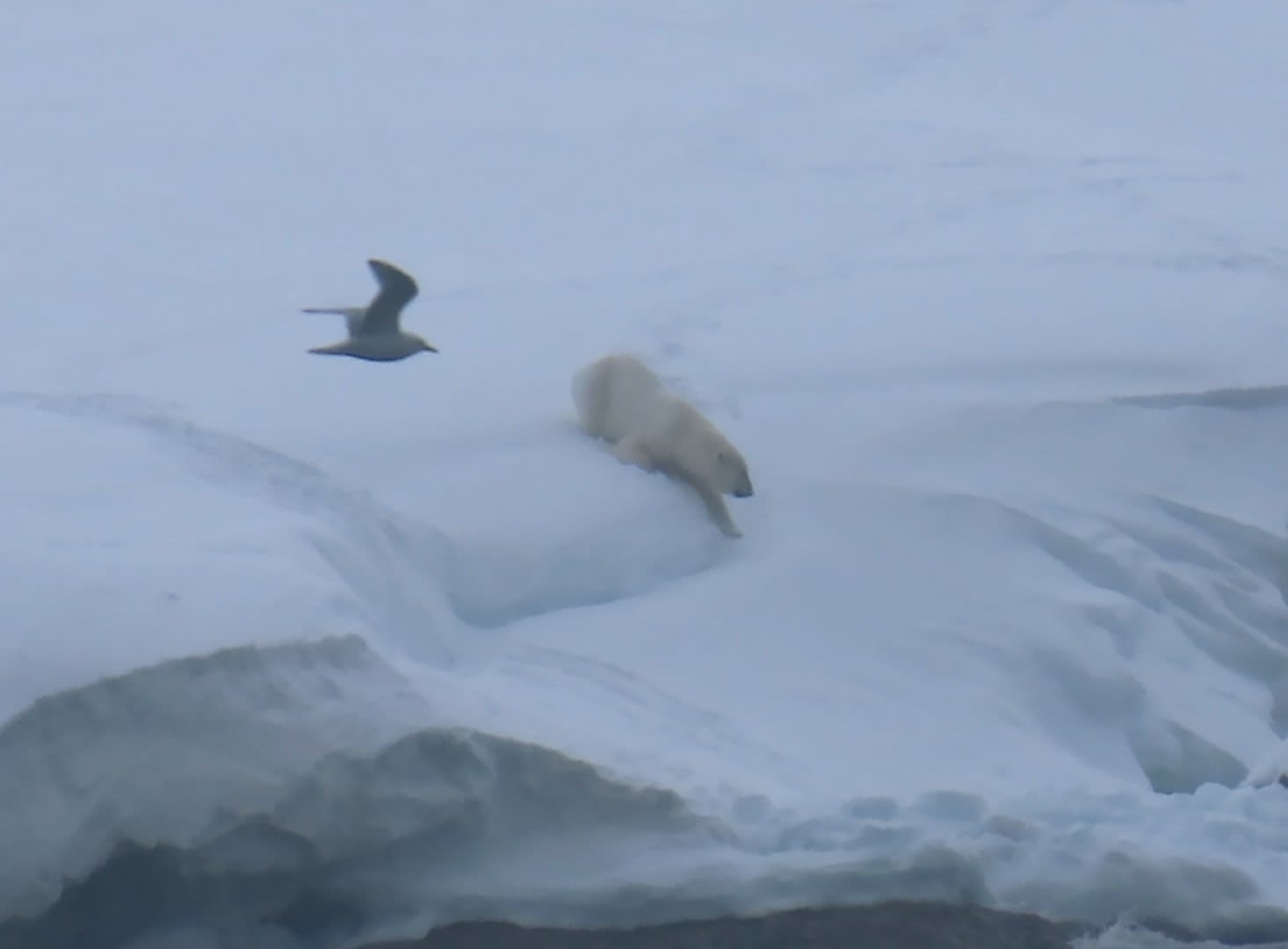
One of seven polar bears spotted in the Arctic around Svalbard, Norway. May 2024.
Cruising through fjords and around the craggy shores of Spitsbergen island, we saw seven “binocular bears” (bears in the distance—two were really just specks) and watched two for more than four hours. The hope was that one would stroll on ice toward our ship for a close encounter. Alas, this never happened.
Svalbard has long prohibited disturbing, luring, or pursuing polar bears unnecessarily. This year, more stringent restrictions were enacted, including new distance requirements for polar bears (and walruses and birds). During the peak months of March 1 to June 30, ships must stay 500 meters, or one-third of a mile away from polar bears. If a bear approaches, tour operators are to retreat. These rules apply to the 12 nautical miles around the Svalbard archipelago.
By comparison, Antarctica has no land animals (aside from an insect). But its unique balance of temperature, ice, and food (krill, mostly, and fish and squid) attract numerous birds and host huge penguin colonies, seals, and whales. The only predators here are leopard seals and orcas, so the wildlife is remarkably carefree.
Antarctica has about 5.8 million breeding pairs of penguins, the most anywhere. That includes its two exclusive penguins: about 240,000 Emperor breeding pairs (the largest penguin) and 4 million Adélie breeding pairs, according to the 2020 State Of Antarctic Penguins Report (SOAP). In nearby South Georgia, there are about 450,000 breeding pairs of king penguins, along with 5 million fur seals.
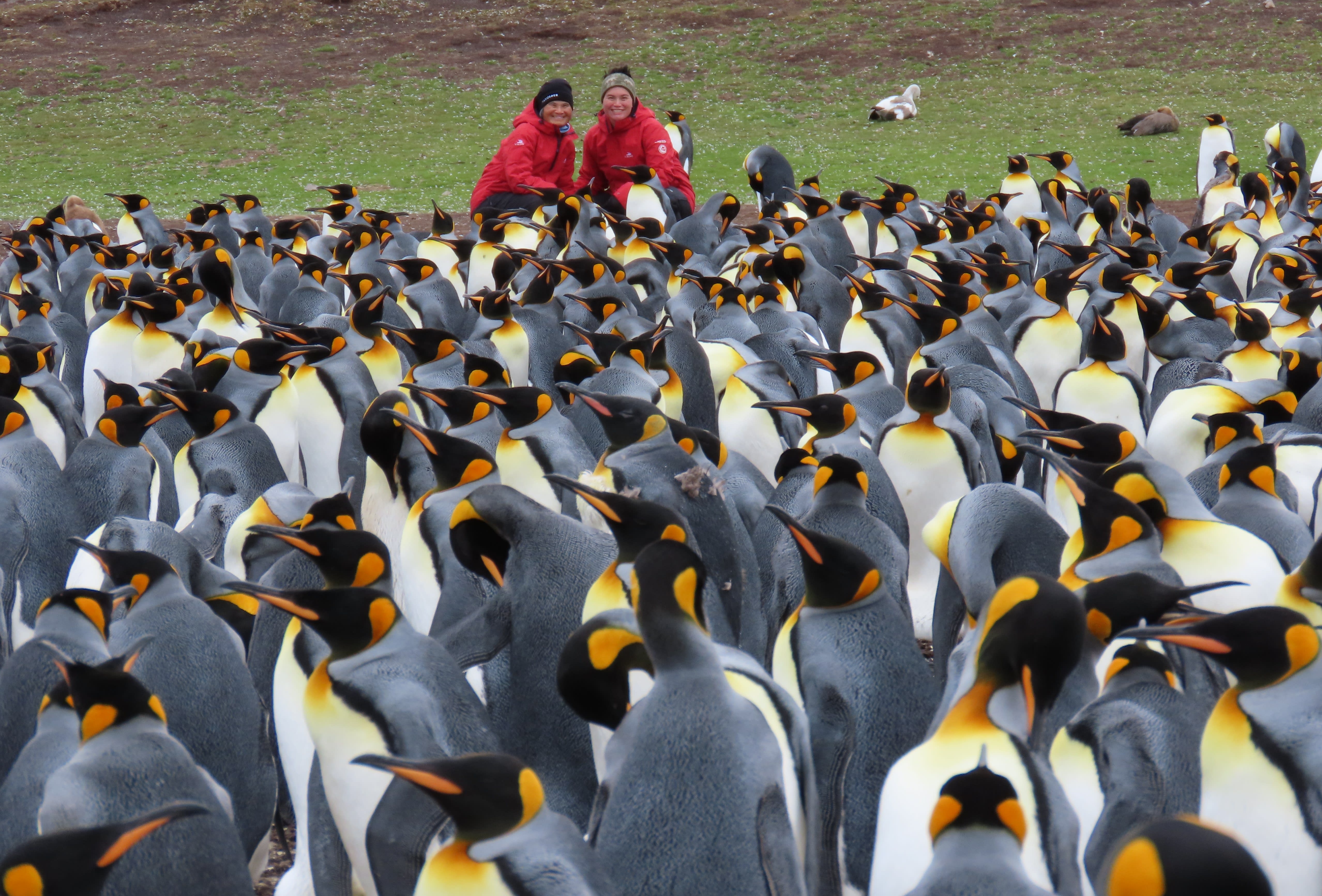
Amazing king penguin colony at Volunteer Point, the Falklands. December 2024.
Antarctica is also a whale magnet: The Southern Ocean is Earth’s largest feeding ground for marine mammals, says the Antarctic and Southern Ocean Coalition.
Edge for wildlife goes to: Antarctica, by a mile.
“That was freaking amazing” moments
In a nutshell: Expedition ships often include kayaking and hiking amid incredible landscapes and close to wildlife such as seals, penguins and whales (but not polar bears or walruses).
In Antarctica, you’ll likely walk on the peninsula portion of the seventh continent and claim bragging rights. This tends to be the major draw for many passengers.
In the Arctic, you’ll likely sail toward the Arctic pack ice at the top of the world. Just hundreds of miles from the North Pole, you’ll feel like true explorers.
Edge for freaking amazing moments goes to: Antarctica.
Fitness required
In a nutshell: You are going to the most remote places on Earth, so you need to be healthy enough not to worry about access to a hospital or sophisticated emergency care.
To go cruising or ashore for both the Arctic and Antarctica, you’ll need to get in and out of rubbery rafts bobbing in the water and step into two feet of water for landings. There may be walks on slippery snow or rocky terrain or more intense hikes. If you want to kayak, you’ll “test” to see if you can get in and out of Zodiacs into the kayak. There will always be many helping hands.
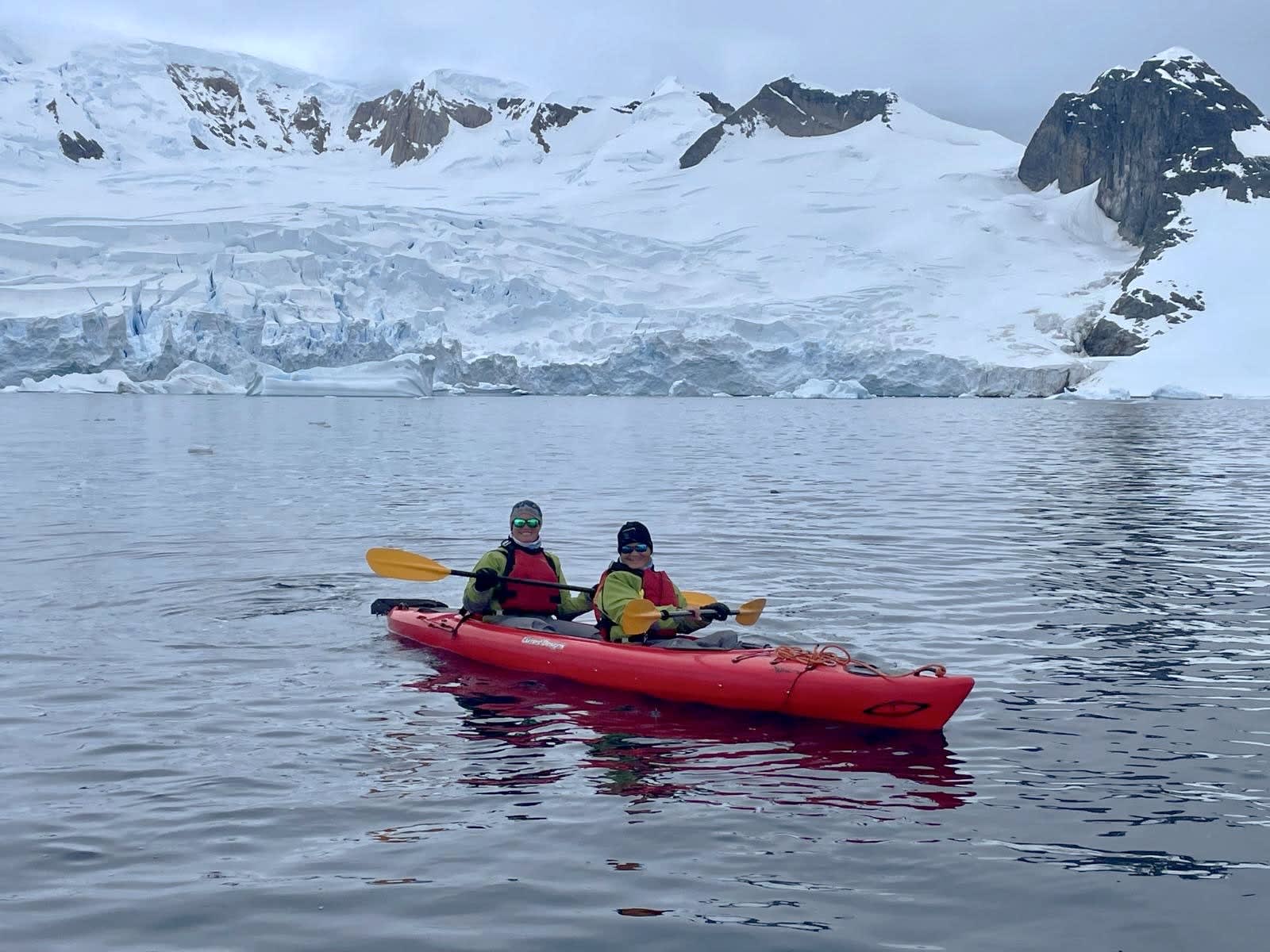
Kayaking in Antarctica. December 2024.
The level of activity will vary based on the company/ship you choose. Like any cruise, you can enjoy yourself just staying aboard. But better to enhance your fitness enough to fully experience these unique adventures.
Edge for fitness required goes to: It’s a tie.
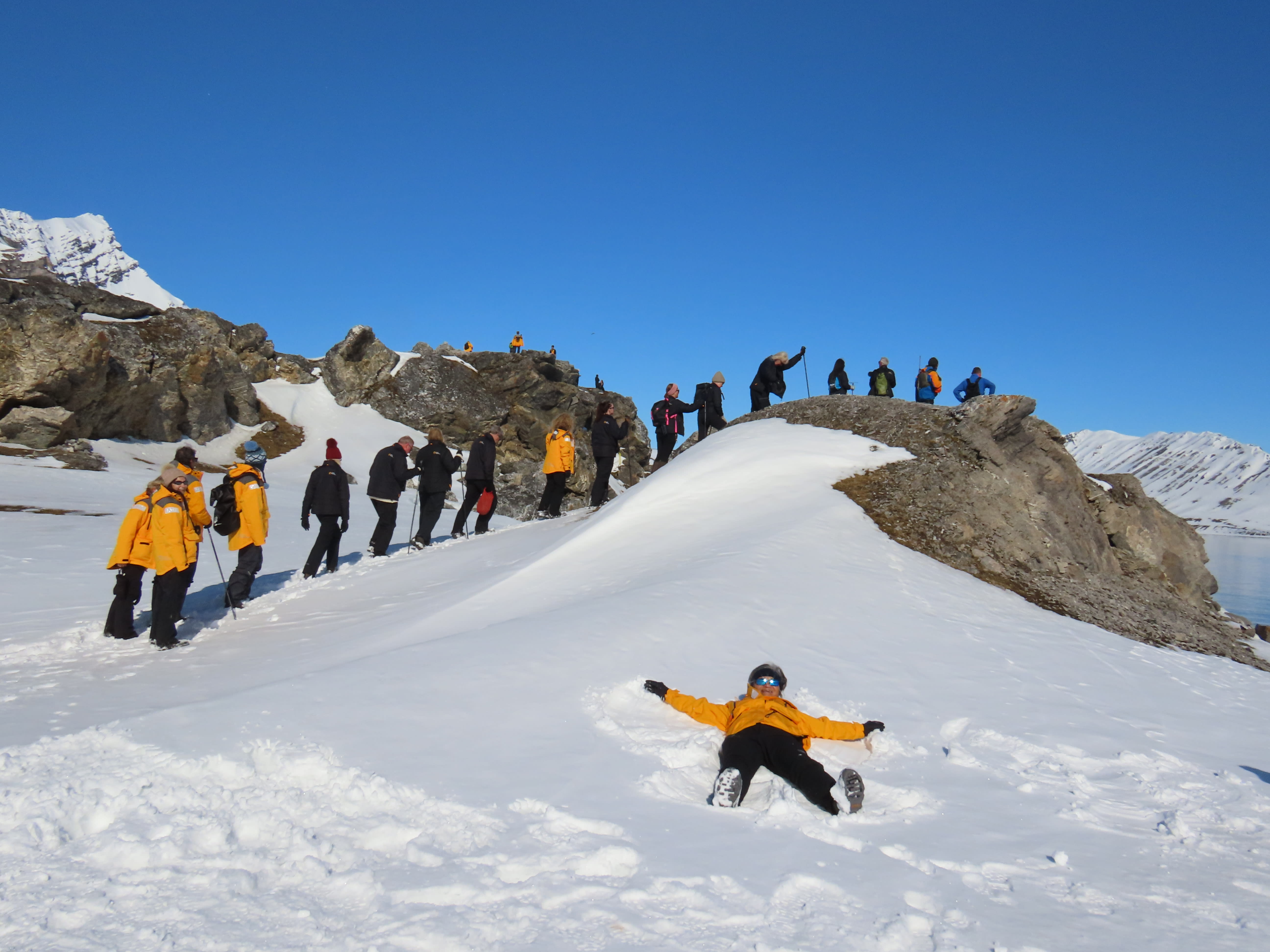
Fun and games in the Arctic. May 2024.
History and culture
In a nutshell: Both regions have long fascinated adventurers. Because the Arctic is surrounded by eight countries, it’s been inhabited for tens of thousands of years. The first landing in Antarctica wasn’t until 1821.
Nearly 4 million people live in the Arctic, including some 400,000 indigenous peoples, such as the Saami in Scandinavia, and the Inuit in Alaska, Greenland, and Canada. Some of their ancestors came 15,000–20,000 years ago from Asia. In Antarctica, about 4,000 people work in 40 research bases during the summer; about 1,000 stay through the bitter winter.
Edge for history and culture goes to: the Arctic.
What else is there to do?
In a nutshell: Since you’re already there, you can check out more of South America or Norway.
When you go to the Antarctic, you can sightsee in Buenos Aires and Ushuaia (with easy trips to Tierra del Fuego), and take a few days to visit Iguazu Falls, Patagonia, or even Machu Picchu.
When you go to Svalbard, you can enjoy adventure activities such as dog-sledding and snowmobiling earlier in the season (which was so much fun!), and easily visit Norway’s spectacular northern areas of Tromso, Senja, and the Lofoten islands, which we also loved.
For both, you’ll have the midnight sun nearly 24 hours a day in the summer, so you will not see the northern lights and you likely will have a hard time sleeping!
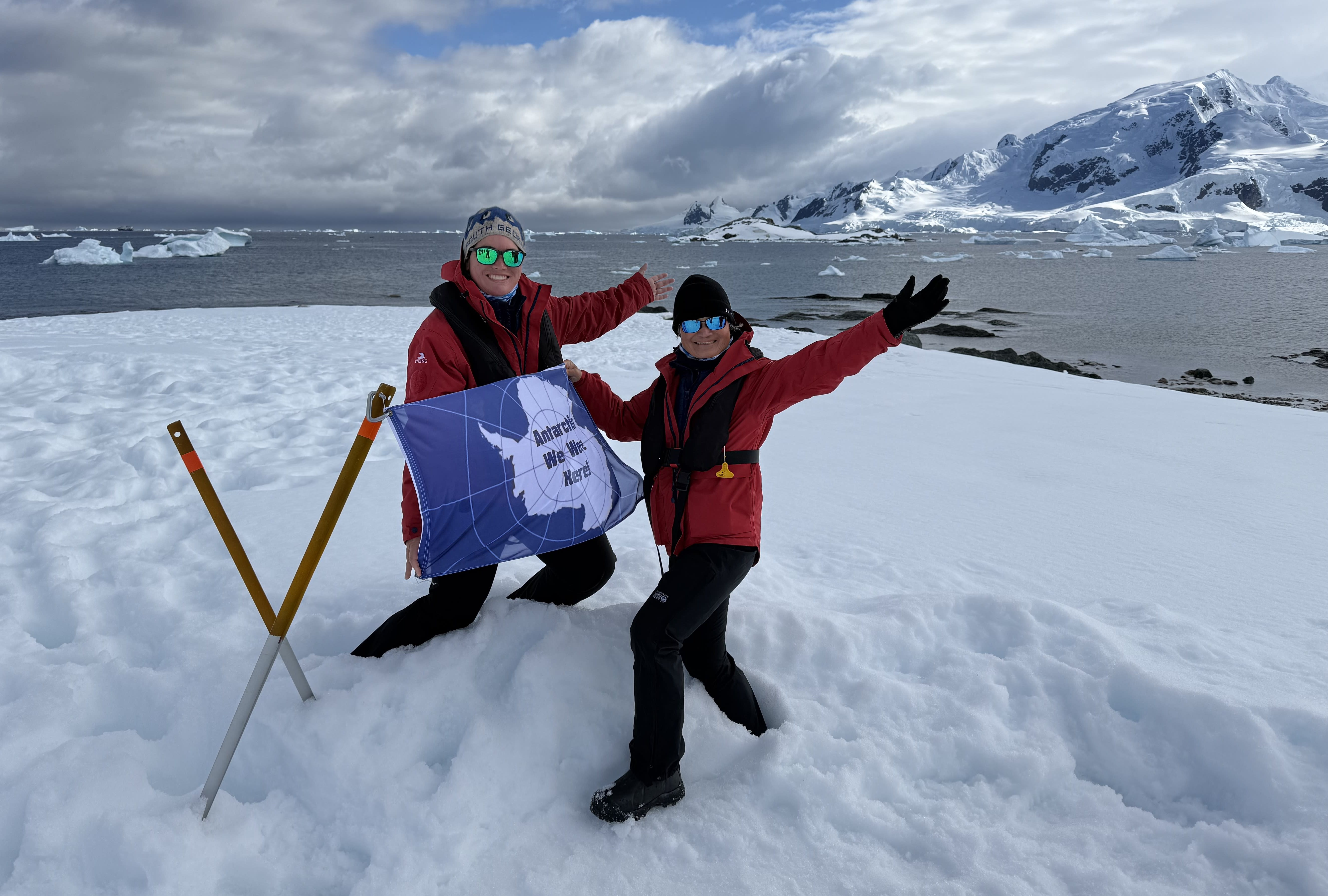
On the seventh continent! Recess Cove, Antarctica. December 2024.
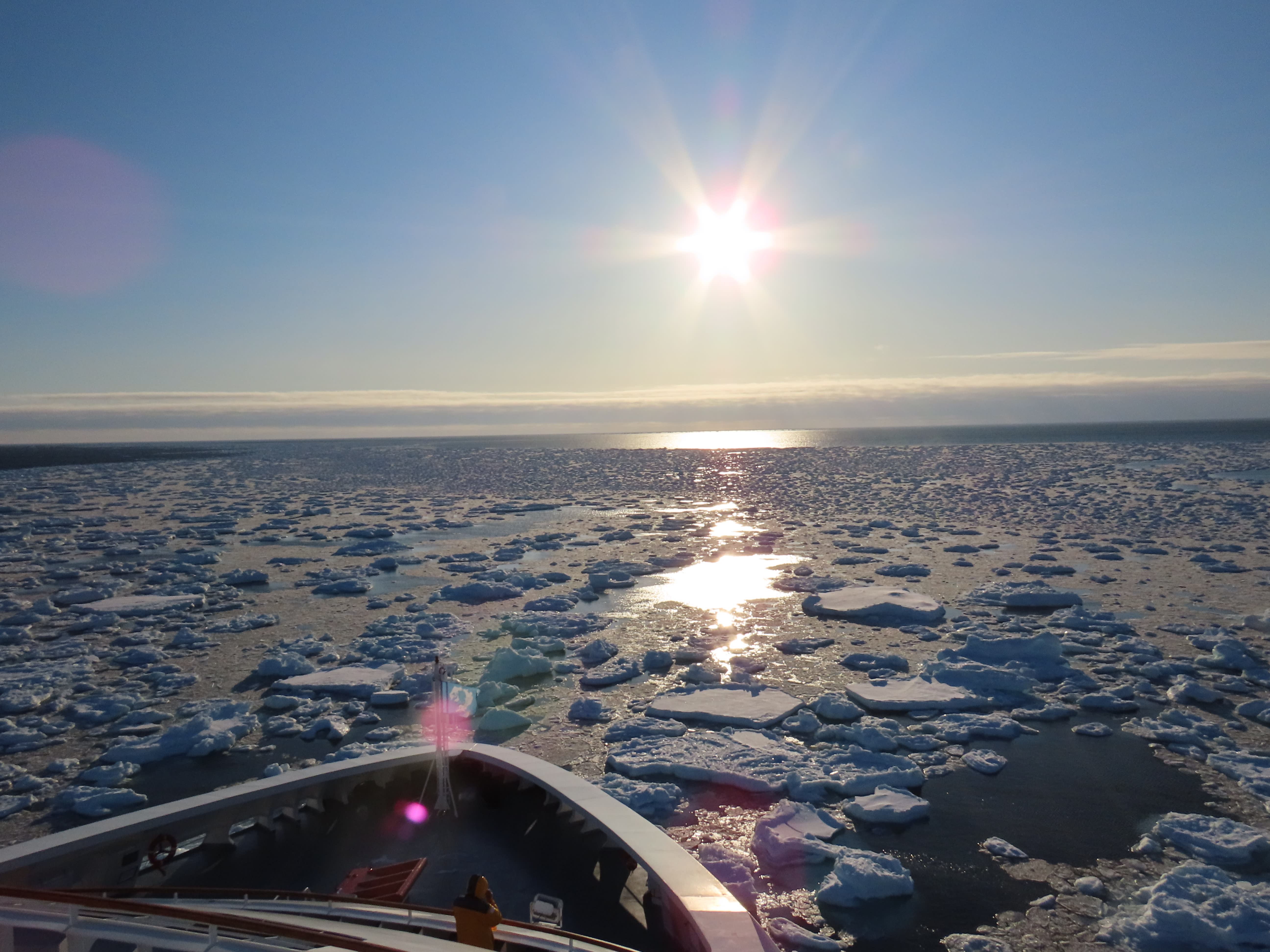
Midnight in the Arctic ice, 80 degrees, 48 minutes north—about 550 nautical miles from the North Pole! May 2024.
Edge for what else to do goes to: the Arctic.
So, what’s the verdict?
Searching and finding tiny polar bears in the distance was exhilarating but exhausting. If you long to see the bears, be prepared for only long-distance viewing in Svalbard, and make that excursion only part of your visit to Norway.
The edge goes to: the Antarctic. The breathtaking vistas and vibrant wildlife gave me such joy, I had a ridiculous grin nearly the whole journey. I can’t wait to return.
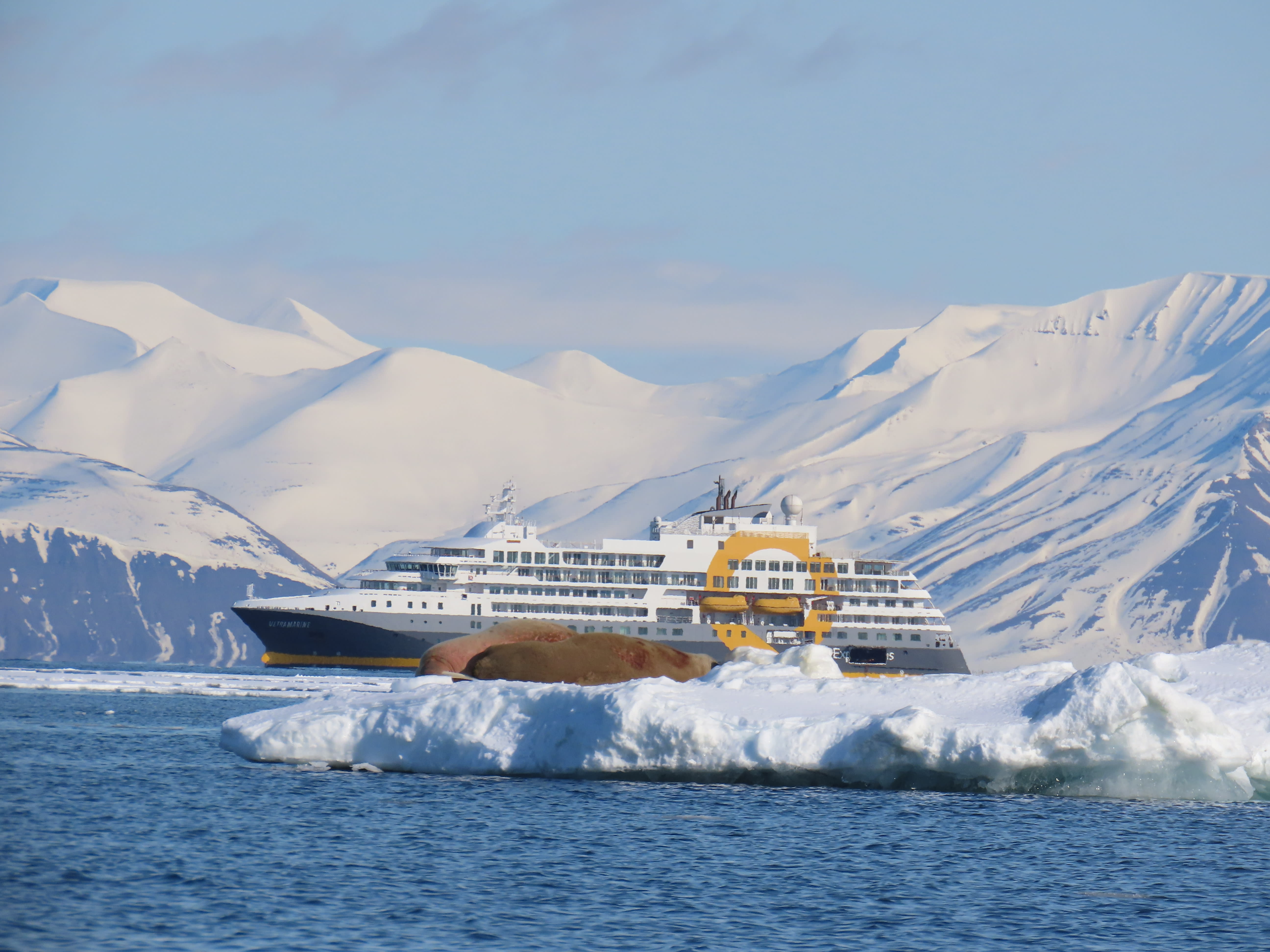
Quark Ultramarine in Svalbard. May 2024.
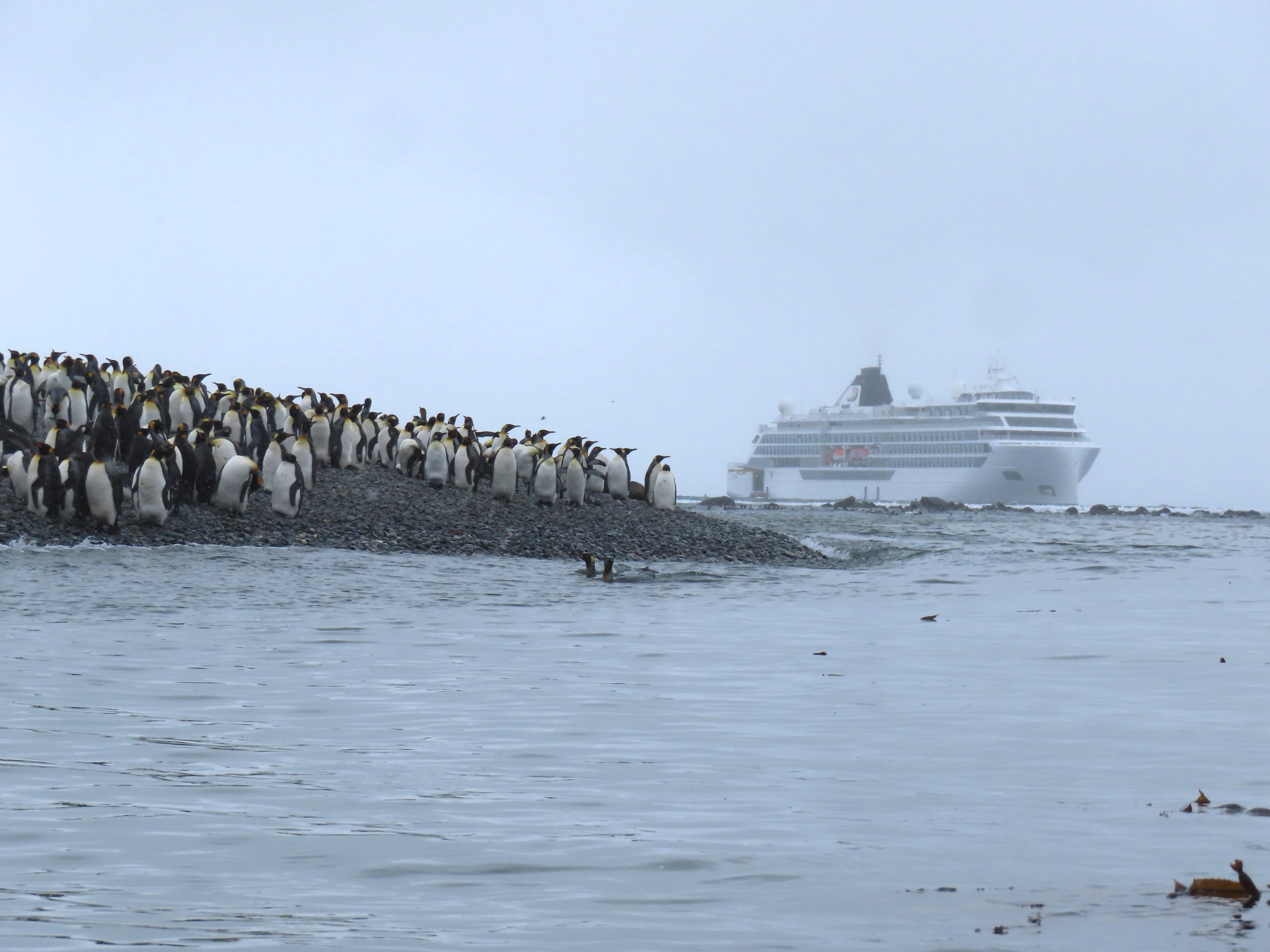
Viking Octantis, Antarctica. December 2024.
Need to know
Ready to go? There are numerous high-quality expedition companies, and more each year. In addition to Quark and Viking, look at Seabourn, Silversea, Aurora, Scenic, Oceanwide, National Geographic, HX, Atlas, and Secret Atlas.
Once you’ve decided on your preferred itinerary, dates, and ships, sign up for those companies’ email alerts. They may offer discounts for early-bird bookings or closer to sailings. Other resources include specialized Facebook groups, Cruisecritic, or polar travel companies.
And of course, leverage the expertise of a travel advisor...like me! I’d love to help make your polar dreams come true.
For more inspiration and insider recommendations, visit our cruises page.


Travel Advisor
Globetrotting Kirks


Mei-Mei Kirk

Get in touch with Globetrotting Kirks
Did you like this guide? Reach out to customize and book your own experience. Or, just to chat about travel in general.