



Curator’s statement
It’s hard to understand the true complexity of the Italian Dolomites from a map, even a fantastically detailed topographical map. The mountains are vast, the landscape is diverse, and everything is named in two languages (why? Because this region of Italy was part of the Austro-Hungarian empire until 1919.) I found there were either guidebooks for the serious hut-to-hut hiker or guidebooks aimed toward the ride the ski lift and up-and-back-down tourist. My guide is full of takeaways for the in-betweeners, those who want to break a sweat on a few hikes, find some off-the beaten-track places, and leave the region feeling like you had a true Dolomiti “Semi” Adventure. Also, I’m not a skier, so this is geared for the time of year when the snow has melted (or at least melted everywhere but the highest peaks.)
The Fora Difference
Book with lcd.travels to access exclusive perks and experiences on your trip.

Killer perks
Free upgrades, spa credits and more—we got you

Personalized recs
Customized travel planning for your style

Insider knowledge
Expert advice from people who’ve actually been there
Where to stay
Unlock perks by contacting lcd.travels to book your trip.
Bolzano/Bozen
Easily accessible by train or car, the city of Bolzano/Bozen, is a convenient place to get to if you are flying into Milan to begin your adventure. Stay in town or head up into the hills via the gondola to stay in Renon/Ritten at the Adler Lodge. Or just ride up for the day. You’ll know you’ve arrived in the Dolomites because you’ll see them all around you from the top. Explore other nearby towns like Merano/Meran where you can prepare your mind and body with an “introductory” hike in the hills surrounding; my favorite was the Knottnkino (conceived by artist Franz Messner. You’ll be able to sit on one of 30 cinema seats built into the ridge to take in the natural and evolving landscape, aka, “the film.”) Sooth your legs with a soak in the thermal waters of Theme Merano after the trek. The area, Alto Adige/South Tyrol is also one of Italy’s many wine regions. Make a reservation at the Restaurant Löwengrube—around since 1543—its longevity will make sense after your gourmet meal. After dinner, grab a spritz or negroni by the pool at the Park Mondschein Hotel.
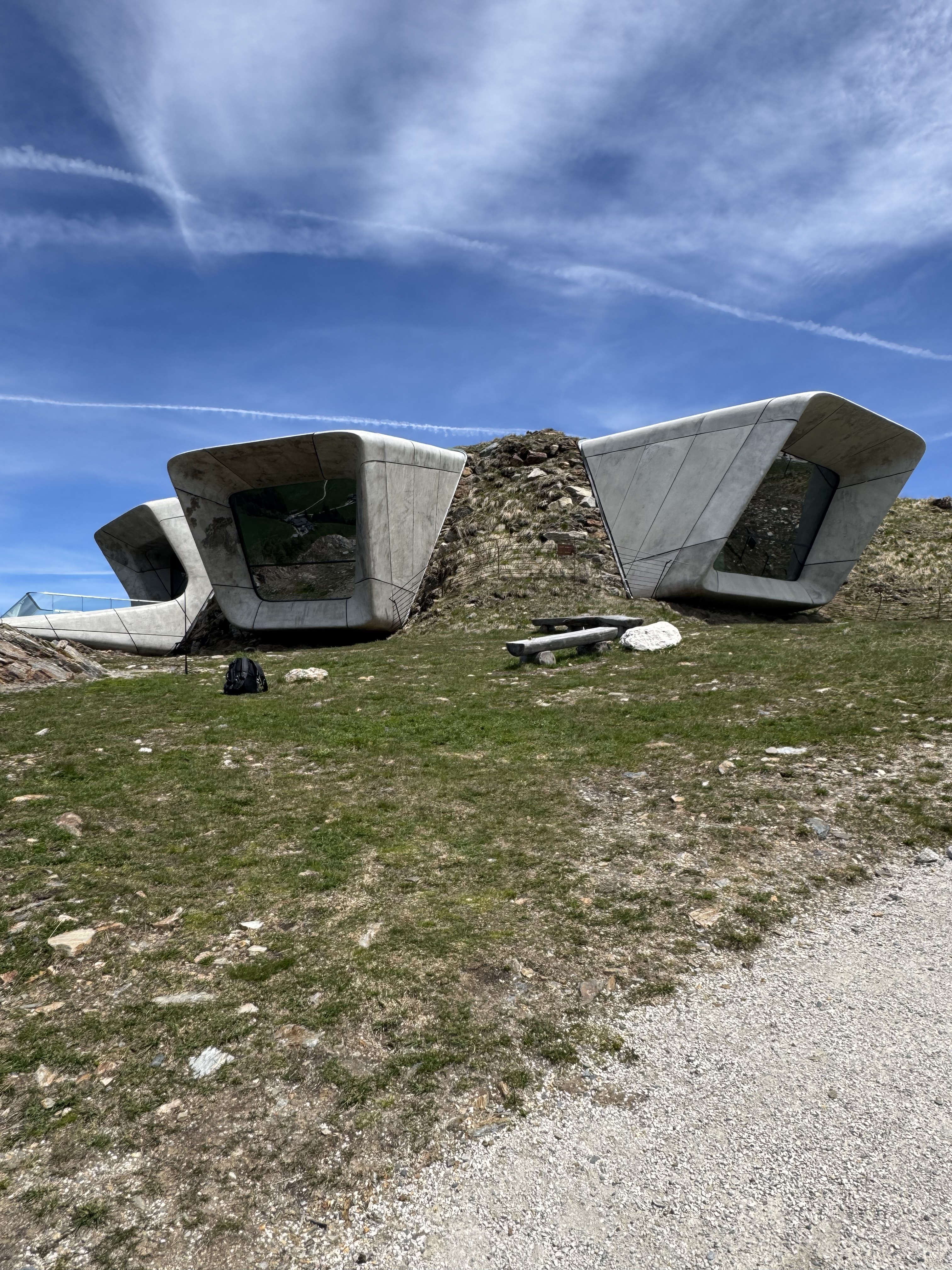
Kronplatz Summit (Messner Museum)
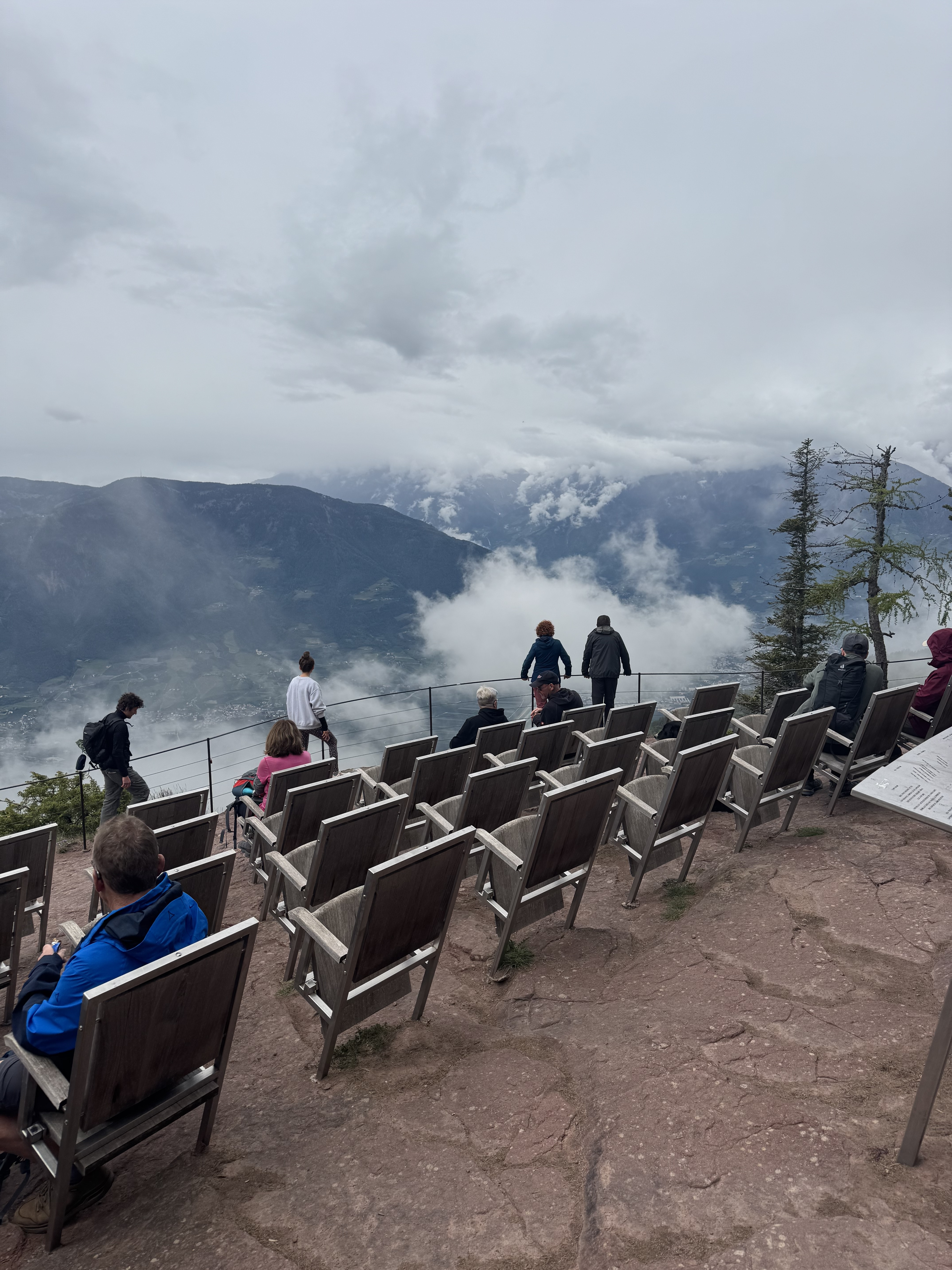
Knottnkino (near Merano)
Sexten/Sesto
With views of the iconic peaks of Tre Cime di Lavaredo at your disposal, Sexten/Sesto is a great spot to park and stay for a night or two. The Tre Cime (aka Three Peaks) are the symbol of the Dolomites and can be hiked by following the Alta Via #4. There are 113 trails accessible in the area, from novice to challenging. Or stay at valley level and wander along the Val Fiscalina through the meadows and forests. Take a cable car up to Monte Elm, where you can hike to the summit for epic 360˚ views of the Dolomites on one side and the Carnic Alps (and Austria) on the other. Hike back down the mountain for some good exercise and a bit of solitude. The restaurant Luis Alm in Bad Moos is a great spot for dinner. Berghotel has a pool with views of Tre Cime that you won’t likely forget.
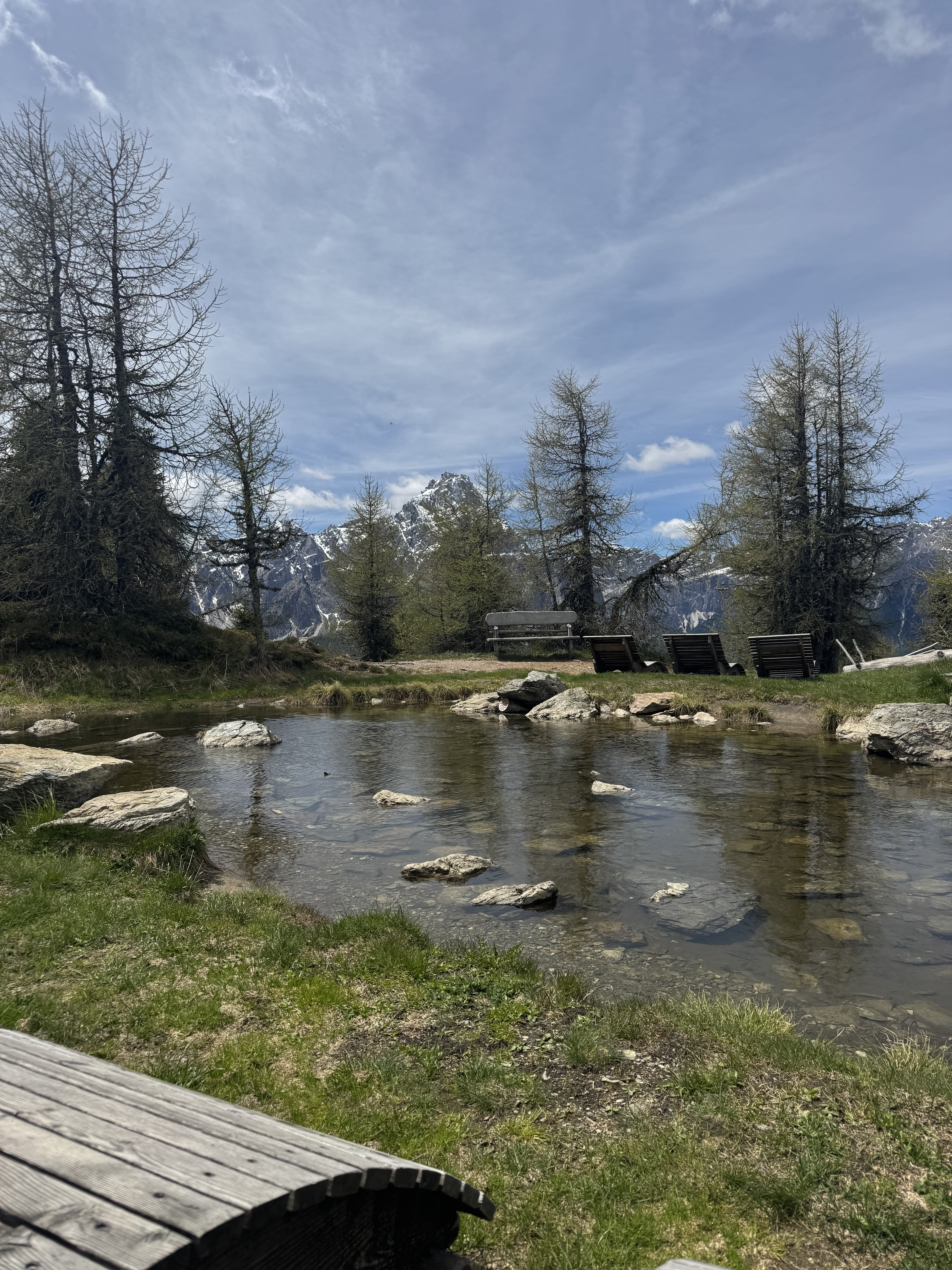
Top of Monte Helm (near Sesto)
Kronplatz/Plan de Corones
The Kronplatz Ski Area is appealing for both adventure and art seekers alike. For the adrenaline junkies, Mt. Kronplatz (on the World Cup ski circuit in the winter) turns into a mountain biking and paragliding mecca in the summer. For everyone else, it’s just as fun to watch these daredevils practice their sport at the top of a 2,275-meter mountain. There are two museums at the top. The contemporary glass and concrete Messner Museum, designed by world class architect Zaha Hadid, is dedicated to mountaineering and alpine history. LUMEN is only a short hop away and showcases mountain photography. The museum is built on the site of an old funicular station. Don’t miss lunch at the AlpiNN restaurant, which extends out from the building on stilts and offers incredible panoramic views. If you can, grab a window seat—it’s the perfect spot to watch paragliders take off from the summit while you chow down. Falkensteiner Hotel Kronplatz is perfect for a night or two if you find you want more time on the mountain
Lago di Braies/Pragser Wildsee
Called the “Pearl of the Dolomites,” you’ve likely already seen the picture-perfect aquamarine mountain lake Lago di Braies/Pragser Wildsee in photographs. It’s a popular spot because the circumnavigating two-mile trail is “easy” by Dolomite standards and the views of the lake are constantly changing based on where you are and what time of day it is. To beat the crowds (and crowded is an understatement), arrive at sunrise or sunset. Even better, book a three-night minimum stay (including half-board) at the historic Hotel Pragser Wildsee, which sits right on the lakeshore. Hotel stays offer access to the lake when the day-trippers have left, along with a private patio and lakeside corner where you can monitor the line for the handmade rowboat rentals—another must-do activity. Make sure to take a detour of the lake loop and have a wuster or schnitzel plus beer at Malga Foresta/ Grünwaldalm zum Hartl. And if you can brave the cold water, take a dip in the lake from the rocky beach area near the church.
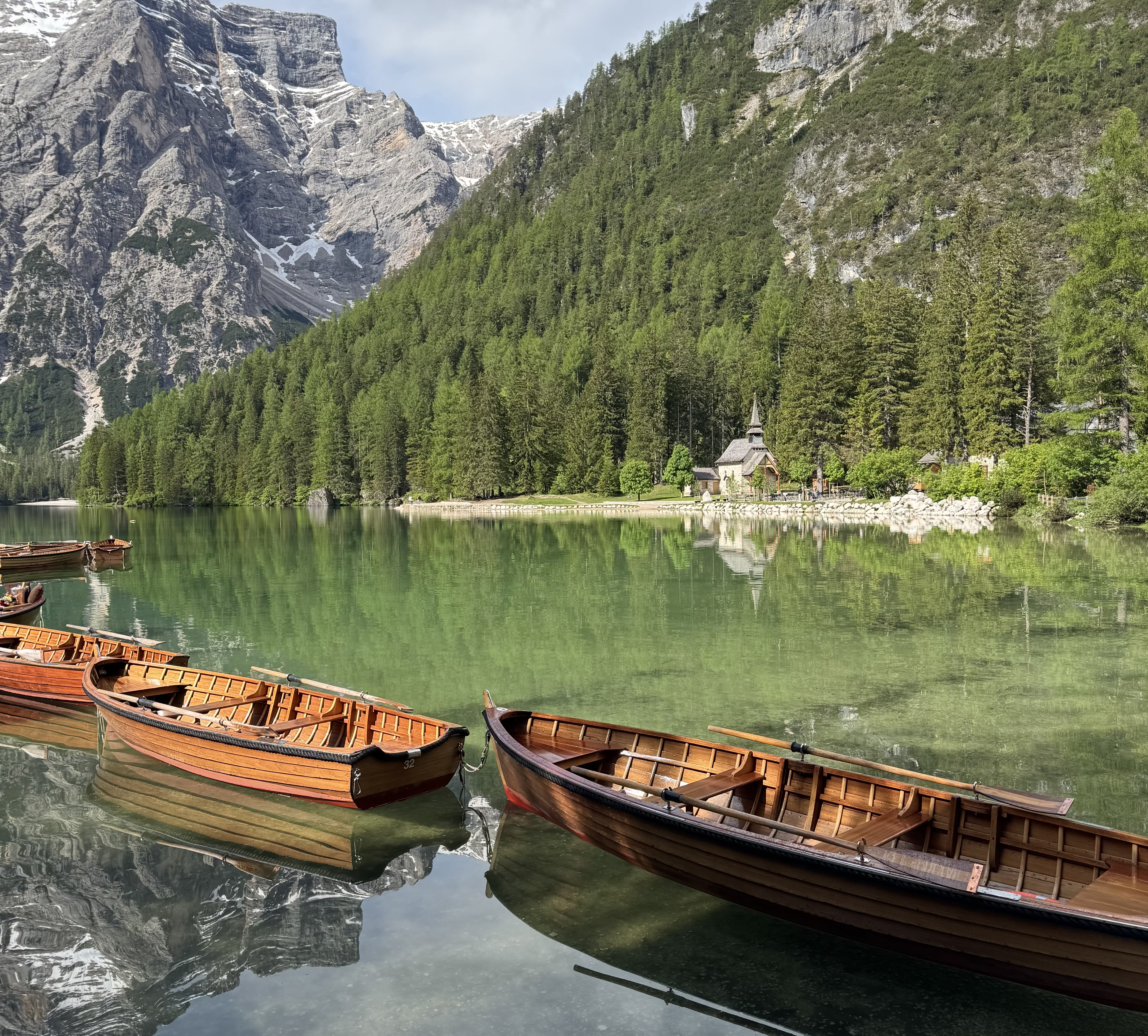
Swimming at Lago di Braies
Secada
Equally picturesque and just as heavily selfied is the Secada Ridgeline. Yes, the ridgeline is even better up close and in person, but the journey to reach it is similarly thrilling. Start at the bottom in the village of Ortesei/St. Ulrich, also a charming place to stay overnight and fine dine at Anna Stuben, and grab the Ortesei/Furnes gondola. At Furnes, you’ll switch to a larger cable car and be at the top in a matter of minutes, make sure to snag a window area so you can observe the journey (especially the last 30 seconds when you head straight upwards.) Once at the top, hike the 30-to-40-minute ridgeline loop. If you have the time and energy, there are several hikes that start from the top. If not, it’s perfectly acceptable to take respite for lunch or an afternoon spritz from Baita Sofie Hütte and linger in the views. Even in June, there was still snow in some parts of the ridgeline area, so wear decent boots even if you don’t plan on taking an extensive hike. Take a respite at the Gardena Grödnerhof Hotel and Spa in Ortesei or the Sangaguler Hotel in nearby Castelrotto.
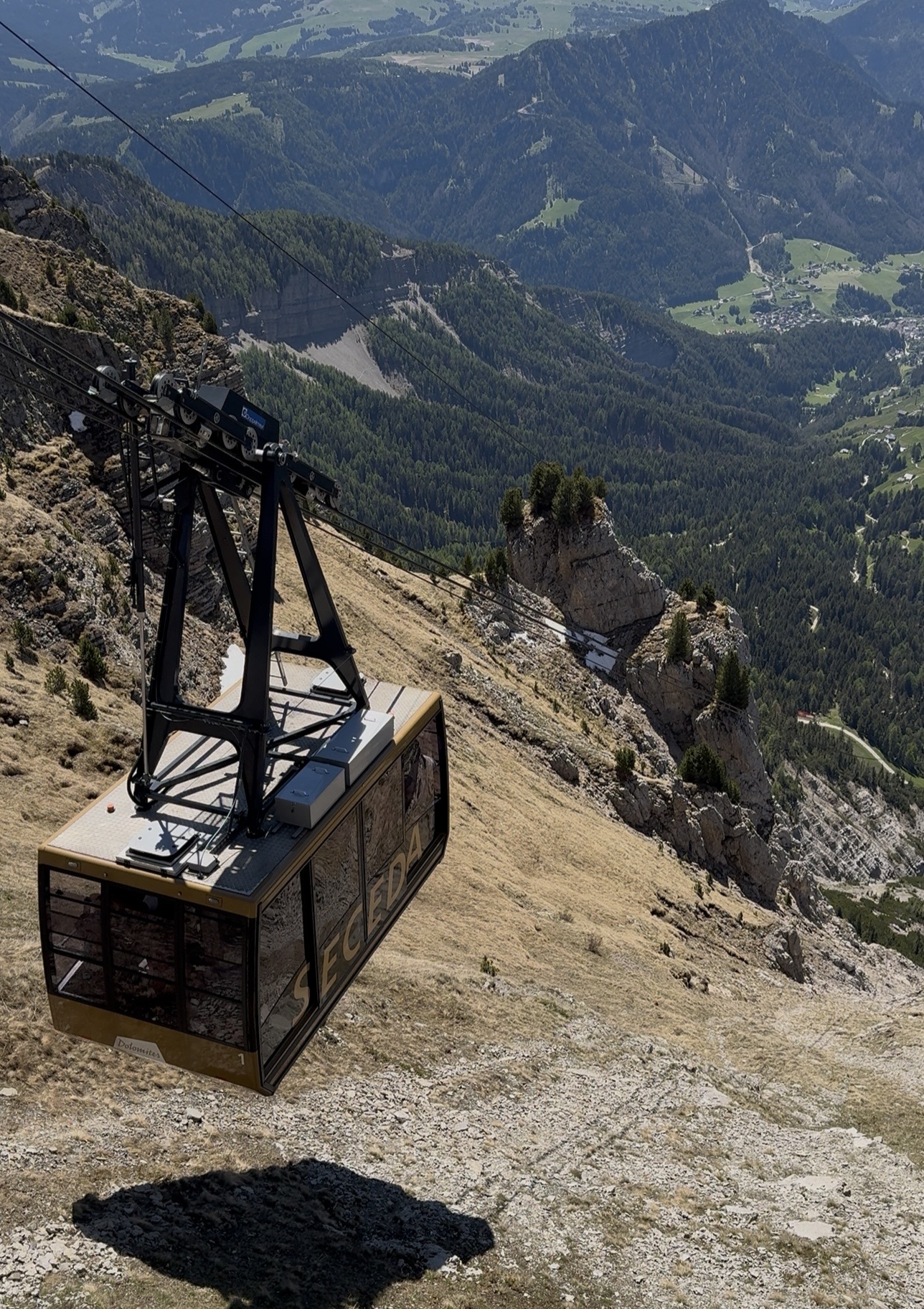
Secada Cable Car
Passo Gardena
The Passo Gardena is exactly why you want to have a car in the Dolomites, and ideally a small sporty one. The Passo Gardena connects Val Gardena to Val Badia, and is not only steeped in jaw-dropping mountain scenery, but the twists and turns of the road make for an exhilarating drive. Both the Lamborghini and Ferrari companies frequently schedule road trip tours on this mountain pass, just to put it in context. It’s a busy road in the summer and you’ll be frequently passing (and sometimes passed by) two wheelers. And you’ll constantly be impressed by (and maybe a little envious of) the bicyclists’ stamina. Make sure to stop at the top of the pass to take in the views or to hike on a trail that spins off. And pack your patience, good humor, and willingness to share the road. Sëlva di Val Gardena and Corvara in Badia, where you will likely start or end your Passo drive, are known for some of the finest restaurants in the Dolomites. You’ll want to check out the latest stars awarded in the Michelin Guide and make a reservation before hitting the gas.
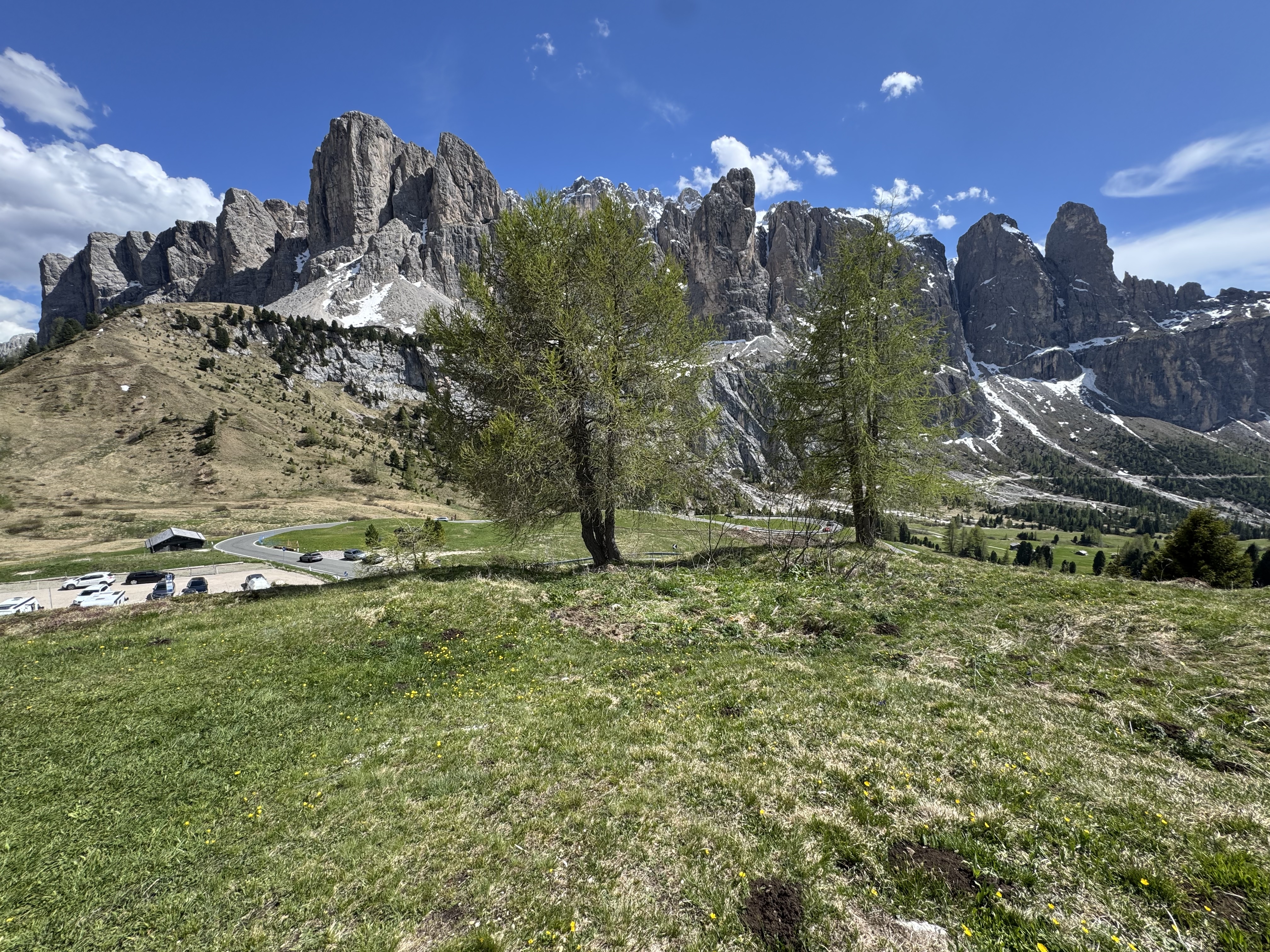
Passo Gardena
Cortina d’Ampezzo
Since Cortina d’Ampezzo is in the Veneto region, it’s back to Italian nomenclature. Cortina can either serve as the first or last stop on your Dolomiti Tour, depending on which direction you choose to travel. Cortina is known as the Queen of the Dolomites, impressing even Ernest Hemingway enough with its charm to set a short story (Out of Season) in the town. Because it will have soon hosted two Winter Olympics (1956 and 2026), there is a wide assortment of lodging options both in and outside town. Hiking paths are abundant, and the areas around Cortina are like trekking in an open-air history museum as it was the front line between Italian and Austro-Hungarian troops in World War I. If you want a fully immersive experience, find a local guide to take you on a Via Ferrata (i.e., climbing steep mountains with cables and ladders built into the rocky faces.) If you want to follow in Hemingway’s footsteps, head to the American Bar at the Hotel de la Poste (housed in the old post office) for a glass of Valpolicella.
Then it’s a fast three-hour descent to Venice. If you want a short detour, stop in Vittorio Veneto for a meal at Osteria da Lauro and a glass of Prosecco as it’s in the UNESCO world heritage site known as the “prosecco hills.”
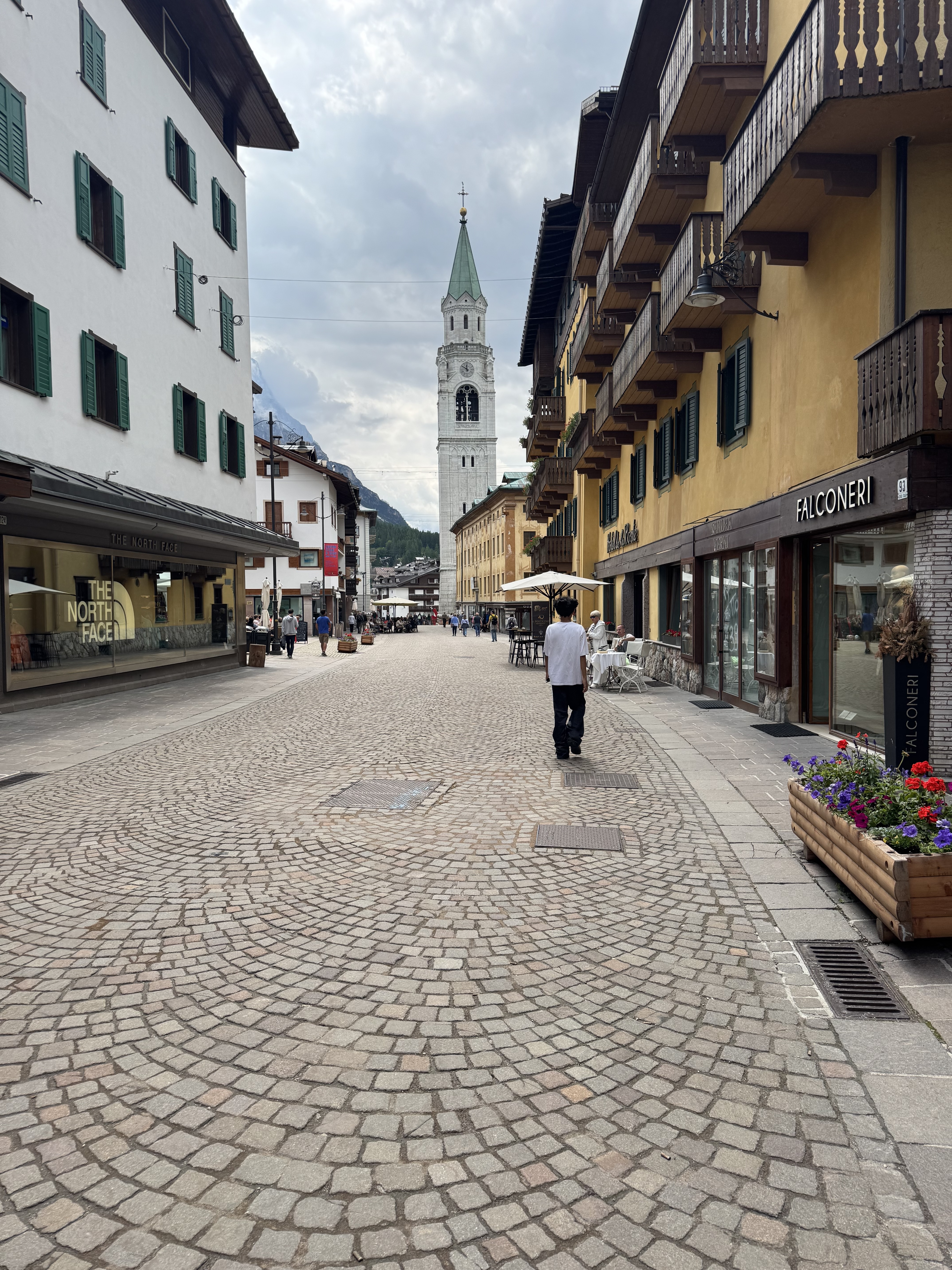
Cortina d'Ampezzo
Need to know
Be prepared that rain will occur on at least one day of your trip and you’ll have to pivot.
If you need a good guidebook for hikes, check out Cicerone’s.
Bring a walking stick, even if you don’t think you’ll need it, your knees will thank you; mine were mad that I told myself I wouldn’t need it.
Renting a car in either Milan or Venice and returning it in the other means you won’t have to backtrack and can relax in one of the two world class destinations at the end of your trip.
For more inspiration and insider recommendations, visit our Italy page.


Travel Advisor
lcd.travels
Lawren Desai

Get in touch with lcd.travels
Did you like this guide? Reach out to customize and book your own experience. Or, just to chat about travel in general.