

Madrid Through Touch, Taste & Sound: A 5-Day Accessible Itinerary for Blind Travelers

Curated By
Linsay Lusyne


Curator’s statement
Madrid holds a special place in my heart because it’s a city that invites you to experience it with all your senses. Whether you’re walking through the scent-filled Retiro Park, listening to the energy of a local flamenco show, or tasting your way through tapas bars, it’s a city that never excludes you—it pulls you in. As a travel advisor and guide for blind and low-vision travelers, I’ve seen firsthand how welcoming and accessible Madrid can be. It’s a place where independence and immersion go hand in hand.
The Fora Difference
Book with Linsay Lusyne to access exclusive perks and experiences on your trip.

Killer perks
Free upgrades, spa credits and more—we got you

Personalized recs
Customized travel planning for your style

Insider knowledge
Expert advice from people who’ve actually been there
Where to stay
Unlock perks by contacting Linsay Lusyne to book your trip.
Day 1: Arrive in Madrid
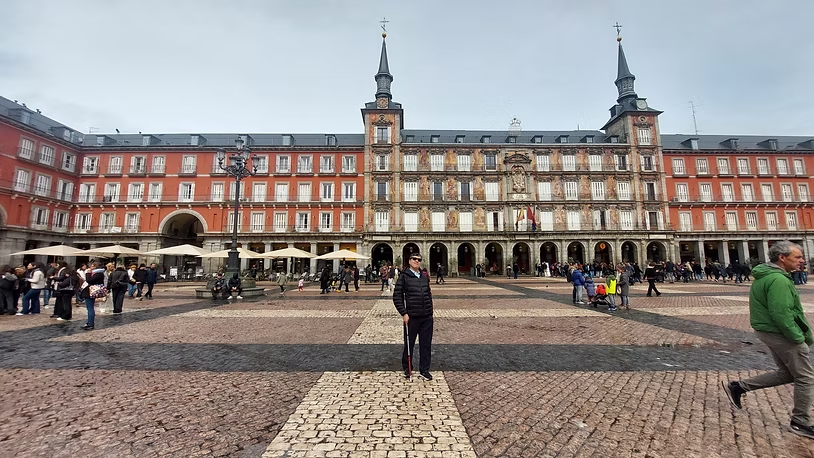
Blind traveler standing with cane in the middle of Plaza Mayor.
Start your journey in Madrid by slowing down and tuning in. I recommend beginning at the Parque del Buen Retiro, Madrid’s most famous park, which is perfect for blind and low-vision travelers. You can follow wide, flat walking paths lined with trees, and the sounds of birds and fountains create a calm orientation space. Take time to touch the textures of marble statues, smell the rose gardens.
Afterward, wander toward Barrio de Las Letras, the Literary Quarter, known for its pedestrian streets and historic charm. The cobblestone textures and audio street crossings make it easy to explore independently or with a guide. Stop for lunch at Inclán Brutal Bar, a creative and welcoming tapas restaurant where the staff is friendly and accommodating. The menu includes traditional dishes with a modern twist, and the ambiance is lively without being overwhelming.
Museums
In the afternoon, visit the Museo Nacional del Prado, Spain’s most famous art museum. It offers free admission for people with disabilities and has excellent accessibility services, including tactile tours, audio guides, and trained staff.
Nearby, the Museo Nacional Centro de Arte Reina Sofía is another excellent stop, featuring modern art and accessibility options like Braille signage and guided visits for blind and low-vision guests. It's highly recommended to book the tickets in advance to avoid long waiting times.
Insider tips
Both museums are within walking distance of Retiro Park, and the area is very manageable on foot or by accessible taxi. Be sure to ask about their sensory or adapted tours in advance—they’re well worth it.
Stay at the VP Jardín de Recoletos: Well-located and very nice hotel with wonderful staff.
Day 2: Tiflológico Museum & trip to Segovia
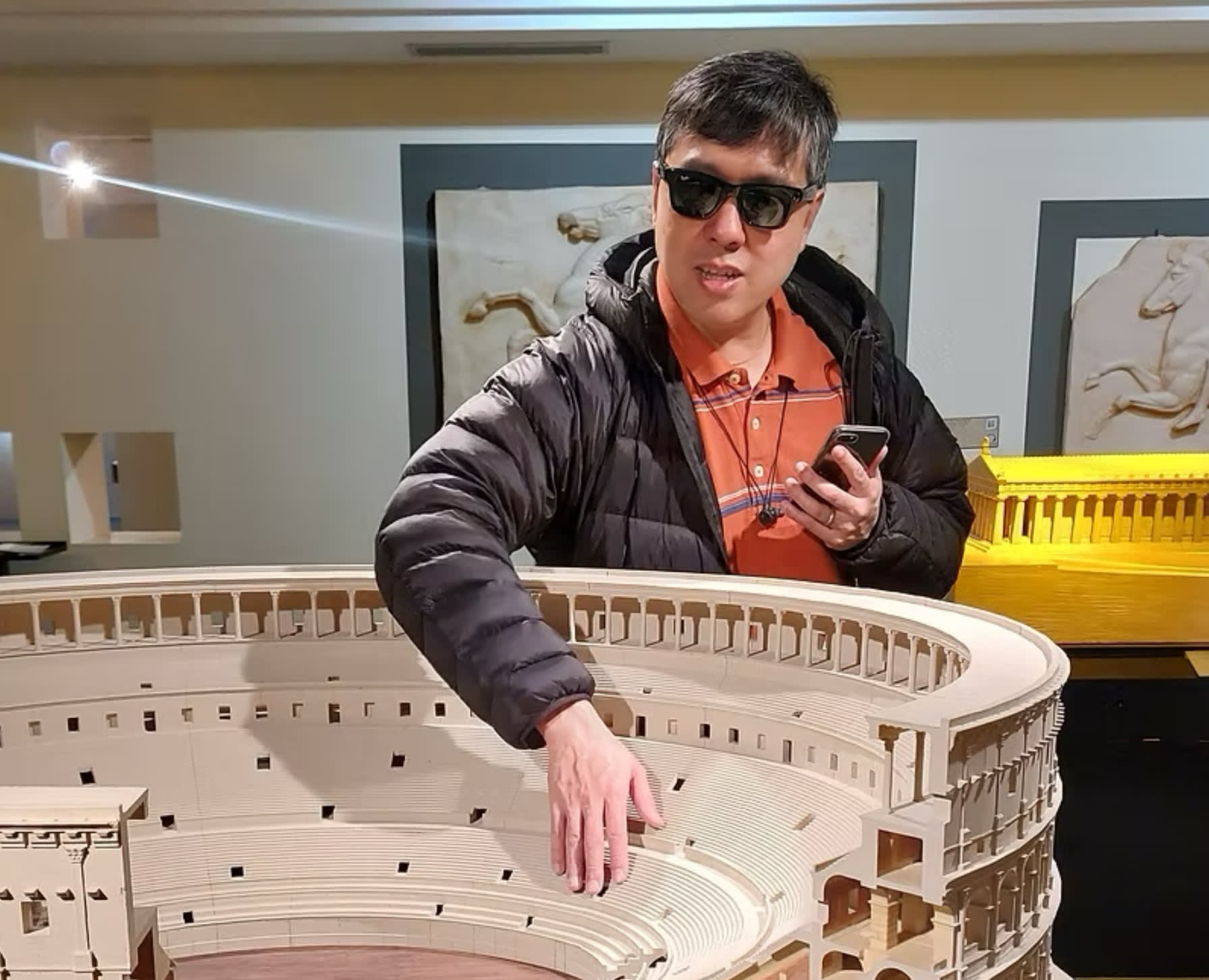
Blind traveler feeling the Colosseum of Rome and getting a good ''view'' on what these historical buildings look like.
Begin your day with a visit to the Tiflológico Museum, designed by ONCE for blind and low-vision visitors. This unique, hands-on museum features tactile models of famous monuments from around the world, a Braille and assistive technology exhibit, and a gallery of blind Spanish artists. Entry is free, and visitors are encouraged to touch almost everything. It’s a perfect way to engage your sense of touch and set the tone for the rest of the trip.
Insider tip: You can explore independently or request a guided experience. The staff are friendly and used to working with blind travelers. And there is a lovely little breakfast/lunchplace right across the street called Cafe La Luna.
Segovia
After the museum, head to Segovia, just over an hour from Madrid by train or car. Segovia is a stunning medieval city perched on a hill, famous for its ancient Roman aqueduct, fairytale-style castle, and historic city walls. It’s a great base for travelers looking for a mix of history, small-town charm, and breathtaking views.
Check into a local hotel—consider one of the converted monasteries or boutique stays within the city walls. I recommend the Hotel San Antonio El Real, built in a renovated monastery. You can have dinner there too, which is very delicious.
Then set out on foot to explore:
Roman Aqueduct: One of the most intact Roman structures in Spain. The sounds of people gathering and the slight echo of the archways create a memorable sensory impression.
Plaza Mayor and Segovia Cathedral: Follow the sloped streets up to the main square, where you’ll find the Gothic-style cathedral at the city’s highest point.
Alcázar of Segovia: Walk downhill to this clifftop castle with pointed towers. The surrounding countryside and mountain views offer a peaceful place to pause.
Evening: dinner like a local
Restaurants open late, so plan to eat around 8:30 or 9 pm. Try a local spot near the cathedral or within your hotel. Many restaurants offer traditional Castilian dishes like roasted lamb or bean stew, and most are happy to describe options if you mention dietary or visual needs.
Travel note: Cobblestones can be uneven in Segovia, so a cane is useful even for those with partial vision. Locals are kind and willing to help, especially in quieter neighborhoods.
Day 3: Hot air balloons & day trip to Ávila
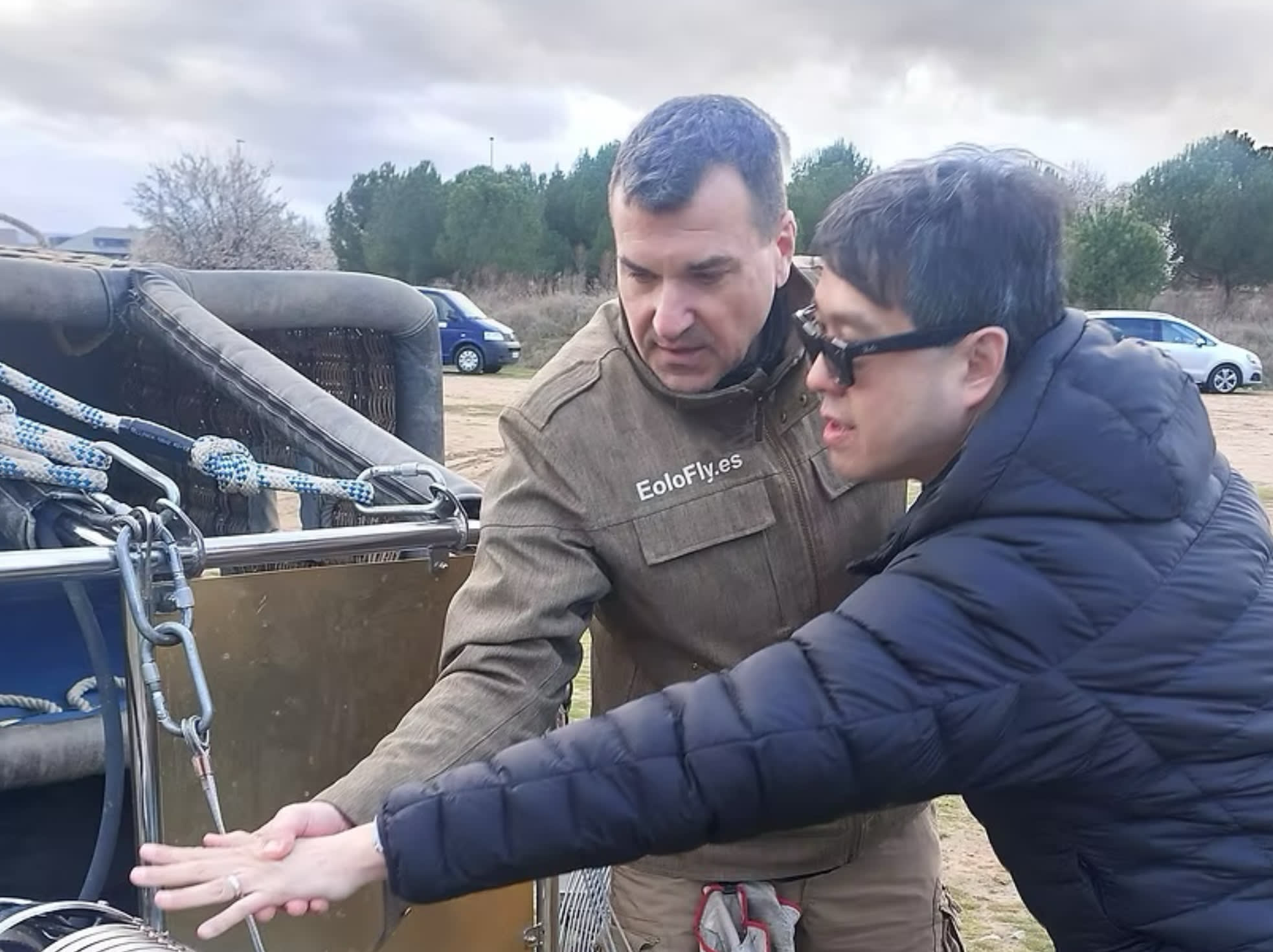
Blind traveler feeling the basket of a hot air balloon. The size of it is huge, and our traveler has never been this close to a hot air balloon before.
Start your day early for a unique adventure: a hot air balloon ride with Eolofly, located just outside Segovia. This spot is known as one of the world’s top places for ballooning, with stunning views of castles, valleys, and historic towns.
The crew, led by Jose, takes the time to explain every detail about the balloon’s basket and how the flight works—perfect for travelers with visual impairments who want to learn through touch and sound. While weather conditions sometimes prevent takeoff, just experiencing the scale and mechanics up close is incredibly memorable.
Day trip to Ávila
After the balloon visit, head about an hour to the medieval city of Ávila, famous for its fully intact city walls. Known as the “Town of Stones and Saints,” Ávila sits high above sea level and offers the rare opportunity to walk along its medieval walls—a truly immersive way to connect with history.
Accessibility tip: The wall walk is about 1.7 km with railings and mostly smooth surfaces, but includes some stairs. With a guide or companion, blind and low-vision travelers can enjoy the walk safely, especially with descriptive narration.
After exploring the walls, pause at a small, cozy café hidden in a quiet side street. Filled with local chatter and the scent of fresh pastries and strong Spanish coffee, it’s an ideal spot to soak up the authentic atmosphere and recharge.
Optional museums to visit in Ávila:
Museo de Ávila: Fully accessible with ramps, elevators, and audio guides, it offers insight into the local history and culture.
Centro de Interpretación de la Muralla: This museum focuses on the medieval walls and is wheelchair accessible, with staff trained to assist visitors with disabilities.
Evening: return to Segovia for dinner
Head back to Segovia for the evening and dine in one of the elegant restaurants in Plaza Mayor. The square fills with lively energy at night, making dinner here feel like a true cultural experience. Castilian cuisine is hearty and delicious—perfect after a day of exploring.
Recommended restaurant: Restaurante Casares
Located right on Plaza Mayor, this restaurant offers excellent accessibility, friendly service, and a menu full of traditional Castilian dishes. Staff are patient and happy to describe meal options, making it a relaxed and welcoming spot to end your day.
Day 4: Explore Toledo
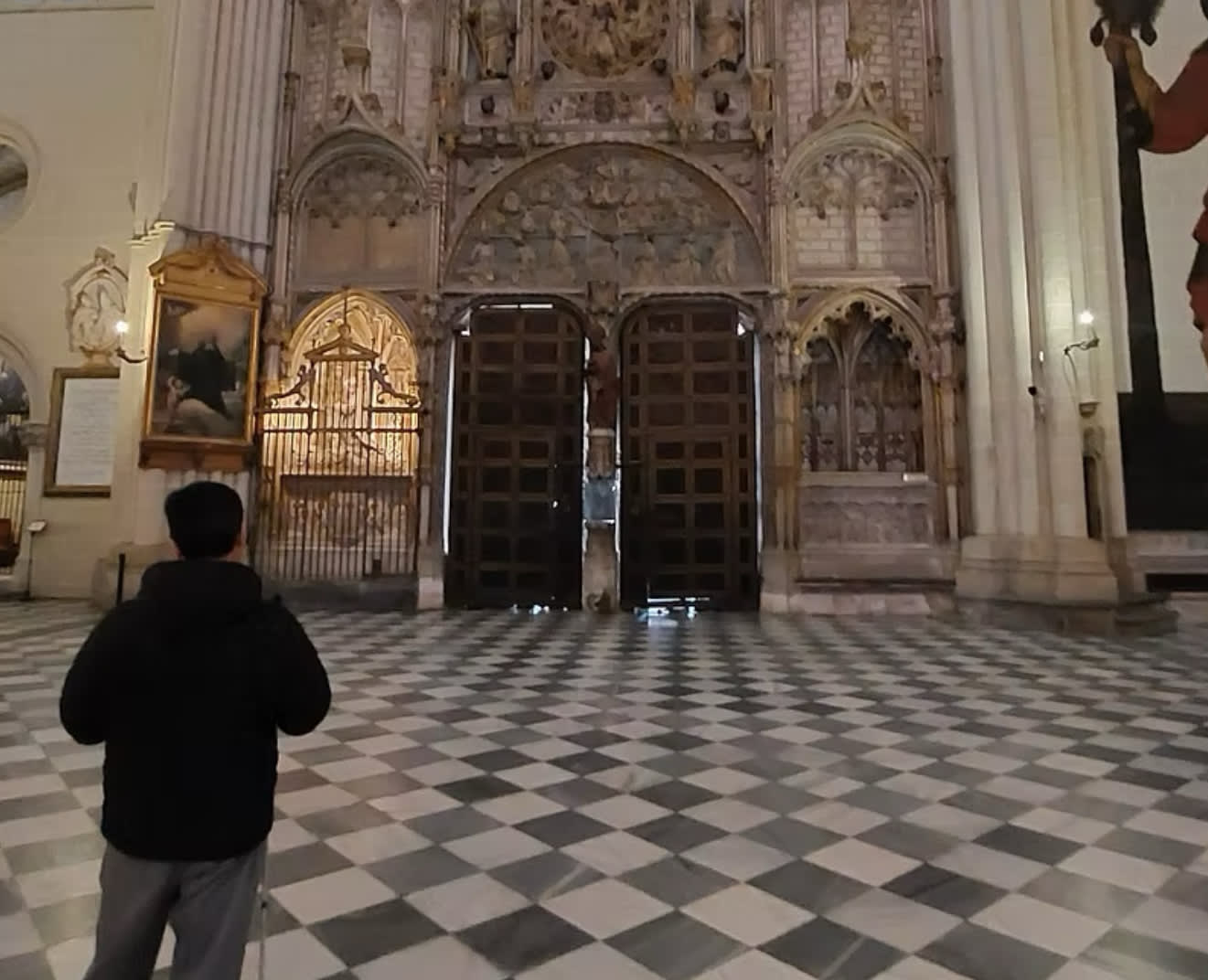
Blind traveler standing inside the gigantic cathedral. You can spend hours and hours here—don't miss it.
Take a day trip to the historic city of Toledo, just 30 minutes from Madrid by high-speed train. It’s a destination that takes you back in time with its winding cobblestone streets, ancient walls, and layers of Jewish, Christian, and Muslim heritage. For blind and low-vision travelers, it offers rich tactile and auditory experiences—from the uneven stone streets underfoot to the echoing church bells and distant chants in the old city.
Start with a guided walking tour tailored for accessibility. Many guides can adapt their descriptions to focus on textures, smells, and sounds, making the history come alive in a meaningful way. Visit the Toledo Cathedral, where you can touch the ornate stone columns and take in the acoustics of the massive space. The Jewish Quarter is another highlight, offering a more peaceful, less crowded area that’s easier to navigate. You’ll find small artisan shops with handmade crafts—great for tactile browsing.
For lunch, I recommend Restaurante La Orza, a cozy spot with a focus on traditional Castilian cuisine. The staff is helpful, and the space is quiet enough to enjoy a relaxed meal while taking in the scents and flavors of the region.
Cervecería La Abadía
For dinner in Toledo, you have to eat at Cervecería La Abadía. I promise you, you won’t be disappointed. This unique restaurant was built in a cave. The vibes here are so nice and fun, with people walking around the many small hallways and discovering new things around each corner. Before we sat down at our table, a tourist noticed we spoke English and asked me if I had gone to the bathroom yet?
What an odd thing to say to someone you have never met before!
The room we are seated in is a part of the cave. The walls are just the walls of the cave and the floor is made of glass so you can see the cave floor. The cave next to us has the same layout, but with small artifacts displayed behind glass walls.
The tapas we order are absolutely delicious. In Spain, they love squid ink croquettes or octopus. Mike is happy to be trying all the seafood he was hoping to try and wow, everything we ate so far was just absolutely gorgeous.
The bathroom, of course, I'm intrigued and I just have to check out what this lovely lady is talking about. I enter this fairytale place, with huge tulip-shaped bathroom stalls. The lighting, the plants, and the oddly shaped sinks make this picture complete. The ceiling is made of mirrors. Don’t worry, you are privately tucked away in your tulip flower when you use the bathroom.
Accessibility notes
Toledo’s historic streets can be uneven and steep in places. A guide or mobility companion is helpful here, and taxi drop-offs can get you closer to major sights. Still, the unique feel of this city makes the effort worthwhile.
Use ChatGPT or Meta in the cathedral to help you with the abundance of ornaments and history.
Insider tip: If you have a European Disability Card or a similar document, many Toledo attractions offer free or discounted entry, and guided tours often include accessibility adaptations if arranged in advance.
Day 5: Flamenco farewell in Madrid
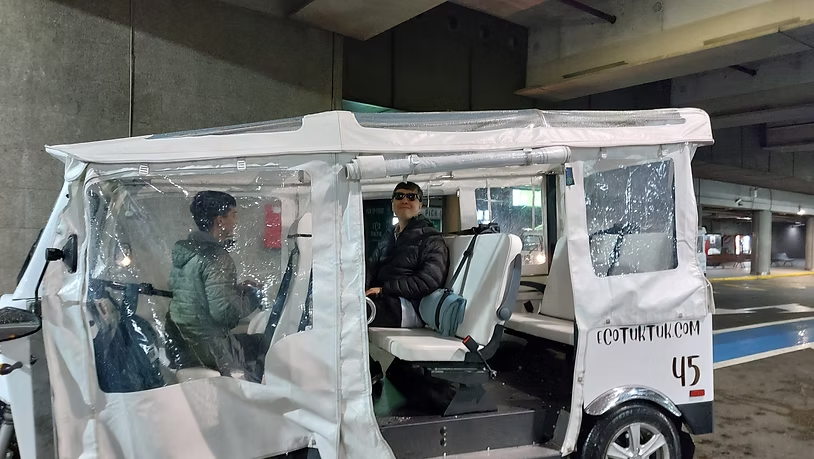
Traveling by tuk-tuk is ideal to cover a lot of ground within the city or with bad weather, like we had.
Enjoy a relaxed morning with a late check-out at 12 pm. Take this time to have a good breakfast and explore the other side of Toledo. To get up into the old town without the steep climb, use the series of six escalators built right into the mountain—an accessible and efficient way to reach the historic center.
Once in town, don’t miss stopping at a local bakery to try mazapán, a traditional Toledo marzipan treat filled with sweet goodness—a perfect pick-me-up as you explore.
Return to Madrid
Head back to Madrid and check into your original hotel room. (Don’t hesitate to ask for the same room if you return—it makes things easier when traveling with low vision).
Next, meet your guide for a private tuk-tuk tour around Madrid’s Royal Palace and Cathedral, plus neighborhoods like La Latina and the Jewish Quarter. A local’s knowledge and stories bring the city alive. On a rainy day, the covered tuk-tuk with blankets keeps you cozy while you soak in the sights and tales of Madrid.
Flamenco farewell
End your trip with an unforgettable flamenco show at a private, intimate tablao. You’ll be welcomed warmly and seated close to the performers in the cozy basement venue—just as flamenco was traditionally experienced.
Insider tip: We really enjoyed the Flamenco experience at Tablao La Carmela. If you have a disability, ask them if you can find your seat before the crowd. We received the best seats in the room!
The show starts softly with a single guitar and grows into a powerful ensemble of singers, dancers, a box drummer, and a cello. The energy and emotion fill the space, making it a moving finale to your journey.
Need to know
Additional tips for traveling in Madrid and nearby:
Getting around: Expect some uneven cobblestone streets—wear sturdy shoes and use a mobility aid or guide if needed.
Transport: Madrid’s public transit is mostly accessible with audio announcements. Smaller towns may vary. The trains in between the cities are also good (we went with the car).
Local guides: Hiring guides who know accessibility needs adds a lot of value.
Language: Basic Spanish or a translation app helps, especially outside tourist areas.
Dining times: Lunch is around 2–3 pm. Dinner usually starts after 8 pm—plan accordingly and take your time to enjoy European dining!
Accessibility: Many museums offer tactile exhibits and audio guides or apps—check ahead to arrange.
Traveling with vision loss here is rewarding with some planning and the right support.


Travel Advisor
Linsay Lusyne

Linsay Lusyne
Get in touch with Linsay Lusyne
Did you like this guide? Reach out to customize and book your own experience. Or, just to chat about travel in general.
For more inspiration and insider recommendations, visit our Madrid page.