

Curator’s statement
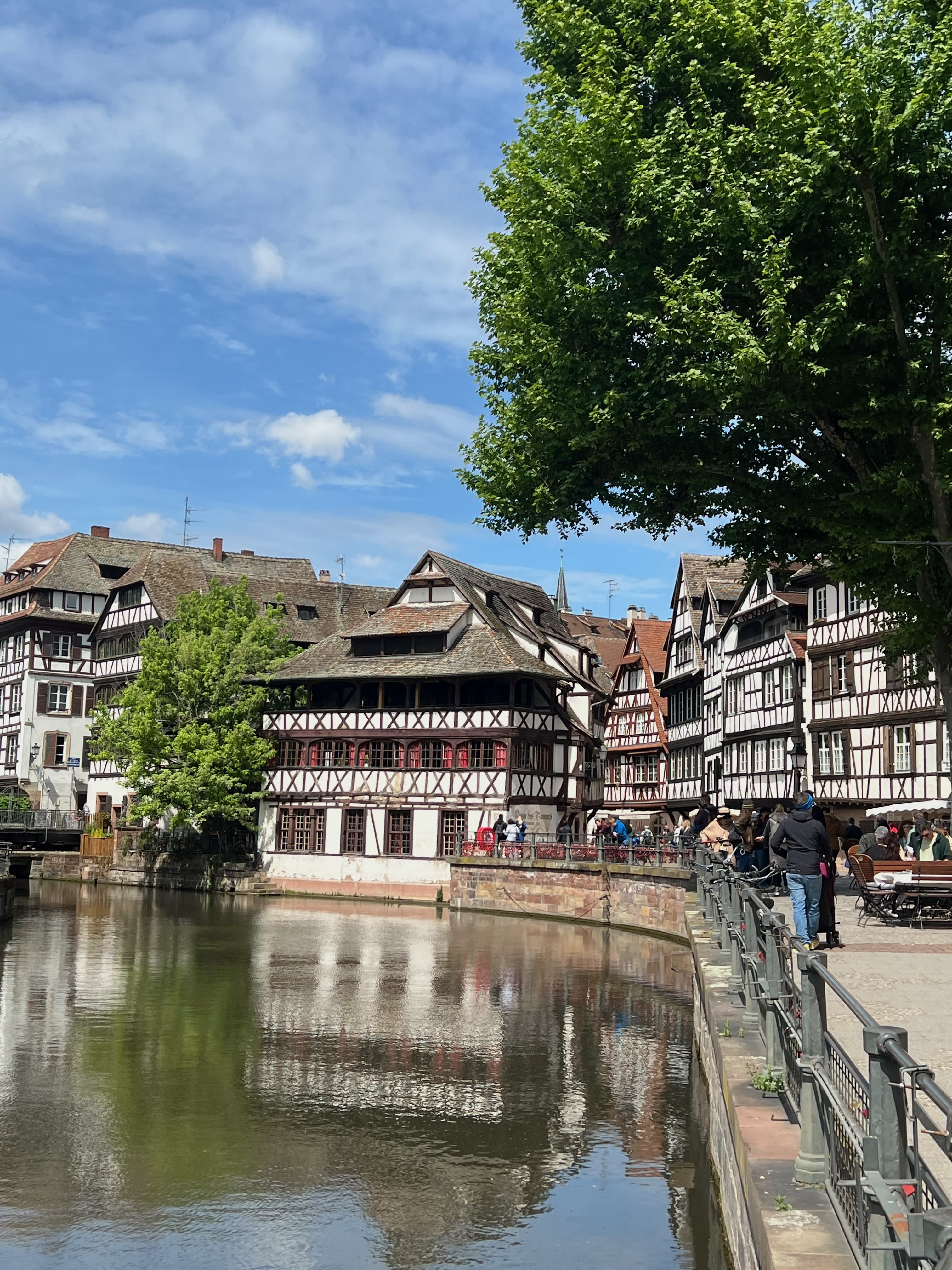
While we’ve explored many regions and cities throughout France, Strasbourg and the Alsace-Lorraine region had long remained on our “to-do” list—until we chose to experience it through a weeklong canal barge trip (more on that in a future report!). The cruise began and ended in Strasbourg, and although the itinerary included a guided day in the city, we decided to arrive early and explore on our own. We’re so glad we did. Strasbourg stands out among French cities with its distinct blend of Franco-German culture; exceptional Alsatian wines; and a compact, walkable city center filled with canals, half-timbered houses, and a breathtaking cathedral. We recommend spending at least two days to take full advantage of the city’s charm—and its excellent dining scene. We focused our visit on the historic heart of the city, especially the adjoining neighborhoods of Grande-Île and La Petite France. Grande-Île, a UNESCO World Heritage site, is home to Strasbourg Cathedral and several fascinating museums housed in the nearby Palais Rohan. La Petite France—often called the “Venice of France”—charms with its winding canals, covered bridges, and waterside restaurants set against the backdrop of beautifully preserved half-timbered buildings. With limited time, we didn’t explore the city’s more modern quarters, including the area that hosts the European Parliament and other EU institutions, but they remain on our list for next time.
The Fora Difference
Book with Dave Levine to access exclusive perks and experiences on your trip.

Killer perks
Free upgrades, spa credits and more—we got you

Personalized recs
Customized travel planning for your style

Insider knowledge
Expert advice from people who’ve actually been there
Where to stay in Strasbourg
Unlock perks by contacting Dave Levine to book your trip.
Things to do in Strasbourg
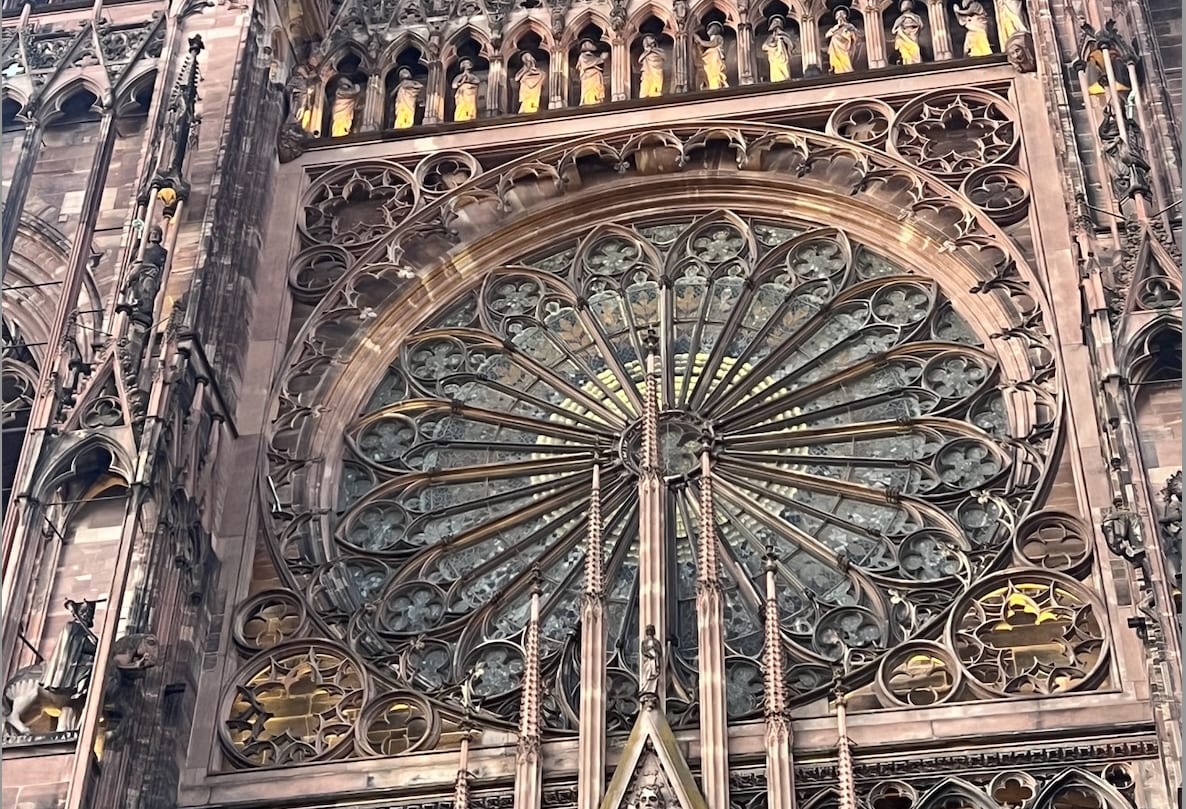
Cathédrale Notre-Dame
Stroll through Grande-Île and La Petite France
Begin at Place Gutenberg, then make your way to Place de la Cathédrale to admire the architectural gems lining the cobblestone streets, many of which are home to bustling cafés and restaurants. From there, walk two blocks down to the quai and follow the Ill River, which encircles Grande-Île, toward La Petite France. This is arguably Strasbourg’s most picturesque district, known for its winding lanes, canals, locks, and beautifully preserved half-timbered houses.
Visit the Strasbourg Cathedral (Cathédrale Notre-Dame)
An awe-inspiring example of Gothic architecture, this cathedral was the tallest building in the world from 1439 to 1874, standing 466 feet high. Inside, don’t miss the Astronomical Clock, a Renaissance masterpiece that blends science, engineering, and art in a mesmerizing daily display.
Explore Palais Rohan
Located next to the cathedral, Palais Rohan was built in 1732 and once served as the seat of government and residence for prince-bishops. Today, it houses three excellent museums: the Museum of Fine Arts, the Archaeological Museum, and the Museum of Decorative Arts.
Discover the Museum of Decorative Arts
We especially enjoyed the Musée des Arts Décoratifs, located within Palais Rohan. The collection includes 18th- and 19th-century furnishings, clocks, porcelain, and royal apartments that were once used by Marie Antoinette, Louis XV, and Napoleon Bonaparte.
Treasure hunt at the Strasbourg flea market
Held every Wednesday and Saturday, the Strasbourg flea market stretches from Rue des Bouchers and surrounding streets just beyond Place Gutenberg. With around 130 vendors, it has a wide selection of antiques, vintage clothing, kitchenware, books, decorative items, and artwork, and is a perfect outing for collectors and casual browsers alike.
Places to eat & drink in Strasbourg
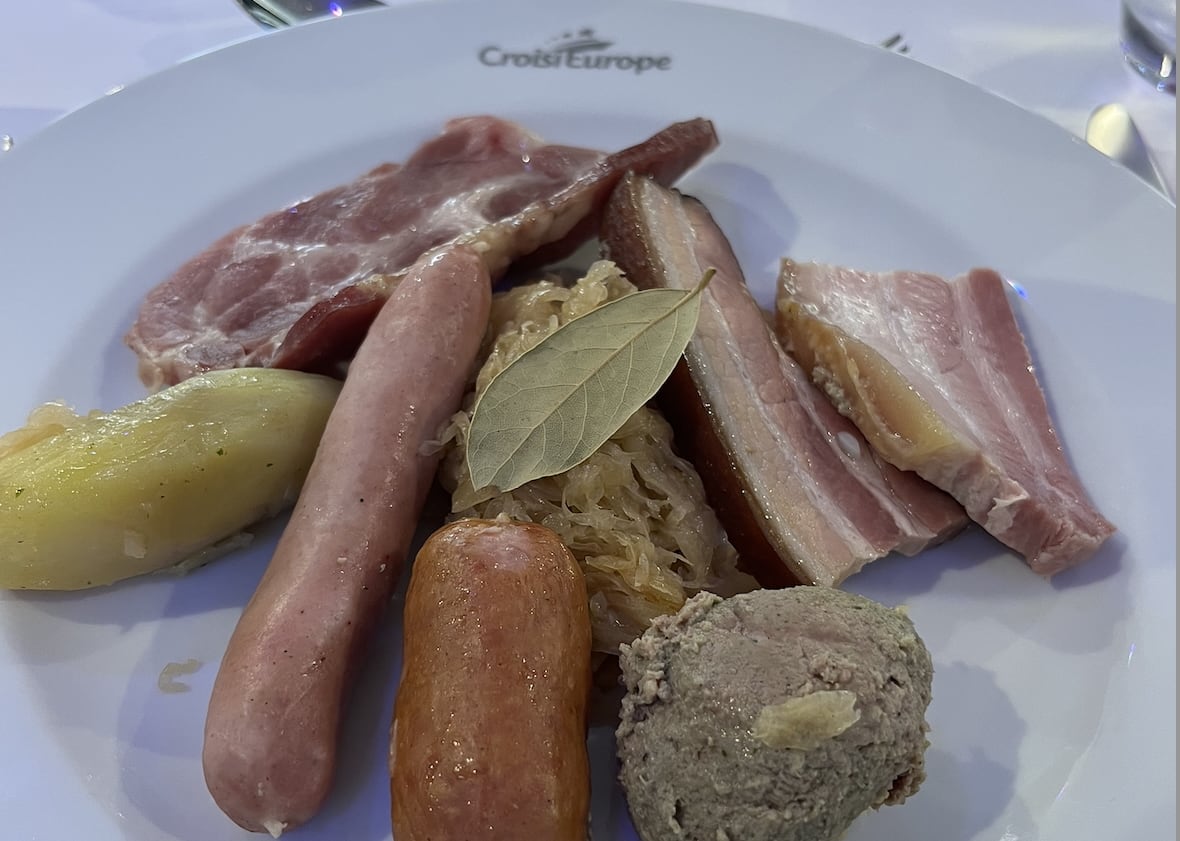
Choucroute
L’Absinthe (22 Rue des Bouchers)
Just a short walk from Grande-Île, L’Absinthe is a cozy, unpretentious spot with about 10 tables and a chalkboard-only menu that changes frequently. It’s popular with locals, thanks to its warm, lively atmosphere and affordable mains (typically under €20). True to its name, the bar offers a variety of absinthes, and one of the house specialties is a crème brûlée flambéed with absinthe—a fun and flavorful finish to your meal.
La Petite Mairie (8 Rue Brûlée)
A welcoming brasserie just a couple of blocks behind the cathedral, this spot serves up traditional Alsatian fare like homemade fleischkiechle (meat patties), choucroute garnie (sauerkraut with sausages and meats), and flammekueche (tarte flambée). Friendly service and a casual vibe make it a great choice for a satisfying, no-fuss meal.
Muensterstuewel (8 Place du Marché aux Cochons de Lait)
Set in a half-timbered house classified as a historic monument, this restaurant feels like stepping into old Alsace. Located in a vibrant dining district, it offers regional classics including choucroute, flammekueche, escargot, and salmon in a cream and Riesling sauce. Main courses hover around €25. It’s a lovely choice if you’re looking for atmosphere and tradition.
Au Purgatoire (34 Rue de Zurich)
A standout for wine lovers, this bar combines rustic charm (think tables made from barrels) with an impressive wine list of around 180 labels, over 40 of which are available by the glass. The staff is wonderfully accommodating—when we mentioned we were new to Alsatian wines, they happily brought over several small tastes to help us choose. A perfect stop for an early evening tasting or a relaxed nightcap.
Need to know
Alsatian wines may not be what you think
If you associate Alsatian wines with sweet Rhine varieties, think again. Alsace produces elegant, aromatic, and often dry wines, despite the common misconception.
Rieslings from the region are typically dry, crisp, and mineral-driven, with bright citrus and floral notes.
You’ll also find excellent dry versions of Pinot gris, Muscat, Pinot blanc, and Sylvaner.
For reds, don’t miss the Alsatian Pinot Noir, which is light, fresh, and increasingly well-regarded.
Munster cheese: A different breed
Forget what you know about the orange-rinded Muenster cheese in American grocery stores. Alsatian Munster is a pungent, tangy, and deeply flavorful washed-rind cheese, aged for two to eight weeks. It’s considered a delicacy in the region and is often featured as a supplement on menus—add it to your chicken cordon bleu for a few extra euros, and you won’t regret it.
Flammekueche: Alsace’s signature dish
Though it may resemble pizza, flammekueche (or tarte flambée) is uniquely Alsatian and truly its own thing. It features:
A paper-thin, crispy dough base (no yeast).
Fromage blanc or crème fraîche as the base sauce.
Onions (usually raw or lightly sautéed).
Lardons (smoky bacon strips).
Popular variations include:
Traditionnelle: the classic.
Gratinée: with added cheese like Emmental or Munster.
Forestière: with mushrooms.
Chèvre-miel: goat cheese and honey.
Sucrée: sweet versions with apples, cinnamon, or flambéed brandy.
Pro tip: Order one at a time to share, especially if you're in a group. Each flammekueche is about the size of a medium pizza (six to eight slices), and sharing multiple styles makes for a fun and flavorful meal.
Getting there is easy
Strasbourg is well-connected by high-speed train (TGV).
Trains from Paris Gare de l’Est run almost hourly and take under two hours.
You’ll also find direct TGV service from Charles de Gaulle Airport a few times daily—convenient if you’re flying in from abroad and want to skip Paris.


Travel Advisor
Dave Levine
Dave Levine

Get in touch with Dave Levine
Did you like this guide? Reach out to customize and book your own experience. Or, just to chat about travel in general.
For more inspiration and insider recommendations, visit our Strasbourg page.