
Curator’s statement
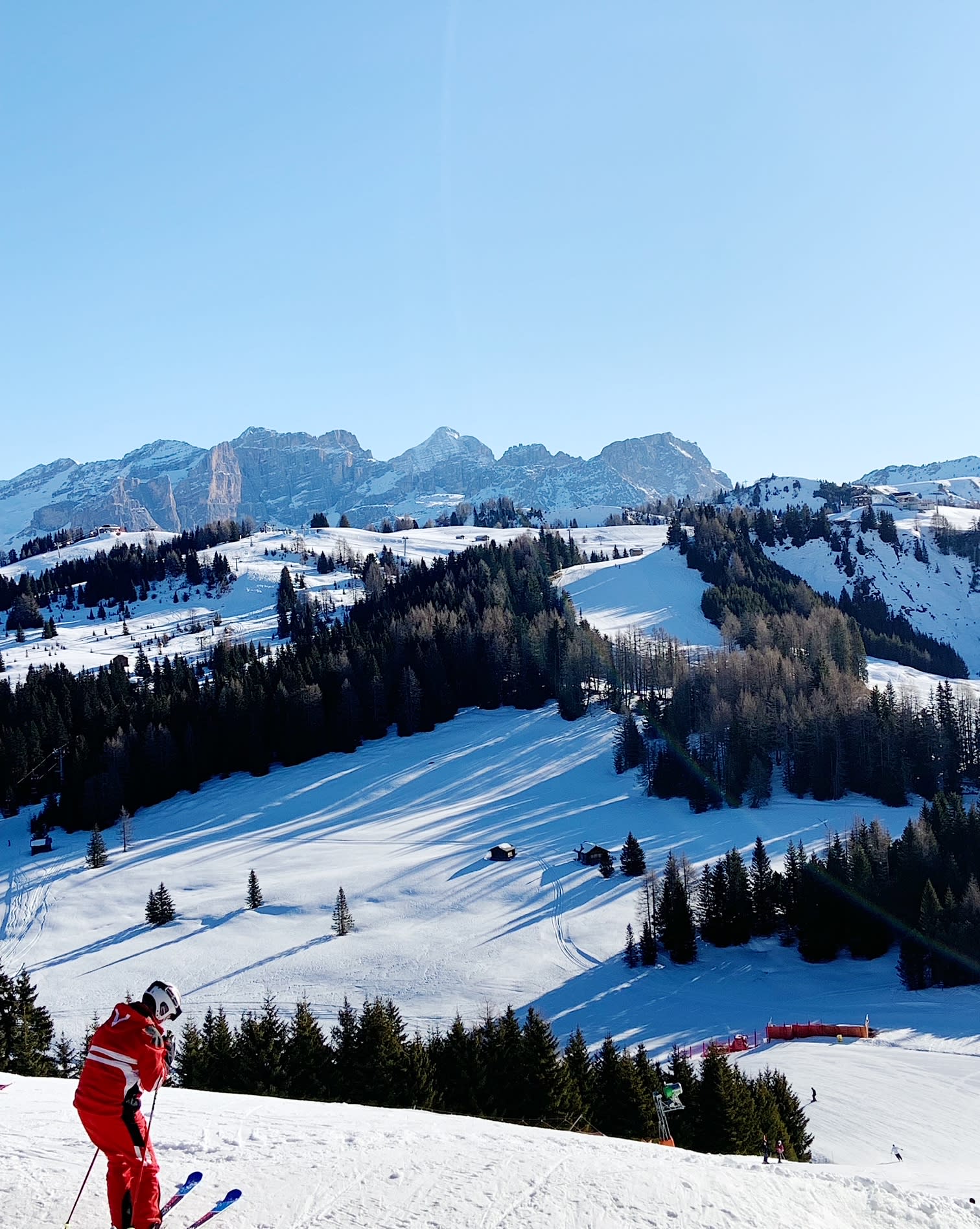
The Dolomiti Superski isn’t just a ski area. It’s a winter kingdom. With a single pass granting access to over 1,200 km of interconnected slopes across 12 distinct regions, it feels like a world unto itself, set amidst the dramatic, pale-peaked mountains that are a UNESCO World Heritage site. The Sella Massif acts as a colossal roundabout, around which a network of lifts and trails weave through valleys steeped in Ladin culture. While the circuit draws serious skiers, its vastness means you can always find quiet, sun-drenched slopes or a cozy mountain hut (rifugio) for a long lunch.
The Fora Difference
Book with Michael Gallow to access exclusive perks and experiences on your trip.

Killer perks
Free upgrades, spa credits and more—we got you

Personalized recs
Customized travel planning for your style

Insider knowledge
Expert advice from people who’ve actually been there
Where to stay in the Dolomites
Unlock perks by contacting Michael Gallow to book your trip.
Things to do in the Dolomites
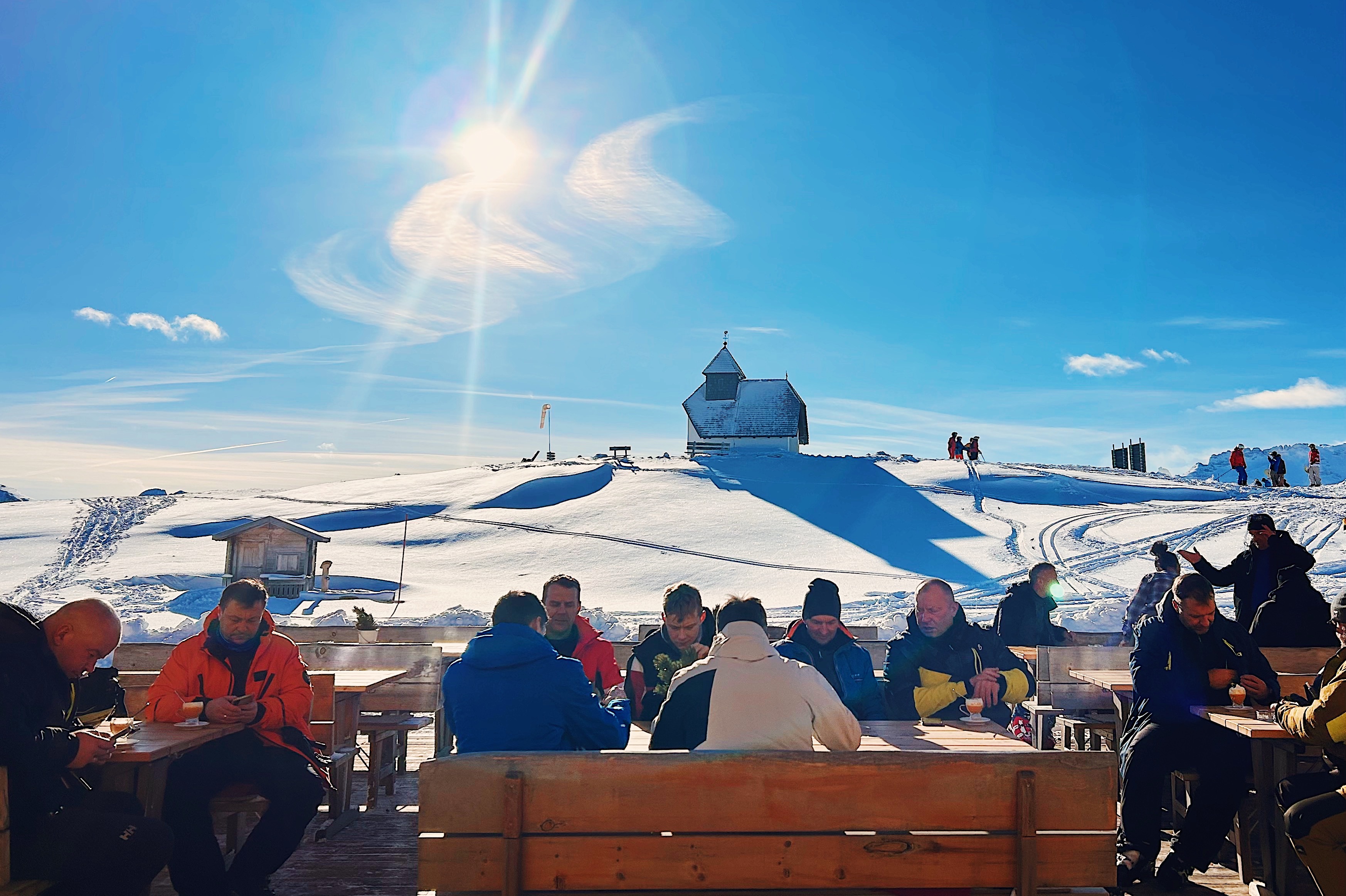
Waiting on the terrace at Pralongia for the helicopter to land.
The Dolomiti Superski suits every winter traveler: families seeking gentle, wide runs, couples dreaming of romantic alpine vistas, and expert skiers challenging the legendary Sella Ronda circuit. Expect impeccable grooming, a unique blend of Italian dolce vita and Tyrolean charm, and a sense of freedom that only this scale can provide. Read on to learn where to stay, what to ski, and how to experience the best of this alpine paradise.
The beauty of the Dolomiti Superski is its diversity. Each valley offers a unique character and terrain.
Alta Badia and Val Gardena: The heart of the circuit
These neighboring Ladin valleys are the epicenter of the Sella Ronda. Alta Badia is known for its gourmet mountain restaurants (including multiple Michelin-starred options on the slopes), wide, cruiser-friendly runs, and a refined, family-oriented atmosphere. Val Gardena is larger, with more challenging terrain, including the famous Saslong World Cup downhill course, and a slightly more vibrant après-ski scene in towns like Selva.
Cortina d’Ampezzo: The icon
Cortina exudes a glamorous, old-world Italian flair. The skiing on the Tofane range is spectacular, with long, scenic runs and the iconic Olympia delle Tofane slope. It’s a destination for those who appreciate style, history, and breathtaking beauty on and off the slopes.
Kronplatz: The champion’s mountain
A single, mighty peak dominating the Pustertal valley, Kronplatz is a skier’s dream with its state-of-the-art lifts and perfectly groomed slopes. It’s a day-trip destination from other bases, offering challenging blacks, fantastic intermediate cruising, and world-class museums at the summit.
Val di Fassa: The Italian spirit
Nestled on the southern side of the Sella Group, Val di Fassa has a strong, authentic Italian character. It’s a fantastic base for the Sella Ronda and offers access to the breathtaking Drei Zinnen (Tre Cime di Lavaredo) ski area, with its dramatic, iconic panoramas.
Civetta: The hidden gem
Known as the “Wall of Walls,” Civetta offers long, scenic runs that feel quieter and more remote than the main circuit. It’s a paradise for intermediates who love to explore endless miles of perfectly groomed trails with stunning Dolomite views.
Alpe di Siusi: The family paradise
Europe’s largest high-altitude alpine meadow, Alpe di Siusi is a vast, sunny plateau with incredibly gentle, wide slopes. It’s absolutely ideal for beginners, families with young children, and snow lovers seeking breathtaking, peaceful scenery.
What to do: Beyond the slopes
The Dolomiti Superski offers more than just downhill skiing.
Sella Ronda: Ski the legendary 26-mile circuit around the Sella Massif. It’s a must-do, achievable in a day by confident intermediates.
Great War tours: Explore open-air museums and tunnels from WWI, high on the mountainsides. A poignant and fascinating historical experience.
Snowshoeing and winter hiking: Miles of marked trails offer a peaceful way to experience the silent, snow-covered landscapes.
Luxury Rifugio dining: Book a table at Rifugio Emilio Comici or Ütia de Börz for a gourmet lunch with unparalleled views.
Heli-skiing: For experts, arrange a helicopter drop onto the majestic Marmolada glacier, the “Queen of the Dolomites.”
Sample itinerary
Days 1–3 (Val Gardena): Settle into Val Gardena. Spend your first day acclimatizing on the local slopes of Seceda and Ciampinoi. On day two, tackle the Sella Ronda (Orange route). Dedicate day three to exploring the challenging terrain of the Saslong area and enjoying après-ski in Selva.
Days 4–5 (Alta Badia & Kronplatz): Ski over to Alta Badia for a gourmet lunch on the slopes. The next day, take a short transfer to Kronplatz for a day of impeccable grooming and a visit to the LUMEN Museum of Mountain Photography at the summit.
Day 6 (Alpe di Siusi & Relaxation): A perfect recovery day. Ski the gentle, breathtaking expanse of the Alpe di Siusi, then return to your hotel for a well-deserved spa treatment.
Day 7 (Departure): Enjoy one final Italian coffee and pastry before your transfer to the airport.
If you’re drawn to scale and alpine beauty but want to consider other options:
The 3 Valleys, France: The world’s largest ski area, with a more vibrant party scene and higher altitude assurance.
The Arlberg, Austria: Austria’s largest interconnected ski area, known for its challenging terrain and charming villages like Lech and Zürs.
Zermatt, Switzerland: For the iconic Matterhorn views, extensive slopes, and a car-free, high-alpine village atmosphere.
Places to eat & drink in the Dolomites
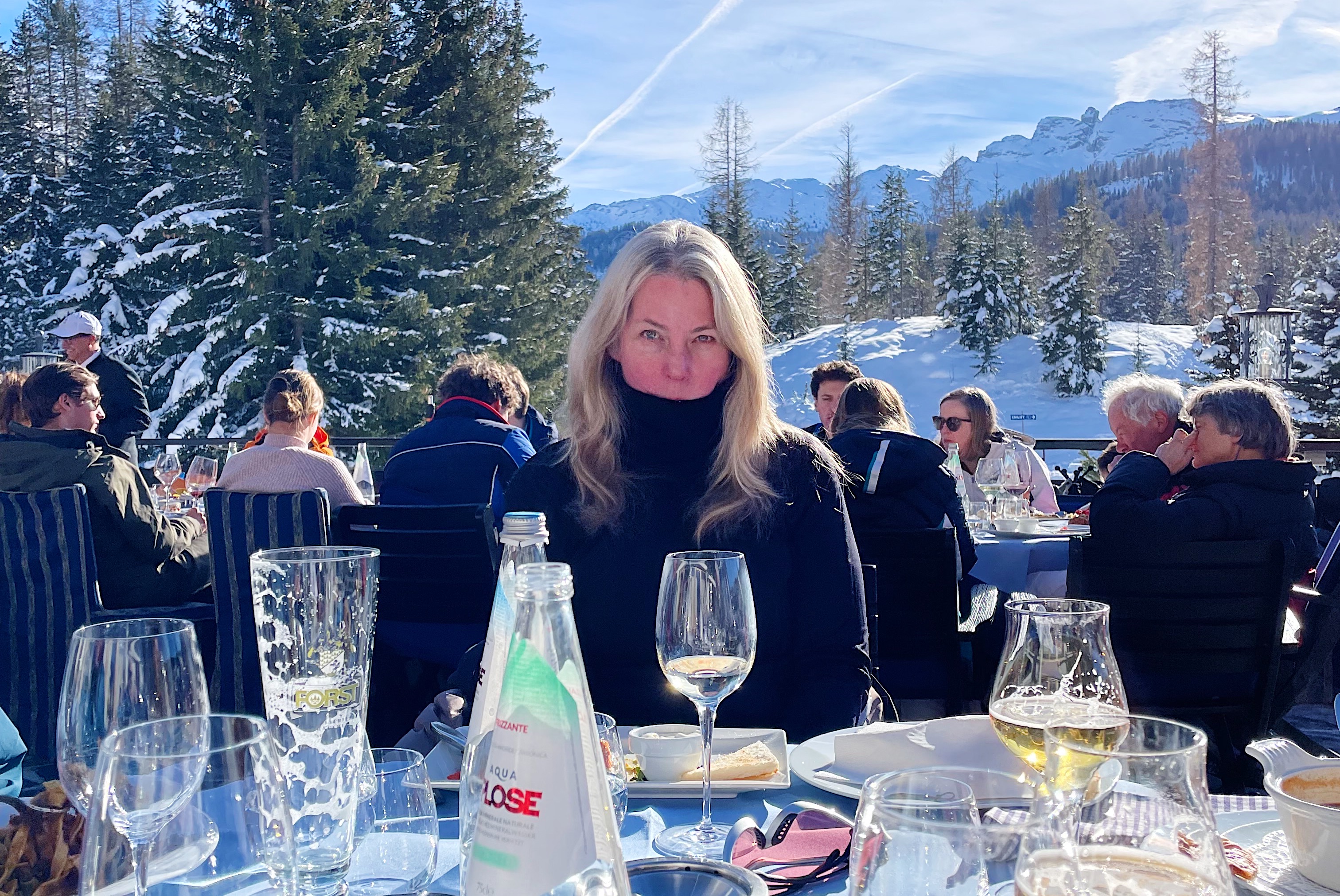
Lunch on the terrace at Armentarola mid-January.
On the mountain
Rifugio Emilio Comici: (Val Gardena): A mountain hut famous for the seafood arriving daily from the Adriatic.
Rifugio Punta Trieste (Alta Badia): Amazing grilled food and a spectacular sun terrace with views of the Marmolada glacier.
Baita Checco (Civetta): A family-run favorite known for its massive and delicious shared platters.
In town
CoCun (San Cassiano): A fine-dining experience in the charming Ciasa Salares
Tivoli (Cortina): A historic chichi restaurant where the Italian jetset meet.
Suinsom (Selva di Gardena): meaning “at the top” in Ladin, with a kitchen focused on combining tradition and innovation using high-quality, fresh ingredients.
Snow Cat Mountain dining
Some rifugios offer dining at the peak with a ride by cable car, snow cat, or snowmobile. Always an adventure with great food. Among your choices, you can book at Edelweiss (Colfosco), Las Vegas (La Villa), Averau (Cortina) or Emilio Comici (Selva di Gardena).
Late afternoon aprés ski at Club Moritzino (Piz La Ila) or at L’Murin (Hotel La Perla Corvara).
Need to know
The Dolomiti Superski is efficient and welcoming, but its size demands a plan. Start by choosing your base valley based on your preferred vibe, and always check the daily piste report app to make the most of conditions.
Currency: The currency is the Euro (€). Credit and debit cards are widely accepted at hotels and larger restaurants, but it’s essential to carry cash for small mountain huts, ski locker deposits, and taxi fares. Tipping isn’t mandatory, but rounding up the bill or leaving 5–1010 percent for excellent service is appreciated.
Languages: The region is beautifully multilingual. Italian is official, but German is equally prevalent. In the valleys of Alta Badia and Val Gardena, the ancient Ladin language is also spoken. English is common in tourist areas.
Key phrases: thank you (grazie / danke), please (per favore / bitte), ski pass (ski pass), slope (pista / piste), mountain hut (rifugio / hütte).
Airports: The most convenient airports are Innsbruck (INN) in Austria, and the larger Venice Marco Polo (VCE) or Munich (MUC). Transfer times can range from two hours from Innsbruck, three hours from Venice, or 3.5 hours from Munich, each one often involving stunning mountain drives.
Transportation: While local buses are efficient and ski-friendly, a car offers flexibility for exploring different valleys on your itinerary. For a single-base stay, it’s not necessary. The region is wonderfully connected by a vast network of modern lifts. Taxis and private transfers are best arranged through your hotel. Getting around South Tyrol is a breeze with the Südtirol Guest Pass. Valid throughout the duration of your holiday, it allows you to travel around the various zones on public transport and is included with your accommodation.
Best time to visit: The core season runs from late November to early April. For the best balance of reliable snow and sunny days, aim for January through March. The Christmas period is magical but busy.
Ideal length of stay: Five to seven nights is perfect to settle in and explore multiple ski areas without rushing. With a week, you can comfortably tackle the Sella Ronda and still have time to discover quieter corners.
What to wear: On the slopes, technical layers are key—temperatures and conditions can change rapidly. Evenings are casual but polished. Think smart sweaters, comfortable boots, and insulated jackets. Pack swimwear for hotel spas and pool.
Signature dishes and drinks
Canederli: Large bread dumplings, often served in broth or with speck (cured ham).
Speck: The region’s famous juniper-smoked, air-dried ham.
Casunziei: Half-moon-shaped pasta stuffed with beetroot or pumpkin.
Polenta: A staple, served creamy or grilled, alongside stews or sausages.
Apple strudel: Flaky pastry filled with warm, spiced apples.
Hugo spritz: A refreshing spritz made with prosecco, elderflower, and mint.
Grappa: A strong grape-based pomace brandy, perfect for warming up.
Local rules and travel tips
Ski pass: Buy your Dolomiti Superski pass online in advance for potential discounts. It works as a hands-free card—just keep it in a pocket.
Piste etiquette: Obey the FIS rules of conduct. Stick to marked slopes, and be aware that slower skiers have the right of way.
Rifugio culture: The mountain huts are a core part of the experience. Don’t rush lunch. Savor a glass of wine and the views.
Après-ski: The vibe is more relaxed and family-friendly than in the Alps’ party towns. Enjoy a drink on a sun terrace, not a dance on the tables.
Altitude: Many areas are above 2,000 meters. Stay hydrated and use sunscreen, as the sun is intense at high altitudes.

Travel Advisor
Michael Gallow
Michael Gallow

Get in touch with Michael Gallow
Did you like this guide? Reach out to customize and book your own experience. Or, just to chat about travel in general.
For more travel inspiration and insider recommendations, check out our Italy page.