

Curator’s statement
From Alexandria’s bustling seaport and the gleaming Bibliotheca Alexandrina to Cairo’s intensity and the pyramids rising stark from the desert, Egypt unfolds in striking contrasts. From above, the Nile stretches like a life-giving ribbon of blue, carving its way through endless sand, while sailing its waters reveals how life has flourished along its banks for millennia. In Aswan, the pace slows: feluccas drift past Elephantine Island, golden dunes glow above the river, and spice markets draw you in with their swirl of color and scent. Then comes Abu Simbel—carved into the cliffs of the far south—leaving you humbled by the scale of human ambition and the power of a civilization determined to outlast time itself.
The Fora Difference
Book with Emma Fuller to access exclusive perks and experiences on your trip.

Killer perks
Free upgrades, spa credits and more—we got you

Personalized recs
Customized travel planning for your style

Insider knowledge
Expert advice from people who’ve actually been there
Where to stay
Unlock perks by contacting Emma Fuller to book your trip.
Day 1: The Great Pyramids & the Sphinx
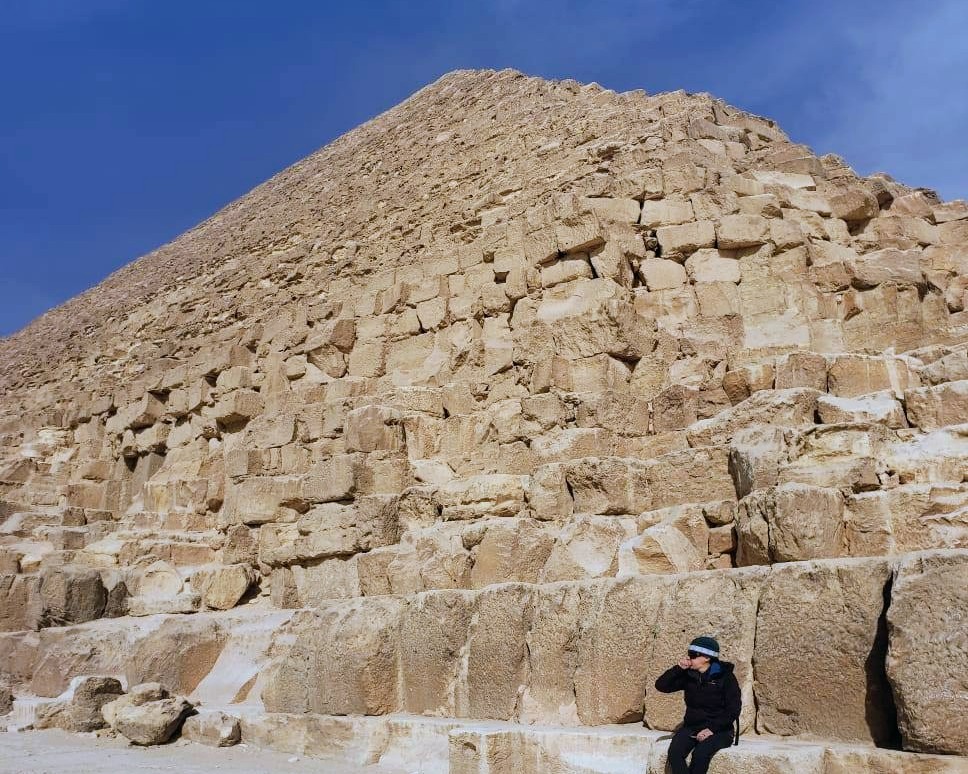
Finding my place among the 2.3 million stones that make up the Great Pyramid
Begin in the ancient capital of Memphis and Saqqara, where the remarkable Step Pyramid of Djoser still rises from the desert as the world’s first monumental stone structure. From here, continue to the legendary Giza Plateau. As the Great Pyramid of Khufu comes into view, take a moment to absorb its staggering scale—2.3 million blocks, each weighing an average of 2.5 tons, stacked into a feat of engineering that has endured for over 4,500 years. For the adventurous, venturing inside and through the narrow, steep passageways to the King’s Chamber is an unforgettable (if slightly claustrophobic) experience. Ride a camel across the sands for that once-in-a-lifetime photo with all three pyramids as your backdrop. Conclude your day with the timeless gaze of the Great Sphinx, an enigmatic guardian that has watched over the plateau for millennia.
Day 2 & 3: Cairo immersion – museums, markets & mosques
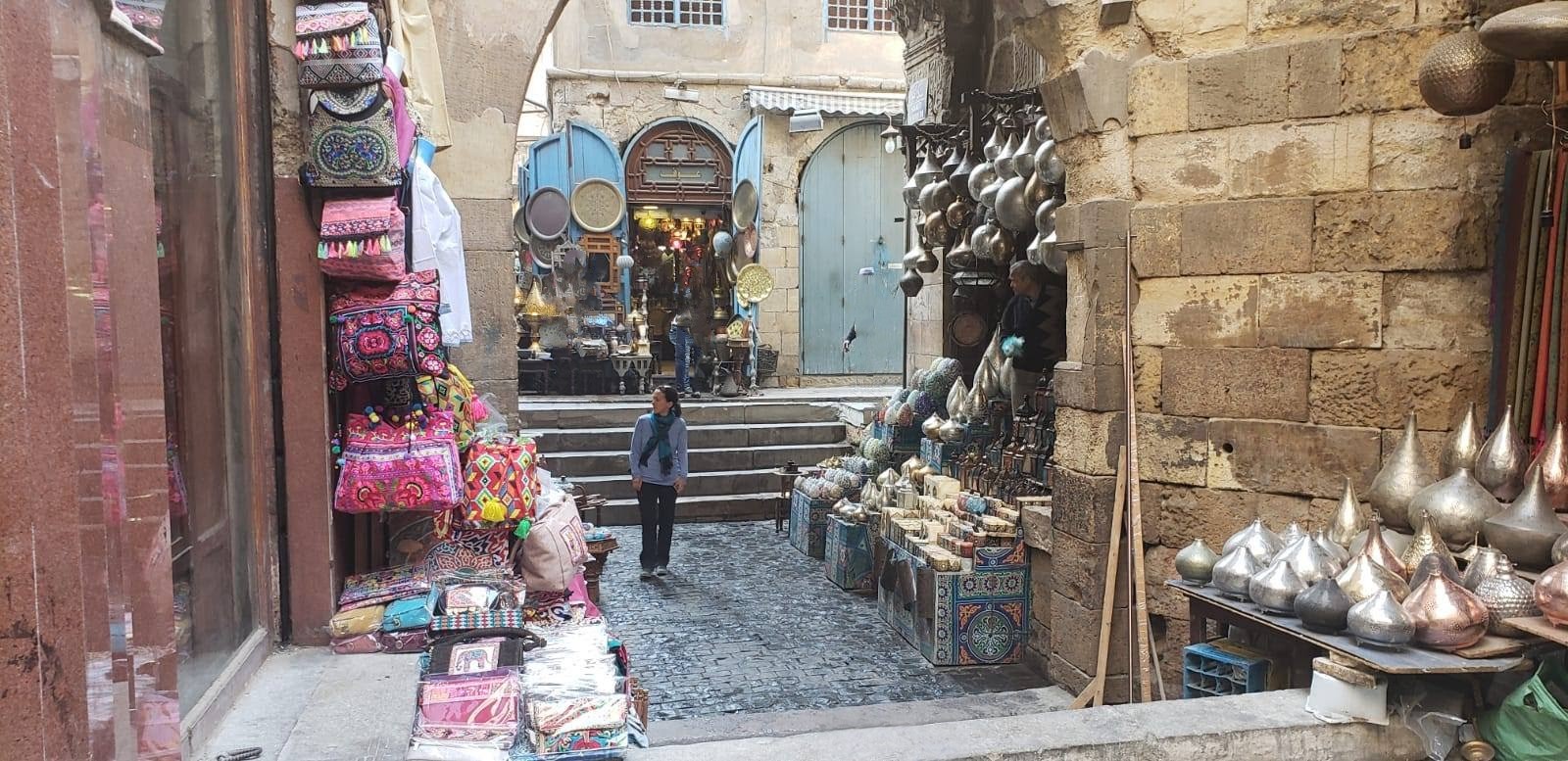
Practicing bartering skills in Khan el-Khalili Bazaar
A tour of Cairo immerses you in centuries of history, faith, and craftsmanship. Start at the Egyptian Museum, where treasures dating back to 3100 BC await—mummies, colossal statues, and exquisite artifacts bring ancient Egypt to life. Continue to the Museum of Islamic Art, home to one of the world’s largest collections of Islamic treasures. Explore Coptic Cairo, the historic Christian quarter with its ancient churches and narrow lanes. Next, to the Citadel of Saladin and step inside the magnificent Mosque of Mohammed Ali. Its gleaming alabaster walls, soaring domes, and panoramic views over Cairo make it one of the city’s most impressive landmarks. Stroll along El-Moez Street, an open-air museum of Islamic architecture, where minarets and medieval buildings line the way. From there, dive into the bustling atmosphere of the Khan el-Khalili Bazaar. The market brims with stalls offering woodwork, glassware, papyrus, jewelry, and spices—perfect for finding a memorable keepsake. For a more traditional craft, wander down Sharia al-Khayamiya, the Street of the Tentmakers. This living, but endangered heritage has roots in crafting tents for Bedouin nomads. Today the artisan’s hand-stitch vibrant appliqué wall hangings. Watching bold patterns come to life with precise stitches is an opportunity to see a skill from the past.
Day 4: Alexandria – City of the Sea and Scholars
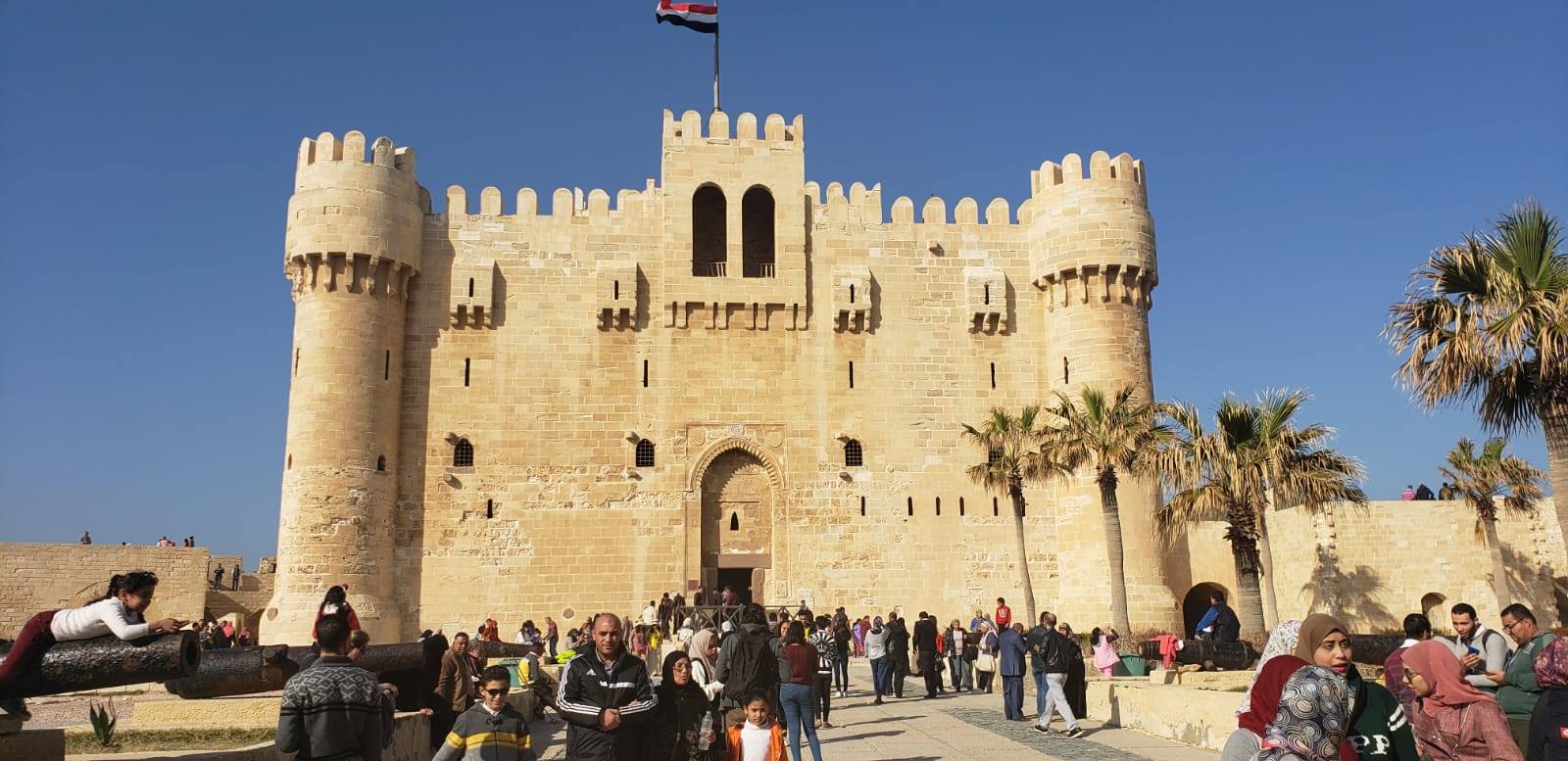
Alexandria’s Citadel of Qaitbay overlooking the Mediterranean
Experience Mediterranean North Africa with a daylong visit to the coastal seaport of Alexandria, founded in 331 BCE by Alexander the Great. Once the original home of the world’s most famous library, a legacy now honored by the modern Bibliotheca Alexandrina, a tribute holding over eight million books. Next, descend into the Catacombs of Kom el-Shoqafa, where Egyptian, Greek, and Roman styles blend in a fascinating subterranean necropolis. Continue to Pompey’s Pillar, a towering 89-foot-tall Roman column, before visiting the Qaitbay Citadel, built on the site of the Lighthouse of Alexandria, one of the Seven Wonders of the Ancient World. Finish with a walk along the Corniche promenade, watching the life of this bustling port city continue as it has for over two millennia. Return to Cairo for the night.
Day 5: Fly to Luxor – East Bank splendors
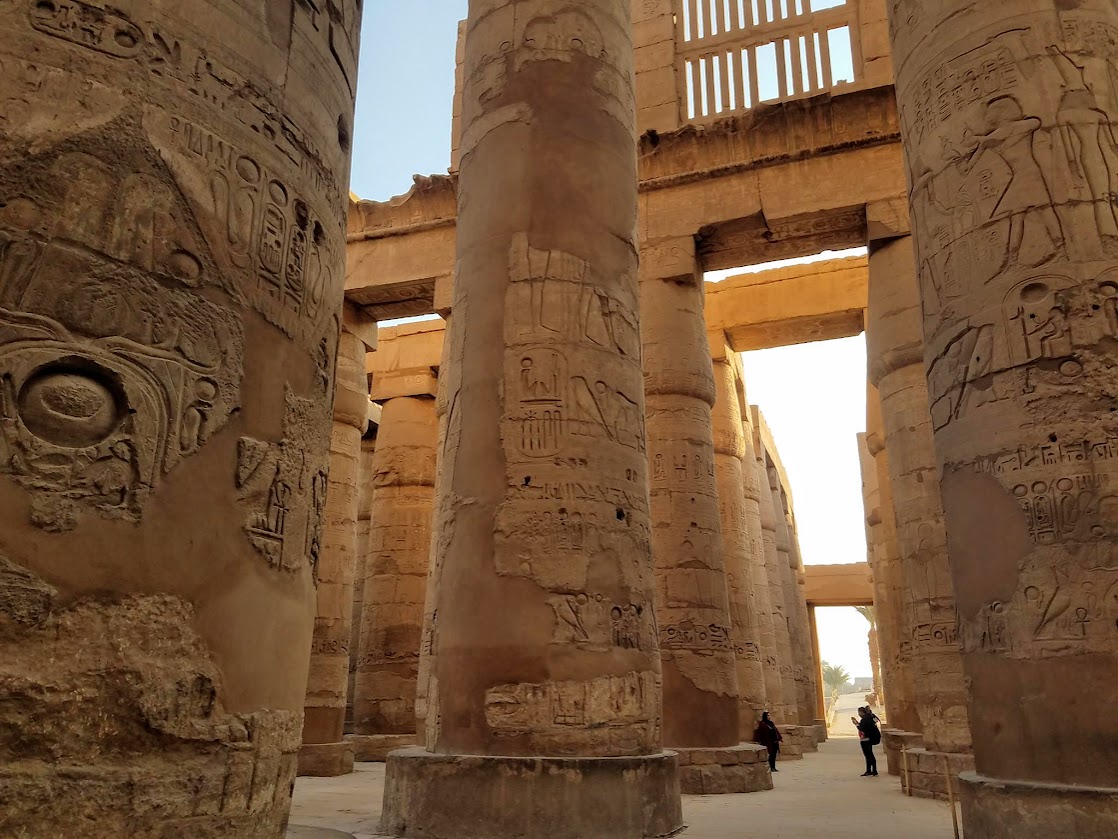
Dwarfed by the sandstone columns in Karnak Temple
Take the short flight from Cairo to Luxor. Gaze down as the Nile stretches below you like a ribbon of life surrounded by desert as far as you can see. Settle into your hotel or board your dahabiya. Walk through the ancient city of Thebes, known today as Luxor, an Arabic word for “the palaces”. Marvel at Karnak Temple and wander among its 134 massive sandstone columns. Twelve of these columns are 70 feet tall and the other 122 columns are 43 feet tall, each weighing hundreds of tons. Follow the avenue of Sphinxes to Luxor Temple with its imposing entrance, elaborate carvings, and remaining obelisk. The other obelisk is the Place de la Concorde in Paris. Surrounded by this ancient history, as the sandstone turns red in the sunset, the call to prayer from a nearby mosque provides the perfect background sound.
Day 6: Luxor’s West Bank – Valleys of Kings & Queens
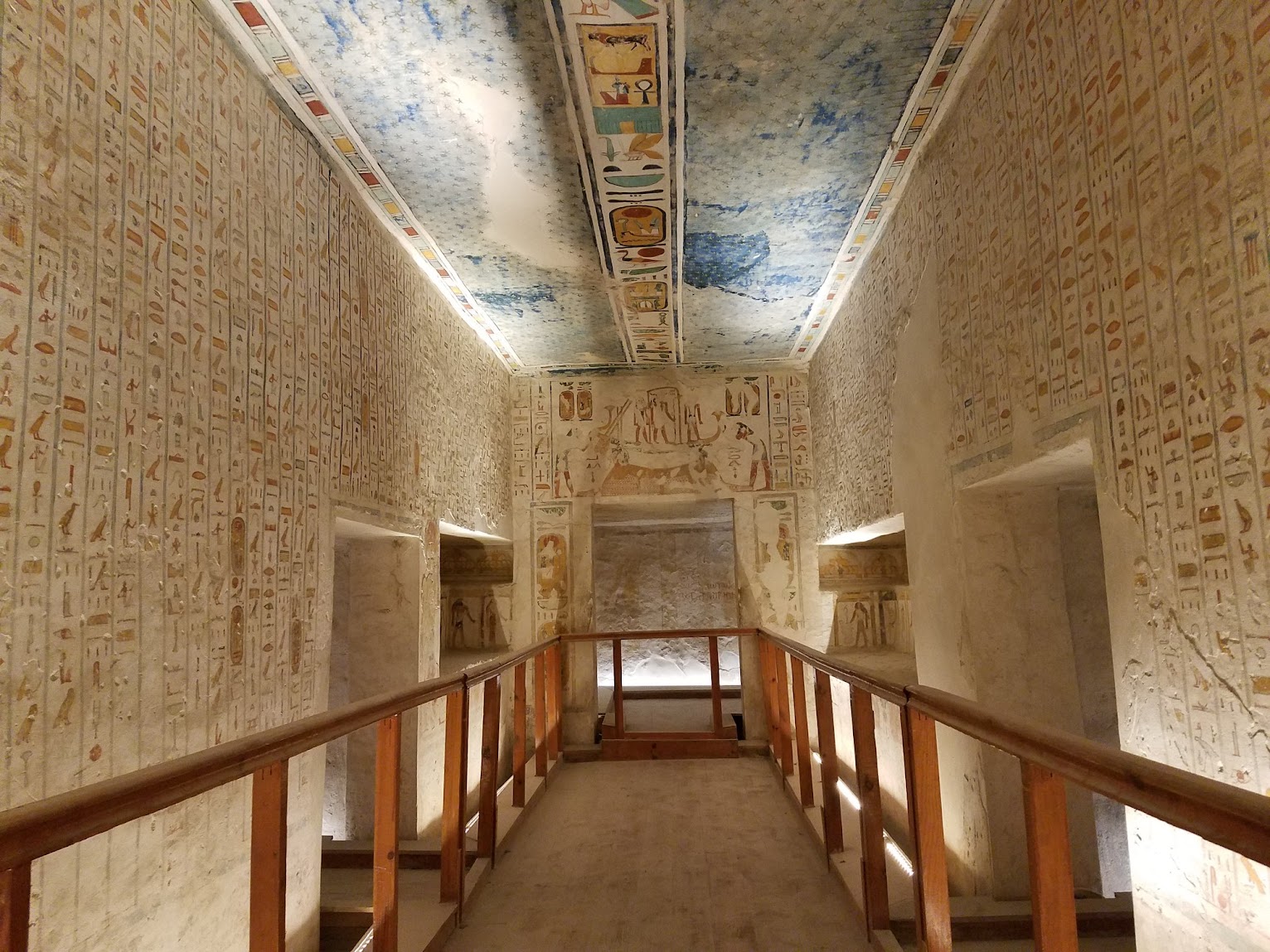
Thirty five feet underground headed to the tomb of Ramses IX
Begin before sunrise with a hot air balloon ride, drifting silently over the Nile. From above, the landscape unfolds like a living tapestry—desert cliffs, the fertile ribbon of the river, the monumental temples of Karnak, and the valleys where pharaohs and queens chose their eternal resting places. Tour the West Bank and step into the afterlife world of ancient Egypt. Descend into the richly decorated tombs of the Valley of the Kings, their walls alive with colors and stories that have survived millennia. In the Valley of the Queens, stand in awe before the Tomb of Nefertari—arguably the most exquisite of them all, where every surface glows with astonishingly vivid paintings. Above ground, ascend the terraces of the Temple of Hatshepsut, a masterpiece carved into the cliffs in honor of Egypt’s great female pharaoh. Nearby, pause before the towering Colossi of Memnon—two 60-foot statues that once guarded one of the largest mortuary temples in Thebes, still watching silently over the desert plain. By afternoon, return to the river and step aboard your dahabiya. As the sails catch the breeze, begin your journey on the Nile.
Day 7: Dahabiya sailing – Temple of Horus and Kom Ombo
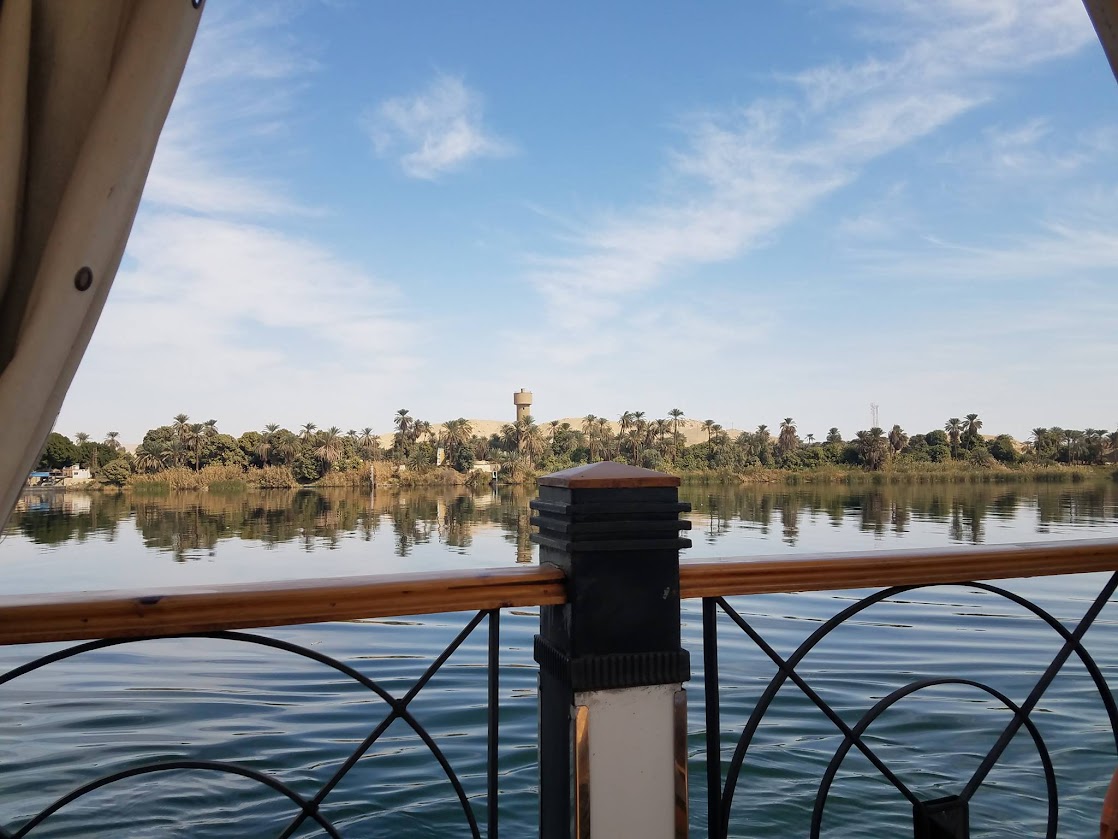
Watching the world go by from the deck of the dahabiya
Wake to sunrise on the Nile. On deck, your journey is punctuated by tranquil views, refreshing drinks, and the simple beauty of a river that has sustained a civilization for millennia. Sail past palm-lined banks, small villages, and ancient temple ruins. Watch the river crossing ferry take camels, trucks, food, singing children, and a loose chicken or two to the opposite bank. Stop at the Temple of Horus at Edfu, which began being built in 237 BC and was completed nearly two centuries later. Remarkably preserved—thanks to being buried beneath sand for thousands of years—the temple stands today much as it once did, its soaring pylons and intricate reliefs offering a vivid window into Egypt’s ancient world. Further along, you’ll arrive at Kom Ombo, where another striking riverside temple rises directly above the water. Unlike any other in Egypt, this sanctuary is dedicated to two gods: Sobek, the crocodile-headed lord of fertility and strength, and Horus the Elder, the falcon-headed god of the sky. Within Sobek’s temple, live crocodiles were once pampered like royalty—adorned with jewels, fed delicacies, and later mummified with the same devotion reserved for pharaohs. Today, their remains can be seen at the nearby Crocodile Museum, a rare and fascinating glimpse into Egypt’s enduring bond with the Nile’s most formidable creature.
Day 8: Arrival in Aswan – the slow rhythm of the Nile
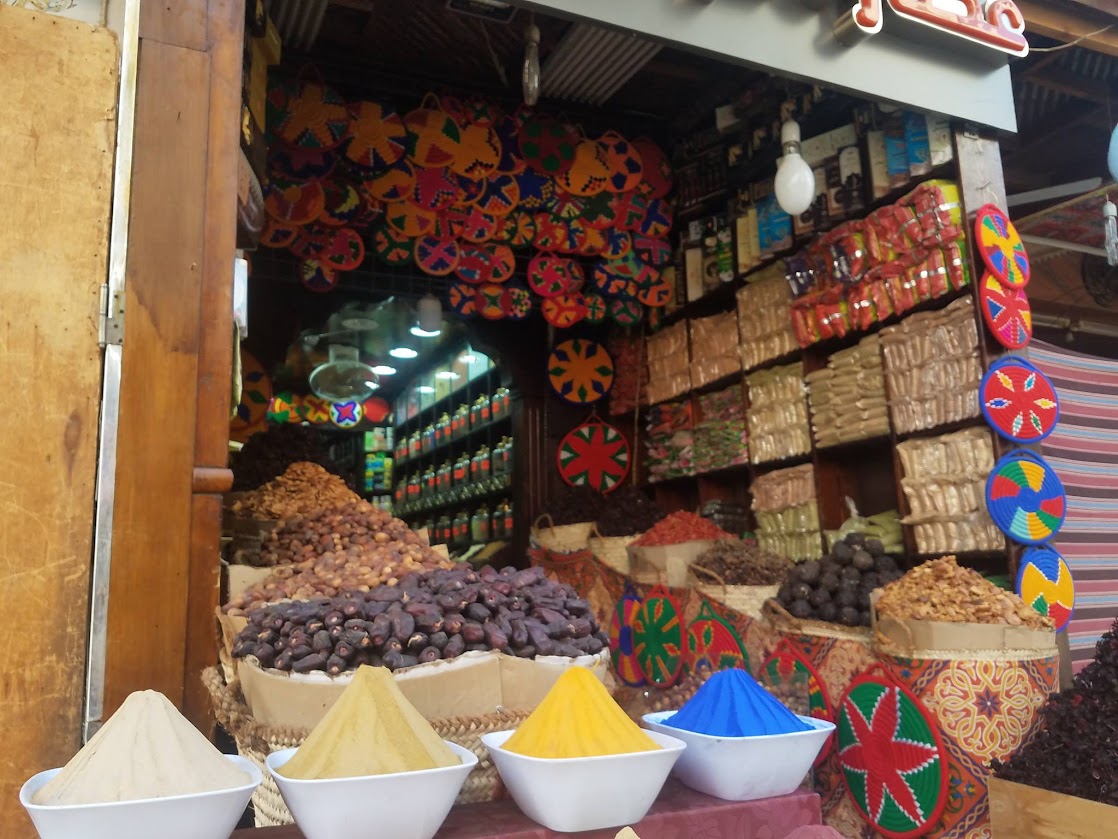
Spice market in Aswan offering indigo, turmeric, cumin and coriander, dates, and bright embroidery
As you sail into Aswan, you will see the Aga Khan Mausoleum rise on the hill and feluccas cross between the shores and rivers islands. Visit the High Dam and Lake Nasser, then take a short boat ride to Philae Island, where the Temple of Isis rises. Stand before the Unfinished Obelisk and marvel at the tools used in 1500 BC to carve what would have been the largest Obelisk in history at 138 feet tall and weighing over 1000 tons. Walk through the lush oasis of the Aswan Botanical Garden. Take a felucca around Elephantine Island to a Nubian tea house. Removing your shoes and sitting on the carpet, you can share tea with your host. As evening falls, wander the spice markets, absorbing the scents, colors, and sounds of this timeless city. Aswan reveals the very inspiration that stirred Agatha Christie to write Death on the Nile.
Day 9: Abu Simbel – a monument to eternity
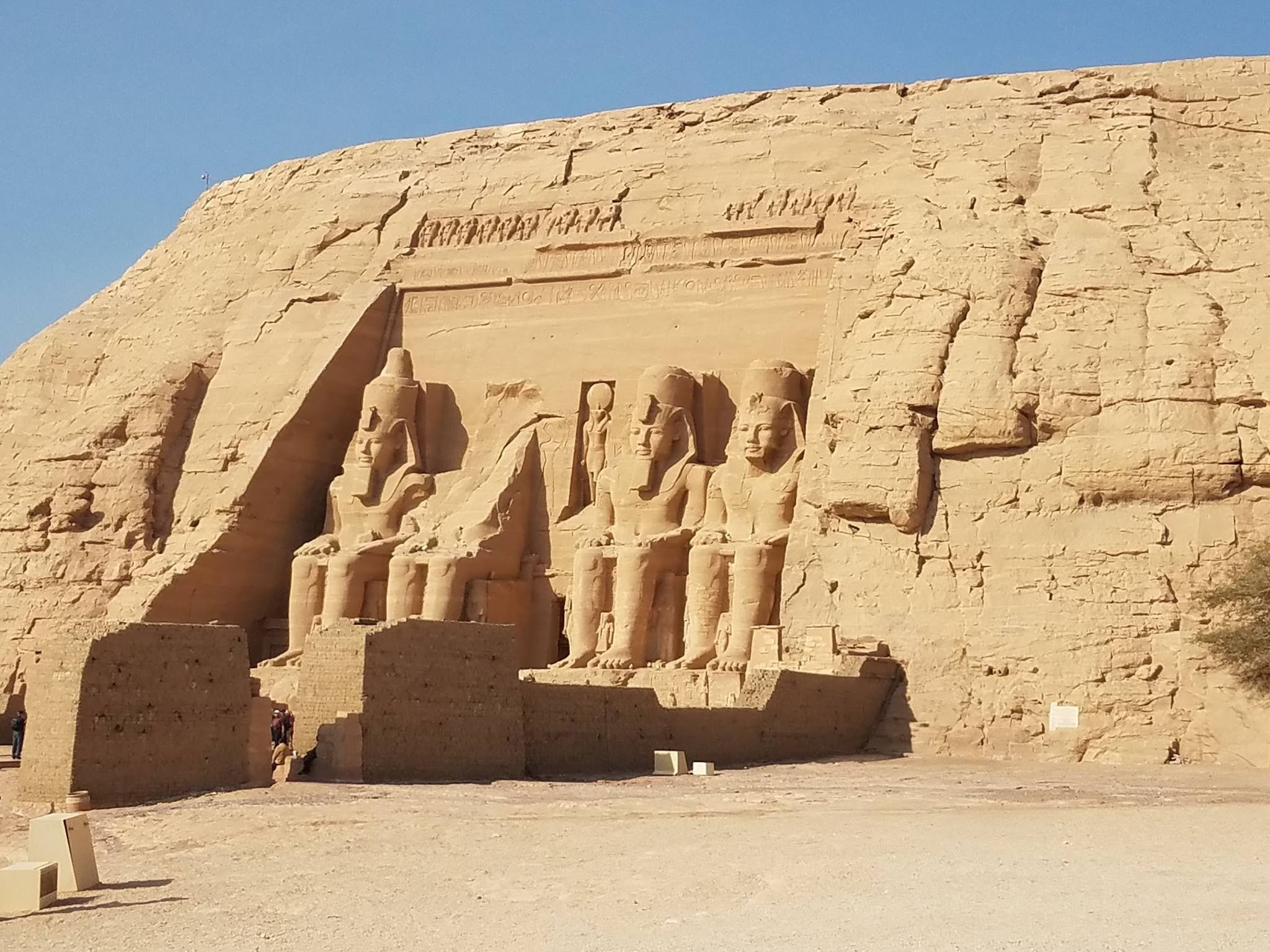
Entrance to the Great Temple of Abu Simbel
Long before sunrise, this adventure begins heading south through miles of sand. It takes about three hours each way, but leaving before dawn ensures you arrive before the strongest heat of the day. Ramesses II was not one for humility, and at Abu Simbel, his legacy looms in colossal form. Four seated statues of the pharaoh, each nearly 60 feet tall, command the entrance, their gaze stretching endlessly across the desert. Step inside, and the sense of scale magnifies further. Rows of statues of Ramesses II line the halls; their presence magnified by walls alive with hieroglyphs and carvings. Every chisel stroke whispering stories of devotion, conquest, war, and glory. Standing within this temple, you are reminded of humanity’s audacity: the drive to create something so enduring it could defy both sand and time. By afternoon, you return to Aswan (For those seeking a quicker journey, flights are available). Night in Aswan or return flight to Cairo.
Day 10: Return home or the journey continues
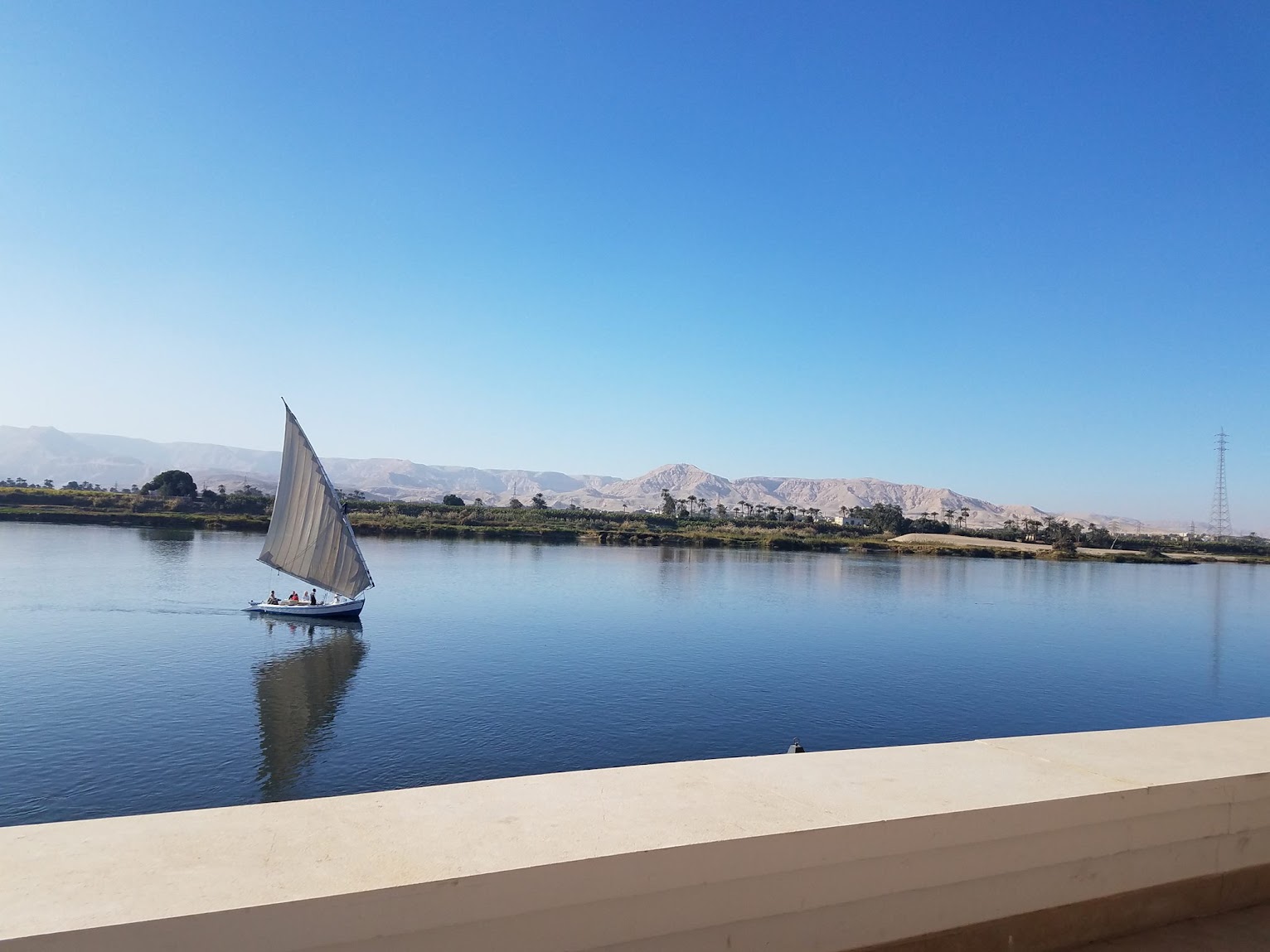
Felucca crossing the Nile
As your Egyptian journey draws to a close, return home carrying the stories, sights, and memories etched by this journey. For those not quite ready to leave, Egypt offers countless paths to continue your adventure. Head east to a Red Sea resort, where coral reefs dazzle beneath the waves—venture west into the vast silence of the Western Desert, where golden dunes conceal ancient oases—or look beyond Egypt’s borders, crossing into Jordan to wander Petra’s rose-red canyons. Wherever you go next, Egypt has already left its imprint—and the memories will linger long after you’ve returned.
Need to know
The dahabiya experience: A dahabiya is a modern-day recreation of the elegant Egyptian sailboats once favored by 19th-century aristocrats and adventurous travelers. It is a return to the golden age of Nile travel, when the journey itself was as captivating as the destinations. With just 5 to 12 private cabins, a dahabiya offers an intimate and highly personalized experience. Its flat-bottomed hull allows for secluded moorings, visits to small villages, and access to sites unreachable for larger vessels. The dahabiya sails when the wind allows, with a quiet motor available to ensure a smooth journey regardless of conditions. On board, sun-drenched decks and shaded recliners invite you to linger, read, or watch the river drift by, all while being cared for by a dedicated crew. Whether you’re a couple seeking a getaway, a family wanting an adventure, or a group celebrating a milestone, a dahabiya delivers the rare luxury of time and space. Unhurried and exclusive, it’s a timeless way to explore the Nile—sailing slowly, savoring the scenery, and experiencing Egypt’s living history.
Embrace the tipping culture: In Egypt, baksheesh—tipping—is woven into daily life. Keep small denominations of Egyptian pounds handy for porters, tour guides, and even restroom attendants. You may encounter well-meaning locals offering unsolicited advice or assistance. In those moments, there’s no need to feel pressured—simply smile, shake your head, and continue your way. Understanding this subtle dance allows you to move through Egypt with ease, respecting local customs while staying comfortably in control of your journey.
Dress with modesty: While attire is generally relaxed in tourist areas, modesty is appreciated at religious sites. Cover shoulders and knees when visiting mosques and carry a lightweight scarf—it’s a versatile and respectful addition to your travel wardrobe.
The art of haggling: In bazaars like Khan el-Khalili, bartering is expected and often playful. Negotiating with a smile; it’s all part of the cultural experience.
Navigating Egyptian traffic: Cairo’s streets are a swirling dance of horns, weaving cars, and sudden merges, where lanes are more suggestion than rule. For visitors, it can feel overwhelming—so hiring a professional private driver is the best (and safest) way to get around.
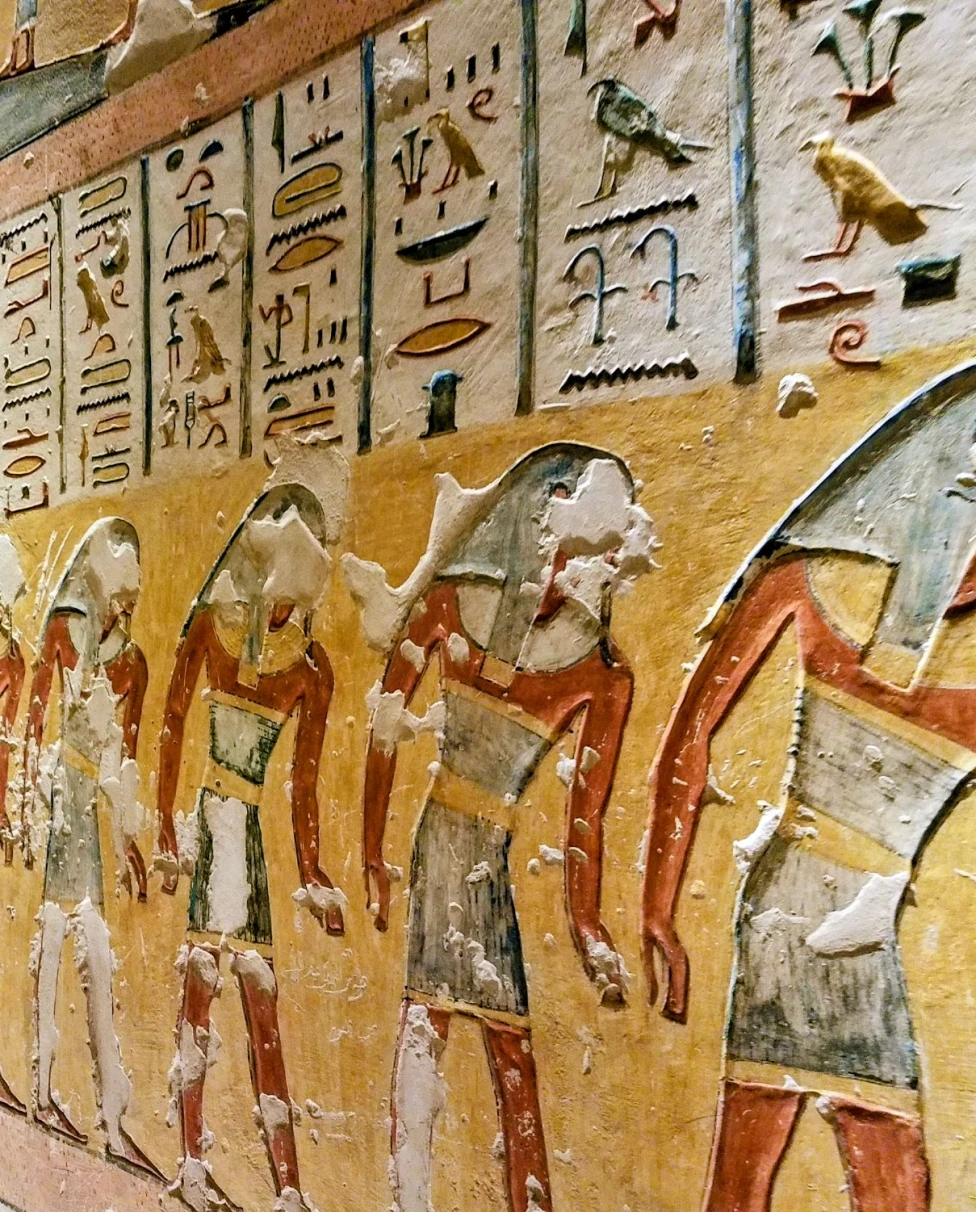
Professional guide: The stories of Egypt are written in stone—on temple walls, in intricate hieroglyphs, and across the painted ceilings of ancient tombs. A professional Egyptologist doesn’t just recite history; they bring these details vividly to life, weaving context and meaning into everything you see. With their insight, the past feels present, and each site reveals layers you might otherwise miss.
Savor the flavors of Egypt: Egyptian cuisine is a delicious blend of Middle Eastern and Mediterranean influences, where simple ingredients come alive with bold spices and fresh herbs. In Cairo, seek out a steaming bowl of koshary, a satisfying mix of rice, pasta, lentils, chickpeas, and tangy tomato sauce. For breakfast, try ful medames, slow-cooked fava beans drizzled with olive oil, or a sandwich of freshly fried tameya (Egyptian falafel made with fava beans instead of chickpeas).
In Alexandria, grilled fish, shrimp, or calamari, often seasoned simply with lemon, cumin, and garlic. Don’t miss sayadeya, a fragrant fish and rice dish baked with caramelized onions and spices, a coastal favorite.
As you travel south, the flavors shift. In Aswan, try Nubian dishes, slow-cooked stews (mullah), okra in tomato sauce, or freshly baked kisra bread, still warm from the oven. Meals here often carry a hint of fenugreek and coriander, distinctive to the region, and are typically milder than dishes elsewhere in Egypt.
Meals often begin with mezze—hummus, baba ghanoush, pickled vegetables, labneh, and stuffed grape leaves—perfect for sharing.
Sweet tooth? Try basbousa, a semolina cake soaked in syrup, or konafa, a crispy shredded pastry layered with cream or nuts and soaked in syrup. In Luxor or Aswan, a stop at a local bakery might tempt you with sesame cookies or halawa (sweet tahini paste).
And don’t forget the ritual of tea and coffee. Egyptian coffee is strong and cardamom-scented, while hibiscus tea (karkadeh), served hot or iced, offers a refreshing ruby-red taste of tradition. For a local malted beverage, try a cold Stella beer, Egypt’s iconic lager.
Time to visit: We went in late January through early February. The temperatures were cool and comfortable. Our guides made sure we visited the sites at quieter times, and quite often we were among a handful of visitors. We continued on to Jordan.
Egypt is extraordinary—and truly unforgettable. It is also an intense country, and navigating its intricacies can be overwhelming. With expert Egyptologists, private drivers, and carefully timed visits, your advisor transforms logistics into a seamless adventure. Every detail is taken care of, leaving you free to enjoy the experience.


Travel Advisor
Emma Fuller

Emma Fuller

Get in touch with Emma Fuller
Did you like this guide? Reach out to customize and book your own experience. Or, just to chat about travel in general.
For more inspiration and insider recommendations, visit our Egypt page.