

Curator’s statement
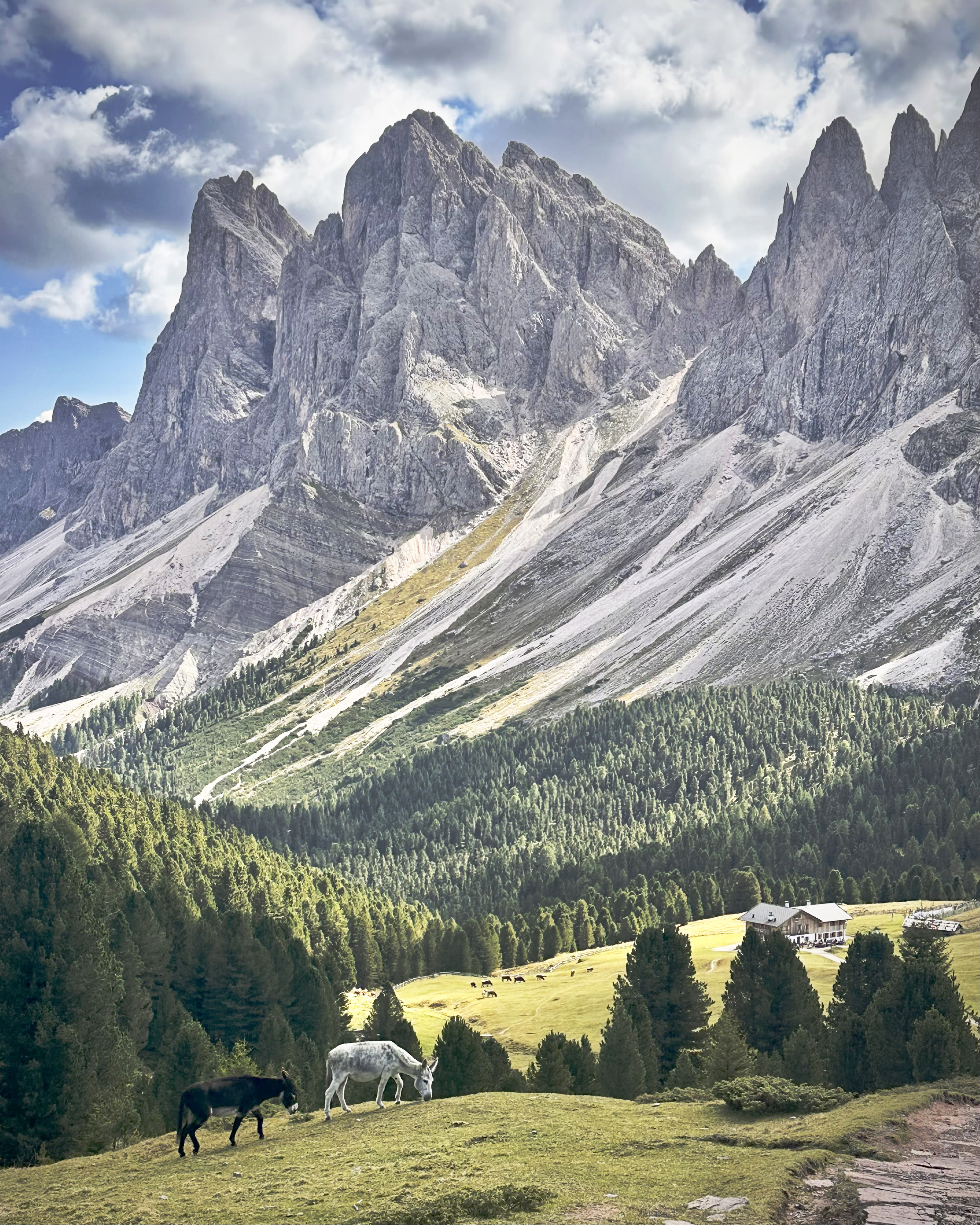
The Dolomites had been calling my name for years before I finally answered. These UNESCO World Heritage peaks in northern Italy deliver something rare: genuine adventure paired with extraordinary luxury. This is not a choose-one-or-the-other destination. Here, you can spend your morning scrambling across high-altitude passes, your afternoon soaking in a mountaintop spa, and your evening savoring Michelin-starred cuisine paired with wines from a 28,000-bottle cellar. The region rewards those who want it all.
The Fora Difference
Book with Jody Holman to access exclusive perks and experiences on your trip.

Killer perks
Free upgrades, spa credits and more—we got you

Personalized recs
Customized travel planning for your style

Insider knowledge
Expert advice from people who’ve actually been there
Where to stay in the Dolomites
Unlock perks by contacting Jody Holman to book your trip.
Things to do in the Dolomites

Hiking in the Dolomites. Credit: Holman Photography
The Great Ladin Valleys Traverse
This multi-day hiking adventure takes you through the heart of Ladin culture, a unique ethnic and linguistic minority that has inhabited these valleys for over a millennium. The Ladin language—descended from Latin mixed with Celtic and Germanic influences—is still spoken daily, a living connection to the Roman Empire that refuses to fade into museum exhibits.
Highlights along the route:
Puez-Odle Natural Park: The dramatic Odle mountain group (meaning "needles" in Ladin) reveals millions of years of geological history through visible rock strata. In 1968, erosion exposed skeletal fragments of an Ichthyosaurus—a porpoise-shaped marine reptile—proving these mountains once formed an ancient seabed.
Sassolungo-Sassopiatto Circuit: High-altitude traverse around two iconic massifs through the Città dei Sassi (City of Rocks), an otherworldly boulder field. Summer meadows explode with wildflowers and marmots whistle from rocky outcrops. Spend the night at Rifugio Sassopiatto at 2,300 meters for an authentic mountain hut experience and witness the Enrosadira—when pale Dolomite limestone turns brilliant pink and red at sunset.
Catinaccio/Rosengarten Massif: This challenging traverse rewards experienced hikers with Rifugio Bergamo, the oldest mountain shelter in the area (and my favorite of our trip), perched dramatically in a rocky valley. According to Ladin folklore, the Rosengarten was once a real garden belonging to the dwarf king Laurin. When captured, he cursed the roses so they could never be seen by day or night—but he forgot twilight, which is why the mountains still glow pink at dawn and dusk.
The Viel del Pan: This spectacular trail was once used by flour merchants from Belluno as a shortcut to the Ladin valleys for bartering goods. During WWI, it served as the demarcation line between Italy and the Austro-Hungarian Empire. Austrian troops excavated the ingenious "City of Ice," a 12-kilometer network of tunnels deep inside the Marmolada glacier, to shelter soldiers. The path offers unparalleled views of the Marmolada at 3,342 meters, the "Queen of the Dolomites."
Places to eat & drink in the Dolomites
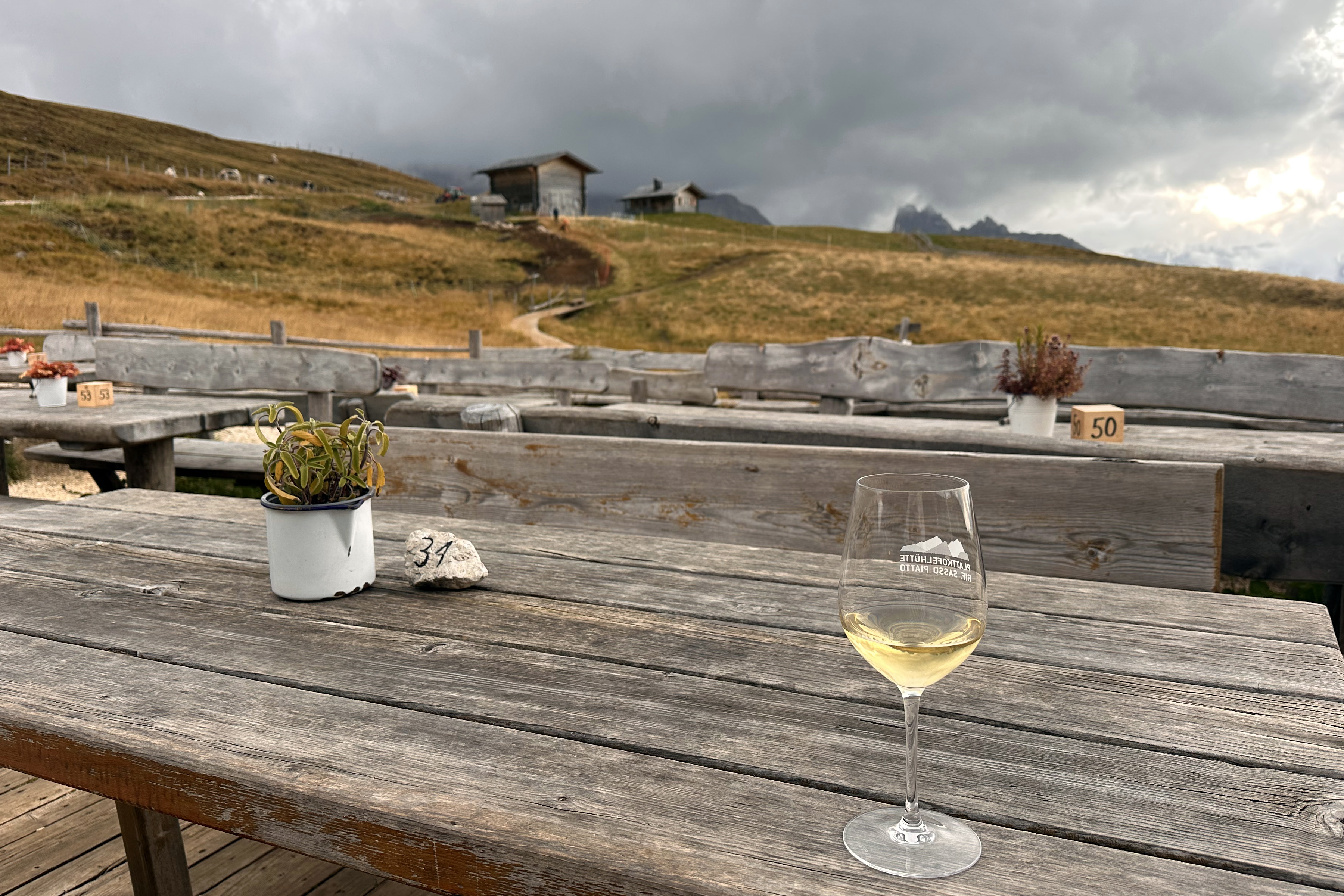
Hearty meals and wine and beer at the rifugios
The food alone justifies the journey. Mountain rifugi serve hearty regional dishes—canederli (bread dumplings), kaiserschmarrn (shredded pancake), wild game, speck (smoked ham)—made from local ingredients. Then, you return to hotels with Michelin-starred restaurants and wine cellars that make oenophiles weep with joy.
Alto Adige produces exceptional Gewürztraminer, Pinot Bianco, and Lagrein. Both Grödnerhof and La Perla offer cellar tours and tastings that make excellent rainy-day activities.
Fine dining & Michelin-starred
Anna Stuben at Hotel Gardena Grödnerhof, Ortisei
Chef Reimund Brunner's one Michelin-starred restaurant serves forest-to-table cuisine using wild herbs, foraged mushrooms, and local game. The tasting menus change with the seasons and showcase the precision of modern Alpine cooking. The wine cellar is exceptional.La Stüa de Michil at Hotel La Perla, Corvara
This one Michelin-starred restaurant offers refined takes on mountain cuisine in an elegant setting. The presentation is artistic without being fussy, and the 28,000-bottle wine cellar provides plenty of pairing options. Reserve well in advance.Albergo at Hotel La Perla, Corvara
The original hotel building houses this more casual dining room that feels like stepping into Dolomites history. The atmosphere is warmer and less formal than La Stüa de Michil, with traditional Ladin and Tyrolean dishes prepared beautifully. The menu focuses on regional classics—think perfectly executed canederli, game dishes, and house-made pastas. Still has access to that remarkable wine cellar. This is the place locals go for special occasions.St. Hubertus at Rosa Alpina, San Cassiano
Three Michelin stars under chef Norbert Niederkofler, who pioneered the "Cook the Mountain" philosophy using only ingredients from the surrounding region. This is destination dining that draws food lovers from across Europe. Expensive and worth every euro.Restaurant de Len at HOTEL de LEN, Cortina d'Ampezzo
Modern mountain dining with a Michelin Guide mention. The farm-to-table menu is seasonal and refined, featuring locally sourced meats, fresh pastas, and regional produce presented with artistic flair. Good for a special dinner after exploring Cortina's town center.
Traditional mountain huts (rifugi)
Baita Sofie Hütte, above Seceda
At over 2,400 meters, this mountaintop refuge offers traditional fare—goulash, dumplings, grilled sausages—with panoramic views that stop you mid-bite. Accessible via cable car or hiking. Perfect lunch stop after a morning on the ridgeline.Alpina Chalet, Alpe di Siusi
Traditional South Tyrolean comfort food in a warm, rustic setting. Handmade dumplings, rich polenta dishes, tender venison, homemade apple strudel and kaiserschmarrn. During ski season, it transforms into a popular après-ski spot with a DJ. The kind of place you linger with wine in hand, watching light change on the peaks.Rifugio Emilio Comici, Sella Pass
Perched at 2,153 meters with dramatic views of the Sassolungo massif. The food is straightforward mountain fare done well—polenta, speck platters, hearty soups. The location and atmosphere make it memorable.
Casual & family-friendly
Restaurant Pizzeria Al Passetto, Cortina d'Ampezzo
A hidden gem for celiacs and gluten-sensitive travelers. They take cross-contamination seriously and serve excellent gluten-free pizza with crispy thin crusts and traditional toppings. They also offer regular pasta and pizza, so there's something for everyone. Casual, welcoming atmosphere.Malga Fane, Valles
Remote mountain dairy farm accessible by hiking or shuttle. They serve simple, exceptional food made from what they produce on site—fresh cheese, butter, yogurt, grilled meats. The setting in a high Alpine meadow surrounded by peaks is unforgettable. Cash only.Ütia de Göma, Val Badia
Traditional Ladin cuisine in a cozy mountain hut atmosphere. Known for excellent canederli (bread dumplings) and game dishes. The restaurant maintains authentic recipes passed down through generations. Good wine list featuring Alto Adige producers.
Need to know
Family-friendly considerations
The multi-day traverse involves mountain hut stays in shared dormitories, which adventurous families may enjoy but others might find challenging. Several excellent options exist for those preferring hotel-based exploration.
Alpe di Siusi (Seiser Alm), Europe's largest alpine meadow, offers gentle paths and spectacular views. Cable cars carry children (and tired adults) to mountaintop viewpoints. Marmots whistle from rocky perches, delighting young hikers. Lago di Braies offers rowboat rentals and an easy loop trail. Ortisei's centuries-old woodcarving tradition continues in studios open to visitors, providing hands-on cultural experiences for curious minds.
Practical information
When to visit
Summer (June-September) is prime hiking season, with wildflower meadows and comfortable temperatures. Autumn (late September to mid-October) brings golden larch forests and fewer crowds. Winter (December to March) transforms the region into a world-class ski destination; the area will host events during the 2026 Winter Olympics.Getting around
The guided traverse includes private transfers between hiking stages. Independent travelers should note that a car provides the most flexibility for exploring viewpoints and trailheads. Early starts are essential during summer—parking lots at popular spots like Lago di Braies fill by 8 am.Fitness level
The traverse suits experienced hikers comfortable with five to six hours of daily walking, elevation changes of 300 to 650 meters (switchbacks are not a “thing” in the Dolomites), and some exposed sections. Families preferring hotel-based exploration have excellent options: Alpe di Siusi (Europe's largest alpine meadow), cable car adventures, and gentle lake trails.
Cultural notes
The Ladin people maintain strong cultural traditions in these valleys. Learning a few words of Ladin (or at least recognizing that signs in three languages reflect genuine trilingual daily life, not just tourism) shows respect for this unique mountain culture that has survived centuries of pressure to assimilate.
Planning your visit
The Dolomites deliver an experience that lingers long after you descend from the peaks. The combination of natural grandeur, cultural richness, and world-class hospitality makes this region unforgettable—though the sore muscles from all that hiking fade mercifully faster than the memories.


Travel Advisor
Jody Holman

Jody Holman

Get in touch with Jody Holman
Did you like this guide? Reach out to customize and book your own experience. Or, just to chat about travel in general.
For more inspiration and insider recommendations, visit our Italy page.