
Curator’s statement
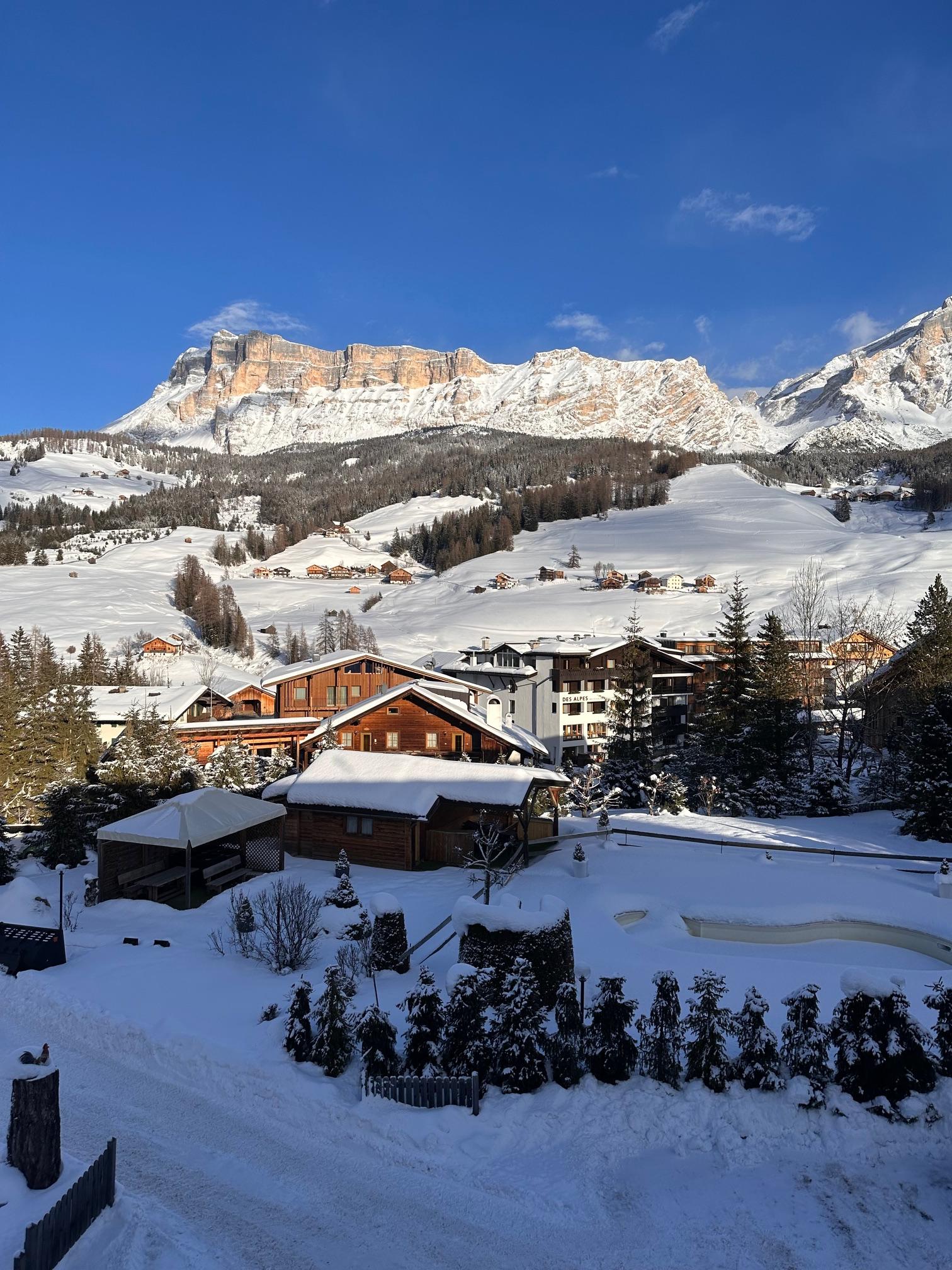
For over 25 years, an annual ski trip to Alta Badia has been more than just a holiday—it’s a tradition that anchors us in a landscape of beauty, rhythm, and renewal. It combines the thrill of skiing with deep familiarity, comfort, and connection to place, becoming both a ritual of joy and a marker of time in our lives. Each visit reinforces a personal bond with the mountains, the culture, and ourselves.
The Fora Difference
Book with Michael Gallow to access exclusive perks and experiences on your trip.

Killer perks
Free upgrades, spa credits and more—we got you

Personalized recs
Customized travel planning for your style

Insider knowledge
Expert advice from people who’ve actually been there
Where to stay
Unlock perks by contacting Michael Gallow to book your trip.
Day 1: Getting there
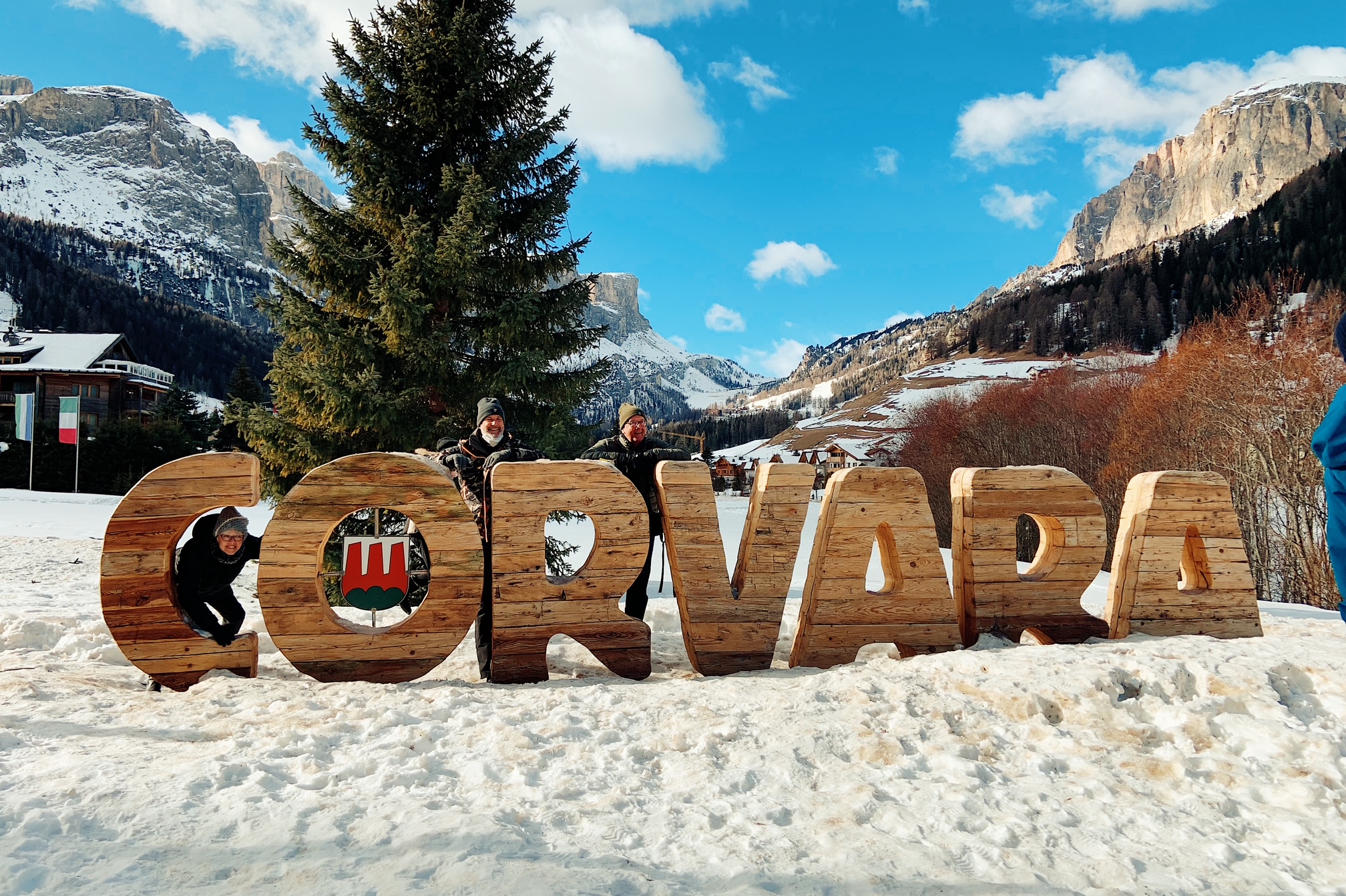
Bun dé Corvara
Fly into a major European hub, such as Munich, Venice, or Innsbruck.
From the airport, the options include private transfers, rental cars, or shared ski shuttles.
The final stretch winds into the heart of South Tyrol, with dramatic Dolomite peaks framing villages like Corvara, Colfosco, and San Cassiano. Arrival feels both intimate and grand—the transition from long-distance travel into a landscape that signals the start of your ski tradition.
Your first day in the mountains is time to get your skis prepped (if bringing your own gear) or visit one of the many ski rental shops to get outfitted in all the latest skis, boots, and poles. As well, you can pick up your ski pass (always take the full Dolomiti Superski pass—valid for all 12 ski areas). If ordered in advance, it can be waiting for you at the hotel.
Grab a seat at L’Got in the heart of Corvara for a welcome drink. Afterwards, stroll across the square to the Taverna in Posta Zirm to enjoy a simple dinner with amazing wood-fired pizzas and a superb curated wine list. Finally, back at your hotel, snuggle under the duvet covers, open the window, and let the fresh mountain air lull you to sleep.
Day 2: Ski warm-up on the slopes
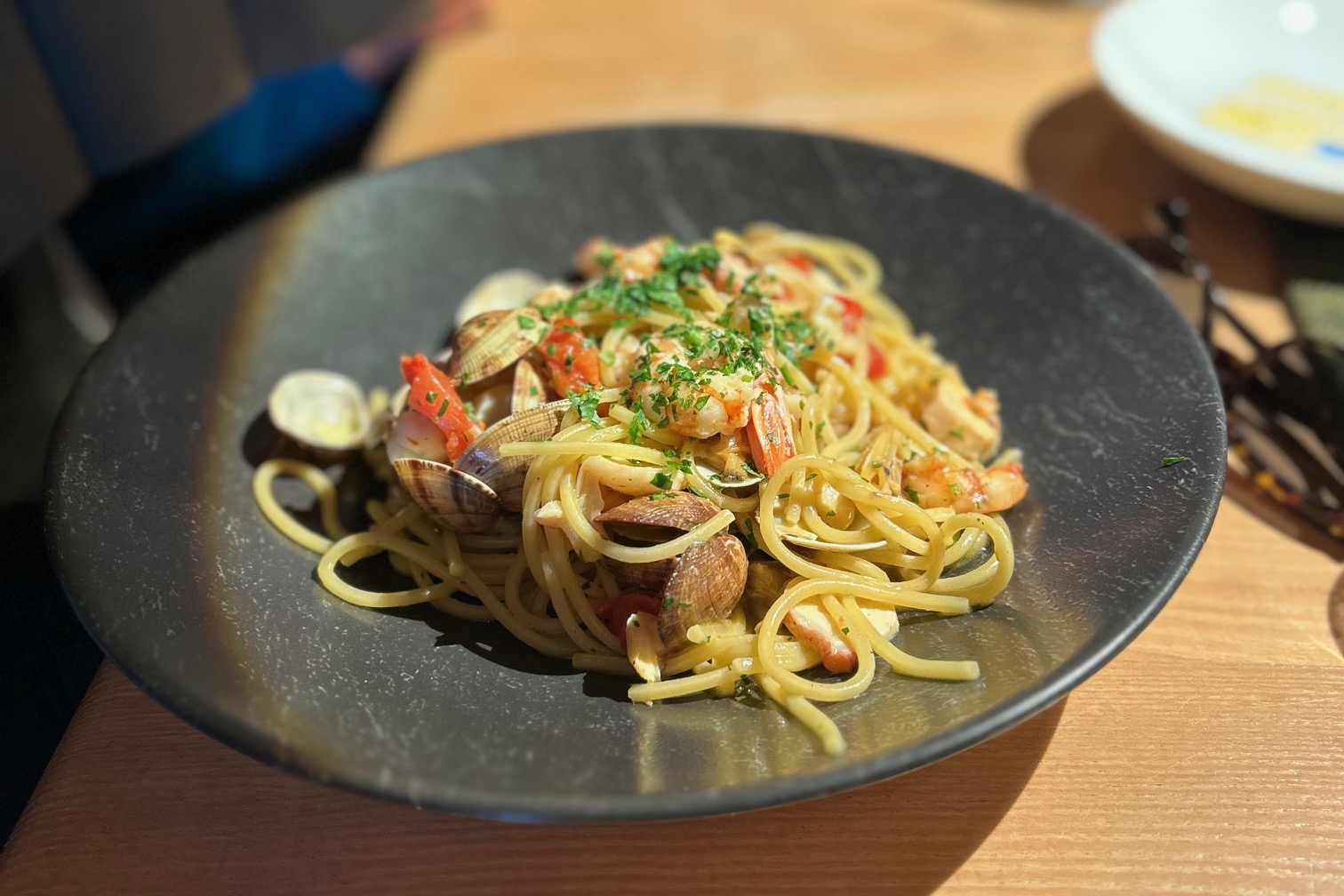
Linguine vongole at Ütia Bioch
Alta Badia abounds in beginner and intermediate runs. Every night the groomers swarm the hills, making sure that the next day’s runs are as finely textured as a bespoke Italian suit.
Make your way to any of the three entry “ovovias” (Col Alt, Piz Sorega, or Piz La Ila) which bring you to the great plateau of Alta Badia. Criss-crossed by numerous blue (beginner) and red (intermediate) runs, now is the time to get your ski legs warmed -up. When you feel ready (and brave), you can tackle the World Cup black run—the Gran Risa—twisting and turning through sharp curves and pine forests.
Remember to stop and grab a cappuccino at any of the many rifugi (or hütte in German). When lunch time rolls around, make your way to Ütia Bioch, with award winning wine lists, a great kitchen, and unsurpassed views of the Marmolada.
When the skiing is finished, head back to the hotel for a relaxing trip to the wellness farm (think saunas, pools, steam rooms, and lounging beds, maybe even a fireplace). Most hotels in the Dolomites offer half-board, (breakfast and dinner included), so be prepared for four- or five-course gourmet meals to end your day.
Get some rest as there is plenty more skiing to be done.
Day 3: Ski to a church chapel at the top of the world
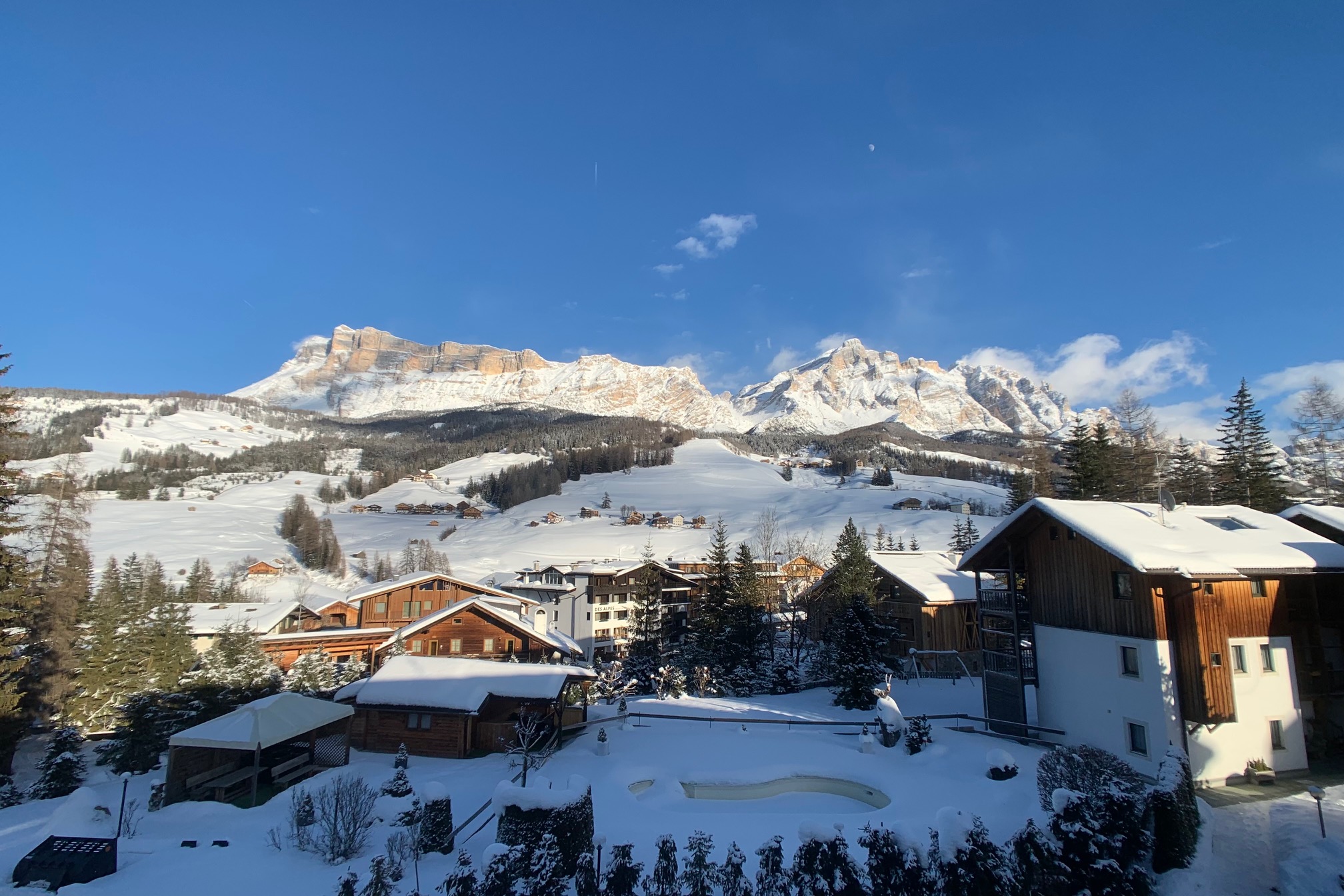
Santa Croce Massif
After a lazy morning with coffee, time to head out towards the village of Badia. From your hotel, make your way by skis to Club Moritzino, close by the Piz La Ila bubble lift. Ski down the long red run called Alting that curves down the mountainside through larch forests till you arrive in the village of La Villa. Three lifts later and you are at Gardenacia and ready to ski down the Sponata run and head to the chairlift that takes you along the river to Badia.
Here, the new (2025) lift La Crusc 1, lifts you up underneath Santa Croce to 1,800 meters. The next leg will carry you up the the ancient chapel of Santa Croce, located under the rock face at 2,045 meters above sea level. After a short visit, you can ski all the way back down to the La Crusc car, your legs thanking you for the rest.
Head back up the lift and enjoy coffee or lunch at Rifugio Lee, a great example of modern Alpinismo style. A few more runs at Santa Croce and it’s time to think about the return ski journey to your hotel.
After more wellness time and another over-the-top dinner, maybe some time at the hotel bar for a nightcap and a review of the day’s adventures. Get rested as tomorrow will be a full day of skiing around.
Day 4: Round & round the ski carousel
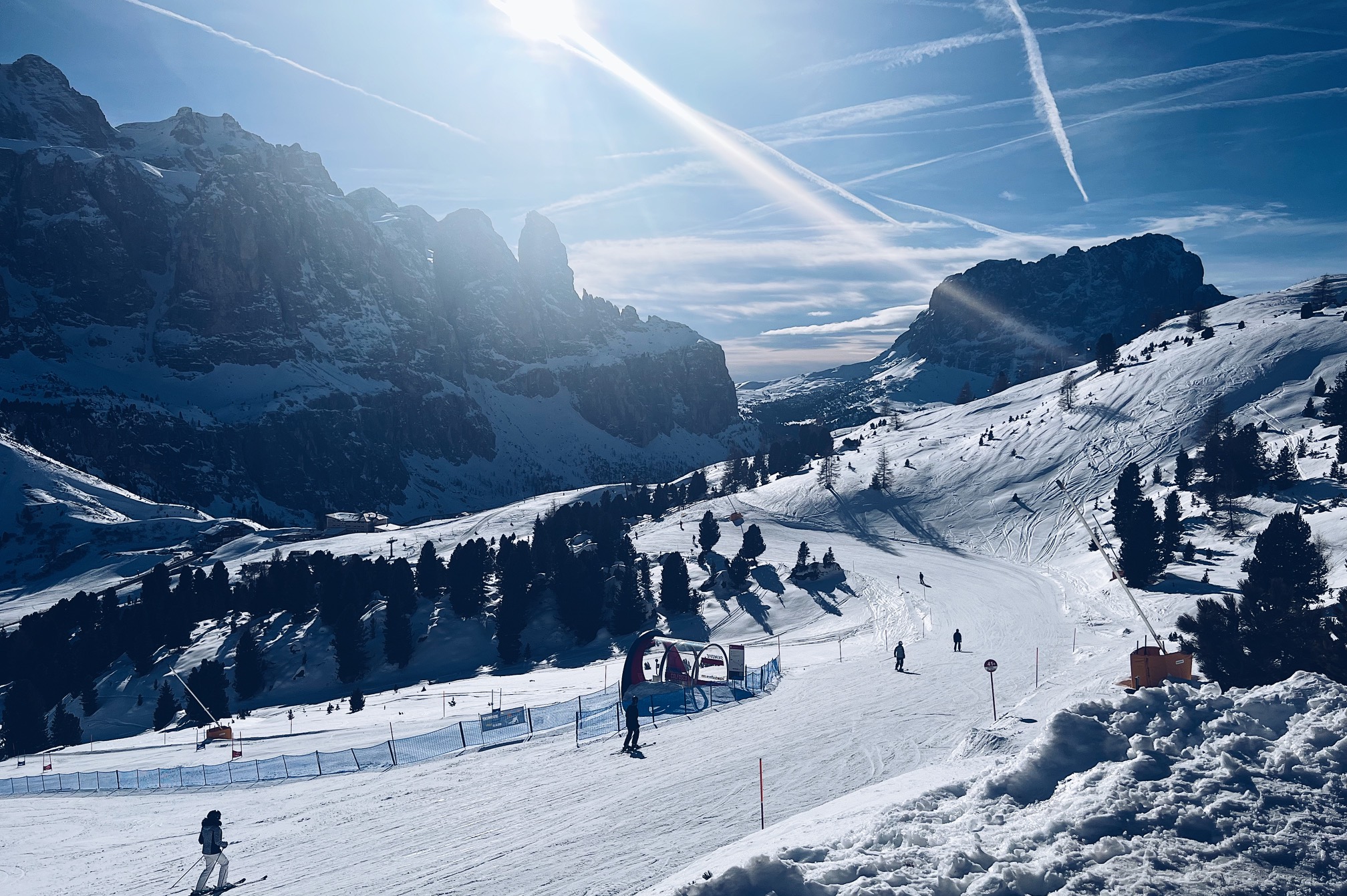
Bluebird day on the Sella Ronda
Today, you need to get up early to be at the lift. Many skiers come here to do this village-to-village ski-around, and it is best to get out on the slopes before the crowds.
Today is your Sella Ronda day. A ski safari through the four valleys that circle that gigantic rock called the Sella (from the Roman for salt cellar). The circuit is either clock-wise (orange) or counter-clock-wise (green) and is made up of a series of lifts and pistes totaling almost 26 kilometers of downhill runs, and an almost equal number of uphill lifts. This day is best suited to intermediate skiers and above.
You begin at the Boe lift in the center of Corvara. The first leg will have you ski to the neighboring village of Arabba (home of the Black Runs). Then it is up the Passo Pordoi to the Belvedere and the wide-open ski plateau above Canazei. Grab a cappuccino at Rifugio Sass-Becè and admire the sweeping panorama.
Time to begin the ski runs down the Passo Sella toward Selva di Gardena. Beautiful sunny slopes run gently downhill underneath the looming face of the Sassolungo Peak. When the lunch-time hunger hits, a stop at one of the most famous rifugi in the Dolomites is a must. Rifugio Emilio Comici is renowned for serving fresh seafood that is delivered daily from the nearby Adriatic.
Afterwards, you continue downwards to Selva, making the ascent back up towards the top at Dantercepies. From here it’s a nice long run along the Passo Gardena into Colfosco. Finally, one last long connector bubble (Borest) deposits you back at the Boe lift. Head back to the hotel and relax with a well-earned stretch in the wellness center. Another amazing dinner and enjoy falling asleep under the comfort of your duvet.
Day 5: A ski trip through the Hidden Valley
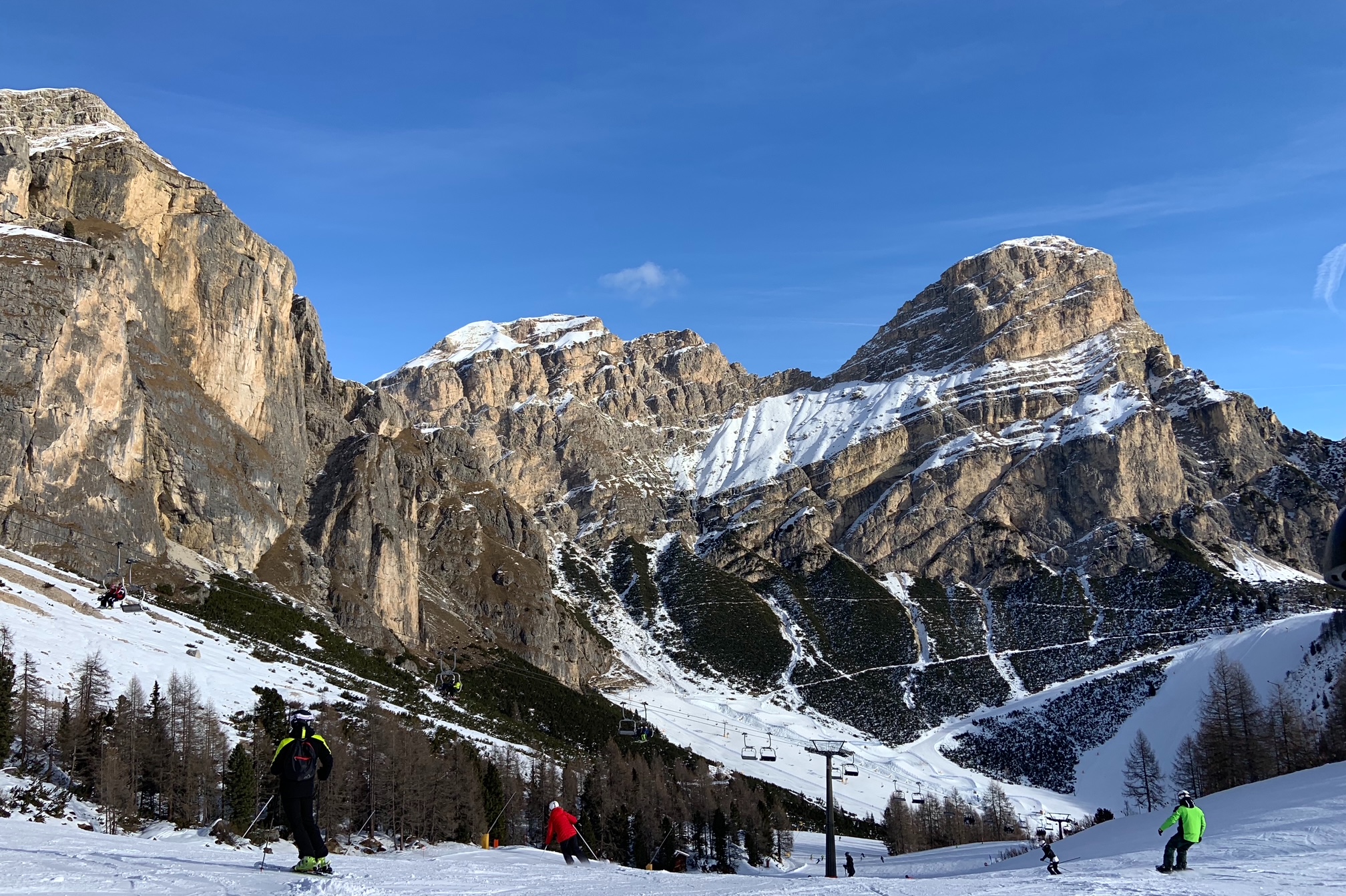
Hidden Valley at Lagazuoi
The day begins with anticipation as you leave the comforts of Alta Badia and take the shuttle up to Passo Falzarego, where the jagged Dolomites rise like ancient fortresses. A cable car sweeps you to the summit of Lagazuoi, depositing you at 2,800 meters into a world of silence and light. From here, the Hidden Valley unfolds—an 8.5-kilometer descent often described as the most enchanting run in the Dolomites.
The ski itself is a journey rather than a race. The slope is never extreme—instead, it guides you past icefalls frozen into turquoise curtains, over gentle pitches and broad meadows, always with the immense stone walls of the Dolomites pressing in close. Midway down, Rifugio Scotoni entices you to stop and linger as the scent of grilled meats fills the clear mountain air. Enjoy a savory lunch, relaxing on a terrace that feels like it floats between peaks.
The final stretch glides into forest, the valley narrowing until skis give way to a charmingly old-world finale: a team of horses pulling ropes to tow skiers across the last flats back toward Alta Badia. The ride is brief but unforgettable, a living reminder of the region’s traditions. By the time you reconnect with the lifts, you feel you have passed through a secret corridor of the mountains, a place where time slows and the grandeur of the Dolomites reveals itself in full.
Day 6: Another day another valley
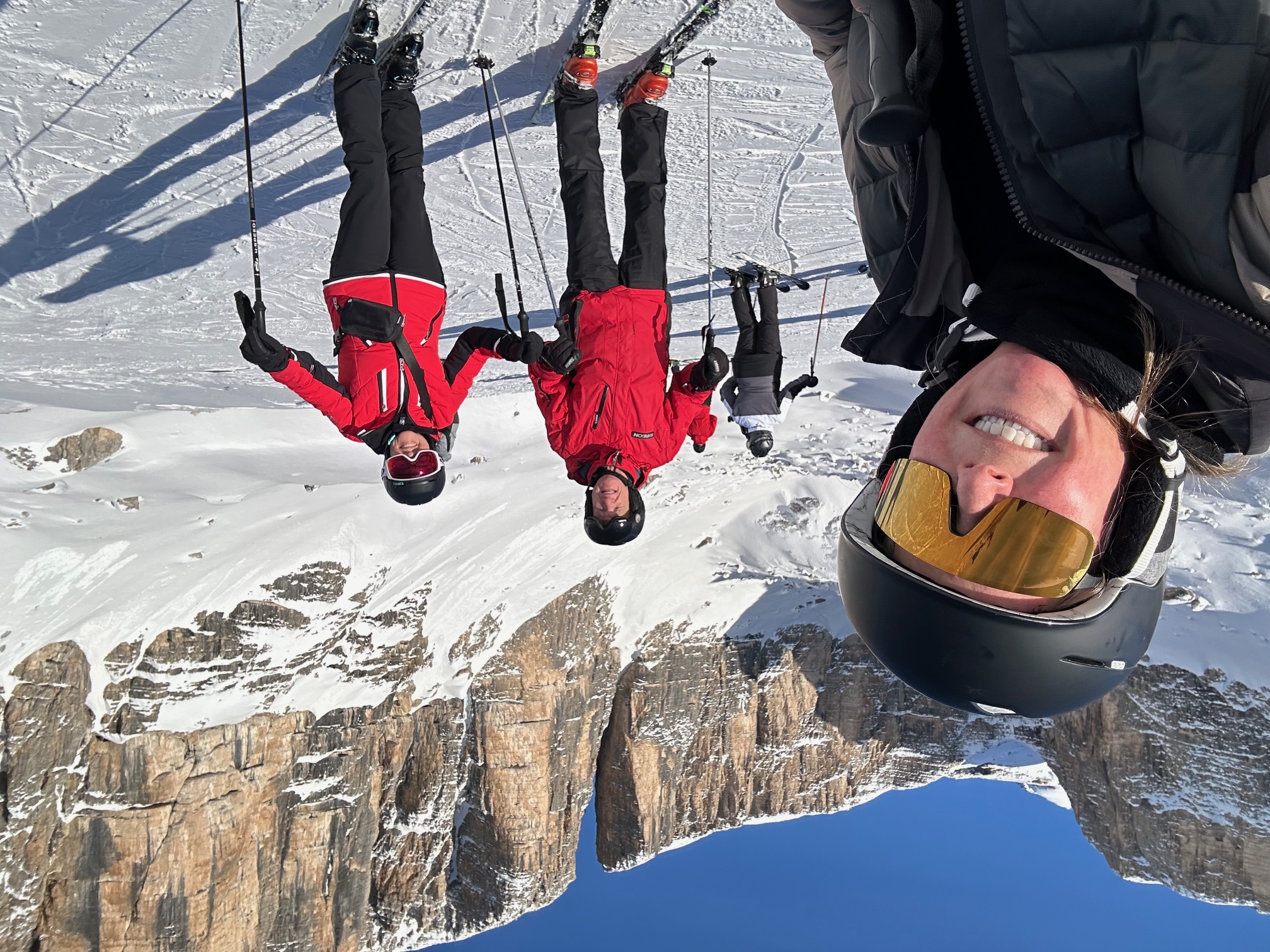
Another day another valley
The day begins in Alta Badia, where the first series of lifts from Corvara carries you above the village, toward Dantercëpies, where the jagged walls of the Sella massif stand like guardians. At the summit, the horizon unfurls—pale stone towers, valleys draped in snow, and a promise of miles to explore. The descent is fast and fluid, a sweep of groomed piste that feels like the passageway into Val Gardena.
From here, the journey continues as you walk through the village of Selva to the lift that takes you up to Ciampinoi, a place carved into ski legend by the World Cup races of the Saslong. You follow its rolling rhythm, the slope falling away beneath you, always framed by the sheer cliffs above Selva.
The path bends onward toward the Col Raiser funicular, a gentle transition that rises into one of the Dolomites’ most serene corners. A mid-morning pause will be essential: the rifugio terrace at Col Raiser will allow for a quick espresso.
Emerging onto the broad plateau of Seceda, you are greeted with views so vast they seem to erase distance. Here, the skiing feels endless. When lunchtime beckons, stop at Rifugio Fermeda and grab a seat in front of a warming fire on the terrace. Once the meal has ended, the great Seceda descent unravels in a single ribbon—over ten kilometers of effortless glide, winding past frozen forests and wooden huts that cling to the slopes.
By late afternoon, you begin the return, retracing lifts and valleys, as the Dolomites shift color with the setting sun, the famed Enrosadira igniting the cliffs in rose and gold. As you ski back into Alta Badia, the circle is complete—a day that feels both like a journey outward and a homecoming, proof that in these mountains, skiing is not just a sport but a story written across snow and stone.
Your final night in the mountains deserves a dining experience as unique as the skiing. An exciting ride in the snow cat takes you up the Colfosco valley to Rifugio Edelweiss. Situated at the base of Sassongher around 1,900 meters above sea level, the intimate and warming stüa echoes the alpine essence of Alta Badia. Dine on excellent pasta or grilled meats served family style, a rich selection of local wines, maybe an espresso, and home-made grappa.
Before heading back down on the cat, just stand on the terrace in the clear night air and admire the moonlight peaks. This moment alone will bring you back again and again to Alta Badia.
Day 7: The final descent
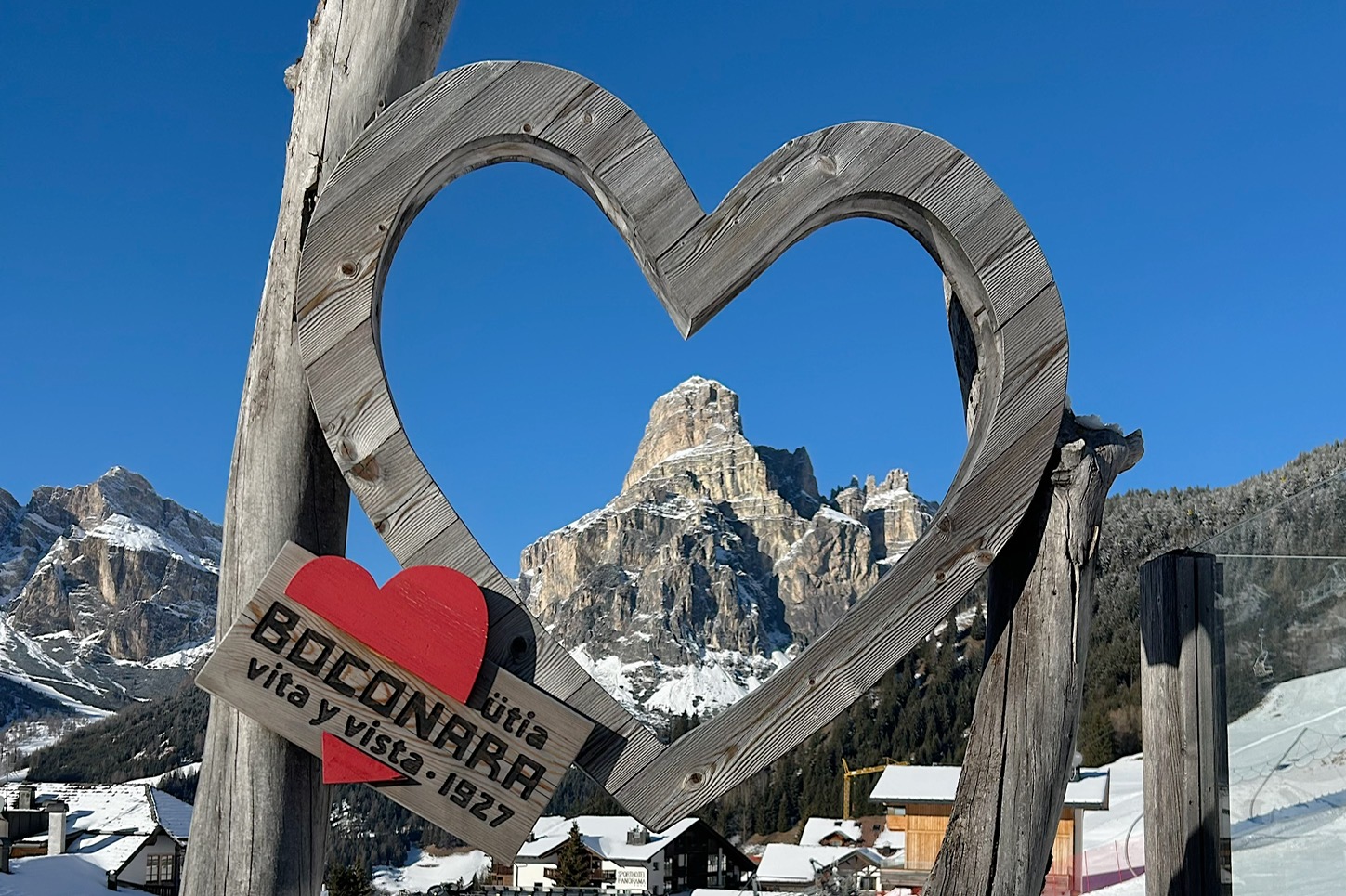
Heart of Corvara
Time to say Ciao.
Today is that day, and there is no better place to spend it than on the sweeping, sun-drenched slopes of Pralongia.
After a final hearty breakfast, you click into your skis one last time. The goal is simple: a morning of glorious, uninterrupted carving on the impeccably groomed cruisers of the Pralongia plateau, a high-altitude paradise that feels purpose-built for joyful, wide-turn skiing.
After ascending on the Piz Sorega cable car, the choices at the top are endless. You might take a few exhilarating runs down the Pralongia red run, a motorway of perfect corduroy that offers breathtaking views with every turn. Or perhaps you’ll explore the connecting blues, weaving through a landscape so stunning it’s been designated a UNESCO World Heritage site.
As midday approaches, a familiar and eagerly anticipated ritual calls: lunch at a rifugio. And here, perched on the edge of the plateau like a crown jewel, is Rifugio Pralongia. Its vast, sun-drenched terrace is the undisputed stage for your final victory celebration.
The menu is a celebration of Ladin hospitality. You order a plate of casunziei—the region’s signature beetroot-filled pasta, drizzled with poppy seeds and butter—washed down with a glass of crisp Südtiroler Kerner. Sitting there, basking in the sun with a plate of exquisite food, it’s a moment of pure, unadulterated bliss—the quintessential Alta Badia experience.
All too soon, it’s time for the final descent back to the village to return your gear. The legs, now tired but happy, make one last triumphant run down, taking in every view, every turn, committing it all to memory.
Then, the transition begins. The ski suit is swapped for comfortable travel clothes. A pre-booked private transfer is waiting, ready to whisk you away from the mountain silence towards your journey home. You have a choice of two captivating gateways: the efficient, alpine buzz of Munich Airport (MUC) to the north, a journey of about 3.5 hours through the rolling landscapes of the Tyrol, or the romantic, aquatic allure of Venice Marco Polo (VCE) to the south, a 2.5-hour drive that descends from the dramatic Dolomitic cliffs into the Venetian flatlands.
As the car pulls away, you take one last look back at the towering peaks. You’re no longer just carrying a suitcase—you’re carrying the crisp memory of that final perfect run on Pralongia, the taste of homemade pasta on a sunny terrace, and the quiet promise to return to the magnificent Alta Badia.
Need to know
Before you go & booking
Book early: Alta Badia is part of the Dolomiti Superski area, one of the largest ski circuits in the world. It’s popular, especially during school holidays (Christmas, February half-term, Easter). Accommodation, ski lessons, and even restaurant reservations fill up months in advance.
Choose your base wisely: Alta Badia is a consortium of six charming villages (Corvara, Colfosco, La Villa, San Cassiano, Badia, and La Val). Each has its own character:
Corvara & Colfosco: Centrally located, great access to the Sella Ronda (both directions). Lively with more après-ski options.
La Villa & San Cassiano: Elegant, with some of the region’s best gourmet restaurants. Fantastic access to the Lagazuoi and Gran Risa slopes.
Badia & La Val: Traditionally Ladin, quieter, and often slightly more affordable. Perfect for a authentic and peaceful stay.
Check the ski-pass options: Your Dolomiti Superski pass covers all lifts and buses in the area. You can buy passes for different durations. If you’re staying a week or more, it’s almost always the best value. If doing the Sella Ronda, you will need the full pass and not a local area coverage.
Travel insurance: Ensure your travel insurance includes comprehensive winter sports coverage, including off-piste (if you plan to do it with a guide), helicopter rescue, and repatriation.
On the mountain: skiing & snowboarding
Piste marking: The piste difficulty system is the same as the rest of the Alps (Green > Blue > Red > Black). However, note that a red in the Dolomites can sometimes feel like a black elsewhere due to their steepness and often being the main, busier arteries. Conversely, some blacks might feel more like challenging reds. Always check the map.
Grooming is excellent: The slopes are meticulously groomed every night. The best time for perfect corduroy is first thing in the morning.
South-facing slopes: Many slopes face south, meaning they get a lot of sun. The snow can become soft and slushy in the afternoon, especially in spring. Plan to ski south-facing slopes in the morning and north-facing ones in the afternoon.
Lift system: The infrastructure is modern and efficient, with mostly high-speed chairlifts and gondolas. However, some key connection points (like the Piz Sorega bubble from San Cassiano) can have long queues at peak times (10–11:30 am). Start early to avoid them.
Ski buses are excellent (and free): The local ski bus system is extensive, punctual, and free with your ski pass. It’s a great way to get to different starting points or back to your hotel if you ski to a different village.
The foodie experience (a major highlight)
Rifugio Culture: This is what sets Alta Badia apart. Don’t just eat at the base station—make your way to a mountain hut (rifugio). Reservations for lunch are highly recommended, especially for the famous ones.
Must-try dishes:
Casunziei: The iconic Ladin beetroot-filled ravioli, served with poppy seeds or butter and sage.
Barley Soup: A hearty, traditional staple.
Speck: Local smoked ham, often served as a starter or on a wooden platter with regional cheeses.
Polenta: Served with wild mushrooms, cheese, or goulash.
Kaiserschmarrn (pancakes with lingonberries) for dessert.
Wine: Try local wines from the South Tyrol region, like Lagrein or Kerner. Remember to try a Bombardino (egg liqueur)—perfect for a mid-slope break.
Gourmet skiing: Look out for the events organized by the Alta Badia Gourmet Ski Safari, where Michelin-starred chefs create special menus at various rifugios.
Après-ski & non-skiing activities
Après-ski: It’s more about lively terraces and enjoying a spritz than wild partying.
Other winter activities:
Snowshoeing: Countless marked trails through silent, snowy forests.
Winter walking: A vast network of cleared paths. The Val di Udai near La Villa is stunning.
Cross-country skiing: Loops in La Villa and San Cassiano.
Sled runs (Slittino): The 7.5 km run from Piz La Ila to Corvara is a classic and great fun for families.
Helicopter tours: For breathtaking aerial views of the Dolomites (weather-dependent).
Practical tips & useful information
Language: The area is trilingual. The native language is Ladin, but everyone speaks Italian and German. English is widely spoken in all tourist areas, hotels, and restaurants.
Currency: Euro (€). Credit cards are accepted almost everywhere, but it’s always wise to have some cash for small purchases at mountain huts or parking lots.
Tipping is not obligatory. It’s common to round up the bill in a restaurant or leave a few euros for good service. For a fantastic meal at a rifugio, 5–10 percent is generous.
What to pack:
Sunscreen & lip balm (high SPF): The sun is intense at high altitude, and the reflection from the snow is powerful.
Good sunglasses & goggles: Essential for both sunny and flat-light days.
Layers: The weather can change quickly. A merino wool base layer, mid-layer fleece, and a quality waterproof/windproof jacket are key.
Helmet: Now obligatory for all skiers on the pistes!
Getting there:
Airports: The closest are Innsbruck (INN), Bolzano (BZO), and Venice Marco Polo (VCE). Munich (MUC) is an excellent option with a longer transfer (~3 hours).
Transfer: Pre-book a shuttle transfer or hire a car. Having a car is useful for exploring the wider valley on non-ski days. Current transfers from Munich to Corvara are around €750 for four to six passengers. Around €400 from Venice.
Parking: Most hotels have parking. Public parking near lifts is available but can be expensive and fill up early.
Enjoy your unforgettable holiday in one of the most beautiful ski areas in the world.

Travel Advisor
Michael Gallow
Michael Gallow
Get in touch with Michael Gallow
Did you like this guide? Reach out to customize and book your own experience. Or, just to chat about travel in general.
For more inspiration and insider recommendations, visit our Italy page.