
Luxury Family Graduation Trip to Peru: Cusco, Lima, Machu Picchu, Hiram Bingham & Sacred Valley

Curated By
Shalegh Silkey


Curator’s statement
Peru had long been on our travel list, but we waited for the perfect moment to explore it as a family—our son’s high school graduation. For a milestone trip, we wanted somewhere new, culturally rich, and packed with once-in-a-lifetime experiences. Peru delivered all that and more: from world-class cuisine in Lima to sacred sites in the Andes, white water rafting, and fly fishing in glacial lakes—this was a celebration we’ll never forget. As a luxury travel advisor, I personally designed and vetted every aspect of this journey: the hotels, guides, experiences, and hidden gems. I hope this trip report inspires your own adventure—whether for a graduation, honeymoon, family getaway, or personal milestone.
The Fora Difference
Book with Shalegh Silkey to access exclusive perks and experiences on your trip.

Killer perks
Free upgrades, spa credits and more—we got you

Personalized recs
Customized travel planning for your style

Insider knowledge
Expert advice from people who’ve actually been there
Where to stay
Unlock perks by contacting Shalegh Silkey to book your trip.
Day 1: Arrival in Lima & JW Marriott Miraflores
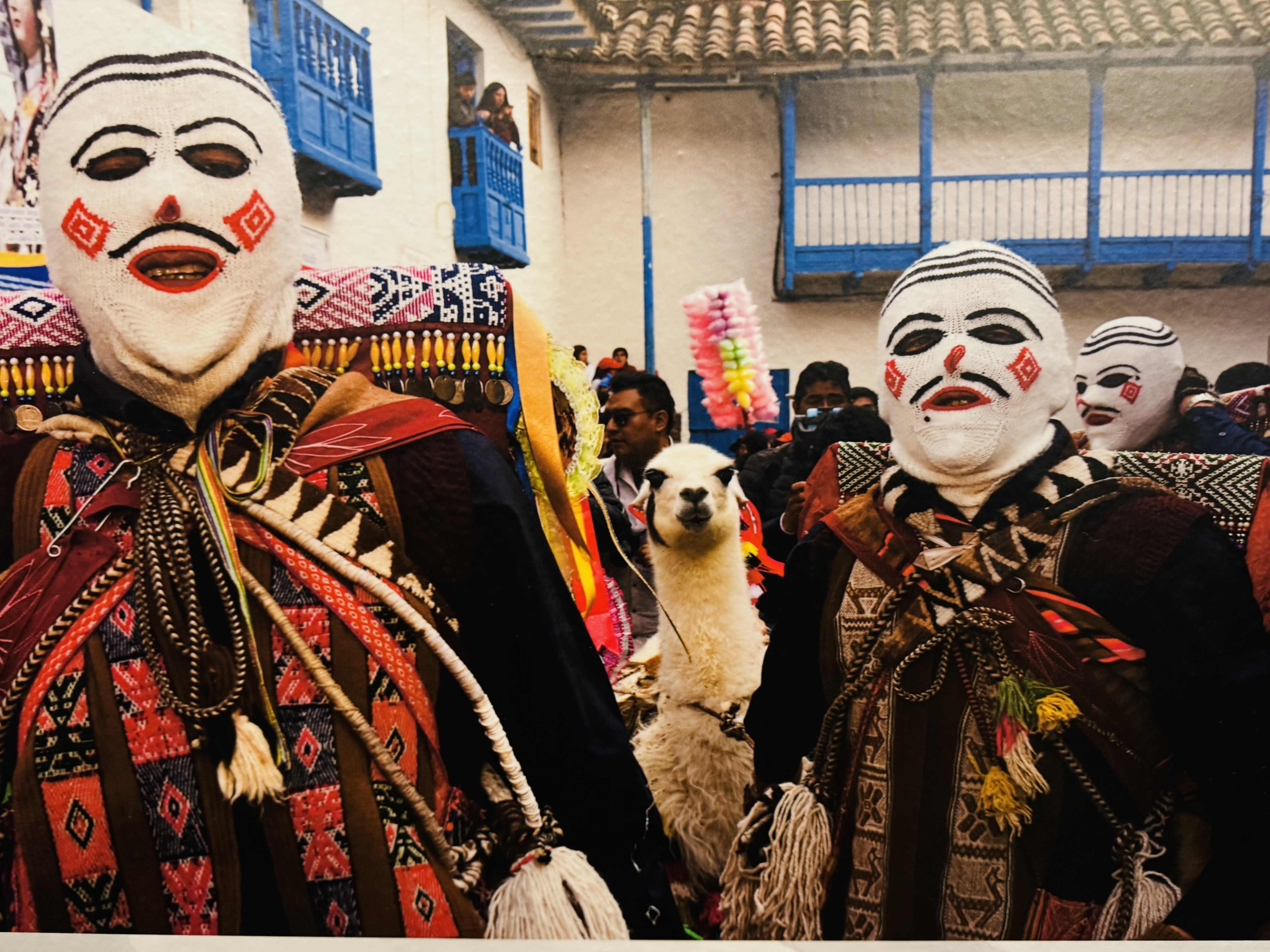
Virgen del Carmen festival
Lima has a stunning brand-new International Airport still teeming with expansion. International early check-in requirements shouldn’t be dreaded as you’ll have plenty to do with several VIP lounges, excellent bars and restaurants, and endless shopping opportunities.
Lima is known to Peruvians as the grey city. Be prepared with layers of clothing to manage the daily evolving temperatures from cool to warm, but chances are you will not see the sun. This was one of the warmer locations that we visited, but the wind from the ocean can make it chilly in the early morning and evening.
We stayed at The JW Marriott Lima Hotel in the Mira Flores District with its incredible 180-degree view overlooking the ocean. Marriott Lima offered the amenities and luxury you would expect from a JW property. An on-site gym that rivals any stand-alone health club (full ocean front) and a never-ending breakfast buffet was included with my perks. The made-to-order egg station, rows of fresh fruits and local meats, and local breads and pastries are only a few of the highlights.
Pro note: While the Marriott website and staff declare the rooms are double queens, they are what we consider in the US to be double-fulls.
Day 2: Exploring Lima—culture, cuisine & charm
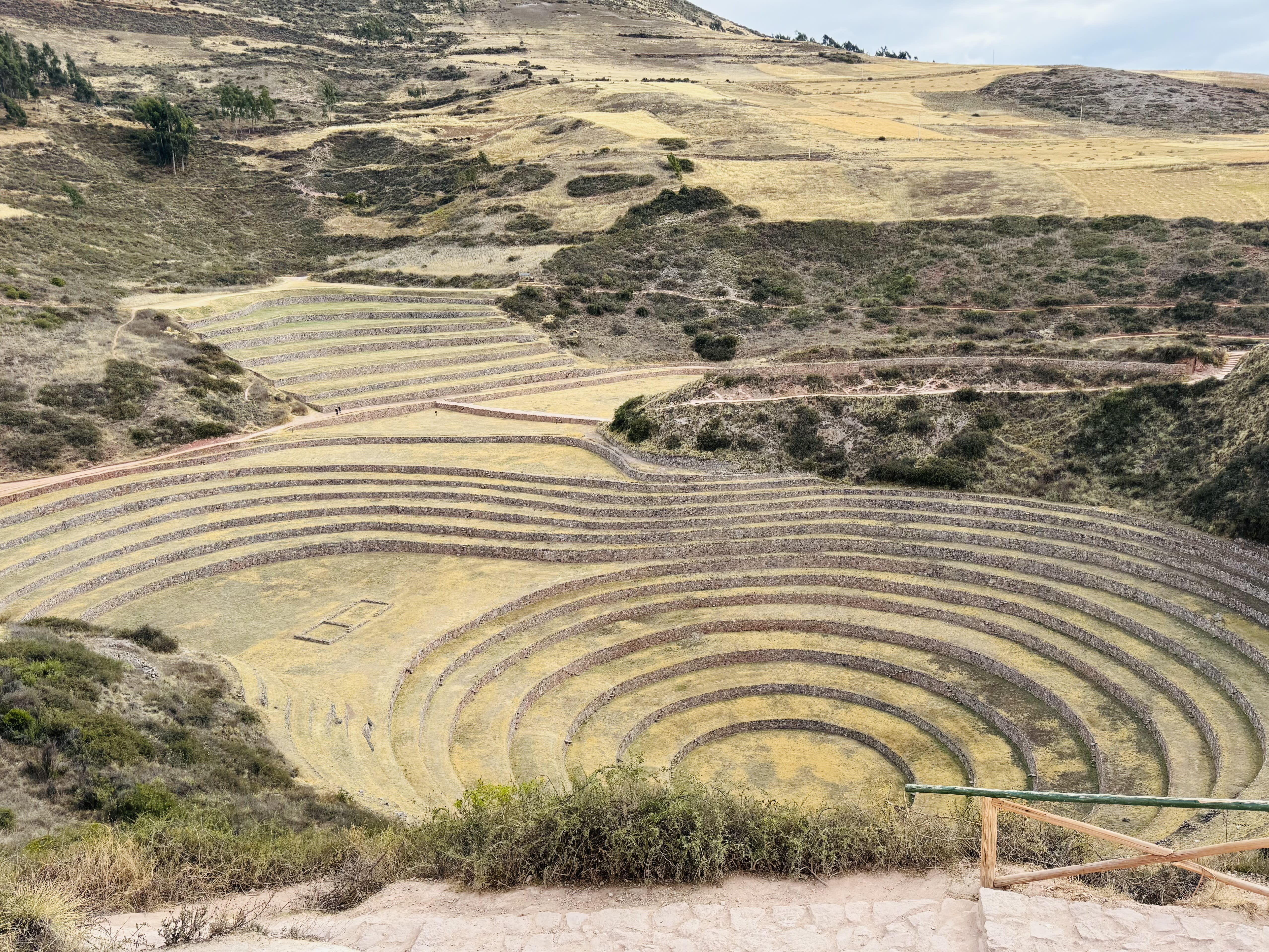
The Moray Ruins
We were up at the gym early before enjoying the magnificent breakfast buffet—eggs to order, fresh-squeezed juices, and freshly baked breads. We cleaned up and made our way to the historic Lima city center, where we met our local guide to learn about the Paza de Armas and Cathedral of Lima. She was very informative, friendly, and knowledgeable about the history, culture, and the hot food scenes of Lima. This day’s journey would take us to churches, to palaces, to food markets, Chinatown, and Morris’ Bar, where the original Pisco Sour was created by Victor Morris and has become somewhat of the national drink of Peru.
We were guided to the Church of Saint Peter of San Francisco, The Franciscan order of Priests, and the Catacombs under the Church, still in possession of the skeletal remains of years of noble citizenry, ultimately making our way to the City Square, boasting endless restaurant, bar, and shopping opportunities, as well as the Presidential Palace, Mayoral Residence and other government buildings.
A colorfully beautiful statue in front of one of the churches depicted one of one of Lima’s most fascinating historical fashion traditions dating back to the Spanish colonial era—when local women adopted the mysterious and elegant style of the tapada limeña. This unique look featured a flowing skirt known as a saya paired with a manto (shawl) that concealed their faces, leaving only one eye exposed. Emerging in the mid-16th century, the style is believed to have been influenced by Spain’s centuries-long connection with Moorish culture. More than just a fashion statement, the tapada allowed women to navigate Lima’s bustling streets with a sense of freedom and anonymity—challenging social norms of the time. Today, it remains an iconic symbol of Peruvian cultural identity and colonial history, offering travelers a deeper glimpse into Lima’s rich heritage.
When the Spanish arrived in Peru and began to colonize Lima in 1535, they brought with them not only European traditions and religion (as well as disease and exploitation), but also their distinctive architectural styles. One of the most iconic features that emerged during the Spanish colonial period in Lima was the use of ornate wooden balconies, many of which still grace the historic buildings of Lima’s Centro Histórico today. These enclosed colonial balconies were more than just decorative. They served both practical and social functions—privacy and modesty, climate adaptation, and were a social status symbol.
As one can find in most major cities of the world, we soon found ourselves amidst the bustling energy of Lima’s Chinatown. Should you one day make your way to this great city, do yourself a culinary favor, and find one of Chinatown’s many food stands for Shumai, boa buns, and the Chinese “one-off” or individual bubble-shaped waffles called Gai Daan Jai. They are also known as egg waffles, bubble waffles, or eggettes in English. These are a popular Hong Kong street food, characterized by their crispy, bubble-like exterior and soft, fluffy interior—there were several small stands with long lines making these.
The most creative and unique cuisine I tasted specific to Peru was the Picarone, originating during the colonial period. A single lady at a tiny food cart used her right hand to dip into a giant bucket to hand-form this donut style dessert into a ring, where she dropped it into a vat to be deep fried. Consisting principally of squash and sweet potato dough, it is typically served up with a healthy dose of syrup, honey, or molasses, which is called chancaca. To die for, not too sweet, soft, and pillowy—best thing I ate all day!
I wasn’t entirely prepared for the flavor journey one can find in Peru. The everyday signature Peruvian meal in Lima is a salad, rotisserie chicken, and homemade French fries, but you will find and endless buffet of so many additional culinary moments awaiting your discovery.
For food lovers planning a trip to Peru, securing dinner reservations at least a few weeks (or even months) in advance at Maido is an absolute must—I can assist! This award-winning Nikkei restaurant in Lima masterfully blends traditional Japanese techniques with bold, native Peruvian ingredients—earning it the #1 spot on The World’s 50 Best Restaurants list for 2025. But Maido is just the beginning of Lima’s world-class culinary scene. Other can’t-miss dining experiences include Kjolle, known for its vibrant Amazonian flavors, Mérito, a cozy spot blending Venezuelan and Peruvian cuisines, and Mayta, where contemporary Peruvian dishes meet stunning presentation.
Day 3: Fly to Cusco—enter the Sacred Valley (Urubamba)
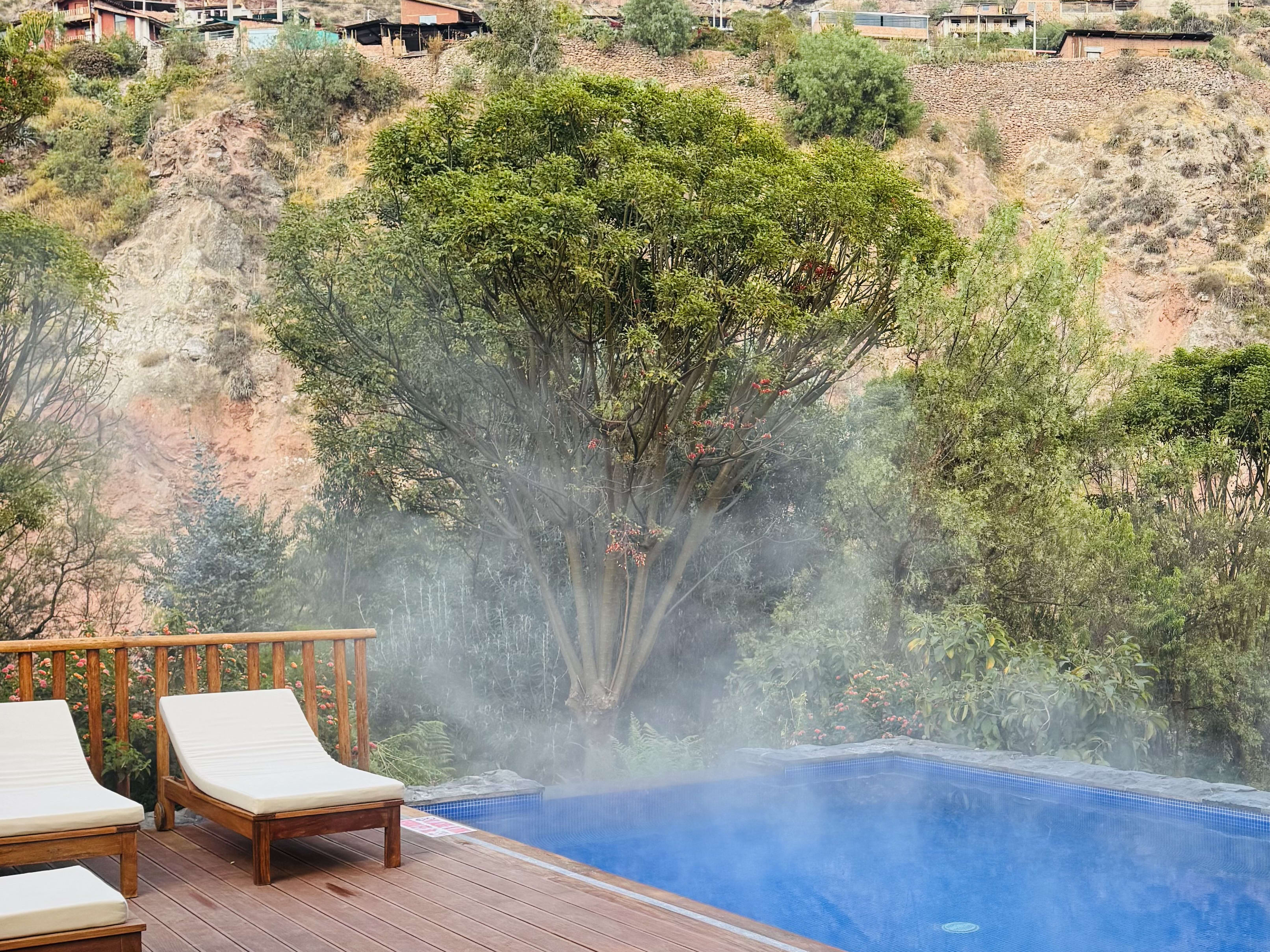
Tambo del Inka indoor/outdoor heated pool
Arrive at your hotel, ours was Tambo del Inka, and immediately indulge in the incredible spa offerings. While the spa offers are various, I was extremely surprised to find that the indoor/outdoor heated pool, hydrotherapy circuit with steam room, dry sauna, hot and cold plunge pools, and Vichy showers were open to all guests daily without booking a spa service, including children without age restrictions, as long as accompanied by an adult.
If you are lucky enough to attend a spa service, you are allowed additional access to another full-size pool and tubs downstairs—this is a quieter, more relaxing adult-only environment. Treatments incorporate authentic Incan ingredients such as quinoa, passion fruit, coca leaves, and even gold dust—treatments were very reasonably priced.
The vibe of this hotel is Peruvian—opulence with vibrant, bright textures and colors contrasting with the view of the outdoor River. My family was in a true double-queen room with a walk-out patio.
The extravagant breakfast buffet for two was covered in my perks and featured daily Peruvian musical entertainment, arpa peruana, or Peruvian harp. The most tranquil sound imaginable.
Day 4: Private tour to Ollantaytambo, Moray & Maras Salt Pools
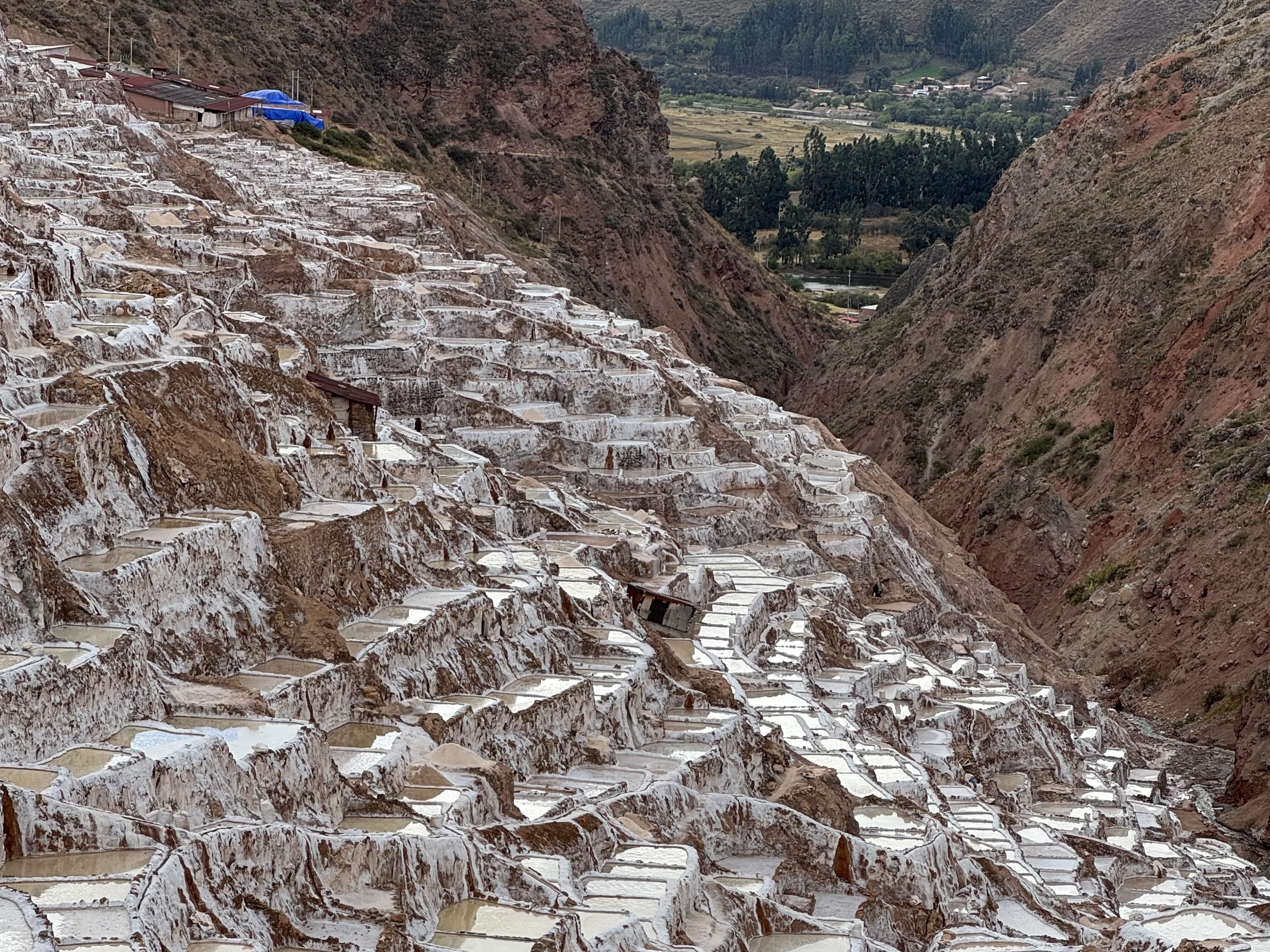
Maras Salt Mines
Initially, I was skeptical that these would all be extreme tourists’ traps, far from the destination, and not worth the effort. I’ve never been so wrong—this day was a 10 out of 10. David, our private guide for the day, picked us up at 9 am. We went straight to the town of Ollantaytambo, where the terraces, stonework, and building structures, along with the water canal system put in place by the Incas, are mesmerizing.
The innate genius of the Incans is evident in every aspect of Ollantaytambo, which has become a chic, bohemian destination at the base of a series of terraces and structures created in the mid-15th century, during the reign of Emperor Pachacutec. The water canal system alone is a feat to admire that allowed the Incas to shower using fresh water daily along with access to running drinking water for themselves, the animals, and the crops.
After enjoying all of Ollantaytambo, we headed to Moray (terraced Incan ruins), a small village boasting more donkeys than people still to this day. Here, people’s perception of wealth was based on one’s livestock with donkeys at the top, closely followed by sheep, alpaca, vicuna, and lamas.
The main attraction in this village was the three large terraces, primarily constructed by the Inca civilization during the Inca Empire, which flourished from the 12th to the mid-14th centuries. These terraces provided stable, warm environments for farming, with fresh water from the surrounding mountains, all helping to produce exceptionally large crops to feed the Incan Empire.
Unfortunately, these terraces were used until the 1970’s when the Peruvian government, through the National Institute of Culture (now the Ministry of Culture), ceased the use of Inca terraces in Moray for agricultural purposes, transitioning its use towards tourism, which until just three years ago could be walked on. The Ministry of Culture has since recognized the damage being done on a daily basis by visitors and will no longer allow anyone down into the circles.
The day, of course, included a wealth of culinary opportunities highlighted by a local restaurant recommended by our guide David, featuring one-of-a-kind family recipes, known to his family, where we ate lunch before heading to our final destination—the Maras Salt Mines.
Also known as Salineras de Maras, the mines are a network of thousands of individual salt evaporation ponds created by hand in the time of the Inca Empire. Each hand-constructed salt pool is owned by a single individual or family that has been based and handed down for hundreds of years. The ponds are carved into the side of a single hill and fed by an underground organic salt spring and channeled into thousands of ponds. The reflecting light of whites, cream, pink, and brown are incredibly difficult to absorb due to the brightness and the sheer uniqueness, one-of-a-kind circumstance. The salt is harvested on site and for sale by local families owning the pools as you near the exit.
Our tour was listed as a full-day tour and started at 9 am and ended at approximately 4 pm.
Day 5: Fly fishing in the Andes with Peru anglers
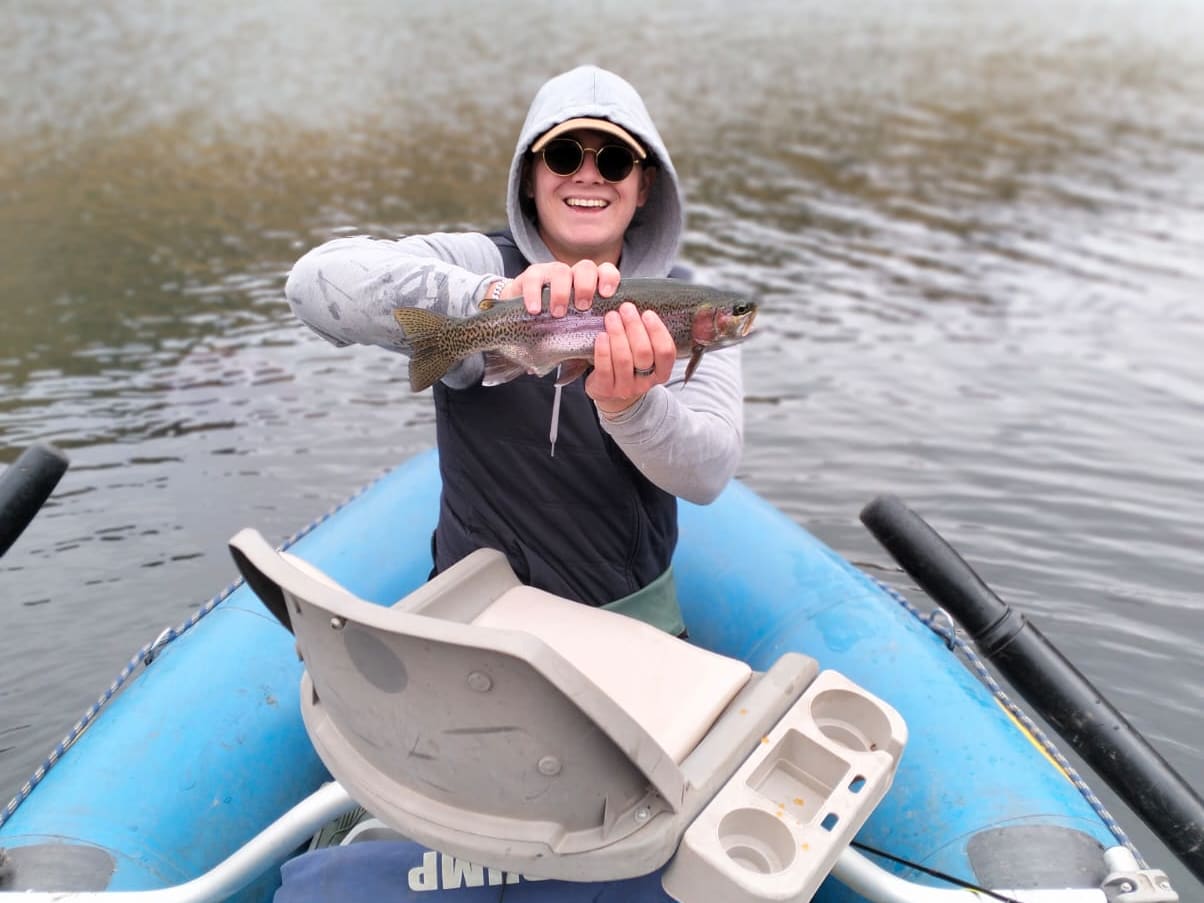
Fly fishing success!
With the abundance of adventures that Peru has to offer, world-class fishing opportunities are among the best. While the expansive coast provides saltwater teeming with marine life, and the rivers of Peru produce endless action of all kinds, we opted for fly fishing the glacial lakes of the Andes full of rainbow trout.
Our guide from the Peru Anglers picked us up from our hotel on the Urubamba River and we began our 90-minute drive through the Sacred Valley and up into the Andes. Climbing our way up the switchbacks of the Andean terrain, we ultimately settled at the Chumpe community, a small collection of hillside farmers charged with not only working their lands but also protecting the natural mountainside beauty, including the spectacular Pachar lake.
We loaded the gear and launched our well-appointed float boat, and I was struck by how peaceful our new fishing hole was, an obvious byproduct of the surrounding terrain, but largely because we were the only people there, save for a few farmers and roaming wildlife.
At 10,000 feet of elevation, the day was crisp, overcast, and windy and we opted to largely troll the lake with streamers, paying off cast after cast with healthy 2–4-pound rainbows, 16–20 inches consistently, that we happily released back into their waters. The warmth of the sun never broke through, and we even had a bit of alpine rain, but nothing could dampen our spirits on this day we won’t soon forget.
Our day ended with a shore-side lunch of Peruvian Caprese sandwiches, Cuzquena beer, and the ever-present quinoa as a salad, which also grew and was being dried out all around us. Arriving back at our hotel around 4 pm, we were all smiles, recounting the unparalleled beauty, serenity, and solitude of our expedition, but mostly trading “fish tales” that for once, needed no embellishments and probably fell short of the reality of our day.
Day 6: A private Machu Picchu experience (Aguas Caliente)
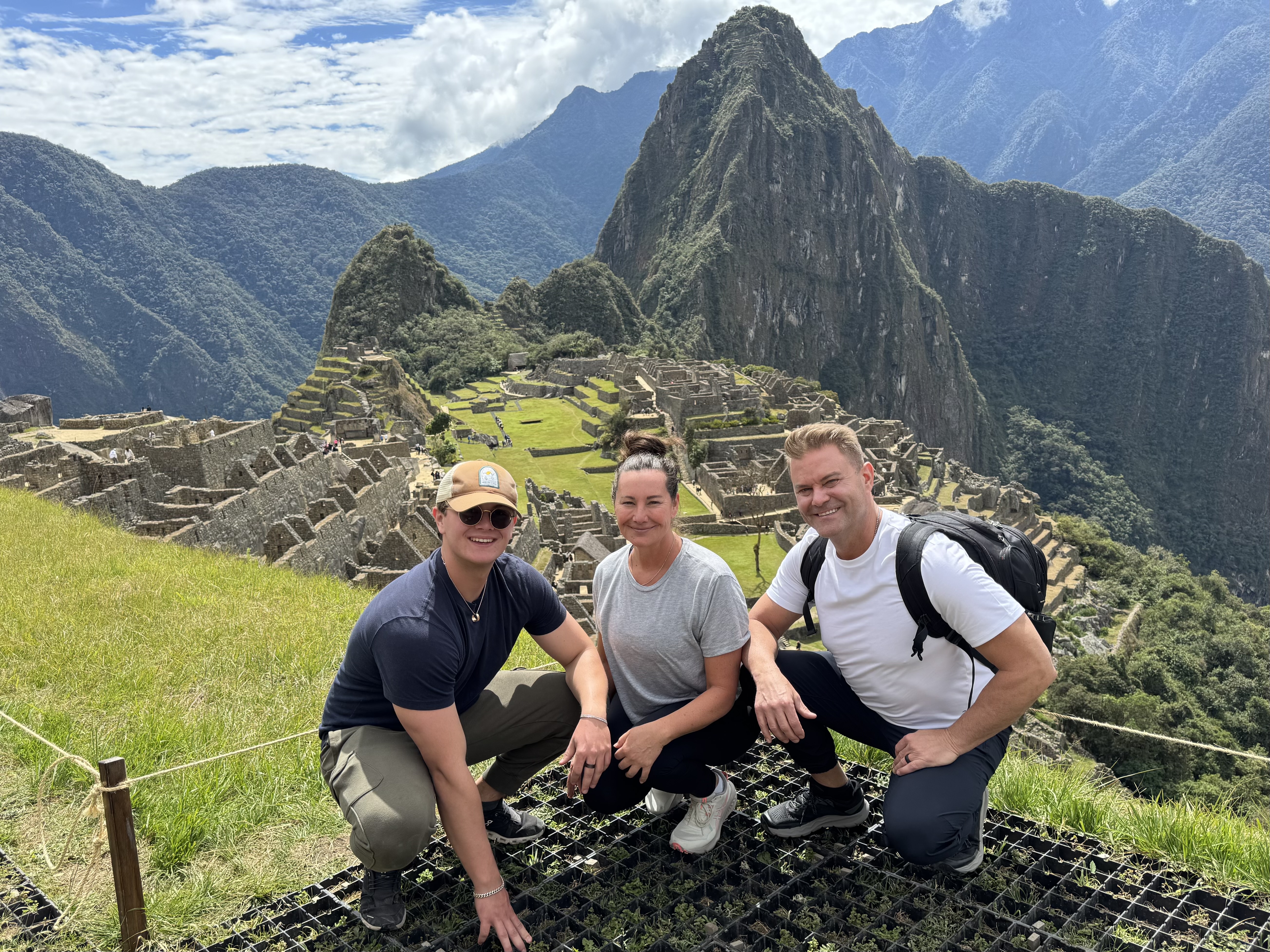
Us at Machu Picchu
Machu Picchu isn’t just a destination—it’s the feeling of a life-changing journey into the heart of ancient Incan civilization. Perched high in the majestic Andes Mountains of Peru, this UNESCO World Heritage Site and one of the New Seven Wonders of the World continues to captivate travelers with its breathtaking beauty, mysterious history, and spiritual energy.
Whether you’re an adventure seeker, a history buff, or a luxury traveler, visiting Machu Picchu offers a travel experience unlike any other in the world. Hidden for centuries and only rediscovered in 1911 by Hiram Bingham, Machu Picchu is one of the most well-preserved archaeological sites in South America. Exploring its ancient stone temples, terraces, and sacred sites allows travelers to literally walk in the footsteps of the Inca. The mystique, combined with astonishing engineering and design, creates an unforgettable connection to the past.
Surrounded by lush green mountains, often shrouded in mist, the views from the Sun Gate or Huayna Picchu are nothing short of spectacular—you will not find this breathtaking scenery anywhere else.
Whether you trek the legendary Inca Trail, take the scenic train, or opt for a private luxury journey, the experience is deeply personal and often transformational—think adventure colliding with spiritual discovery.
If you’re building your travel bucket list, Machu Picchu should be at the top! It’s one of those rare places that exceeds expectations in every way. It’s the kind of moment you’ll talk about for years—photos will never do this scenery justice.
Our private guide left us to dine and adventure on our own in Aguas Caliente. He called ahead to one of his favorite local restaurants and much to our surprise, a round of pisco sours in addition to one of the most popular and ancient cuisines of Peru was awaiting us—a full guinea pig, decorative hat and all. While dining on guinea pig wasn’t one of my favorite meals, it was definitely an experience. Ours was steamed versus deep friend and honestly had some of the same textures and qualities as chicken.
There are many ways to arrive at Machu Picchu from Cusco, Urubamba, or the Sacred Valley and can include car, train, and bus with several lines and transfers in between. There are also several circuits or routes with timed entries daily into Machu Picchu that sell out. If you don’t get a specific circuit, chances are you will be disappointed in your experience. If you have mobility issues, please work with a professional travel advisor that has been to Machu Picchu personally. The Hiram Bingham was a bucket list item worth the wait!
Day 7: Private white water rafting (Urubamba)
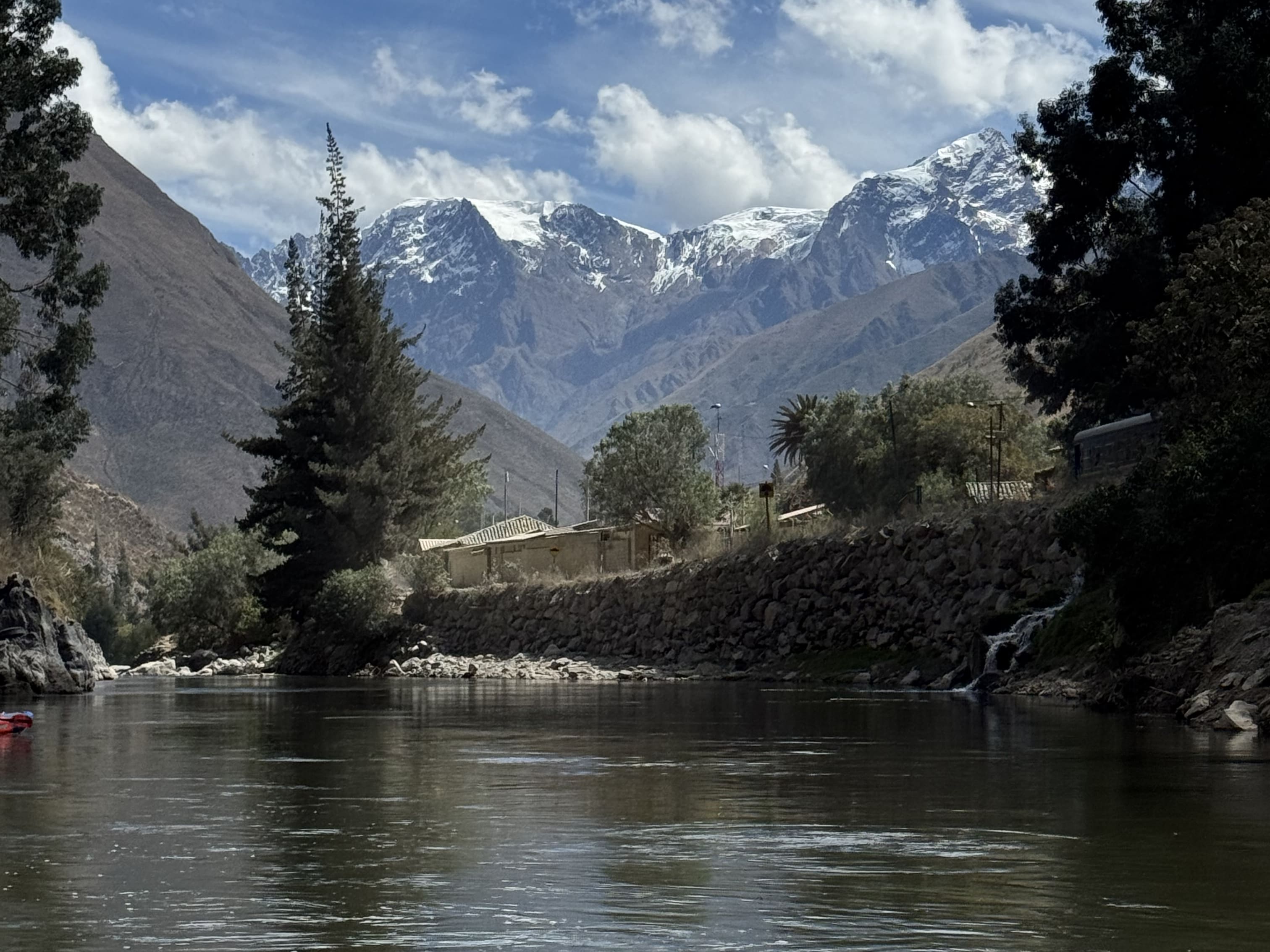
White water rafting views
Our private white water rafting guide met with us the night before our excursion to set expectations. I’m convinced now that he was also assessing our personal fitness levels first-hand, all in the name of safety.
I would recommend scheduling your adventure from Urubamba as you will float the Urubamba River in the Sacred Valley area, and pick-up and travel times can vary. Our expedition included private transfers, equipment, lunch, an unexpected history lesson, Incan Ruin sightings, a river guide, and a kayaking guide for safety.
As it was the “dry season” the river wasn’t raging while we were there, but the Class II and II rapids were exciting enough for all of us, allowing for plenty of relaxed float time to absorb the scenic wonders all around. There were plenty of opportunities to really dig in with our paddles and rip through the rapids, coupled with gently glides down the river surrounded by ancient ruins and the amazing mountain scapes that form the Sacred Valley. If you are seeking consistent class 4, 5, and 6 rapids, you will need to visit Peru during its wet season (their summer).
The conclusion of our trip down the river brought us to a serene exit with stunning views and a quiet pasture in one of the many agricultural areas along the Urubama. Complete with facilities that included clean towels, private warm showers, and toilets for both men and women, we set up for an afternoon lounge with blankets and giant lush pillows inviting you to nap in the winter sun after the extravagant buffet assembled by two local women. The freshness and quality of our meal seemed simple, but the creativity and flavor combinations titillated our pallets.
After the lunch, but before dessert, the three of us took to the day lounge to relax, digest, and take in the splendor that surrounded us. After a couple of cat naps, we attacked desserts of homemade rice pudding with a variety of berry compote. We wrapped up our day of white water rafting around 4 pm and headed back to our resort to enjoy the heated pool, hot tub, and sauna.
Day 8: Chinchero stopover & arrival in Cusco
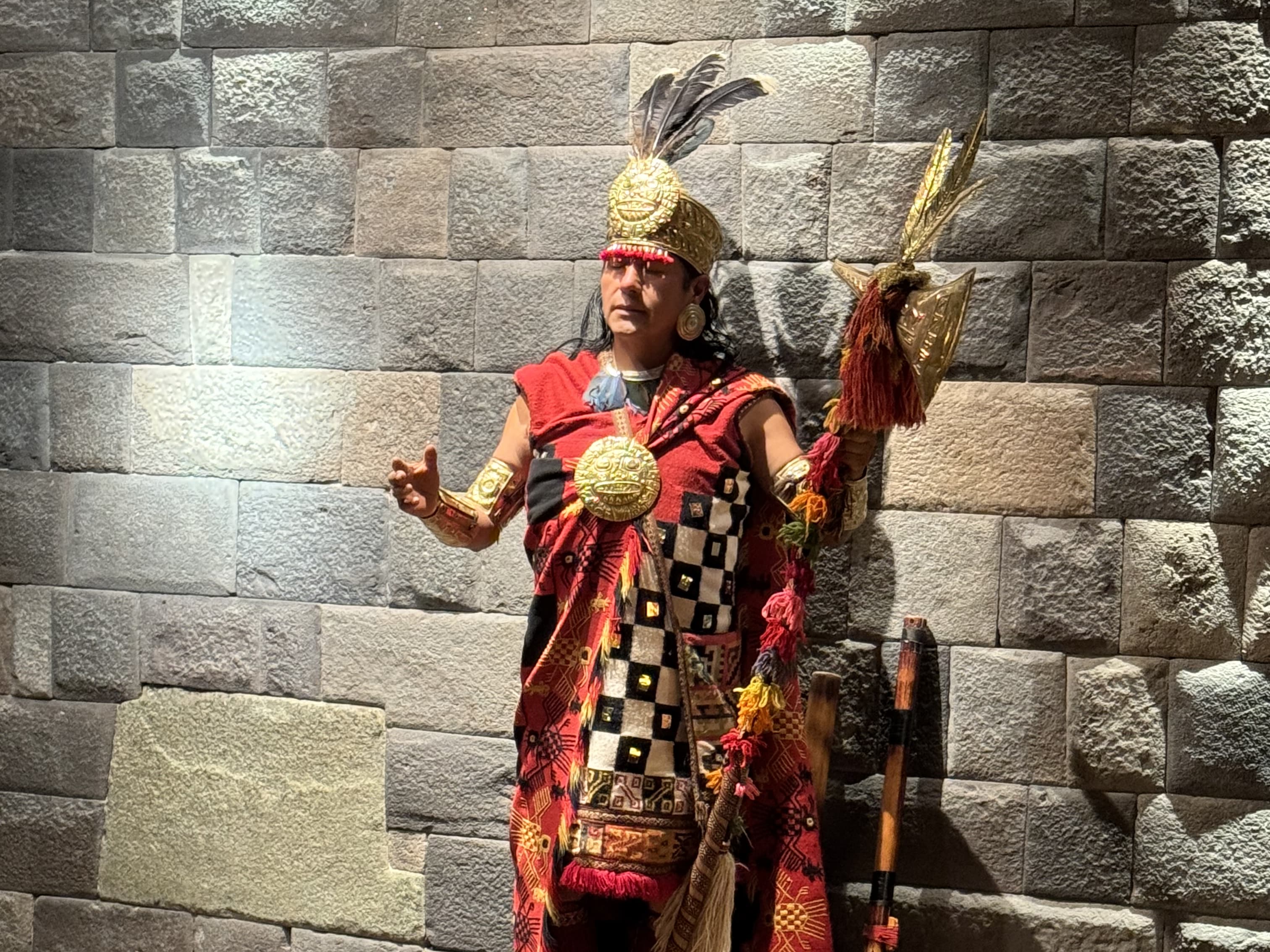
Authentic Inca Ceremony
Our family woke up early to catch a flight to Cusco. On the way to Cusco, I had prearranged a stop in Chincero, best known for its rich Inca history, vibrant textile traditions, and stunning Andean scenery.
Chincero is a hub for traditional Andean weaving, with women showcasing age-old techniques of spinning, dyeing, and weaving alpaca, vicuna, and baby lama wool. There are several co-ops in this area and ours included a multitude of live vicunas, alpacas, and lamas, and an entire mini structure that housed a plethora of guinea pigs.
We went to one such co-op for a demonstration on the dyeing techniques and materials used. The number of vibrant colors these ladies can create from all-natural, local items is mind-blowing. More shocking is the ingredient used to solidify or set the dyes—it’s young children’s urine. The ingenuity, artistry, and craftmanship displayed in these cooped centers is boundless. Needless to say after our demonstration, the inspiration to shop until we dropped wasn’t missing.
Upon landing in Chincero, we checked directly into our home for the next three nights, Palacio del Inka. Upon entering the hotel’s lobby and reception areas, you immediately understand its naming as “Palacio”. The entry and reception feel like a palace with opulent blues, maroons, and golds pared with stone and wood in textures of all varieties.
We checked into our double two room two-bathroom suite and immediately set out to explore Cuscuo. After shopping and walking for several hours, we stopped at a restaurant on the square that had an open-air and windowed balcony overlooking the Jesuit Church, the Catholic Church, and the entire town.
As our exploration in the town came to an end, we headed back to the hotel to attend the free history tour that concluded with an incredible, authentic Inca ceremony. This experience was so touching as we were shocked and enthralled to encounter something so authentically unexpected.
Once the ceremony was over, we moved to the next activity hosted by the hotel—the pisco sour experience! Palacio del Inka has their own spin on the authentic cocktail, and I must say, their version was one of my favorites. Every detail, up to the final touch of the “L” on top as a nod to The Luxury Collection has been well thought out.
Day 9: Hiking Palcoyo—Peru’s other Rainbow Mountain
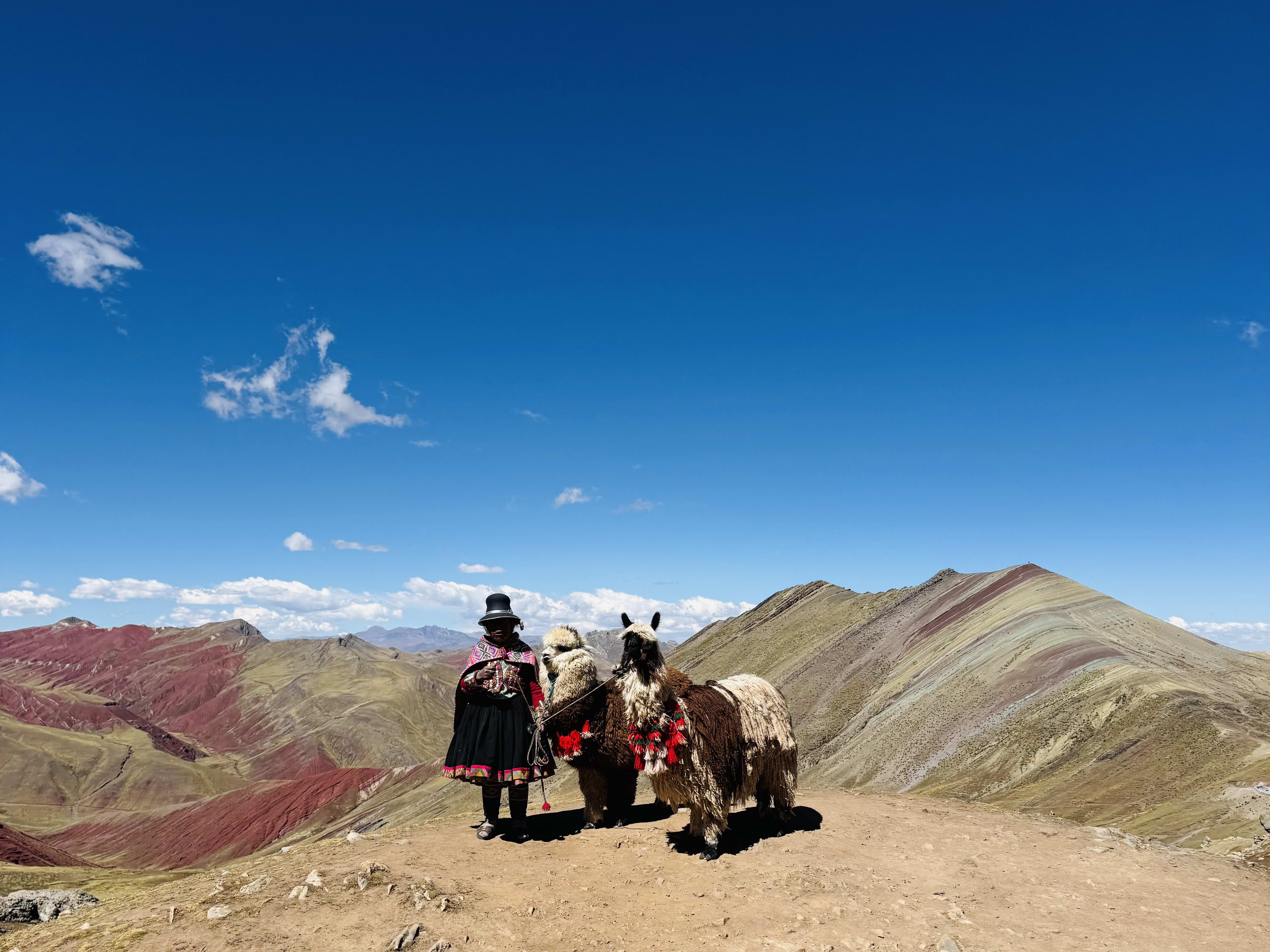
Polocoyo Mountain views
We opted to do the lesser-known of the more colorful mountains in the area - Palcoyo Mountain. Our private transfer picked us up at 6 am. It was very chilly even though we did dress in layers. Luckily, the transfer was prepared for our Arizona blood and had soft, warm blankets for us to wrap up in. We drove for two hours to a local village restaurant that hosted us for a warm breakfast buffet with restroom facilities and delicious coffees.
After breakfast, we made our way to Palcoyo Mountain, paying the entrance fee and using the facilities. There was a lot of construction happening, including new restrooms and a new viewpoint. We immediately began the hike to the summit. While we are a fit family and hike and perform cardiovascular exercise on a regular basis, we were not prepared for the incredible toll the 14,000 foot altitude would have on our hiking abilities.
We didn’t treat the excursion as a race but did manage to keep a brisk pace with plenty of huffing and puffing with plenty of picture and video breaks. Our private guide provided ample details about the village people, animals, and customs. Thankfully, he also brought plenty of herbal candies and smelling ‘salts’ used for thousands of years to curb altitude sickness and breathing difficulties.
At one point during the drive, I thought, what in the world did I sign us up for and would my clients be on the brink of firing me for something like this? Upon reaching the summit, I knew immediately that the drive and the time and the effort were all 100 percent worth it. It’s difficult to describe the scenery and vibrant colors of the mountain and pictures don’t scratch the surface.
Descending was relatively fast, and the ride back to the village’s lunch buffet provided another opportunity to enjoy a delicious lunch of local offerings. The variety of fresh vegetables and salads with local dishes of meat and seafood was the perfect reward for our morning’s efforts.
We enjoyed car naps back to Palacio del Inka and headed immediately to the spa to purchase a hydro circuit hour that allowed us access to the spa facilities without having to purchase a treatment. The options of pools—hot and cold, hydro massage chairs, steam room, cold shower and sauna, offered all the recovery we needed.
Day 10: The Westin Lima after a canceled flight
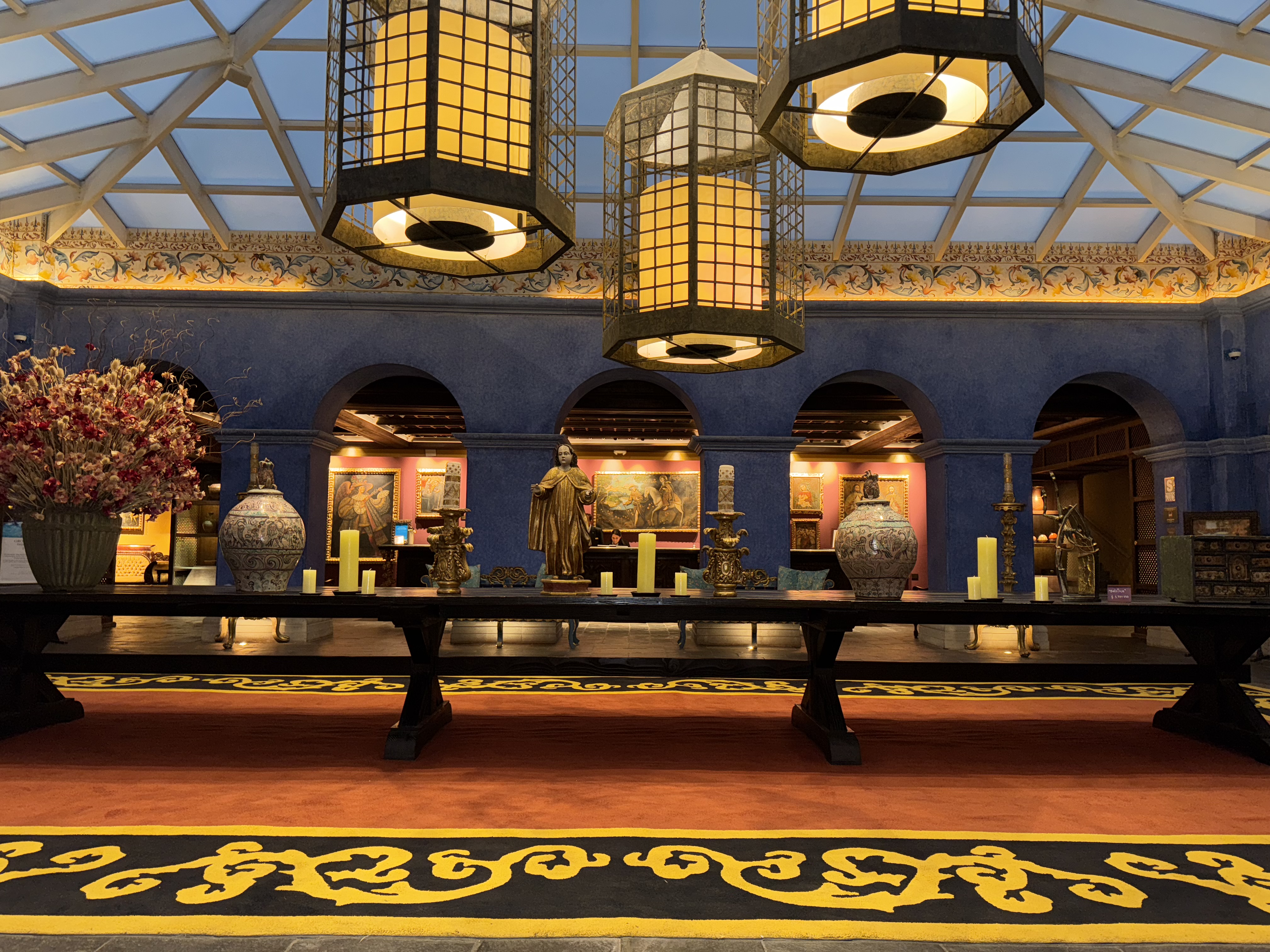
Palacio Del Inka
The Westin Lima Hotel and Convention Center, though not part of our original itinerary, became a necessary addition due to a flight cancellation—and it turned out to be a very pleasant surprise.
While the property doesn’t offer ocean views like the JW Marriott Lima, it still boasts impressive city views. Our exceptionally spacious room was a standout, featuring high ceilings, pristine new carpeting, an airy, open-layout bathroom with a separate wash closet, and the most comfortable beds of any hotel we visited.
Need to know
Final thoughts: Why I recommend Peru for milestone travel
This trip reminded me that luxury doesn’t just mean 5-star hotels (though we certainly had those)—it’s about intentional, meaningful travel. Peru is the perfect destination for those seeking immersive culture, nature, and history—all tied together with thoughtful service and unforgettable experiences.
If you’re considering Peru, I’d love to help you plan a seamless and deeply personalized itinerary. From private Machu Picchu access to hidden culinary gems, I know how to turn a trip into a story worth telling for years to come.
Pro Travel Advisor tips for visiting Peru:
Do not wear expensive jewelry—this isn’t the place.
Call your credit card company & bank prior to leaving the country to let them know of your travels & to waive foreign transaction fees.
Make sure your purchases are in Peruvian currency “Soles” (PEN). Your credit card company will convert the rate on your statement, chances are it will be a much more favorable exchange without fees.
Marriott Luxury Properties will exchange up to $300 USD per person per day to Soles for no fee
Lima Airport—Pro Travel Advisor tips:
The LATAM lounge isn’t open yet (September 2025), however, through Priority Pass you can receive a complimentary meal at Restaurant Bonbonniere.
You will be required to go through an additional screening at your gate, where officials will go through every carryon item once your boarding pass has been scanned. You can not board your international flight with ANY liquid—even water.

Travel Advisor
Shalegh Silkey

Shalegh Silkey
Get in touch with Shalegh Silkey
Did you like this guide? Reach out to customize and book your own experience. Or, just to chat about travel in general.
For more inspiration and insider recommendations, visit our Peru page.