




Curator’s statement
La Ora na, Tahiti—the gateway to a world of adventure in the heart of the South Pacific and a destination in its own. Known is known for its crystal-clear lagoons, rugged mountain trails, black-sand beaches, heavy surf, and vibrant island culture, Tahiti offers something for every traveler. Beyond its postcard-perfect scenery, you’ll find lively markets, ancient temples, and welcoming communities ready to share their traditions. Whether you are spending a week on the island or a day or two, there is plenty to see and do throughout the island to make the most of every moment in this island paradise.
The Fora Difference
Book with Jaimie Bayer to access exclusive perks and experiences on your trip.

Killer perks
Free upgrades, spa credits and more—we got you

Personalized recs
Customized travel planning for your style

Insider knowledge
Expert advice from people who’ve actually been there
Where to stay in Tahiti
Unlock perks by contacting Jaimie Bayer to book your trip.
Things to do in Tahiti
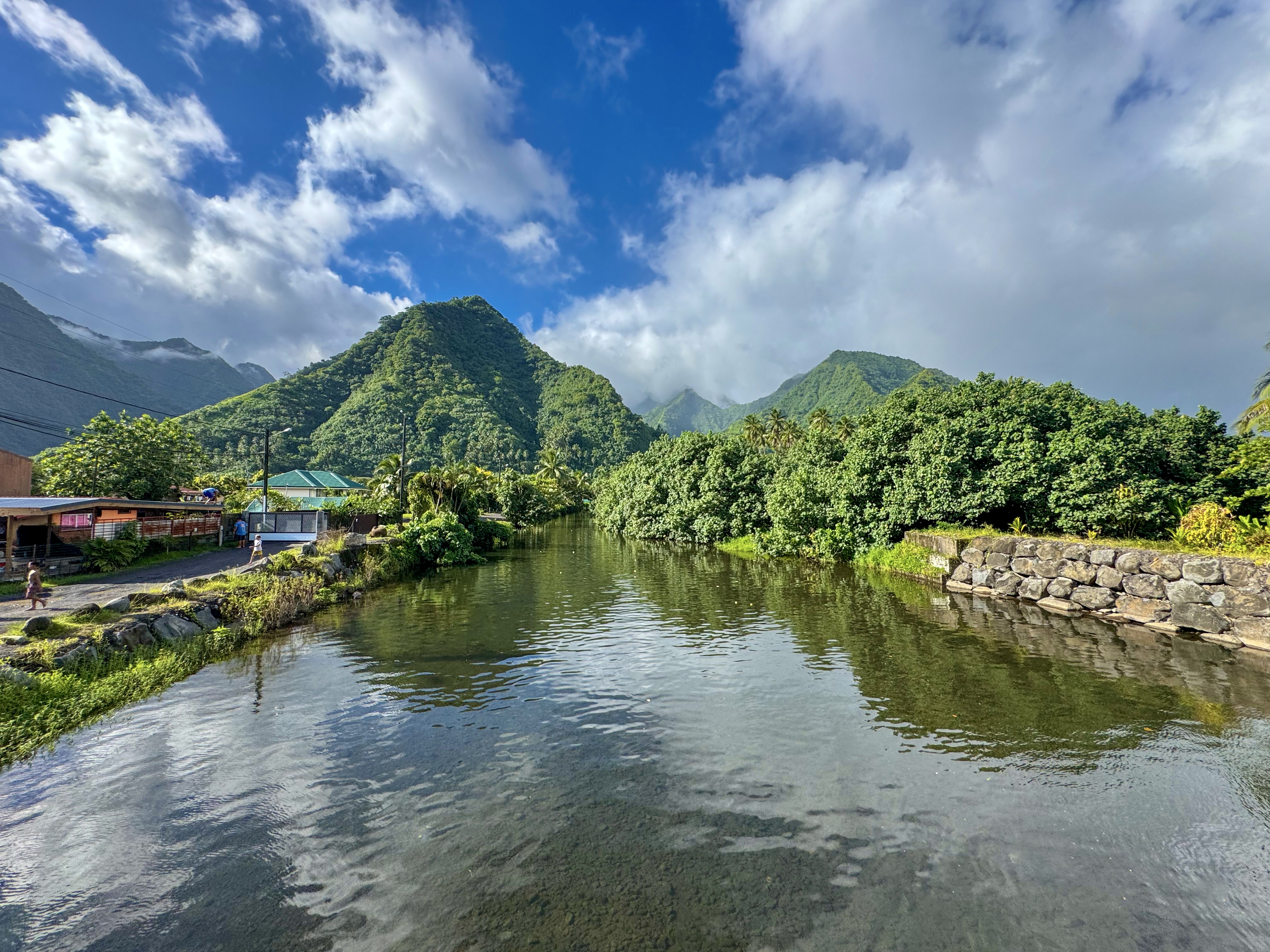
A view of the mountains from the village at Teahupo'o
Never a dull moment on the island—Tahiti blends adventure, culture, and relaxation into one unforgettable island escape.
On the water
If you are looking to enjoy time on the water, I recommend booking a two- to four-hour snorkeling adventure. We booked directly at our hotel (Te Moana) and had an amazing two-hour experience. First, we traveled past the reef to a spot known for sea turtles and swam along the shelf for about an hour. Next, our guide, Keanu, took us to a popular spot known as the Aquarium. This area is located in the lagoon, with little to no current and is shallow with an abundance of coral and fish. There are two sunken boats and a small plane that the government placed there for divers and snorkelers to explore. I recommend a direct booking with your hotel that can pick you up at your dock so you do not have to drive into the city (with traffic), park (and pay).
Another great way to enjoy the lagoon is by paddle-board or kayak. Most hotels offer them free of charge to guests. From the Te Moana, I paddled north along the coast and out to the sandbar. If you are lucky enough, you will see a large stingray or two passing by.
Beaches
Tahiti has no shortage of beaches, however, keep in mind that most of them (especially on the west side) are black-sand due to volcanic activity. You’ll still find some white-sand beaches, too, typically formed from coral fragments in the sheltered lagoons. While I was not super impressed by the beaches, my two favorite ones were Taharuu (west side) and Haapoponi à Tiarei (east side). The Venus Point is extremely popular, and we attempted to go there, but after two rounds of circling the parking lot we left. There is a ton of surfing at almost all the beaches as well as strong currents, so know your limits if you choose to swim. Beach parking is also free.
Driving
The island is not as small as you would assume. We had a car and opted to spend the day driving around the island. One reason I wanted a car rental (besides the obvious—to gather provisions) was to take a trip to the world-class surf spot, Teahupo’o, and stop at the best restaurant on the island: La Plage de Maui.
It is recommended to drive the island West to East, but take into account construction, a slower driving pace (40 mph) and plenty of stops when planning your day. We split our driving into two days, with one day exploring the east and one exploring the west side. The first day (much longer) from the Te Moana, we drove west and stopped at Vaiava Beach, Grottes de Mara’a (three small grottos), Tahaaruu Beach, Source Vaima (a small natural cold spring with freshwater eels), and the Water Gardens. There are three longer hikes (1–4 hours, steep and slippery at rainier times) at the Water Gardens, but we opted to walk the short loop. From there we continued to Tahiti Iti, stopping for lunch at La Plage de Maui, and then off to Teahupo’o. There are small boats at the parking lot and at the point (short walk) that will take you out to the wave for 30 minutes (approx. $25).
On the east side, I recommend starting at the farthest point and working your way back. Keep in mind we didn’t go around the whole island due to time (late afternoon and about 1.5-hour drive back from Teahupo’o). I recommend heading to the Three Cascades waterfalls (although two were closed for construction and no entry fee), and to make a stop at the Arahoho Blowhole. On the way back, the Plage de Venus is a popular beach.
Hiking
Hiking is another great activity, however we did not hike due to rainstorms. Most hikes are moderate to intense and longer distances. A guide is recommended for some.
Local market
One must-do is a visit to the local market in Papeete. The market opens early around 6 am and it is recommended to get there early if you are buying fresh meats, flowers, or veggies. Most of the vendors and souvenir tables open at 8 am, as well as the upstairs shops. Everything is closed by 5 pm at the latest.
Negotiating is not customary and cash is the only currency accepted. Most, if not all will happily take US dollars. If you are driving, there is public parking around, but you will need to pay. If you want to buy a flower crown, this is the place. Crowns can range between $20 (small) and $30 (large). Looking to buy a black pearl? I would head to a shop nearby. Not only do they take credit cards, but if you are spending $100+, you want to make sure you are getting good quality.
Places to eat & drink in Tahiti
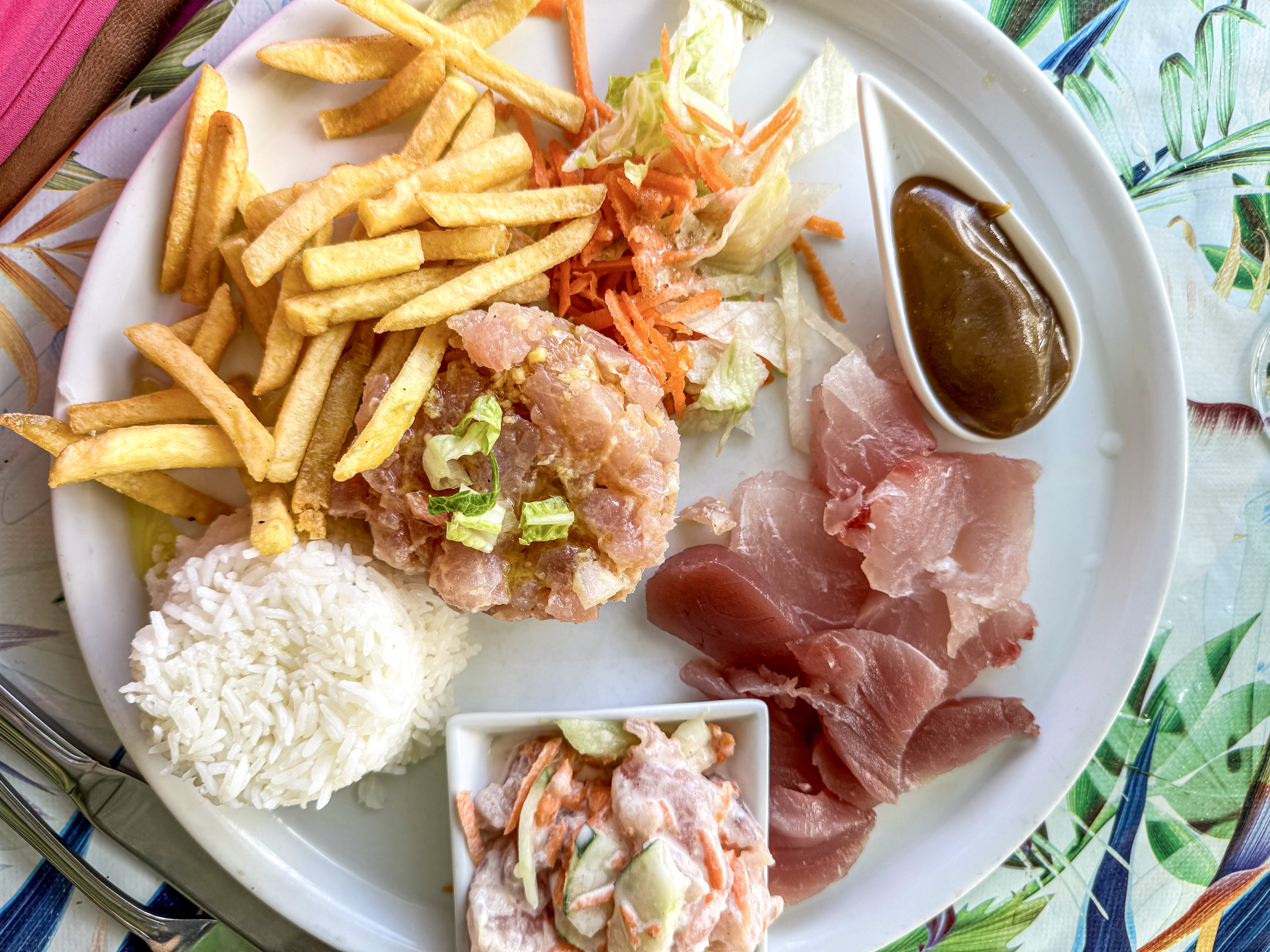
Tuna Trilogy at La Plage de Maui
Breakfast was included in our resort (and at most), so I can’t speak to morning meals, but nothing is cheap in Tahiti except maybe a croissant. I recommend getting breakfast with your stay.
For lunch, hands down, the best place we ate was at La Plage de Maui. The Tuna Trilogy was out of this world. Make sure you have a reservation as this place fills up fast. Service can be slow, so plan for at least two hours, especially if you are continuing to Teahupo’o.
Everywhere you go will most likely have Poisson de Cru de Coco on the menu, and if you love ceviche, tuna, and coconut—get it everywhere! Each place will have their own twist. I loved it at Te Moana.
Late breakfasts and little to no lunches mean early dinners. Te Moana had a great menu. There are two amazing food trucks next door, and we tried both. These food trucks offer hefty portions at a lower price than fine dining. Roulotte Chez Nina had a great swordfish and close-by Temaiti West Side had delicious ribs.
If you are looking for fine dining, Le Lotus (at the InterContinental) offers both lunch and dinner. If you are willing to drive at night to the east side (we weren’t), the O Belvédère is a beautiful restaurant with breathtaking mountain-top views. In the city, L’OA Bouche is recommended. Meherio Tahitian Bistro is also great, as well as Les 3 Brasseurs. Don’t forget to stop at Restaurant Le Moana for happy hour drinks.
Polynesian shows with dinner buffets occur at the InterContinental Saturdays and Wednesdays. Reservations are recommended.
Need to know
Tahiti is the largest island in French Polynesia (of the 118 islands and atolls) and the only one with an international airport, so regardless of your itinerary, you will have a stop here. I recommend 2–5 days, the latter if you are looking to spend a few relaxing at your resort on the lagoon, soaking up some sun and R&R.
If you plan on doing an island tour, have a house rental, or want to stop at a grocery stop now and again, a car is recommended. If you are only on Tahiti for a day or two, I would not recommend getting a car. Furthermore, if you only want to rent a car for a day, your hotel can arrange that too. Taxis are expensive, metered, and cash-only (USD is okay). If you are renting a car, Hertz is the top choice, but expect a 2ish-hour wait if you are coming in internationally without an EU passport. Customs will take some time and the airport Hertz is not very efficient. If your rental is less than eight days, I recommend upgrading to unlimited miles. Reservations that are 8+ days will automatically have unlimited miles. If you are taking the car on the ferry to Mo’orea you will pay extra (reservation required, about $100 round trip) and have to get extra maritime insurance. We opted to make a reservation on Tahiti and one on Mo’orea. Avis had no line—FYI.
Let’s talk alcohol: not for sale on Sunday. There, I said it. I made the mistake of heading to the grocery store on Sunday (we got in late Saturday evening) for wine and liquor, and I was not happy. Restaurants and hotels sell it, but I like sipping on wine on my balcony, watching the sunset set.
Larger restaurants, food trucks, and shops take credit cards, but taxis, the market, and roadside vendors take primarily cash. American dollars are used throughout French Polynesia and you don’t necessarily need to do an exchange. If you opt to change cash in, the larger hotels can do it for you and there is a small fee (like $5 for $100).
Gratuity is added to each check, about 5%, and that is standard across the board. Extra is always welcome, but not expected at restaurants. I do always recommend tipping a tour provider, as they have likely spent a few hours with you, providing information, fun, and keeping you safe.
The best (and driest for this tropical environment) time to travel is early June through late October. This is their winter, so the sun sets earlier (around 5:30 pm on the solstice). If you travel during the rainy season, expect cancellations for water activities and restrictions for hiking.
Humpback whale season is in September and October and sees an influx of tourism.


Travel Advisor
Jaimie Bayer

Jaimie Bayer

Get in touch with Jaimie Bayer
Did you like this guide? Reach out to customize and book your own experience. Or, just to chat about travel in general.
For more inspiration and insider recommendations, visit our Tahiti page.