
Curator’s statement
Slovenia captured my heart with its intimate scale and outsized beauty—a country where you can have breakfast beside alpine lakes, lunch in vineyard-draped hills, and dinner in a medieval castle, all within a few hours' drive. This itinerary follows a carefully choreographed progression from the otherworldly turquoise waters of the Soča Valley through the fairytale setting of Lake Bled to Ljubljana's living-room warmth and finally to the sun-drenched wine country that rivals Tuscany. It's a destination that rewards those who look beyond the postcard views to discover a culinary scene punching far above its weight, where Michelin-starred chefs work with ingredients foraged that morning and winemakers pour their stories along with their wines.
The Fora Difference
Book with Destinations by Bailey to access exclusive perks and experiences on your trip.

Killer perks
Free upgrades, spa credits and more—we got you

Personalized recs
Customized travel planning for your style

Insider knowledge
Expert advice from people who’ve actually been there
Where to stay
Unlock perks by contacting Destinations by Bailey to book your trip.
Day 1: Arrival & Soča Valley immersion
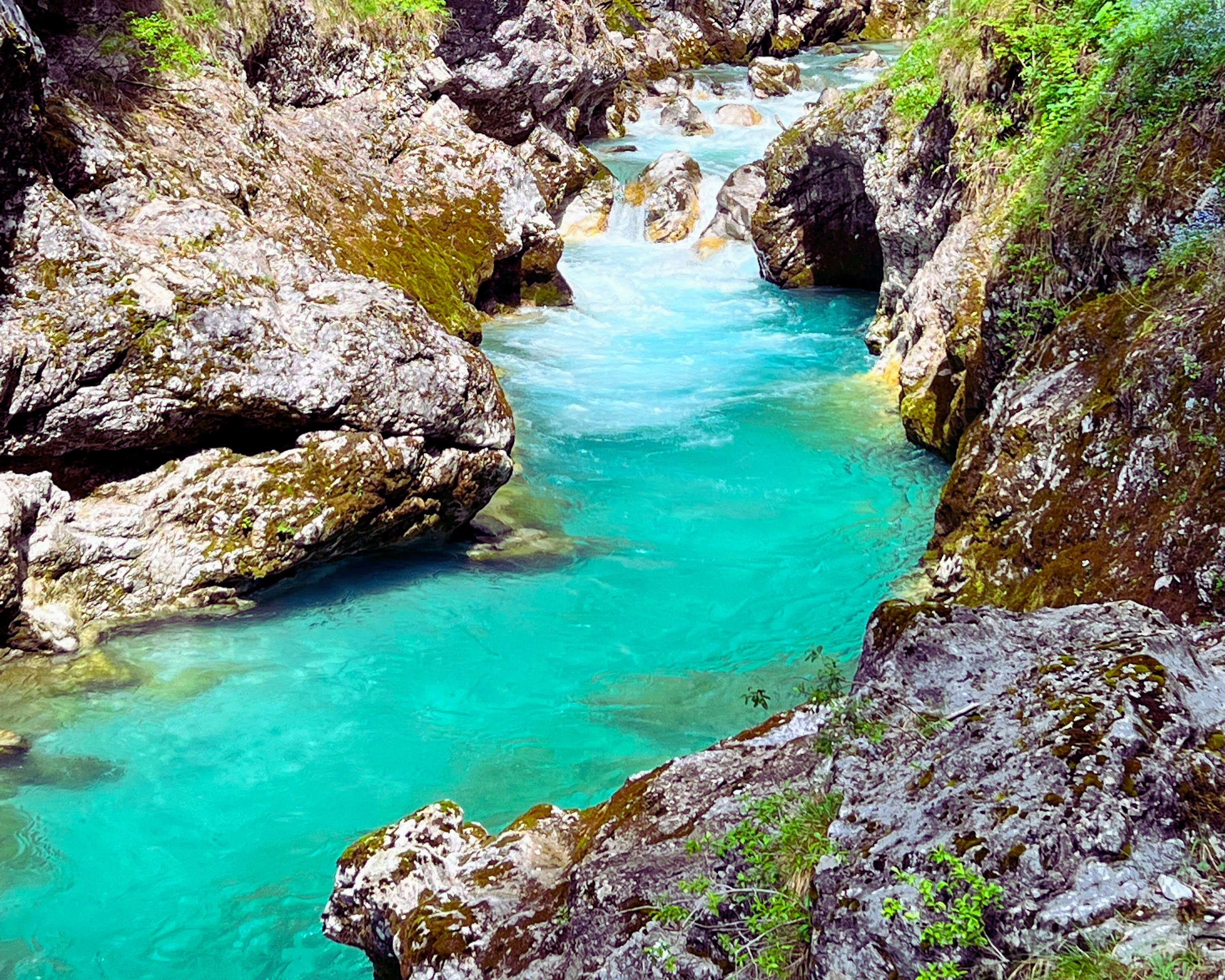
The Great Soča Gorge. Photo by Dione Bailey
The journey begins with a scenic drive from Venice Marco Polo Airport (VCE) across the border, where the landscape transforms almost immediately. Within an hour, the gentle Venetian plains give way to the dramatic Julian Alps, and suddenly you're following the Soča River—a ribbon of impossible turquoise that photographers struggle to capture accurately because it seems too vibrant to be real.
Morning/early afternoon: The Great Soča Gorge
Before reaching your accommodation, detour to the Great Soča Gorge (Velika Korita Soče), where a short, easy trail reveals the river at its most dramatic. Here, the water has carved smooth channels through white limestone, creating natural sculptures and pools so clear you can count the rounded stones 20 feet below the surface. The color—somewhere between Caribbean aquamarine and liquid jade—comes from limestone particles suspended in glacial meltwater. This is your first lesson in Slovenian magic: nature as both artist and architect.
Late afternoon: Settling into Kobarid
Check into Hisa Franco in the Kobarid area. The village itself is unassuming—more authentic mountain settlement than tourist destination—which is precisely its charm. Take time before dinner to walk the quiet streets, where local residents still outnumber visitors and the pace remains refreshingly unhurried.
Evening: Hisa Franco
Dinner at Hisa Franco is not merely a meal but a manifesto. Chef Ana Roš, one of the world's most celebrated female chefs, has built her reputation on radical localism—foraging mushrooms from nearby forests, aging fish in koji fermented from local grains, and transforming humble ingredients like trout and alpine dairy into dishes that tell the story of this valley. The restaurant occupies a restored 19th-century house where the dining room's large windows frame mountain views that change with the seasons. Reservations must be secured months in advance; there are genuinely no comparable alternatives in the immediate area.

A note from Destinations by Bailey
The drive from VCE takes approximately two and a half to three hours. Depart Venice by mid-morning to reach the Soča Gorge in optimal afternoon light—the sun illuminates the gorge best between 2-4 pm. Fill your tank before crossing into Slovenia; gas stations become sparse in the mountains.
Day 2: Alpine icons & Lake Bled luxury
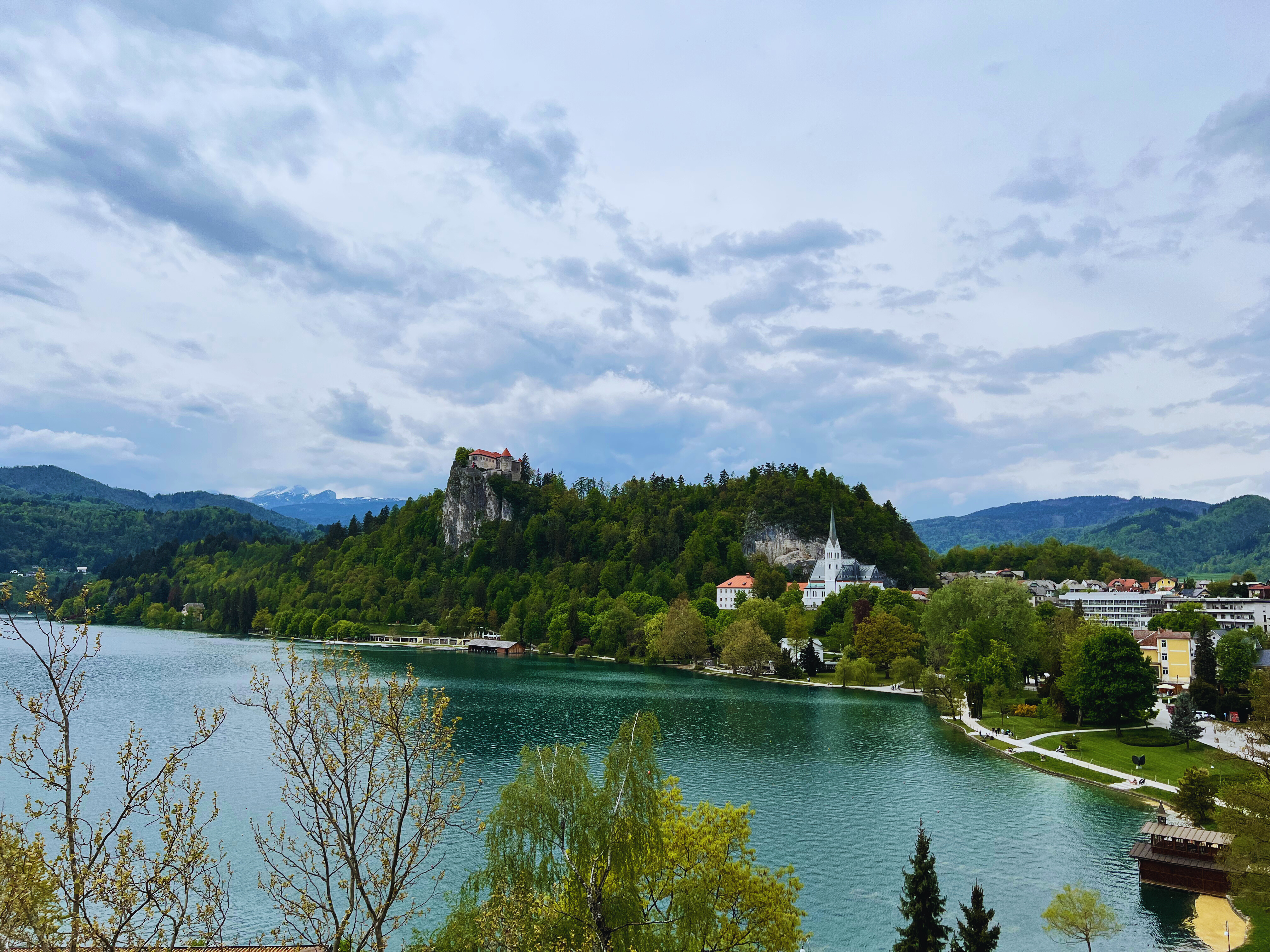
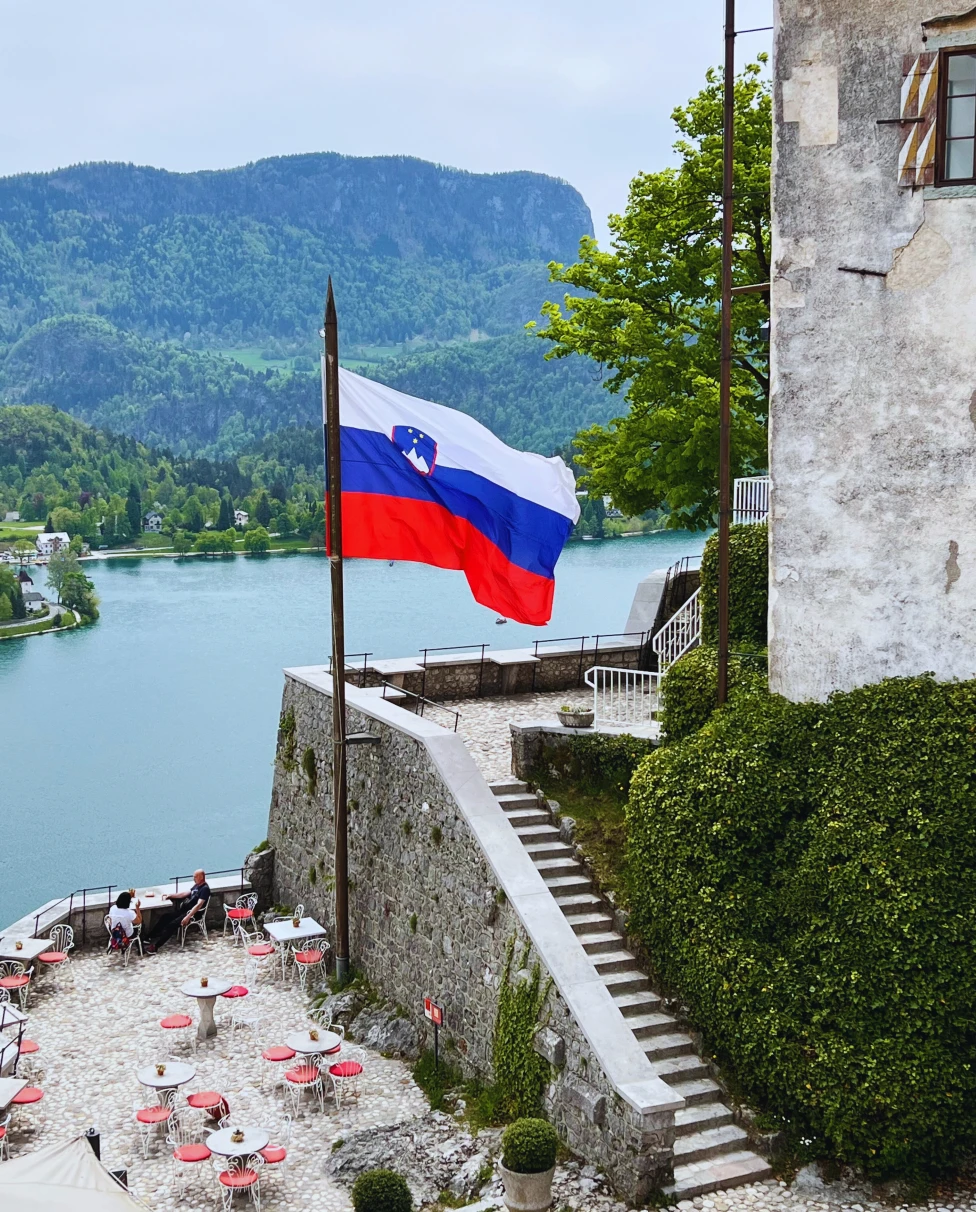
Lake Bled. Photo by Dione Bailey
Morning: The journey to Bled
The drive from Kobarid to Lake Bled (approximately an hour and a half) follows mountain roads that switchback through pine forests and past villages where hay still dries on traditional wooden racks called kozolec. As you descend toward Bled, the landscape softens, and then—suddenly—there it is: the postcard made real. Lake Bled sits in a glacial basin, impossibly picturesque with its island church, medieval castle perched on a cliff, and Julian Alps rising like cathedral walls behind it.
Late morning: Check-in & Brdo.si brunch
Check into Grand Hotel Toplice with lake views (worth every euro for the morning light on the water). After settling in, take time to explore the lake's shoreline path, which circles the entire perimeter—a gentle six-kilometer walk that offers constantly changing perspectives of the island church and castle. The morning is perfect for this stroll, when the light is soft and the crowds haven't yet descended on the more popular viewpoints.
Afternoon: Bled Castle & lake contemplation
Dedicate the afternoon to Bled Castle (Blejski grad), perched 130 meters above the lake on a sheer cliff. Beyond the medieval architecture and museum, the terraces offer commanding views—the lake below, the island church with its red-roofed bell tower, and, on clear days, the summit of Triglav (Slovenia's highest peak) visible in the distance. This is where you understand why Bled has captivated travelers for centuries: It's a landscape that feels designed, yet utterly natural.
Consider renting a traditional pletna boat (the only boats allowed on the lake) for a peaceful row to Bled Island, where 99 stone steps lead up to the Church of the Assumption. Local tradition holds that a groom should carry his bride up these steps for good luck.
Evening: Juliana Restaurant
Dinner at Juliana Restaurant provides a fine-dining experience with floor-to-ceiling windows overlooking the lake. As dusk falls and the castle illuminates above, you'll understand why Slovenian cuisine is gaining international recognition—modern technique applied to ingredients that taste of place, paired with excellent local wines that most international visitors have never encountered.
A note from Destinations by Bailey
For a quieter, equally high-quality lunch option away from the lakefront crowds, Wine Bar and Restaurant Stova (about two kilometers outside town) offers an intimate setting with an excellent wine list focusing on natural and biodynamic Slovenian producers. Lake Bled Castle also has a restaurant requiring advance reservations if you'd prefer to dine there.
Day 3: Capital city culture & castle dinner
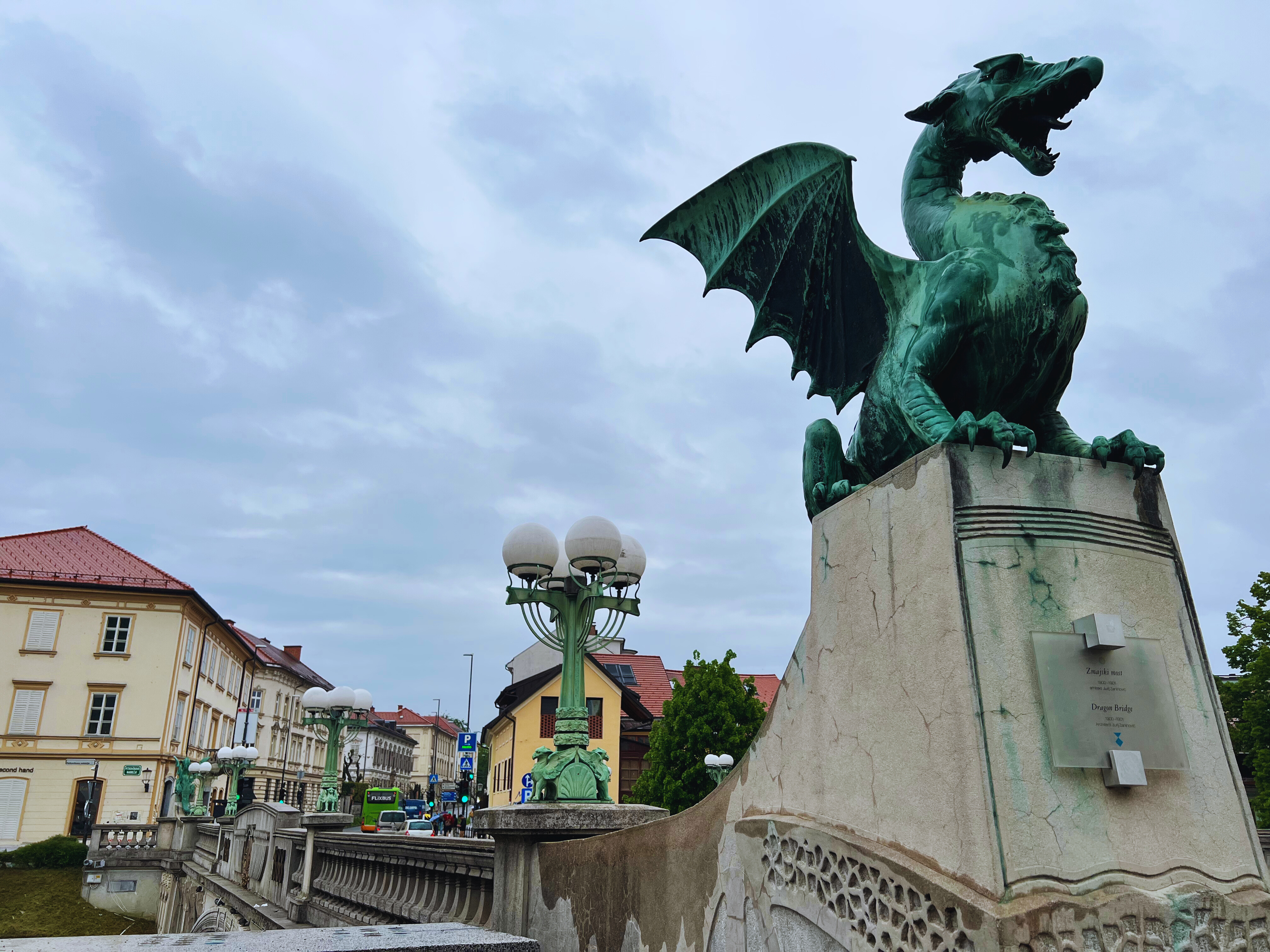
Dragon Bridge, Ljublijana. Photo by Dione Bailey
Morning/midday: Transition to Ljubljana
The drive to Ljubljana (approximately 45 minutes) is a gentle descent from alpine drama to urban sophistication. Slovenia's capital manages the rare trick of feeling both cosmopolitan and village-like—a city where you can walk everywhere, where the river is lined with cafés instead of highways, and where locals stop to chat in the middle of pedestrian bridges.
Afternoon: Check-in & urban exploration
Check into the InterContinental Ljubljana by IHG, perfectly positioned for exploring the car-free Old Town. Ljubljana reveals itself slowly: Jože Plečnik's iconic Triple Bridge, the Art Nouveau architecture along the Ljubljanica River, the Central Market where vendors still sell foraged mushrooms and seasonal produce, and countless small galleries and artisan shops. The city has a living-room quality—intimate, welcoming, and perpetually interesting without trying too hard.
Wander without agenda. Stop for coffee at one of the riverside cafés. Cross and recross the Dragon Bridge (guarded by the copper dragons that have become the city's symbol). Pop into Čompa for natural wines by the glass. Ljubljana rewards aimlessness.
Late afternoon: Ljubljana Castle
Take the funicular up to Ljubljana Castle as the afternoon light begins to soften. The castle complex—partially medieval, partially modern reconstruction—matters less for its historical significance than for the perspective it provides. From the tower, the entire city spreads below: the red-tiled roofs of the Old Town, the emerald thread of the river, and the Kamnik-Savinja Alps forming a dramatic backdrop to the north.
Time your visit for early evening, when the city takes on a golden glow and the temperature cools. This is when Ljubljana is at its most beautiful—the hour when locals emerge for their evening stroll and the outdoor terraces fill with conversation.
Evening: Strelec Restaurant
Dinner at Strelec Restaurant, dramatically situated within the castle walls, transforms a meal into theater. The restaurant occupies two of the castle's defensive towers, and dining here—with views across the city lights and the distant mountains—feels both historic and contemporary. Chef Igor Jagodic's menu draws heavily from Slovenia's culinary heritage, reinterpreting traditional dishes with modern technique and artistic presentation. This is haute cuisine that knows where it comes from.
A note from Destinations by Bailey
Strelec reservations must be secured well in advance—ideally when you book your flights. The restaurant has limited seating, and its reputation has made it Ljubljana's most sought-after table. Request a window table when booking for the full experience.
Day 4: Relaxation & vinous indulgence
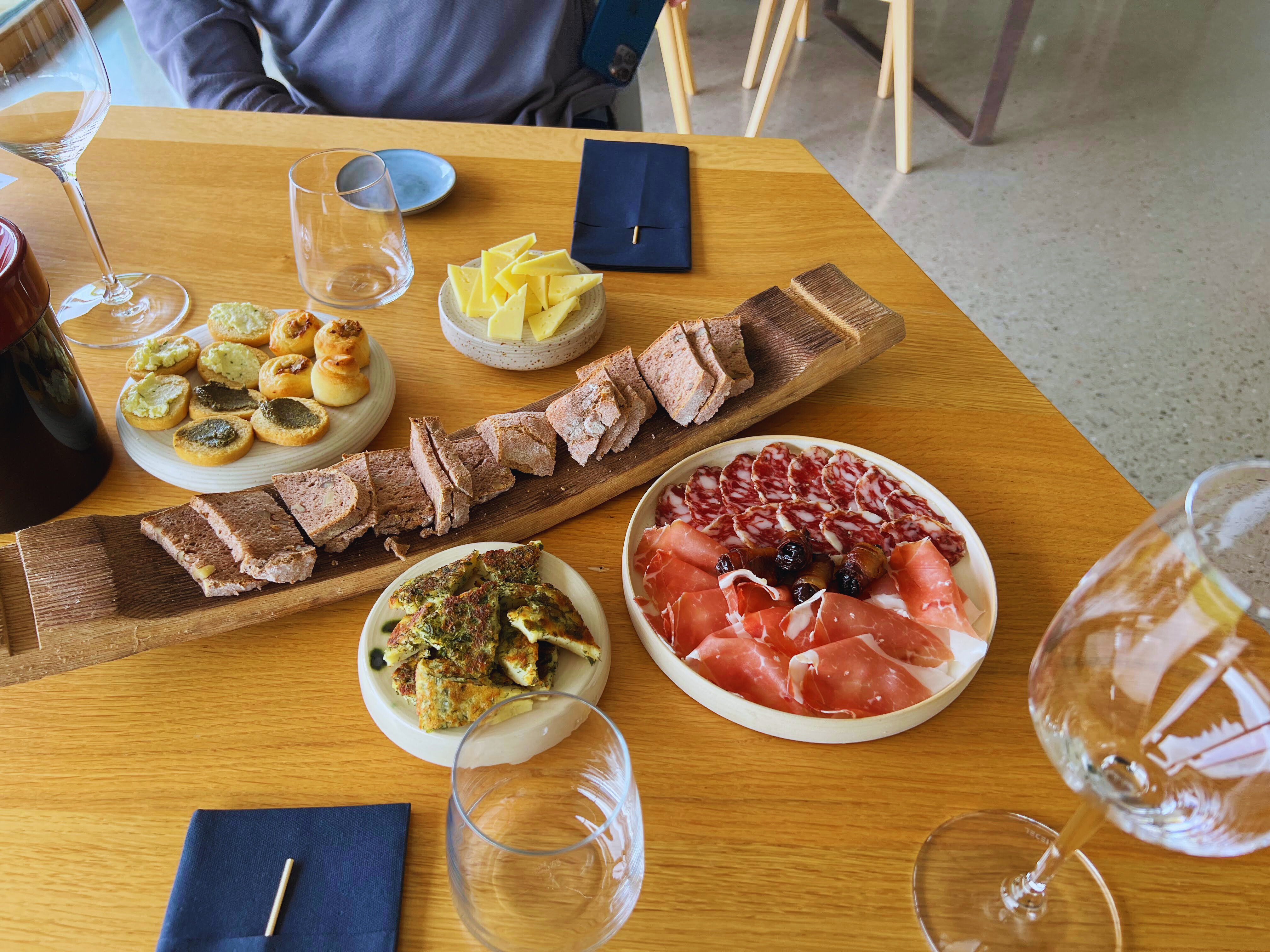
Charcuterie board at Lepa Vida. Photo by Dione Bailey
Morning: Journey to Goriška Brda
Drive west drive (approximately one hour) to Goriška Brda, Slovenia's premier wine region. Often called the "Tuscany of Slovenia," Goriška Brda justifies the comparison: gentle hills covered in terraced vineyards, medieval village churches punctuating ridge lines, and a quality of light that makes everything look camera-ready. But the region has its own identity—cooler climate, different grape varieties, and a winemaking culture that emphasizes minimal intervention and extended skin contact for white wines.
Midday: Lepa Vida Winery
Before checking in, head directly to Lepa Vida for a wine tasting that introduces you to the region's signature style. The focus here is on orange wines (white wines fermented with extended skin contact) and Rebula (known as Ribolla Gialla across the Italian border). What elevates this experience beyond a standard tasting is the owner's spectacular homemade charcuterie board—an artful arrangement of local salumi, prosciutto, aged cheeses, house-made spreads, and pickled vegetables that perfectly complements the wines while showcasing the region's artisanal food culture.
The winery's location offers commanding views across the vineyards toward the Italian Collio region—a reminder that borders here are recent impositions on an ancient wine culture. The tasting room overlooks the slopes where the grapes grow, and the owners pour their wines with genuine enthusiasm, explaining techniques passed down through generations.
Afternoon: Pikol check-in & vineyard wandering
Check into Pikol, a unique accommodation that embodies the region's wine-focused hospitality. The afternoon is yours to decompress—walk through vineyards on well-marked trails, visit the village of Šmartno with its intact medieval walls, or simply sit with a glass of wine and watch the play of light across the hills from your private hottub. Goriška Brda operates on a slower frequency; let yourself synchronize with it.
Evening: Dam Restaurant
Conclude your Slovenian journey with dinner at the one-Michelin-starred Dam Restaurant, where chef Uroš Fakuč has created what might be the country's most ambitious culinary experience. The tasting menu showcases the region's ingredients—Adriatic seafood, local vegetables, wild herbs, and world-class wines—through cooking techniques that reference both tradition and innovation. This is Slovenia's culinary prowess at full strength: confident, creative, uncompromising.
A note from Destinations by Bailey
Goriška Brda's dining scene extends beyond Dam. If you've arranged to spend extra time in Ljubljana on day three, consider lunch at one of the region's other excellent restaurants (Atelje, JB, or Cubo) before heading to Goriška Brda, or return to any of them for a second night in wine country. Each offers its own interpretation of regional cuisine, and wine lovers could easily justify an additional day here.
Need to know
Reservations are non-negotiable
Slovenia may be small, but its best restaurants operate at capacity. Book Hisa Franco, Juliana, and Dam Restaurant the moment your travel dates are confirmed—ideally two to three months in advance for popular periods. These aren't just good restaurants; they're destination experiences with limited seating.
Geographic logic
This itinerary follows a natural west-to-east-to-west progression that showcases Slovenia's diversity: the dramatic, rugged Soča Valley; the alpine postcard perfection of Lake Bled; the urban sophistication of Ljubljana; and, finally, the sun-drenched Mediterranean influence of Goriška Brda. The distances are manageable (no single drive exceeds two hours), but the landscapes shift dramatically.
Practical considerations
Weather: Mountain weather changes rapidly. Pack layers, including a waterproof jacket, even in summer. The Soča Valley can be 10 degrees cooler than Ljubljana.
Driving: Roads through the Soča region are winding and narrow. Drive conservatively, especially if you're not accustomed to mountain roads. GPS is reliable, but having offline maps downloaded provides backup.
Currency: Slovenia uses the euro. Credit cards are widely accepted, but carry some cash for small villages and market purchases.
Language: English is widely spoken in tourist areas and restaurants, though learning a few Slovenian phrases—"hvala" (thank you), "dober dan" (good day)—is appreciated.
Wine: If you fall in love with Slovenian wines (you will), buy them here. Export is limited, and prices in Slovenia are significantly lower than international markets.
The best-kept secret
Slovenia remains wonderfully under-touristed compared to its Mediterranean neighbors. This itinerary takes you to recognized highlights, but you'll still have moments—a quiet trail in the Soča Gorge, an empty vineyard path in Brda, a late-evening stroll through Ljubljana—when it feels like a personal discovery. Protect that feeling. Travel slowly, linger longer, and let Slovenia reveal itself at its own pace.

Travel Advisor
Destinations by Bailey


Dione Bailey
Get in touch with Destinations by Bailey
Did you like this guide? Reach out to customize and book your own experience. Or, just to chat about travel in general.
For more inspiration and insider recommendations, visit our Slovenia page.