

Curator’s statement
Siem Reap is more than the gateway to Angkor Wat. Lanterns glow above tree-lined boulevards, markets hum with the scent of lemongrass, and saffron-robed monks pass quietly through side streets as the city slowly stirs awake—a rhythm as graceful as it is timeless. Part of its charm is its ease. The temples lie only minutes away, so days here unfold gently: dawn at Angkor, a shaded lunch in town, an afternoon swim or spa ritual. Exploration feels indulgent rather than exhausting. History and leisure entwined in perfect measure. That balance carries into the city’s most storied hotels. At Raffles Grand Hotel d’Angkor, the antique cage-style lift and doormen in silk pantaloons recall a grander age, while evenings in the Conservatory Lounge feel steeped in heritage. Sofitel Angkor Phokeethra blends Khmer atmosphere with French elegance—lotus ponds, Cambodia’s largest pool, and a farewell tradition where the entire team waves guests goodbye. At Zannier Hotels Phum Baitang, rice paddies stretch into the horizon, villas on stilts echo village life, and the Spa Temple glows at dusk as frogs and crickets hum softly in the fields—rural simplicity reimagined with quiet sophistication. Spas across the city mirror this rhythm of respite—modern yet affordable sanctuaries offering calm after long walks among the ruins. In Siem Reap, wellness feels as natural a part of the journey as discovery itself. What makes the city unforgettable, however, are its people. Proud yet approachable, they carry the resilience of a nation shaped by hardship but now looking forward with optimism. Conversations often unfold in careful English, offered with patience and genuine warmth, and almost always end with a smile that lingers. The temples may define the skyline, but Siem Reap’s spirit lives in its encounters—moments so small yet sincere, they stay with you long after the journey ends.
The Fora Difference
Book with Juan Jose to access exclusive perks and experiences on your trip.

Killer perks
Free upgrades, spa credits and more—we got you

Personalized recs
Customized travel planning for your style

Insider knowledge
Expert advice from people who’ve actually been there
Where to stay
Unlock perks by contacting Juan Jose to book your trip.
Day 1: Gentle arrival
However you arrive—morning, afternoon, or late at night—the first hours in Siem Reap are best kept unhurried. This is a city that rewards a soft landing.
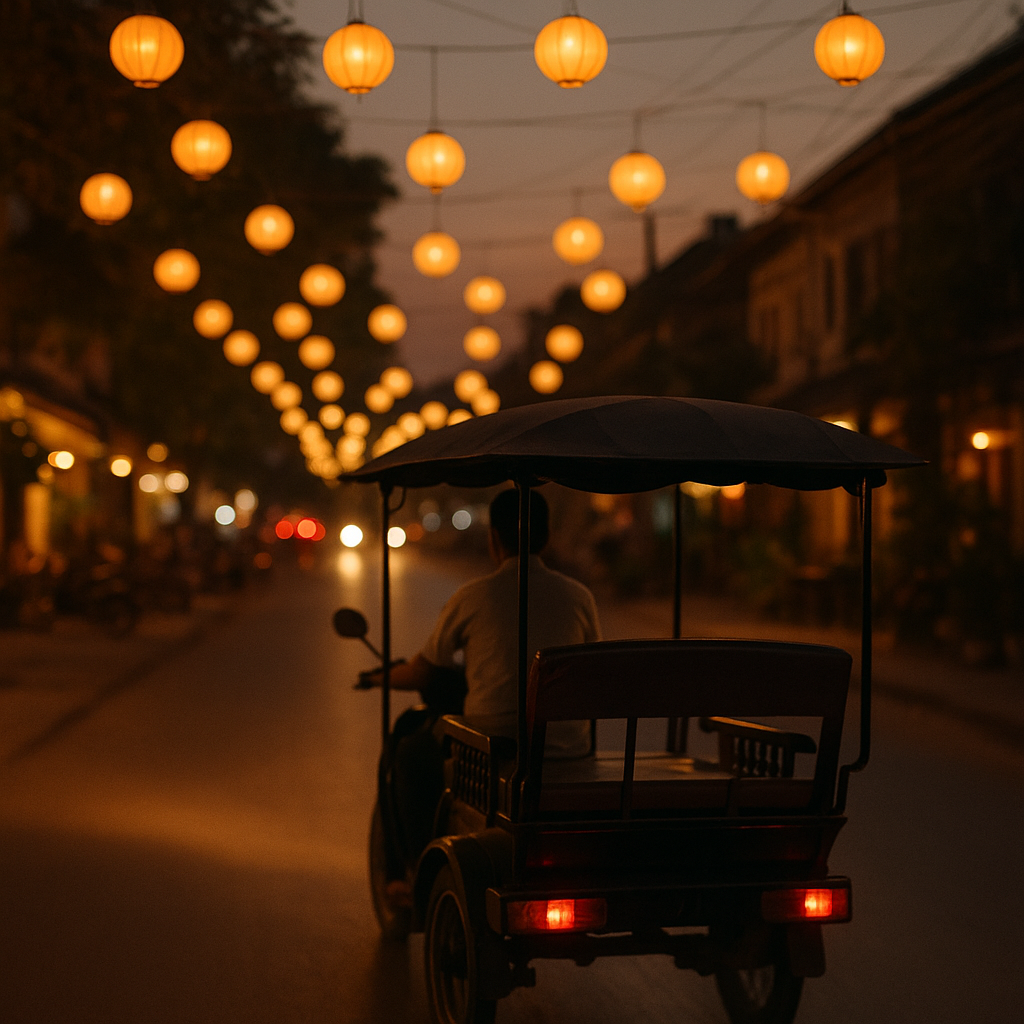
If time allows, retreat to La Mudita Spa, an oasis away from the busy streets, where the Traditional Khmer Massage (Chab Sar Sai) restores balance after long-haul travel. Arrivals later in the day can slip straight into a tuk-tuk, gliding past lantern-lit streets for a first taste of the city’s rhythm. And for those with an afternoon to spare, a Khmer cooking class beginning at 5 pm offers the chance to shop the market with a local chef before preparing (and enjoying) your own dinner.
Advisor tip: The drive from the airport to Siem Reap town takes close to an hour. It’s best to pre-book your transfer, so your arrival feels smooth and stress-free.
Day 2: Art, gardens, & local dining
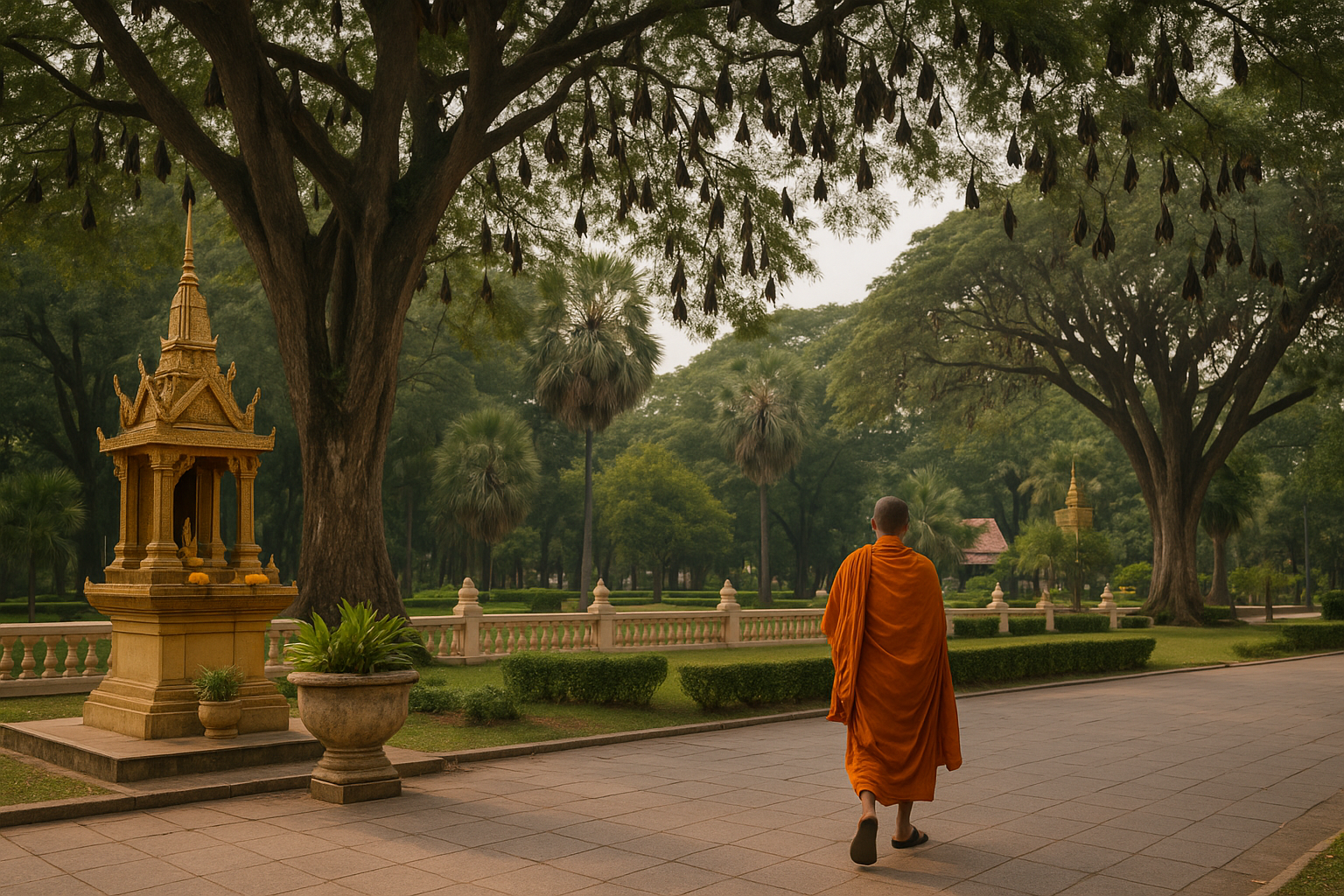
Begin the morning in the Royal Gardens, where towering banyan trees shelter shrines and saffron-robed monks pass quietly among them. Look up: fruit bats often roost in the branches—a curious detail many visitors overlook.
Pause for lunch at Café d’Angkor in Raffles, where Khmer flavors meet French refinement. Two dishes to look out for are the Cambodian Chicken Curry, a comforting classic with sweet potato and eggplant, and the Soft Shell Crab & Pomelo Salad, which balances local seafood with a bright citrus twist. For dessert, the Khmer Banana Cake with pandan sorbet is a favorite and a fitting nod to Cambodian tradition.
In the afternoon, visit Theam’s Gallery, the home and atelier of artist Lim Muy Theam. Trained in France, he returned to Cambodia to help revive Khmer craftsmanship after years of conflict. The gallery blends private collections, lacquerware, and contemporary pieces across pavilions set in lush gardens. Apprentices often work on lacquer and sculpture here, turning the space into a living workshop—more home than museum, more sanctuary than gallery.
Dinner is at SPOONS Café & Restaurant, a student-run social enterprise that blends fresh flavors with purpose. Standout dishes include the Hmok Fish, steamed in banana leaf with lemongrass and coconut, and the Steak Lok Lak, wok-fried beef with Kampot pepper and a fried egg on rice. For dessert, the Mango Sticky Rice with coconut cream is a classic finish. Beyond the food, it’s the energy of the young team—proud, eager, and full of warmth—that makes dining here unforgettable.
Advisor tip: Plan at least an hour at Theam’s Gallery. The pavilions are layered and rushing means missing the artistry unfolding quietly in corners.
Day 3: Stories & flavors of Cambodia
The morning belongs to the Angkor National Museum, where dynasties and deities are given voice. Without this prelude, Angkor’s carvings can blur into stone. They unfold as narratives—gods, kings, and myths etched in bas-relief, suddenly vivid.
By midday, you’ll find yourself at Phsar Chas (Old Market), a maze alive with silver boxes, carved trinkets, dried chilies, and spice blends. The air is thick with lemongrass and incense. Bargaining is part of the ritual, and while silk is best left for another day, this is the place to pick up souvenirs that carry the scent and texture of Cambodia home with you.
For lunch, slip into Pi Sa (open 11:30 am–2:30 pm), a colonial-era bistro just steps from the market. The name, a polite Khmer word for “to eat” reserved for honored guests, captures its spirit: dining as both flavor and respect. Inside, exposed brick and velvet banquettes set the scene for Chef Sothea Seng’s modern take on Khmer cuisine, crafted from the same fresh ingredients sold in the stalls below. It’s an elegant pause before the evening ahead.
After lunch, the pace softens. Some return to the hotel for a swim. Others slip into one of Siem Reap’s many spas, where cool air and practiced hands restore the body for the evening to come.
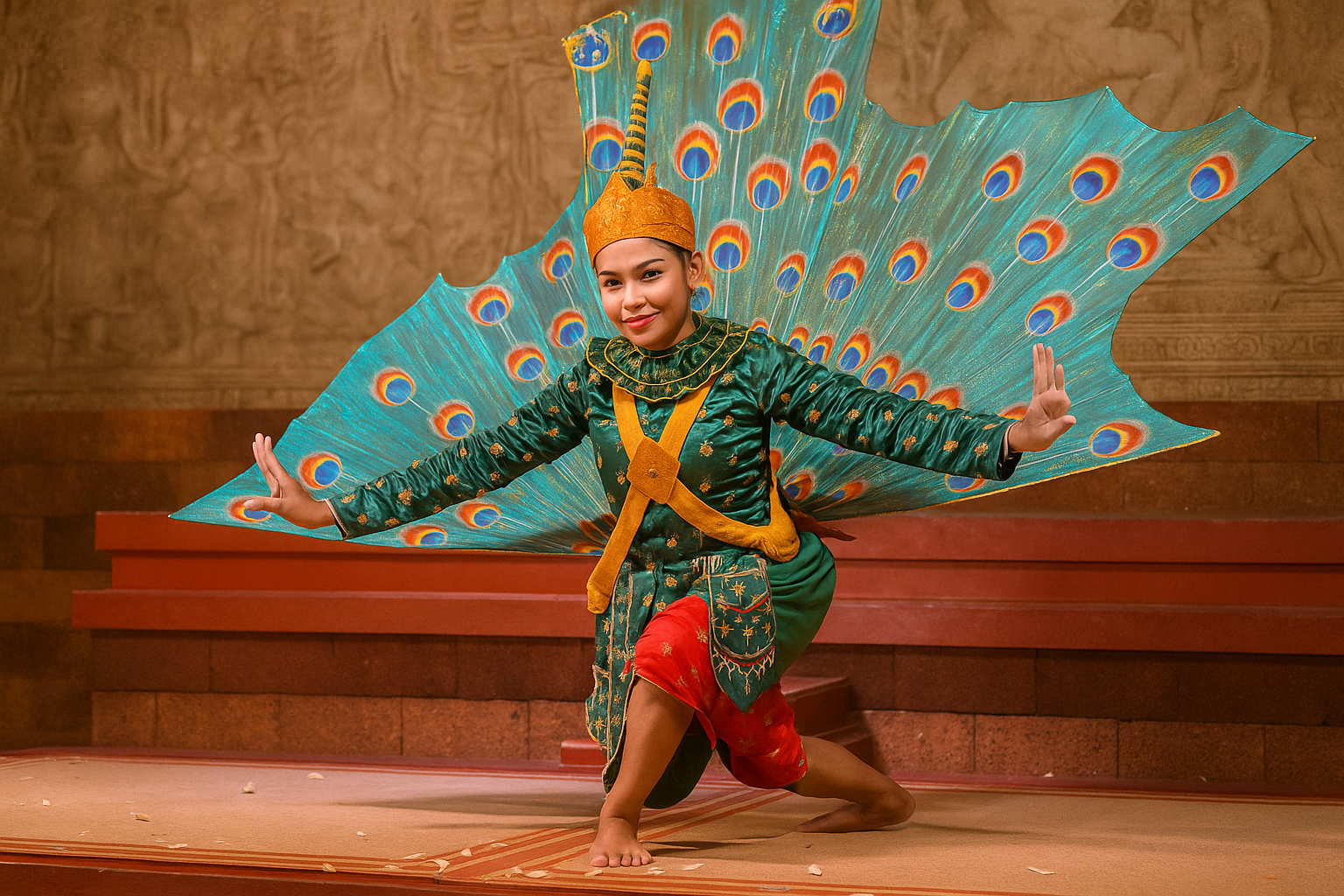
That evening, the curtain rises at the Apsara Theatre. Dinner is served at 7:30, followed by a one-hour performance of classical Khmer dance. The grace is in the detail—the delicate curve of a hand, the bend of a finger practiced since childhood. To become an Apsara dancer is more than a role. It is a lifelong discipline and a source of immense family pride, with each performance carrying heritage and honor onto the stage. For an hour, myth, movement, and music converge, and Cambodia tells its story without words.
Advisor tip: The Apsara Theatre fills quickly, especially in high season. Reserve in advance for the best seats and the smoothest experience.
Day 4: The heart of Angkor
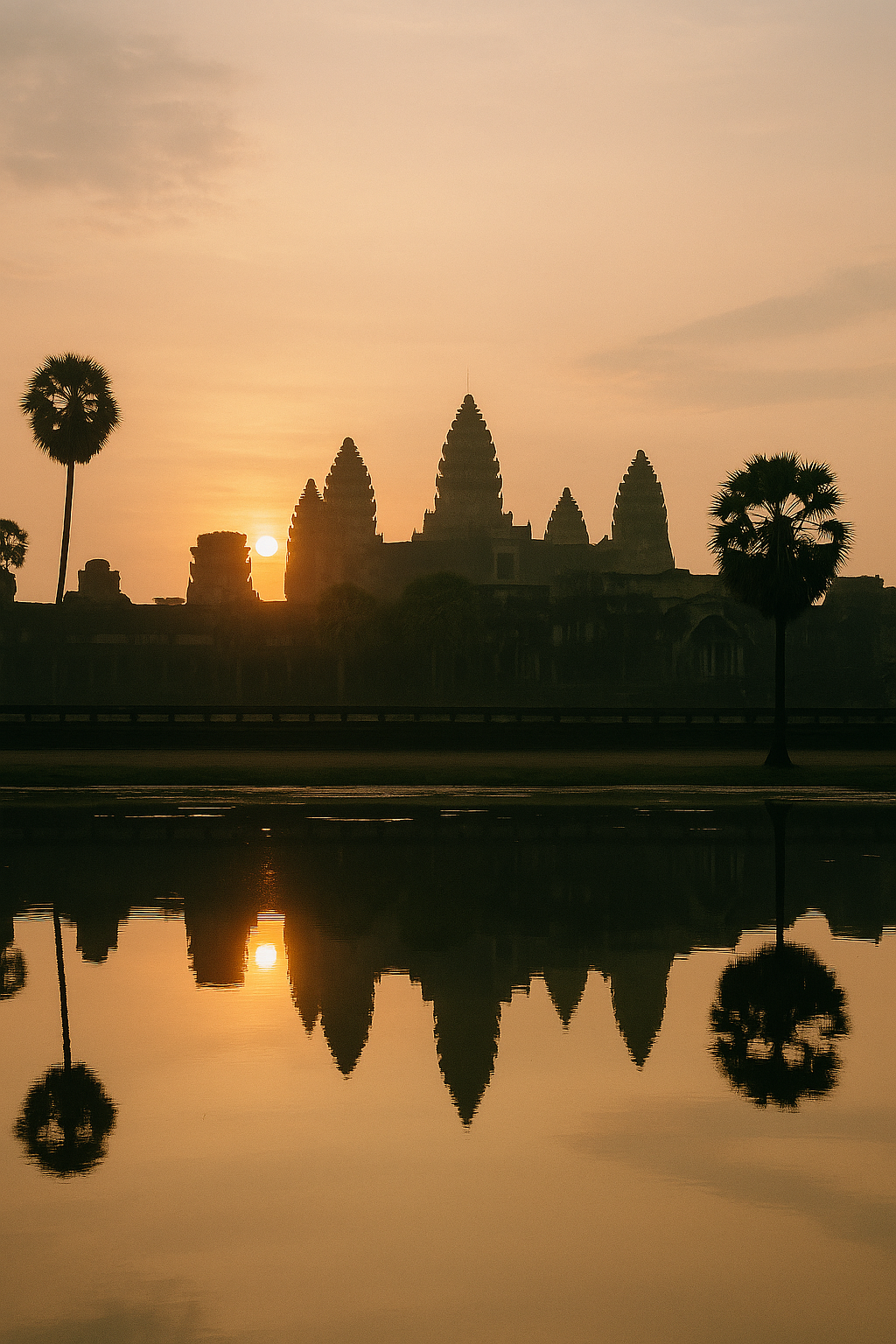
You’ll be picked up from your hotel around 5 am for sunrise at Angkor Wat, the largest religious monument in the world and a UNESCO icon. The towers rise in silhouette as the sky shifts from indigo to gold—a moment that defines any journey to Cambodia. Most visitors crowd the reflecting pool, but a quieter perspective lies just a few meters back near the ruins of a small library, where the atmosphere is calmer. People still gather there, but the vantage point is less crowded. Once the majority stream inside after sunrise, it becomes one of the best places to capture the temple in near solitude.
Spend about 90 minutes exploring the galleries and bas-reliefs of Angkor Wat with your guide before returning to your hotel for breakfast and a short refresh—a break most private tours happily arrange.
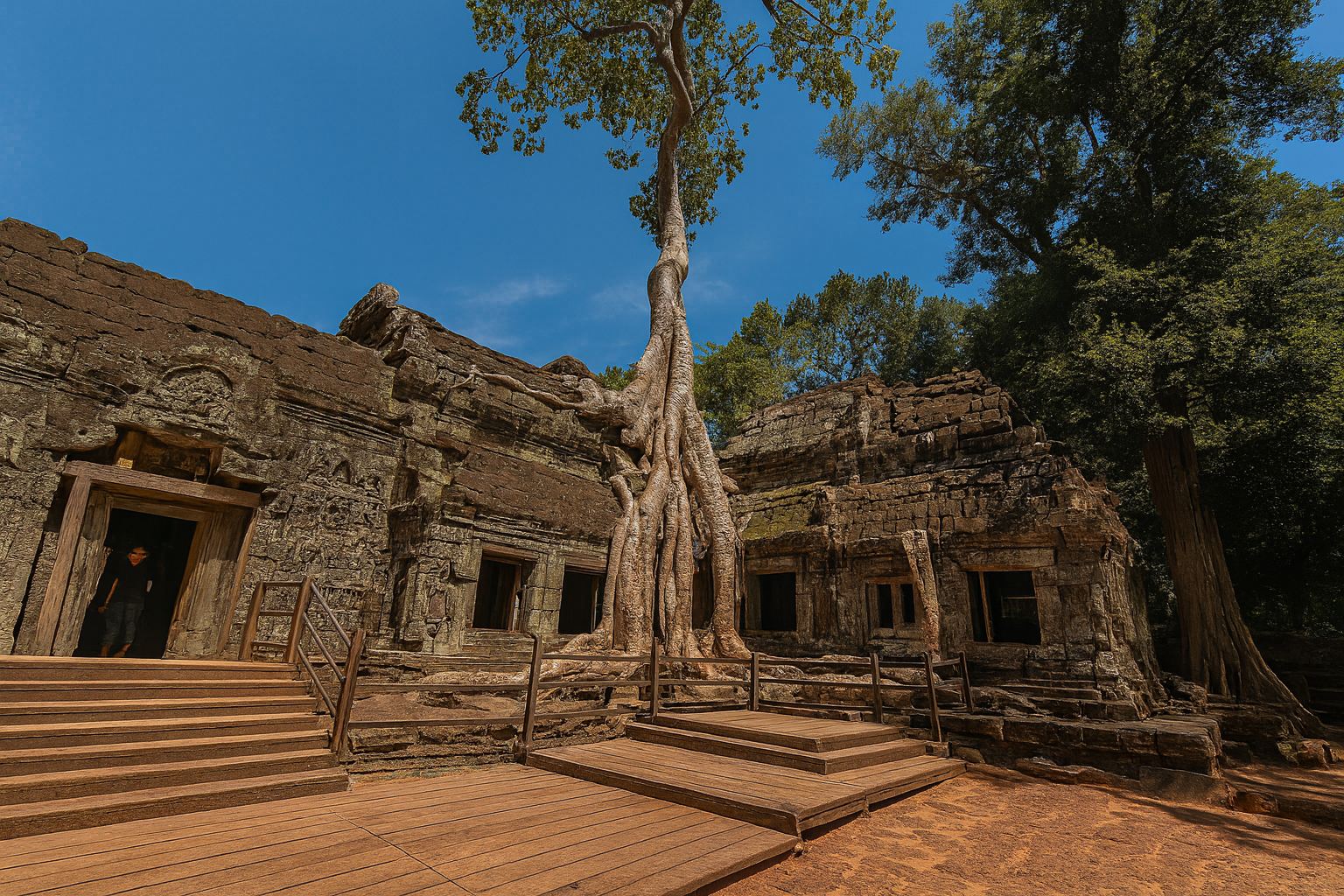
The day then opens to the countryside at Preah Dak village, where families prepare warm palm-sugar cakes over open fires. Sampling one fresh from the griddle offers a glimpse into daily Khmer life. Continue to Ta Prohm, the jungle temple where giant silk-cotton and fig tree roots twist dramatically through stone walls.
From there, pass through the South Gate of Angkor Thom, where stone gods and demons line the causeway, and explore the enigmatic Bayon, famous for its 54 towers and 216 serene faces, followed by the monumental Baphuon. Your guide will bring to life the history of the Khmer empire, weaving context into each carving and corridor.
Lunch is typically arranged by your guide at a traditional Khmer restaurant near the temples, a chance to pause in the shade and enjoy classic Cambodian dishes before continuing.
The afternoon closes with Preah Khan, one of Angkor’s largest and most atmospheric complexes. Its moss-covered walls and sprawling corridors make it feel both vast and intimate—a fitting finale before returning to your hotel to unwind.
Dinner tonight is at 1932 in Raffles, where Cambodian cuisine is presented through set tasting menus, each inspired by a different era in the country’s history. The 1930s Royal Khmer menu is a guest favorite, while the 1960s Golden Age menu offers lighter classics. One of the charms here is flexibility—while the menus are fixed, the staff are happy to swap in dishes from other eras if you’d like to sample across, making the experience feel curated just for you.
Advisor tip: A guided tour with private transportation is essential. Routes flow seamlessly, stories are brought to life, and small comforts—like cold towels after each stop—keep the day easy. Temple tickets must be purchased in advance (the ticket office is not close to Angkor Wat temple), and the process is simple: they can be bought online or via the official app, saving valuable time in the morning.
Day 5: Banteay Srei & silk traditions
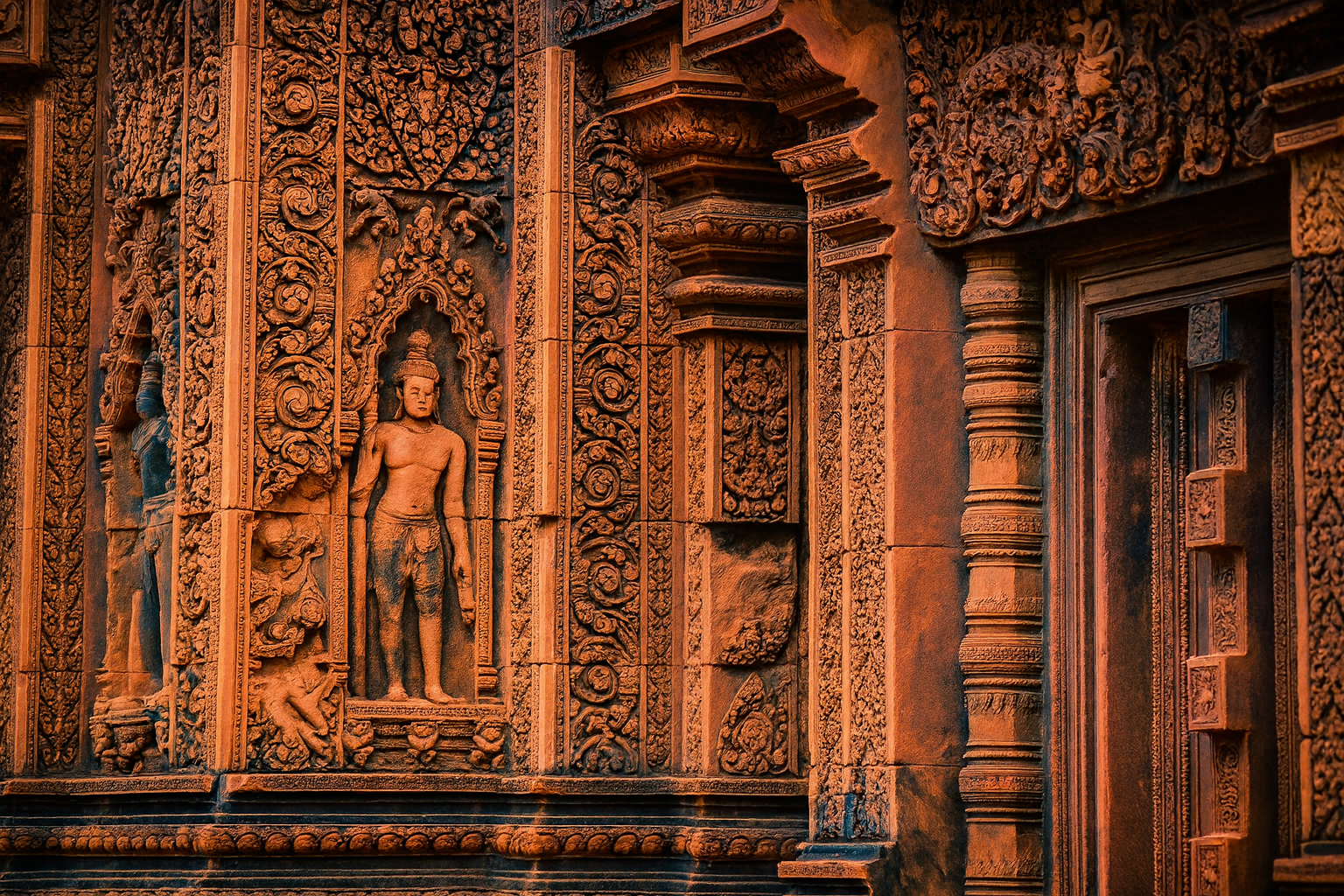
Rise early for the drive to Banteay Srei, the “Citadel of Women.” Its pink sandstone glows warmly in the morning light, and the carvings—miniature in scale but extraordinary in detail—are some of the most intricate in Angkor.
On the way back, stop at the Artisans Angkor Silk Farm, a private social enterprise founded to revive Khmer heritage and provide rural Cambodians with meaningful employment. Created through a partnership between a European NGO and Cambodia’s Ministry of Education, it now runs vocational centers where traditional craftsmanship thrives. This isn’t a staged showcase but a working atelier, where visitors can follow silk’s journey step by step: silkworms spinning cocoons, threads dyed in jewel tones, and shimmering fabrics woven by hand. Purchases here directly support the artisans’ work—and guarantee that what you bring home is 100 percent genuine silk.
If time allows, make the journey to Srah Srang, one of the most spectacular places to watch the sunset. Around 40 minutes from the silk farm, this former royal bathing pool for kings and their consorts offers a quiet grandeur that endures to this day. Broad stone steps descend to waters that hold the evening light like a mirror—shifting from violet to rose to gold—until the last glow slips away. Many find no better place to close the day.
Dinner is at Mouhot’s Dream in Sofitel Angkor Phokeethra, one of Siem Reap’s most elegant French restaurants. Signature dishes such as the braised beef cheek or Mekong lobster reflect refined French technique, and the wine selection is among the best in town, making this a fitting finale to the day.
Advisor tip: If you’re planning to bring home silk, the silk farm is the place to buy it.
Day 6: Farewell morning
How you spend your last hours in Siem Reap depends on when you leave—but there’s always time to make the goodbye memorable.
With an early flight, the day begins in stillness: a light breakfast in the garden, a final walk past lotus ponds, and the quiet rhythm of monks passing by as the city stirs awake.
If your departure is later in the day, Siem Reap lends itself to one more pause. A massage at one of the city’s many serene spas is the perfect send-off—affordable, restorative, and a way to let the week settle in body and mind.
For those with an evening departure, there’s space for one last indulgence. Pick up a few souvenirs at the market you missed earlier or sit down to an early dinner at a favorite table—the refined Khmer bistro plates at Pi Sa, or the warm, purposeful energy of SPOONS. Both are close to town, making it easy to savor the moment before heading to the airport.
Advisor tip: Always allow at least an hour for the drive to the airport—and pre-book your transfer so the trip has a seamless end.
Need to know
When to go: Siem Reap is best between November and February, when mornings are cool and skies are clear. The green season from May to October brings fewer crowds and a lush countryside, though short bursts of rain are common.
What to pack: Keep it light; breathable fabrics for hot days and a wrap or shawl for evenings. Temples require respectful dress — shoulders and knees covered for all visitors. A silk scarf or sarong is an easy solution. Comfortable walking shoes, sunscreen, and insect repellent are essentials.
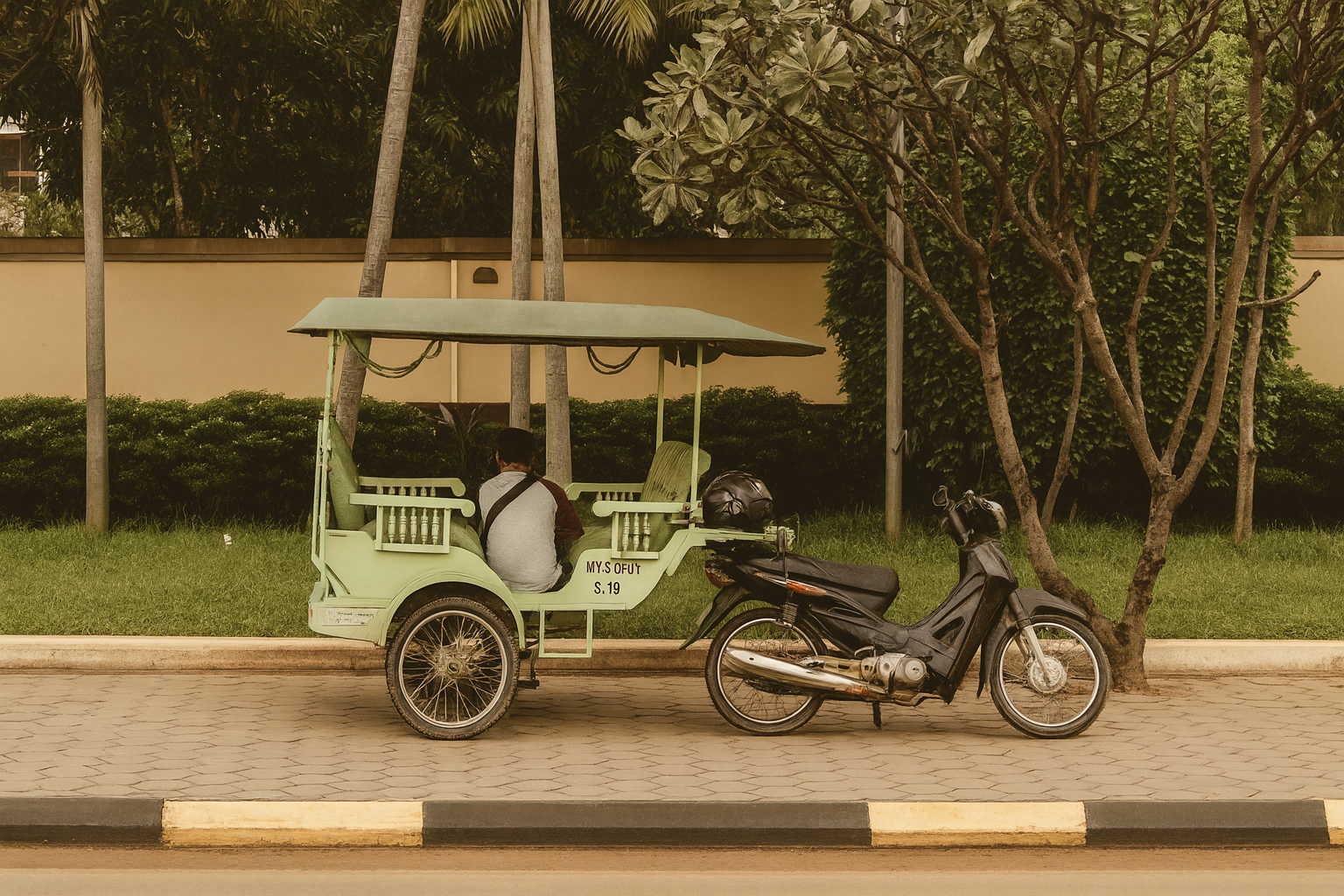
Getting around: The tuk-tuk is Siem Reap’s signature ride. Use the Grab app to book them easily and pay by card. For day trips to outlying temples like Banteay Srei, a private driver is recommended.
Connectivity: Skip the roaming fees: pick up a local SmartNas eSIM just outside the main terminal on arrival. Coverage is reliable across town and at the temples.
Money matters: Both U.S. dollars and Cambodian riel are accepted, but dollars dominate. Carry small notes for markets, tuk-tuks, and tips.


Travel Advisor
Juan Jose
Juan Jose

Get in touch with Juan Jose
Did you like this guide? Reach out to customize and book your own experience. Or, just to chat about travel in general.
For more travel inspiration and insider recommendations, check out our Siem Reap page.