


Curator’s statement
There are Greek islands that announce themselves immediately. Islands of famous sunsets, glamorous beach clubs, and bustling harbors filled with yachts. Patmos is not one of them. Spend a little time exploring, and you begin to discover a rich religious heritage and a serene spiritual atmosphere that set it apart from almost anywhere else in Greece.
The Fora Difference
Book with Thomas Stadler to access exclusive perks and experiences on your trip.

Killer perks
Free upgrades, spa credits and more—we got you

Personalized recs
Customized travel planning for your style

Insider knowledge
Expert advice from people who’ve actually been there
Where to stay on Patmos
Unlock perks by contacting Thomas Stadler to book your trip.
Beyond the famous Greek islands
Tucked into the northern Dodecanese, closer to the Turkish coast than to Athens, Patmos has long drawn a quieter kind of traveler. One less interested in being seen and more interested in simply slowing down. Whitewashed villages, hidden coves, long lunches that drift well into the afternoon. Life here does not rush, and after a day or two, neither do you. Home to around 3,000 people and small enough that a drive from one end of the island to the other takes less than half an hour, Patmos wears its modest scale lightly.
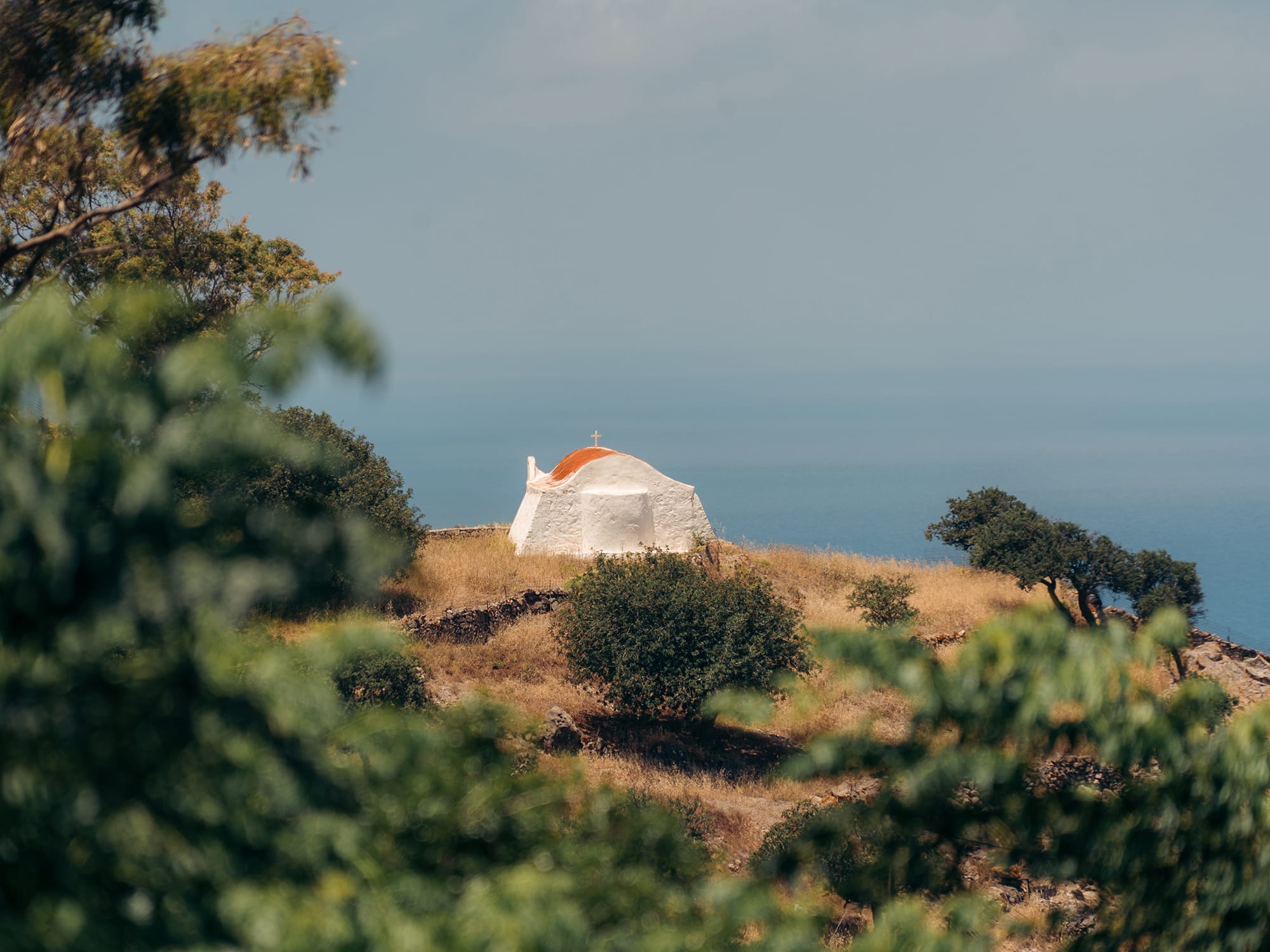
Patmos, an island that reveals itself slowly; Photo: Thomas Stadler
What surprises many first-time visitors is how little known Patmos remains. Despite its beauty and history, it has largely escaped the seasonal crowds that swallow up some of Greece's more celebrated islands. There is something quietly thrilling about arriving somewhere that still feels like a genuine discovery. You spend the first evening wondering why more people haven't found this place. By the second, you almost hope they never do.
Wandering through Chora
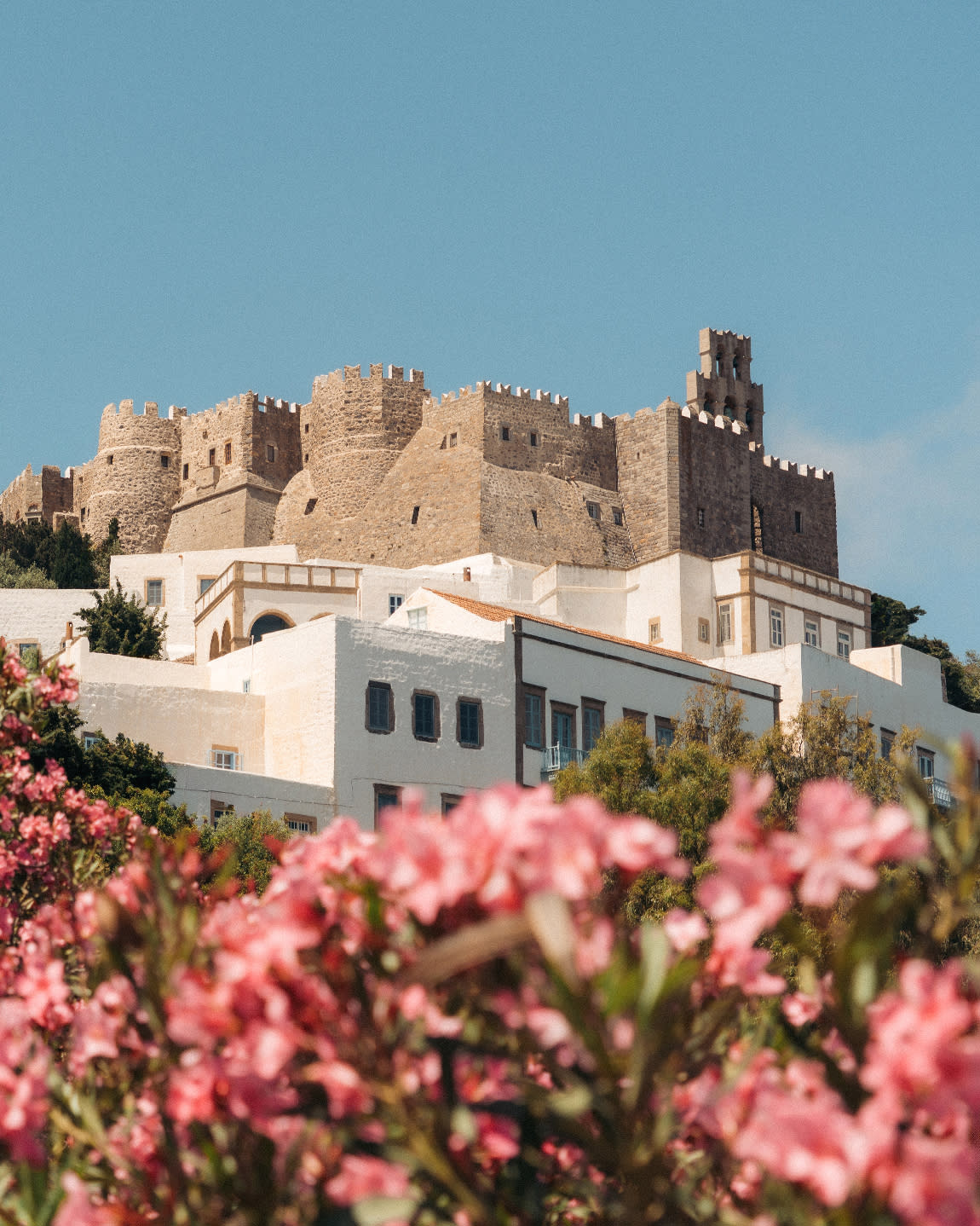
At the heart of Patmos lies Chora, one of the most beautiful villages in Greece. Perched on the island's highest hill, its maze of narrow alleyways winds around the imposing Monastery of Saint John, which, together with the nearby Cave of the Apocalypse, forms a UNESCO World Heritage Site. White houses, blue doors, flowering bougainvillaea, and old mansions create a scene that feels almost untouched by time.

The whitewashed houses of Chora below the fortified monastery; Photo: Thomas Stadler
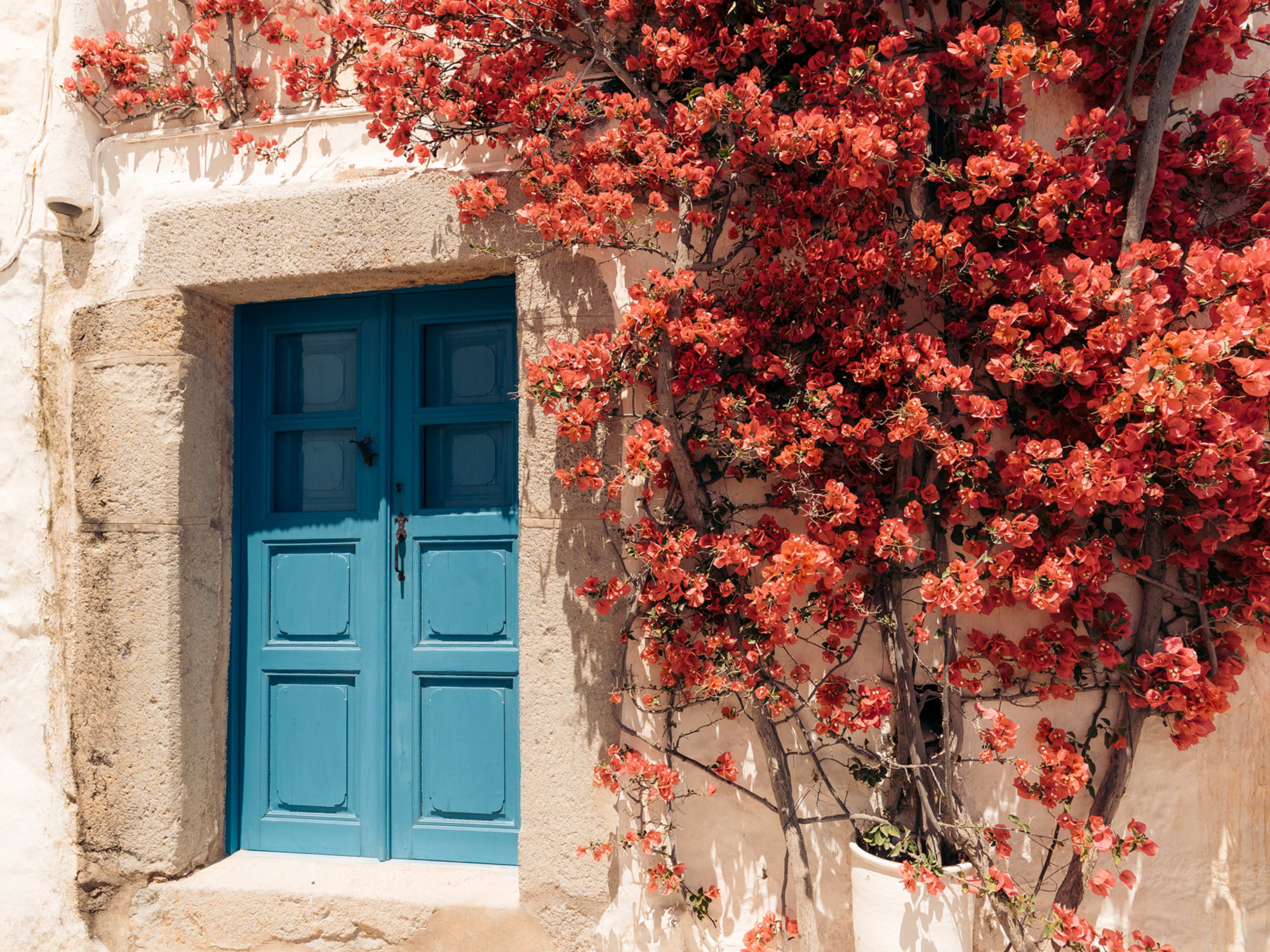
Wandering through the narrow alleyways of Chora; Photo: Thomas Stadler
Chora invites you to wander without a destination. A quiet courtyard appears behind an unassuming archway, a small chapel hides between two houses, and then suddenly the sea comes into view between whitewashed walls. As the afternoon light softens, cats nap in the shade, locals exchange greetings in small squares, and the scent of jasmine drifts through the lanes. It is the kind of place where getting lost feels like exactly the right plan.
Life around the harbor
Below Chora lies Skala, the island's main harbor town and the point where most visitors first set foot on Patmos. During the day, it has an unhurried feel—fishing boats bobbing in the marina, locals lingering over coffee at waterfront cafés. By evening, the seafront fills with people, tavernas spill onto the promenade, and small bars and boutiques stay busy well into the night. It is lively without tipping into overwhelming, which feels very much in keeping with the rest of the island.
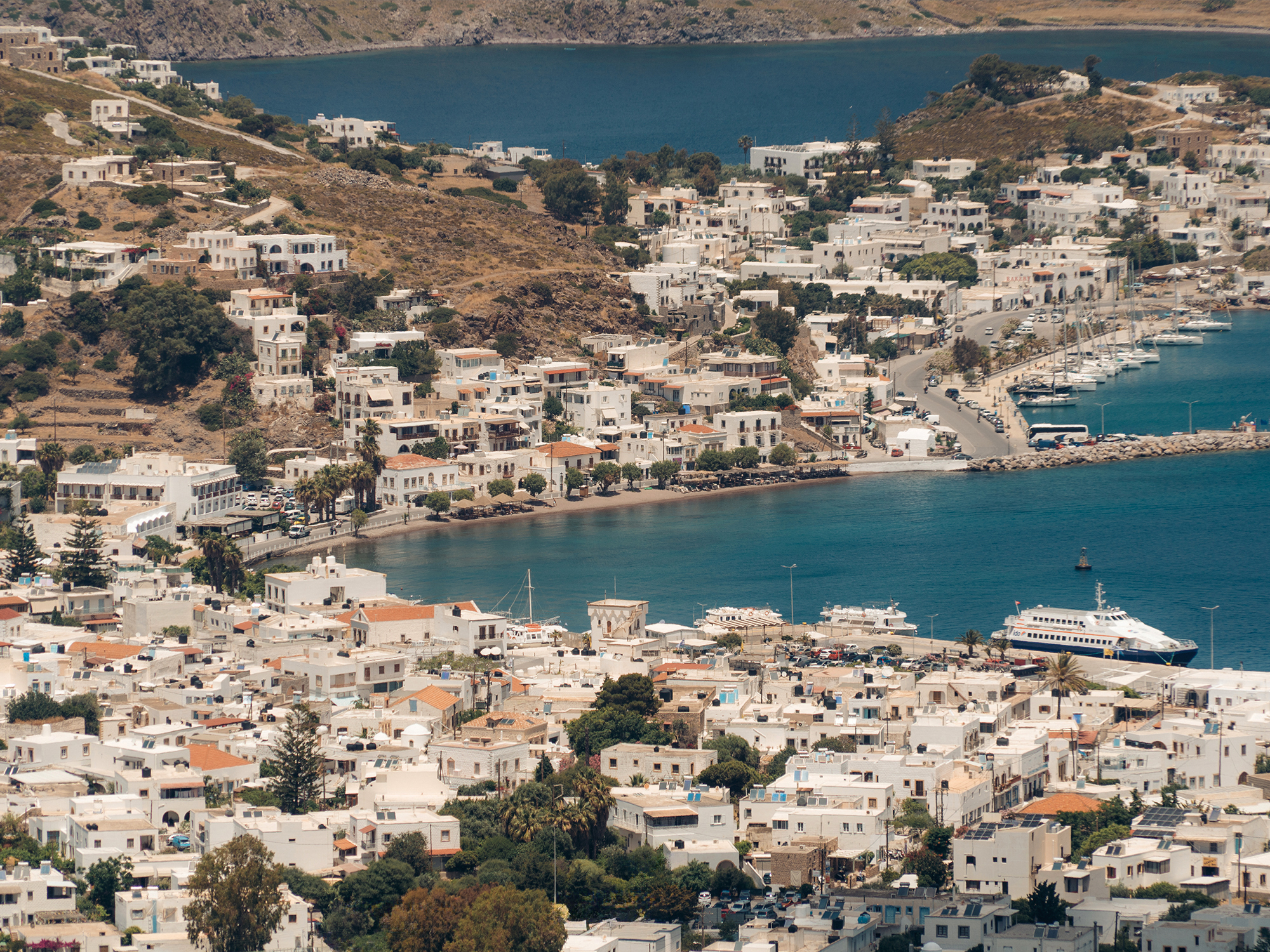
Skala, the island's harbor town and lively waterfront center; Photo: Thomas Stadler
Discovering the coast
Patmos is not an island of endless sandy beaches, and that is part of what makes exploring its coastline worthwhile. Small coves and pebble beaches are scattered around the island, many reached by winding roads or short walks, some barely visited at all.
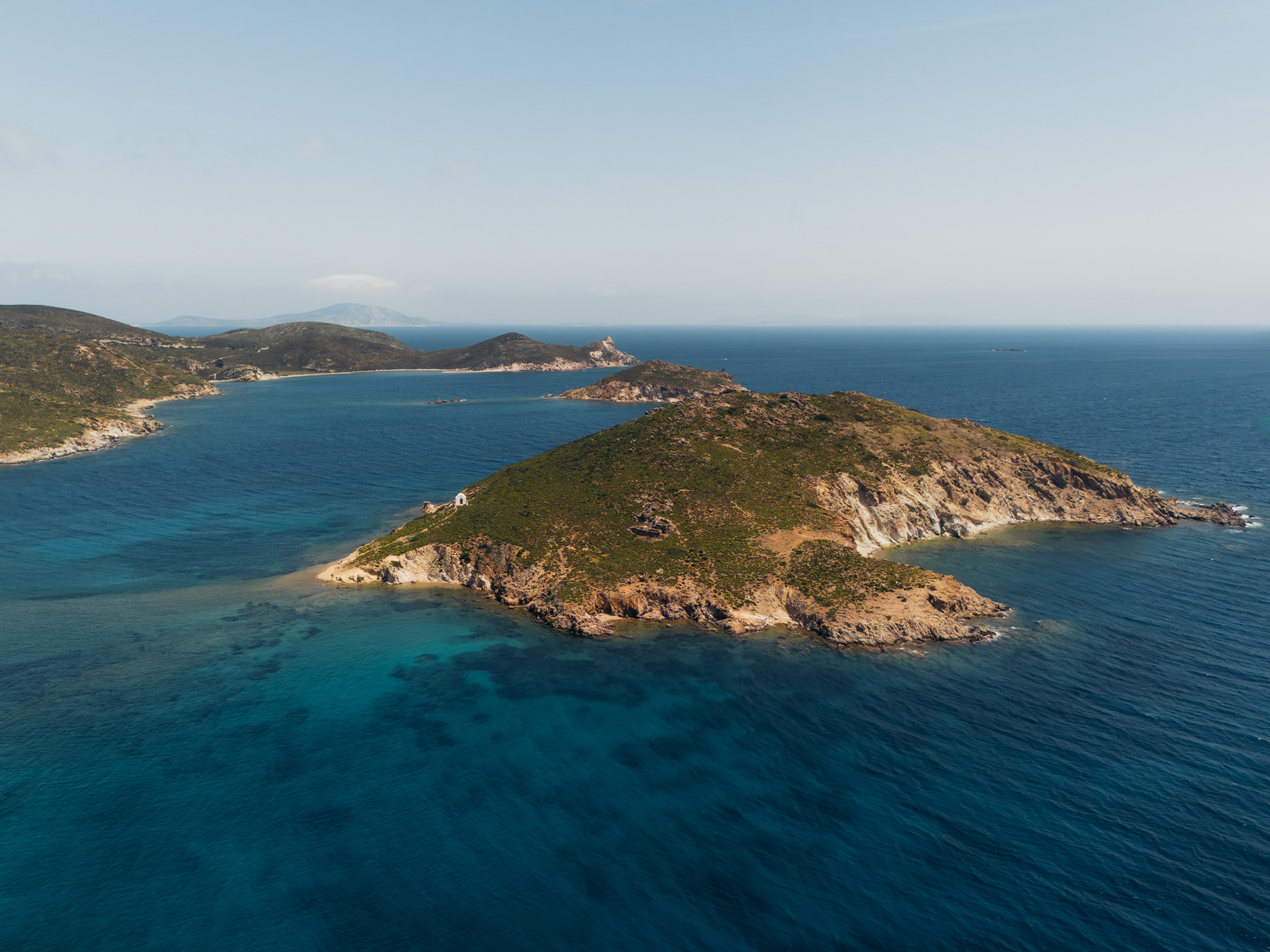
Agios Georgios, a swimmable islet off Livadi Geranou Beach; Photo: Thomas Stadler
One of Patmos' most beautiful beaches is Psili Ammos in the south, reached either by boat or after a steep hike across the hillside. As one of the island's only sandy beaches, it has a special appeal. The extra effort keeps the crowds down, and the golden sand and crystal-clear water make the journey more than worthwhile.
Patmos Aktis, a Luxury Collection Resort & Spa
Patmos is home to many small family-run guesthouses and midscale hotels, which only adds to its understated charm. Located on the shores of Grikos Bay, Patmos Aktis is the island's most upscale resort and its only five-star property. Its history dates back to the 1960s, but over the past few years, the property has undergone a significant transformation and today forms part of Marriott's Luxury Collection.
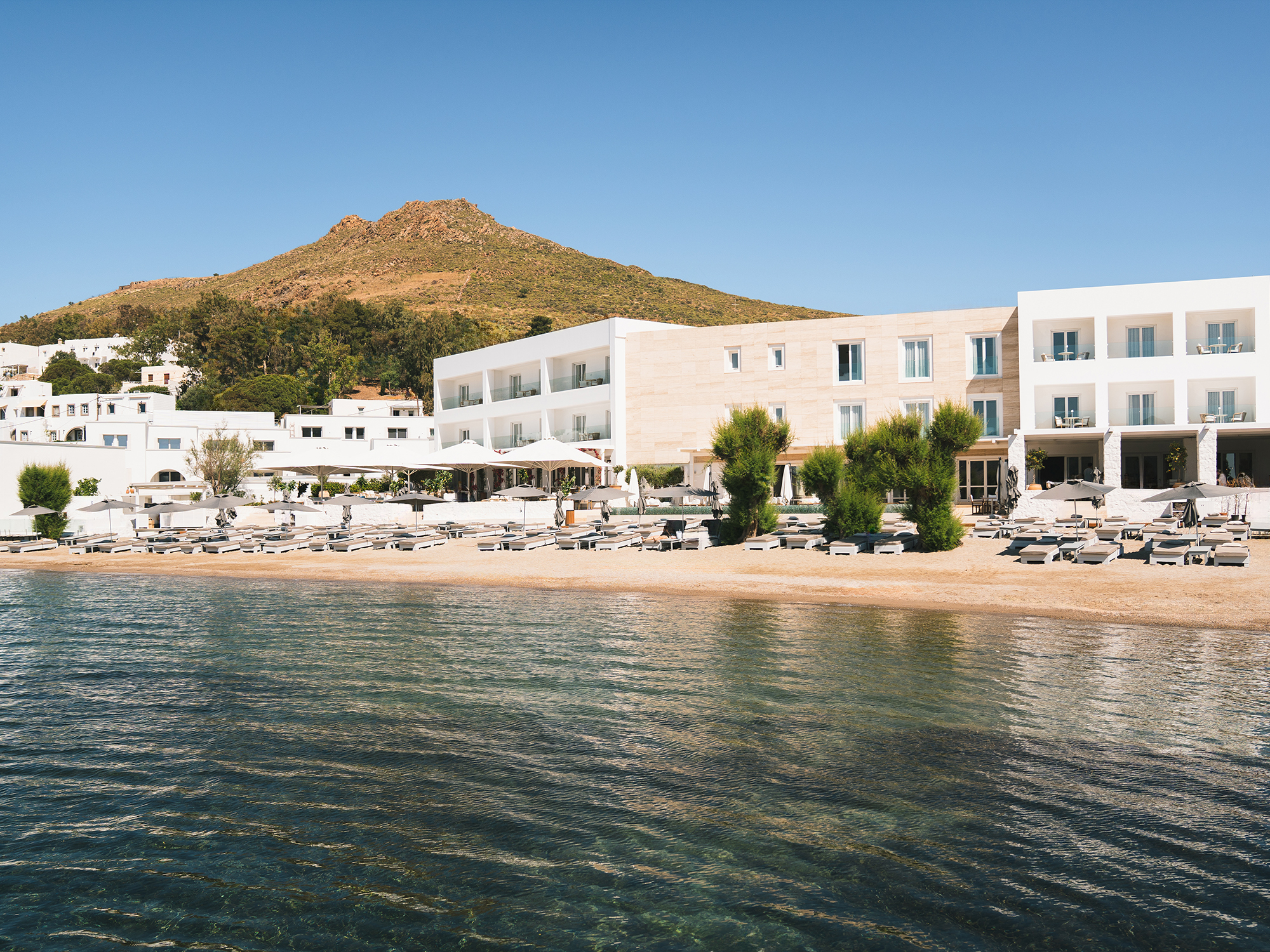
Patmos Aktis on the shores of Grikos Bay; Photo: Thomas Stadler
The interiors are bright and understated, leaning on natural materials and whitewashed tones that feel genuinely in tune with the island rather than decoratively Greek. Set directly on the beach, the property works equally well as a place to do very little and as a base for exploring the island.
Rooms, suites, and maisonettes come with private terraces or balconies overlooking the gardens or the bay, and many of them also feature private pools. My Aegean Suite came with a balcony offering idyllic views across Grikos Bay and towards the distinctive Kallikatsou Rock. Summer 2026 also brings additional room categories, including the Fisherman's House and new Aegean Beachfront Suites with private pools just steps from the beach.
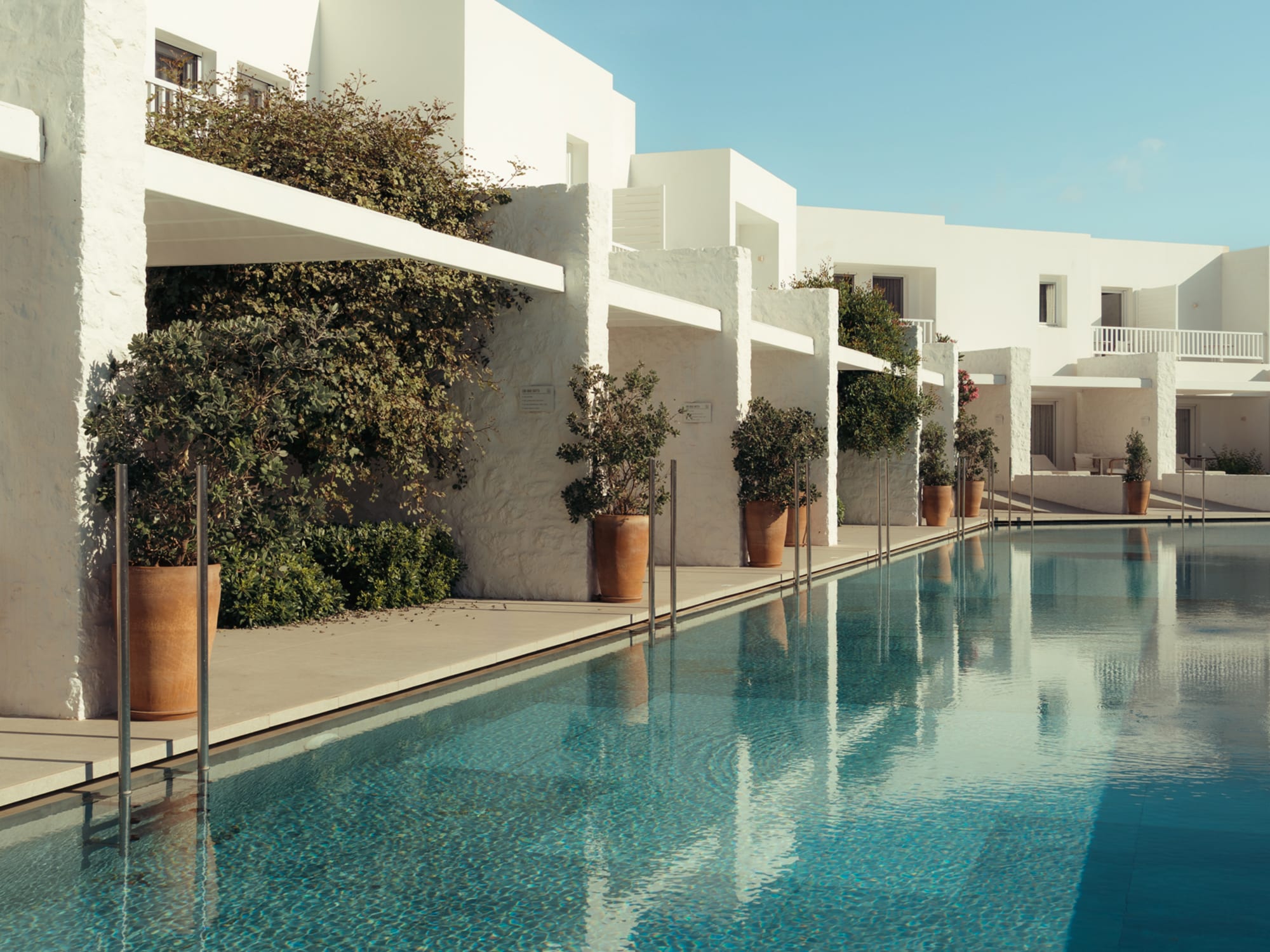
Patmos Aktis, a Luxury Collection Resort & Spa; Photo: Thomas Stadler

Patmos Aktis, a Luxury Collection Resort & Spa; Photo: Thomas Stadler
Staying at Patmos Aktis also gives you access to a spa featuring an indoor pool, sauna, and an array of treatments, as well as a well-equipped gym. For dining, Barolo serves Italian cuisine in an elegant setting, while Plefsis Tavern, located directly on the beach, offers traditional Greek dishes and the fresh catch of the day.
There is a real sense of hospitality here, with personal interactions that never feel performed. The concierge team is always happy to arrange a private boat excursion to a secluded cove, help plan visits to the island's cultural landmarks, or point you towards their favorite local tavernas. It is this genuine care and local knowledge that will make you feel especially well looked after.
Need to know
Getting there
Patmos has no airport, so all visitors arrive by sea. Regular ferries connect the island to Athens (Piraeus), as well as to nearby islands including Kos, Rhodes, and Symi. Flying into Kos and taking the ferry from there is often the most convenient option.Best time to visit
May, June, September, and October are the sweet spots. Warm temperatures, a swimmable sea, most businesses open, while tourist numbers remain low.How long to stay
Two to four nights is enough to find your rhythm, explore Chora, and get to a beach or two. Patmos also fits naturally into a broader Dodecanese itinerary, with day trips to quieter neighbors like Lipsi well worth adding.Getting around
Rent a car or scooter. Buses exist but are limited, and having your own transport is the best way to reach the island's quieter corners without depending on timing. Taxis are available too and, given the short distances, are rarely expensive.Combine with
Patmos pairs well with a stay in Athens and Dodecanese islands like Kos, Rhodes, Symi, and Leros, with regular ferry connections between them. Turkey's Aegean coast is close, too, with boat connections to Bodrum via Kos.Marriott Bonvoy
Patmos Aktis is part of Marriott, meaning you can earn and redeem Bonvoy points during your stay. Booking through a travel advisor can get you additional perks including resort credit and room upgrades.
For more inspiration and insider recommendations, visit our Greece page.


Travel Advisor
Thomas Stadler

Thomas Stadler

Get in touch with Thomas Stadler
Did you like this guide? Reach out to customize and book your own experience. Or, just to chat about travel in general.