IATA numbers are unique, seven- or eight-digit combinations that allow accredited travel agencies to book travel and earn a commission on supplier bookings. IATA numbers also signal to service providers that travel advisors are legitimate as they’ve already been thoroughly vetted by a lengthy verification process.
The International Air Transport Association (IATA) represents airlines around the world, creating regulations and establishing industry standards. The organization also manages financial transactions between airlines and travel advisors through its Billing and Settlement Plan (BSP) outside the United States, which is where IATA accreditation numbers come in. IATA numbers’ prevalence has grown since they were first created for use by airlines, with hotels, cruise lines, and car rental companies now referencing them as well.
What are the benefits of having an IATA number?
1. Proves an agency’s qualifications and credibility
An IATA number guarantees that a travel agency or advisor has been evaluated as a reliable and legitimate partner for industry suppliers. You need access to an IATA number or equivalent industry accreditation to access most global booking systems and earn supplier commission.
2. Allows an agency to access global booking systems
Beyond establishing an agency’s credibility, an IATA number also grants access to global distribution systems (GDS), like hotel reservation platforms. If your agency lacks an IATA number, you won’t be able to access these systems to make bookings for clients.
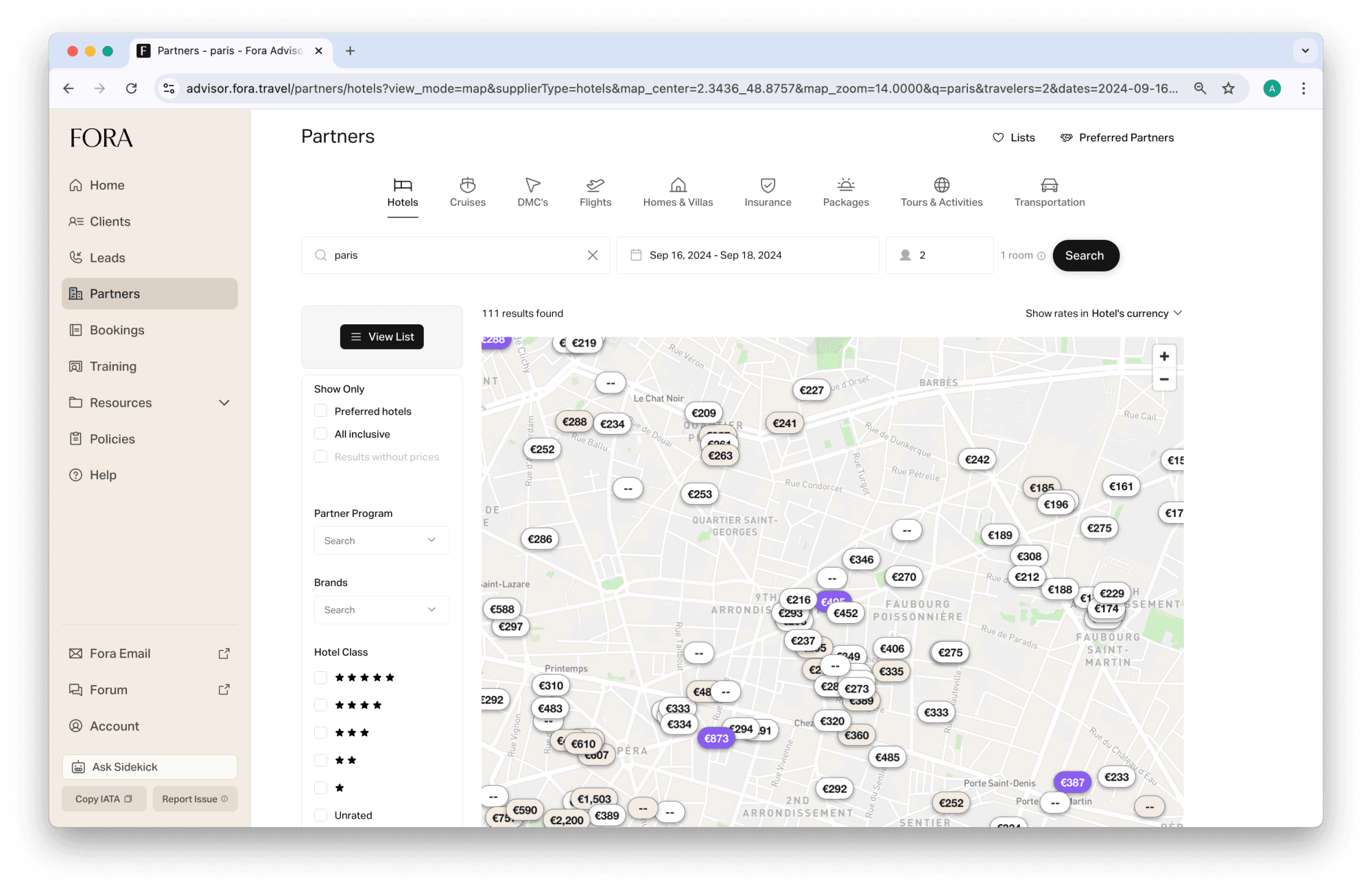
At Fora, you’ll be able to see all of these rates directly in our booking platform.
3. Streamlines commission payments
An IATA number makes the process of paying commissions much smoother. It tells a supplier exactly who should be paid for making a reservation and streamlines tracking.
4. Proves industry regulator compliance
There’s a lot of legal work that goes into getting and keeping an IATA number. For example, an agency can lose its IATA number for working outside of the confines of internationally recognized policies, like client data or financial protections. Working with a host agency that has one means that you’re aligned with an organization that abides by industry protocol.
How are IATA numbers different from other accreditations: IATA codes, IATAN cards, CLIA cards, ARC, and TIDS?
There are a lot of acronyms related to, but distinct from, IATA codes. Here are five to know. Your host agency may have specific guidelines for getting these ID numbers or may provide them for you, so make sure to ask.
IATA codes
IATA codes are the three-letter tags attached to nearly every airport in the world and the two-letter codes assigned to airlines, like LAX for Los Angeles International Airport and AA for American Airlines. These have long been the global standard for airport and airline identification.
IATAN ID card
IATA is an international body. IATAN issues a professional ID for individual travel advisors. You need to meet minimum requirements to qualify, including spending 20 hours per week on your travel business and earning $5,000 or more in commission or salary in the last 12 months. You don’t need an IATAN ID to book travel for clients, but having one also grants access to exclusive opportunities, like trainings, travel deals, and discounted insurance.
CLIA card
The Cruise Lines International Association (CLIA) has its own card to identify an advisor as an expert: the CLIA EMBARC ID. It’s not required to make cruise bookings, but signals cruise experience. In addition to establishing industry recognition, having one grants access to benefits like special rates and training courses.
ARC
The Airline Reporting Corporation (ARC) is the U.S. version of IATA’s flight ticketing and payment hub, BSP. In the U.S., agencies need both an IATAN number and ARC accreditation to issue flight tickets directly. ARC handles ticketing and IATAN handles the accreditation process.
TIDS
The Travel Industry Designator Service (TIDS) is another IATA program that issues unique ID numbers. These free codes are for non-IATA-accredited booking intermediaries, like tour operators, event planners, advisors, and consultants, and are available globally. Many—but not all—suppliers recognize TIDS as a valid industry identifier for commission tracking, but it doesn’t grant access to the BSP to issue flight tickets or settle airline payments like IATA accreditation does.
How to get and use an IATA number
Most travel advisors get IATA access through a host agency, which is faster and doesn’t have an experience requirement or IATAN application fees. Applying for your own IATA number takes 4–6 weeks once you meet the eligibility bar, which includes experience selling travel, proof of financial stability, and business licensing.
You just need an IATA number to book travel and earn commission, not an IATA card. To use your IATA number, you’ll either manually enter it when making a commissionable booking or it’ll be automatically added when you book through your host agency portal. That ties your booking to your host agency so suppliers can pay your commission accurately.
Working with an accredited host agency means the legal legwork is already covered. When you sign up to become a Fora Advisor, you’ll get access to our IATA number to make travel bookings.
Read our full guide to getting an IATA number
Frequently asked questions
Can I book travel without my own IATA number?

Yes, if you work with a host agency. Most travel advisors book under their host agency’s IATA number rather than getting their own. You’ll still earn your own commission, access supplier rates, and book through the same systems.
Do hotels and cruise lines require an IATA number?
Yes, in most cases. Travel suppliers use IATA numbers to verify that an advisor is a legitimate, accredited travel professional before paying commission. Some suppliers accept alternative credentials like CLIA or TIDS, but an IATA number is the most widely recognized and accepted across the industry.
Are there alternatives to IATA numbers?
Yes, but while other systems like ARC, CLIA, and TIDS exist, they’re often more specialized or less widely recognized. Having an IATA number is ideal for booking across supplier types.
Are there any potential challenges to getting an IATA number?
As an independent travel advisor, the main obstacle is choosing a viable host agency to work with, such as Fora. As an independent travel agency agency, potential challenges include financial instability, a lack of operational infrastructure, an inability to comply with industry standards, or a failed background check at the agency management level.
What happens to my bookings if my host agency loses its IATA number?
Existing bookings are typically honored through the original travel dates, but new bookings under that agency’s IATA number stop. If you’re working with a host agency, this is one of the main reasons to vet their financial stability and operational track record before signing on.
Is an IATA number the same as an IATA code?
No. An IATA number is a 7–8 digit identifier issued to accredited travel agencies so they can book travel and earn commission. An IATA code is a three-letter tag assigned to airports and airlines. They share the same parent organization but serve different purposes.
Why are IATA numbers the travel industry standard?
IATA numbers started as a way to verify which travel agencies were authorized to sell airline tickets. As hotels, cruise lines, and other suppliers adopted global distribution systems to manage bookings, they leaned on the identifier already tied to the travel industry rather than building a new one.