



Curator’s statement
Most people go to Greece for the islands. This itinerary goes for something deeper. From the Athenian Agora where Socrates debated and died, to the coastal headland where Aristotle was born, to the pass where 300 Spartans chose honor over survival, this is the Greece that gave the Western world its ideas about virtue, justice, and the good life. It rewards the curious traveler who wants to come home with more than just photographs.
The Fora Difference
Book with Daniel Griffin Smith to access exclusive perks and experiences on your trip.

Killer perks
Free upgrades, spa credits and more—we got you

Personalized recs
Customized travel planning for your style

Insider knowledge
Expert advice from people who’ve actually been there
Where to stay
Unlock perks by contacting Daniel Griffin Smith to book your trip.
Day 1: Arrive in Athens & first taste of the Plaka
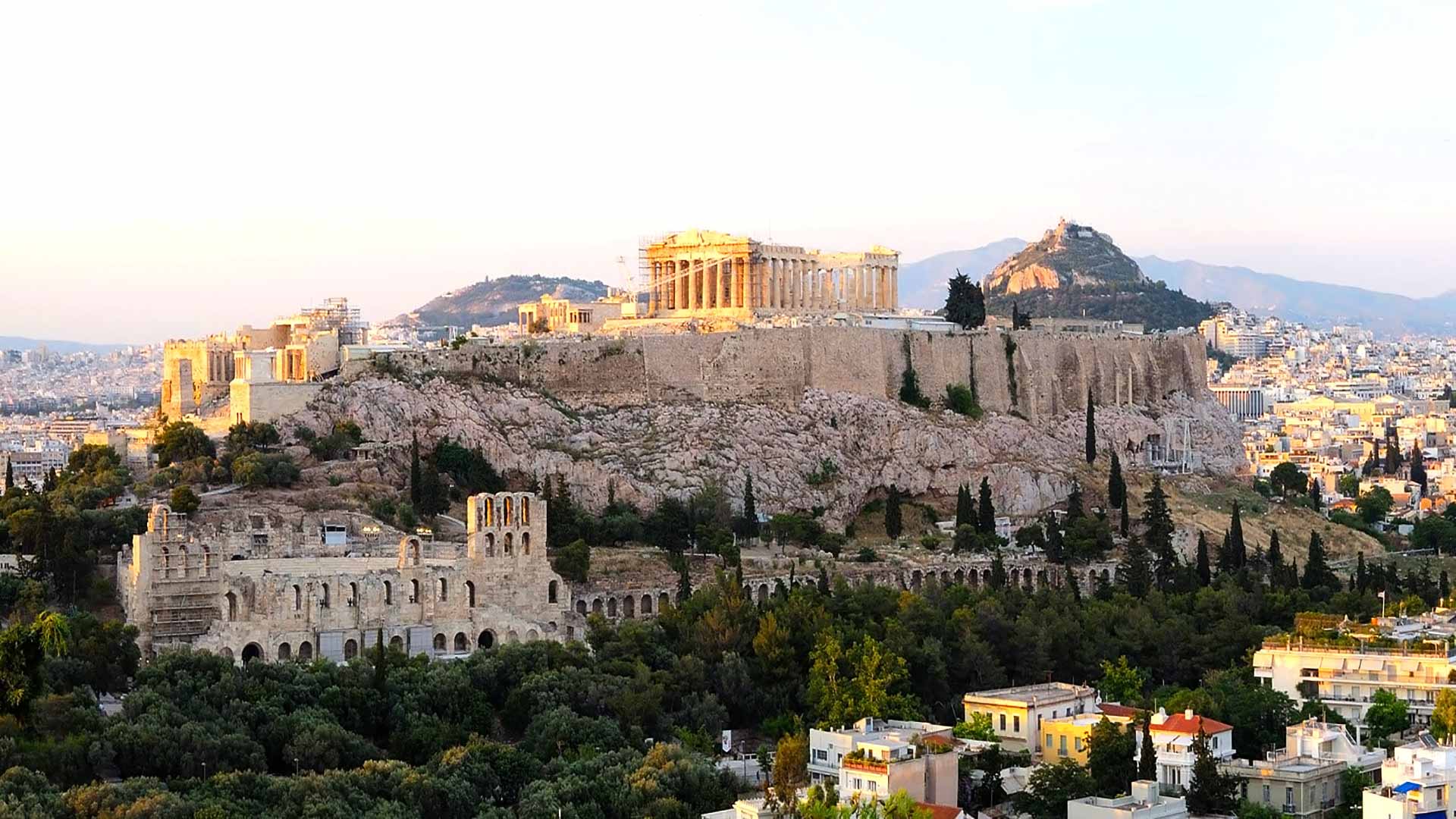
The Acropolis at dusk, Athens; Photo: Unsplash
After clearing customs and settling into your hotel in the Kolonaki neighborhood, the afternoon belongs to the Plaka, Athens' oldest quarter and one of the most continuously inhabited neighborhoods on earth. Wander the lanes beneath the Acropolis with no agenda: find a table, order lamb, let the city come to you. If energy and schedules permit, the National Archaeological Museum stays open late on Sundays and rewards even a single unhurried walk-through before the real sightseeing begins tomorrow.
Day 2: The Ancient Agora, the birthplace of Stoicism
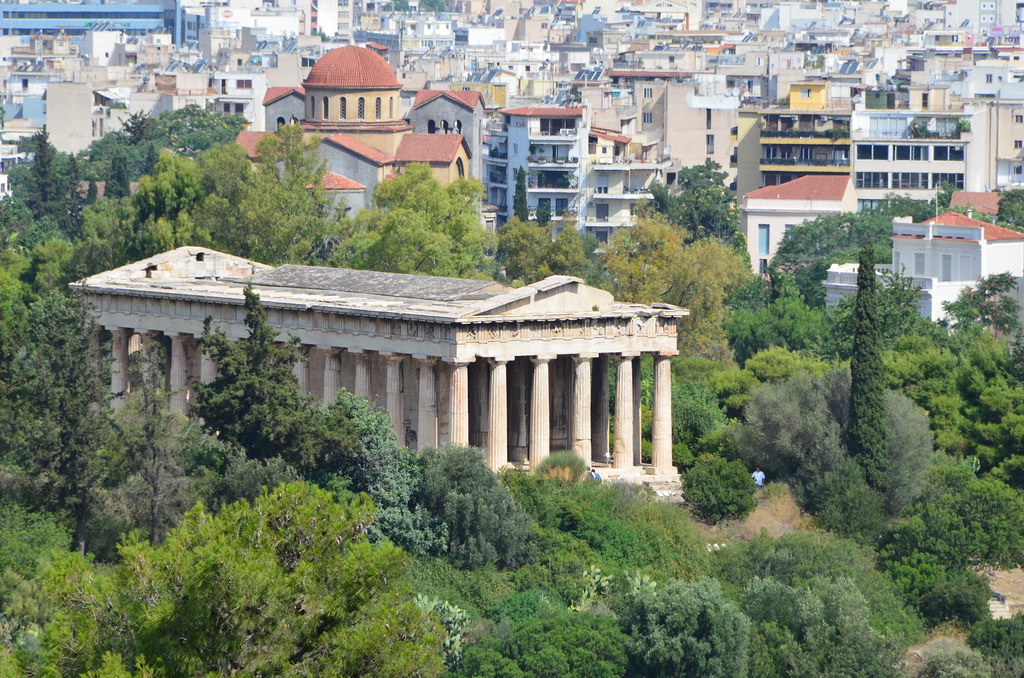
The Temple of Hephaestus, Ancient Agora, Athens; Photo: Unsplash
The Ancient Agora is the most philosophically charged square mile in human history, and arriving at opening means you may have it almost entirely to yourself. This is where Socrates taught and was condemned, and where Zeno of Citium founded Stoicism around 300 B.C. at the Stoa Poikile (the Painted Porch), giving the school its name.
After the Agora, the afternoon moves to the Acropolis Museum, one of the finest archaeological museums in the world; the Parthenon Gallery alone is worth the trip. Buy tickets for both in advance online and build the day around an early start.
Day 3: The Acropolis, Aristotle's Lyceum & Plato's Academy
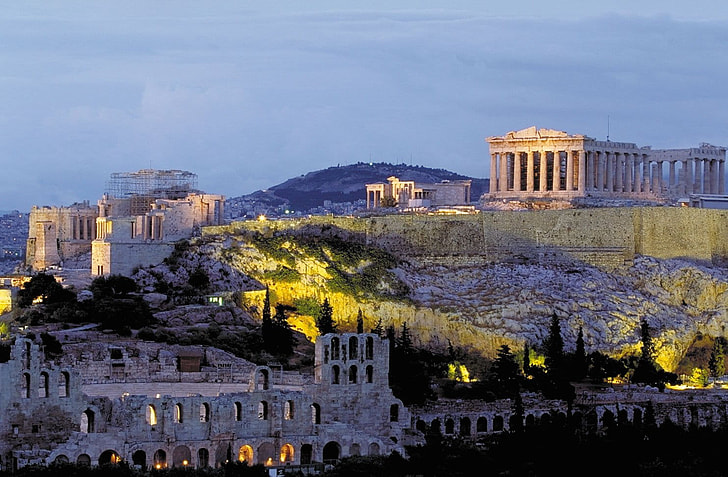
The Parthenon, Acropolis, Athens; Photo: Unsplash
Today covers the three great institutions of ancient Athenian thought in a single long day. The Acropolis at 8 a.m. in the off season is a completely different experience from the summer crowds: the Parthenon, the Erechtheion, and the Propylaea in early morning light with almost no one else there. From the Acropolis, the day moves to the Lyceum where Aristotle founded his school in 335 B.C. and lectured while walking, and then to Plato's Academy, a modest but deeply significant public park where Western philosophy as a formal discipline began. Buy Acropolis tickets online the night before and bring water—the ascent is steep and exposed.
Day 4: Visit Marathon & drive to Nafplio
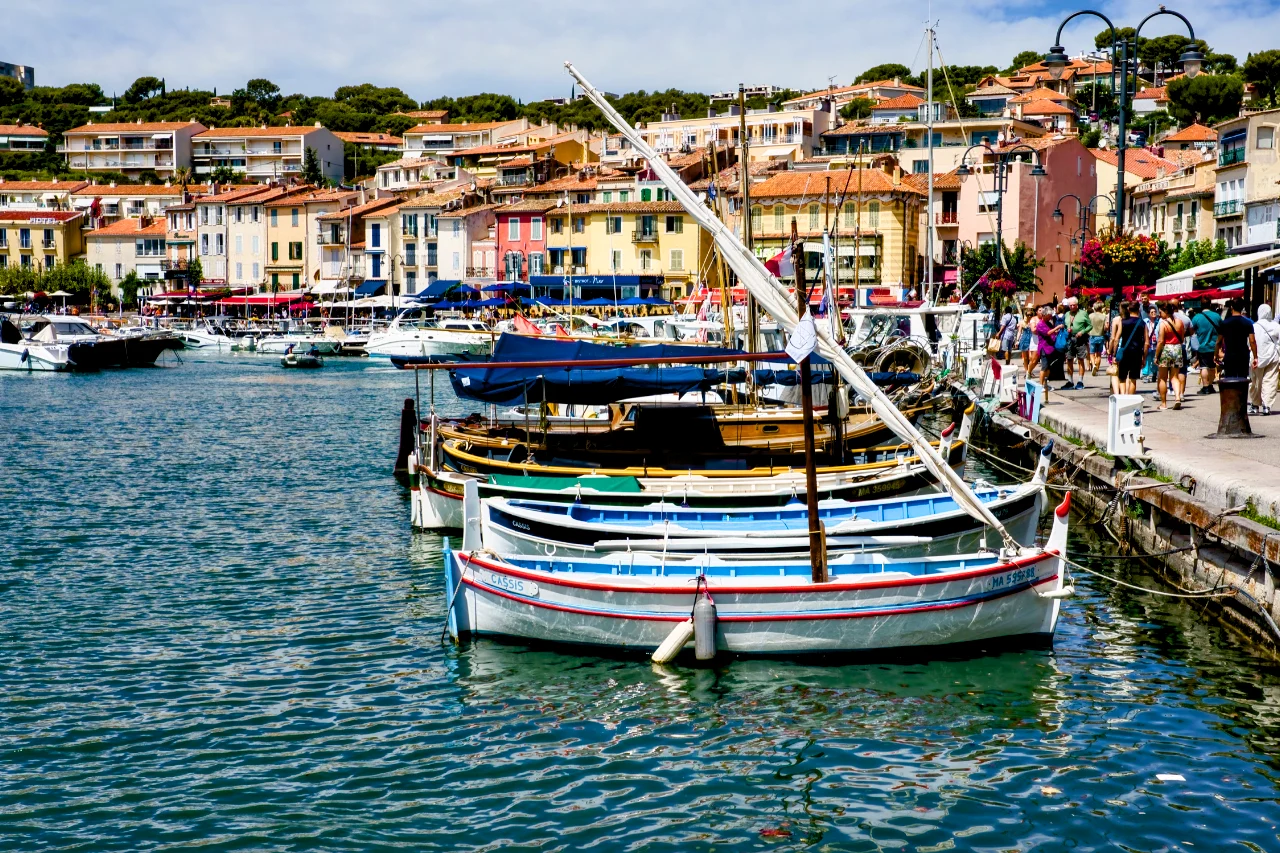
The harbor and old town of Nafplio, Peloponnese; Photo: Unsplash
Today you pick up the rental car that will carry you through the rest of the journey and make your first stop at Marathon, where, in 490 B.C., a vastly outnumbered Athenian force defeated the Persian army and preserved the democratic experiment that made Greek philosophy possible. The burial mound of the 192 Athenian soldiers who fell there is one of the most quietly moving sites in all of Greece: a grass mound in a flat coastal plain, unchanged from the landscape where the battle happened.
The drive south to Nafplio takes you past the Corinth Canal overlook, a staggering feat of engineering cut 90 meters through solid rock. Nafplio itself is arguably the most beautiful small city in Greece, with a neoclassical old town, a Venetian fortress above, and a harbor below that will serve as your base for the next four nights.
Day 5: Mycenae & Epidaurus
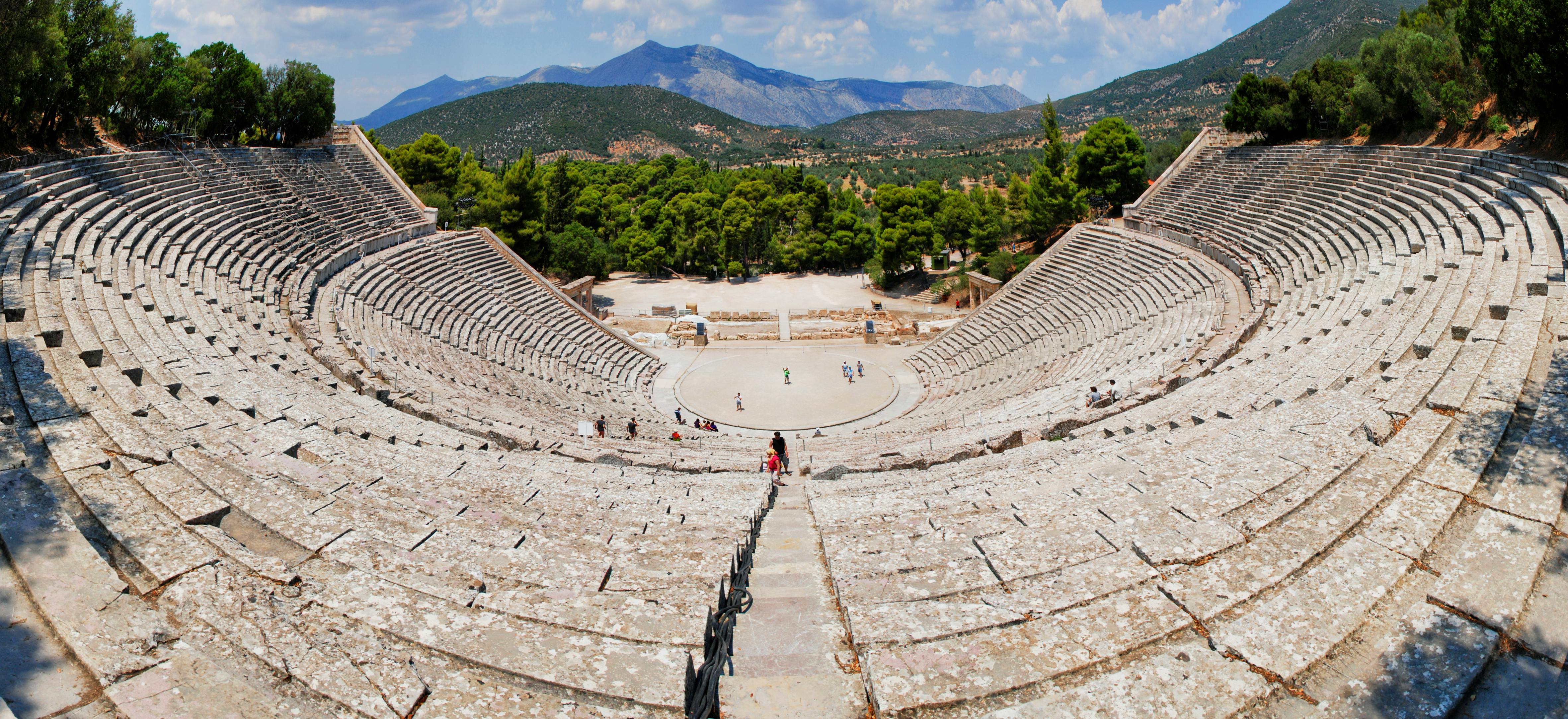
The ancient Theatre of Epidaurus, Peloponnese; Photo: Unsplash
Mycenae is the Bronze Age world that Homer wrote about: Agamemnon's citadel, the Lion Gate, the Treasury of Atreus. This pre-philosophical Greek civilization is the deep soil from which Socrates and Aristotle eventually grew, and understanding the heroic world the philosophers were consciously moving beyond makes everything that follows far more meaningful.
The afternoon moves to the Theatre of Epidaurus—built in the fourth century B.C. and seating 14,000 people—where the acoustics are still so perfect that a whisper from the stage carries to the top row. Stand in the center of the orchestra and speak normally. It works.
Day 6: Ancient Corinth, home of Diogenes the Cynic
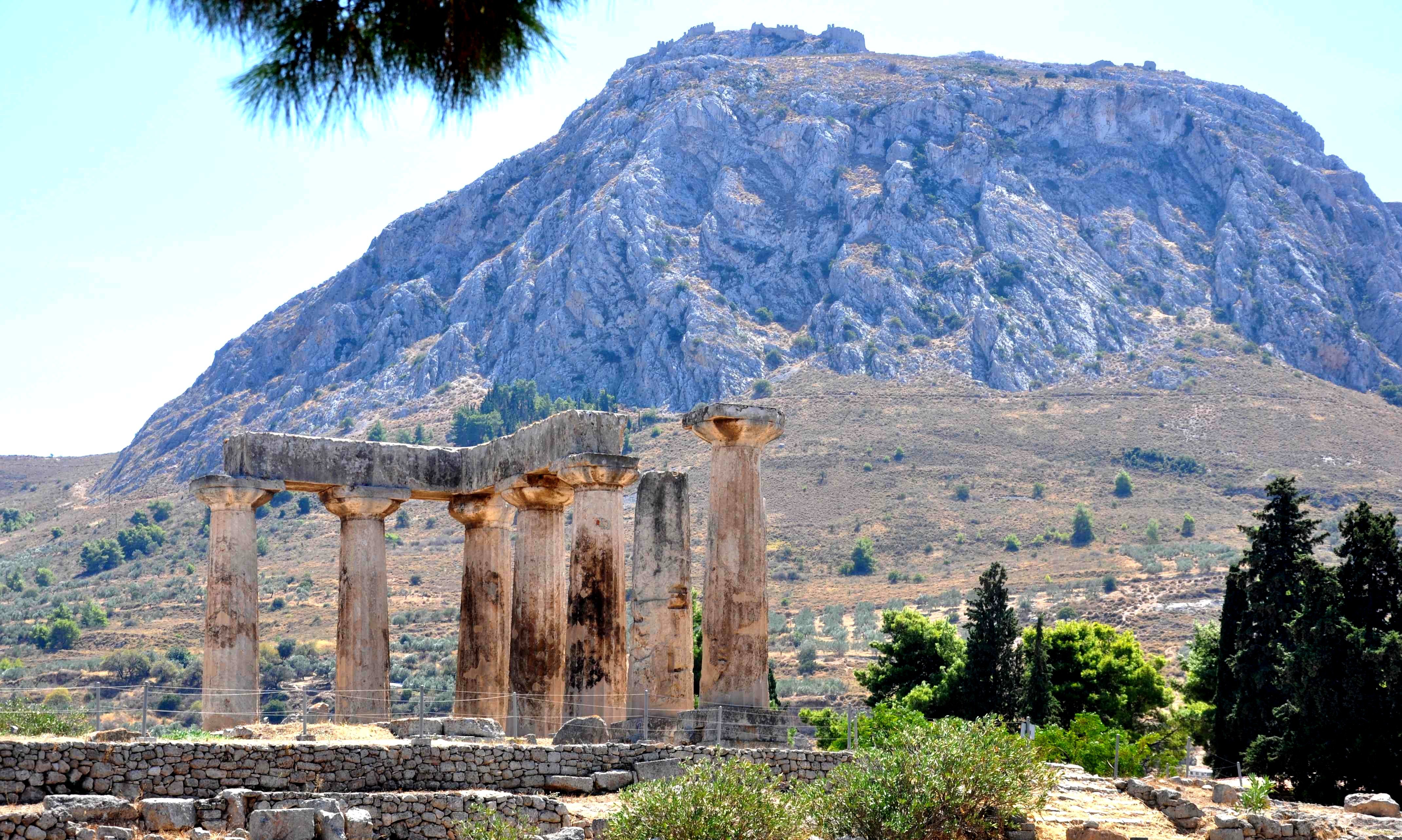
The Temple of Apollo, Ancient Corinth; Photo: Unsplash
Ancient Corinth is where Diogenes of Sinope lived in a large ceramic jar, owned nothing, and founded Cynicism: the most radical philosophical challenge to Aristotle's vision of the good life. Where Aristotle argued for virtue expressed through civic life and moderate flourishing, Diogenes argued that virtue requires stripping everything away. When Alexander the Great visited him and asked if there was anything he could do for him, Diogenes replied: stand out of my light. The archaeological site is anchored by the Temple of Apollo, one of the oldest standing Greek temples, and the museum is excellent. Add Acrocorinth, the fortress city above, for views of both the Aegean and Ionian seas on a clear day.
Day 7: Sparta & Mystras
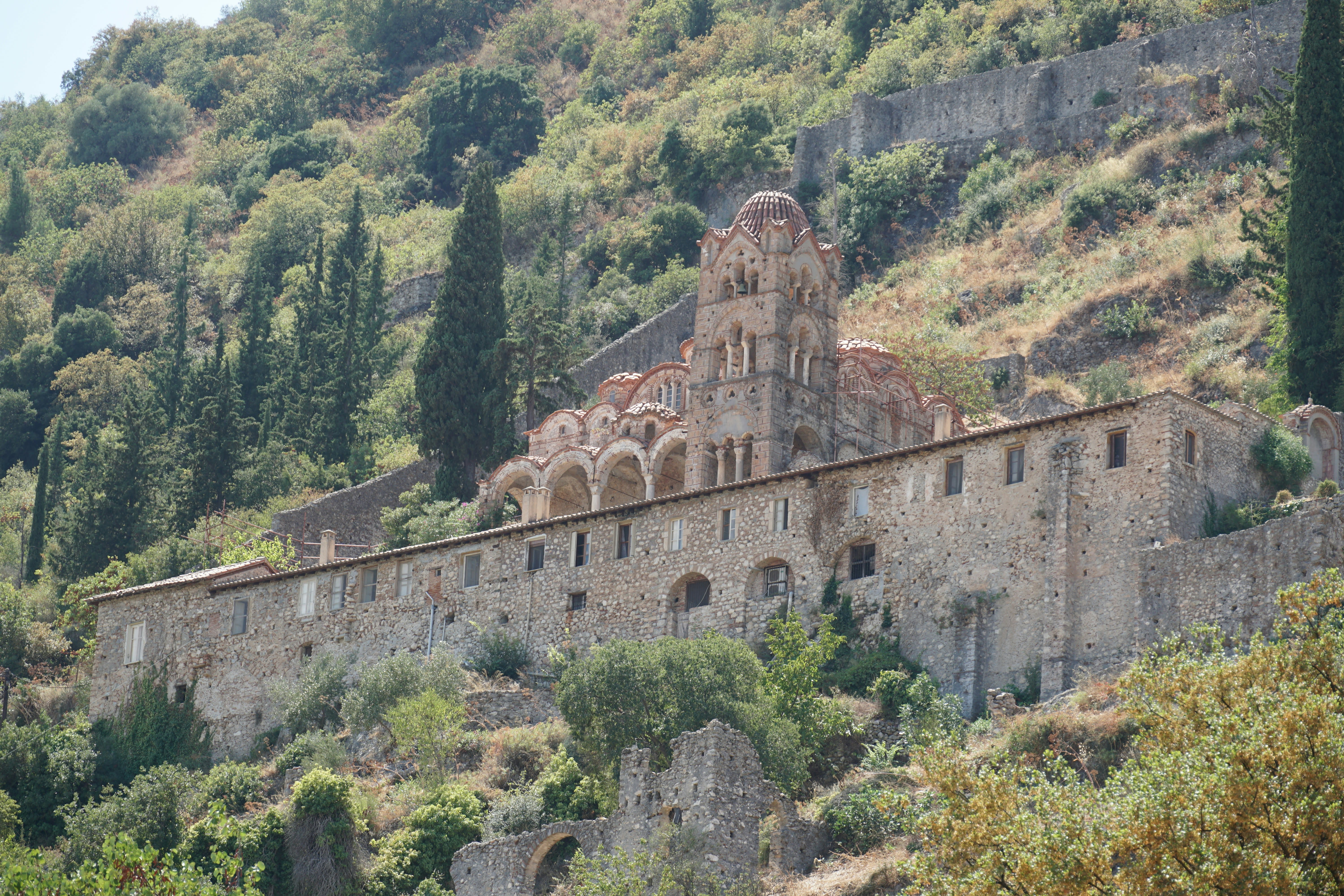
The Byzantine ghost city of Mystras, Peloponnese; Photo: Unsplash
Sparta was Aristotle's perpetual philosophical foil: a society he both admired for its discipline and criticized for its single-mindedness, a civilization organized entirely around war that produced excellent soldiers and nothing else. The archaeological museum has a remarkable collection of Spartan artifacts, and the ruins of ancient Sparta are appropriately sparse (the Spartans famously said their walls were made of men).
The afternoon belongs to Mystras, a UNESCO World Heritage Byzantine ghost city built on a steep hillside above Sparta, abandoned in the 19th century and now perfectly preserved with crumbling frescoed churches, palaces, and towers. It is one of the great undervisited sites in all of Greece and requires some climbing but rewards every step.
Day 8: Olympia & drive to Delphi
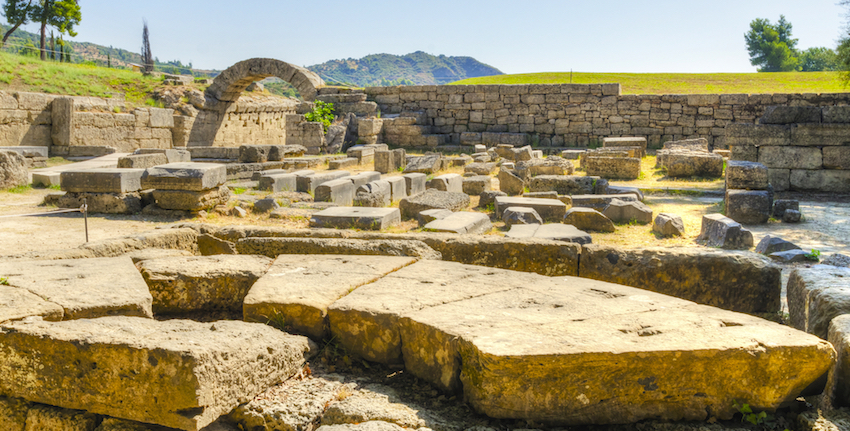
The ancient Olympic stadium, Olympia; Photo: Unsplash
Olympia is the most Aristotelian site in Greece. Arete, the Greek concept of excellence and virtue, was not merely a concept here: it was measured, competed for, and crowned with olive branches before 40,000 spectators. Walk through the vaulted tunnel that served as the original athletes' entrance 2,500 years ago and onto the 192-meter track where the ancient Olympics were held. Every reviewer says to run the track. Do it. The museum is arguably the finest site museum in Greece, with the complete pediment sculptures from the Temple of Zeus and the Hermes of Praxiteles.
After Olympia, the drive north toward Delphi through the mountains of central Greece is one of the most beautiful in the country.
Day 9: Delphi
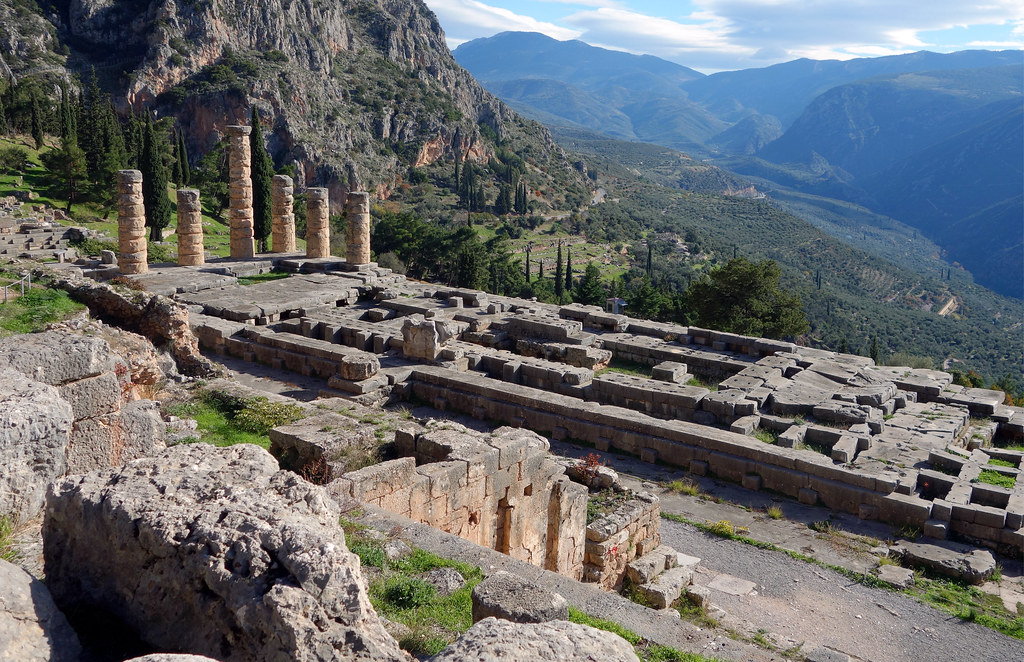
The Temple of Apollo, Delphi; Photo: Unsplash
The Oracle at Delphi told a friend of Socrates that no man was wiser than Socrates, and Socrates spent the rest of his life trying to understand why. That attempt became the Socratic method, and the inscription above the temple, γνῶθι σεαυτόν (know thyself), is still there. The site is set dramatically on the slope of Mount Parnassos overlooking a vast sea of olive trees running down to the Gulf of Corinth far below, and in the morning with no crowds, it is one of the most extraordinary places on earth. The Delphi Archaeological Museum next to the site is among the best in Greece: the Charioteer of Delphi alone, a 478 B.C. bronze in a state of near-perfect preservation, is worth the drive from anywhere.
Day 10: Thermopylae & drive to Meteora
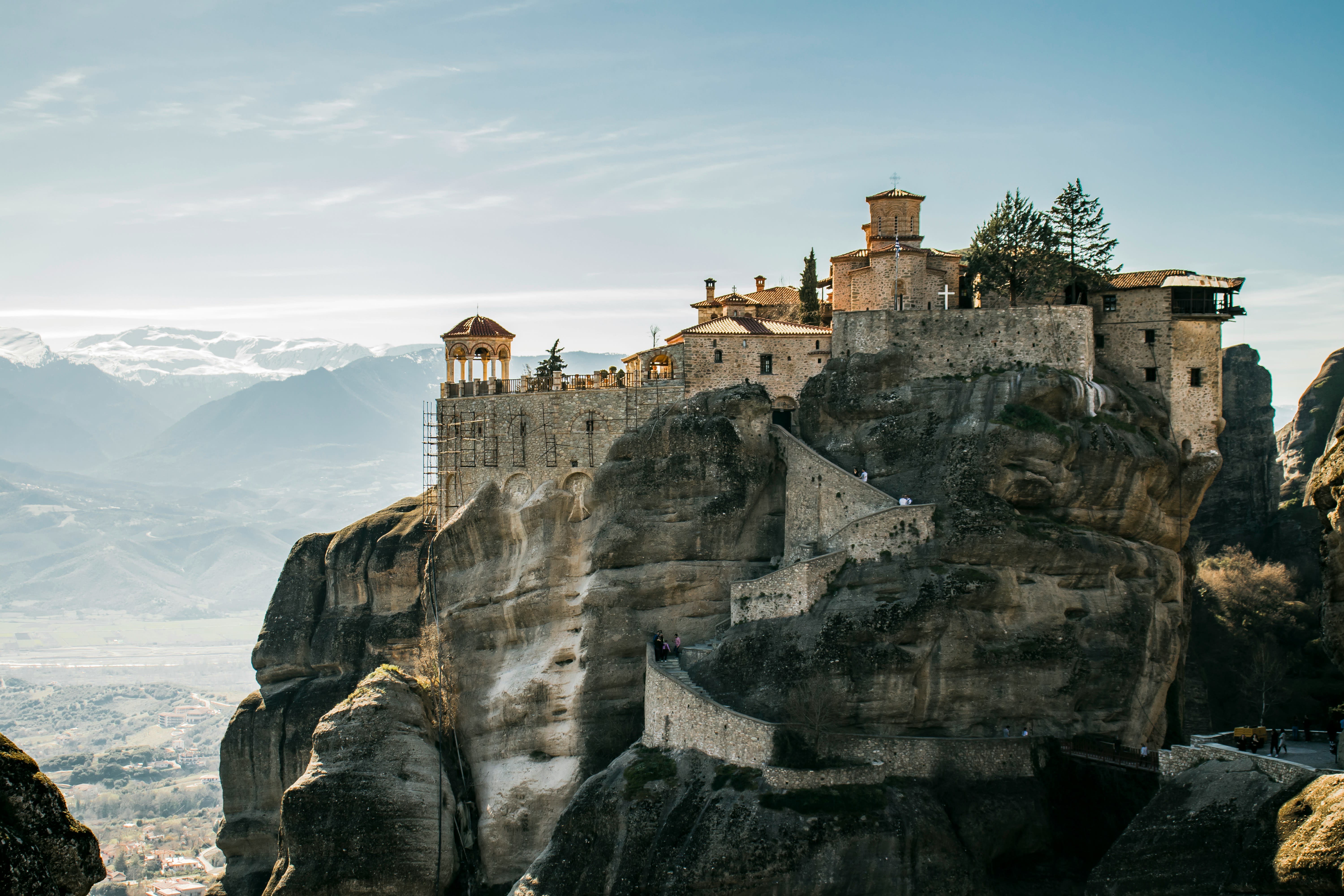
The monasteries of Meteora, Central Greece; Photo: Unsplash
Thermopylae is not a spectacular site visually, but it does not need to be. In 480 B.C., Leonidas and 300 Spartans held a narrow coastal pass against a Persian army estimated in the hundreds of thousands for three days, knowing from the second day that the position was hopeless. The Leonidas monument and the inscription on the burial mound are worth the stop on their own.
The drive north from Thermopylae to Meteora is one of the great arrival experiences in Europe: As you approach Kalambaka, enormous rock formations rise suddenly and without warning from flat Thessalian farmland, with monasteries perched on top of vertical pillars of stone. Stop at the upper viewpoint before dinner and let it register.
Day 11: Meteora & the monasteries on the rock
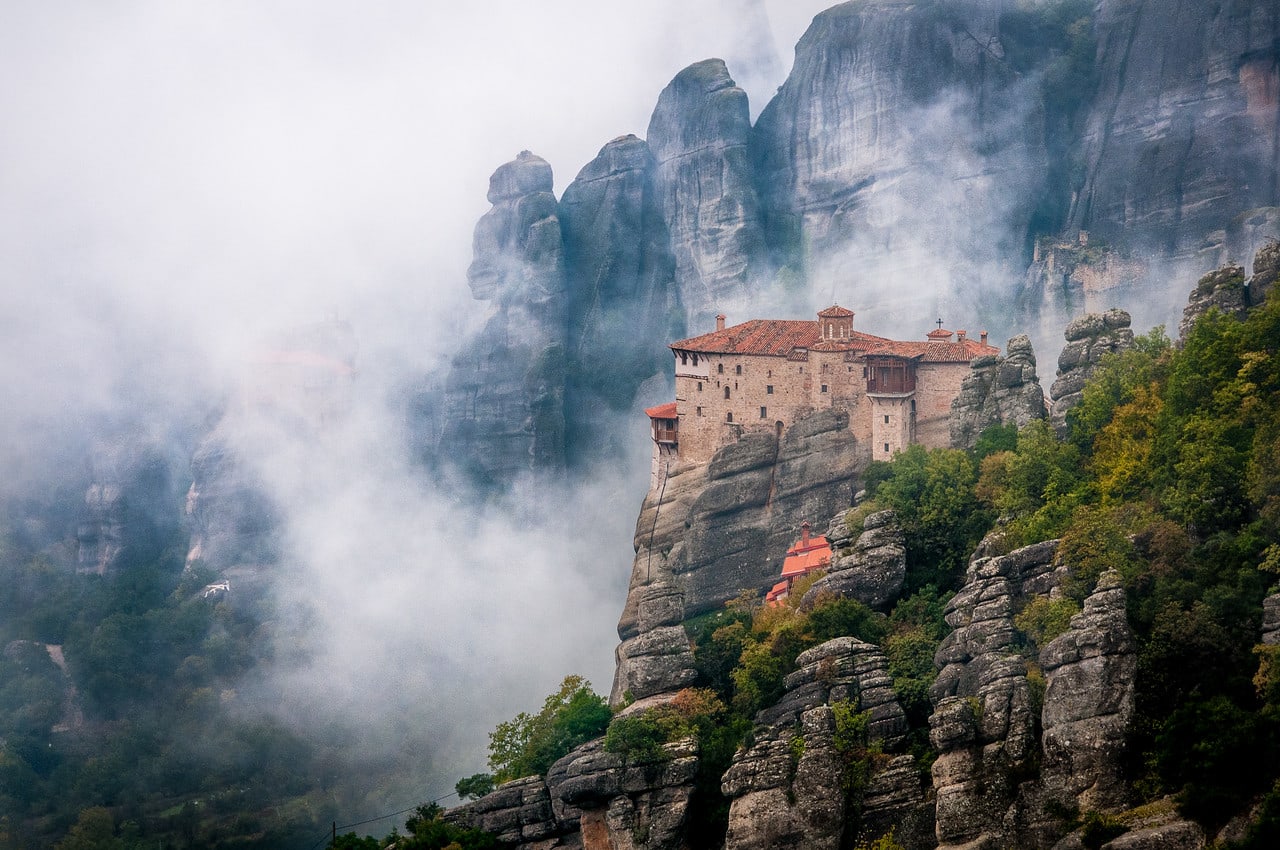
Varlaam Monastery, Meteora; Photo: Unsplash
The six active monasteries of Meteora were built between the 14th and 16th centuries by monks who were hauled up the rock faces in nets. For anyone grounded in Stoic philosophy, the life lived here represents the contemplative ideal taken to its architectural extreme: solitude, elevation, and complete removal from the world.
Plan to visit three or four across the day, as each monastery closes one or two days per week on a rotating schedule. Great Meteoron is the largest and most historically important, Varlaam has extraordinary 16th-century frescoes, and Roussanou is the most dramatically positioned on a thin spire of rock. Women need covered shoulders and skirts to enter.
Day 12: Drive to Thessaloniki
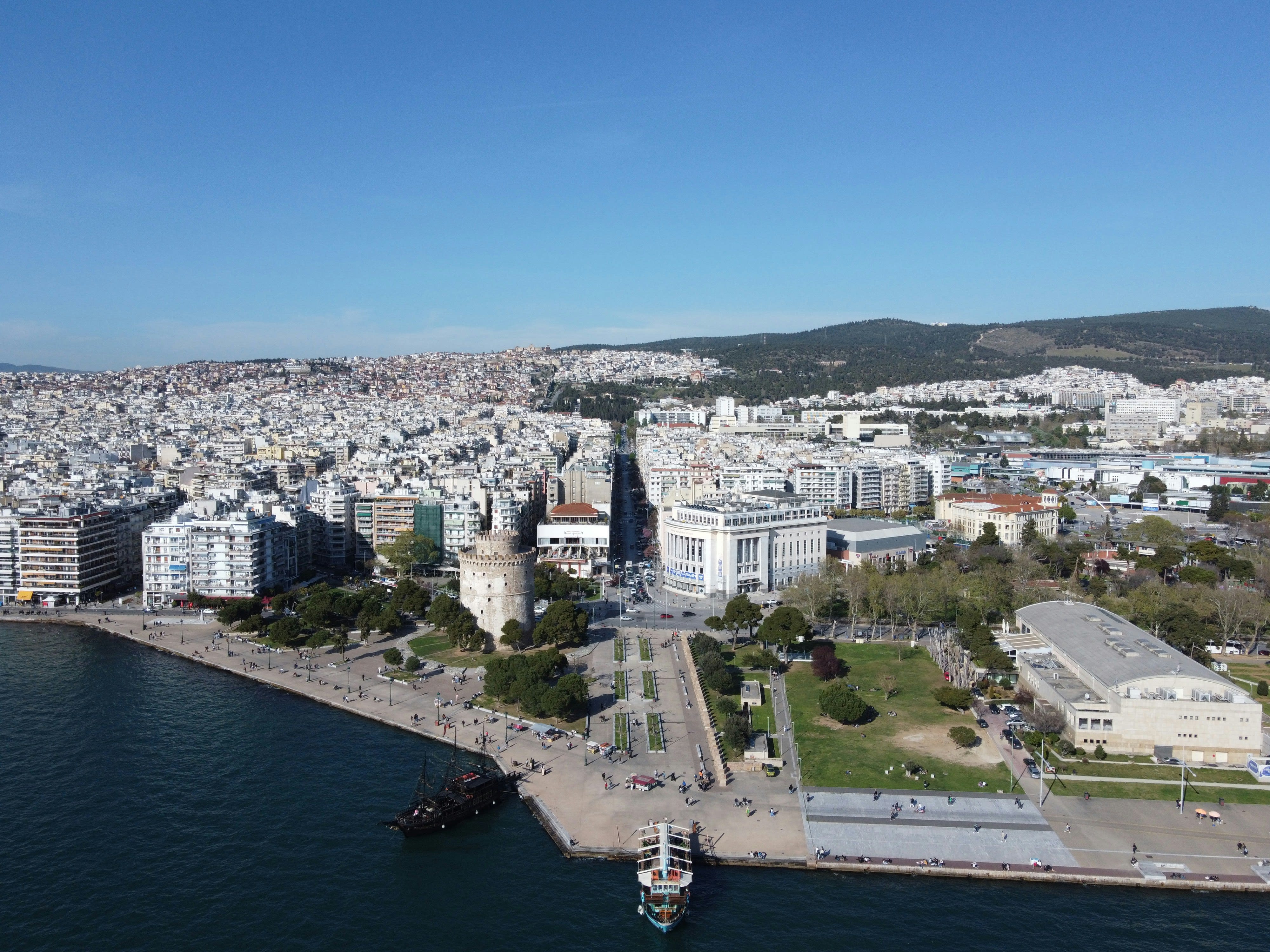
The White Tower and waterfront, Thessaloniki; Photo: Unsplash
Greece's second city is one of the most genuinely underrated urban destinations in Europe, and arriving via the drive north from Meteora gives you a sense of how vast and varied this country actually is. Thessaloniki sits on the Thermaic Gulf with a waterfront promenade, a Byzantine old quarter, and a food scene that many Greeks will tell you is better than Athens. The main square is named Aristotelous, after Aristotle, and there is a statue of him there worth raising a glass to. It is also the base for the two most significant day trips of the entire journey: Amphipolis, where Thucydides commanded and was exiled, and Stagira, where Aristotle was born.
Day 13: Stagira
Stagira is where Aristotle was born in 384 B.C., and it is the philosophical pilgrimage endpoint of the entire journey. The archaeological site sits on a coastal promontory above the Aegean: ancient city walls, towers, an agora, and residential areas all visible and well signed, set among pine trees above deep blue water. There are strong archaeological indications that Aristotle's tomb is located within the site.
Download the free audio guide app before you arrive (the narrator is a merchant who arrives in town just after Aristotle's death, an extraordinary piece of site interpretation) and do not rush this one. Budget three full hours, read every sign, and sit with it.
Day 14: Return to Athens
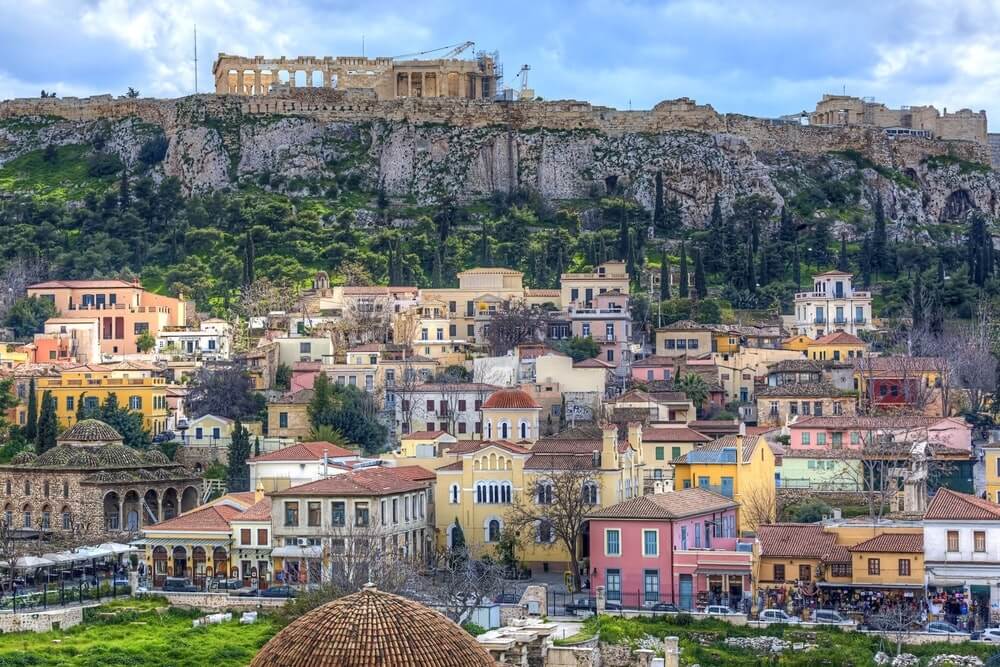
Monastiraki neighborhood below the Acropolis, Athens; Photo: Unsplash
The last day brings you back to Athens with one final afternoon in the city that started everything. Use it to revisit the Agora if you want to close the loop, or simply walk, eat, and let the journey settle. You have now visited Stagira, Olympia, Delphi, Thermopylae, and the pass where Leonidas held: the entire Aristotelian and Stoic world in two weeks.
If your flight departs early the next morning, a hotel near the airport makes this manageable. Make the final dinner memorable: Diporto Agoras—a taverna that has operated since 1887 with no menu, no sign, and no credit cards—is one of the great dining experiences in Athens and a fitting way to end.
Need to know
Greece rewards travelers who move slowly and start early. Nearly every archaeological site opens at 8 a.m., and the first hour before tour groups arrive is categorically different from what comes after. Buy tickets online the night before wherever possible, especially for the Acropolis and Delphi. A rental car is essential from Day 4 onward: Public transport cannot reach Marathon, Mycenae, Olympia, Thermopylae, Meteora, or Stagira on any reasonable schedule. Full insurance is worth every euro on Greek mountain roads. Cash still matters at smaller tavernas and rural sites. Tipping is appreciated but not expected. The food outside of tourist centers is consistently excellent and consistently cheaper: Look for places with no English menu out front and follow locals at lunch.


Travel Advisor
Daniel Griffin Smith
Daniel Griffin Smith

Get in touch with Daniel Griffin Smith
Did you like this guide? Reach out to customize and book your own experience. Or, just to chat about travel in general.
For more inspiration and insider recommendations, visit our Greece page.