

Curator’s statement
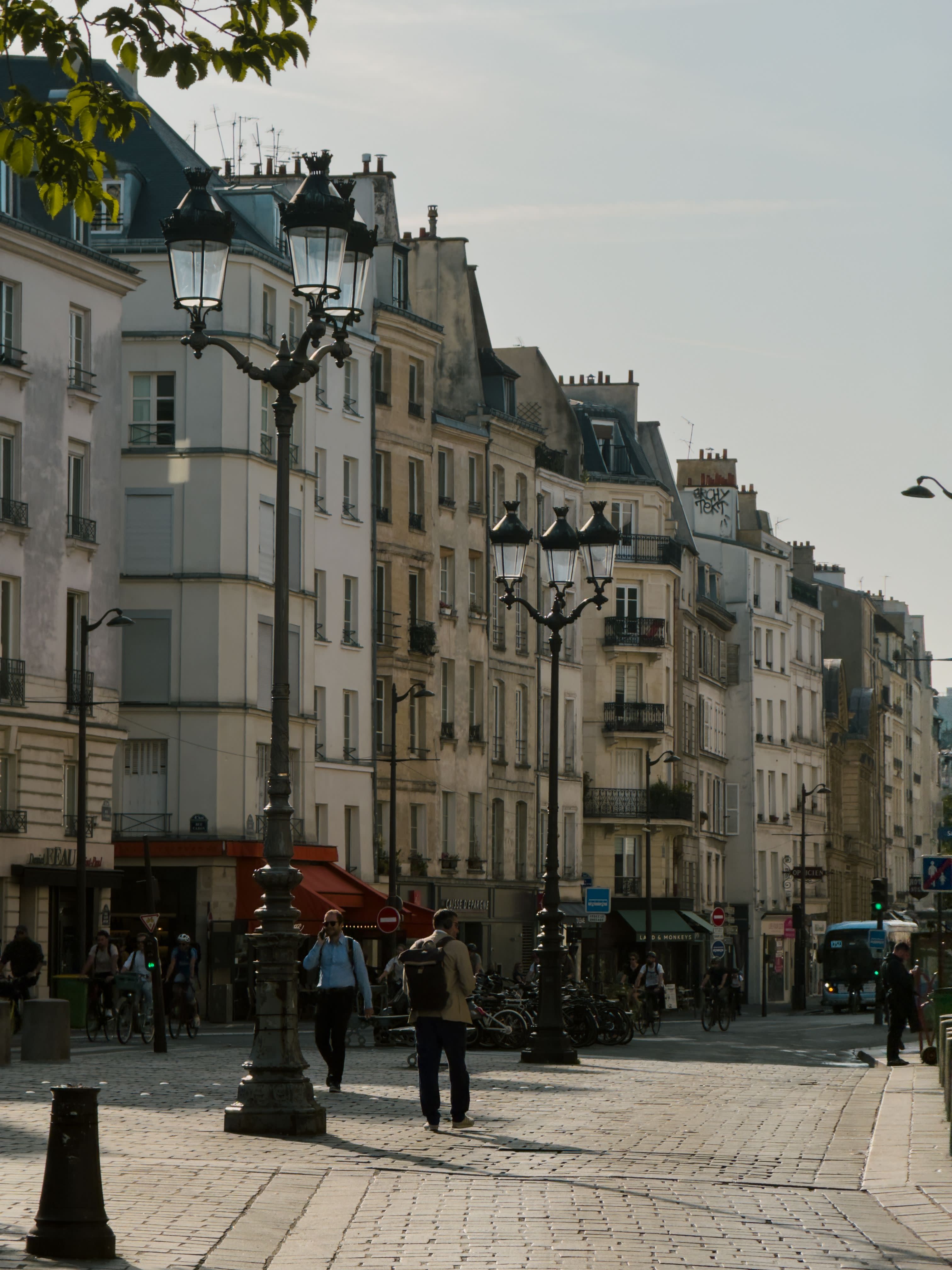
France decriminalized homosexuality in 1791, and Paris has been building queer life out in the open ever since. The Marais is still the address everyone knows. But the bookshop that made it a gay neighborhood trades from the 11th now, and the bar on rue des Archives that just won best aperitif in the city opened last October. Most of these places run close to the line, and the ones still standing are the ones people keep turning up for.
The Fora Difference
Book with The Bēhaven Collective to access exclusive perks and experiences on your trip.

Killer perks
Free upgrades, spa credits and more—we got you

Personalized recs
Customized travel planning for your style

Insider knowledge
Expert advice from people who’ve actually been there
Where to stay in Paris
Unlock perks by contacting The Bēhaven Collective to book your trip.
Things to do in Paris
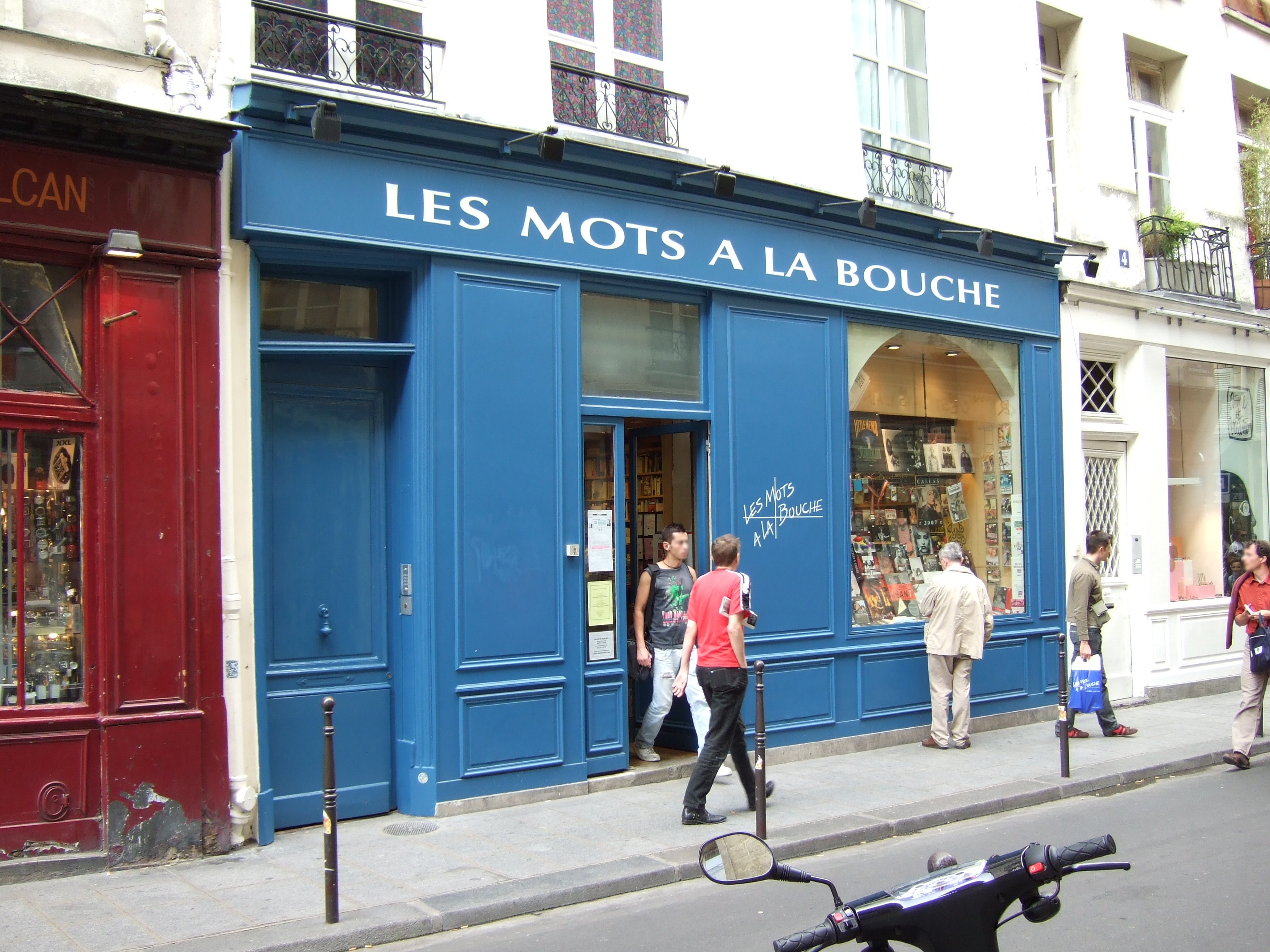
The bookshop's former premises on rue Sainte-Croix-de-la-Bretonnerie. Photo Credit: Ecelan via Wikimedia Commons
France's first LGBTQ+ bookshop, Les Mots à la Bouche, opened in 1980 on rue Simart in the 18th and moved to 6 rue Sainte-Croix-de-la-Bretonnerie in 1983. It sold books in the Marais for thirty-seven years. The landlord declined to renew a long-held below-market lease, and it reopened in June 2020 at 37 rue Saint-Ambroise in the 11th, where seven booksellers bought the stock through a €40,000 crowdfund in 2021 and have run it as a worker cooperative since. Rent is now near €5,500 a month against €4,300 four years ago, and this May the landlord granted a three-month suspension to keep it trading. Buy a book instead of photographing the window.
Paris unveiled its first memorial to homosexual victims of deportation and persecution on 17 May 2025. It's a three-tonne steel star by Jean-Luc Verna in the Jardins de l'Arsenal beside the Bastille marina, one face black and matte, the other mirrored. Amsterdam put up Karin Daan's pink granite triangles at the Westermarkt in 1987. The Mémorial des Martyrs de la Déportation behind Notre-Dame, where most itineraries send people instead, is about deportation in general and doesn't name this history anywhere in its text.
Place des Émeutes-de-Stonewall and Place Harvey-Milk were both named on 19 June 2019 under the city's LGBTQI+ commemorative naming programme, and they sit minutes apart in the 4th. Harvey Milk is the junction of rue des Archives and rue de la Verrerie, a hundred metres or so from the Hôtel de Ville. Most people cross it on the way to a bar without looking up.
Le Village opened at 12 rue du Plâtre in 1978 under Joël Leroux and Jean-Claude Zamora and is generally credited as the first gay bar in the Marais. A plaque went up outside in May 2025. Elles Bar has the room now.
Diva's Kabaret does drag in a twelfth-century vaulted stone cellar at 33 rue des Rosiers, seventy square metres, seating fewer than eighty. Thursday through Saturday. The staircase down means it isn't wheelchair accessible.
The Pigalle room has been a performance space since 1873, when it was Le Divan Japonais. Marcel Wutsman founded Madame Arthur there in 1946 as the first gender-twist cabaret in France, and Serge Gainsbourg played house piano in 1954. It closed in 1994, sat empty, and reopened in November 2015 under the team behind the Divan du Monde next door.
Archives, Recherches et Cultures Lesbiennes has been collecting lesbian print and oral history since 1983. The reading room is inside the Maison des Femmes de Paris at 163 rue de Charenton in the 12th, open Wednesday afternoons from two until half five, and first-time visitors fill out a short form on arrival. The separate Collectif Archives LGBTQI+, formed in 2017, still has no premises and no public reading room.
Chéries-Chéris, the city's LGBTQIA+ film festival, runs across three MK2 cinemas in the second half of November and hit its thirty-first edition in 2025. November is low season, which is also when I can do the most with a hotel booking.
Places to eat & drink in Paris
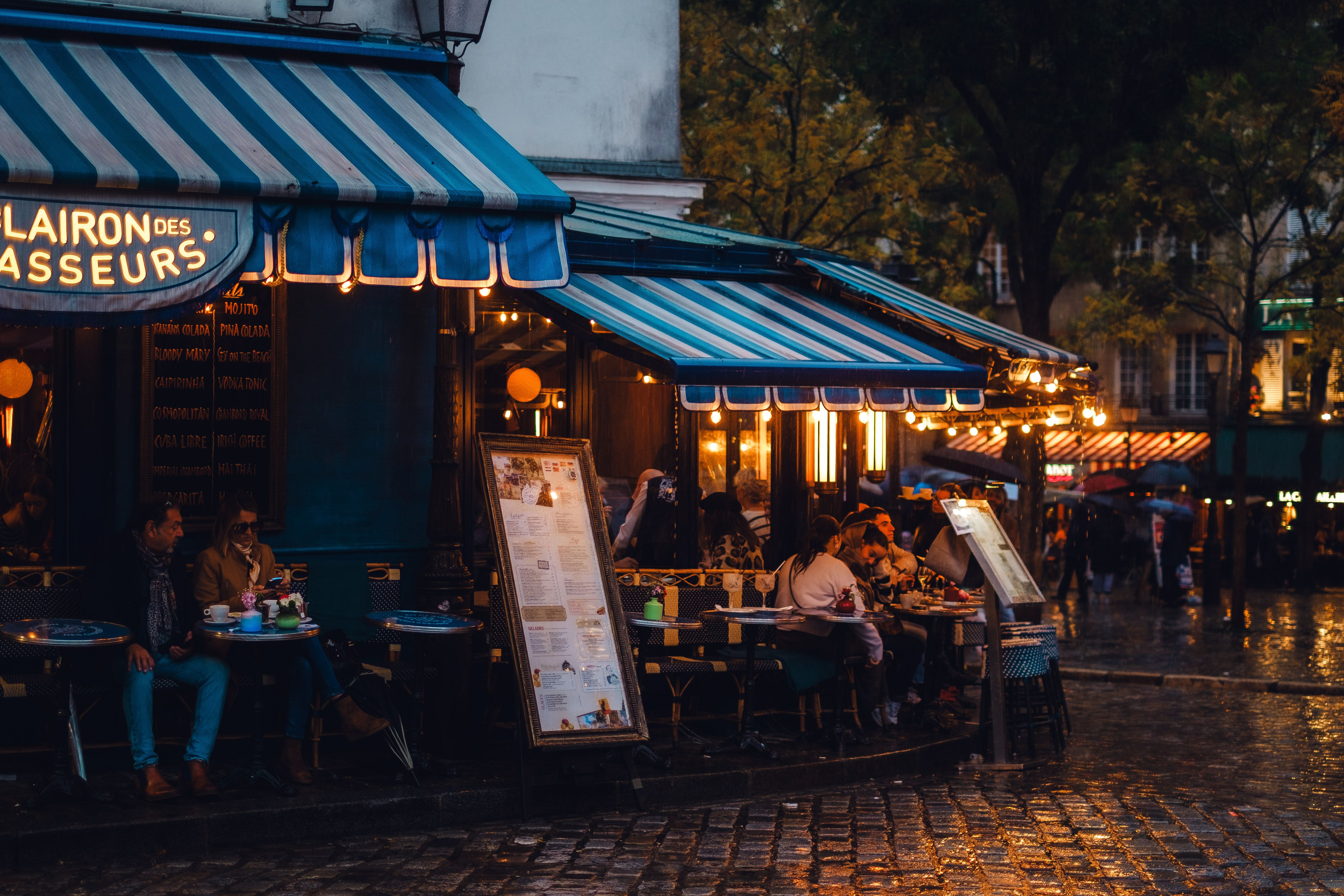
A cafe terrace on a wet evening.
Le Coyote is in a nineteenth-century textile workshop at 86 rue des Archives. Marine Gora opened it in October 2025 and it took Time Out's best aperitif in Paris nine months later. Coffee in the morning, wine bar in the evening, with an all-natural list drawn entirely from women producers alongside sommelier Sara Petersdotter. Order the Cherry Bomb, bourbon with cherry syrup, lemon and egg white, and the cookies Gora brought over from her old place.
La Mutinerie at 176 rue Saint-Martin has been a self-managed feminist and queer collective since 2012, with prices kept low on purpose and no owner to speak of. It went into judicial reorganization in 2024 and told its regulars it might not last three more months. A crowdfund saved it. Open daily from five.
Le Cox opened on 15 December 1995 behind the red facade at 15 rue des Archives that's been its whole visual identity since. It still fills the pavement from seven. Daily half five until two, happy hour until ten.
Elles Bar is one of very few lesbian bars left in the city, at 12 rue du Plâtre since 2021 under an owner called Marie. Wednesday through Saturday evenings. It's the address with the Le Village plaque outside.
RAIDD has been at 23 rue du Temple since 2003, opened by Jean-Claude Houssoy and under new owners since 2024. It's loud and performance-driven, with the shower show from midnight. The address is rue du Temple, not rue Vieille du Temple, which sends people to the wrong street constantly.
Chéri Chéri is a dinner and cabaret room for about a hundred at 77 rue du Faubourg du Temple in the 10th, run by Thibaud, who created the Rainbow Power parties, with Lucille from the bar Wanted. Sunday is Brunch and Queen, a drag brunch, and it's the easiest table on this list to get me to book for you.
Le Mary Celeste sits on the corner of rue Commines in the 3rd and takes walk-ins, which in Paris is close to a miracle. Doors at six, kitchen until eleven, and a wine list built on growers the owners buy from directly. People order the deviled eggs twice.
Clown Bar at 114 rue Amelot was the bar attached to the Cirque d'Hiver and still carries the 1900s ceramic tiling on its walls. Sota Atsumi, who made his name at Vivant, cooks there now. Kitchen Wednesday through Sunday, four minutes from the Marais edge.
Les Enfants du Marché is a counter inside the Marché des Enfants Rouges, the oldest covered market in Paris, doing Japanese-French plates and natural wine. No reservations, so it is a lunch you turn up for rather than book.
Need to know
Pride isn't where the internet says it is. The Marche des Fiertés has landed on the last Saturday of June every year since 2021, and 2026 was set for 27 June until the Préfecture de Police, and Inter-LGBT canceled it the day before, with the forecast above forty degrees. It was moved to Saturday, 3 October 2026. That cost Inter-LGBT around €50,000. The Quinzaine des Fiertés, the fortnight of programming around the march, ran through June as planned. No 2027 date has been announced. The pattern points to 26 June, but after this year I wouldn't book flights against a pattern, and I check the date with the organizers before anyone I'm working with commits to a week.
Three listings you'll find that are wrong. Open Café at 17 rue des Archives closed for good on 26 June 2022, and the former owner kept the liquor license so nothing else could open in the room, though it still shows as trading in several directories. 3W Kafé on rue des Écouffes is closed. Le Queer Lieu, the community café in Saint Denis that keeps getting written up as the first of its kind outside the périphérique, isn't reopening its space, though the association still runs events elsewhere. Le Coyote's posted hours disagree across three sources, so message them before you walk over.
One thing worth saying plainly, because most writing about this neighborhood does not. A gay bar and a queer-owned business are not the same thing, and in the Marais the second category is far smaller than the first. Two research passes through French LGBTQ+ press, the Centre LGBT Paris-Ile-de-France directory, and the Paris LGBT listings turned up one confirmed LGBTQ+-owned place to eat or drink near the quarter, Le Coyote, plus La Mutinerie, as a self-managed collective rather than an owner-run business. The restaurants above are good and they are in the neighborhood. None of them is called queer-owned here, because none of them could be confirmed as such.
What actually changes a trip here is who knows you're coming. I work with a private concierge at one of the properties I book near the Marais, which is how a table turns up at a restaurant that's telling everyone else it's full. The other thing is smaller and matters more than people expect. I confirm the bed configuration and both names on the reservation in writing before you arrive, so nobody's having a conversation at the desk about whether a king was really what you wanted.


Travel Advisor
The Bēhaven Collective
Bryant Blakeslee

Get in touch with The Bēhaven Collective
Did you like this guide? Reach out to customize and book your own experience. Or, just to chat about travel in general.
For more travel inspiration and insider recommendations, check out our Paris page.