


Curator’s statement
There is a version of luxury that just means more staff, more amenities, more polish. Dwarika's offers something else: a courtyard so quiet it seems to have opted out of the city entirely, built from centuries of hand-carved woodwork that one man refused to let disappear. We came to Kathmandu wanting different things, my husband hoping for rest, me hoping for something I couldn't yet name, and found both inside the same set of carved gates. It's a hotel that treats its own history as something to live inside, not something to display.
The Fora Difference
Book with Elaine Brackin to access exclusive perks and experiences on your trip.

Killer perks
Free upgrades, spa credits and more—we got you

Personalized recs
Customized travel planning for your style

Insider knowledge
Expert advice from people who’ve actually been there
Where to stay
Unlock perks by contacting Elaine Brackin to book your trip.
Welcome
Dwarika's
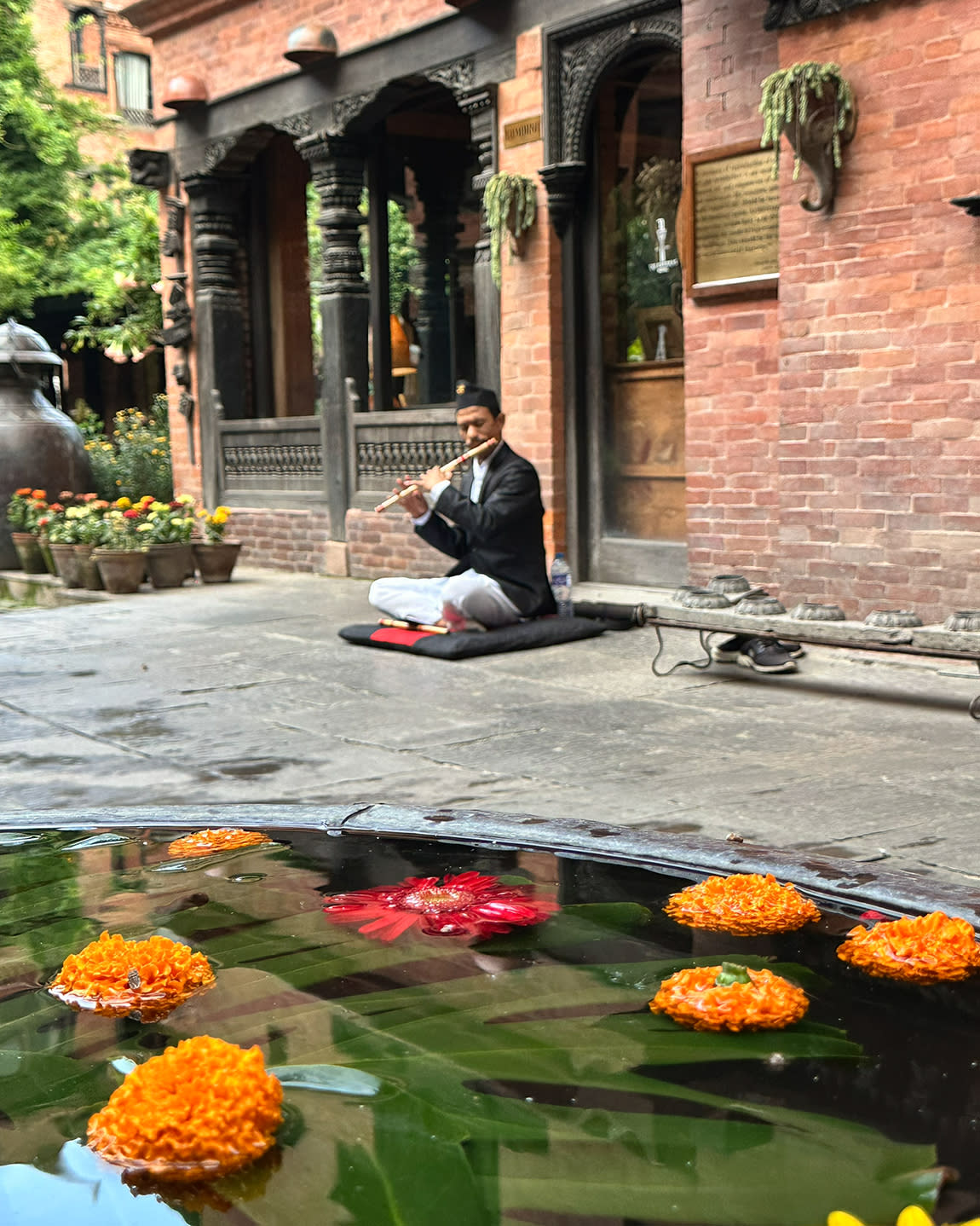
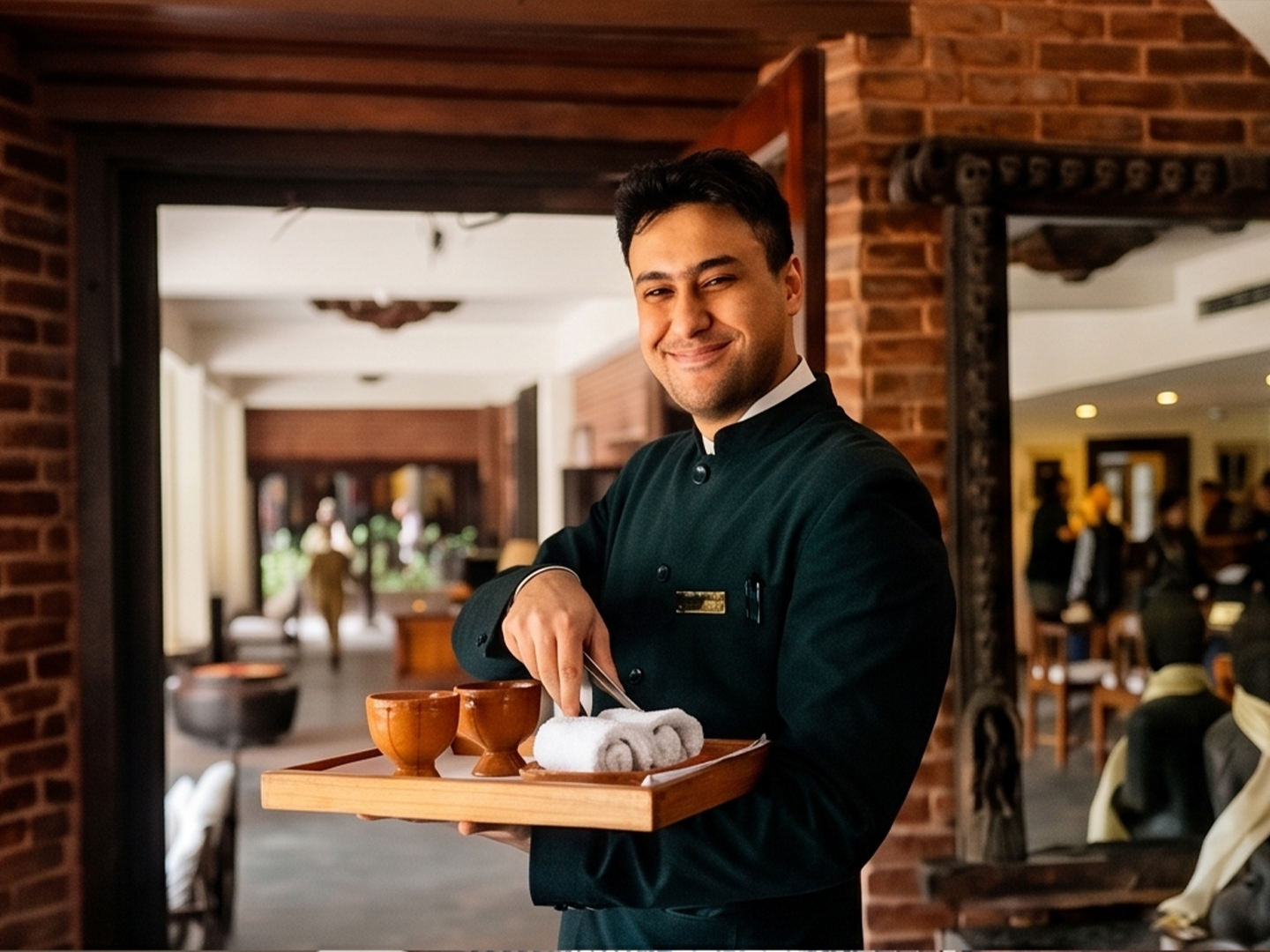
Dwarika's sits behind a gate that does something strange to the sound of Kathmandu. The taxi stops, a guard in traditional dress pulls it open, and the traffic and horns that filled the last twenty minutes are simply gone. Someone is already waiting to meet you: a small prayer gesture, palms pressed together, a khata scarf draped over your neck, then a cold towel and a welcome drink before you've said a word. The courtyard on the other side runs on a slower clock. In the common areas, guests gather over traditional Nepali board games, not just the Bagh Chal set tucked into every room, but others laid out for anyone willing to sit down and learn. The hotel was close to full the week we stayed, by the front desk's account, but it never felt that way. Something about the layout, courtyards opening onto each other instead of one lobby everyone funnels through, keeps it feeling private, no matter how many rooms are booked.
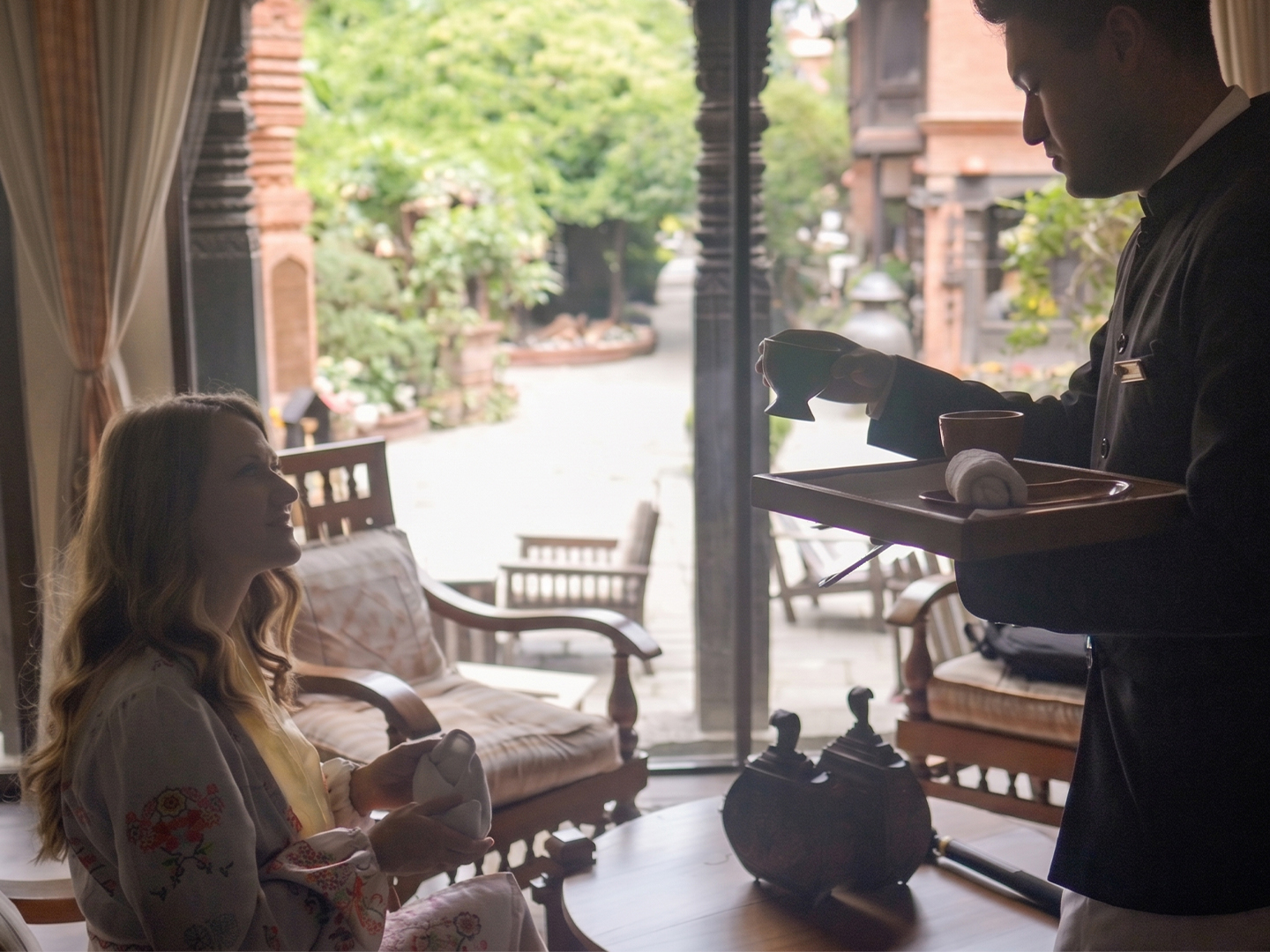
A warm welcome at The Dwarika's - Elaine Brackin
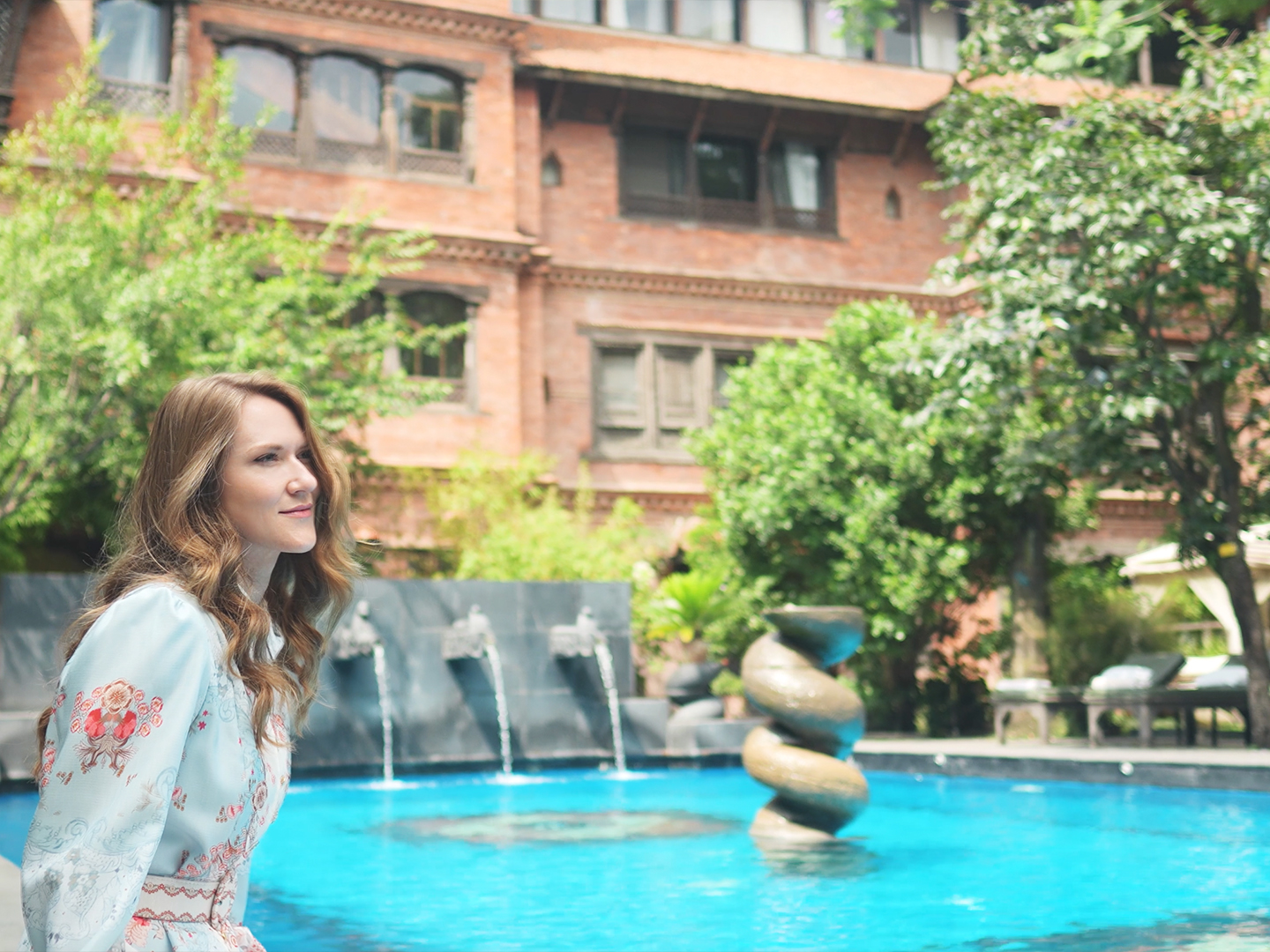
Dwarika's pool - Elaine Brackin
History
The hotel exists because a man named Dwarika Das Shrestha could not walk past what was being thrown away. In 1952, he came across carpenters in the Kathmandu Valley sawing the carved sections off a centuries-old wooden pillar, treating hand-worked heritage as scrap. He started collecting instead: windows, doorframes, columns, anything that would otherwise have been broken down for firewood or lumber. It took decades. In 1977, he built a hotel around what he'd saved. When he died in 1992, his wife, Ambica, took over, running the property and becoming one of the most prominent businesswomen in Nepal at a time when that was rare. Their family still lives there, and you can feel it in how the place is kept: less like a hotel maintaining an aesthetic, more like a family protecting something they actually love. Ambica passed away in 2024, in her nineties. Her daughter now serves as managing director, her grandson as CEO, one more generation choosing to stay rather than sell the story off. They're building a new wing now, roughly forty more rooms, under what feels like the same instinct that built the first one.
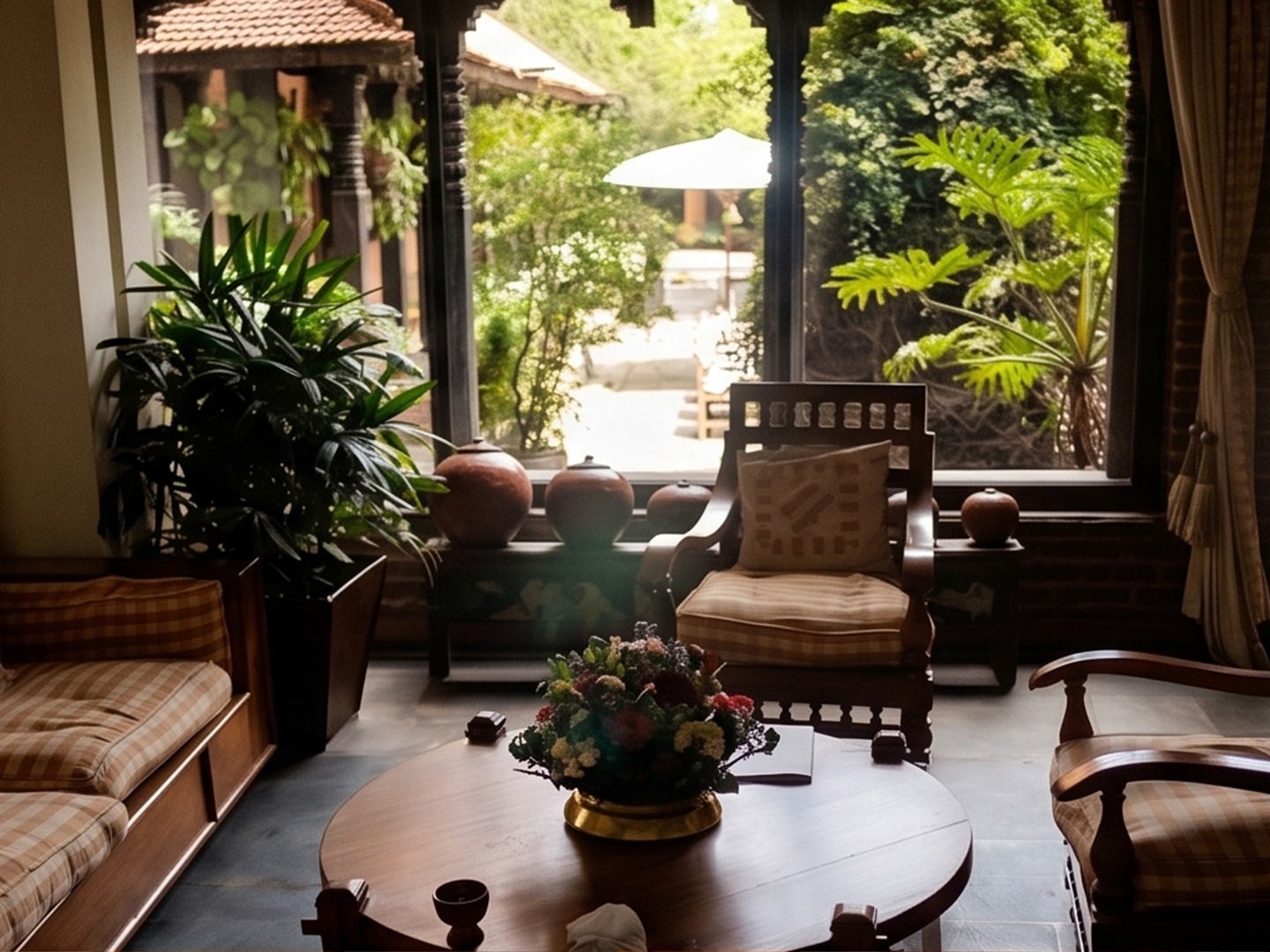
Dwarika's lobby - Elaine Brackin
Ram Mandir
One of the best things Dwarika's arranges is a guided evening walk to the Ram Mandir, a 150-year-old temple nearby, for the Aarti ceremony. What stood out wasn't only the ceremony itself, it was how easy the whole evening felt for something this unfamiliar to us. It's a temple for locals. We didn't see another tourist the entire evening, but the hotel has a long-standing relationship with it, and our guide moved through it as though it were the most ordinary errand in the world. Every time I might have hesitated, wondering where to stand or what to do with my hands, he was already answering it before I'd finished the thought. He carried a basket of offerings and didn't blink when it started to rain. Whatever we needed, he said, would be sent over from the hotel if we asked. At the temple itself, a young woman I'd never met noticed me still hesitating near the entrance and walked me through the rest: where to stand, when to move, what was happening, and why. A priest carried a flame past the shrine. There was a rhythm to it: hands out for water, then again for sugar crystals, and finally the priest touching a small brass pair of the gods' shoes to each of our foreheads in turn. Afterward, we sat in a courtyard while someone told us the story of Ram over chai and lakhamari, and I kept thinking I'd expected to feel like a visitor and instead felt like a guest.
Accommodation
The rooms carry the same instinct as the rest of the property: nothing there for show, everything placed with a reason. We walked through several categories over the stay, and each holds onto the same bones, dressed differently. The Heritage Deluxe Rooms are the smallest category, but nothing about them reads as a compromise—the same care in the carving and the textiles as everywhere else on the property. The Junior Suites, forty-two of them, are where the property gets more playful: each one is furnished on its own terms, so no two feel interchangeable the way rooms usually do at a hotel this size. The Executive Suite trades scale for calm, fewer flourishes, more room to actually spread out and forget you're traveling. The Royal Suite is the outlier, several floors stacked on top of each other with its own space at the top, closer to renting a small house than booking a room. The same carved woodwork from the courtyards continues into all of them. The soaps are handmade on the property, lemongrass-scented, and heavy in a way that tells you immediately they weren't ordered in bulk. You're sent off with one, specially wrapped, to take home. Every room comes with its own Bagh Chal set, cast in gold-toned metal, a strategy game played on a 5-by-5 board for over a thousand years, four tigers trying to trap twenty goats before the goats can trap them first. We played one night after dinner.
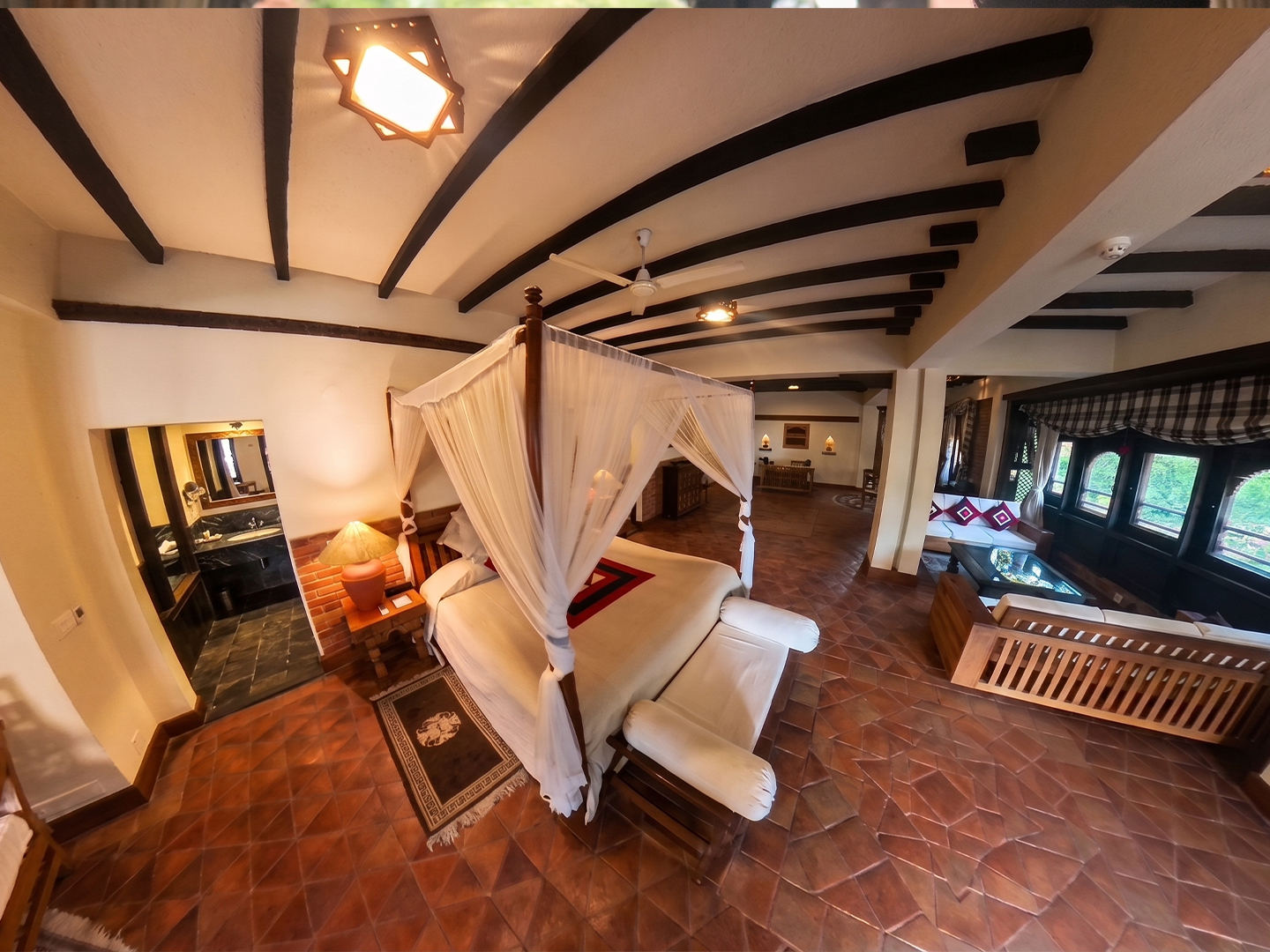
Suite - Elaine Brackin
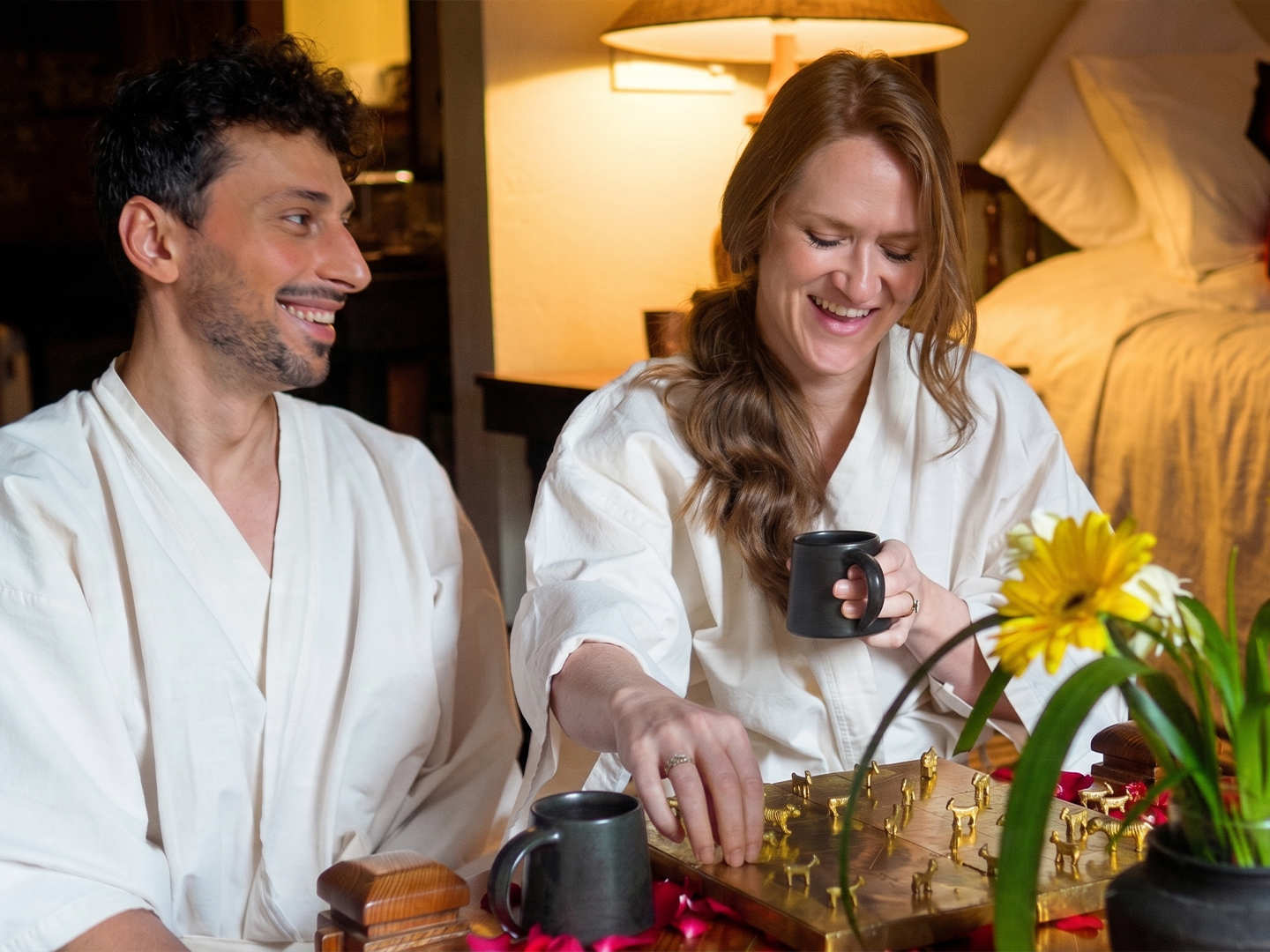
Bagh-Chal traditional goat and lion game
Dining
The property doesn't stop at architecture. Dwarika's runs several restaurants across the property, each with its own character. We didn't make it to Krishnarpan's multi-course Nepalese tasting menu ourselves, though watching it in motion, a slow procession through the country's regions, made it easy to imagine as an evening in its own right for the right traveler. We did eat at Mako's, and its precise, quietly confident Japanese food was one of the best meals of the trip. Toran leans international for anyone who wants a lighter, more casual night. The staff at each carry their restaurant's theme without ever tipping into costume, a quiet consistency rather than a performance.
The Fusion Bar, tucked into what was once the founder's own home and lined with photographs of musicians (Dwarika Das Shrestha played music himself, staff told us, and the room still seems to hold that thread), turned out to be one of our favorite parts of the stay. The bartenders build a few signature cocktails around local ingredients, and they were some of the best drinks we had in Nepal.
Breakfast alone is worth the early wake-up, both made-to-order and buffet, wide enough that you could eat something different every morning, taken either in the courtyard with the birds going about their morning or in a dining room too handsome to rush through.
Rituals & experiences
Small rituals run through the day without ever feeling staged. A prayer wheel sits in the courtyard, the kind you spin on your way past out of habit rather than performance, and each morning the hotel holds a Nitya Puja that guests are welcome to sit in on, whether or not you understand what's being said. There's a complimentary yoga class most mornings, a woodworking demonstration you can watch without charge, a quiet echo of the salvage that built the place to begin with, and depending on the week, a chance to sit in on a painting or pottery lesson, or catch traditional Nepalese dance with masked Lakhey performers in the evening.
The property's own spa, Pancha Kosha, works from Ayurveda and Himalayan herbal traditions rather than a generic treatment menu, with nine private rooms and a dedicated singing bowl therapy room among them. None of it feels like a program. It feels like a place that has always run this way and lets you opt into as much or as little of it as you want.
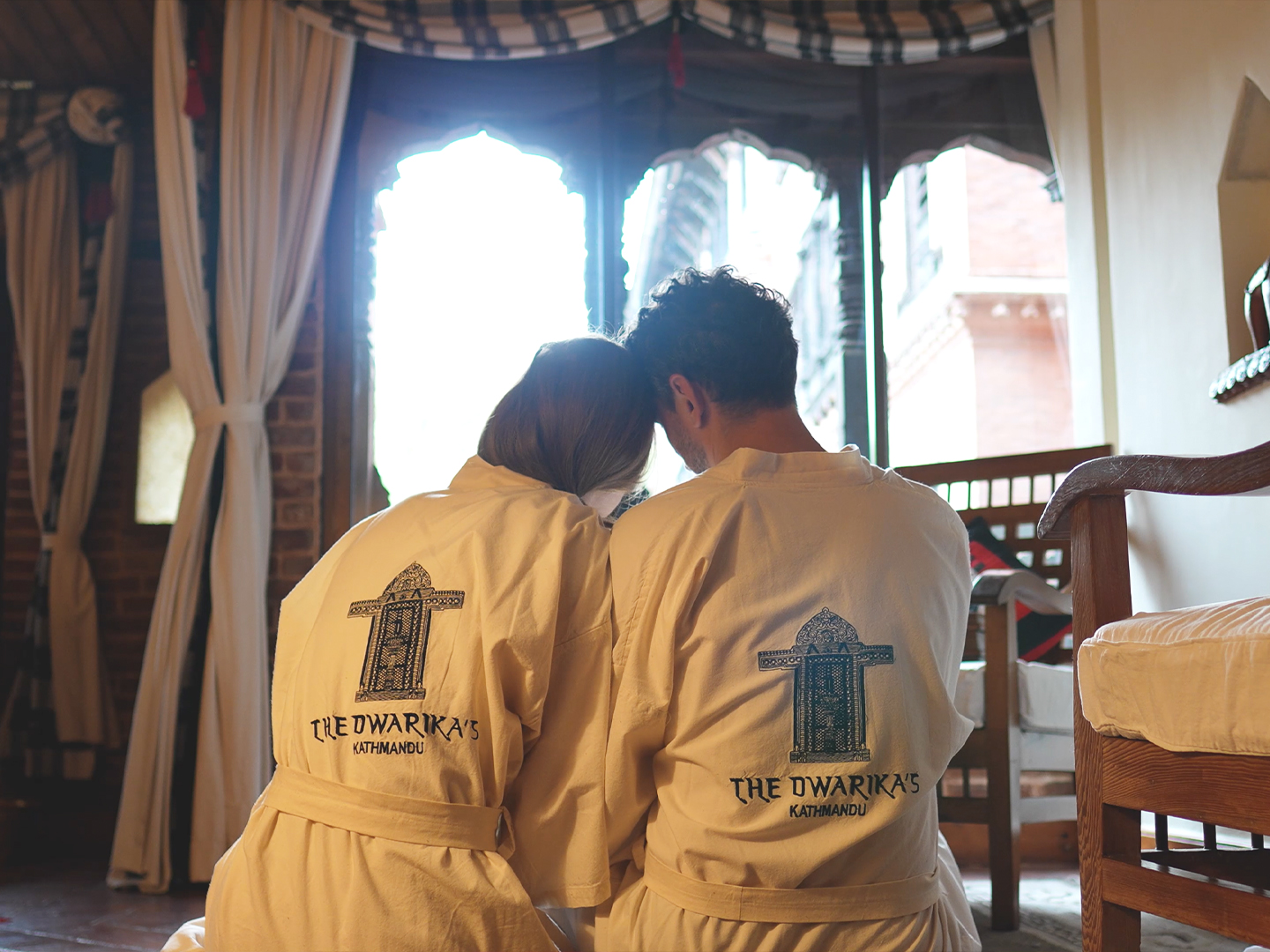
Couple plays board game in Dwarika's robes - Elaine Brackin & Kenan Kasap
Who is this for?
This isn't the property for someone who wants a packed activity board or a scene by the pool. It's for people who don't mind an unstructured afternoon, who'd rather sit in on a stranger's game in the courtyard than fill every hour with something bookable. Couples looking for real quiet will find it here. So will anyone who cares about craftsmanship and history enough to want to stay inside it, rather than just look at it from a lobby placard.
Need to know
Getting there: A short taxi ride from Tribhuvan International Airport. The hotel arranges transfers, or a local rideshare app works fine once you're in the city.
How long to stay: Give it at least three nights. Anything shorter and you'll spend the whole visit adjusting to how slow the place wants you to move.
What to do: Book the Ram Mandir Aarti walk at least a week ahead of arrival, it fills up and isn't a same-day add-on. If there's a card or board game happening in the common areas, sit in. It's an easy way into conversation with other guests. Play Bagh Chal in your room before dinner.
Nearby, worth building into your days
Pashupatinath Temple, one of the holiest Hindu sites in Nepal, is close enough to reach on foot. Boudhanath Stupa, one of the largest Buddhist stupas in the world, is about fifteen minutes away. For contrast, Thamel is where most visitors end up shopping, with restaurants and souvenir shops built for tourists. Asan Bazaar, in the old city center a short distance away, is the version locals actually use: a centuries-old trading market with spices, textiles, copperware, and street food stalls selling sel roti and yomari. Seeing both back to back tells you more about the city than either one alone.
For more inspiration and insider recommendations, visit our Kathmandu page.


Travel Advisor
Elaine Brackin
Elaine Brackin

Get in touch with Elaine Brackin
Did you like this guide? Reach out to customize and book your own experience. Or, just to chat about travel in general.