



Curator’s statement
Flying to San Juan from the U.S. takes a few extra hours, but it saves you days at sea getting to the beautiful islands of the Eastern Caribbean. Each morning, you wake up in a new port, and each island has its own treasures to explore. Beaches galore, but also hiking, and shopping, boating, and more.
The Fora Difference
Book with Ron LeMaster to access exclusive perks and experiences on your trip.

Killer perks
Free upgrades, spa credits and more—we got you

Personalized recs
Customized travel planning for your style

Insider knowledge
Expert advice from people who’ve actually been there
Where to stay
Unlock perks by contacting Ron LeMaster to book your trip.
This seven-day loop out of San Juan is the Caribbean cruise most veterans wish they’d started with—one sea day instead of three, six distinct cultures in a week, and a homeport that feels like a vacation before the ship even sails. Because you begin already deep in the Caribbean rather than two days south of Florida, the itinerary skips the parade of mega-ports (Nassau, Cozumel, St. Thomas) and drops you into the Lesser Antilles: Dutch-French St. Maarten, rainforested Dominica, spice-scented Grenada, rum-soaked Barbados, and the quieter British Virgin Islands via Tortola.
For first-time cruisers on a budget, that density is the gift—every morning you wake up somewhere entirely new, and the ports are small enough that you don’t need a $200 ship excursion to see the best of them. What follows is an advisor’s-eye view of each stop, written for someone who wants to do this well without overspending. A quick flag before we go: Princess’ 7-day San Juan roundtrips typically alternate between two itinerary patterns, and the combination you’ve listed (St. Maarten + Dominica + Grenada + Barbados + Tortola) blends stops from both. Always verify the exact port order on your final cruise documents—it sometimes shifts season to season, and a few ports below have ferry schedules that change by weekday.
Why this route rewards first-timers more than Florida departures
Most people start cruising from Miami or Port Canaveral because flights are cheap and the ships are massive. The trade-off is that nearly half your week is spent at sea getting to and from repeat-visit ports. A San Juan homeport cuts two full sea days off that math and replaces them with islands that still feel like discoveries: Dominica has no jewelry mall, Grenada's cruise pier lets you walk to a 300-year-old fort, and Tortola sees a fraction of the ship traffic St. Thomas does. You’ll also taste genuine cultural range—Dutch guilders on one island, Eastern Caribbean dollars on the next, British driving rules in two of them, French bakeries on a third. That variety is the single best argument for flying to San Juan instead of driving to Florida.
The catch is airfare and a heat-dense port schedule. You’ll be off the ship nearly every day, which is exhilarating but exhausting. Build in pool afternoons on the sea day and the homeport bookends—your body will thank you.
Old San Juan is worth a full day before you sail
Princess docks most Caribbean voyages at the Pan American Piers on Isla Grande, not the Old San Juan piers most tourists picture. That matters: the terminal is a 10-minute, $15–20 taxi ride from the historic district, San Juan, Puerto Rico, with nothing walkable on foot. If San Juan is a mid-cruise stop on your particular sailing, you may dock at Piers 3–4 right in Old San Juan instead—check your boarding documents. Either way, arrive a day early. Flights from the U.S. mainland land at SJU constantly, Puerto Rico requires no passport for Americans, and a pre-cruise night knocks out any weather-delay risk while giving you a proper taste of the island.
Base yourself in Old San Juan itself rather than Condado if you can swing it; the four hundred years of Spanish colonial architecture are the point, and you’ll walk everywhere. Start at Castillo San Felipe del Morro—the iconic honey-stone fortress jutting into the Atlantic—then use the same $10 ticket (good for 24 hours) at Castillo San Cristóbal, the largest fort Spain built in the Americas. Between them, wander the pastel blocks around Plaza de Armas, the blue cobblestones of Calle Fortaleza (the “umbrella street” Instagram made famous), and the Paseo de la Princesa along the old city walls at golden hour. The La Perla neighborhood below El Morro—the “Despacito” barrio—is genuinely worth a visit with a community-led daytime guide, and genuinely worth avoiding at night; use your judgment and don’t go alone.
For food, split your attention between legacy and modern. Deaverdura on Calle Sol is the hole-in-the-wall for real comida criolla—roasted pork, tostones, rice, and beans WanderlogTravel Lemming for about ten dollars. Café Cuatro Sombras pulls farm-to-cup coffee from its own Wanderlog Yauco plantation and makes the best breakfast in the old city. For the obligatory piña colada, you have a choice and it’s actually interesting: Barrachina on Fortaleza claims the 1963 invention (and serves around 2,300 a day, which tells you something), while the Caribe Hilton bar got the official 2004 government nod Frommers for its 1954 version by Ramón Marrero. The Caribe Hilton's is less sweet and more refined; Barrachina is the tourist pilgrimage. La Factoría on Calle San Sebastián—a warren of connected bars behind an unmarked door—is where you go for a modern shaken version and a properly great cocktail night.
Budget tip most first-timers miss: Take the 50-cent ferry from Pier 2 across to Cataño for a Bacardí distillery visit—it’s six minutes each way and still the best-value excursion in the city. Plan roughly a full day for Old San Juan if you want to see the forts properly, eat well, and still have energy for embarkation. Half a day works if you’re tight, but you’ll regret the rush.
St. Maarten: Two countries, plane-spotting, and a $7 wristband that saves your wallet
Ships dock at the A.C. Wathey Pier in Philipsburg, about a mile from Front Street. The single most useful thing to know about this port is the water taxi wristband: $7 for unlimited all-day rides cruising between the pier, Captain Hodge Pier, and Walter Plantz Square. That wristband, or the free 20-minute walk along the harbor, makes the $10-per-person taxi into town completely unnecessary.
The signature St. Maarten experience is Maho Beach, where Boeing 737s and the occasional KLM 747 land so close to the sand that their jet wash kicks up beach umbrellas. Sunset Bar & Grill posts a chalkboard of the day’s arrivals—time your beer to the widebodies. Get there via the local minibus from Emmaplein ($2 per person, about 30 minutes), not a $25 taxi. Plan two to three hours to make it worthwhile. On a longer port day, Loterie Farm on the French side offers a real rainforest zipline course and hiking trails on the grounds of a 1721 Frommers sugar plantation at the base of Pic Paradis Frommers—the Fly Zone is about $40, the Extreme course closer to $80, and the on-site Jungle Room restaurant Loterie Farm is surprisingly good. Taxi there runs $40–50 each way, so this is a half-day commitment.
For food, Lee’s Roadside Grill in the Pelican area is the local pick—family-run since the ‘90s, famous for whole grilled red snapper, conch chowder, and Caribbean lobster at fair prices, with a stop right on the Philipsburg-to-Maho minibus line. In town itself, the Guavaberry Emporium on Front Street is both a free-tasting distillery and a history lesson: guavaberry liqueur is the island’s national drink, the Guavaberry Colada was invented here in 1973. Taste your way through about twenty rums for nothing.
Insider tip: The jewelry touts at the cruise terminal and along Front Street run the same scripted “free gift” pitches every port city does—Diamonds International’s cruise-ship prices are not better than anywhere else. Walk past them, grab the water taxi wristband, and spend the money on a boat day or a good lunch instead. You’ll need six to eight hours to do St. Maarten well. A tighter half-day works if you commit to Philipsburg Beach plus a single add (Maho or Guavaberry).
Dominica: The most different island you’ll visit all week
Dominica surprises almost every first-time cruiser. There’s no duty-free mall, no pristine white beach, no resort strip. What there is: a rainforest-covered volcanic island with nine active volcanoes, UNESCO-protected national parks, and some of the cleanest water you’ll swim in. All cruise. Ships dock either at the Roseau Cruise Ship Berth right in town or occasionally at Woodbridge Bay (a five-minute drive out). The vibe is small, real, and a bit rough around the edges—which is precisely the point.
The most efficient port-day combination is Trafalgar Falls plus Emerald Pool. Trafalgar is a pair of waterfalls Cruise Critic about 25 minutes from town—the larger “Mama” is fed by natural hot springs, and you can soak in the pool at its base. Emerald Pool, forty minutes further in Morne Trois Pitons National Park, is a flat, easy 15-minute loop through rainforest to a small waterfall dropping into a green swimming pool. Both charge a $5 site fee, or you can buy a $12 weekly multi-site pass. For something more cinematic, Titou Gorge—the narrow volcanic slot canyon where Jack Sparrow swam in Pirates of the Caribbean 2—lets you swim between towering rock walls to a hidden waterfall. Cold, short, unforgettable; pair it with the Wotten Waven sulphur springs 20 minutes away.
Resist the temptation of the Boiling Lake hike—it’s an eight-hour round trip and you will miss your ship.
For food, walk into the Fort Young Hotel and eat at Palisades, the only oceanside restaurant in Roseau, built into a 17th-century fort. Get the callaloo soup or the lionfish, and have a Kubuli beer—the local lager in a green bottle whose slogan is literally “The Beer We Drink.” That’s the authentic pairing.
Insider tip that saves real money: The certified taxi drivers waiting at the pier (look for license plates starting with H, HA, or HB) will quote you $80–120 for a half-day group tour. Walk one block inland and that same tour drops to $40–60 per person for a group of three or four. Negotiate for a specific itinerary—two sites plus transport—and confirm whether site fees are included. Bring waterproof shoes, not flip-flops; small bills in USD; a dry bag; and accept that you will probably get rained on. It’s a rainforest. Plan the full port day for Dominica—nothing about this island happens fast.
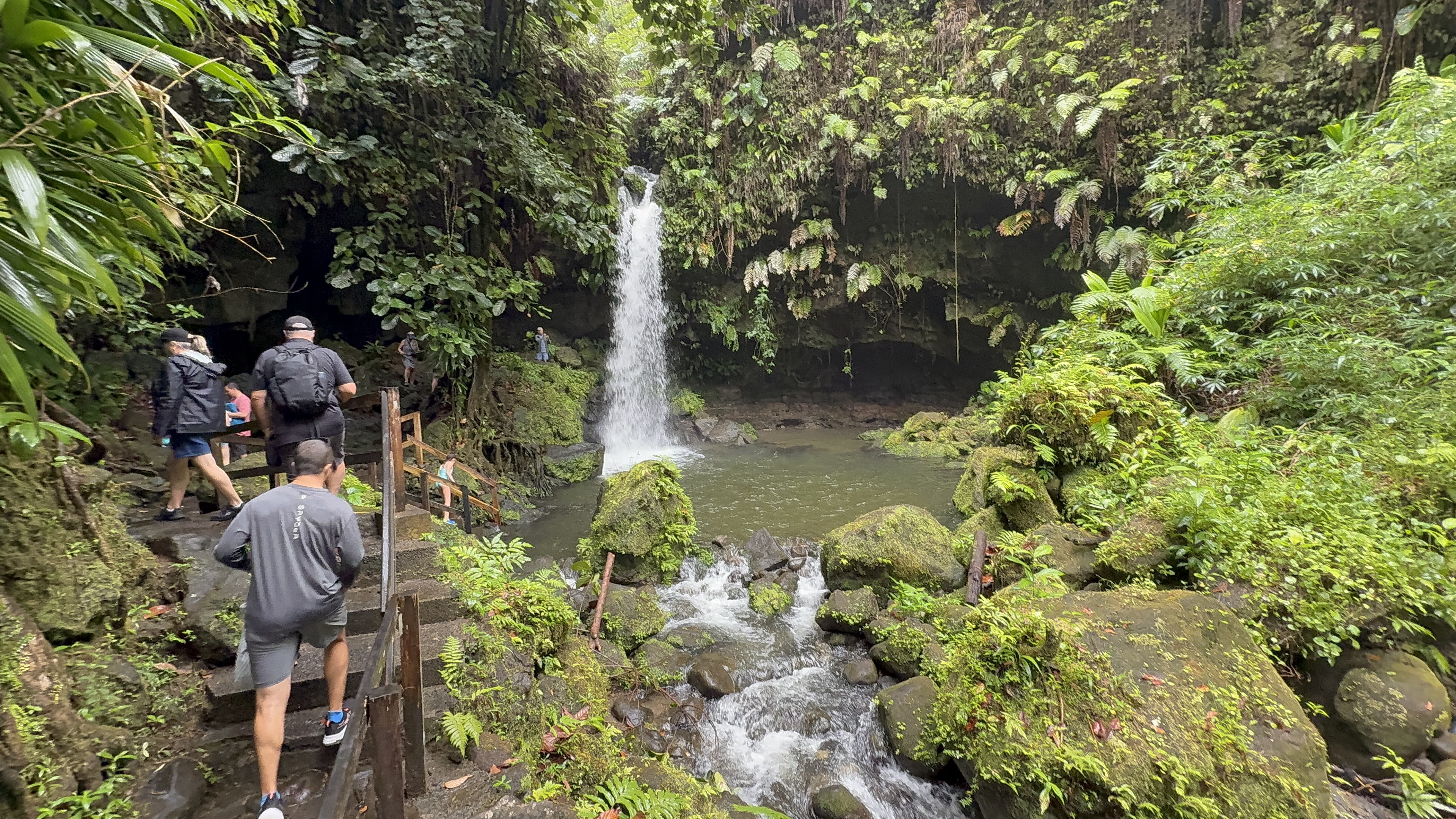
Emerald Pool on Dominica / Ron LeMaster
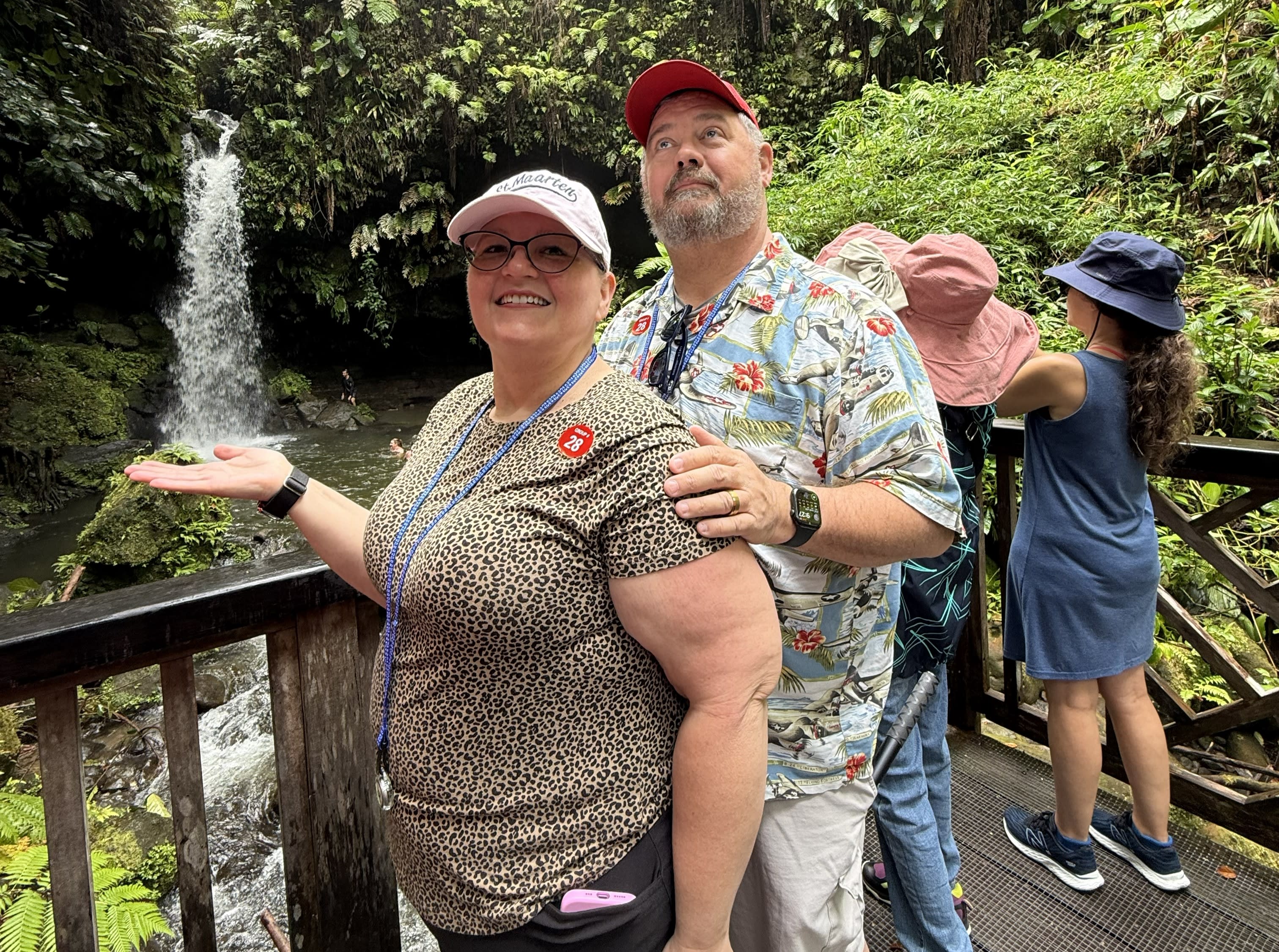
Emerald Pool / Ron LeMaster
Grenada: The most walkable port and the best spice market in the Caribbean
St. George’s is arguably the prettiest cruise harbor in the region: red-roofed Georgian buildings climbing green hills around a horseshoe bay, with a French-built fort on top. The Melville Street Cruise Terminal drops you steps from downtown, which makes Grenada the easiest day to DIY. You can have a full, memorable port day here for under $30 per person.
Start with a free walking loop: Up to Fort George (a steep but short climb, panoramic views over the Carenage harbor, and the somber site where Prime Minister Maurice Bishop was executed in 1983), down through Market Square for the spice vendors, and back along the Carenage promenade. This is where you buy nutmeg, mace, cinnamon bark, cocoa balls, and fresh vanilla—prices are fixed, no haggling needed, and everything is a fraction of what you’d pay at the cruise-port shops. Grenada produces roughly twenty percent of the world’s nutmeg; this is the source. Finish at the House of Chocolate on Young Street for artisan Grenadian chocolate and the nutmeg ice cream you didn’t know you needed.
For the afternoon, skip the land taxi to Grand Anse Beach and take the water taxi from the pier: $10 round trip, 10–15 minutes, and you’ll get the best photo of your ship from the water on the way. Grand Anse itself lives up to the “best beach” lists—two miles of powdery Diycruiseports sand, calm reef-protected water, chair rentals around $20 at Umbrellas Beach Bar. If you want a singular experience, book a snorkel trip to the Underwater Sculpture Park at Molinere Bay—the world’s first, with more than 75 sculptures now covered in coral and swimming with turtles. Sandals called it one of the 25 Wonders of the World. Snorkel tours from Grand Anse run $50–70 per person.
For food, Patrick’s Local Homestyle Cooking near Port Louis Marina serves tapas-style Grenadian plates—oil down (the breadfruit, callaloo, and salt meat national dish), lambie conch, curried mutton—that you order to share across the table. BB's Crabback on the waterfront, run by Grenadian chef Brian Benjamin, makes the eponymous crabback (baked crab, cheese, and wine in the shell) plus goat curry with coconut shavings.
Insider tip: Buy your spices at Market Square, not at the cruise port. Same nutmeg, half the price, and you’re supporting farmers directly—a small bag of whole nutmeg runs $3–5. Also: every good rum punch in Grenada gets freshly grated nutmeg on top. Accept no substitutes. You need four to six hours here, and you can genuinely do this port well for $30.
Barbados: The easiest DIY day and the best cheap lunch in the Caribbean
Barbados is the outlier on this route: coral and limestone rather than volcanic, the easternmost Caribbean island, and far and away the most developed tourism infrastructure of the southern ports. That makes it the simplest day to plan yourself. The cruise terminal is about a mile from downtown Bridgetown, connected by a flat boardwalk you can walk in fifteen to twenty minutes—don’t pay for the port shuttle.
The signature Barbados experience is a Carlisle Bay catamaran cruise, and it’s worth the money. The bay is a protected marine park with six shipwrecks and resident hawksbill and green turtles. Cool Runnings is the family-owned operator everyone recommends—$100 for a five-hour lunch sail with two snorkel stops, unlimited drinks, and a buffet that includes their famous banana bread. Tiami is the more polished alternative; El Tigre is the budget pick around $85. Booking directly online saves roughly a third over the Princess shore excursion. The pure-budget move is to walk or taxi ($5) to Pebbles Beach, rent snorkel gear for $15, and swim to the Berwyn wreck yourself—turtles often come right to the shore.
For landlubbers, Harrison’s Cave is the signature inland attraction: a tram tour through a 2.3-kilometer limestone cavern with 50-foot ceilings and emerald pools. The Signature Park Pass runs about $57; U.S. News & World Report book your tram timeslot before you arrive (reviewers who didn’t report 90-minute waits). If rum is your priority, go to the Mount Gay Visitor Centre at Spring Garden—ten minutes from the pier, not the actual distillery 45 minutes north. The $27.50 Signature Tasting Tour covers four rums from the world’s oldest continuously operating rum brand, established 1703.
Here is the Barbados recommendation I’d stake a reputation on: Cuz's Fish Shack on Pebbles Beach. A blue shack in a parking lot just south of the Radisson, family-run for nearly a century, serves what locals call the legendary Bajan fish cutter—fried marlin on salt bread with cheese, a fried egg, and house pepper sauce for about $5. Open Monday to Friday until the fish runs out, cash only, line by 11. Get a double with cheese and a Banks beer from the shack next door. That sandwich is the single best $6 you’ll spend all week. For a proper sit-down, Lobster Alive on Carlisle Bay flies in live spiny lobsters from Bequia twice weekly and has a live jazz lunch Sundays—casual enough for bare feet, special enough for a memory.
Insider tip: Take the ZR vans like a Bajan—white minivans with maroon stripes, Barbados license plates starting "ZR," $3.50 (about U.S.$1.75) to go anywhere on the island. Route #11 serves Carlisle Bay directly. Bring exact change in small Barbadian bills, and remember that Barbados drives on the left—locals and long-time Caribbean travelers both forget this stepping off curbs. The currency is pegged 2-to-1 to USD, but a handful of stalls quote the same number in USD, so always confirm which currency you’re paying in or you’ll hand over double. Full port day, seven to eight hours, is ideal.
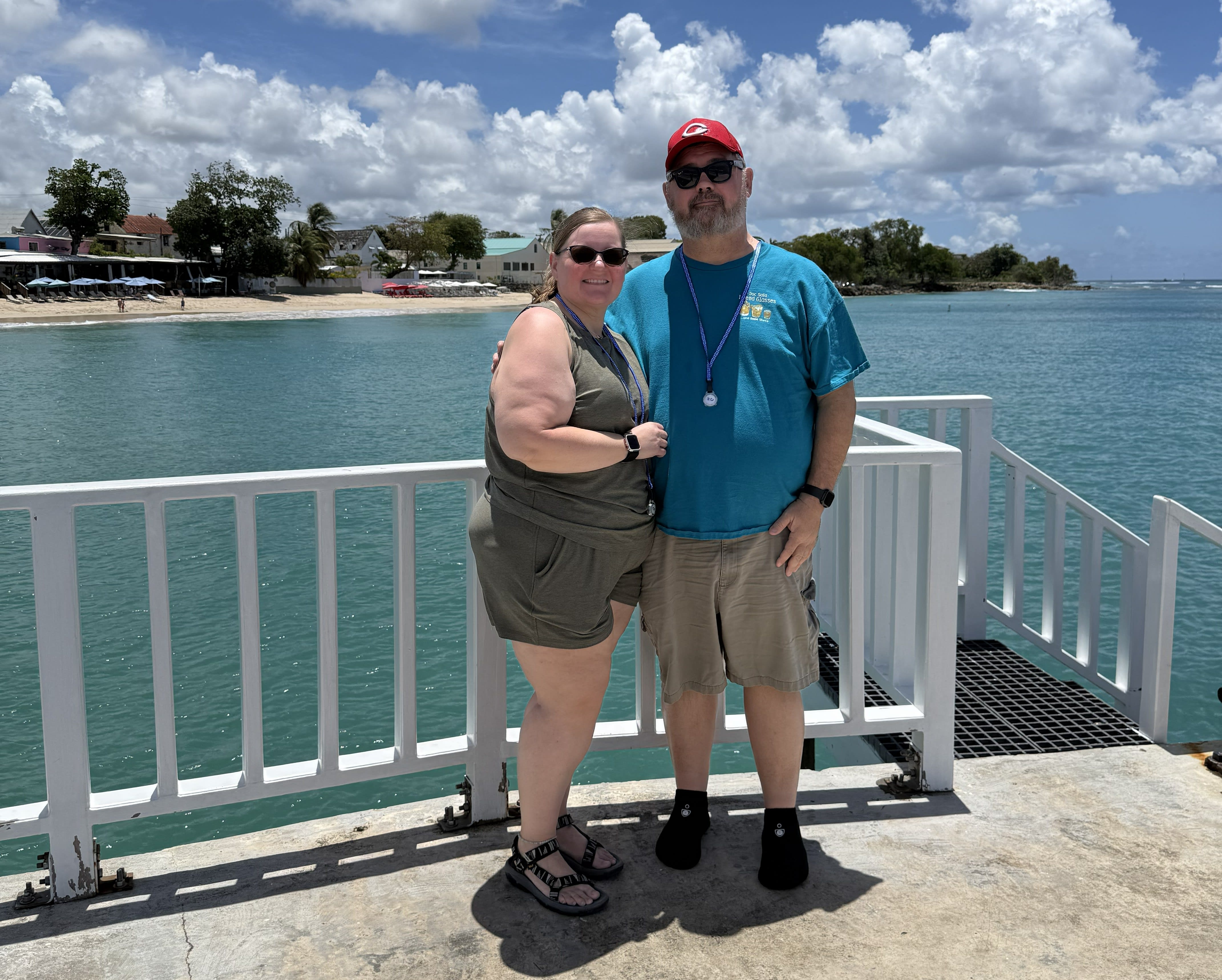
Speigthtown, Barbados / Ron LeMaster
Tortola: The quiet island and The Baths
Tortola is the least-visited port on your itinerary and the most underrated. Ships dock at Tortola Pier Park, a modern 2015 complex with free Wi-Fi, ATMs, and even an onsite doctor, five minutes from downtown Road Town. The island was hit hard by Hurricane Irma in 2017 but tourism has now fully recovered—the 2024–2025 season set a new arrivals record—and the vibe here is deliberately lower-key than St. Thomas. Much quieter, more authentic, and cash matters more: many taxis, beach bars, and the Callwood distillery don’t take cards. Hit an ATM at Pier Park on your way out.
The headline experience is The Baths on Virgin Gorda—truck-sized granite boulders forming sea caves, tidal pools, and narrow passages you scramble and wade through. It's unlike anything else in the Caribbean. Speedy’s Ferry from Road Town runs 30–40 minutes each way and doesn’t operate on Sundays (critical—if your port day is Sunday, you’ll need a different plan entirely). The cleanest version for cruisers is Speedy’s Baths Experience Package at $69: round-trip ferry, taxi to the park, and lunch at Top of the Baths. Bring water shoes and $3 cash for the site fee. Build a two-hour buffer before all-aboard and take the earliest possible ferry out—missing Speedy’s 3:30 p.m. return is how people miss ships.
If The Baths feels like too much logistics, the easy alternative is Cane Garden Bay—a 15-minute, $12 “safari bus” ride over a gloriously steep mountain road to a crescent beach with calm water, and, directly across the road, Callwood Rum Distillery. Callwood is the last working distillery of 106 that once operated in the BVI—four generations of one family still making Arundel Cane Rum from cane grown behind the stone building. The tour is $5, cash only, and takes ten minutes. The distillery-plus-beach combination is the perfect half-day.
For food and drink, Pusser’s Road Town Pub—a 10-minute walk from the pier—is where you order the original Painkiller (Pusser’s dark rum, cream of coconut, pineapple, orange juice, grated Grenadian nutmeg). The cocktail was invented at the Soggy Dollar Bar on Jost Van Dyke, but Jost is a ferry-plus-ferry day trip you can’t really do well from the ship; Pusser’s Road Town serves the same drink with fish and chips, shepherd’s pie, and conch fritters in a 1979 pub full of Royal Navy memorabilia. If you do have a long port day and want adventure, book a catamaran charter direct from Road Town to Jost Van Dyke—it's the practical way to hit Soggy Dollar, Foxy's, and Sandy Spit without fighting ferry schedules.
Insider tip: Tortola is where cash is king and ferry schedules are law. Pull $100–150 at the pier, confirm same-day ferry times at the Speedy’s counter the moment you disembark, and never try to time the last ferry back—take the one before. Plan a full port day, seven to nine hours, especially if you’re going to Virgin Gorda.
Princess-specific tips that change the math
A few things specific to Princess that budget-minded first-timers don’t always hear upfront. The Princess Plus package runs $65 per person per day and covers drinks up to $15 each with a 15-alcoholic-drink daily cap), one-device Wi-Fi, crew gratuities, and four casual-dining meals per voyage. For most seven-night cruisers who drink moderately, Plus is the sweet spot—the math works out favorably once you factor in the $18/day gratuities alone. Premier at $100 per person per day is worth it only if you plan four or more specialty-dining nights (Crown Grill, Sabatini's, The Catch), want multi-device Wi-Fi, and will actually use the new $100 shore-excursion credit it includes. Otherwise Plus plus à la carte specialty is more economical.
The Medallion—Princess’ wearable disc that replaces your keycard—is genuinely useful; do the steps in the app before you sail to skip the green-lane line at Pan American Pier. Order food and drinks to any deck chair via the app (the $14.95 fee is waived on Plus and Premier). Sabatini’s porcini risotto and Crown Grill are the two specialty rooms worth the cover charge if you’re going to splurge once.
On-shore excursions: Princess’ tours are rarely the best value on these ports. Grenada, Barbados, and St. Maarten are easy DIY with the tips above; Dominica rewards a negotiated local taxi; Tortola’s Baths run cheaper through Speedy’s direct; and a Carlisle Bay catamaran booked with Cool Runnings directly saves 30–40% over the Princess version. The cases where a ship excursion is worth the premium are when you’re anxious about being back on time, when weather is iffy, or when the tour requires remote logistics (Harrison’s Cave with transport is a reasonable Princess booking). Ship excursions also come with a return guarantee—if the tour runs late, the ship waits. That peace of mind is real and sometimes worth the markup.
Need to know
What you actually take home from this week:
The reason this itinerary keeps turning first-time cruisers into repeat cruisers is that it rewards curiosity in a way the Florida-departure routes simply don’t. You’ll eat a $5 fried-marlin sandwich on a Barbados beach, buy nutmeg from the woman who grew it in Grenada, watch a 747 land over your head in St. Maarten, swim through a rainforest gorge in Dominica, and climb through boulders that feel invented for a fantasy novel on Virgin Gorda.
That’s five genuinely different Caribbeans in six days—cultural, volcanic, colonial, British, Dutch, French—and you get them without burning three sea days to reach them. Pack water shoes, a dry bag, small USD bills in denominations of ones and fives, and a slightly loose schedule. The insider move on every one of these islands is to walk past the port-side touts and find the locally owned version of what the cruise line sold you for double. That’s the trip.
For more inspiration and insider recommendations, visit our cruises page.


Travel Advisor
Ron LeMaster
Ron LeMaster

Get in touch with Ron LeMaster
Did you like this guide? Reach out to customize and book your own experience. Or, just to chat about travel in general.