



Curator’s statement
Safaris are my favorite kind of travel, and this week-long adventure at the end of 2025 was my fifth (my second in Tanzania). Tanzania is home to the Serengeti, which is what many people picture when imagining what it looks like to go on an African safari, with sweeping plains, the Great Migration, and a huge population of lions and other big cats (my favorite). It’s one of the best places for a first safari—or a hundredth!
The Fora Difference
Book with Regan Kirk to access exclusive perks and experiences on your trip.

Killer perks
Free upgrades, spa credits and more—we got you

Personalized recs
Customized travel planning for your style

Insider knowledge
Expert advice from people who’ve actually been there
Where to stay
Unlock perks by contacting Regan Kirk to book your trip.
This wonderful adventure began terribly: a blizzard in New York caused us to miss our connection, lose a day of the trip, and be without our luggage for the first four days we were in Africa! Still, our excitement carried us through buying shorts and toothpaste at the tiny airport store in Arusha. We began our safari by flying into Seronera Airport in central Serengeti, where we were met by our fabulous guide, Said (pronounced Sah-eed). He would be shepherding us throughout our stay in Tanzania. He led us to his lovingly maintained converted Land Cruiser (the standard safari vehicle in Tanzania), which had charging ports, wi-fi, a built-in cooler, and a roof that could pop up to allow us to stand and see without a window in the way.
Our original plan was to spend two nights in central Serengeti and four nights in the south. All of our lodges for this trip were part of the Lemala family, a strong mid-luxury option. However, Said informed us that the migration was late to head south this year due to delayed rains and suggested changing the distribution of our nights if possible. A short while later, his company, Mauly Tours, came back and confirmed: we would now spend four nights in central Serengeti and two in Ndutu. This turned out to be a fantastic change!
Central Serengeti is known for big cats, especially huge prides of lions. That first day, Said took us to Lemala Ewanjan, where we were warmly greeted by the staff and shown to our tent. (Don’t be put off by the word “tent”; this is a huge room with adjacent bathroom, dresser, solid floors with thick carpet, and running water, wi-fi, and electricity.) By the end of four days of full-day game drives (with picnic lunches packed by the camp), we’d counted over 100 lions. We’d seen a leopard with two small, playful cubs and a different leopard with a larger cub and a kill up a tree. We’d seen five cheetahs, including a mother with two nearly grown “cubs”—one of whom brought down a gazelle while we were busy watching the mom!
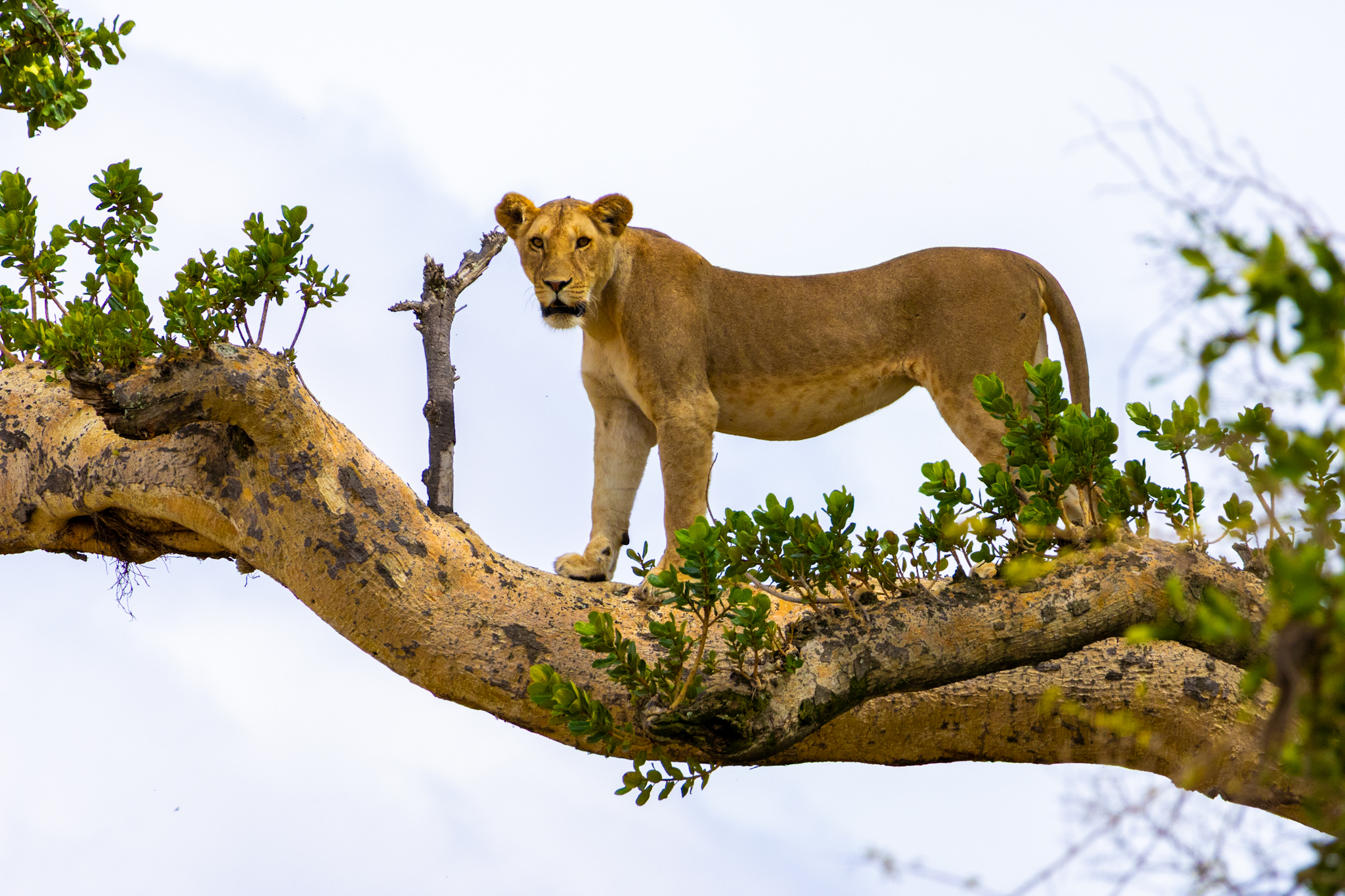
A tree-climbing lion--this isn't typical in most parts of Africa, but fairly common in the Serengeti
We also had wonderful sightings of elephants, including one baby joyfully splashing through the mud just like a human child. Cape buffalo, another of the Big Five, were in plentiful supply—including one that had been killed by a small pride of lions. Although the migration was still mostly to the north, we saw pieces of it in the form of herds of wildebeest marching south with grim determination.
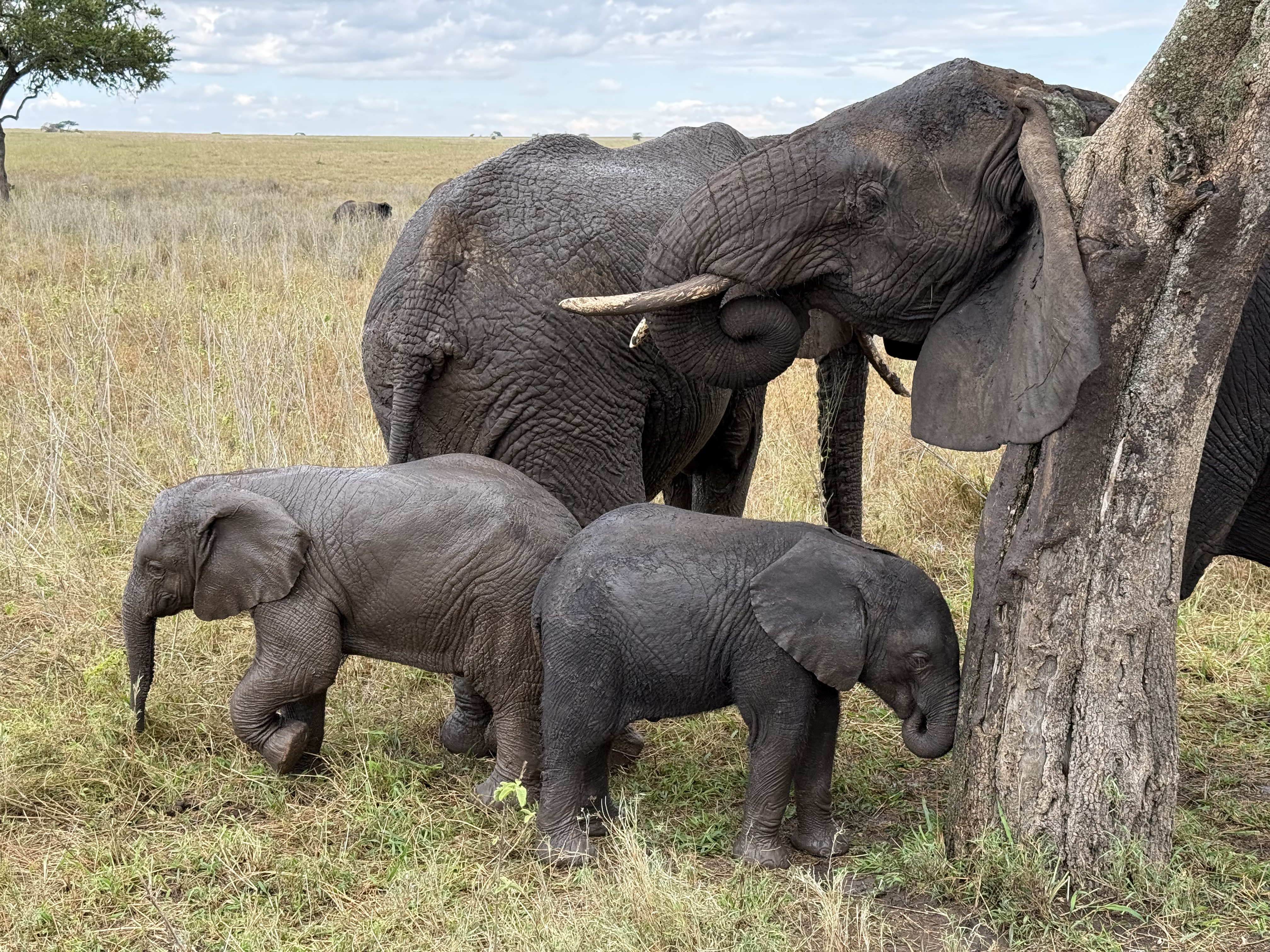
A charming elephant family
Lemala Ewanjan made for a wonderful home base, with caring and attentive staff, quick laundry service (a necessity when one has no luggage), and a limited but good menu each morning and evening. There were only about six guests present most of the time, so the camp was less than half full, making it feel even more intimate than usual. To our delight, on the third day there, we received word that our bags had magically found us out in the middle of the Serengeti and we rushed to Seronera Airport for a joyful reunion.
After our time in central Serengeti, we drove south to the Ndutu region, where we would be staying at Lemala Ndutu, a camp that follows the migration. Despite being a mobile camp, there wasn’t a huge difference in quality or design between this one and Ewanjan; there was still running water, flush toilets, and comfortable tents. As Said had predicted, the wildlife was more sparse here; the migration would arrive in the coming weeks, at which time calving season would begin and babies would start appearing everywhere.
However, Ndutu was well worth the visit for one specific experience. That first day, we saw a leopard taking a snooze in a tree. And then we heard over the radio: Quince, the famous cheetah who currently had five cubs about eight weeks old—an unusually large litter—had been spotted! We hurried over and felt our hearts melt immediately at the sight of those five mischievous fluffballs and their attentive, patient mother. I couldn’t believe it when one of the cubs leapt onto the back tire, right below my window. Other vehicles came, and went, but we stayed for over an hour watching the cubs’ antics as they practiced hunting each other and then clumsily climbed partway up a tree.
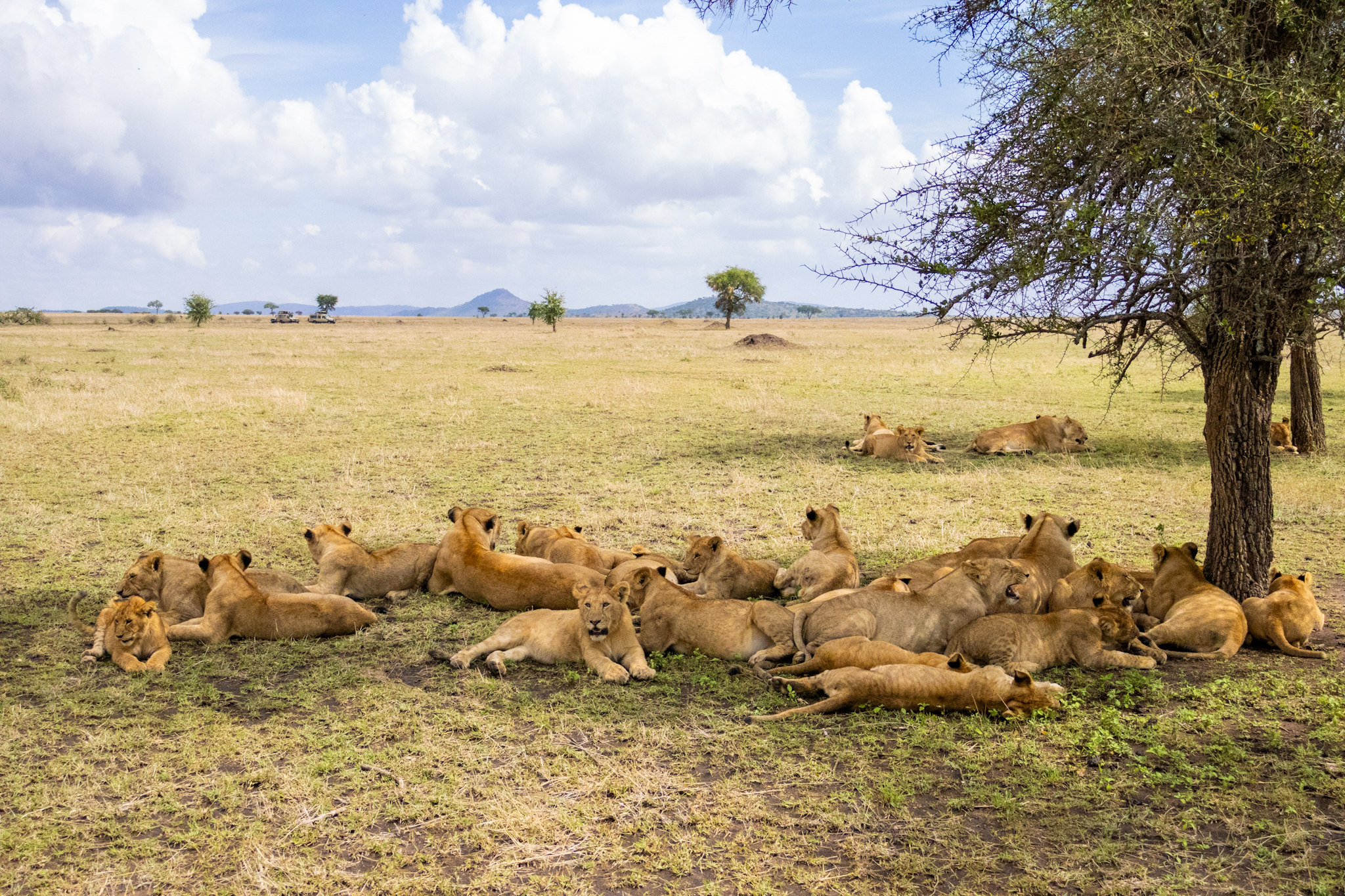
A giant pride of lions in the central Serengeti--we counted over 20, with three different kills nearby.
The next morning, we went back to the same area and Said used his impressive intuition to find the cheetahs again. We were the only vehicle with them for a long time, watching in delight as Quince carefully shepherded her cubs along. And then—she caught wind of nearby prey! She left her cubs to chase a gazelle, bringing it down with apparent ease in a chase that lasted all of ten seconds.
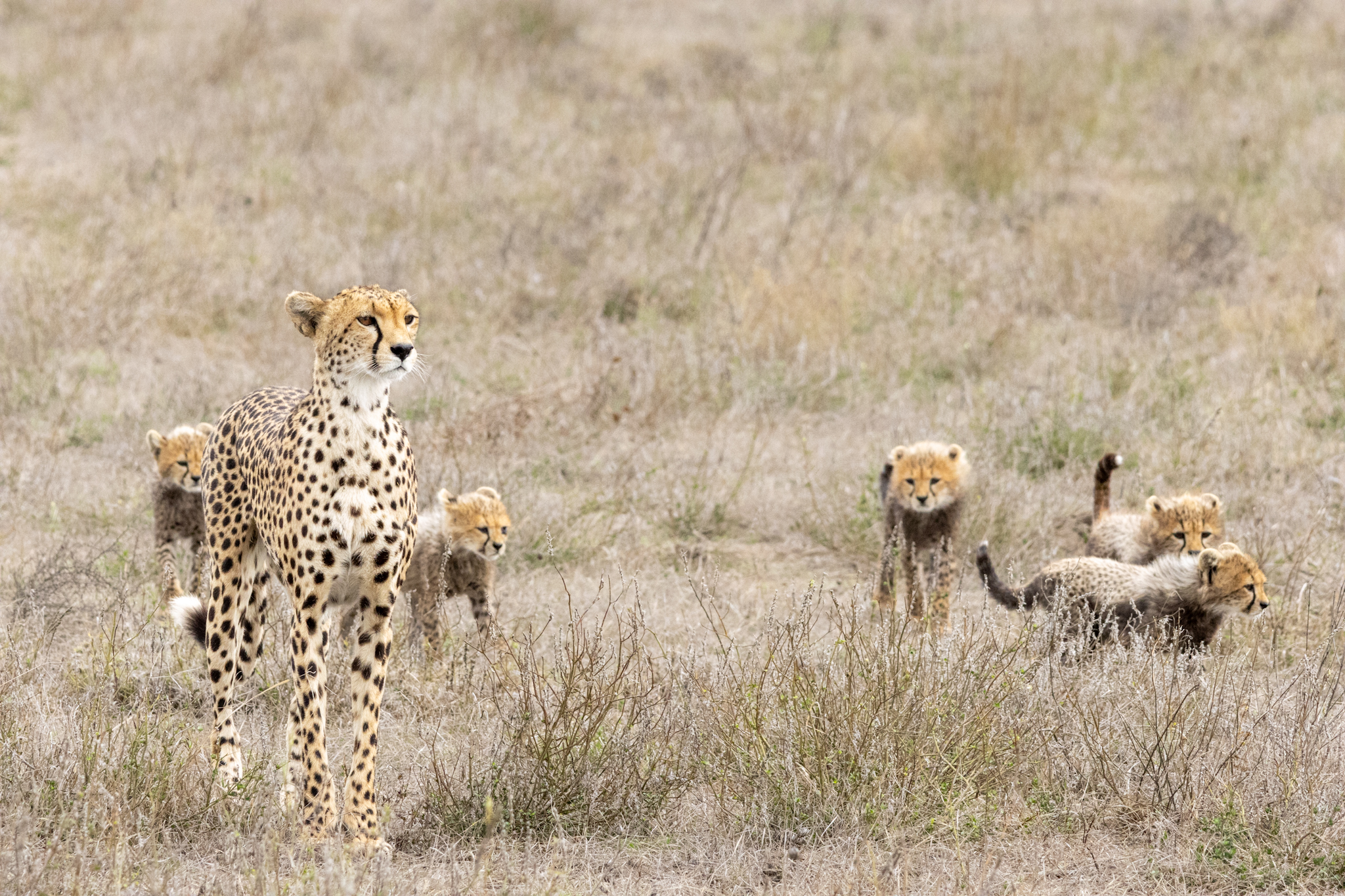
Quince the cheetah and her five adorable cubs
When we reluctantly tore ourselves away to leave the cheetahs in peace, we began the long drive to the Ngorongoro Crater, the final leg of our Tanzania trip (we’d head to Rwanda and then Uganda afterwards for gorilla trekking, but that’s a different trip report). The crater is a fascinating place: a large bowl that functions as its own microcosm of the great plains of Tanzania, and home to normally migratory animals like wildebeest and zebras who live there year-round. This is also the best place to see rhinos in Tanzania and complete one’s Big Five search, although in my three visits to the crater they have always been extremely far away (as in, “See that dark blob? That’s a rhino!”). We did an afternoon drive in the crater and another in the morning, seeing many hyenas, elephants, flamingos, buffalo, and more. There were a couple of notable highlights: driving past a leopard on the ground as we were descending into the crater (where leopards are extremely rare); glimpsing a leopard in a tree elsewhere (very well-concealed); and the most surprising sighting we’ve ever had:
We were driving along and saw a small group of zebras, including a baby, frolicking in a small pond. We stopped to take pictures and then a quick video. As we were watching the zebras, Said suddenly shouted, “There’s a lion!” To our shock, a solitary female crouched in the grass, astonishingly well-concealed. In a split second, she leapt into motion, going after the baby. She gave herself away too early, though—the zebras burst into motion and managed to outrun her. Seeing a hunt is always a special experience, but coming upon one by surprise—and failing to spot the lioness, just as the zebras did—was incredible. Reviewing my camera later, I couldn’t believe I’d taken multiple pictures that clearly showed the lion hidden in the brush (and a video that caught the whole chase).
With that excitement, our safari in Tanzania came to an end. It had been an incredible week and I’d taken over four thousand pictures and videos, which I greatly enjoy reviewing and editing, reliving all of my favorite moments. We headed to Arusha for an overnight at a hotel before our flight the next day to Rwanda for the start of our mountain gorilla adventure.
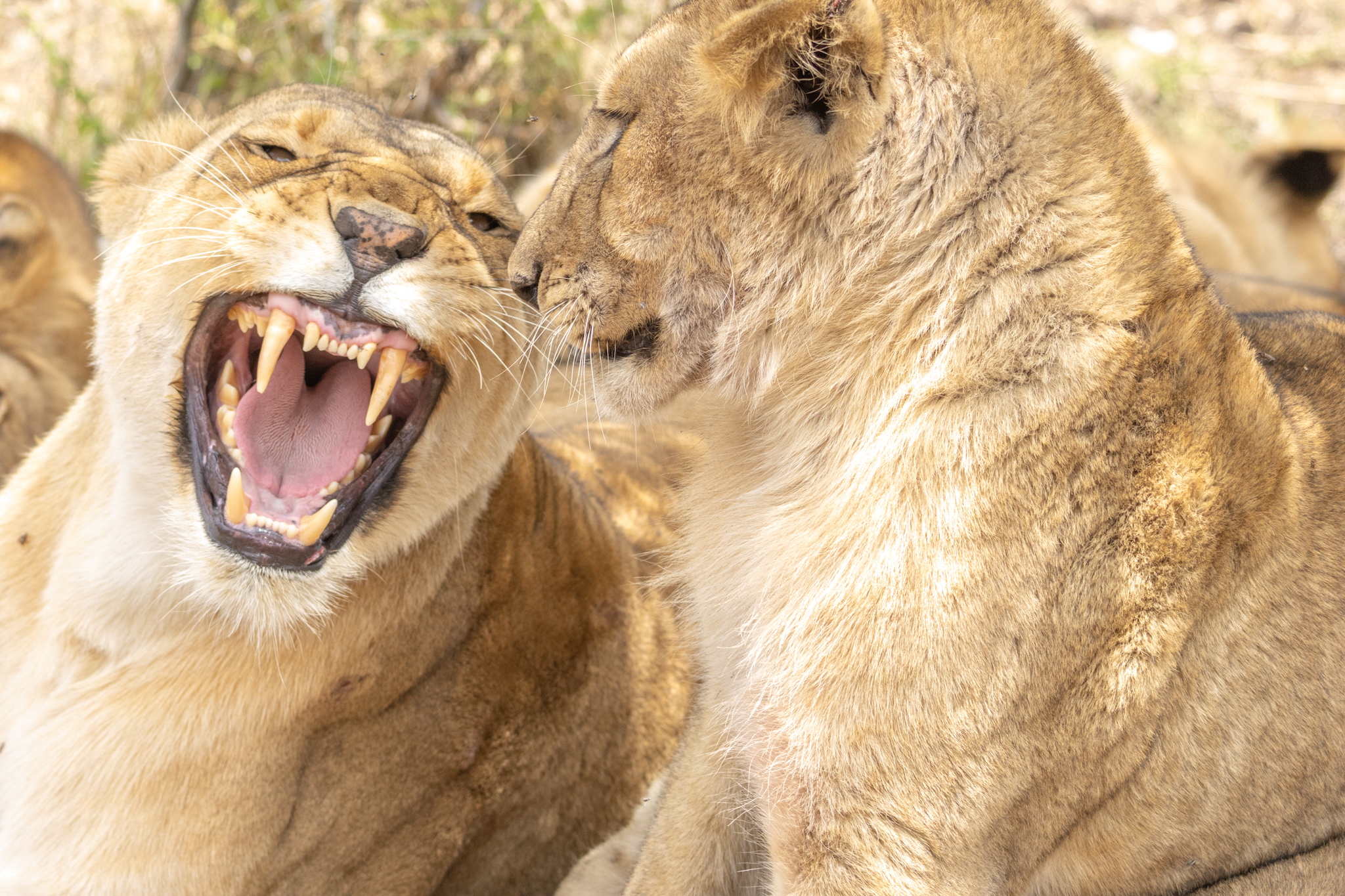
A mother lion expresses her annoyance at her cub
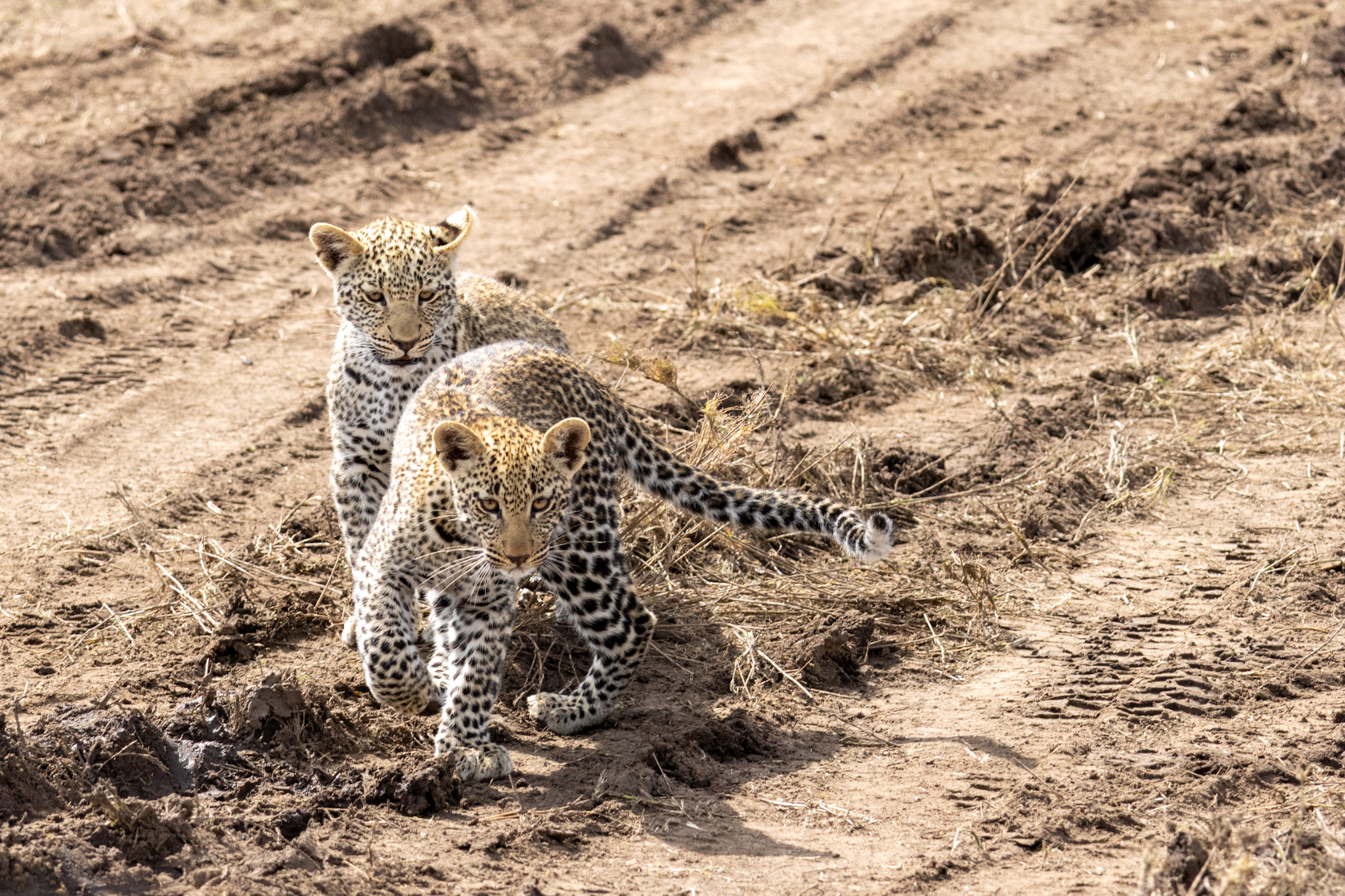
A pair of curious and playful leopard cubs
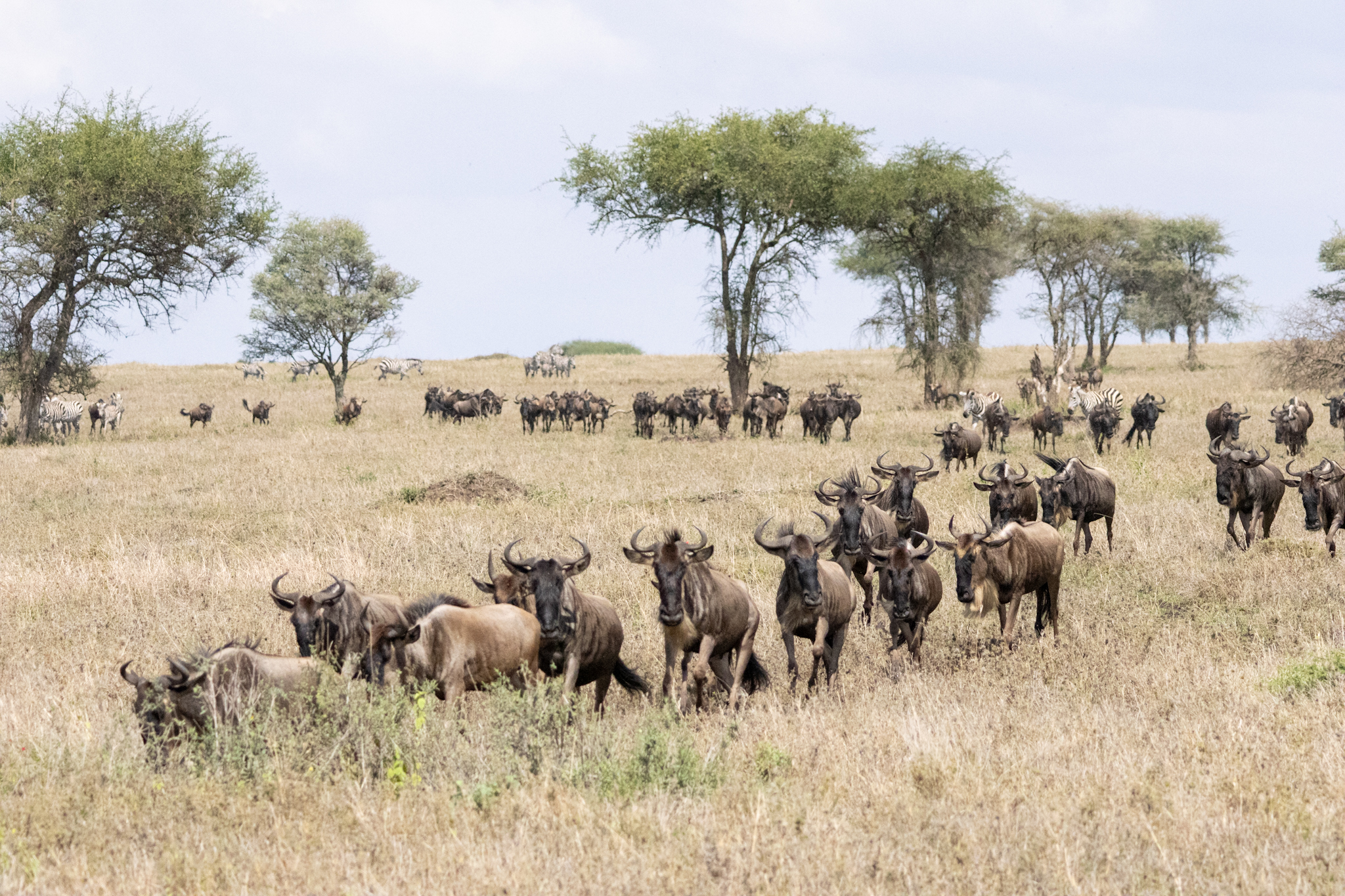
A tiny piece of the Great Migration
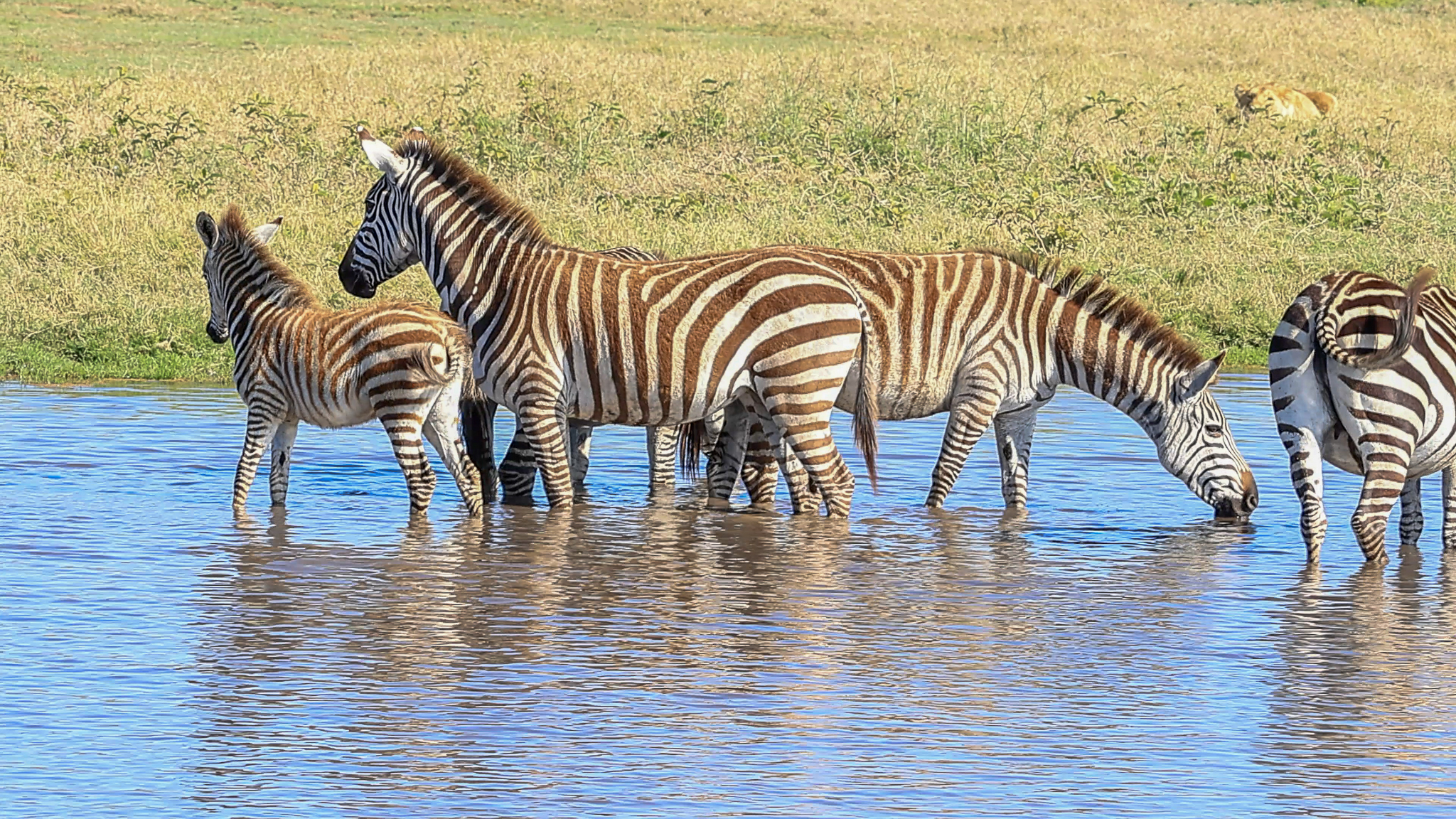
Look closely—we stopped for a picture of the zebras and then noticed something in the grass, just before she sprang into motion!
Need to know
If you are flying to/from the Serengeti or any other parks (and you should, if you can, to reduce driving time), there will be strict limits on the weight of your luggage. Use a soft-sided duffle bag that squishes and pack less than you think you need; most camps offer overnight laundry service.
A good guide is worth their weight in gold. They have to have so many skills: safe driving, animal spotting/tracking, and an encyclopedic knowledge of flora and fauna.
Avoid wearing black or dark blue; these colors are more attractive to tsetse flies.
Wear layers; it’s often chilly in the morning and very hot during the day.
Some sightings will be very close, such that a good phone camera might be all you need. For distant sightings, like the rhino, you’ll want a camera with zoom if you’re going to try to capture them. I’ve had good luck with a 100–400mm lens on my DSLR and a 40x or 65x zoom on my digital camera.
Pack a neck gaiter; I love my Buff!
Depending on which company you travel with, many now have very nice Land Cruisers that include USB charging ports, wi-fi, and a built-in cooler. I recommend working with an experienced travel advisor who can help identify the right on-the-ground company.
If the migration is present, a hot air balloon ride is well worth the expense.
In most other countries where we’ve been on safari, the game drives are usually broken into separate morning and afternoon outings, with a lunch break back at the lodge in the middle. In Tanzania, it typically makes sense to do full-day drives instead because there’s so much ground to cover. The Serengeti is huge!
If you like a subtle cream liqueur, try Amarula, the local alcohol made from the marula fruit. Most camps have it, and it goes very well straight or in coffee, hot chocolate, or (our favorite) a mix of the two.
For more inspiration and insider recommendations, visit our safari page.


Travel Advisor
Regan Kirk

Regan Kirk

Get in touch with Regan Kirk
Did you like this guide? Reach out to customize and book your own experience. Or, just to chat about travel in general.