





Curator’s statement
I first witnessed a tabular iceberg from the expedition deck at 3 a.m., the Antarctic sun fully above the horizon; the silence so complete it had a texture. I was working as Future Cruise Sales Manager aboard HX Hurtigruten’s MS Fridtjof Nansen when I crossed the Drake Passage for the first time—and I can tell you with certainty that nothing prepares you for the scale. Antarctica does not ask for your opinion. It simply shows you what the world looked like before we arrived.
The Fora Difference
Book with Monika Norvilaite to access exclusive perks and experiences on your trip.

Killer perks
Free upgrades, spa credits and more—we got you

Personalized recs
Customized travel planning for your style

Insider knowledge
Expert advice from people who’ve actually been there
Where to stay in Antartica
Unlock perks by contacting Monika Norvilaite to book your trip.
Things to do in Antartica
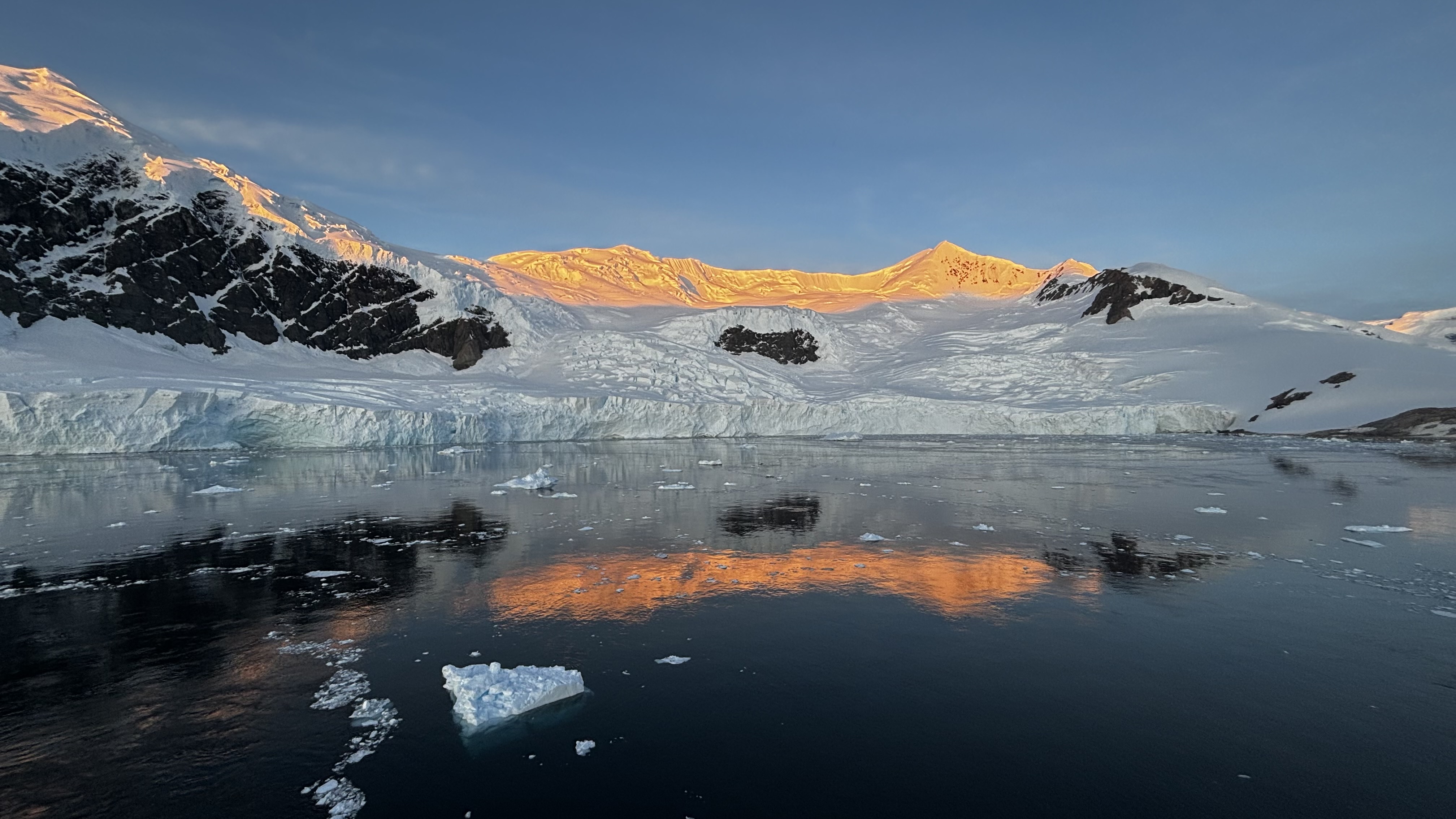
Antarctic sunset, Paradise Bay—MS Fridtjof Nansen, HX Hurtigruten Expeditions. Photo: Monika Norvilaite
Zodiac landing at a penguin colony: Step off a zodiac onto black volcanic sand and walk among thousands of chinstrap, or Gentoo penguins—creatures so unafraid of humans that they will waddle up and inspect your boots. Request a morning landing when the light is low and the colony is at its most active; your expedition leader will know which sites allow early access.
Kayak in Neko Harbour or Paradise Bay: Paddling at water level—surrounded by ice formations, in absolute silence—is a completely different encounter with Antarctica than anything you experience from the ship. This activity must be pre-booked with your operator before departure; places are limited per expedition.
Sail the Lemaire Channel: A passage so narrow that the cliffs appear close enough to touch from either rail of the ship, with glacier faces and sea ice stretching ahead. Position yourself on the bow when the ship makes its approach—this is the frame most photographers spend the entire voyage trying to capture.
Make a continental landing: Setting foot on the continent itself—not just the Peninsula Islands—is a milestone that relatively few travelers achieve. Ask your operator specifically which itineraries include a continental landing versus island-only stops; the distinction matters more than most guides acknowledge.
Take the polar plunge: A ritual aboard every serious expedition: jumping into Southern Ocean water near 0°C, usually from the ship’s stern platform. It is brief, involuntary in its intensity, and something you will describe for years.
Watch for humpback whales in Wilhelmina Bay: Known among expedition naturalists as “Whaleamina Bay,” this sheltered inlet is a feeding ground for humpbacks during the summer season (November through March). Bring binoculars to the upper deck in the early morning and stay patient—sightings here are frequent and close.
Walk in the footsteps of Shackleton on South Georgia: If your itinerary includes South Georgia Island, visit Grytviken—the historic whaling station where Ernest Shackleton is buried. The journey across the island he completed on foot after his ship was crushed in 1915 is one of the most remarkable stories in exploration history, and standing at his graveside makes it visceral in a way that no biography does.
Photograph the Blue Hour on the Ice: Antarctica in summer offers 20+ hours of daylight, and the light quality between 11 p.m. and 2 a.m.—a long, low golden-blue hour—is unlike anything in temperate photography. Set an alarm. Most passengers miss this entirely. The bridge crew will be awake; ask if the ship is near significant ice formations during those hours.
Attend every expedition briefing: This is not optional, and it is not a formality. The naturalists and guides aboard expedition vessels typically hold briefings after dinner that contextualize what you saw that day—geological history, species behavior, climate data—and preview what tomorrow’s landings will involve. The briefings are often more memorable than the landings themselves.
Cross the Antarctic Circle: Most Peninsula itineraries reach approximately 65°S; crossing the Antarctic Circle (66°33’S) requires a slightly longer voyage and specific routing. If this matters to you—and it should—confirm the itinerary specifics with your advisor before booking. Ships that cross it mark the occasion. It is the kind of thing you remember the coordinates of.
Places to eat & drink in Antartica
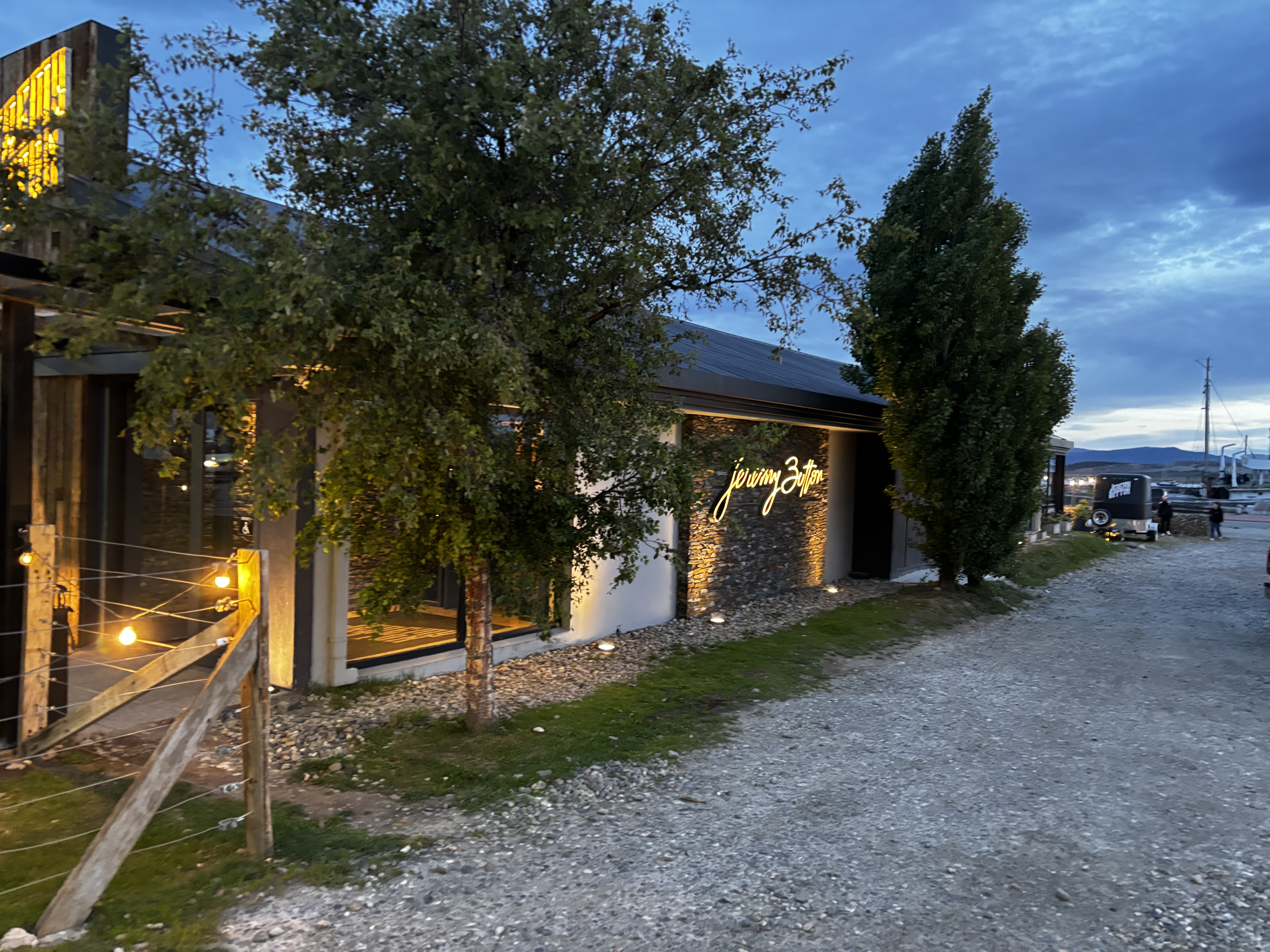
Jeremy Button restaurant, Ushuaia—the night before sailing. Photo: Monika Norvilaite
Don Julio, Buenos Aires (pre-departure dinner): One of South America's most celebrated parrillas, Don Julio in Palermo, has been perfecting the Argentine asado for decades. Reserve several days in advance, order the bone-in ribeye, and treat this dinner as the civilized send-off before the world goes quiet. It is worth the pilgrimage on its own merits.
Chez Manu, Ushuaia (Final night before embarkation): A reliable institution in Ushuaia’s small but serious dining scene. Order the centolla (king crab), caught locally, and ask for a window table—the views over the Beagle Channel from this elevation are your first proper glimpse of where you are headed.
Ramos Generales, Ushuaia (morning before boarding): A warm, wood-paneled café in the center of Ushuaia that has been serving travelers since the early 1900s. Come for breakfast on embarkation morning—good coffee, medialunas, and the quiet understanding that everyone in the room is about to do something unusual.
The ship’s dining room, Drake Passage Crossing: The crossing takes approximately 48 hours each way, and not everyone finds their sea legs immediately. The ships—whether Silversea, HX Hurtigruten, or Ponant—set a proper table regardless of conditions. The habit of gathering for dinner, even when the swell is significant, becomes one of the more memorable aspects of the voyage.
Celebratory pisco sour, the Antarctic Circle Crossing: A ritual on voyages that reach 66°33’S: pisco sours served on deck when the ship crosses the Circle. The naturalist team typically marks the moment; the cold makes the drink taste better than it has any right to. If your itinerary crosses the Circle, find out in advance when the crossing is scheduled.
Jeremy Button, Ushuaia: Named after the Fuegian native who became one of the most remarkable figures in the history of this coastline, Jeremy Button is one of Ushuaia’s most considered dining rooms—warm interiors, serious Patagonian ingredients, and a location close enough to the harbor that the Beagle Channel is never far from your thoughts. A strong choice for the final dinner before embarkation.
Need to know
On choosing the right ship: There is no single best expedition vessel for Antarctica—the right ship depends on how you travel. Small ships (under 100 passengers) offer more landing flexibility and a quieter environment—larger vessels (100–500 passengers) often carry more comprehensive science and naturalist programs. Ask your advisor about the passenger-to-guide ratio, not just the ship’s name. That number shapes the entire experience
On timing: The Antarctic season runs from November through March. November offers the whitest landscapes and the best chance of sea ice; December and January bring the most wildlife activity, 24-hour daylight, and penguin chick hatching season; March is quieter, with whale feeding at its peak and the first autumn light. There is no wrong month—only different journeys
On the Drake Passage: The Drake is the world’s roughest stretch of open water and approximately 48 hours wide in each direction. Most crossings are manageable; some are challenging. Come prepared with sea sickness medication regardless of your usual tolerance—the Drake operates on its own rules. Many travelers consider it part of the experience. Some choose air crossings (King George Island to Punta Arenas) to avoid it entirely; discuss both options with your advisor
On what to bring: Expedition operators provide all waterproof outerwear and rubber boots for landings. Do not overpack. What you actually need: base layers, a mid-layer fleece, sturdy trousers, and quality binoculars. The operator’s packing list is unusually accurate—follow it.
On booking lead time: The itineraries that include South Georgia and the Falkland Islands—which add significant depth to the journey—often sell out 18 months ahead for the peak season. If this is a trip you are seriously considering for 2026–2027, the conversation should happen now.


Travel Advisor
Monika Norvilaite

Monika Norvilaite
Get in touch with Monika Norvilaite
Did you like this guide? Reach out to customize and book your own experience. Or, just to chat about travel in general.
For more inspiration and insider recommendations, visit our Antarctica page.