


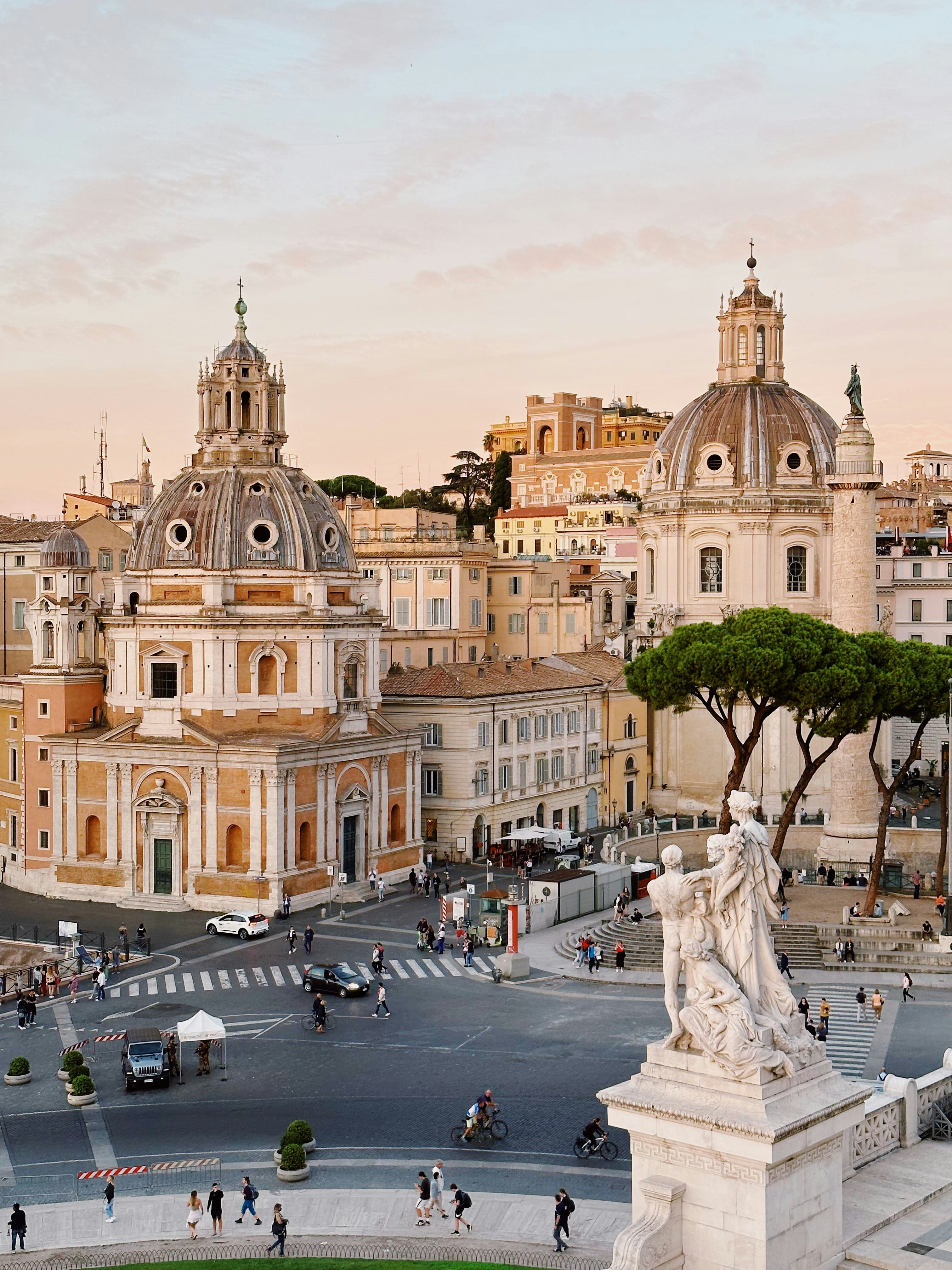
Curator’s statement
Rome sits on almost everyone’s list, and a lot of people finally get there because a cruise gave them the reason. Then they find out the port the cruise lines call Rome is Civitavecchia, 50 miles up the coast, and the city they came for is a four-hour round trip from the gangway. I have watched that math wreck a first morning. Three nights up front is how I fix it, and it turns the days everyone writes off as travel into the ones they talk about at home.
The Fora Difference
Book with The Bēhaven Collective to access exclusive perks and experiences on your trip.

Killer perks
Free upgrades, spa credits and more—we got you

Personalized recs
Customized travel planning for your style

Insider knowledge
Expert advice from people who’ve actually been there
Where to stay
Unlock perks by contacting The Bēhaven Collective to book your trip.
Day 1: Landing day, and where to base yourself
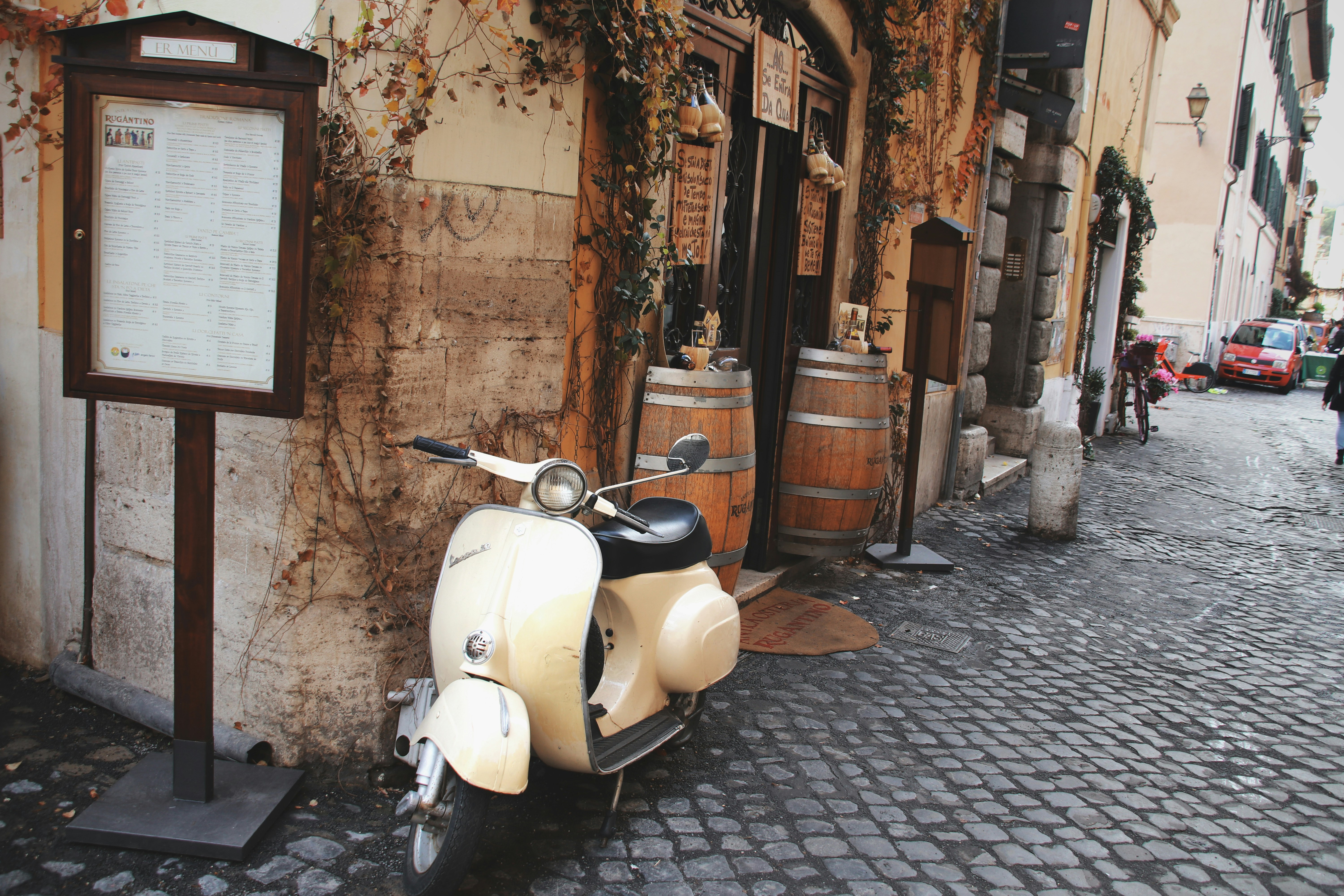
A Trastevere side street in the afternoon. This is the neighborhood I base clients in when they want to eat where Romans actually eat.
Most flights from the States land in Rome between 8 and 10 in the morning. That looks like a free day. It is not, because you have not slept, even if you were at the front of the plane in a lie-flat seat. So the plan is a driver waiting at baggage claim to take you straight to the hotel, a room you can get into early, and nothing scheduled before lunch. Fiumicino, FCO, is about a 30-minute drive from the city center.
Where you sleep matters more here than the star rating does. Centro Storico puts you inside the postcard, walking distance from most of what you came for, with the city still going on outside your window at midnight. Trastevere is where Romans go to eat—it feels like a neighborhood rather than a destination, and you will cross the river most days to reach the ancient sites. The streets around the Spanish Steps run calmer and more residential, which is the pick if you want to close the door on the day. I choose based on whether you want to fall asleep to the city or away from it.
One shortcut if you want it: Chapter Roma is an advisor favorite and one of the most requested hotels in Rome across the Fora network, and the client reviews back it up. That is about as close to consensus as this industry gets, and it is why it leads my list.
Before any of that happens, the hotel already knows who you are. I send a note ahead with everything that matters—why you are traveling and who with. Whether you actually need an early check-in, which is worth asking honestly, because it affects both availability and what they can do about an upgrade. Allergies, anywhere from I hate olives to peanuts will put me in the hospital. Accessibility needs. Bed configuration and the names on the reservation, so nobody at the desk is guessing and nobody has to correct anyone. If your flight lands at 11 at night, the room is held until you get there.
Upgrades are always subject to availability at check-in. What I can tell you is that those notes land, because I work with properties I know and I have direct contacts at every one of them. The point is that you walk in feeling like they already know you. And on the rare occasion something is not right, you should be on vacation rather than sorting it out at a front desk. That part is mine.
I have been the person watching an empty carousel belt go around. My bags went one way, I went another, and I spent a morning in Barcelona replacing what I needed. The toothpaste I grabbed off a pharmacy shelf that day is the brand I order online now, so there was a silver lining. It would have been a far worse morning if the ship had sailed that afternoon.
I have always carried a few essentials in my carry-on, and that trip changed what I count as essential. Medication and a change of clothes are obvious. What people forget is the charger, and enough of whatever makes them feel like themselves to get through two days without a suitcase.
For the afternoon, I book a private golf cart tour. Clients keep asking for it, and I understand why. You stay seated, you cover far more ground than your legs will manage on four hours of airplane sleep, and you get your bearings before you have to find anything on your own.
Then a small group walking food tour in the early evening. It handles dinner, it keeps you upright until a normal bedtime, and moving is what actually beats jet lag. Drink more water than you think you need and make it an early night.
Do the food tour now rather than at the end of your stay, because a good food guide is the best intelligence you will get all week. They eat here every day. They know what opened, what has slipped, and what changed hands last spring, which no list published two years ago can tell you. Ask where they eat on a day off, and what’s near your hotel that they would walk you past. Most guides are glad to be asked, because they love this city and almost nobody thinks to ask. The convenient place nearest your hotel is the safe answer, and the safe answer is rarely the best meal. What you want from them is the table worth the detour.
Day 2: Ancient Rome, and how to beat the crowds
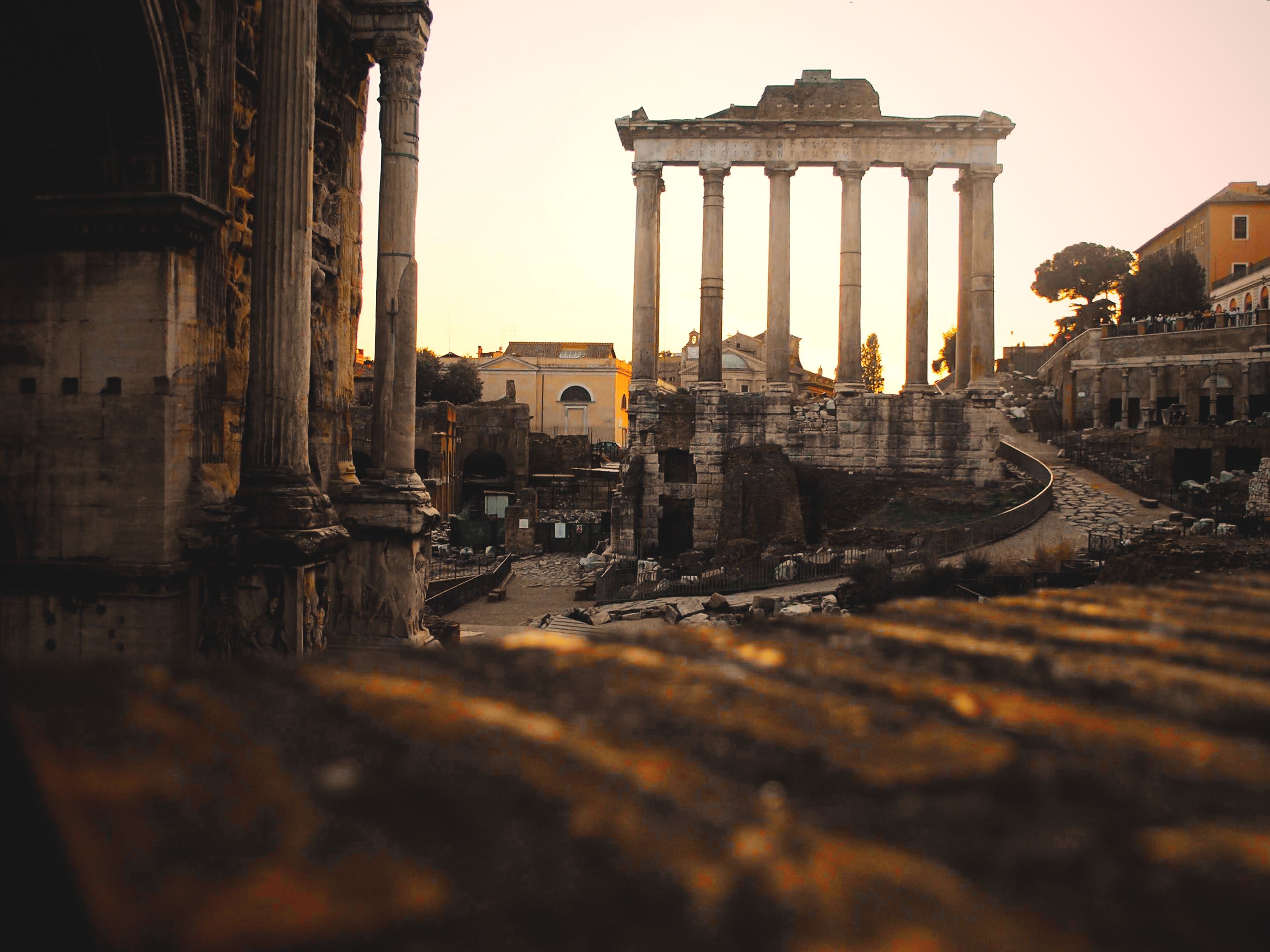
The Roman Forum with the crowds gone. The hour you go decides how the whole day feels.
Rome is loud in a way that takes a day to adjust to. Bells that have never once agreed on the hour, scooters on streets built for carts, and water running constantly from the 2,500 street fountains that never shut off. It is also the trip most people have been meaning to take for 20 years, which is worth remembering when you are deciding how many days to give it.
Rome had 22.9 million visitors in 2025, a record, and you will feel most of them on the Colosseum concourse by 10 in the morning. Go early or do not go.
The Colosseum and the Roman Forum share a ticket and a hillside, so they are one morning rather than two. What matters is the hour you walk in and the access you are holding. Special access tickets reach parts of the Colosseum most visitors only see from a distance, and they sell out long before general admission does.
Private sounds expensive and usually is not, once you do the math. A private guide is priced for the group rather than per person, so the more of you there are, the better it gets. Two people can make it work. A family of four almost always should. Semi-private groups usually run around six people instead of 30. Six people move through a site. 30 stop every 40 feet.
Then stop planning. I leave real gaps in these days on purpose. Rome at midday is hot and busy, so most of my clients go back to the hotel for a few hours and head out again around 6.
The evening is for the list everyone arrives with. The Trevi Fountain, the Pantheon, and the Spanish Steps sit close enough together to walk between with no guide and no tickets. One thing did change in February 2026. Getting down to the basin at Trevi, the spot where people throw coins, now costs two euros for non-residents, and that lower area is capped at 400 people at a time between roughly 9 in the morning and 10 at night. The piazza above it is still free and still open. Go right at opening or late in the evening if you want the photo without the queue. The water, for what it is worth, has been arriving through the same underground channel since 19 BC.
Day 3: The Vatican, and the staircase almost nobody sees
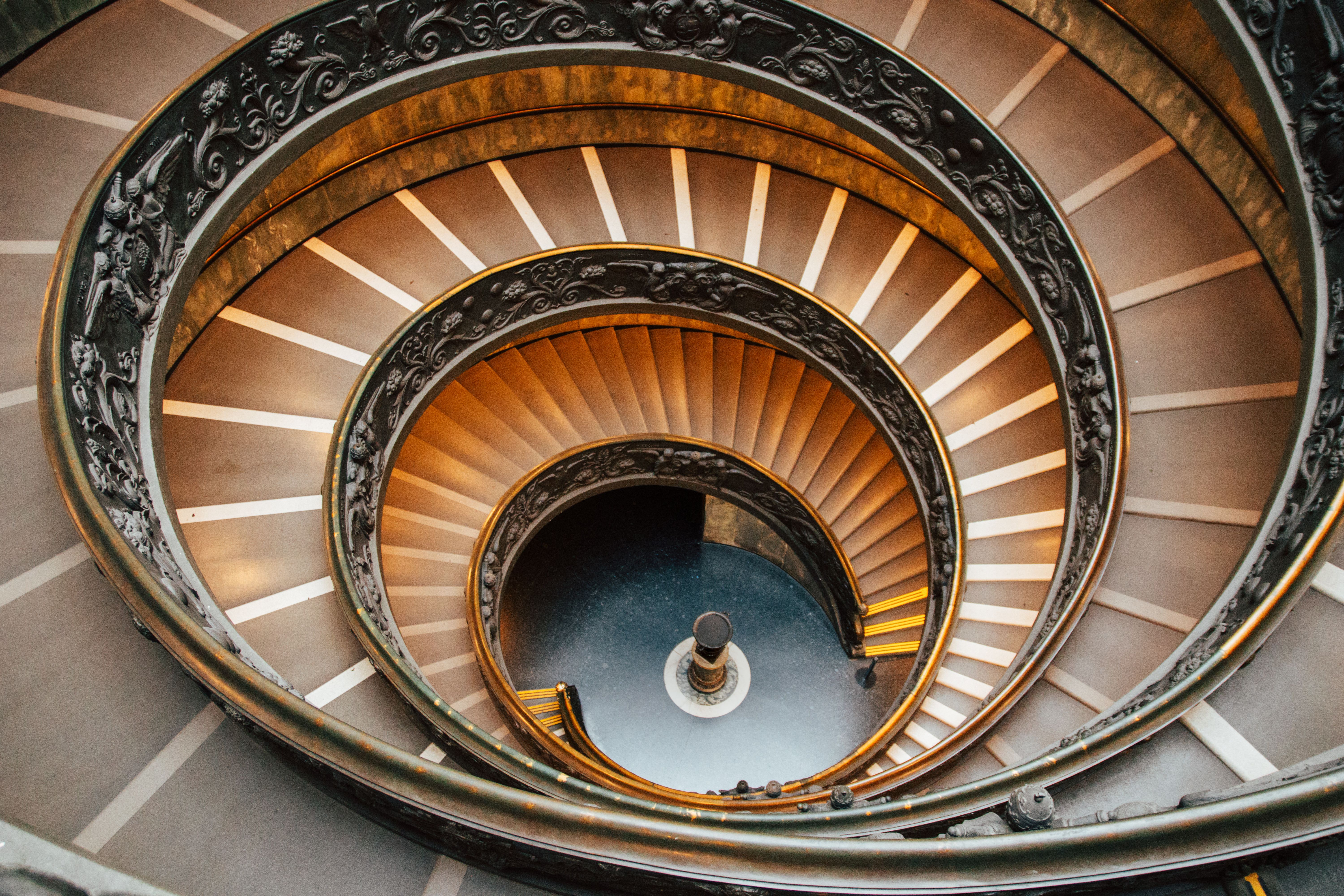
The spiral staircase every visitor photographs on the way out of the Vatican Museums. It is Giuseppe Momo's, built in 1932, and it is not the one I get my clients into.
The Vatican Museums are why most people give themselves a second full day. Close to 7 million people went in 2025, second only to the Louvre. Nobody sees all of it, and nobody should try.
There is a tier above standard early entry, which is private access before the museums open to the public at all. What you are buying is not status—it is time. Being finished with the Sistine Chapel by the hour everyone else is still in line means the rest of the day is yours instead of gone.
And here is the thing most visitors never find out they missed. That spiral staircase everyone photographs on the way out—bronze rails winding under a glass dome—is not the Bramante Staircase. It is Giuseppe Momo’s, built in 1932. Bramante’s original, built around 1505 so Pope Julius II could ride a horse up to his own front door, is still standing a short walk away, and it is locked. Standard tickets do not reach it. Arriving early will not help. Ask me how my clients get in.
Operators are not interchangeable either. Some manage to be exclusive without being dry, which suits travelers who want access and a guide with a personality attached. Others run more academic, and for some people that is exactly right. Neither is better. They are built for different travelers, and matching them is the part I care about.
Give the afternoon to a neighborhood instead of a monument. Trastevere and the Jewish Quarter both reward walking with nowhere particular to be. One rule while you are out: If the menu has photographs on it, keep going, and the same goes for anywhere with someone posted outside trying to talk you in. Short menus that change with the season are the better sign.
Day 4: Getting from Rome to the Civitavecchia cruise port
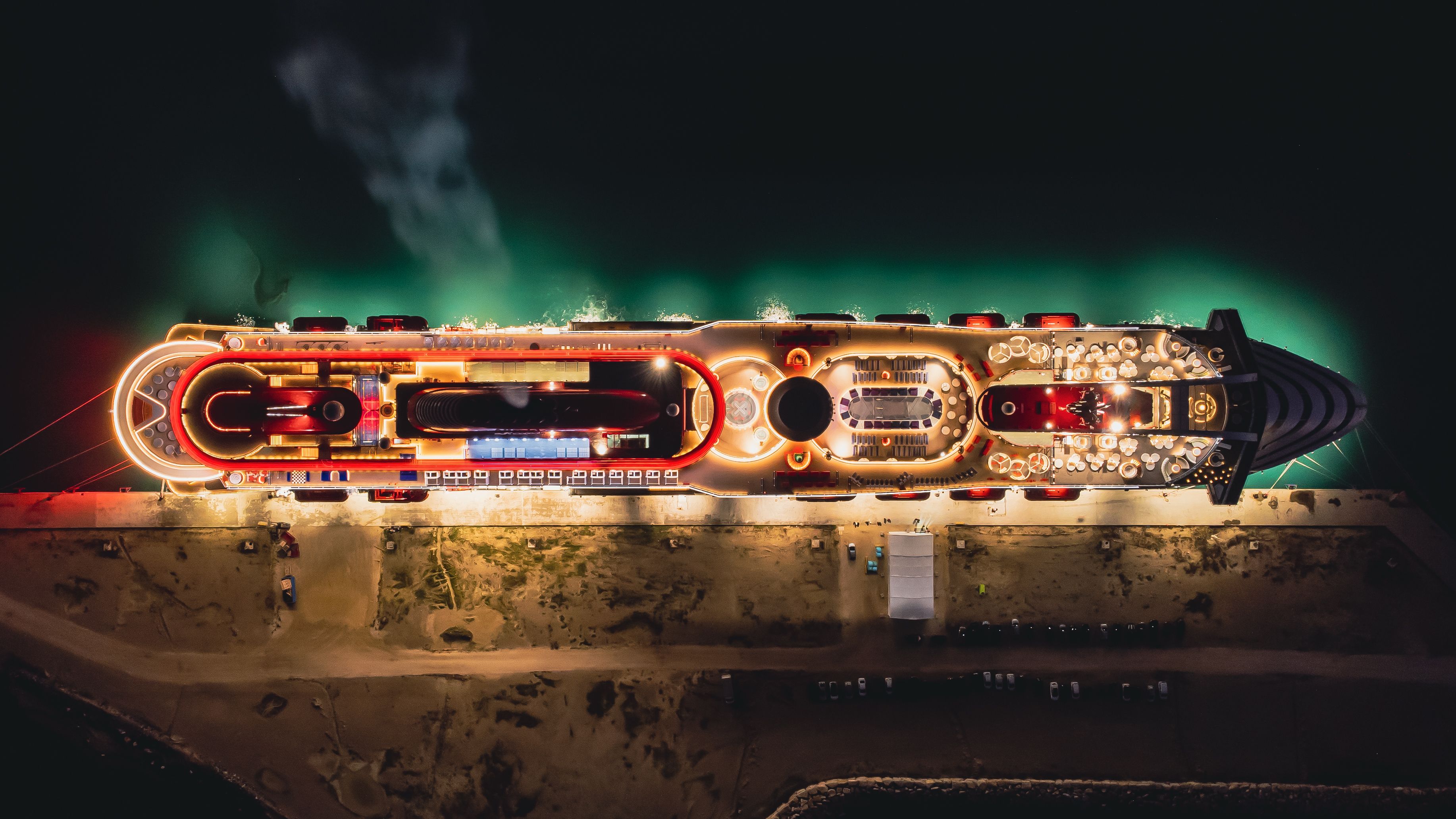
A Virgin ship overnight in Civitavecchia, 50 miles from the city the cruise lines call Rome.
People ask why not stay in Civitavecchia the night before and skip the transfer. It is a working port town, and the hotels there are built for a night before a ship rather than for a trip. They are not what my clients are looking for. You would be trading three days in Rome for 90 minutes of convenience you can plan around instead.
Start with breakfast at the hotel. Most of the properties I book include it, which is one fewer decision on a morning that already has a clock attached. You are not out hunting for coffee with your bags stacked in a lobby and a car coming at 10.
Civitavecchia sits about 50 miles northwest of Rome, and the port is large enough that walking to your ship is not an option. Cruise passengers move through a reception area called Largo della Pace, and from there it is shuttles and gates before anyone reaches a gangway.
The train is around five euros, and it genuinely works. It also means hotel to taxi, taxi to Termini, Termini to Civitavecchia, then another mile and a half to the terminals on foot or by paid shuttle, with your luggage the whole way. That is five handoffs, and every one of them is a place to lose time you do not have.
A private car runs roughly 165 to 220 euros for two people and takes an hour to 90 minutes depending on how Rome lets you out that morning. Authorized drivers carry port permits, so you are delivered inside the gates rather than at a station. Door to door, bags in the trunk, one handoff instead of five. On the single morning of this trip where being late cannot be fixed, that is the answer.
The cruise line will also offer to sell you a transfer. I do not book them. You are on a coach running on someone else’s schedule and paying a markup for it.
Your boarding time is selected in advance in the cruise line’s app, and the earlier you complete that check-in, the better the slot you get. Aim to arrive about an hour ahead of your assigned time. That is enough room to unload, hand your bags to the porters, and get in line in case they are running ahead of schedule, which they sometimes are.
Do not turn up much earlier than that. You will stand outside waiting, and depending on the month, standing outside in Italy is its own experience. The whole morning is a balance. You do not want to scramble, and you do not want to be the couple watching the ship from the pier. Drop your bags early, and they reach your cabin sooner. Board early and the ship is yours for the afternoon, though whether the cabin is ready when you step on is another question. There is also a correct line for the right guest, which is not obvious from the curb. I walk my clients through the whole sequence before they go.
It is worth knowing what the rest of the week looks like, because it changes how much Rome you want first. Most sailings out of Civitavecchia run west. Naples for Pompeii and Capri, then Livorno or La Spezia for Florence and Pisa, then Provence, Barcelona, Palma de Mallorca. Some swing through Genoa for Portofino, or Palermo, or Villefranche below Nice. The eastern itineraries head toward Athens, Santorini, and Mykonos, then up the Adriatic through Corfu, Dubrovnik, and Kotor.
None of them are Rome, which is the reason the combination works. Naples is louder and rougher and has none of Rome’s polish, with Pompeii next door and the ancient world stopped mid-sentence. Florence is small enough to cross on foot in 20 minutes. Each port is a different century or a different country, and none of them asks you to move house to get there.
That last part is the whole argument for front-loading your land time. I have done the all-land version of a European trip, and what wore on everybody was the moving. Trains and stations and repacking, and a good share of most days spent getting somewhere rather than being anywhere. A ship removes that completely. You unpack once, and your hotel moves overnight while you sleep.
What a ship cannot do is take you inland, and plenty of what makes a country itself sits two hours from any water. So you do both. Three days on the ground in one city with nothing to carry anywhere, then a week of coastline where all the moving happens without you.
Need to know
The port is not the city. Cruise lines list Civitavecchia as Rome, and the real distance is about 50 miles. Trying to do Rome as a port call burns close to four hours in transit out of an eight-hour window, which is exactly why the front of the sailing is the better place to see it.
Two nights is my floor before any international departure. Three is what I book when the destination earns it, and Rome earns it. If a flight goes sideways, you still land with two nights standing.
The same thinking applies at the other end, and more people miss it there. If your flight home leaves the afternoon you disembark, you will spend the last hours of an expensive trip rushed and land in the States near midnight with the drive home still ahead of you. Add one night after the ship instead, take the earliest flight out the next morning, and you are home in the afternoon with your own bed at a normal hour. Athens is where I book this most, because flights out tend to go early. Disembarkation timing is not the same on every ship either, which is one more reason the ship matters as much as the itinerary.
On travel insurance, I am not an agent, and I never push anyone into it. I do recommend it strongly, and not only for delays and lost bags. If you get sick or hurt on the other side of the Atlantic, that is when it earns its money. It is also worth looking past what the cruise line sells you at checkout, because outside policies are often less expensive and cover considerably more. I give clients options to compare and let them choose.
I have needed mine. A long delay that turned into a cancellation, with mishandled bags on top of it, and the policy covered what I spent and compensated me for the disruption. Travel is not perfect. Being prepared and staying flexible is most of the work.
Being on a cruise does not mean you are stuck with the ship’s tours. Private and small-group touring is available in nearly every Mediterranean port, and it often costs less than people expect once you are not paying for a coach and a headset. This is what I get asked about most after someone’s first big sailing.
On timing, the edges of the Mediterranean season are the best part of it. I have a May sailing booked myself, one of the first of the season, and clients going in October. Fewer people, softer weather, better rates. If your dates have any flexibility at all, say so early and I will point you at the window.
A few things I keep out of guides on purpose, but I can tell you if we work together:
How my clients get into the original Bramante Staircase, and how far ahead it has to be arranged.
Which of those five hotels I would actually put you in, which comes down to the neighborhood rather than the rating.
The food tour operator I use, and which of their guides to request. That request is most of the difference between a good walk and a great one.
Which ships let you take your last morning slowly and which have you on the pier at 7.
What happens when the bags do not arrive, which is a real protocol on my end and not a shrug.
What clients tell me afterward is almost never that they wish they had seen one more site. It is that they wish they had given themselves time to breathe, and that they had started planning sooner.
Send me the ship and the sail date. I will tell you what your first morning in Rome actually looks like, whether the itinerary you are holding leaves room to do this properly, and what I can get you into that is not on anyone’s booking page. Italy does not have to be hard. That part is mine.


Travel Advisor
The Bēhaven Collective


Bryant Blakeslee

Get in touch with The Bēhaven Collective
Did you like this guide? Reach out to customize and book your own experience. Or, just to chat about travel in general.
For more inspiration and insider recommendations, visit our Rome page.