

Curator’s statement
When I was younger, my parents took me on a Nile cruise with a relaxing holiday in Hurghada and a day trip to Cairo. That trip has always stayed with me, and now, traveling with my partner, a real archaeologist, I knew I had to return. This time, we made Cairo our base, embarked on a spectacular Nile cruise to explore temples and tombs, and returned to the city to dive deeper into its history and vibrant culture. Egypt’s history, energy, and timeless landscapes make it a destination that leaves a lasting impression.
The Fora Difference
Book with Desiree Janssen to access exclusive perks and experiences on your trip.

Killer perks
Free upgrades, spa credits and more—we got you

Personalized recs
Customized travel planning for your style

Insider knowledge
Expert advice from people who’ve actually been there
Where to stay
Unlock perks by contacting Desiree Janssen to book your trip.
Day 1: Arrival in Cairo
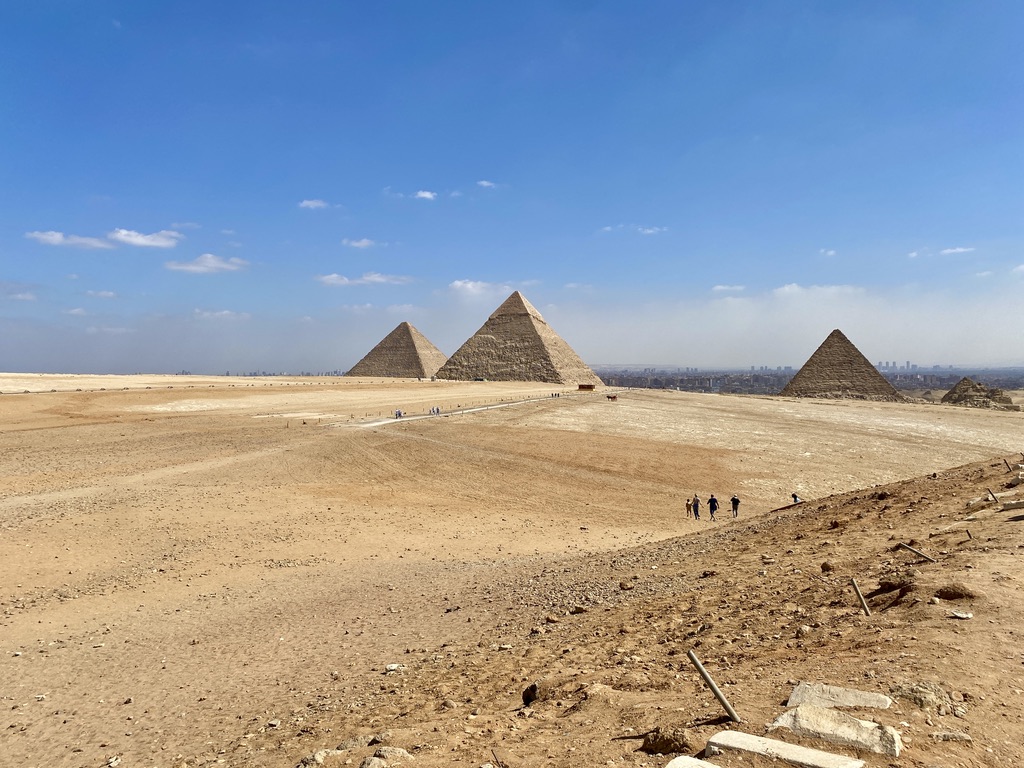
The great pyramids of Khufu (Cheops), Khafre (Chephren), and Menkaure
First encounters with Egypt
We started our adventure in Cairo with a visit to the iconic Giza Plateau to see the pyramids and the Sphinx up close. Walking among these ancient wonders is awe-inspiring, and it’s easy to see why they’ve fascinated travelers for millennia.
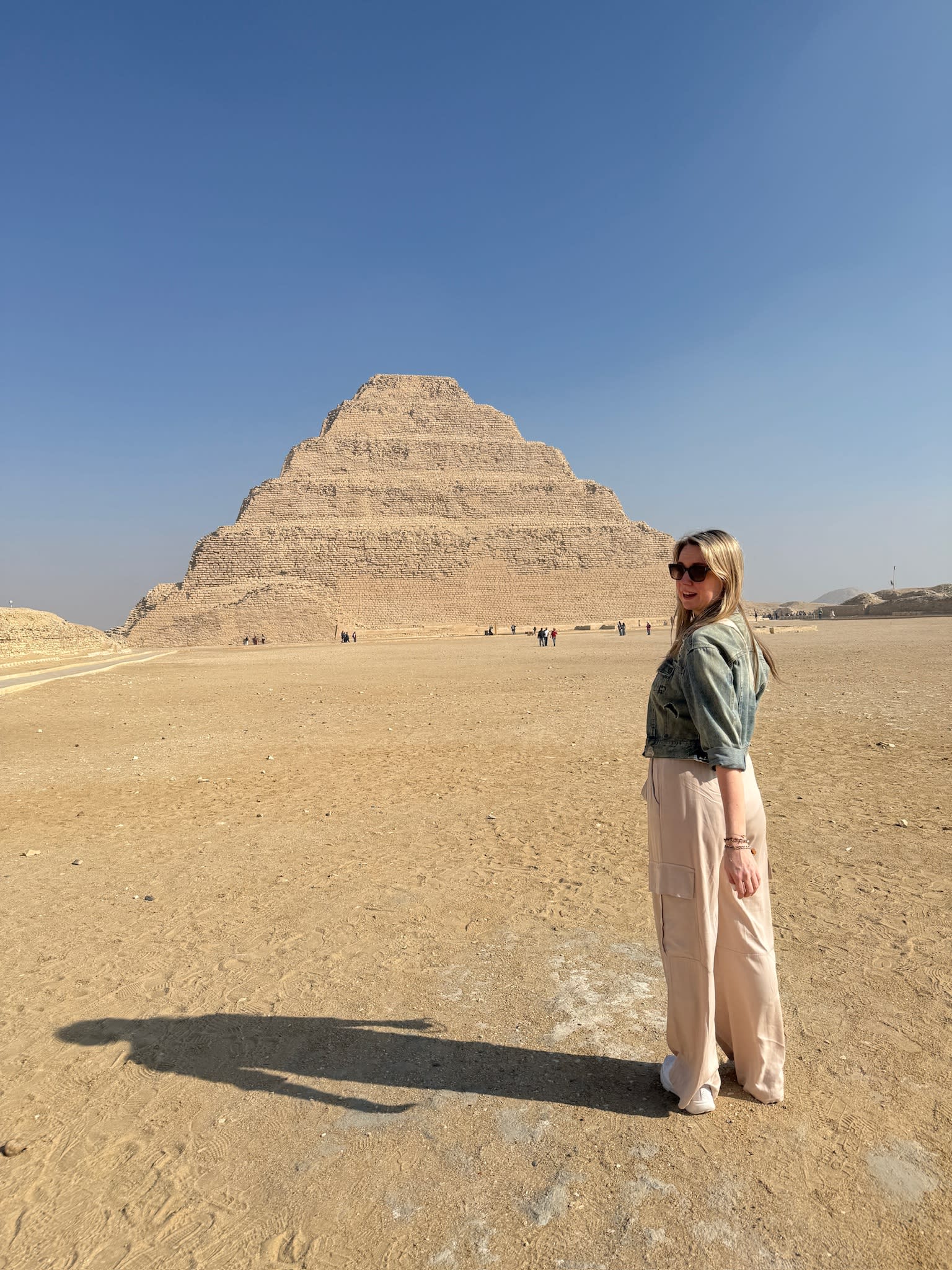
From there, we went to Saqqara, home of the Step Pyramid of King Djoser, the world’s earliest large-scale stone monument.
We finished the day in Memphis, Egypt’s first great capital, where colossal statues of Ramses II and the Alabaster Sphinx hint at the grandeur of ancient Egyptian civilization.

A note from Desiree
Insider tip: Wear comfortable shoes and bring sunscreen, as you’ll be walking on uneven ground in the sun. Starting early also helps you beat the heat and the crowds of the day.
Day 2 From Cairo to the heart of Luxor
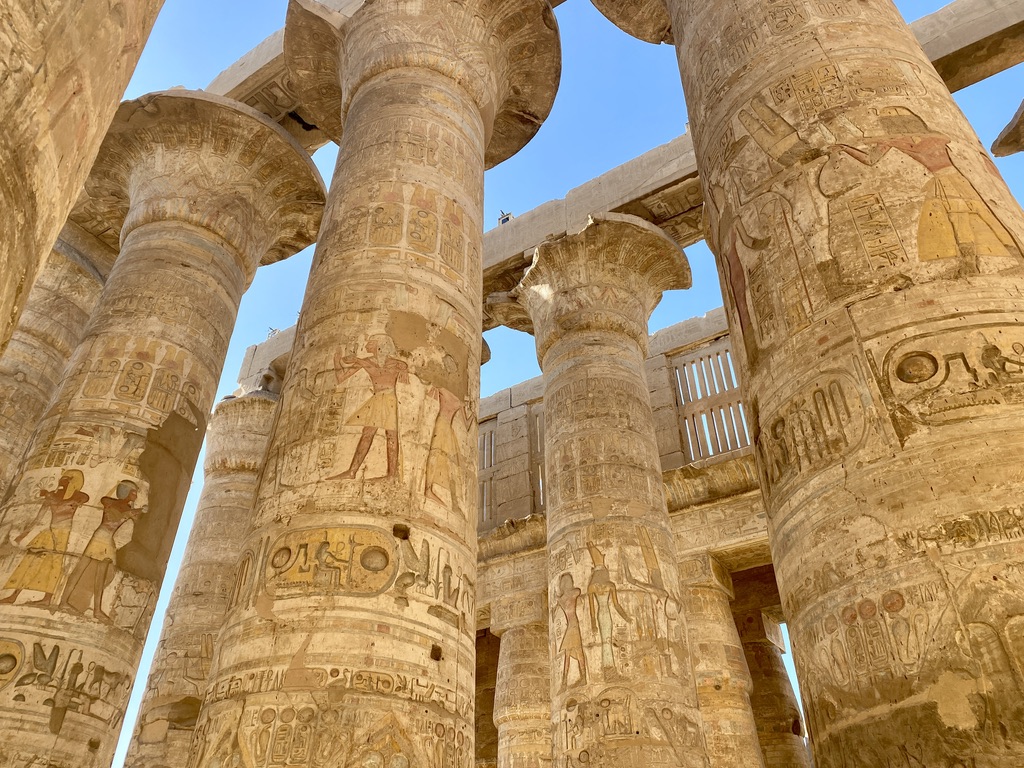
The Karnak Temple!
We woke up early and flew from Cairo to Luxor, eager to step into the heart of ancient Egypt.
Our first stop was the vast Karnak Temple Complex, where towering columns, amazing carvings, and several obelisks left us in awe.
Next, we explored Luxor Temple, wandering through its grand halls and noticing the layers of history, from Amenhotep III to Ramses II, and even the Abu Al-Haggag Mosque perched atop earlier ruins.
After a morning filled with history, we boarded our Nile cruise, enjoyed lunch, and settled in for the journey along the river, our floating home for the next few days.
A note from Desiree
Insider tip: Hire a local guide! The stories of the temples and the pharaohs who built them are indispensable and bring the sites to life in a way you can’t get on your own.
Day 3: Exploring Luxor’s West Bank & sailing to Edfu
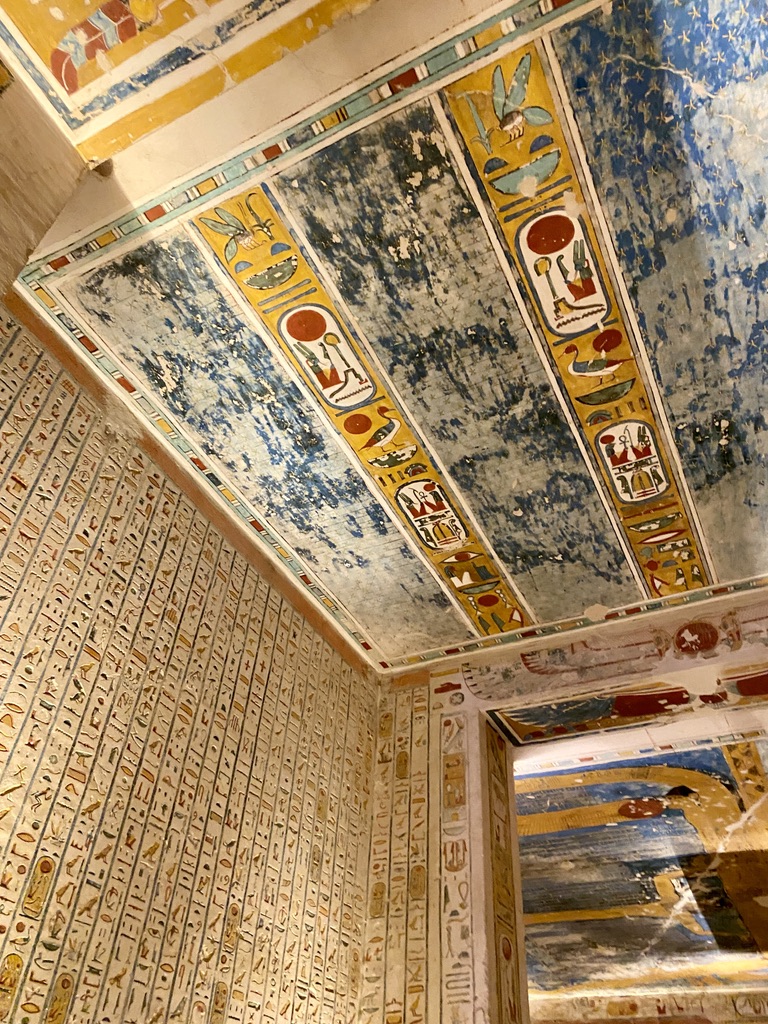
The colorful inside of one the tombs in the Valley of the Kings
We spent the morning on Luxor’s West Bank, stepping into the tombs and temples of ancient royalty.
At the Valley of the Kings, we wandered through beautifully preserved tombs of pharaohs like Ramses II and Tutankhamun, amazed by the colors and intricate carvings that have lasted millennia. The Mortuary Temple of Queen Hatshepsut was and is one of my favorites, with its terraced architecture and detailed reliefs. We have also seen the Colossi of Memnon, who stood as silent guardians of the Nile, watching over the landscape for thousands of years.
After a morning steeped in history, we returned to our Nile cruise, enjoying dinner, and evening entertainment while sailing toward Edfu.
Travel tip: Layering is key! Egypt’s temperatures vary wildly, you might start a 90°F (32°C) morning in the desert but need a sweater at 5 a.m. or in the cooler evening on the Nile. Pack a light jacket or scarf to stay comfortable throughout the day.
Day 4: Temples of Edfu & Kom Ombo
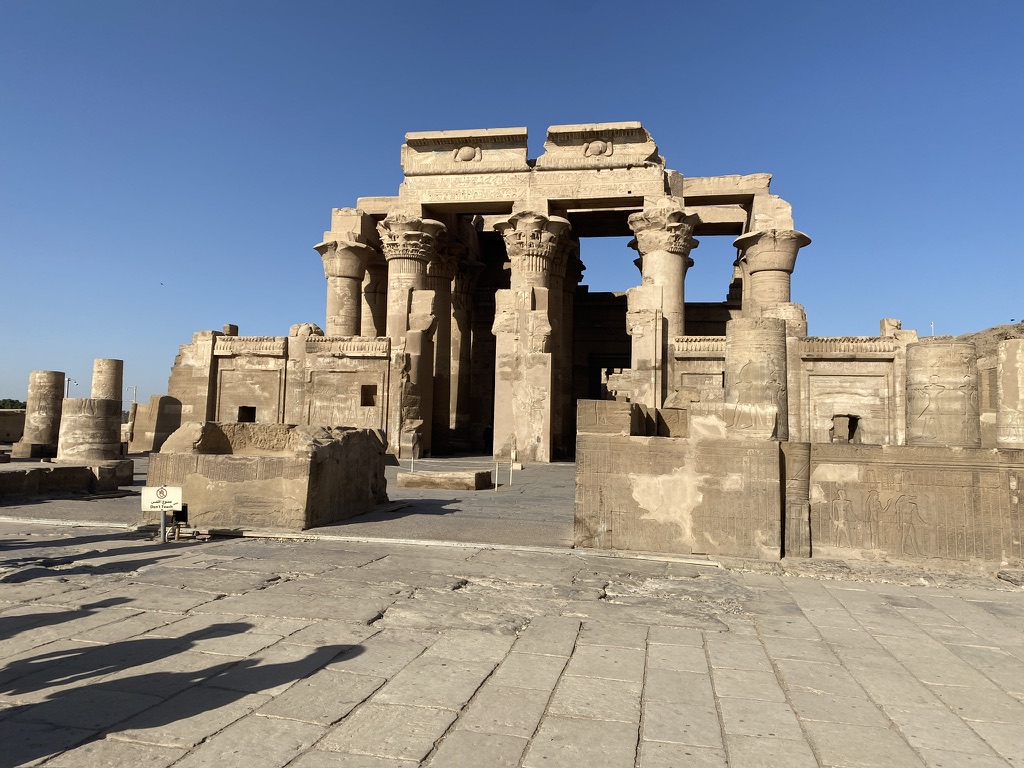
The temple at Kom Ombo for the falcon god Horus and the crocodile god Sobek
Our day began at Edfu Temple, Egypt’s best-preserved temple, dedicated to Horus, the falcon god. Wandering its towering walls and intricate reliefs, we were transported into the stories of Horus avenging Osiris and the rituals of Ptolemaic times.
After lunch on board, we arrived at Kom Ombo, a remarkable double temple devoted to both Horus and Sobek, the crocodile god, with carvings so detailed they even depict what appear to be ancient surgical instruments.
We ended the day sailing toward Aswan, enjoying dinner as the Nile sunset accompanied us.
A note from Desiree
Travel tip: Many sites have small bazaars at the entrances or exits where vendors will approach you. A polite but firm “La Shukran” (no, thank you) while keeping eye contact and walking confidently usually works best.
Day 5: Abu Simbel & sailing the Felucca in Aswan
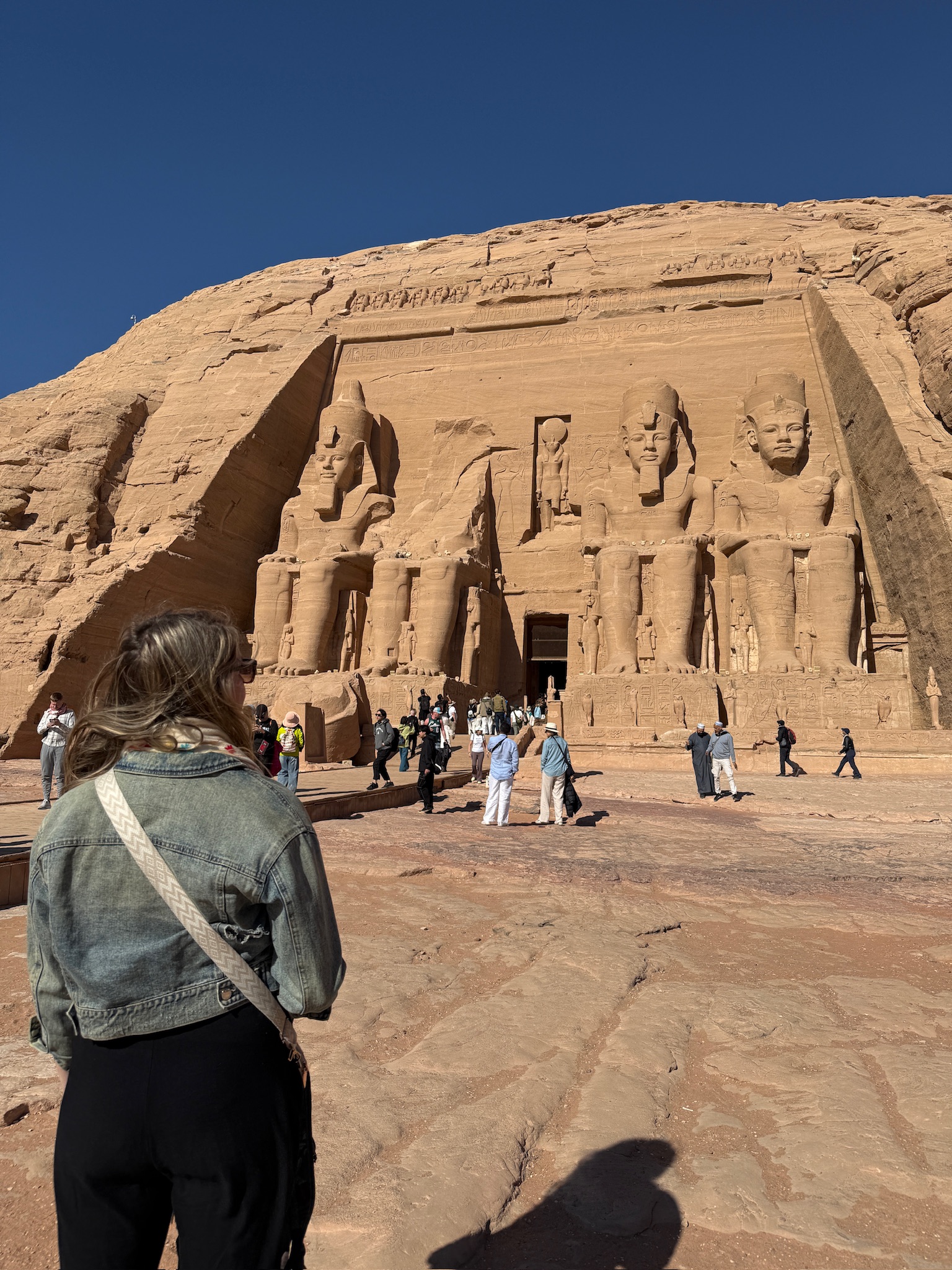
Just me admiring the Abu Simbel temple!
This day had a very early start, but it was worth it!
We woke up before dawn for an unforgettable adventure, driving from Aswan to the legendary Abu Simbel temples. Standing before the colossal statues and exploring the intricate carvings, we were completely captivated, the scale, detail, and history make this one of Egypt’s most awe-inspiring sights.
After returning to Aswan, we relaxed on a traditional felucca, drifting past Elephantine Island and the lush Kitchener’s Botanical Garden, soaking in the serene beauty of the Nile.
A note from Desiree
Travel tip: Ask your cruise for a breakfast box if you have an early departure. There are no restaurants on the road to Abu Simbel, and you’ll want plenty of energy for this epic day!
Day 6: From Aswan back to Cairo
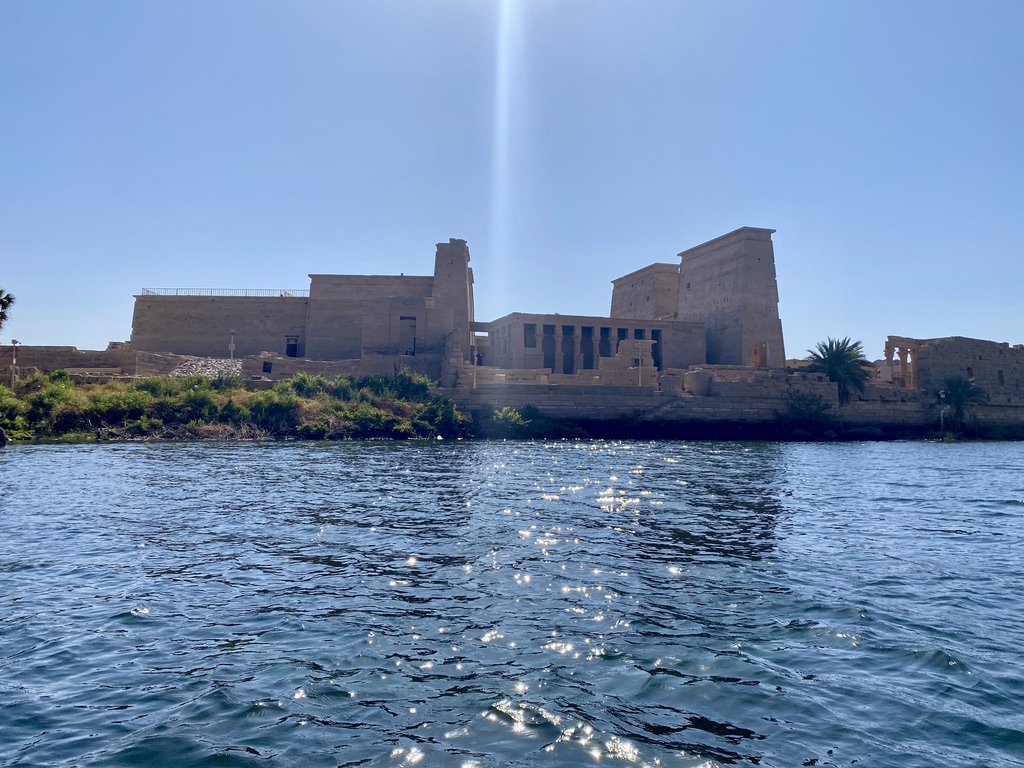
The temple and island of Philae
After breakfast, we said goodbye to our Nile cruise and spent the morning discovering more of Aswan.
We started at the Aswan High Dam, an impressive feat of modern engineering that remains vital for Egypt’s water and energy supply.
From there, we crossed the Nile by boat to Philae Temple, dedicated to the goddess Isis, and felt enchanted by its island setting, surrounded by water and steeped in ancient myths and rituals.
In the afternoon, we flew back to Cairo, ready to explore more of the city’s vibrant streets and history in the final days of our journey.
Travel tip: Combining ancient sites like Philae with modern landmarks such as the High Dam gives a fascinating perspective on Egypt, letting you experience both its past and present in one day.
Day 7: Cairo’s history through the ages
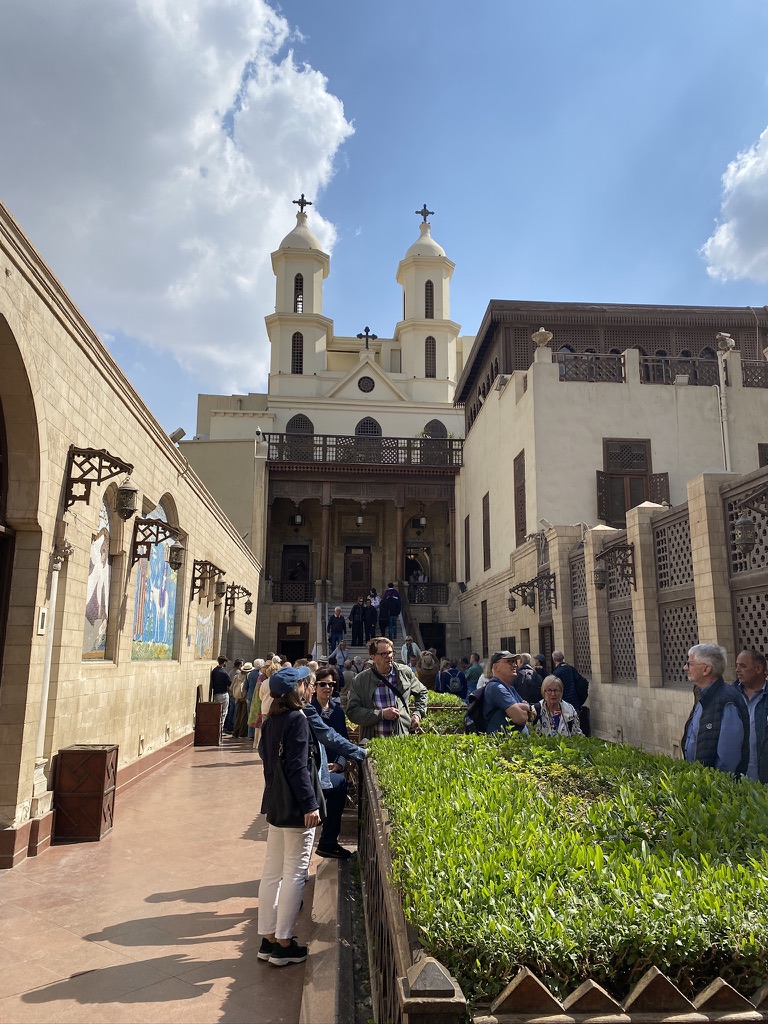
The Hanging Church
Today we explored the many layers of Cairo’s rich history, starting at the Grand Egyptian Museum, where walking through the grand halls and galleries and seeing Tutankhamun’s treasures up close left us in awe.
Later, we wandered through Coptic Cairo, visiting the Hanging Church and the Church of Saints Sergius and Bacchus, places steeped in centuries of faith and legend.
We ended the day at the Ben Ezra Synagogue, famous for its ancient Hebrew manuscripts, which added yet another layer to Cairo’s incredible story.
Travel tip: Give yourself at least a few hours for the Grand Egyptian Museum. The galleries cover thousands of years of history, and it’s easy to underestimate how much there is to explore.
Day 8: A final taste of Cairo
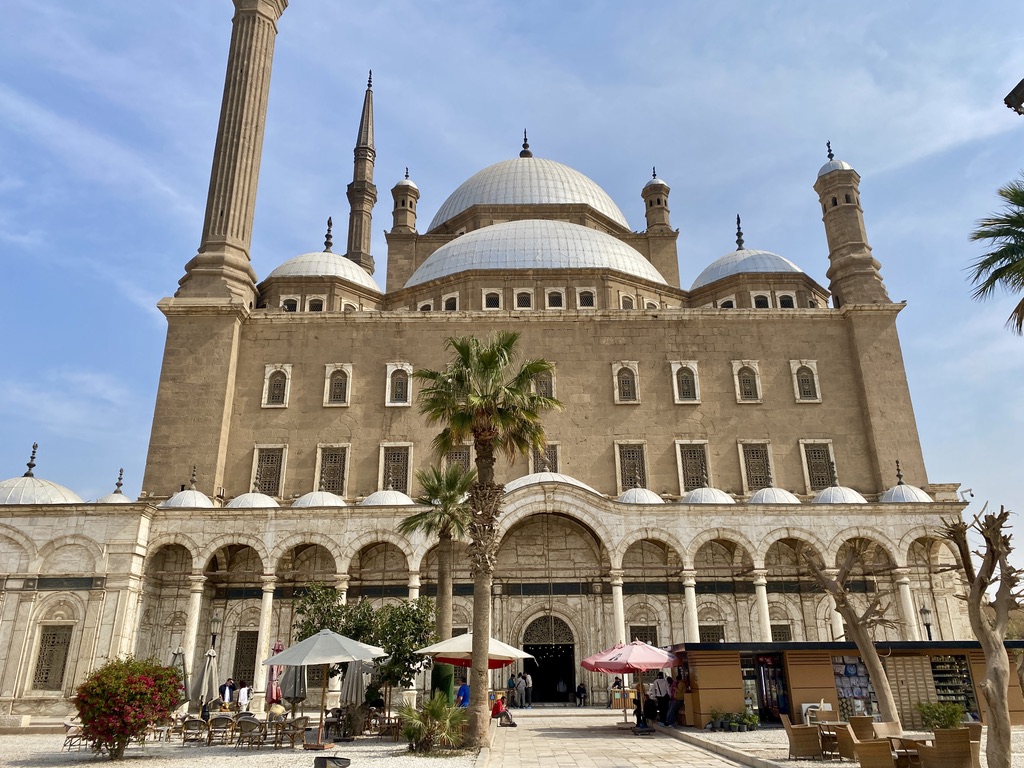
The Mosque of Muhammad Ali
Our last day in Cairo took us to some of the city’s most iconic landmarks, a perfect close to an unforgettable journey.
We began at the Citadel of Saladin, a 12th-century fortress with sweeping views over the city, and explored the Alabaster Mosque of Muhammad Ali, whose soaring domes and elegant minarets left us in awe.
To end our adventure, we wandered through the vibrant Khan el-Khalili Bazaar, taking in the colors, scents, and energy of this historic market, a lively, unforgettable experience that felt like the heartbeat of Cairo.
In the afternoon, it was time to head to the airport, carrying memories of ancient temples, a serene Nile cruise, and the rich culture that makes Egypt so extraordinary back with us.
A note from Desiree
Travel tip: When visiting mosques, modest clothing is appreciated. Cover shoulders and knees, and women can wear a scarf, often provided at the entrance. It’s a small gesture that shows respect and allows you to fully enjoy these beautiful historic spaces.
Need to know
Cash and small bills: Many sites, vendors, and small shops prefer cash (Egyptian Pounds), and having small bills helps for tips or quick purchases.
Download offline maps, keep chargers or power banks handy, and consider a local SIM for navigation, translations, and general use of the Internet.


Travel Advisor
Desiree Janssen

Desiree Janssen

Get in touch with Desiree Janssen
Did you like this guide? Reach out to customize and book your own experience. Or, just to chat about travel in general.
For more inspiration and insider recommendations, visit our Egypt page.