
Rhine to the Alps: A 13-Day Viking River Cruise from Amsterdam to Lucerne

Curated By
Daniel Griffin Smith


Curator’s statement
Thirteen days that move from Dutch canals to Swiss alpine lakes, threading through Germany and France along the way. Amsterdam to Basel by river, then onward to Lucerne by road. Few itineraries deliver this much variety with this little friction. Four countries, centuries of history, and some of Europe's most dramatic scenery, all without unpacking more than once. This is the itinerary I recommend when someone tells me they want Europe done right, not Europe done fast.
The Fora Difference
Book with Daniel Griffin Smith to access exclusive perks and experiences on your trip.

Killer perks
Free upgrades, spa credits and more—we got you

Personalized recs
Customized travel planning for your style

Insider knowledge
Expert advice from people who’ve actually been there
Where to stay
Unlock perks by contacting Daniel Griffin Smith to book your trip.
Day 1: Arriving in Amsterdam
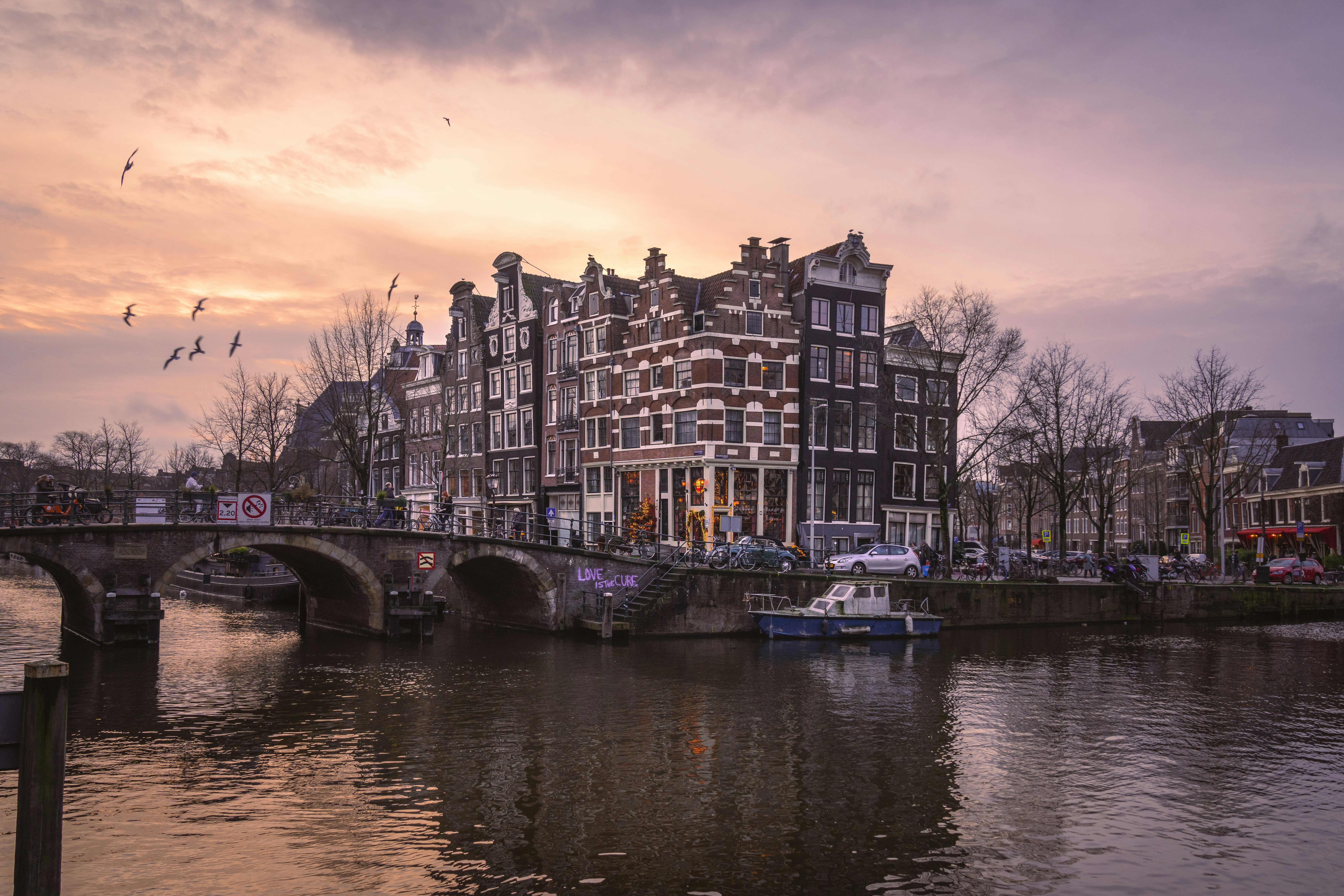
Amsterdam canals
Amsterdam earns its reputation the moment you step outside the airport and into a city that feels genuinely alive at every hour. Transfer to the Pulitzer Amsterdam, one of the most distinctive hotels in Europe, built across 25 historic canal houses in the heart of the Jordaan district. The rest of your day is unscheduled by design. Wander the canals, find a grand café for lunch, pick up a stroopwafel from a street vendor and let the city set the tone for the journey ahead. Your Viking Host is available at the hotel to help you plan your time and make the most of every hour in Amsterdam.
Day 2: Walking Amsterdam like a local
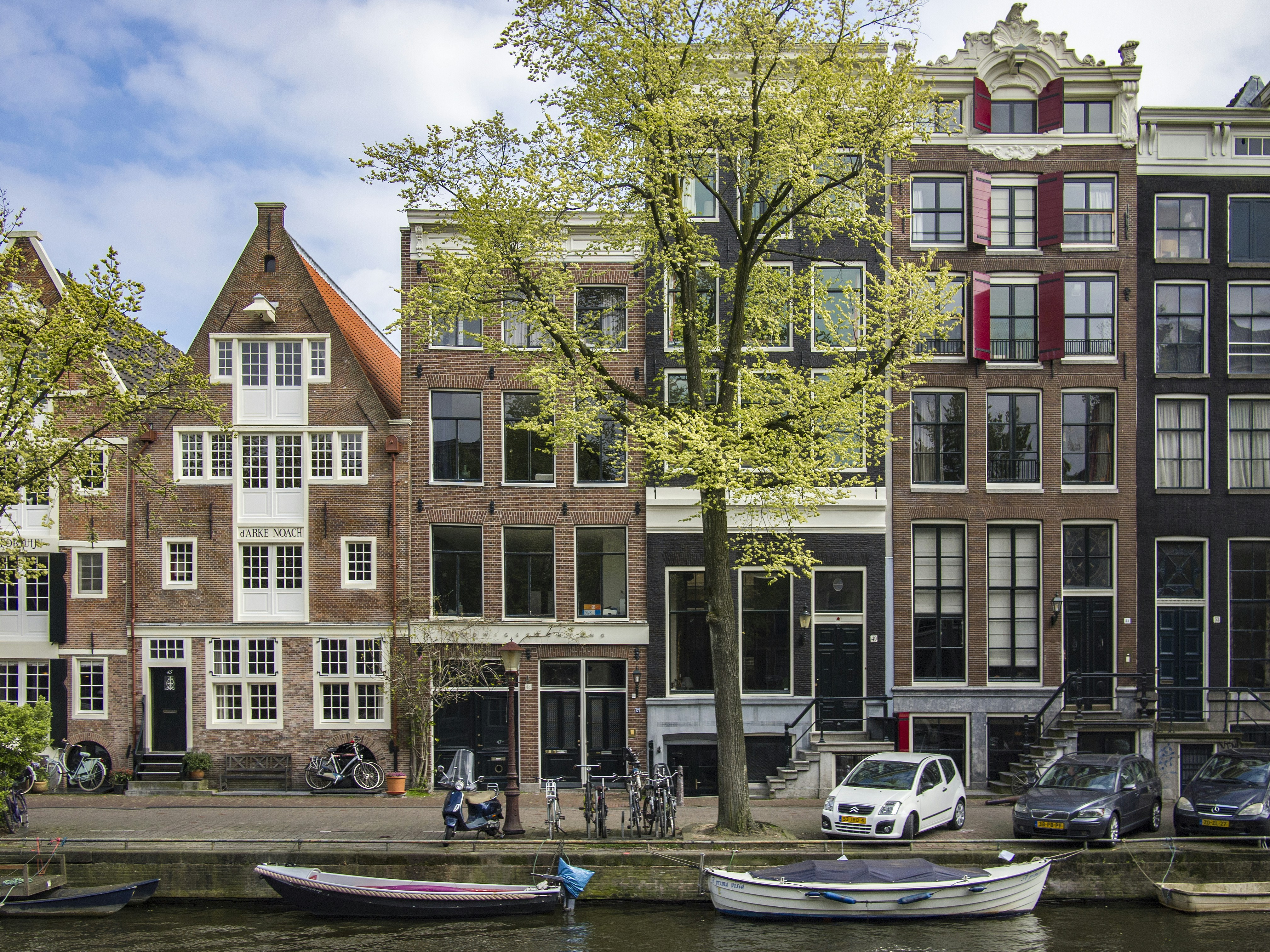
Historic canal houses along the Jordaan district
This morning you join a guided walking tour through Amsterdam's historic streets, passing Wester Church, the Anne Frank House, and the elegantly preserved canal houses of the Golden Age. The tour is included with your extension and led by a local guide who brings the Dutch Golden Age to life in a way that no museum can replicate. A practical note worth taking seriously: If you want to go inside the Anne Frank House, book your tickets online well in advance as it sells out weeks ahead. Your afternoon and evening are completely free, and Amsterdam rewards independent exploration. Find a brown café along the Prinsengracht, browse the Rijksmuseum's collection of Rembrandt and Vermeer, or simply follow the canals until you find somewhere worth stopping.
Day 3: Last morning in Amsterdam, then the river begins
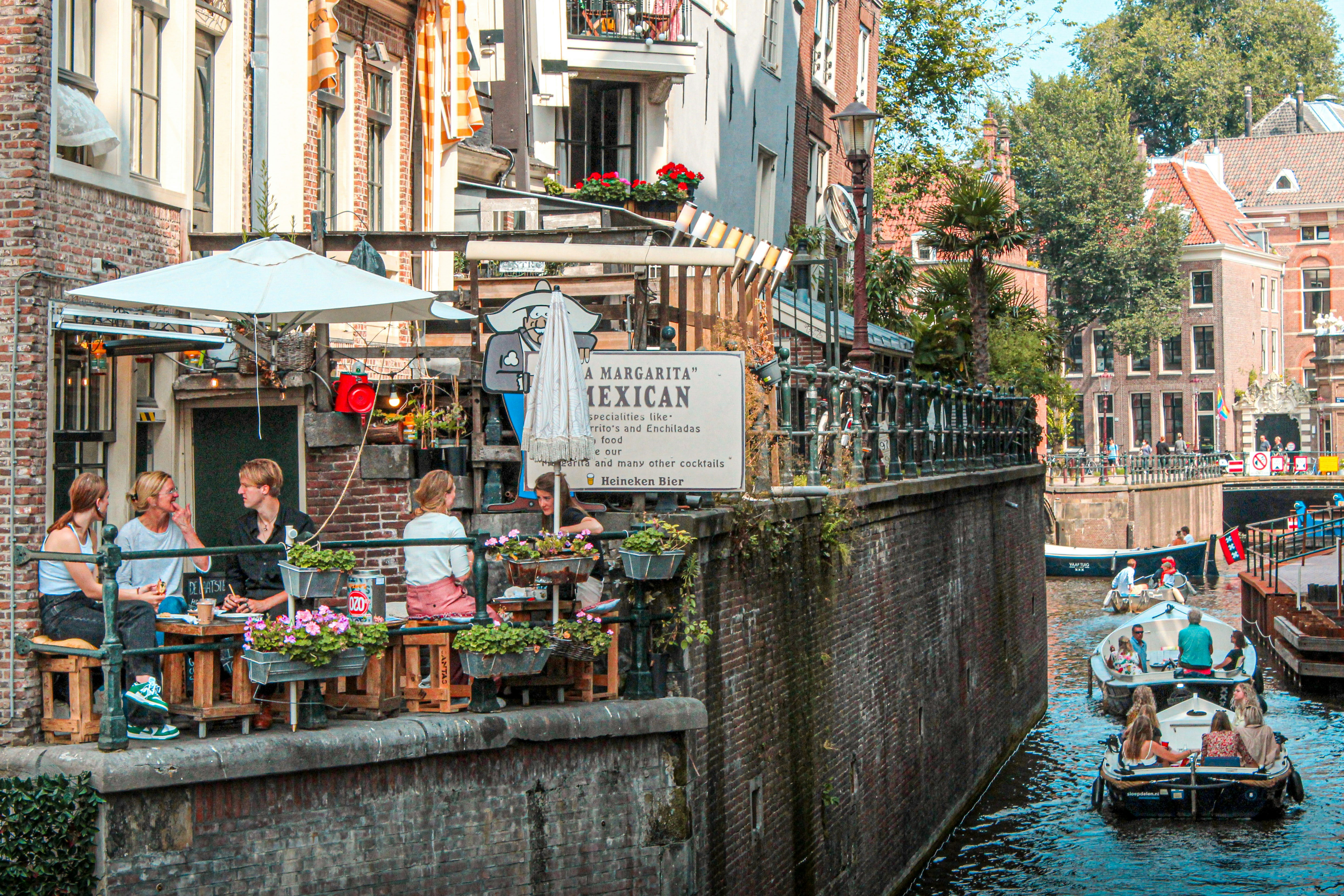
Canalside dining in Amsterdam
Your final morning in Amsterdam is yours completely. Sleep in, find a café for a long breakfast, pick up anything you missed the day before. The Rijksmuseum and the Van Gogh Museum are both within easy walking distance of the Pulitzer if you want to spend your last few hours with world-class art. This afternoon, you transfer to your Viking Longship and the river cruise begins. There is something genuinely memorable about the moment you step on board and realize that everything from here is taken care of. Dinner tonight is served on board as your first taste of the Viking experience.
Day 4: Kinderdijk & the Dutch countryside
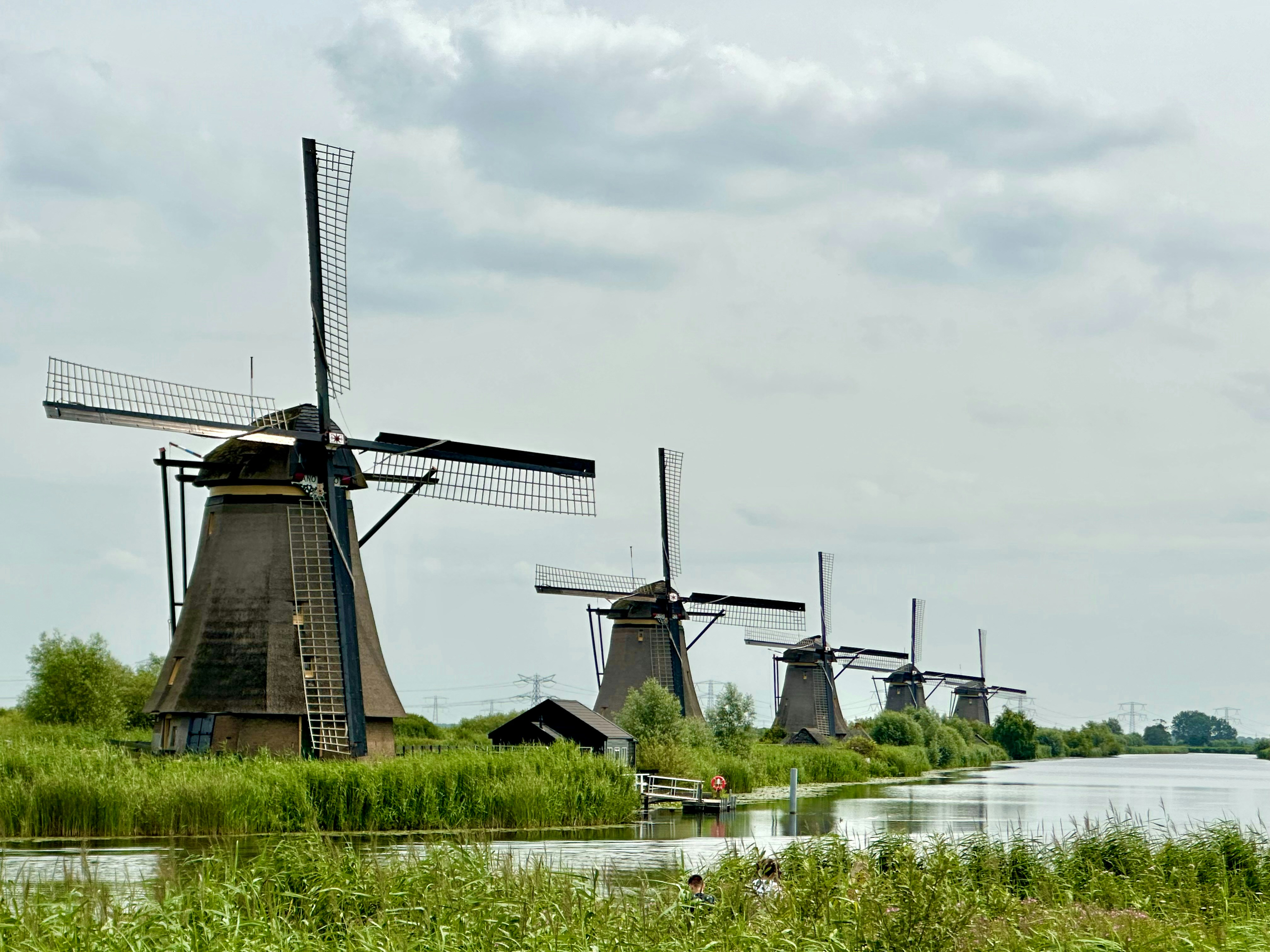
Historic windmills at Kinderdijk, UNESCO World Heritage Site, The Netherlands
This morning your ship sails to Kinderdijk, home to 19 historic windmills that have been pumping water from the Dutch lowlands since the 18th century and designated a UNESCO World Heritage Site. It sounds like a postcard and it is, but standing among them on foot with the flat green polder landscape stretching in every direction is one of those experiences that earns its reputation completely. Your included shore excursion brings the engineering ingenuity behind the Dutch water management system to life in a way that changes how you see the entire country. This afternoon, the ship continues south into Germany, and you begin to feel the Rhine take hold. Have a drink on the Aquavit Terrace and watch the landscape shift from Holland to something older and more dramatic.
Day 5: Cologne & the Gothic Cathedral
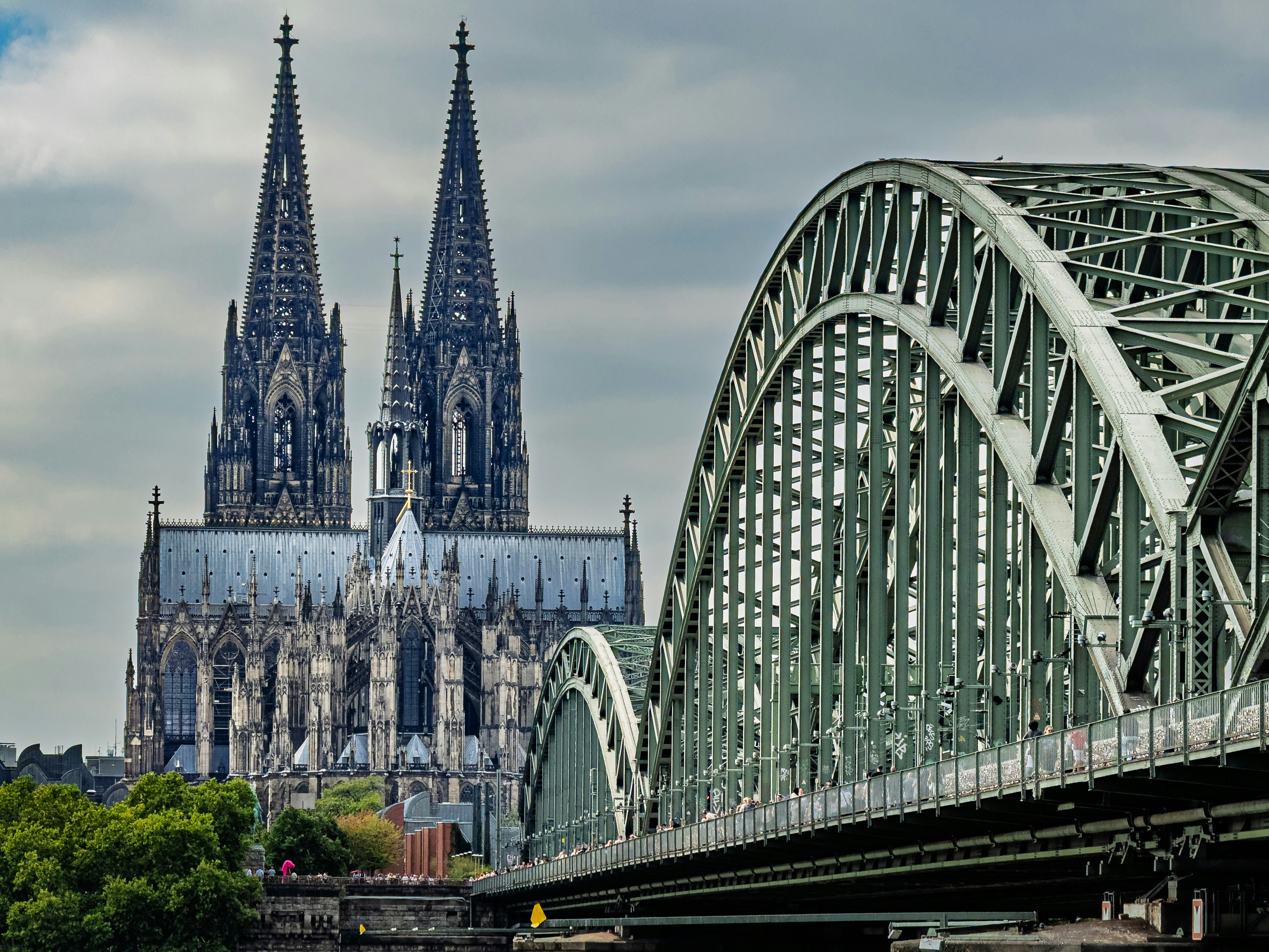
Cologne Cathedral, UNESCO World Heritage Site, Germany
Cologne announces itself from the river before you even dock—the twin spires of the Kölner Dom rise above the city skyline and make clear that you have arrived somewhere significant. This is one of the great Gothic cathedrals of Europe, a UNESCO World Heritage Site that took over 600 years to complete and still manages to stop people in their tracks. Your included shore excursion takes you through Cologne's Old Town and past Roman ruins, medieval streets, and the famous Hohenzollern Bridge covered in thousands of love locks. A practical note: The cathedral is free to enter and the interior is worth as much time as you can give it. If you have any energy left in the evening, Cologne's Old Town is one of the most walkable and genuinely lively city centers on the entire Rhine.
Day 6: Koblenz & the Middle Rhine Valley
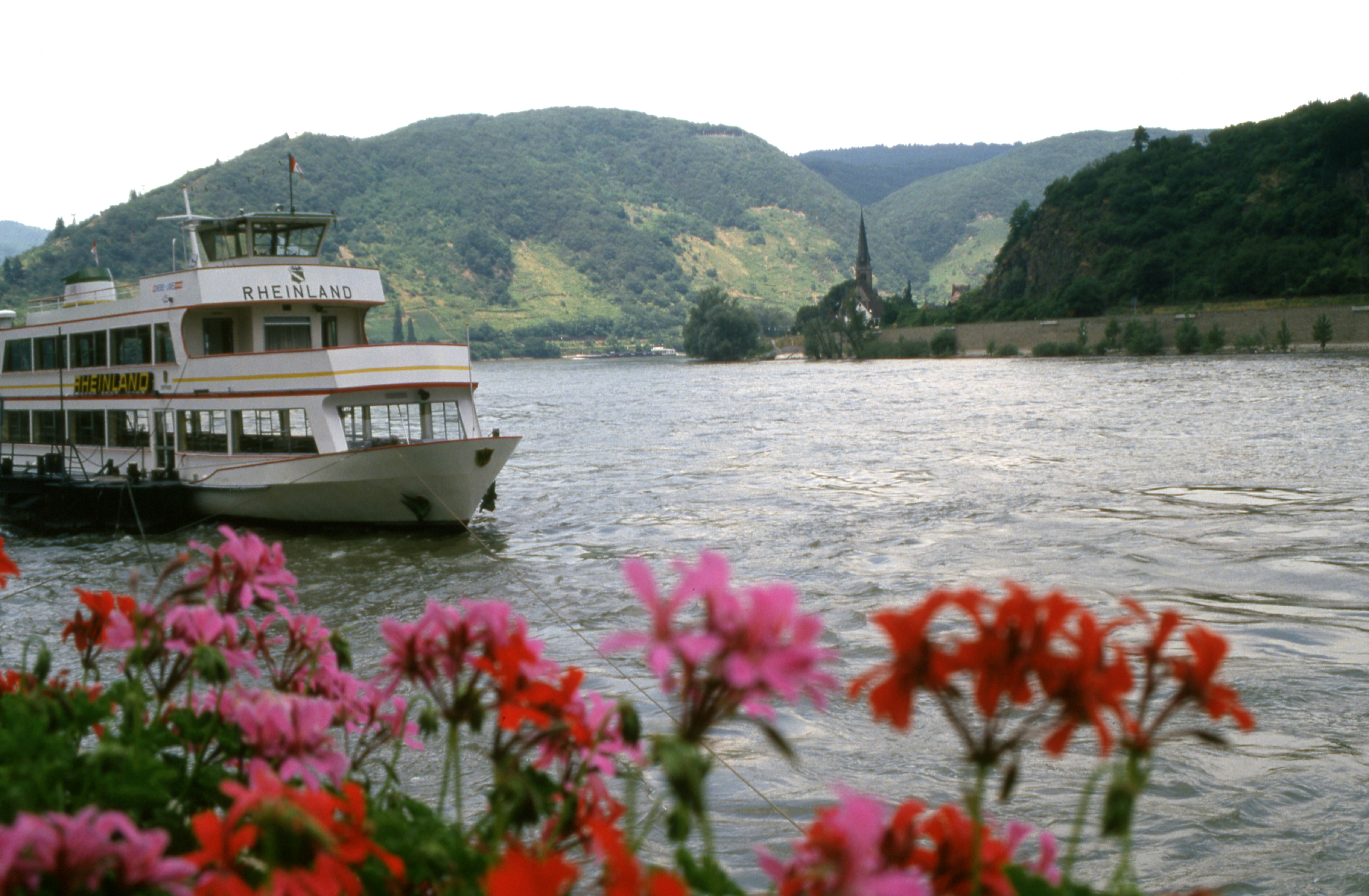
The Middle Rhine Valley, UNESCO World Heritage Site, Germany
Koblenz sits at one of the most strategically significant points in all of Europe, the place where the Moselle River flows into the Rhine, a confluence that armies and traders have fought over for two thousand years. Your included shore excursion takes you through the Old Town to Deutsches Eck, the dramatic promontory at the meeting of the two rivers, where an enormous equestrian statue of Emperor Wilhelm I surveys the waterway below. After Koblenz, the ship enters the Middle Rhine Gorge, a UNESCO World Heritage Site and arguably the most dramatic stretch of the entire river. Castle after castle lines the hillsides, vineyards drop steeply to the water's edge, and somewhere along the way you pass the Lorelei Rock, the legendary cliff that gave its name to one of Germany's most famous folk songs. This is the afternoon to be on the Sun Deck.
Day 7: Rüdesheim & the Rheingau wine country
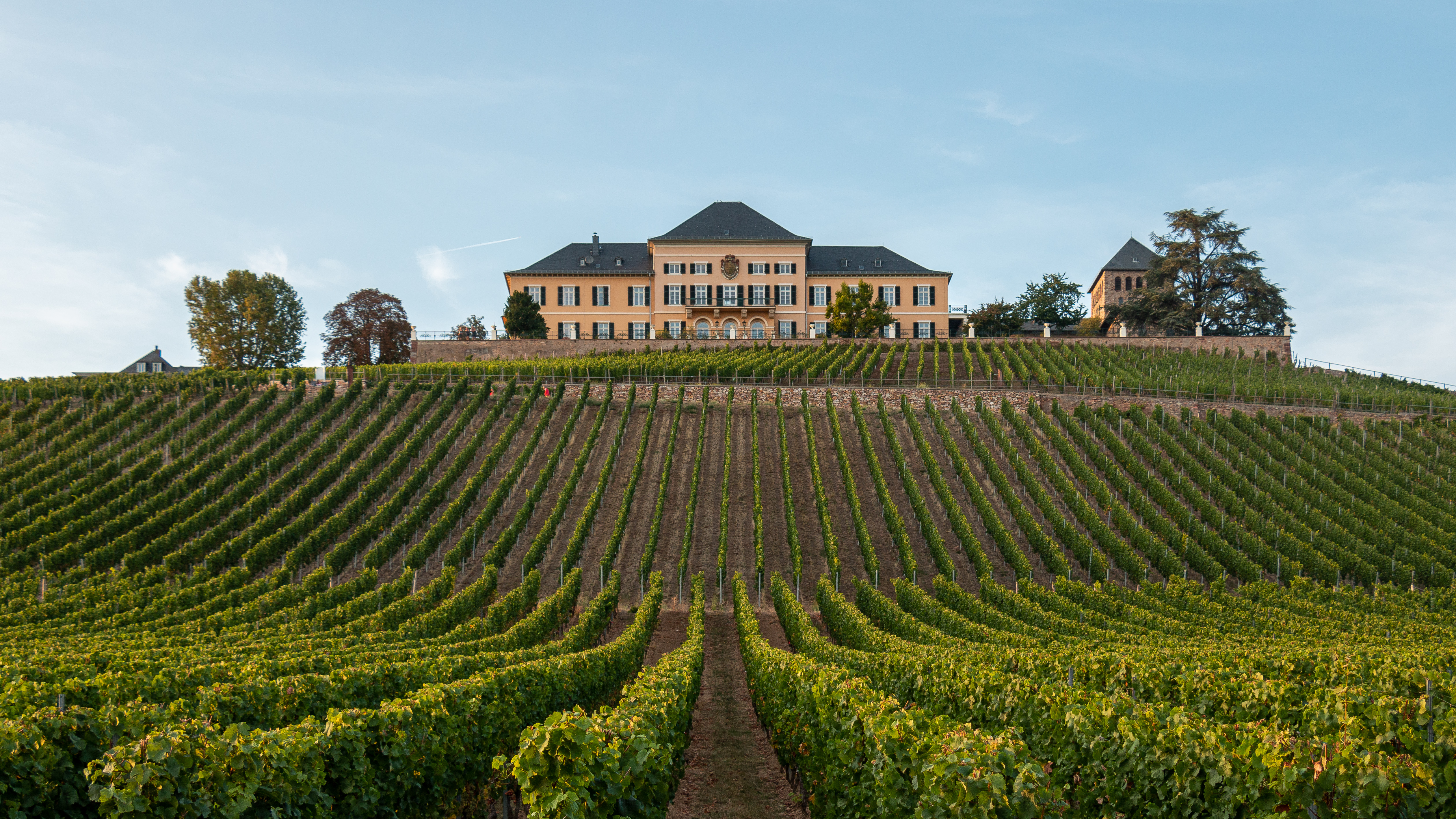
Rheingau vineyard estate above the Rhine, Germany
Rüdesheim is a small Rhine town with an outsized reputation, and most of it comes down to one thing: wine. The Rheingau region produces some of Germany's finest Rieslings, and Rüdesheim sits at its heart, surrounded by steep south-facing vineyards that have been cultivated since the time of Charlemagne. Your included shore excursion takes you through the town and along the Drosselgasse, a narrow pedestrian lane lined with wine taverns and restaurants that has been drawing visitors for centuries. The honest insider tip here is to linger. Order a glass of the local Riesling at one of the outdoor terraces, watch the river traffic below, and resist the urge to rush back to the ship. This is exactly the kind of unhurried afternoon that a river cruise is built for.
Day 8: Speyer & the Imperial Cathedral
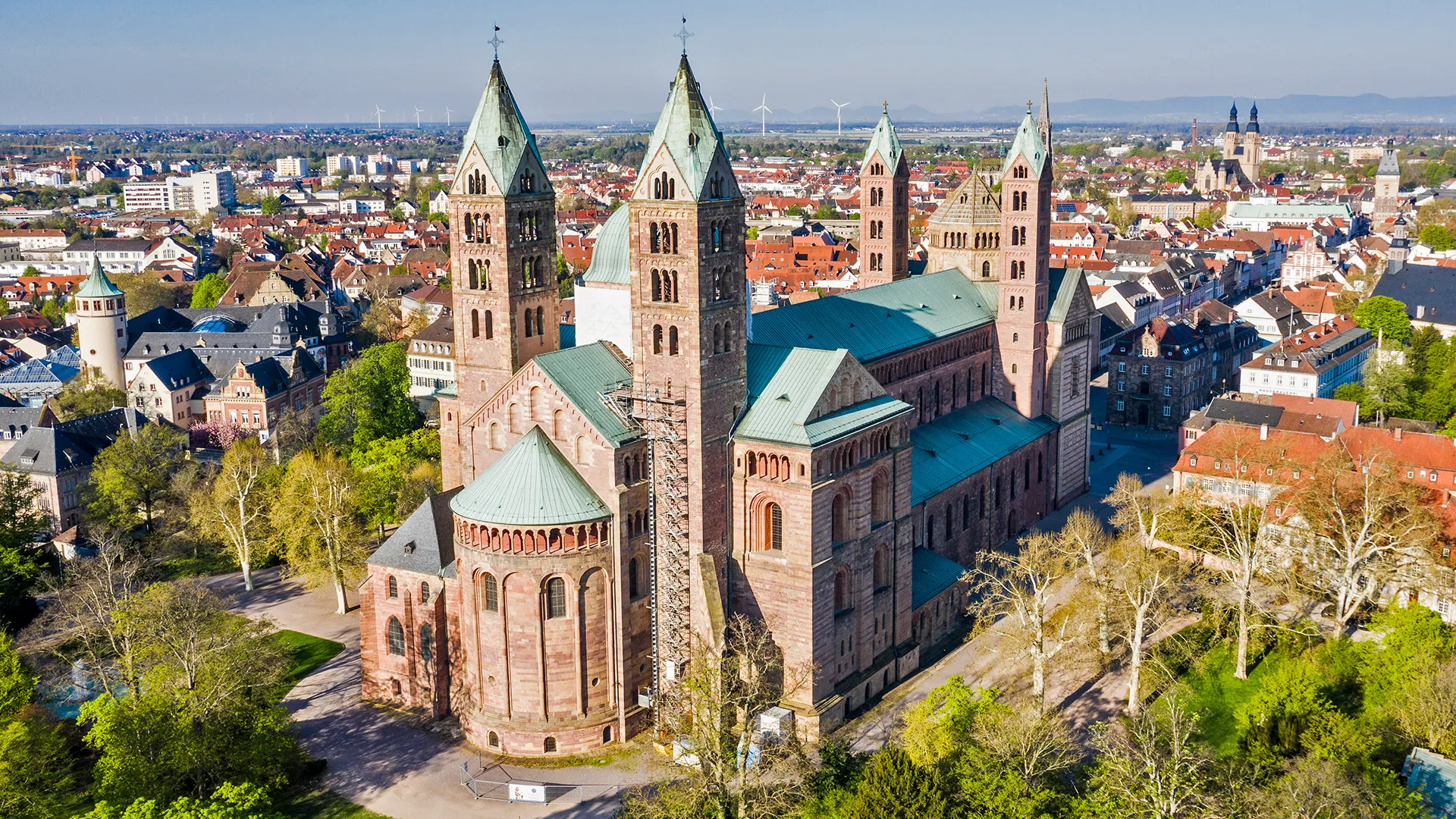
The Imperial Cathedral of Speyer, UNESCO World Heritage Site, Germany
Speyer is one of those Rhine towns that rewards the traveler who pays attention. The Kaiserdom, or Imperial Cathedral, is a UNESCO World Heritage Site and one of the finest examples of Romanesque architecture in the world, built in the 11th century as the burial church of the Holy Roman Emperors. It is older than Notre-Dame, older than most of what passes for ancient in Western Europe, and it sits at the end of a long pedestrian boulevard that gives you the full approach it deserves. Your included shore excursion covers the cathedral and the historic old town, but leave yourself time to walk the Maximilianstrasse independently and find a café for a quiet lunch before returning to the ship. Speyer is a small city that most travelers have never heard of and almost everyone remembers.
Day 9: Strasbourg & the art of the in-between
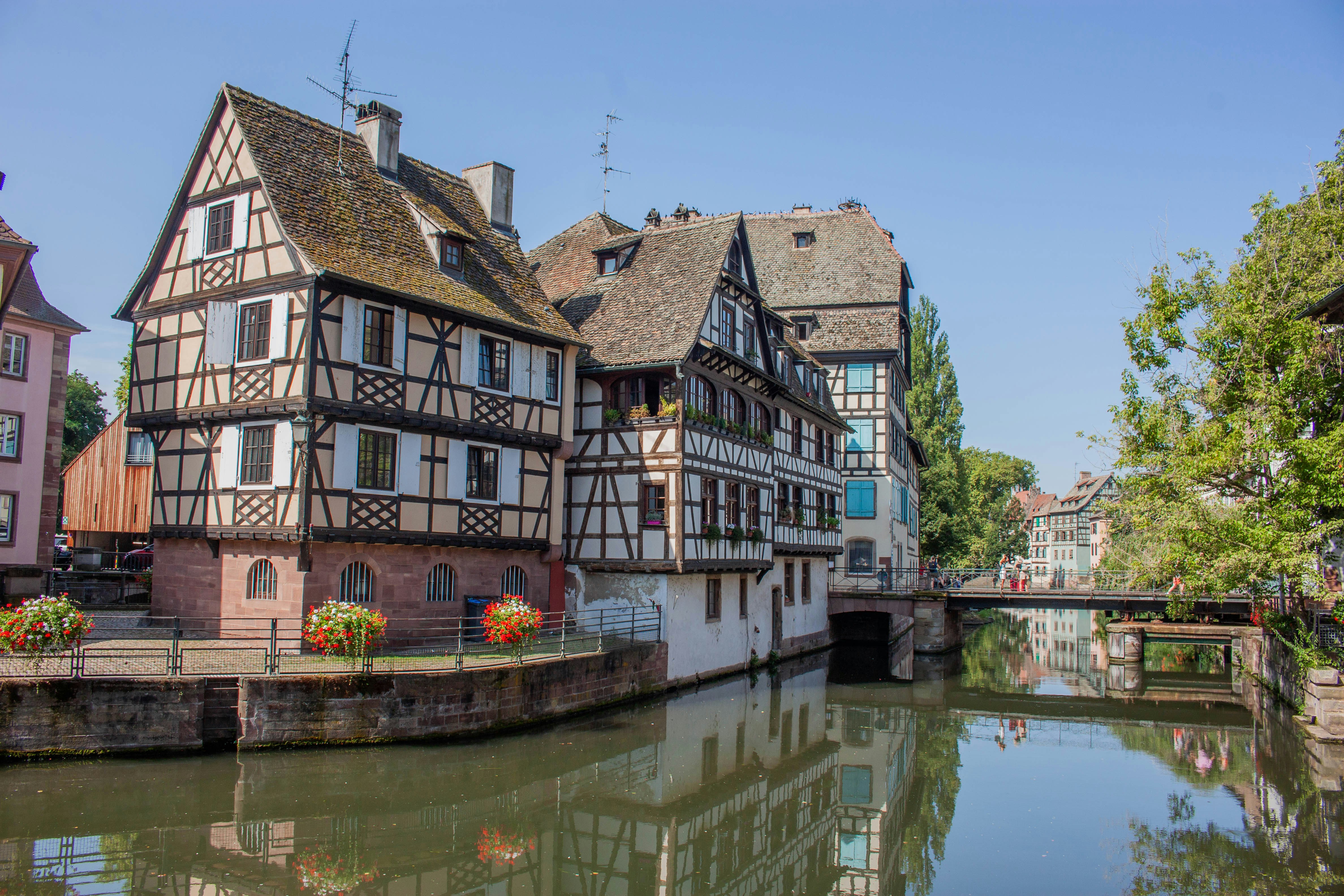
The Petite France quarter, Strasbourg, Alsace, France
Strasbourg is one of Europe's most fascinating cities precisely because it has never fully belonged to one country. Passed between France and Germany four times in the last 150 years, it has absorbed the best of both cultures into something entirely its own—French elegance and German craftsmanship living side by side in the same half-timbered streets. Your included shore excursion takes you to the Strasbourg Cathedral, a masterpiece of Gothic architecture that was the tallest building in the world for over two centuries, and through the Petite France quarter, a medieval neighborhood of canals, flowers, and beautifully preserved houses. The insider tip here is to eat. Strasbourg is the capital of Alsatian cuisine and the tarte flambée, choucroute garnie, and local pinot gris are not to be missed. This is one of those port days where you will wish you had more time.
Day 10: Breisach & the Black Forest
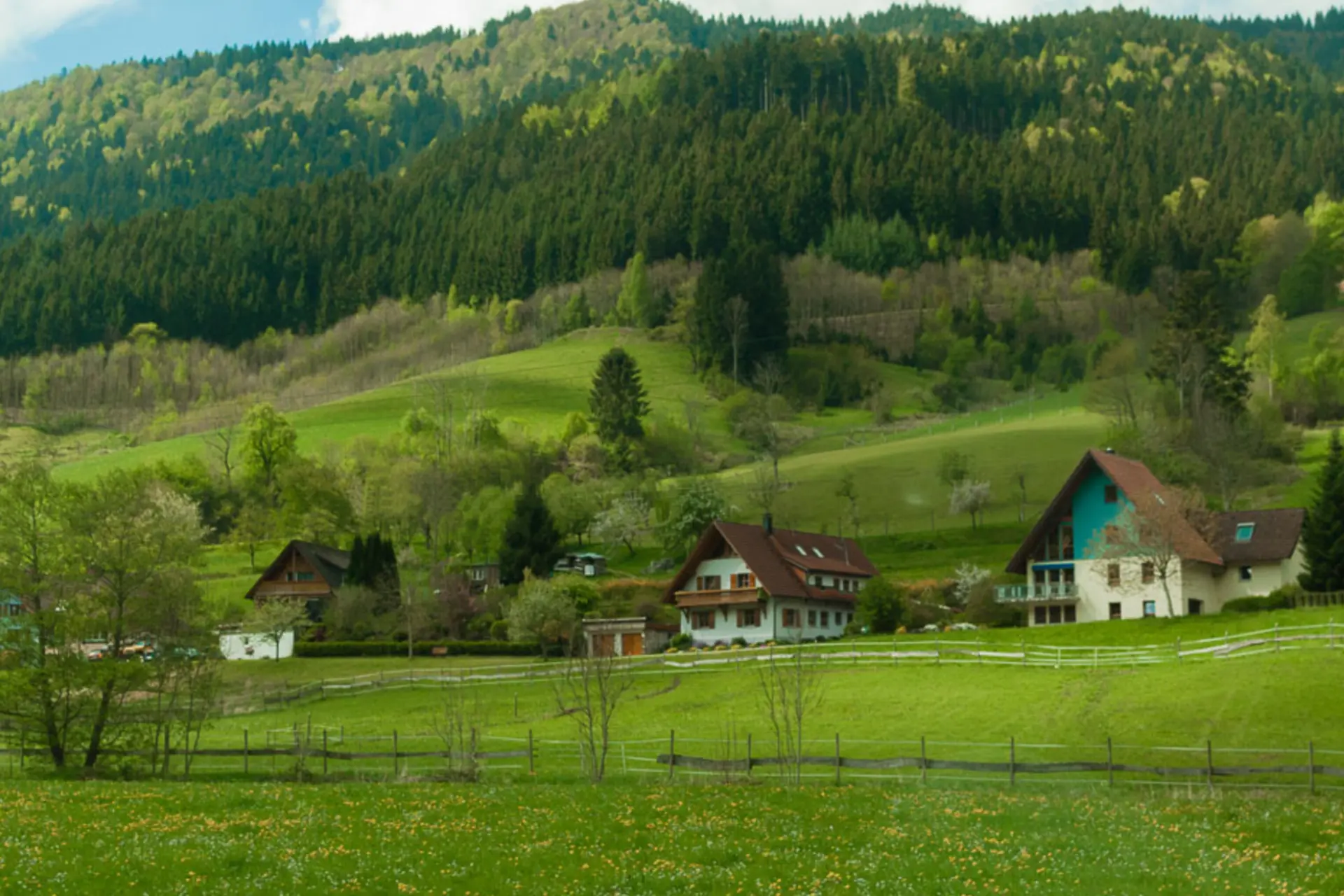
Traditional farmhouse in the Black Forest, Germany
Breisach is a small Rhine town on the German-French border that serves as the gateway to one of Germany's most iconic landscapes, the Black Forest. Your included shore excursion takes you into the forest itself, through villages of steep-roofed farmhouses and dense fir trees that inspired the Brothers Grimm and gave the world both the cuckoo clock and the Black Forest cake. The cuckoo clock demonstration is genuinely fascinating regardless of whether you plan to buy one. The craftsmanship that goes into even a modest clock is extraordinary and the workshop visit puts the entire tradition in context. This is also your last full day on the river, which makes the evening worth marking. Have dinner on the Aquavit Terrace if the weather allows, pour a glass of something local, and watch the Rhine slide past one final time before Basel tomorrow.
Day 11: Basel & the journey to Lucerne
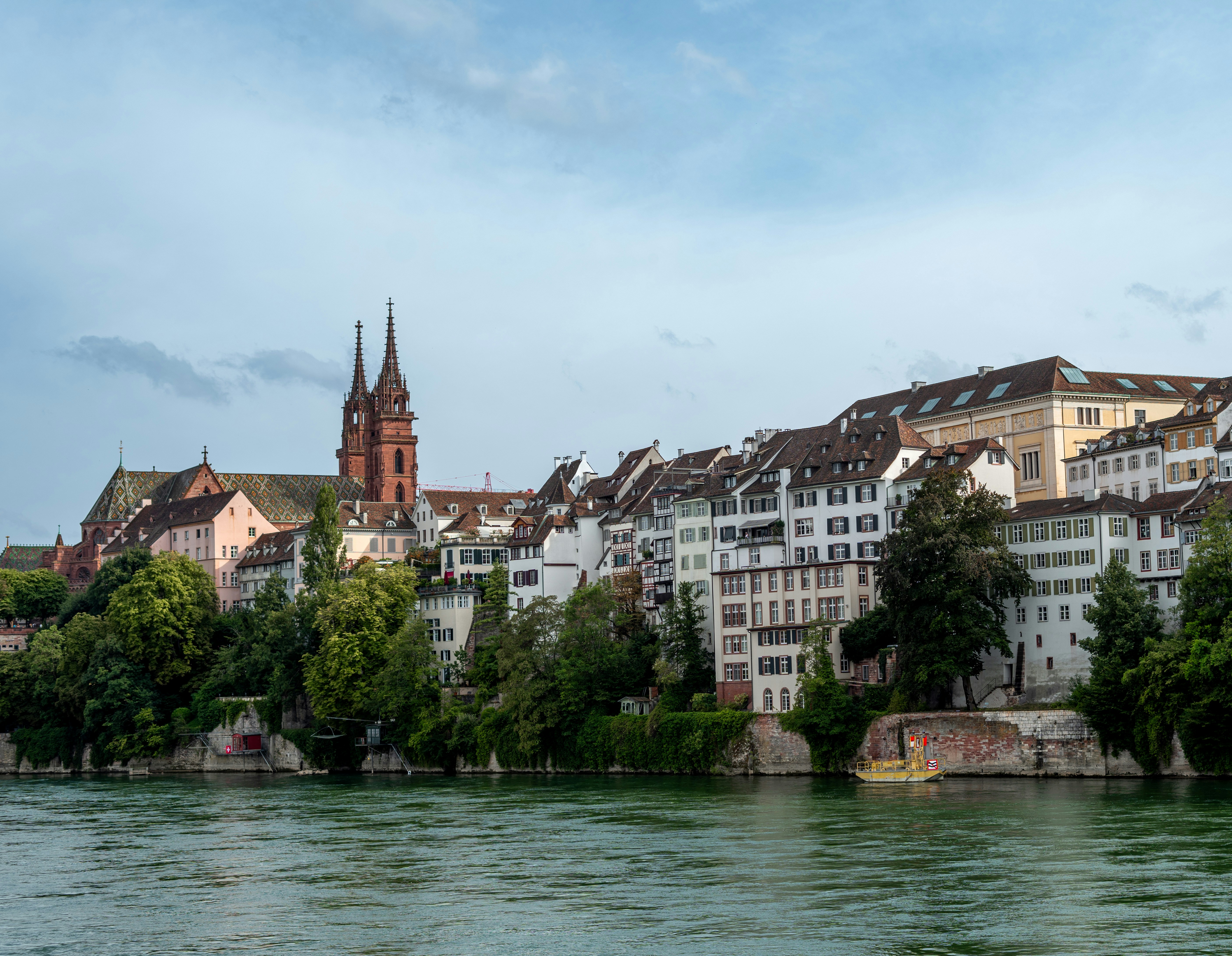
The medieval old town of Basel, Switzerland
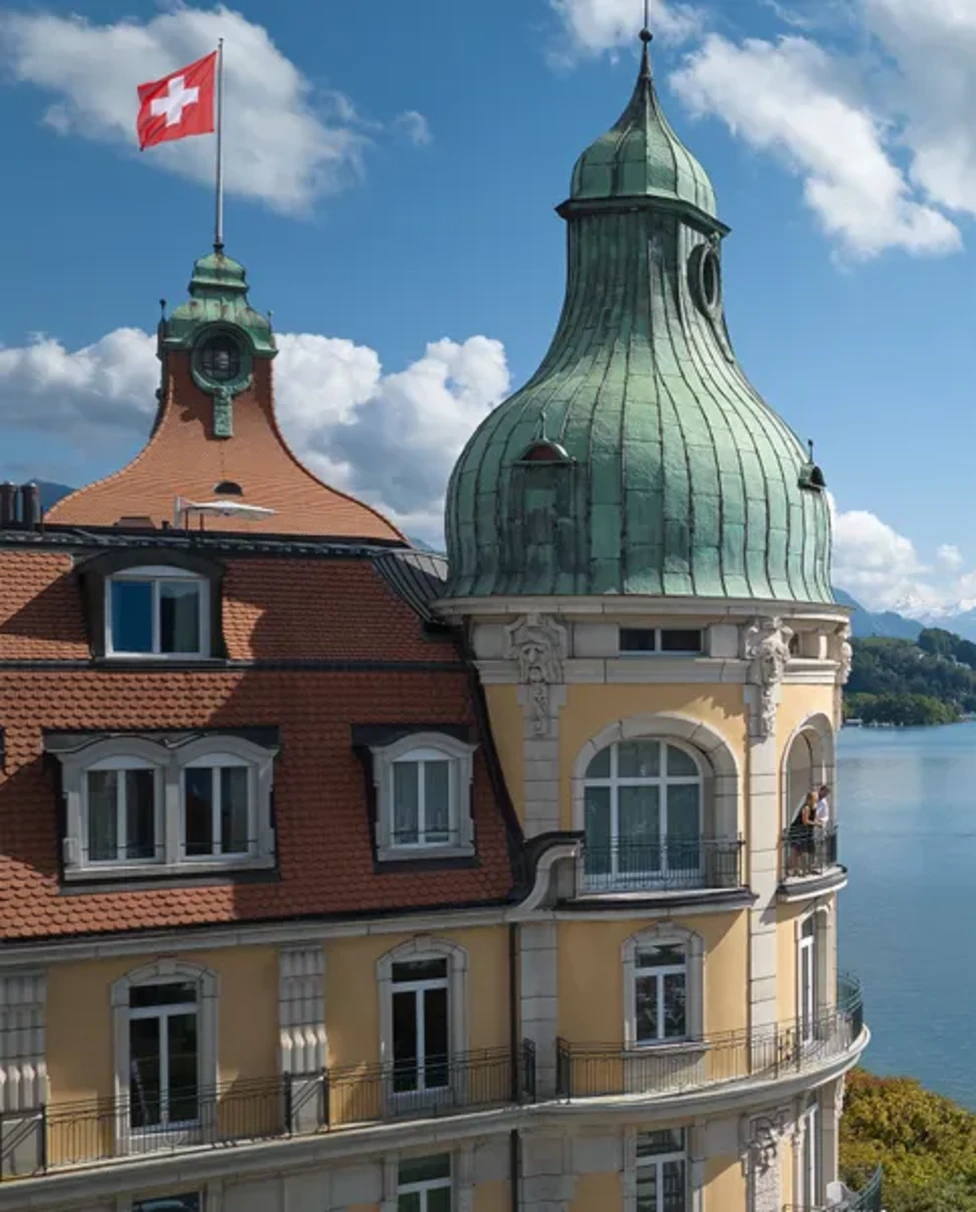
Basel is where the river cruise ends and Switzerland begins in earnest. Before you disembark, take a moment on deck as the ship docks for the final time. The city itself sits at the precise point where France, Germany, and Switzerland converge, and even a short walk through the medieval old town reveals a city of surprising cultural depth, home to more museums per capita than almost anywhere else in Europe. Your transfer to Lucerne takes roughly an hour by road and the scenery shifts quickly from the Rhine plain to something dramatically alpine. By the time you arrive at the Mandarin Oriental Luzern and see Lake Lucerne stretching out below the mountains for the first time, the contrast with Amsterdam three days earlier is complete. This is the moment the full arc of the journey reveals itself.
Day 12: Lucerne, lake & the Alps
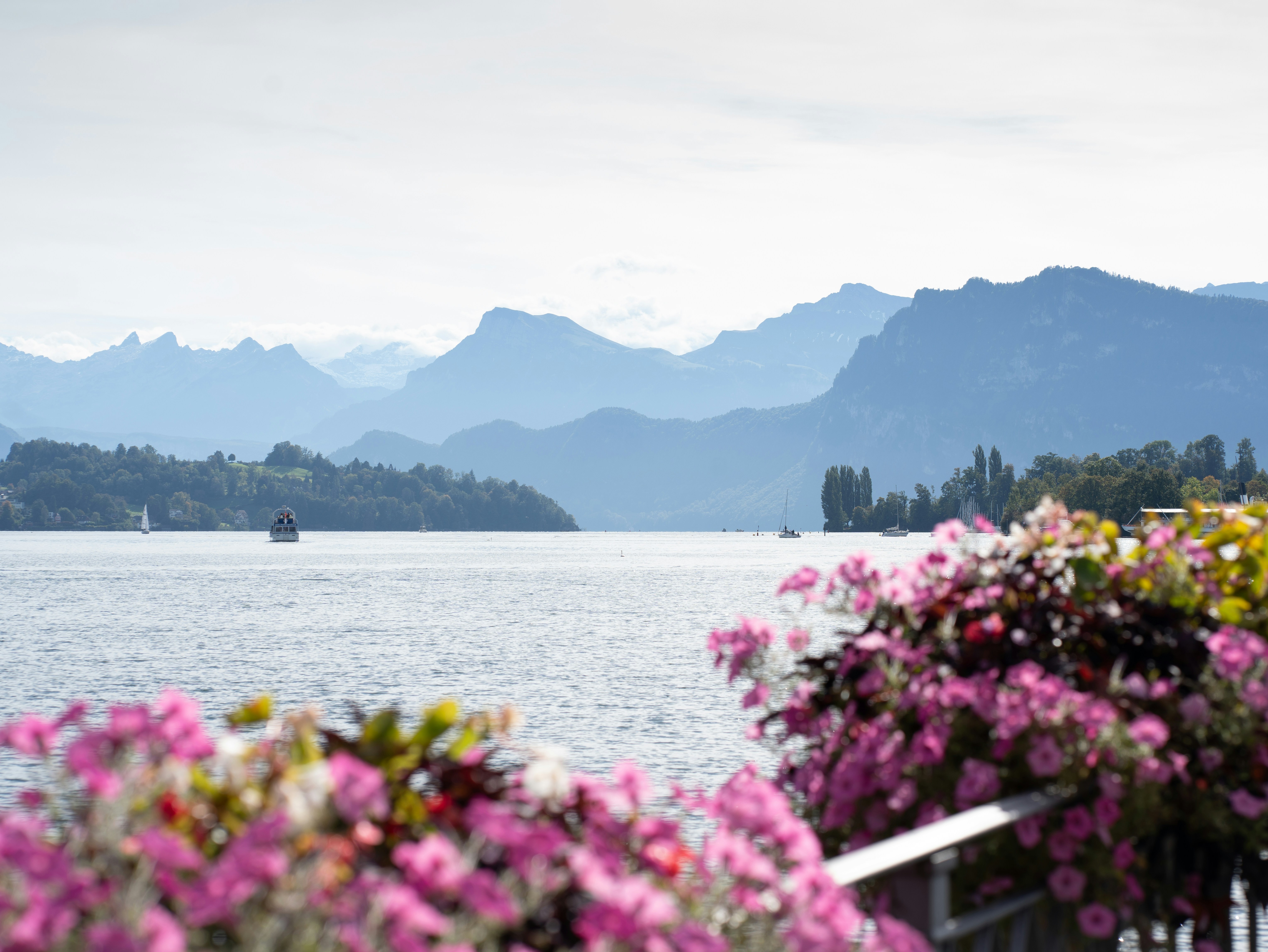
The Chapel Bridge and Lake Lucerne, Switzerland
Lucerne is the kind of city that makes you wonder why you didn't visit sooner. The Chapel Bridge, a 14th-century covered wooden footbridge spanning the Reuss River, is one of the most photographed structures in Switzerland and earns every frame. Your included walking tour covers the Old Town, the iconic Water Tower, and the beautifully preserved burgher houses that line the riverbanks, but the real draw is what surrounds the city on every side. This afternoon, you board a scenic cruise on Lake Lucerne, gliding across water so clear and still it mirrors the peaks above it, before ascending Mt. Pilatus by cogwheel train for views that stretch across the entire alpine panorama. The Mandarin Oriental puts you in the best possible position to experience all of it, right on the lake with the mountains framed in every window.
Day 13: Einsiedeln Abbey, Swiss cheese & chocolate
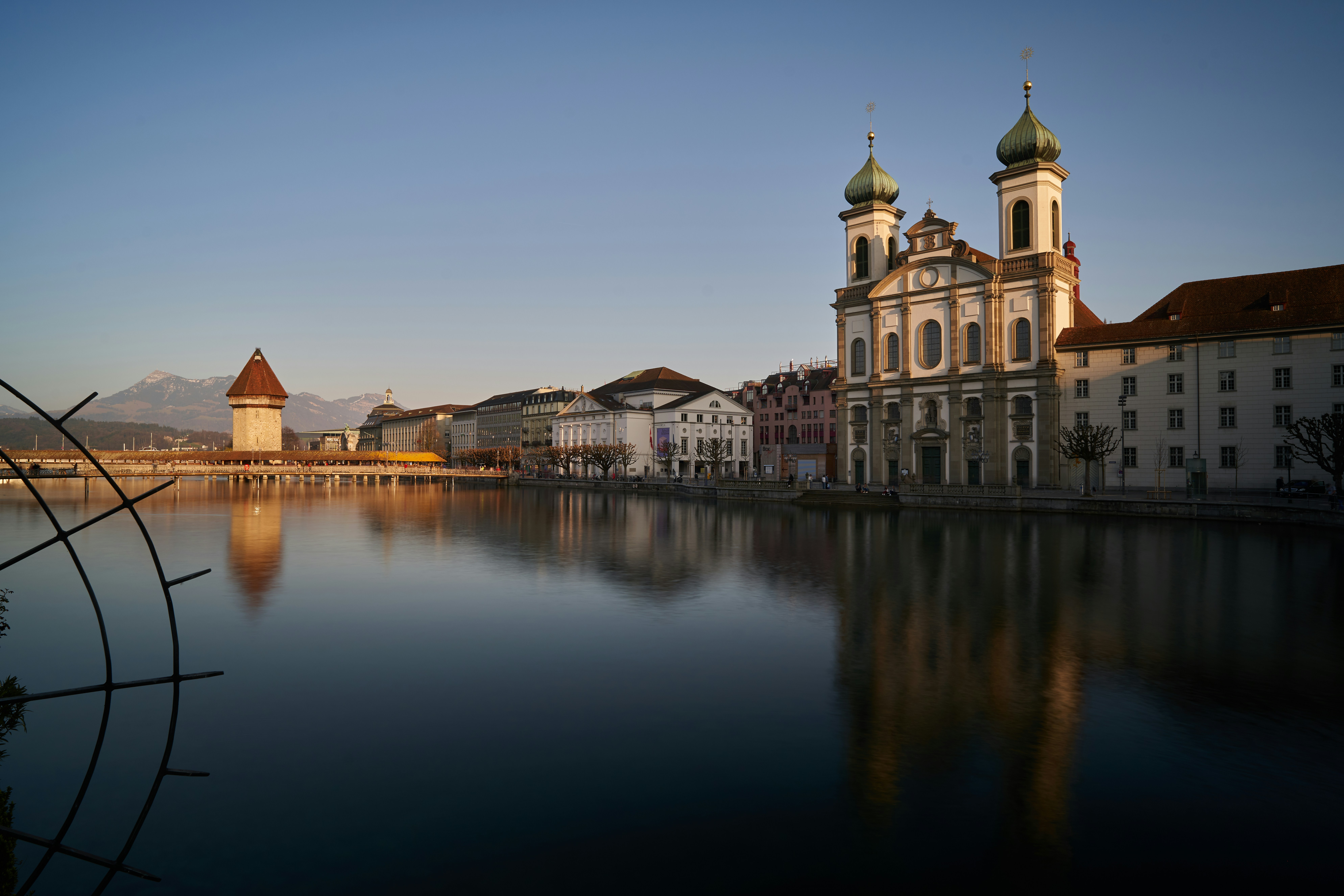
Einsiedeln Benedictine Abbey, Switzerland
Your final day in Switzerland is one of the most distinctive of the entire journey. The morning takes you to Einsiedeln Benedictine Abbey, a baroque masterpiece built around a pilgrimage shrine that has drawn visitors for over a thousand years, set in a high valley that feels genuinely removed from the modern world. From there, you visit a working alpine dairy farm where you meet the farmer, learn how mountain milk becomes the cheese Switzerland is famous for, and make your own bergmutschli before sitting down to a fondue lunch that puts every other fondue you have ever had in perspective. The afternoon brings a visit to a Swiss chocolatier where the process of making handmade chocolate is as compelling as the tasting that follows. It is a full day that covers three of Switzerland's most enduring traditions and sends you home with a very clear sense of what this country is actually about.
After breakfast on Day 14, transfer to the airport for your return flight.
Need to know
The Rhine Getaway runs March through November and the experience varies significantly by season. October is the sweet spot for this itinerary. The harvest is in full swing in the Rheingau, the crowds are thinner than summer, the light is extraordinary and the temperatures are comfortable without being cold. November sailings coincide with the opening of the Christmas markets in Cologne, Strasbourg, and Basel, which transforms every port into something genuinely magical but also brings more visitors.
Book your Anne Frank House tickets the moment you confirm your Amsterdam dates. They sell out weeks in advance and cannot be purchased at the door.
Every shore excursion included with your Viking fare is genuinely worthwhile on this itinerary. Unlike some river cruise itineraries where the included excursion is a brief walking tour, the Rhine Getaway ports are dense with history and your guide is the difference between seeing a cathedral and understanding one.
Pack for layers. Even in summer, the Rhine Valley mornings are cool on the water and the Black Forest runs cold. A light jacket you can tie around your waist handles everything this itinerary throws at you.
The Mandarin Oriental Luzern is one of the finest hotels in Switzerland. If your budget allows, upgrade to a lake view room. Waking up to Lake Lucerne with the Alps behind it on your first morning in Lucerne is worth every franc.

Travel Advisor
Daniel Griffin Smith
Daniel Griffin Smith

Get in touch with Daniel Griffin Smith
Did you like this guide? Reach out to customize and book your own experience. Or, just to chat about travel in general.
For more inspiration and insider recommendations, visit our cruises page.