

The Ultimate Outer Banks 4x4 Driving Guide: Permits, Safety & Pro Sand Driving Tips

Curated By
Tobias Hale
Curator’s statement
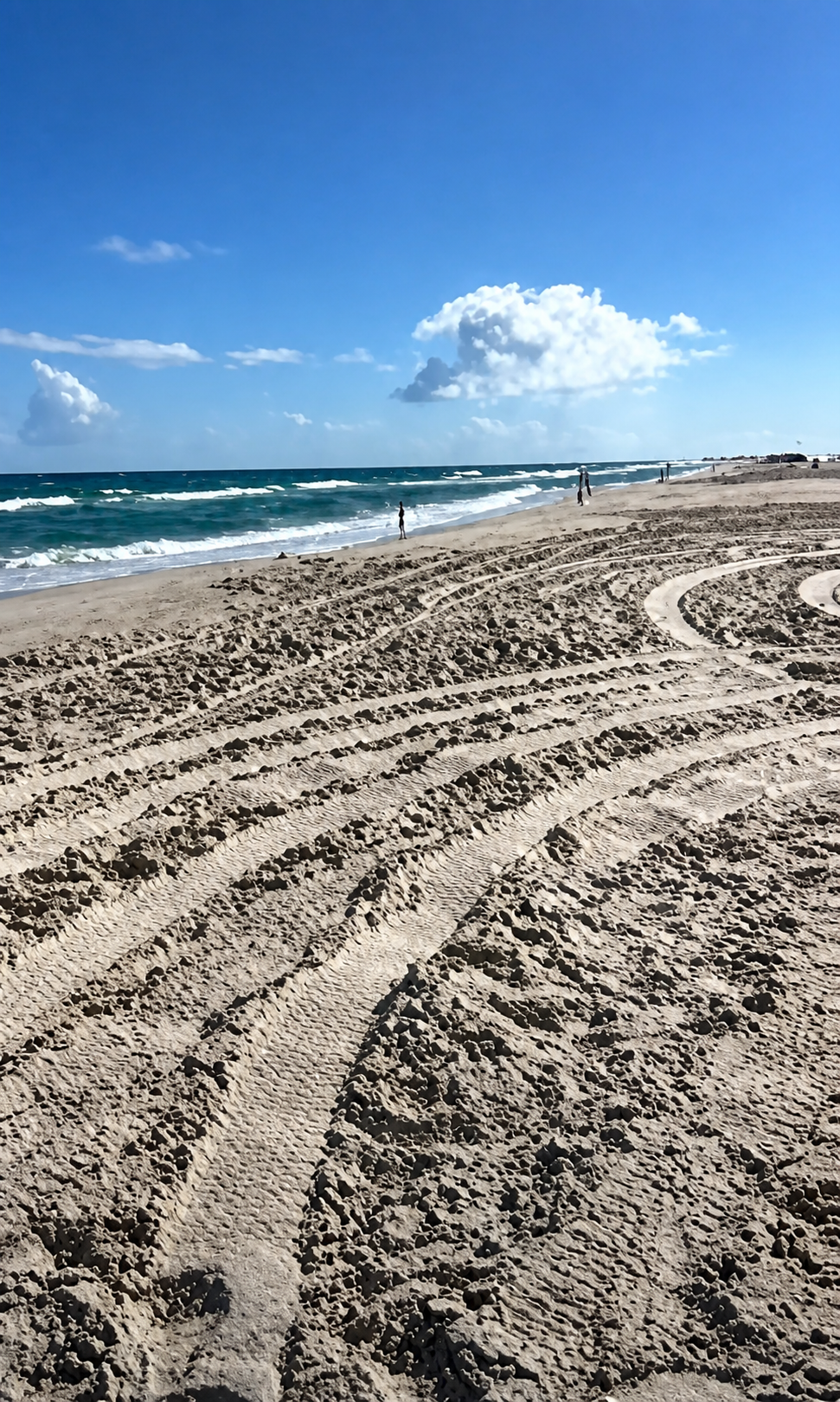
There’s something about setting up on the beach with your friends and family for the day that just sticks with you. It’s easy to get hooked on it. You’re not packed into a crowded access point, you’ve got room to spread out, and for a while it feels like your own private beach. That mix of space and freedom is a huge part of what makes the Outer Banks so special.
The Fora Difference
Book with Tobias Hale to access exclusive perks and experiences on your trip.

Killer perks
Free upgrades, spa credits and more—we got you

Personalized recs
Customized travel planning for your style

Insider knowledge
Expert advice from people who’ve actually been there
Where to stay
Unlock perks by contacting Tobias Hale to book your trip.
My favorite way to “beach.”
If you’ve only seen the Outer Banks from paved roads and public beach accesses, you’ve only seen part of it. The real OBX is out on the sand.
Driving a 4x4 on these beaches isn’t just a fun bonus; it completely changes the experience. Once you do it, it’s hard to go back to crowded access points and hauling gear long distances.
I’ve driven the beaches from Carova all the way down to Ocracoke, and one thing stands out. The farther you go, the more space you find. Even in peak season, you can still end up with your own stretch of beach, sometimes with hundreds of yards between you and the next vehicle.
Some of the most well-known areas, especially north of Corolla in Carova, are only accessible by 4x4. There are no paved roads out there. It’s basically a sandy highway that locals use daily. During busy months, it gets crowded, especially with people hoping to spot the wild horses. If you pay attention to the tour trucks, they usually know where the horses are.
Having your own vehicle gives you freedom, but it also means you need to be responsible. You’re sharing the beach with other drivers, families, and wildlife. This isn’t a place to drive recklessly. Stay aware, be predictable, and respect the space around you.
The wild horses are one of the highlights. They’re descendants of Spanish mustangs, and seeing them in the wild is unforgettable. Just remember, they’re not pets. Keep your distance and never feed or approach them.
The remoteness is part of what makes this experience so special, but it also means you need to be prepared. There are no quick fixes out here. What you bring is what you have.
Rules you can’t ignore: Protecting the Outer Banks
Driving on the beach might feel wide open, but there are rules, and they matter. They’re there to protect both people and the environment.
Why you must stay off the dunes
This one is simple. Stay off the dunes.
It’s illegal, and it’s enforced. More importantly, dunes protect the coastline from storms and erosion. The plants growing on them hold everything together, and once they’re damaged, recovery takes a long time.
You’ll see fencing and designated walkways. Stick to them.
Speed limits, wildlife zones & beach etiquette
Speed limits usually range from 15 to 25 mph, depending on where you are. It might feel slow, but it makes sense when you consider how many people and animals are around.
You’ll also come across protected wildlife areas, especially during nesting season. These zones are clearly marked and sometimes closed off entirely. Ignoring them can lead to fines and real environmental damage.
Basic courtesy goes a long way out here. Give people space, don’t crowd set-ups, and keep your driving predictable.
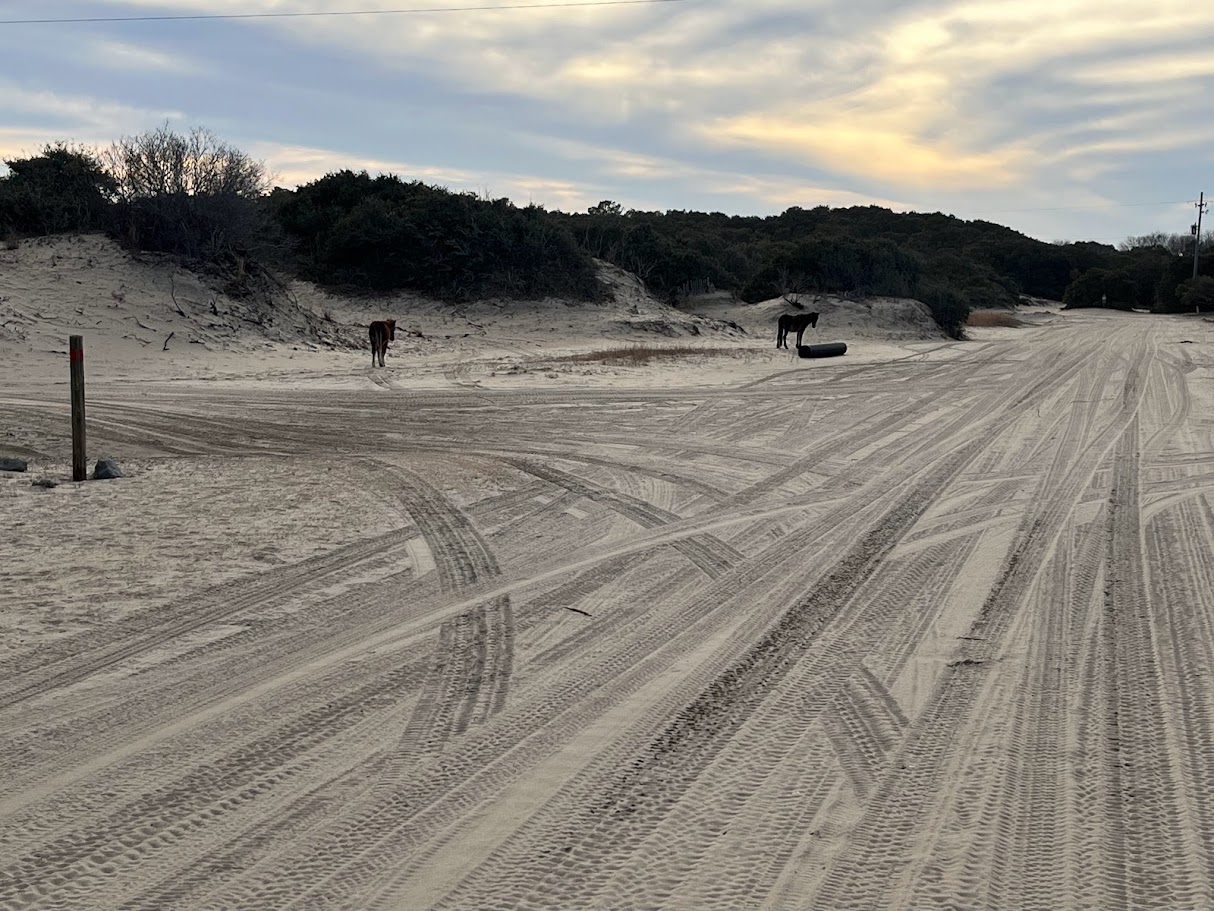
Just hang back and watch. Don't interact. Drive slowly. You don't want to hit one with your truck.
How to get your 4x4 beach driving permit
If you’re heading to places like Cape Hatteras National Seashore, you’ll need an ORV permit. Everything you’ll need to know is here: Outer Banks Driving Permits.
Cape Hatteras National Seashore ORV Permits: Permits are issued through the National Park Service and are required for designated off-road areas.
Typical pricing:
10-day permit: about $50
Annual permit: about $120
Your permit must be clearly displayed on your vehicle at all times.
Corolla and local access rules
Corolla’s 4x4 beaches don’t always require the same federal permits, but local rules still apply. During peak season, parking permits are required to have a day at the beach, and enforcement is active. Be careful here, the parking area has “the road” on either side of it, and you may have to watch for cars when walking to the water. Park perpendicular to the shoreline and back to the water. This beach has deeper, softer sand, especially at the only entrance/exit to the beach. Look for the ruts and keep momentum going. Get your tires down before you get to the entrance; there is no parking at the entrance.
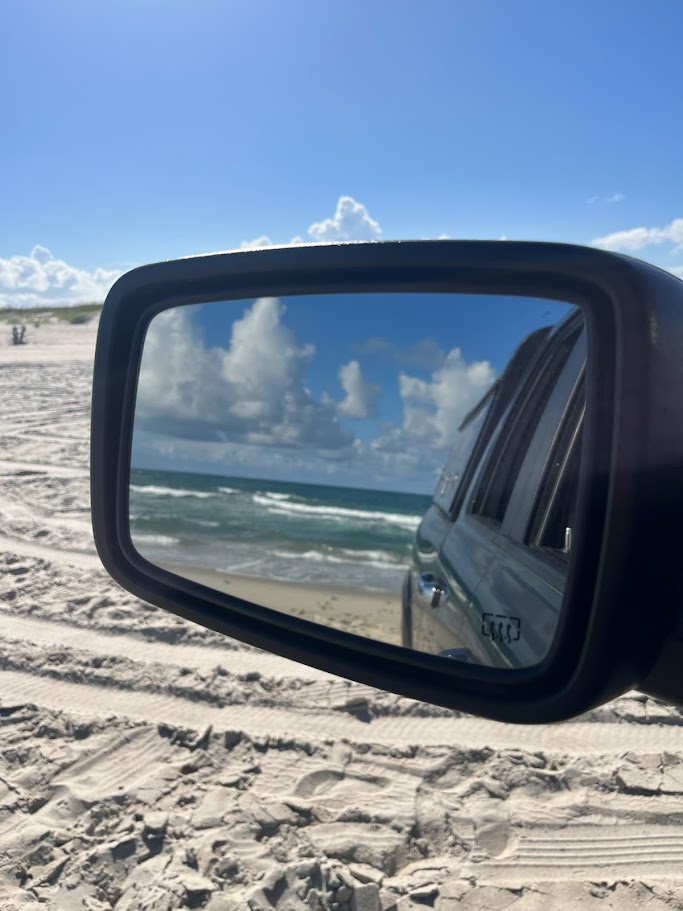
If you see this in your mirror, you did it right.
Essential vehicle setup before you hit the sand
Preparation makes all the difference.
Airing down your tires: Start around 15 to 20 PSI. Lower pressure gives your tires a wider footprint, which helps you stay on top of the sand instead of digging in.
Think of it like walking on sand barefoot versus wearing hard shoes.
Must-have gear
At minimum, bring:
Shovel
Tire gauge
Tow strap
Traction boards or even a piece of wood
If you don’t have your own air compressor, just know where you need to stop to refill your tires.
How to drive on sand without getting stuck
Driving on sand isn’t difficult, but bad habits will catch up with you fast.
Ruts vs fresh sand: Ruts are usually easier to drive on because the sand is more compacted. Stick to them when you can, especially if you’re new. Fresh sand might look smooth, but it’s often softer and more likely to get you stuck.
Keep your momentum: You don’t need speed. You need steady movement. Avoid sudden stops and aggressive acceleration. If your tires start spinning, ease off right away.
Stay away from the waterline
It might look like so much fun, like in the movies, but it comes with risks and is a bad idea.
Sand shifts
People tend to be near the water. They like to dig holes for some reason, and sometimes they don’t refill them.
Saltwater will damage your vehicle. Highly recommend a full car wash, including the undercarriage, even if you don’t get it wet.
It’s safer for you, others, and your vehicle to stay higher up on the beach.
What to do when you get stuck
It happens to everyone at some point.
Basic recovery steps:
Lower your tire pressure further, down to about 12 to 15 PSI.
Gently rock the vehicle between drive and reverse.
Use what you have:
Dig out around your tires and undercarriage.
Place boards or traction aids under the tires.
Keep your wheels straight when trying to move.
When to ask for help
If you’re not making progress, stop before you dig yourself in deeper. Use a tow strap or ask another driver for help. Most people out there are willing to lend a hand, but it’s still your responsibility to be prepared.
Conclusion
Driving the Outer Banks in a 4x4 is one of those experiences that’s worth doing right. It doesn’t take much, but it does take some preparation and a bit of respect for the environment.
Get your permit if needed. Air down your tires. Stay off the dunes. Keep your distance from the water. Bring the right gear.
Once you’ve got those basics down, everything starts to feel easy. You’ll spend less time worrying about getting stuck and more time actually enjoying where you are. If you do get stuck, you can always call a tow truck, but no one wants that except the tow truck driver. Enjoy the moment.
Need to know
For more inspiration and insider recommendations, visit our North Carolina page.


Travel Advisor
Tobias Hale

Tobias Hale

Get in touch with Tobias Hale
Did you like this guide? Reach out to customize and book your own experience. Or, just to chat about travel in general.